 |
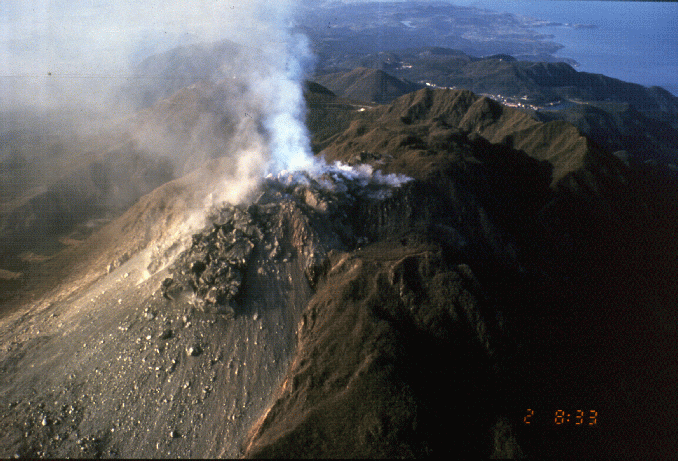
| Mount Unzen in Japan |
Saturday, March 31, 2012
Fr. Marcello Mastrilli, S.J. And "Hell's Mouth"


Friday, March 30, 2012
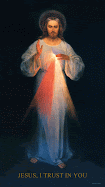
St. Claude de la Colombiere's Prayer; "Trust In God"
 Father De La Colombiere's Prayer
My Lord and my God, I know well that Thou watchest over those who centre their every hope in Thee, and that they can stand in need of nothing who look to Thee for their all. Wherefore am I resolved to live henceforth without dread, and to sink in Thy bosom all my cares and all my sorrows. Man may rise against me, sickness may rob me of strength and means to serve as I would wish, I may even forfeit Thy grace through sin ; but never shall I forego my trust in Thy mercy. I will cling to it with my life's last breath. The Evil One may endeavor in vain to wrest it from me ; but nothing shall avail to shake this my steadfast trust.
Let others look to creatures, to wealth and talent for happiness; let them rely on the guiltlessness of their lives, the rigor of their penance, the number of their good works, or the earnestness of their prayers ; for me, Lord, my trust is my very trust itself. That trust in Thee has never, nor will it ever, deceive a soul.. I am therefore assured that I shall enjoy eternal happiness, since I so steadfastly hope for it, and since I look to Thee for it, my God.
I am aware, and but too well aware, alas ! how weak and fickle I am ; I well know that temptation miy wreck the most sturdy virtue ; I have seen the stars of the heavens fall and the pillars of the firmament shaken ; but all that dismays me not, when Thou, my God, art with me; and with me wilt Thou ever abide as long as I shall hope in Thee. In Thee shall I fend shelter from every ill, nay, more, I am assured always to hope, since I hop e even for this ever-enduring hope.
In fine, O my God, I am sure I cannot hope too much in Thee, nor receive less from Thee than that for which I hope. And so I hope;that Thou wilt be my stay in the steepest pathways, that Thou wilt ward off from me the most dangerous thrusts, that Thou wilt so nerve my weakness that it triumph over my most redoubtable foes.
I hope, yes, I am certain, that Thou wilt ever love me. I hope also to love Thee with an undivided and a boundless love. And that my love, by one effort, may reach the supreme degree, I hope, O my God, for Thy very self and from Thyself alone.
I hope that after having loved, served and adored Thee while time lasts, I shall have the happiness of seeing and enjoying Thee throughout all eternity.
Link (here)
Pink Smoke At Marquette University

Marquette Hall room 100, where many university students sit crabbily
and fall asleep to their professor’s monotone voice throughout the week,
buzzed with students Sunday night. They were there for the academic
screening of “Pink Smoke Over the Vatican,” a documentary film about a
movement supporting women seeking to be ordained as priests in the Roman
Catholic Church.
The 58-minute film and attached academic event was sponsored by Marquette’s Women’s and Gender Studies Program and
shared the views of men and women who encourage the ordination of
women, along with those who oppose it. Janice Sevre-Duszynska, one of 12
women ordained in 2006 on the waters outside of Pittsburgh, was at the
screening and shared her story with the audience and partook in the
question-and-answer session after.
“Pink Smoke Over the Vatican” shares the stories of men and women who
are working to put an end to the “underlying misogyny and outdated
feudal governance that is slowly destroying the Roman Catholic Church,”
the video’s website said. The name comes from supporters’ actions
on April 17, 2005 when they released pink smoke in front of several U.S.
cathedrals in an attempt to call churches to open doors fully to women
participation.
At the beginning of the documentary the narrator continuously repeats
the question, “Where are the women’s voices?” and then cites the 1024
Canon Law that says only a baptized male can be ordained.
Dr. Dorothy Irvin, a Roman Catholic theologian, explained in the film
that the woman’s role in the church was eradicated after the Roman
Empire made Catholicism its official religion. Before this, women were
ordained and practiced the sacraments, all proven by the discovery of mosaics in South Africa and pictures in catacombs across the world.
Link (here) to Marquette Tribune
Thursday, March 29, 2012
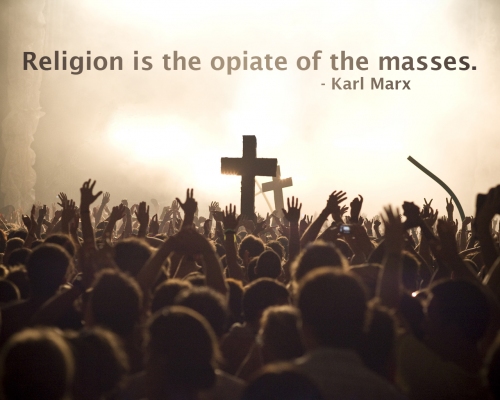
Jesuit On His Marxist And Atheistic Professors
In the spring of 1982 I graduated from St. Ignatius College Prep in San Francisco. A few months later I matriculated into Stanford University. As the product of 12 years of Catholic schooling, I was eager to attend one of the world’s finest universities and had the good fortune to be admitted into a program called Structured Liberal Education (or SLE, which folks on The Farm pronounced “slee“).
It was a big, residence-based program build around the “Great Books.” As a freshman SLE was pretty much my only course, and it was presided over by a Marxist scholar of whom I (and all my classmates) were in awe. As I recall, many of the professors who taught in SLE wore their atheism as proudly as the fraternity guys wore their Greek letters.
My professors, if not openly hostile to religion, often communicated a felt undercurrent of skepticism toward faith – it’s a tone and attitude that I have seen amongst some of my colleagues at the various universities I have attended and taught at as well. While I cannot say that it was easy to have my beliefs questioned, debated, dissected before my eyes like a cadaver, I can say that the experience was purifying. It’s also impossible for me to say that attending Stanford induced the first faith crisis of my life. I had had many doubts, even radical ones, during my years of Catholic education. I had questions, deep questions, that neither catechisms nor priests were able to answer. I remember feeling at times that many good, pious people seemed unwilling to countenance my doubts, even downright frightened when I raised them as questions. At Stanford, however, my teachers often seemed only too willing to help me demythologize what I believed.
Link (here) to The Jesuit Post to read full piece by Fr. Michael C. McCarthy, S.J.
Cervantes Was Jesuit Educated
 |
| Miguel de Cervantes Saavedra (source) |
Miguel de Cervantes Saavedra was born in Alcalá de Henares in 1547 and died in Madrid in 1616. His father Rodrigo de Cervantes was a doctor of few means. Nothing is known of his mother Leonor de Cortinas.
It appears that Cervantes studied with the Jesuits in Córdoba or Seville and perhaps in Salamanca. It is fairly certain that he was a pupil of López de Hoyos in Madrid. In 1569 he went to Italy as part of Cardenal Acquaviva's retinue and after signing up as a soldier in 1570 fought in the battle of Lepanto aboard the galley Marquesa.For the rest of his life he would boast of the several wounds that he received in his hands and in his forehead. Subsequently, he fought in the Corfú, Navarino, and Tunis campaigns. On his way back to Spain in 1575, the galley El Sol was attacked by Turkish ships and Cervantes was taken captive to Algeria. During his five years of captivity he wrote the Epístola a Mateo Vázquez. Juan Gil obtained Cervantes's freedom in 1580 in exchange for 500 ducats. Once back in Spain, he became a tax collector for the Invincible Armada. He had one daughter, Isabel, from his liaison with Ana de Villafranca. He married Catalina de Salazar y Palacios in 1584. He was twice imprisoned for embezzlement and for not paying his debts. He went to jail in 1603 when the corpse of Gaspar de Ezpaleta was found on his doorstep, but he was released for lack of evidence. From 1613 one of his books will appear every year until the last one, Persiles, with its dedication in which he takes leave of his readers signed three days before his death, on April 23, 1616.
Link (here) Cevantes Project 2001
Fr Nawras Sammour, S.J On Syria's Peace Plan

"Assad's assent is a sign of hope for the entire Syrian people that now must wait for concrete action by the government," said Fr Nawras Sammour, S.J. as he spoke to AsiaNews about President Bashar al-Assad's acceptance of the peace plan put forward by UN envoy Kofi Annan. For the Jesuit missionary, the proposal by the United Nations and the international community is the "only way to lay down weapons and end a year of clashes and violence." Syria's government has agreed to the peace plan today, said Ahmad Fawzi, spokesman of the former UN secretary general. For Annan, who is in Beijing to meet with Chinese Premier Wen Jiabao, Assad's agreement is a first step to end the violence and start talks between the regime and rebels. The UN envoy has already has written to President Assad urging him to put his commitment into immediate effect. The six-point plan, which is backed by the UN Security Council, calls for an end to the violence, the gradual implementation of a ceasefire, sending humanitarian aid, the release of people detained without trial, the free movement of journalists and talks between the government and opposition. The Syrian National Council (SNC) is sceptical however. Its leaders stress that without an ultimatum, the regime will continue its offensive. Together with the Turkish government, they call for military support to the Free Syrian Army (FSA) and the creation of a buffer zone on the Turkish border.
Link (here) to AsiaNews
Wednesday, March 28, 2012
"Sacred Heart Of Jesus, I Give My Life To You."
 |
| Admiral Jeremiah Denton blinking in Morse Code "torture" |
Admiral Jeremiah Denton knew the one he served and the one he served did
not let him down. He served the Sacred Heart of Jesus. You can see a video of him that is in the national archives.
Just click on "Contents" and scroll down to the last entry under
"Scenes from Hell." He was shot down over North Vietnam on July 18, 1965
and wasn't released until February 17, 1973. Of his almost eight years
in prison, he spent four of them in solitary confinement. The video
shows him being interviewed by a reporter in North Vietnam. All during
the interview he blinked his eyes in a way that seemed strange to those
who later saw the footage. His blinks were Morse Code and spelled out
the word "torture."
How did Admiral Denton survive? Fr. Jim Willig, in his book about his struggle with cancer, "Lessons from the School of Suffering," quoted Admiral Denton :
How did Admiral Denton survive? Fr. Jim Willig, in his book about his struggle with cancer, "Lessons from the School of Suffering," quoted Admiral Denton :
When I was in prison in Vietnam in solitary confinement, my captor would continually torture me. One day I was tied to a rack. A young soldier was ordered to torture me and break me. During this torture, when I honestly felt I was at my breaking point, a beautiful prayer came instantly to my mind, even though I wasn't praying. The prayer was "Sacred Heart of Jesus, I give my life to you." So, I prayed that prayer over and over again. The more I prayed it, the more I felt I truly was giving my life to the Lord. Then this peace came over me like a warm blanket, and I no longer felt pain--only peace. The soldier torturing me saw this transformation in my face and stopped his torture. He went to his commanding officer and said, "I'm sorry. I can't do this." And they let me go back to my cell. From that day on, I continued to use that prayer of peace, "Sacred Heart of Jesus, I give my life to you."
I talked with Admiral Denton about this and he said that what struck him as unusual is that he had learned prayers to the Sacred Heart as a child and they all used the word "thee," but the prayer that came to his mind out of the blue used the more familiar "you."
Admiral Denton gave his life to the Sacred Heart who did not let him down. Now we will declare whom we will serve. We will give our lives, our love, our all to the Sacred Heart of Jesus who gave His life, His love, His all to us. We will consecrate ourselves to both the Sacred Heart of Jesus and the Immaculate Heart of Mary because these two Hearts beat as one for the salvation of everyone. We want our hearts to beat as one with their Hearts.
Link (here) to the full post by Fr. James Kubicki, S.J. his blog is entitled Offer It Up!
Blogger Note: Admiral Denton attended the Jesuit's Spring Hill College in Alabama
Jesuit On Ethnic Cleansing In Homs Syria
 |
| The Jesuit Courtyard in "Old Section" of Homs (source) |
Aid to the Church in Need, supports the original Fides story, saying
that Islamic militants have targeted the city’s Christian population. “As far as we know, the Christians in the city of Homs have not been threatened and forced to flee their homes,” a Jesuit in Homs--Syria’s
third-largest city--told Fides. The Christian population of Homs has plummeted from 160,000 to 1,000 in
the past year.
Local Christians, the Jesuits said, have fled not because of Islamist persecution, but because of a desire for safety amid the conflict between government and rebel forces.
But Aid to the Church in Need reports that 50,000 Christians have fled in the past 6 weeks,
fearful of the "ethnic cleansing" that is being conducted by Islamic
militants with ties to Al Qaida.
Link (here) to Catholic Culture
Jesuit Brother Apart Of Team Rubicon
Brother Jim Boynton, S.J., is a Jesuit from St. Ignace, MI. As a Jesuit, Jim has taught high school in India, Nepal, Cleveland
and Detroit and has served as vocation director for the Detroit
Province. Jim has organized and led numerous medical mission trips to
Guatemala and Honduras and traveled with groups of Jesuit novices to
Peru for their introduction to the culture and immersion in the
language. He is currently assigned to work with the Jesuit Refugee and Migrant Services and is serving as principal of St. Ignace school of Foi et Joie in Quanaminthe, Haiti.
Link (here) to Team Rubicon
Tuesday, March 27, 2012
Sin In The Modern World
"......growing number of Catholics who are living their spiritual lives in a kind of tense Catholic limbo. Some never go to Mass, while others do so occasionally. The vast majority of them have no idea what they would confess, if they ever went to confession, because they disagree with church authorities on what constitutes sin in the modern world."
Which contributor to America Magazine said this? Find out (here)
Monday, March 26, 2012
The Times Were Clearly In Favor Of Pot And Free Sex
 |
| Chucked of the Tarpeian Rock |
I always suspected a massive plot behind the sudden demise of classical languages in Catholic schools and universities after Vatican II. Admittedly, those studies were countercultural. While knowledge makes a bloody entrance, in post-conciliar times, “the living was easy.” We were exhorted to adapt ourselves to the times, and the times were clearly in favor of pot and free sex. Why should students be forced into painful studies which would never be useful in the real world? If the Baltimore catechism had yielded to constructing collages, and if experience formed the basis of theology, what did Latin and Greek have to offer? Their demise fit in with the times. Nonetheless, it seemed that the theologians willingly pushed the classics over the side of the Tarpeian cliff. If their students did not have access to the primary texts, they would be in no position to question the new theological view of the universe; doctrine and morality would depend upon theologians’ experience. What can be more absolute than experience? The intervening years have taught us that experience is, not only multifaceted and susceptible to contradictory interpretations (even among theologians), but also painful and downright confusing. Spin doctors everywhere try to convince us that we experience and want what they want us to experience and want. Democracy declines into promises to fulfill needs both natural and induced. Even in the Church, we have come to realize that not everything can be tolerated. How can we escape the whirlpool of relativism?
Link (here) to the Homiletic and Pastoral Review to read the full article by Fr. John McDermott, S.J.
“Do You Have Your Belt On?”
 |
| Chicago Jesuit Acadamy |
At Chicago Jesuit Academy. Ninety-six 5th through 8th graders go to school here-- all boys, mostly from rough West Side neighborhoods like Brandyn’s. Teaching character in a morning handshake. When Brandyn walks into CJA’s spare but sunny atrium every morning, he sees Dave Diehl, the Dean of Students, standing by the door, holding a clip board. Brandyn knows the rules: First, take off your jacket. Then, look Mr. Diehl in the eye and shake his hand. “Good morning Mr. Diehl.” “Good morning Mr. Snow,” Diehl answers, checking off Brandyn’s name. “Do you have your belt on?” “Yes.” “You may head up.” These rules are an explicit part of the school’s culture. But they’re also triage – a check for any problems the kids might be having.“Do the students often forget their belts?” I ask Diehl. “I noticed you asking each of them if they have it on.” “They forget it occasionally,” he tells me. “It’s more of a check for them-- it’s an indicator. If they’ve forgotten that they're forgetting other things.” Discipline and dress codes aren’t new in education. But here, there’s an additional question: Can you teach middle school kids practical life skills and character-- along with math?
Link (here) to WBEZ to read the full story
Italian Jesuit In Communion Controversy
| Fr. Franco Annicchiarico, S.J. |
.....celebration of Mass in the Chapel of La Sapienza University of Rome (photo), run by the Jesuits ( http://www.uniroma1.it/sapienza/cappella/i-gesuiti ): The celebration was chaired by the Deputy Chaplain, Father Franco Annicchiarico, S.J...... while I was still kneeling, the celebrant has shunned me wandering and began to distribute Communion to the other. After a second of dismay I got up and went to sit on the front bench. Needless to say my dismay and my desolation: "To
refuse communion because I showed devotion to the Holy Eucharist, as if
I were a heretic, an excommunicated, which gives a public scandal! It allows the communion to practicing homosexuals, and even full-blown and you deny me just because I knelt down! "
Link (here) to the Italian blog Messa en Latino to read the full post.
Blogger Note: Website is in Italian use translation tool.
Sunday, March 25, 2012
Jesuit On The "Obama Miracle"

Link (here) to Insight Scoop
Saturday, March 24, 2012
Lumberjack, Coal Miner, Prisoner, Seaman, Construction Worker, Auto Mechanic, Priest And Jesuit
 |
| Photo of Fr. Walter Ciszek, S.J. in a Russian Communist prisoner mugshot |
They sent Fr. Walter Ciszek, S.J. to study in Rome at the “Russicum,” the Jesuits’ Russian center, and finally in 1937 he celebrated his first Mass in the Byzantine rite. Aiming to infiltrate Russia through Poland, he taught ethics in a seminary in Albertyn. But in 1939 Hitler invaded from the west and then the Russians came from the east, despoiling the seminary, and so the young alter Christus was on the cross between two thieves. In 1940 the Ukrainian Archbishop of Lvov permitted him to enter Russia, and he headed for the Ural Mountains, a two-week trip in a box car with 25 men. While hauling logs in a lumber camp, he said Mass furtively in the forest. Secret police arrested him as a Vatican spy when they found his Mass wine, which they called nitroglycerine, and kept him in a cell 900 feet square for two weeks with 100 other men. After six more months, beaten with rubber truncheons, starved, and drugged, he signed a confession, and this he called one of the darkest moments of his life. On July 26, 1942, he was sentenced to 15 years’ hard labor, starting with five years of solitary confinement in Moscow’s hideous Lubyanka prison, and then off to Siberia. After a slow 2,500-mile trip to Krasnoyarsk in a sweltering boxcar, he was sent on a barge to Norilsk, 200 miles north of the Arctic Circle, and worked 12-hour days shoveling coal into freighters, with rags for shoes. In hushed tones he said Mass for Polish prisoners using a vodka glass for a chalice and wine made from stolen raisins. Having been transferred to work in the coal mines for a year, he became a construction worker in 1947, returning to the mines in 1953. Release came in 1955 and he got news to his sisters for the first time since 1939 that he was alive. In Krasnoyarsk he quickly established several parishes. Then came four years just south in Abakan, working as an auto mechanic. In 1963 the KGB hauled him back to Moscow and handed him over to the American consulate in exchange for two Soviet agents. As the plane flew past the Kremlin, he related, “Slowly, carefully, I made the sign of the cross over the land that I was leaving.” In New York, undeterred by arthritis and cardiac ailments, he gave spiritual direction at Fordham University in a residence now named for him, writing his monumental books With God in Russia and He Leadeth Me.
Link (here) to read the full story at Free Republic
Subscribe to:
Posts (Atom)