Showing posts with label Jesuits and the Middle East. Show all posts

Saturday, May 31, 2014

Al Qaeda-Linked Militant Is Responsible For The Missing Fr. Dall' Oglio, S.J.

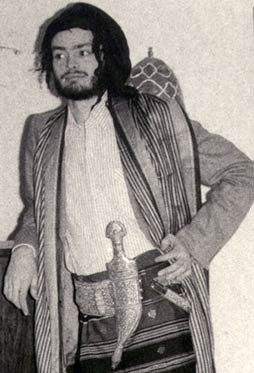
Fr. Paolo Dall'Oglio, S.J.
Father Paolo Dall'Oglio was abducted by an "Al Qaeda-linked militant" in Syria in July 2013, and was believed to still be alive.
However, according to Mid East Faces, "ISIS defector" Abu Mohammad Assuri indicates Father Paolo was shot 14 times and "killed right after his capture."
Father Paolo's death was first reported "by Tahrir Souri, a Syrian opposition website," and "was immediately confirmed by the Syrian League for Human Rights." The Syrian League for Human Rights named defector Assuri as an eyewitness to killing.  There were "at least 1,213 cases" of Christian persecution reported in Syria alone last year, where "10 percent of [the people] are Christians." Many of these "have become targets for Islamist groups who believe Christians are supporters of President Bashar al-Assad."
Link (here) to Brietbart

Monday, April 7, 2014

Jesuit Beaten And Murdered With Two Bullets To The Head

Fr. Frans van der Lugt, S.J. presiding at Mass in Homs
A Dutch Jesuit priest who chose to remain in the beseiged city of Homs to care for its starving population has been shot dead, according to media reports. Fr Frans van der Lugt, a 75-year-old psychologist, had remained in the rebel-controlled Old City throughout the siege, which is now over 600-days long, with government forces surrounding them. He had been offered the chance to leave, but chose to stay. 
His death was reported by the pro-government Al-Mayadeen TV, and the Jesuits have since told the Catholic News Service that Fr van der Lugt was beaten and then shot with two bullets in the head. The Washington Post reports that a masked gunman killed the priest inside a monastery in the Bustan al-Diwan area of the city, although the identity and motive of the killer remains unclear.
In February he had told the Daily Telegraph that the city had been abandoned by the international community. He came to Syria in 1966, and in the 1980s had set up an agricultural project outside the city to help young people with mental disabilities. He said that hunger was sending some people insane.
Link (here) to the Catholic Herald

Thursday, March 6, 2014

Meanwhile.....Over At Georgetown

A young Varisco
“I don’t have any desire to debate Robert Spencer….I would never give someone like that a forum,” Hofstra University Professor Daniel Martin Varisco declared at Georgetown University on February 26, 2014.  Addressing the Prince Alwaleed bin Talal Center for Christian-Muslim Understanding (ACMCU), Varisco’s equally flawed outlooks on Islam and intellectual inquiry had disturbing implications for modern academia. Prior perusal of the opening pages of Varisco’s 2007 Reading Orientalism:  Said and Unsaid did not raise hopes for his briefing “Khutba vs. Khutzpa:  Islamophobia on the Internet.”  In this book, Varisco analyzes leftwing intellectual Edward Said’s Orientalism and its legacy, expressing agreement “with most of Said’s political positions on the real Orient.”  Varisco reveals his discipleship of Said with condemnations of post-World War II United States having “become by stealth and wealth the neo-colonial superpower” in which a “neocon clique…engineered the wars” not just “against” Iraq but also Afghanistan. Varisco’s one-sided estimate of historical harms includes a “PhD cataloguing of what the West did to the East and self-unfillfulling political punditry about what real individuals in the East say they want to do to the West.
Link (here) to Front Page Mag

Wednesday, January 29, 2014

Fr. Frans van der Lugt, S.J., "People Have Nothing To Eat"

Fr, Franz van der Lugt, S.J.
We refuse to die of hunger in Homs. We Christians and Muslims love life and want to live. This was the appeal Fr. Frans van der Lugt sent via YouTube. The Dutch Jesuit has been living in Syria for decades and is the only European left in the besieged city.Activists in the Bustan ad Diwan area of Homs shared the video posted on YouTube by Fr. Frans in recent days. The video shows Fr. Francis as he is also known, speaking from what seems to be a church altar.
“I am here to talk to you about the old city of Homs which has been under siege” for one year and seven months now. “I represent the local Christian communities,” the priest said referring to the 70 or so Christians that remain in Syria’s third major city. Homs supports the revolt and has suffered huge destruction under the country’s repressive regime.
“Christians and Muslims are going through a difficult and painful time and we are faced with many problems. The greatest of these is hunger,” Fr. Frans states. “People have nothing to eat. There is nothing more painful than watching mothers searching for food for their children in the streets.”
Link (here) to read the rest of the story at UCANews

Saturday, June 15, 2013

Jesuit And His Parish Under Seige In Syrian War

The Jesuit Courtyard in "Old Section" of Homs
A priest working in the devastated city of Homs in Syria has given an account of some of the horror he's facing every day. The priest, who cannot be named, sent a report to the charity Aid to the Church in Need, which is supporting Syrians with an aid package of £25,450 (€30,000) for a center in Homs, on top of £42,450 (€50,000) given last year. 
The report details the priest's struggle to provide basic food, shelter and medicine to more than 30,000 people fleeing violence amid ongoing bomb blasts and other violence.
He goes on to give an account of the “many explosions” of the past week in his quarter of Homs, one of which took place very near to his church. The car bomb left 11 people dead, of whom five were his parishioners. An earlier explosion caused the death of a 10-year-old boy from the Catholic community centre next to his church. 
Three other children were injured. In his report, the priest pays tribute to a Jesuit priest and 74 other Christians living in a “siege[–like] manner” in Homs' ancient Old City, where many historic churches, mosques and other buildings lie in ruins after fierce fighting. 
Facing a shortage of food and medicine, the Jesuit and his flock rely on aid parcels being sent to them. Describing life for the Jesuit and his people, the priest writes that people continue to cling to hope in spite of the difficulties. He said: “We have a great hope. Churches still ring bells for prayers and all people come and share Mass.” Quoting Pope Francis, he writes: “Nobody can steal our hope and joyfulness.”
Link (here) to the Zenit Story

Thursday, June 13, 2013

Deir Taanayel

Domaine de Tanaïl
At a Jesuit monastery in the heart of Lebanon’s Bekaa Valley, a small group of dedicated workers are making dairy products from start to finish, not too different from how it was done hundreds of years ago. Every day at 6 a.m., cheesemakers in white lab coats and gloves start their work. Step by step – starting with the cows that graze on the farm – they make around 10 varieties of cheese, as well as yoghurt, butter and ice cream. The milk from the cows grazing just footsteps away is transported through pipes to large metal cooling tanks. It is then drained through bags until it reaches the right consistency, depending on the product.
“We’re well-known for our old ways,” says Rana Kadri, as she gives a tour of the facility. Each product is made in a different way to reach its final shape, she explains. Yogurt and strained yogurt – laban and labneh respectively – for example, are made at a higher temperature than the cheeses.
The Dutch-inspired hard Gouda cheese – far from a local product – is one of their main products, but for very Lebanon-specific reasons. With an aging time of up to three years, much longer than the softer dairy products, it can be stored for long periods without it going bad, an unfortunate consideration in the conflict-prone Bekaa Valley, where roads are sometimes blocked when tensions flare up. Despite the area’s reputation, there is a general feeling of pride in the rich agricultural traditions of the Bekaa Valley. Once known as the breadbasket of the Roman Empire, the area is today home to most of the country’s wineries as well as the source of a variety of fruits and vegetables.

Kadri, who has been working as the facility’s production manager for the past six months, had only recently finished college when she got the job offer to lead the artisan cheese operation in the idyllic setting of a farm in a monastery. Deir Taanayel stretches some 200 hectares and includes a stone church, a small lake and livestock including cows, goats and chickens.
A large garden that leads visitors to the entrance is something out of a rural travel book, with rows of picnic benches, bicycles for rent lined up along the main building, and a large cage with dozens of colorful exotic birds singing away. Families of stray cats have made the farm their home, having found a reliable source of food.
The monastery itself dates back to 1860, but the cheesemaking and the farm in its present form didn’t start until around 70 years ago, when the monks began the activity that would later inspire other Lebanese dairies to adopt the name Taanayel – a bittersweet result of their success. As the demand for the dairy products grew, so did their need to organize their work.

Four years ago, the monastery began a partnership with Arc en Ciel, a nearly 30-year-old Lebanese non-governmental organization that specializes in social and rural development. There are now 50 full- and part-time employees, and it remains a nonprofit operation.

Under the new management, the monastery has gone from a little-known spot to one of the must-see destinations for those visiting the area. In 2011, Deir Taanayel received a mere 15,000 visitors, while last year the number reached 80,000. This year they are expecting a total of 120,000.

“[Arc en Ciel] helped raise our standards. They run it like a business,” says Elia Ghorra, an agricultural engineer in charge of the production who began working at the monastery in 2005. “On Sundays you see all nationalities and religions having picnics here. It’s beautiful.”

The NGO has turned the nearby eco-lodge, a grouping of traditional mud houses as well as an adjacent restaurant that serves Taanayel cheese, into a youth hostel, offering a quaint place for visitors to spend the night when in the are

Wednesday, June 12, 2013

Fr Henri Boulad, S.J. On The Situation In Egypt, “How democratic countries can support such movements is disgusting,”

Fr. Henri Boulad, S.J.
A priest who directs the Jesuit Cultural Center in Alexandria, Egypt, blasted Western support of the Muslim Brotherhood in Egypt during a visit to Parliament Hill. Jesuit Father Henri Boulad, 82, a Melkite Catholic, singled out the United States, France and Great Britain for their support of the Islamist group, which he said has created a regime far worse than the military dictatorship of Hosni Mubarak that preceded it. He warned of looming catastrophe. “How democratic countries can support such movements is disgusting,” Father Boulad told a meeting of the Middle East Discussion Group at a luncheon hosted by Canadian Sen. Ann Cools. The Jesuit described Egypt as unstable and that the government is running out of money to provide basic services. Income from tourism has decreased because of strict restrictions on tourist activity and a dangerous lack of security, he said. Forces comprised of a wide array of thinkers, journalists, youth, Christians and a large number of Muslims who oppose the aims of the Muslim Brotherhood are rallying to challenge the regime, he said. “Grass-roots people are more and more convinced these people are liars,” Father Boulad said. Muslim opponents, he explained, “don’t want this kind of Islam.” “I am speaking up and saying ‘Don’t be intimidated by these people,’” he said. “Resist in the name of your principles.”
Father Boulad charged that the Muslim Brotherhood has a systematic plan to harass Christians so that they will leave Egypt and that among their tactics is the kidnapping and rape of Christian girls. The organization also invokes human rights to silence critics in France, Canada and elsewhere, using the courts against people who speak up, he said. The government cries “Islamophobia” and it “is politically incorrect to be an Islamophobe,” he said.

“The United States, France and Great Britain are supporting this. It’s crazy,” he added. “Intellectual and factual terrorism is being implemented not only in Egypt but all over the world. You cannot speak up. They go to court; they accuse you.” “As long as Islam is not reformed, we are going to catastrophe,” Father Boulad warned. Fortunately, he continued, some people have the courage to speak up. He said he hoped liberal democracies would support the growing coalition opposing the Egyptian ruling party.
Link (here) to Catholic Sun

Sunday, June 2, 2013

Fr. Nawras Sammour, S.J. "We Need To Step Back And Realize That We Went Too Far,"

Fr. Nawras Sammour, S.J.
For Jesuit Father Nawras Sammour, the ongoing conflict in Syria is a professional challenge and a personal "have all left." Tens of thousands of Syrians have died and millions have been displaced in more than two years of fighting between President Bashar Assad's government and rebels seeking his resignation. "Sometimes I can't believe we Syrians have reached that level of violence," Father Sammour said. "I'm shocked. Shocked. "We need to step back and realize that we went too far," he told Catholic News Service May 31 during an interview at JRS headquarters near the Vatican. In a situation that is so tense and so divided, particularly among different Muslim groups, Father Sammour said Syria's small Christian communities may be frightened. But with Christian aid programs and partnerships with others providing assistance, they also enjoy a certain respect as non-partisans looking only to help others. Father Sammour is Jesuit Refugee Service's regional director for the Middle East and lives in Damascus, Syria. He was born in Aleppo, and his mother, brother and sister still live there, but his nieces and nephews
Link (here) to CNS 
Link (here) to watch a video documentary of the violence and destruction in Aleppo

Friday, May 31, 2013

Radicalization Of Islam In The Region

Middle East expert Jesuit Father Samir Khalil Samir, who teaches at the University of Beirut. "Many people in Lebanon are concerned because the conflict in Syria is becoming more like a conflict between Shiites and Sunnis. These are the two main currents in Islam. In Lebanon, it is also noticeable that the Shiite Hezbollah behave more aggressively than before towards the Sunni Lebanese. 
In the north of Lebanon - that is, in the city of Tripoli - there are already skirmishes every day leaving people dead. Also in the south of Beirut, there are acts of violence. These are all signs that are to be taken seriously. "the wave of violence in Syria is not just for the neighbours of Lebanon and Syria a problem, says Father Samir Khalil.  
"In the Arab world, there are more divisions and conflicts than ever before. This is due to the radicalization of Islam in the region. This is the basic problem in the Arab world, which one has to actually tackle. It is not important whether one is in Iraq, Egypt or Syria. This radicalization has its roots in the attitude of Israel and its Western allies, for example in relation to occupied territories, such as the Golan Heights, which actually by international law belong to Syria. " 
Link (here) to the preeminent European Catholic blogger , his full post is at Cathcon

Friday, April 26, 2013

Fr. Paolo Dall'Oglio, S.J., "..Commit Oneself To The Struggle For Justice, Including Militarily,"

As confusion continues to surround the whereabouts of two kidnapped Orthodox bishops in Syria, a Jesuit expert says it's time to "decriminalize" the word jihadist in thinking about the conflict
"It means a believing Muslim person who's obedient to the divine order to commit oneself to the struggle for justice, including militarily," Jesuit Fr. Paolo Dall'Oglio told a crowded assembly Tuesday afternoon in Rome. 
He compared the armed uprising in Syria to the Italian resistance against fascism. "There is no contradiction between jihad and democracy," Dall'Oglio insisted. Dall'Oglio was speaking at a conference on Syria organized by FOCSIV, a federation of organizations of Christian volunteers. He was joined by Franco Frattini, an Italian politician and the country's former foreign minister under the center-right government of Silvio Berlusconi. Frattini began by confessing he wasn't sure what to do about the Syrian conflict, in part because he's not clear "on the force of jihadist movements within the opposition."
Link (here) to the Fishwrap

Wednesday, April 24, 2013

He’ll Be A Welcome Guest In The Holy Land

When Shimon Peres flies to Italy next week to formally ask Pope Francis I to visit Israel, the president will actually be inviting the newly elected pontiff to make his second trip to the Holy Land. Forty years ago, The Times of Israel has ascertained, Jorge Mario Bergoglio made an unfortunately timed first visit. It was early October 1973, and Bergoglio, then in his mid-30s, had been in Rome completing a course for his new job as the Provincial Superior of the Society of Jesus in Argentina. He flew to Israel intending to tour widely, but arrived at the very start of the Yom Kippur War. Sources in the Argentinian Jewish community, with whom Bergoglio has a long and warm relationship, said the rumor is that he stayed in Israel “for only a few hours” before being “evacuated” because of the war. Not quite. In fact, the Vatican told The Times of Israel, Bergoglio was here for about a week, but the war certainly “caused difficult problems for the visit.”On his first day and a half, Bergoglio was able to visit holy sites in Jerusalem, including the church-filled neighborhood of Ein Kerem, and Bethlehem, said Father Federico Lombardi, the director of the Holy See Press Office. After that, however, because of the fighting, Bergoglio was unable to tour further. Instead, he spent the next six days confined to the American Colony Hotel, on the seamline between West and East Jerusalem. He used the time “studying the Letters of Saint Paul to the Corinthians,” Lombardi said, using books that he borrowed from the library of the Jerusalem branch of the Pontifical Biblical Institute. Since beginning his papacy last month, Francis I has told Jewish leaders that Catholics and Jews are “bound by a very special spiritual bond,” and pledged to work to further advance “the progress there has been in relations between Jews and Catholics since the (1960s) Second Vatican Council in a spirit of renewed collaboration.” No sooner had Bergoglio taken office, than Peres invited the new pope to visit Israel, asking him to contribute to peace as a spiritual, rather than a political, leader.“He’ll be a welcome guest in the Holy Land, as a man of inspiration who can add to the attempt to bring peace in a stormy area,” Peres said.“All people here, without exception, without difference of religion or nationality, will welcome the newly elected pope.”
Link (here) to The Times of Isreal

Friday, April 12, 2013

Jesuit Bishop, "One Lives Day By Day."

Bishop Antoine Audo, S.J.
Syrians caught up in the ongoing fighting in the devastated city of Aleppo are exhausted and starving, a senior Antoine Audo, the Jesuit Chaldean bishop of Aleppo and president of the aid agency Caritas Syria, told the missionary news service Fides: "One lives day by day. I have the impression that people are more and more exhausted. They have all become poor and everyone is always looking for something to eat for himself and his family. "In the streets of Aleppo you can see the people that run endlessly with bags in their hand, trying to find a bit of bread," he said. He added that roads in the formerly prosperous city were being closed and that doctors were being threatened and forced to flee.
bishop has warned.
Link (here) to the Tablet

Thursday, April 11, 2013

Pope Francis To Visit The Jesuit Operated Astalli Center

The Astalli Center in Rome
A priest in Rome says Pope Francis personally called him to say he will visit the Astalli Center, a local facility “Yesterday I received a call on my cell phone. It was Pope Francis and he told me he would come. This is wonderful,” Father Giovanni La Manna, head of the Jesuit Service for Refugees in Rome, posted on his Twitter account April 7. The Astalli Center offers refugees free medical care, psychological counseling, legal advice, meals, showers, a laundromat and educational assistance. Undocumented refugees can use the services at the Center without fear of being identified and deported, due to an agreement between the Jesuits and the city of Rome. Most the immigrants at the center are Muslims refugees fleeing from the Middle East and Africa, and the lines to use its services are often long. In a previous interview with CNA, Fr. Manna, who has been working at the center since 2003, said the stories behind many of the refugees are tragic. Most of them have fled because their lives were in danger because of political or religious reasons, he said. Others have been forced to flee because 
run by the Jesuits, that helps thousands of undocumented refugees – many with tragic histories.
“being a Christian in a Muslim country is very difficult.” “There are also many women who have fled because their families force them to marry someone they don’t love,” the priest added. The inspiration to help these refugees “comes from the Gospel. We don’t make anything up, we just keep in mind what the Gospel says and teaches,” Fr. Manna noted.  
And in welcoming these people we make no distinction for race, language or religion. To us they are people who deserve care and help.” The Jesuit Service to Refugees started in 1980 and has spread throughout the world to help people in need. The Astalli Center in Rome receives nearly 400 people day, and a team of volunteers helps the Jesuits care for them.
Link (here) to

Friday, April 5, 2013

Fr. Paolo dall’Oglio, S.J., "Christian Neo-proselytism And The Blasphemous Actions"

Fr. Paolo dall’Oglio, S.J.
Below are excerpts from Fr. Paolo dall’Oglio’s article, translated with as much fidelity to the writer’s Italian
style.
Title: Eclipse of the Sun

We hope that we are dealing with an eclipse of the sun. Monsignor Fisichella, who “personally followed the spiritual path of acceptance of the Christian faith” of the deputy editor of Corriere della Sera, Magdi Cristiano Allam, through to his baptism by the Pope on the Easter Vigil, characterized this as a “special event” (evento riservato). But it was not a suburban parish priest who baptized him, but the successor of St. Peter. The mind turns naturally to Oriana Fallaci, the notorious Islamophobe and great writer who died recently. She was a friend of the Monsignor as well as of the deputy editor, and an important representative of Italian “Islamo-pessimism” in the defense and reconstruction of Judeo-Christian identity in Western civilization. 
In her view the most dangerous enemy of this civilization is Islam, much more than materialism, secularism and the liberal mentality….In the mirror of Fallaci’s thinking, Muslims feel frustrated in their spiritual aspirations and stuck in an anachronistic caricature, which causes them to drift towards terrorism…
The moon of urgent concern for freedom of conscience and religion has blocked the sun of charitable discretion, of respect for Muslim feelings, and of the renunciation of proselytism (and we have already had the incident about praying for the conversion of the Jews in the re-approved Latin liturgy for Good Friday). It has overshadowed the Copernican Revolution of the Second Vatican Council which also went in favor of Islam, and the renewal of official dialogue between the Holy See and important Muslim organizations. It discouraged numerous efforts to construct harmony and friendship, in the quarters of European cities as well as in the countries, for secular and peaceful Islamic-Christian coexistence. It neutralized attempts to defuse inter-religious violence and to show how far the Church is from the neocolonialist logic of the Western hegemonic powers (strapoteri), and how a great majority of Muslims are opposed to the logic of hostile confrontation….
Before the world, and on the occasion of his baptism, Magdi Allam has declared his intent to affirm “the authentic religion of truth, of life and of freedom” against the “the root of evil is inherent in an Islam that is physiologically violent and historically conflictive.” In this fashion he confirmed the Muslim impression, intentionally or not, that there is a an objective strategic convergence of Christian neo-proselytism and the blasphemous actions against the holiest realities of Islam promoted by the northern European media. 
In other words it is difficult to escape the impression that the sacred banner of freedom of conscience is being used by the West to introduce a Trojan Horse into Islam with the aim of causing it to disintegrate. Mr. Allam and his catechists should remember that Christian history frequently has registered inconceivable cruelty in the repression of apostasy and heresy. Even recently, to save “Western civilization,” horrible crimes have been committed against the integrity of individuals and against freedom of conscience by regimes who define themselves as defenders of the Church.
Link (here) to the full article at First Things

Monday, February 4, 2013

Tarillion, S.J. On Constantnople

Constantinople is a universe containing an immensity of Christians. They reckon at least two hundred thousand Greeks, and the Armenians perhaps are eighty thousand, amongst the permanent inhabitants, omitting those that come and go, whom commerce and the court circulate. The plague affords a striking proof how populous this city is. I have seen, myself, two hundred thousand people mown down by the mortality. The dead that passed the portals to be inhumed outside the city, gave us the means to make this calculation. And yet the streets were as full of living people a few weeks subsequently, as if nobody had died.
Many families that inhabited the town in the time of the Genoese, are still at Pera and Galatea ; they amount to about four hundred persons ; they are the ambassadors' interpreters ; while some are doctors, a profession from which they derive consideration, and free admission to the Turkish lords, without even excepting the seraglio. The retinue and households of the several ambassadors and the merchants of then nations, in all almost three thousand persons, are the most distinguished of the Christian Franks. The crowd is increased by the Christian vessels, and the streets near the shore are often to be seen thronged with their newly-landed. The Catholic slaves of Constantinople, who are working the ships, or chained to the gallies, or imprisoned in the bagnio of the Grand Seignior, are 5,000; there are 20,000 others in possession of his subjects. A native of Ragusa, M. R. Galani, a Dominican, and titular archbishop of Ancyra, a gentleman of great regularity of life, and who is strictly attentive to his duties, is ecclesiastical superior to all these Catholics. The situation of our house is such, that we can easily assist this population. At the centre of Galatea, near the sea, in the thoroughfare of all that come from the bottom of the harbour, appears the finest church in Turkey. The pillars that support, the balustrade that terminates the vestibule, and hems the staircase that conducts to it, these are all of snowwhite marble. It possesses the prerogative of mosques, a cupola, and a covering of lead. The nave is decorated by sepulchral monuments of ambassadors of France and of Princess Tekeli; you will find her mother's mausoleaum in a separate chapel. This pious and courageous princess died at Nicomedia. To render her the services which for several years she had received at Constantinople, the Jesuits considered it a duty to visit Nicomedia as long as she resided there. A mission had commenced at Nicomedia, which, impracticable without a plausible pretext, such as a visit to this princess, expired when the lady died.
Link (here) to the full 18th century letter by Father Trallion, S.J.

Friday, November 23, 2012

Turk Jesuit

Let me give you a special example because it concerns a Turk. This young man did not find answers to his questions in the Islamic tradition. He went to an imam who ordered him to read the Koran and advised him not to ask too many questions that could lead him astray. 
One day he entered a church during Mass and heard 'Take and eat it, this is my Body'. God who becomes flesh, who becomes a companion on the way of man and who gives him his Body cannot be accepted in the Islamic tradition but at the same time this is something fascinating. Then the young Turk visited a priest and began discussing fundamental questions about life. 
The priest's answers were so convincing that he 'entered the way' leading to conversion to Christianity. When he was baptised he decided to devote his whole life to Christ. Today Antuan Ilgit is in the Jesuit novitiate in Italy and he dreams of returning to Turkey and working with the youth in his own country.
Link (here) to Sunday

Wednesday, October 24, 2012

Syrian Jesuit Bishop Tells Of Devastation In The City Of Homs

Bishop Antoine Audo, S.J. on the right
The Chaldean Catholic bishop of Aleppo, Syria’s largest city, told an audience at Parliament in London that the city is in “chaos.” Christians “have fled their homes because of the threat of bombs, they have lost their livelihoods; schools, hospitals and other public services do not function,” said Bishop Antoine Audo, a Jesuit who has led his eparchy (Eastern-rite diocese) of 35,000 Chaldean Catholics since 1992. “80% of people have no job and have no option but to stay at home,” he added. “Poverty is getting very serious, especially with rising prices and no salaries. The face of the city has changed. There is no security, everything is dirty, there are difficulties in basic travel, no taxis, no buses.” “In the city of Homs, home to what was the country's second-largest Christian community, all but a few of the faithful were forced to leave after a wave of persecution—all the churches desecrated,” he continued. 
Link (here) to Catholic Culture

Wednesday, October 17, 2012

Like The Jesuits?

The Senusi brotherhood is the Jesuit order of Islam. The monks regard the Senusi sheikh as the well-guided one, the true Mahdi to restore the Moslem power. Outwardly the Senusiya profess to aspire to no political aim. Their ideal goal consists in the federation of the orthodox religious orders into one theocratic body, independent of secular authority. They discountenance violence. To Mohammedans in districts under Christian sway they recommend not revolt, but withdrawal to Senusi convents. None the less, despite this ostensible condemnation of political agitation, the Senusiya aim at absolute independence. Their houses, at once church and school, arsenal and hospital, are found in the Libyan oases, Fezzan, Tripoli and Algeria, in Senegambia, the Soudan and Somalia."
Link (here) to the book entitled, "Islam: a challenge to faith" By Samuel Marinus Zwemer

Monday, July 9, 2012

Italian Jesuit On Islamic Hell

Father Paolo Dall'Oglio, S.J. a brawny bear of a man who enunciates each word with a theatrical sense of certitude, scoffs at the "jihad priest" label. He says he remains committed to a peaceful resolution of the conflict in his adopted homeland — a "jihad of the spirit, not a jihad of arms," as he declared during a recent stay in the rebel-occupied Syrian town of Qusair. 
Still, the Italian-born priest warns: "If nonviolence becomes another name for a lack of responsibility, then I am not with nonviolence anymore. I am with the right to defend people." Talk like that helped get Dall'Oglio expelled from Syria last month after 30 years in Syria, 
where his devotion to Christian-Muslim "harmony" earned him a global following as a charismatic and pugnacious interfaith visionary. The outspoken cleric says he was "kicked out" by church authorities acting on demands from the Syrian government, enraged by his strident pronouncements backing the 16-month uprising against President Bashar Assad. He evinces little sympathy for fellow Christians who fear Assad's fall could unleash an era of Islamist repression."They are in a state of Islamophobia," Dall'Oglio says of Syrian Christians still loyal to a fraying police state that has throttled dissent but tolerated religious minorities for more than four decades. "From the 1980s, all they've heard, repeated and repeated, is that without the Assad state, Syria would be an Islamic hell."
Link (here) to The LA Times

Thursday, June 21, 2012

The Church Is Endangering Christians

Fr. Paolo Dall'Oglio, S,J,
Christians, who make up around 10% of the Syrian population, have been split by the uprising. Some have sided with the regime and some with the opposition, while the fearful majority have remained on the fence. This has caused splits in some mixed communities. Just before leaving, Father Paolo Dall'Oglio, S.J. an Italian who brokered the release of a Christian held in Qusayr, a town close to the mixed city of Homs where the violence has been most fierce. “Those who had taken them—and they were not mainstream members of the opposition—saw the church in full alliance with the regime. The church is endangering Christians,” he says. “But I was comforted by the fact they said they were not against Christians but against those who had collaborated with the regime.” Father Paolo hopes that the violence can be stemmed so the civil war doesn't eclipse an uprising that is calling for a plural, democratic country. "I see an Islamic bent in the armed opposition," he says. "We need not be afraid of Islamists but the less democratic ones will come to the fore as the war continues.".
Link (here) to read the full story at the Economist.