Showing posts with label Jesuit Saint. Show all posts

Friday, March 7, 2014

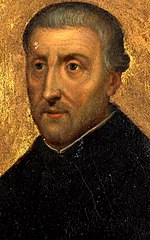
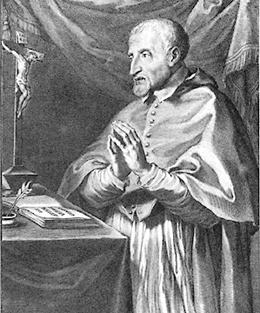
St Alphonsus Rodriguez,S.J., The Jesuit Doorkeeper And Mystic

At the request of his mother, Alphonsus married the virtuous Maria Suarez. His married life of four years was marked with much suffering. His business suffered, and two of the couple’s three children died in infancy. He was widowed at the age of 32 and his mother died soon aftewards. He sold the business and moved in with his sisters; they helped Alphonsus raise his son, and taught their brother prayerful meditation. When his son died, Alphonsus decided to follow his call to the priesthood.
Alphonsus wanted to become a Jesuit. Twice he was refused admittance due to his older age, but providence came to his rescue. He entered the novitiate at the age of thirty-seven, and after six months, he was instructed to go to the Jesuit college of Montesion in Palma on the island of Majorca off the coast of Spain, to complete his novitiate training. At the end of his novitiate, he was assigned various duties and was made doorkeeper at the college. He remained in this office for 46 years.
Nothing could be more insignificant in the eyes of the world and more monotonous in itself than such a life. By his deep interior spirit that animated him, Alphonsus transformed and transcended it with his: fervent spirit of prayer, deep union with God, devotion to Mary, especially the Rosary, which allowed him to live constantly in the presence of God even in the most difficult times. His spirit of obedience was remarkable. His love for his fellowmen and his spirit of penance inspired many to follow him. People in high positions came to him in their troubles and difficulties to seek his advice. He exercised a powerful influence for good upon his own Brothers, many of whom reached a high degree of sanctity. Of these the greatest was St Peter Clever, a fellow Jesuit, whom Alphonsus prepared to become the apostle of Slaves in the New World. Many owed their vocation to priesthood and religious life to him. The last year of his life, was one of great suffering. He died on October 31, 1617, with the name of Jesus on his lips.
As a humble porter, Alphonsus was always appreciated for his kindness and holiness; however, it was only after his death that his memoirs revealed the quality and depth of his prayer life. It was then that others learned that the humble Jesuit who had been gifted by God with remarkable mystical graces, ecstasies and visions of our Lord, our Lady and the saints.
Alphonsus was beatified in 1825, and was canonized by Pope Leo XIII on 15 January, 1888 together with his spiritual disciple, St Peter Claver. St. Alphonsus is the patron saint of Majorca, Spain.
Link (here) to Catholic Fire

Thursday, January 30, 2014

The First Recruit

Pope Francis recently proclaimed his favorite Jesuit, Peter Favre, a saint, short-circuiting the typical“first recruit,” and he tutored the Jesuit founder in Greek while Ignatius schooled his pupil in his signature “Spiritual Exercises.”
canonization process that can drag on for centuries. Favre, who lived from 1506-1546, was a roommate of St. Francis Xavier and St. Ignatius of Loyola, the founders of the Jesuits, at the University of Paris. The Jesuits call Favre Ignatius’
Francis also moved three others along the path to sainthood, including approving a miracle attributed to the intercession of Sister Maria Teresa Demjanovich, a native of Bayonne, N.J., who died in 1927; and advancing the causes of Spanish priest Emanuele Herranz Estables and Polish layman George Ciesielski.
Favre was beatified by Pope Pius IX in 1872, but he was never credited with the required miracle that would formally elevate him to sainthood. Francis – the first Jesuit elected pope – waived that requirement and, according to the Vatican, “enrolled him in the catalogue of the Saints.”
It was the second time last year that Francis has dispensed with tradition, as is his style. In declaring Pope John XXIII a saint earlier this year – he'll be formally canonized with Pope John Paul II next year – Francis waived the required second miracle for the pope who convened the landmark Second Vatican Council (1962-1965). Speaking to a consortium of Jesuit magazines last year, Francis praised Favre’s “dialogue with all, even the most remote and even with his opponents; his simple piety, a certain naivete perhaps, his being available straightaway, his careful interior discernment, the fact that he was a man capable of great and strong decisions but also capable of being so gentle and loving.”

Link (here) to The Charlotte Observer

Read more here: http://www.charlotteobserver.com/2014/01/24/4634855/pope-francis-names-peter-favre.html#.UusAxvv9XAU#storylink=cpy

Friday, October 18, 2013

Saint Among Savages

St. Isaac JoguesWe could say that St. Isaac is the true standard bearer of the faith in a new land, carrying the banner of Christ into unchartered territory. In this he followed in the footsteps of Christ himself, laying down himself in sacrifice out of love for others, even those who despised him, and in doing so became a pioneer in the truest sense: “Jesus the pioneer and perfecter of our faith, who for the joy that was set before him endured the cross, despising the shame” (Heb 12:2). This deliberate following of Christ can be seen in a consecration of himself that Jogues made while still safely within his Huron mission in French Canada. Fr. Francis Talbot, S.J., in his monumental biography of Jogues, Saint among Savages, recounts this incident: “He begged and demanded of God that he would be immolated, would be sacrificed as a victim of Divine love. He offered himself, body, soul, will, mind, memory to God, that God might do with him as He pleased.” Like the Declaration of Independence and the Bill of Rights, this prayer ought to be considered one of the foundational statements of America. This This willingness to endure death at the hands of savage torturers helped birth a new Christian realm in this continent. Interestingly enough, during his captivity Jogues had a dream in which his ministry and martyrdom appeared to him as a tour through a large city, built upon the exact spot as the Mohawk village of his imprisonment. He describes his first sight of the city as follows: “I had gone out of our village as I usually did…. When I returned, everything seemed changed. The tall palings that surrounded our village on all sides were transformed into very beautiful towers, battlements, and walls…. some savages…came out and assured me that it truly was our little hamlet.” Entering the first wall of this city he saw a slain lamb over the gate. Passing through a second gate he encountered a garrison and was apprehended and brought to a palace. Outside the gate of the palace Jogues saw many people who knew from France. He was taken in and judged and punished by the king of this city in a manner similar to how the Mohawks had tortured him. Jogues interpreted his judgment of suffering as the price he had to pay to abide in this city. He does not, however, provide us with an explanation of the rest of the dream. Could this great city be an image of the new realm of Christendom which was formed in the continent of America? What strikes me most about the city is that it combines images from America, France, and Heaven with Christ as king ruling over all. The city was placed on the site of the Mohawk village, with the natives outside of and exiting the outer ring; the second ring that of his fellow Christians and guarded by angels; and finally the palace, the seat of Christ. To me it seems that from the palace Christ’s reign would extend to the outer circle through the mediation of the more interior one. Thus, we can see Christ’s plan for the extension of his domain, creating a unity that draws all together, but through the mediation of Christian suffering.
Link (here) to Crisis Magazine

Wednesday, July 17, 2013

St Robert Bellarmine, S.J., " For It Was Fitting That If The Son Of God Wished To Become Son Of Man He Should Be Born Only From A Virgin,"

Lodovico Carracci "The Trinity with the Dead Christ"
The first testimony is the confession of Peter from the revelation of God the Father, Matthew ch.16, Thou art the Christ, the Son of the living God.” Note here that Peter asserts that Christ is the true and natural Son of God, for that is why he added ‘living’, because it is proper to living things to generate for themselves something a like in nature. And it is confirmed from other places, for in John ch.3 Christ is said to be “the only begotten Son,” Romans ch.8 he is called “proper Son,” I John ch.5 he is called “true Son,”  Colossians ch.1 and Hebrews ch.1 he is called “natural” for he is called the image or the type of the paternal hypostasis, which does not belong to adoptive sons. Again in the same place he is called a Son such that with respect to him the angels are called servants, who however are otherwise adoptive Sons of God, and indeed chiefly so. Next, Christ is accused of having preached that he was the Son of God, John19, “For we have a law and according to the law he ought to die, because he made himself the Son of God.” And it is certain that he was not accused of having made himself adoptive or metaphorical Son of God, for even the Jews say, “We have one Father, God,” John ch.8. And yet Christ did not dilute this accusation but as it were admitted it, and in that confession he wished 39 But if he is true, proper, only begotten, natural Son, then he is begotten of the substance of the Father; but he did not receive a part of the substance, because God is without parts, therefore he received the whole of it, therefore he is one God in number with the Father. The Transylvanian ministers and Blandrata reply that Christ is true and proper Son of God because he was conceived from the Holy Spirit, and they prove it from Luke ch.1 where it is said, “The Holy Spirit will come upon you and the virtue of the Most High will overshadow you, and therefore the holy thing that is born from you will be called the Son of God.” But on the contry, for even Adam, Eve, and all the angels were not born of the seed of man but are directly the work of God. How then is he called only begotten Son? Second if for this reason Christ is Son of God because he was conceived in the womb of a virgin by the work of the Holy Spirit, then he could be called the Son of the Holy Spirit; but Scripture never says this, nay on the contrary it says that the Spirit proceeds from the Son, John ch.15 and elsewhere. Third, this is not to be natural and true Son, for God did not generate Christ from his own substance in the womb of a virgin but from the substance alone of the Virgin; hence in Hebrews ch.7 Christ is said to be without father and without mother, that is, without father on earth and without mother in heaven, as all the Greeks and Latins expounded. To the place of Luke ch.1 I say with Ambrose, Gregory, Bede, Bernard that the virtue of the Most High is the Word of God which descended into the womb of the Virgin, and there put on flesh, and therefore the Son of Mary is called the Son of the Most High. It can also be said that conception from the Holy Spirit is a sign, not a cause, that Christ is called Son of God. For it was fitting that if the Son of God wished to become Son of Man he should be born only from a virgin, and if a virgin were to give birth, she should give birth only to God, as St. Bernard rightly said. Further, Jacob Palaeologus, who, although he was one of the chief doctors of the new Samosatans, at length at Rome, as we said above, was converted to the true faith, not only made no account of our argument but turned it back against us by means of this reasoning: any true Son of God cannot be true God; but Christ is true Son of God, therefore he is not true God. And this syllogism (as I have often heard from him) he used to boast was a very firm demonstration, even though I said to him that the major proposition of the syllogism is so false that the contrary is most true. For as the true son of man is true man, the true son of a lion is true lion, and in all others in like manner, so too the true Son of God must be true. 
Link (here) to the full book by St Robert Bellarmine, S.J.  entitled,  Disputations about Controversies of the Christian Faith against the Heretics of this Age, first published at Ingolstadt in 1581,1593 and republished several times thereafter.
The Latin text can be downloaded from Google books: 

Thursday, May 30, 2013

Jesuits Impose Dress Code At The Basilica Of Bom Gesu In Goa, India

Fr. Savio Barreto, S.J.
The authorities at the Basilica of Bom Jesus in Old Goa have begun loaning shawls to visitors at the Basilica who are dressed inappropriately and wish to see the interiors of the 16th century baroque-styled monument. Church authorities or volunteers have now begun screening tourists before they enter the Basilica and those who are found dressed inappropriately are given a shawl which they will have to wear and return once they conclude their visit to the Jesuit monument housing the sacred relics of Jesuit saint and patron of the missions ~ St Francis Xavier.
The rule applies for both men and women, given that it was found that it was not only women who dress scantily but men too saunter in wearing singlet and are made to either wear a shirt if they have one or a shawl. 
Speaking to Herald, Rector of the Basilica Fr Savio Barreto, S.J. said that the move was a result of a decision taken ‘long ago’ following complaints from the faithful that it was unacceptable and portrayed a complete lack of respect and decorum on the part of the tourists, both in their attire as well as their talk as it was not in keeping with the decorum of the place. 
“This was something we had said we would do and would put up boards that all tourists should be dressed appropriately if they wish to enter the Basilica. Many people had complained that the tourists were not dressing properly and were offended by it,” 
Fr Barreto said adding that the shawls were being handed over by the volunteers at the Basilica. 
More than a year ago, the church authorities had installed a signboard asking tourists to dress appropriately and maintain decorum. However, the written directions did not work, bringing about the need to give shawls to the tourists. Tourists are sometimes attired in beachwear since they come to the basilica as part of all Goa sightseeing tours that cover several locations including beaches in a single day. Many of these tours coincide with religious services that are conducted at the churches.
Link (here)

Thursday, May 23, 2013

Catholics Seem To Have Forgotten How Greatly The Protestants Feared The Jesuits

Hammer of Heretics
John Donne, as Protestant controversialist, singled out the Jesuits for special opposition in Ignatius His Conclave. Now that the religious controversies of the Reformation and Counter-Reformation are largely submerged in an ocean of indifference, even Catholics seem to have forgotten how greatly the Protestants feared the Jesuits.   The dread of Jesuit sophistication is well expressed, in Edmund Spenser’s Faerie Queene, when Errour vomits forth literature:
Therewith she spewed out of her filthy maw
A flood of poison horrible and black,
Full of great lumps of flesh and gobbets raw
Which stunk so vilely, that it forced him slack
His grasping hold, and from her turn him back:
Her vomit full of books and papers was,
With loathly frogs and toads, which eyes did lack.
When St. Robert Southwell arrived in England in 1586, intercepted communications identified him only as RobertusElizabethan authorities took the newcomer for elder Jesuit Robert Parsons—and were terrified at the very thought of the Catholic havoc he might cause.  St. Peter Canisius was feared throughout the German-speaking world as the Catholic “Hammer of Heretics.”  And he did hammer them, too.
Link (here) to Crisis Magazine to read the full article.

Tuesday, May 7, 2013

Choosing Only What Will Conduce Most Surely To The End For Which We Were Made

The "Spiritual Exercises" of St. Ignatius, though contained in a very small volume, are strictly Exercises, of application and will on the part of him who makes them; and a great measure of discernment and prudence, with a high degree of what the world calls talent, as well as pious fervour, in him who conducts them. They were not completed at once; Ignatius himself said that he wrote them in fragments, as his own experience suggested what was useful for others. He had in this way written the Method of Examination of Conscience; and in the Manner of Election he recalled what had been the contest of the good and evil spirits within himself, while he was lying on his bed at Loyola. not simply meditations or prayers. They require an effort. Whoever would understand these "Exercises" must go through them with a full and docile desire to appropriate them on his own behalf. He will then learn, by God's grace, the wonderful power which they contain under the extremest simplicity of language. They are not to be made in a cut and dried manner; they need a certain adaptation to each one's character or circumstances, and good judgment accompanied with zeal on the part of the director. Besides these qualities, some particular gift seems necessary; for St. Ignatius found only B. Pierre Favre, out of all his associates, completely possessed of it. Next to him he estimated Salmeron; then Villanueva and Domenech; and for the first part, which is designed to inspire repentance in the soul and a horror of sin, he greatly esteemed the eloquence and fervour of Francisco de Strada.
The "Exercises" extended at first over more than four weeks; they are often now condensed into the space of eight days. At the commencement Ignatius has placed the few lines which he meant to be the foundation and the summary of the whole:—
Man is created to praise, reverence, and serve God, and thus to save his own soul. All other things are created for the sake of man, and to aid him in the attainment of his end; therefore he should use them only with this object, and withdraw himself from them when they would lead him from it. We must then make ourselves indifferent to all created things, where a choice is left us; so that we should not desire health more than sickness, riches more than poverty, honour more than contempt, a long life more than a short one, and so of all the rest; desiring and choosing only what will conduce most surely to the end for which we were made.
When this great primary truth has been grasped, that the one only use of all earthly creatures is to help man on his way to God, we are invited to consider the extreme folly of using them for any other purpose. The nature and dreadful consequences of sin are set before us in the fall of the angels, and of our first parents, and of any single soul overtaken by the just judgment of God, and then we are told to examine and judge our own past lives in the light of this revelation. Contrition, with its included firm resolve to serve our Creator of the first week of the Exercises. The second week starts from this point of efficacious good desires. It also has a fundamental principle. We are not left to find out for ourselves the way of virtue. A perfect model is placed before our eyes. In the opening contemplation of the Kingdom of Christ, the soldier-saint bids us follow our great Captain to the battlefield, and he is careful to let us know from the outset that for generous souls there is within reach and at their choice a higher service and more complete devotion,—the way of the Counsels. The Divine condescension is brought vividly to mind as we dwell upon the great mysteries of the Incarnation and Nativity and Infancy of our Lord; and then in the very famous contemplation of Two Standards, which is said to have peopled monasteries, we are shown on the one hand the clever schemes of Satan for the ruin of souls, and on the other the well-ordered process by which grace works out their sanctification. The whole life of Christ is then passed in review, and definite instruction is derived from His example and words for the most momentous decision, the central point of the Exercises, the choice of a state of life for those who are free to choose, the choice of a more perfect fulfilment of existing duties for those whose sphere of activity is already fixed beyond their power to change it. The practical bent of the mind of St. Ignatius is shown by many little details of advice, but perhaps most of all by the two very remarkable considerations which are meant to test the fulness of sincerity and the degree of generosity with which we mean to give ourselves to the service of our God,—the Three Classes of Men and the Three Degrees of Humility. The third week leads us to the foot of the cross, and in the contemplation of that greatest act of love confirms the resolutions we have made. The fourth week animates us with the prospect of the reward exceeding great, as shown in the risen life of Christ.
more faithfully, is the fruit
The truly sublime Contemplation for obtaining Spiritual Love may be said to gather together and to crown the whole series of the Exercises. It brings us back to the principle from which all started, but it sheds upon it a brighter light from Heaven than our eyes could have endured without the preparation of those intervening weeks. It seemed to us at first that creatures, even if we made a right use of them, could at best only move onward with us, helping instead of hindering; but now we see that they of themselves have the power to bring us into closest communion with God, who lives and moves and is in them and us. The following prayer is the Saint's petition for the love of God :— 
Take and receive, O Lord, all my liberty, my memory, my understanding, and my will. All that I am, and have, Thou hast given me. O Lord, I give it back to Thee: dispose of all according to Thy good pleasure. Give me only Thy love and Thy grace, for this is sufficient for me.
Ignatius, in his rules for the spiritual life, drew largely from the sayings of the Fathers of the Desert, especially of Abbot Serapion. The work of Garcias de Cisneros, who had been Abbot of Montserrat, was probably known to him, but there is no similarity to give any ground for the accusation of plagiarism. The "Exercises" originated in Manresa, and were perfected by the experience of Ignatius when he began to teach. Whoever uses them must own that only Divine inspiration could have shown Ignatius such secrets of the human heart—such remedies, such stimulants, and such aids.
At the end of some editions of the "Spiritual Exercises" are placed some general admonitions, translated by Father André des Freux into Latin verse. We give them here in prose:— Resist no one, however much your inferior; it is better to be the vanquished than the victor. Try to obey blindly in all things, and willingly submit your own judgment to any one. 
Do not remark the faults of others, and hide them when they are seen; accuse yourself of your own, and desire them to be known. Whatever you do, say, or think, consider in the first place whether it be for your neighbour's good, and pleasing in the sight of God. Preserve always your liberty of soul; neither allow any person or cause to oppress it. Do not lightly bind yourself in friendship with any man, let faith and reason prove what is best.
Diligently exercise the mind and body in good actions. Be a fool in the opinion of man, and so you will be wise before God. Turn over these things in your mind in the morning and at evening; and when you go to rest, fail not in prayer. Hitherto he had enjoyed great peace of mind and conscience, together with a sense of buoyant exultation which had carried him over all obstacles.
All at once, without any transition or perceptible cause, Ignatius was assailed by terrible trials of more than ordinary debility, he was entering the church in which it was his custom to hear mass, a voice seemed to say to him, "How will you be able to support this for forty years or more?" For the moment a horrible dread came over him; then recognising the source from which the insidious question had proceeded, he replied, "Can you promise me, O wicked one, another single hour of life? And what are forty years of suffering compared with the ages of eternity?" For the time the enemy fled, but only to renew his assault with greater malignity. and temptations. One day when, in a state
Henceforth the Saint was subject to continual and sudden alternations of joy and sadness; sometimes his soul was left in utter gloom and desolation, and then again it was in a glow of happiness and content. So sudden, yet so complete, were the vicissitudes through which he passed, that, to use his own expression, it was like putting off one garment and putting on another; and, astonished at his own experiences, he said to himself, "What is this new phase of existence into which I have entered?"
Link (here) to St. Ignatius Loyola and the early Jesuits By Stewart Rose

Friday, May 3, 2013

The Story Of A Life Of Entire Devotedness

THE LIFE OF ST. FRANCIS DI GERONIMO
Little, we imagine, has hitherto been known in England about St. Francis di Geronimo, but henceforth it will be impossible to plead the want of an accessible and highly readable Life in the vernacular in excuse for ignorance. Miss Clarke has drawn up from the best Italian and French lives, and from the processes for his beatification and canonization, a narrative which is quite a model of even and interesting narrative, of clearness and simplicity of arrangement, and of judicious selection. In the career of any missionary there must necessarily be a frequent recurrence of events extremely like one another. He has to preach over and over again the same truths, to inculcate the same duties, to reprove the same vices, to remedy the same abuses, and to minister to the same needs, spiritual and corporal, of the poor or other sufferers. And if he is a wonder-worker, as St. Francis was in a very remarkable degree, much art is required in both the choice and grouping of the miracles, if interest and curiosity are not to be stifled by repetition and monotony. The Life under review avoids all tedium, and leads the reader on without fatigue to ever growing knowledge of the Saint and the characteristics of his work. The style is clear, graceful and attractive, by its easy flow and utter absence of pretentiousness. We trust that Miss Clarke may enrich our Catholic literature with many more such instructive biographies; she will thus render an inestimable service alike to devotion and the spiritual life. St. Francis' life, in spite of his indefatigable labours, was prolonged to seventy-four years, forty-six of which were spent in the Society. 
Born in 1642, he held at the age of twelve the offices of sacristan and catechist in a house of the Theatines near his home. At sixteen, his vocation to the priesthood being unmistakable, he received the tonsure, followed five years later by minor orders, and after three more years of study by the priesthood at the age of twenty-four. Four years later (1670), with the reputation already of a holy priest, he entered the Society, and his Master of Novices was heard on the day of his admission to say frequently,  
"This is a happy day for the Society of Jesus. We have received a holy priest into our midst: he will be an example to all his fellow-novices, and a perfect model for their imitation." The prediction was more than verified, but early in the second year of his noviceship as the companion of the veteran missioner, Father Bruno, he began the active career which with minor exceptions was to occupy him for the remainder of his life. 
Almost from the beginning of his religious life, St. Francis conceived an ardent desire to devote himself to foreign missions, and those, as he earnestly and repeatedly petitioned Father Oliva, the General of the Society at the time, where he might have most chance of suffering martyrdom. Encouraged at first by his Paternity in this desire, he was destined in the end to the disappointment of his hopes. Naples was to be his Indies. There his labours were to multiply to such an extent that we are told ten Jesuit Fathers were required after his death to fulfil the various functions he performed. Numerous and striking as were the miracles he wrought, wonderful as were his predictions, perhaps the greatest wonder of his life was the ascendency he gained over the hearts of men by his unwearying charity and precious gift of sympathy. He does not seem to have been gifted with remarkable ability; he had no special aptitude for oratory; his style was never particularly elegant, nor judged by ordinary rules of rhetoric could it be called eloquent, yet its effects were astounding wherever he went. He could have said like St. Paul: "My speech and my preaching was not in the persuasive words of human wisdom, but in the showing of the spirit and power." He was simple, earnest, vivid in illustration, and above all full of the love of God and man, and like the great Apostle of the Gentiles " all things to all men." 
Hence, though for his greater trial his labours were for a time restricted to one class of men by his ecclesiastical Superiors out of the idea that one who dealt principally with the greatest sinners amongst the poor was unfitted for the task of exhorting or directing the educated and refined, or of instructing the clergy or the devout, it was soon discovered that there was no class, learned or unlearned, rich or poor, worldly or devout, into whose special wants he could not enter to the full. 
But what he did, how he laboured, how he was tried and proved by mortifications and disappointments, how he lived down all obloquy and mastered all hearts in every rank of life,—for the details of all this we must refer our readers to the biography itself, where they will find the story of a life of entire devotedness perservered in through more than forty years, externally not diversified by much that the world calls eventful, yet rich in wonders, in labours, and in fruit. And they will find that story told with a freshness, vividness and charming simplicity which will ensure its perusal to the very end.
Link (here) to The Month

Monday, April 8, 2013

"There Is Not, Never Has Been, And Never Will Be A Single Human Being For Whom Christ Did Not Suffer."

At the beginning of the Second Week of the Spiritual Exercises, St. Ignatius has us imagine the Three Persons of the Most Holy Trinity looking out over the world and at suffering humanity lost in sin. How will this beloved creature made in God's own image and likeness, made for union with God, be saved? St. Ignatius has us imagine the Incarnation of the Second Person of the Blessed Trinity and his birth in Bethlehem. The Son chose to humble and empty himself, becoming a man, sharing our life and our death. Throughout the Exercises of the Second Week, we are called to be close to Jesus, to follow him, and to labor with him for the salvation of humanity. Baptism joins us to Christ and makes us one with him in this work. The evangelical counsels of consecrated persons configure them more closely to Christ poor, chaste, and obedient; to Christ humble, self-emptying, and sacrificing. The motivation for this is love--the love of the Blessed Trinity which did not abandon humanity in its sin, the love revealed on a cross. We are called on this day in a special way to share the love of God for suffering humanity. In our Good Friday Service we venerate the cross. But before doing so, we look out on the world from that cross. We see the world with Christ's eyes. We love lost and suffering humanity with Christ's Heart. We pray for all people, bringing them with us to the cross where Christ died for us all. 
A Church council in the year 853, which is quoted in the Catechism of the Catholic Church #606, stated: "There is not, never has been, and never will be a single human being for whom Christ did not suffer." He suffered and died and save all, no one excluded. Then, after the veneration of the cross, we receive Holy Communion. We are joined with Christ so that we carry in our bodies his death and resurrection. 
United to Christ, we carry the cross, the sign of God's love for all, the sign of the lengths to which God goes to save us. Not all people know this, nor have all accepted it. We carry the cross to them when we love them and lay down our lives for them so that they may accept the salvation Christ won for them and be saved. In the closing words of his homily at the Mass he celebrated with the cardinals who had just elected him, Pope Francis said:
"When we journey without the Cross, when we build without the Cross, when we profess Christ without the Cross, we are not disciples of the Lord, we are worldly: we may be bishops, priests, cardinals, popes, but not disciples of the Lord. My wish is that all of us, after these days of grace, will have the courage, yes, the courage, to walk in the presence of the Lord, with the Lord’s Cross; to build the Church on the Lord’s blood which was poured out on the Cross; and to profess the one glory: Christ crucified. And in this way, the Church will go forward. My prayer for all of us is that the Holy Spirit, through the intercession of the Blessed Virgin Mary, our Mother, will grant us this grace: to walk, to build, to profess Jesus Christ crucified. Amen."
Link (here) to Fr. James Kubicki, S.J. and his blog Offer It Up

Saturday, March 30, 2013

Easter Of 1541

It was now necessary to proceed to the choice of a Superior. Hitherto they had none, for Ignatius abstained from all supremacy or dictation; on every point (except the name) the opinion of all the members was asked; when government was necessary, they exercised it in turn. 
Now that they were recognized as an order, they required a head; and in the Easter of 1541, Ignatius summoned all to Rome who 1541. could come, the others were to send their vote in writing. 
Only five could be collected; Brouet came from Sienna, Laynez from Parma, Le Jay from Brescia, Bobadilla was at Bisignano, in the kingdom of Naples; there the inhabitants petitioned the Pope that they might retain him, and the Pope forbade him to return. He had not time to send his written vote, but afterwards declared that he should have chosen like the rest. 
In prospect of this election, Xavier and Rodriguez had left their votes sealed up at Rome. Faber sent his, copied twice over, for fear of accident, from Worms, where he was attending at the Diet. Those who could come, reached Rome as soon as possible, because there was much to do. 
They had desired their Father Ignatius to form a plan for them—this was now considered, closely examined and adopted. Then the election was deferred till April 7, that all might pass three days in prayer, abstaining from consulting with one another. On the 7th the sealed papers were opened. Ignatius Ignatius was named by all.
Link (here) to read the full account of St. Ignatius of Loyola's election as the Superior General of The Society of Jesus

Tuesday, March 12, 2013

Ignatius Saw His Soul Depart Out Of This Life, Surrounded With A Marvellous Splendour;

Monte Cassino
Ignatius, as soon as he had arrived in Rome, presented himself with his companions to the Pope; they were already known to him, and that in a favourable light. The Sovereign Pontiff agreed to their petition, and commanded Faber and Laynez to give provisionally public lectures, the first on Holy Scripture, and the second on Dogmatic Theology, at the Sapienza, which is the name of the University of Rome. Ignatius at the same time began to give the Spiritual Exercises publicly to the people, and to several persons in particular, amongst whom was Cardinal Contarini, uncle to Peter Contarini, accounted by Maffei one of the most learned men of the time. This illustrious Cardinal took Ignatius for the director of his conscience, and said that he had found in him the guide he had been long seeking for. The Procurator of the Emperor, Peter Ortiz, wished to make trial of the qualities that Contarini praised in the Saint. He retired to Monte Cassino, to go through the Exercises in the most complete solitude, and invited Ignatius to accompany him thither. The impression they made on this celebrated Doctor was so strong, that he would have entered into the Society of Ignatius if the latter had not dissuaded him from this step on account of his age and the important commission with which he was charged. 
It was during the time Ignatius was at Monte Cassino that he was apprized of the death of James Hozez, who had been the last to enter into the new Society, and was now the first struck down by death. He died at Padua, the victim of his zeal, death having found him on that field of battle which he had freely chosen as his portion. At the moment of his death Ignatius saw his soul depart out of this life, surrounded with a marvellous splendour; and another time while assisting at Mass, at the moment that the Priest said the words, Confiteor. . . et omnibus Sanctis, he again saw him in the company of many others. 
He was in this manner consoled for the loss he had sustained, and had, moreover, the happiness of soon replacing, by another disciple, the one whom God had taken away from him.
Link (here) to the Life of St. Ignatius of Loyola by Fr. Genelli, S.J.

Friday, March 1, 2013

Jesuit Doctor Of The Church On Papal Spiritual Supremacy

St. Robert Francis Romulus Bellarmine, S.J.

Early in the 17th century, Saint Robert Bellarmine, S.J. found himself at the center of an international controversy over clerical exemption. Several years earlier, in 1599, he was pressured into justifying exemption on more solid natural law grounds rather than treating it as mere human invention. Clerical exemption was a central issue in the Venetian Interdetto controversy of 1605-07, when Pope Paul V excommunicated Venice for violating ecclesiastical prerogatives. Bellarmine was caught in the middle. On one side were theologians ,like Paolo Sarpi, who argued that clerical exemption was of human origin and, therefore, clergy were subject to secular law. On the other side were papalists, who defended the divine origin of clerical privilege, like the Spanish jurist, Francisco Pena. Though he disapproved of the Interdetto, Bellarmine was drawn into the debate on the side of Rome, primarily to defend himself: first, against critics like Sarpi, who used his own theories to limit papal temporal power; and, second, against Pena, who blamed him for providing theoretical ammunition to the Venetians. This, argues Tutino, was a challenge for Bellarmine, whose insistence on the separate jurisdictions of temporal and spiritual authority, left unclear under what conditions a pope’s intervention into earthly affairs, on behalf of souls, might be justified.
The Venetian Interdetto was only one of several international crises that marked Bellarmine’s career. The second was the growing threat of royal absolutism to the spiritual jurisdiction of the Church. Bellarmine decided to refute the absolutist claims, contained in: The True Law of Free Monarchies (1603) by King James I. Tutino argues that Bellarmine saw this text as a new political and theological challenge to the Church—and to his own political theology. James’s Protestant-sounding arguments were aimed at strengthening the crown at the expense of the Church, and constituted a new kind of heresy, one that went beyond the claims of his Tudor predecessors. The Stuart monarch was not merely a threat to the Catholics of England. His vision, of absolute temporal sovereignty over the spiritual authority of the Church, could spread across the continent. Indeed, the king directed his ambassadors to distribute copies of his book to receptive state officials in Catholic, as well as Protestant, capitals. The danger posed by James was not limited to his book, however. The controversy over the “Oath of Allegiance,” offered Bellarmine a new opportunity to defend papal spiritual supremacy. Imposed in January 1606, after the Gunpowder Plot was foiled, the Oath required English Catholics to deny the pope’s power to excommunicate and depose the king, asserting the latter’s primacy over spiritual affairs. James was not the only one from across the English Channel to defy Bellarmine. Scotsman, William Barclay, was the leading “divine right” theorist of his day, according to John Locke, and a professed Catholic, who taught civil law in France until his death in 1608. Barclay’s De potestate Papae was published in England the following year. Widely praised at the Sorbonne and elsewhere, his book explicitly challenged Bellarmine’s theory of potestas indirecta by denying the incommensurability of the temporal and spiritual jurisdiction, thereby elevating the sovereign to the same level as the pope. Bellarmine once again had to defend potestas indirecta, while fending off papalist critics like Pena, who believed his theory of papal primacy too modest to be effective against the enemies of Rome. Bellarmine’s refutation of Barclay is published in Tutino’s On Temporal and Spiritual Authority.
Link (here) to read the full article at Homiletic and Pastoral Review by John M. Vella

Wednesday, February 27, 2013

A Chief Curse Of Life In Japan

St. Ignatius of Loyola was so keenly interested in the fortunes of his sons, wherever they might be, that he once said he would like to know how many fleas bit them at night. Plenty of fleas bit his dearest son Francis Xavier while snatched his brief slumbers on the matted floor, for though the cleanest people in the world beat and shake the mats incessantly the fleas still thrive in such excellent cover and are, or used to be a chief curse of life in Japan.
From the book entitled, St. Francis Xavier, S.J., by Fr. James Brodrick, S.J. page 245 an Image Book

Thursday, February 21, 2013

Fr. Hugh Kelly, S.J., " The Most Widespread And Sustained Missionary Effort In The History Of Christianity"

St. Francis Xavier, S.J.
For centuries, in the late middle ages, the spread of Christianity in Asia had been held up by the wide-spread conquests of the Moslem power. The followers of Mahomet were the fanatical enemies of Christianity, in the long wars of the Crusades; and for centuries, they lay across all the land routes to the east. But in the last decade of the fifteenth century two events occurred which allowed the current of Christian missions to flow again. In 1492, Columbus discovered America and in 1497, Vasco da Gama rounded the Cape of Good Hope and thus opened up the sea approaches to the east. These two discoveries threw open to Christian zeal vast fields, white to the harvest, and resulted in a wonderful outburst of missionary activity. The ships which Spain and Portugal sent out to the west and to the east, in addition to their complements of sailors, soldiers, merchants, and adventurers, carried zealous and intrepid missionaries. Francis Xavier is the acknowledged leader of that army. He was the spearhead in the most widespread and sustained missionary effort in the history of Christianity. By his heroic example and his burning letters, he drew the attention of Catholic Europe to the vast multitudes so suddenly revealed as waiting for the good news of the gospel. His courage, zeal and enterprise, have made him the symbol and inspiration of all foreign missionaries. The Holy See created him the patron of foreign missions. His heroic achievement, and his devotion to a high ideal, have been generously recognised even by historians who do not share his faith. His career has been called one of the most heroic efforts of human history.
Link (here) to SAINT FRANCIS XAVIER, S.J. Jesuit and Missionary by Fr. Hugh Kelly, S.J.

Wednesday, February 20, 2013

St. Francis Xavier, S.J., ' The Japanese Are Best Disposed Towards Our Christian Way Of Life.”


“Among all the nations of the Far East that I know, the Japanese are best 
                                             disposed towards our Christian way of life.”


Three hundred years of cruel persecution could not completely destroy the seeds Xavier had planted. All the early Jesuit and Franciscan missionaries were killed, every known Christian was martyred. But seven generations later, when missionaries were able to return to Japan, they found over 60,000 Catholics hidden in the mountains or in small fishing villages. They still sang the Ave Maria in Latin! They still practiced the daily recitation of the Rosary
Link (here) to Shrine of St. Jude

Saturday, February 16, 2013

The Birth Place Of St. Francis Xavier, S.J..

Castillo de Javier / Javier Castle - Navarra, Spain

Xavier ranked very low in the hierarchy of Spanish castles, a mere unblooded corporal among magnificent battle-scarred generals and field marshals. But in renown the little sentinel of Navarre has outstripped all the hoary giants of the Spanish hills. Very few people except Spaniards or inveterate travelers in Spain will have heard of the cloud-capped Penafiel or tremendous Coca, but everybody has heard of Xavier. It would hardly be an exaggeration to say the name has has become a household word the world over, a magic evocative name, conjuring up visions of galleons, catamarans and brown junks tossing on tropical seas, of hot Indian plains and stifling Malayan jungles, of explosive, sun-drenched Indonesian islands of a China and Japan as unmapped and mysterious as the dark side of the moon. A child born within the gloomy battlements of Xavier on April 7, the Tuesday of Holy Week in the year 1506, was to make all the difference. He was christened Francis, a name before unused in his family of habitual Michaels, Jeromes, Matins, Peters and Johns, perhaps because of his arrival in Holy Week reminded his devout mother of the saint who had borne the wounds of Christ in his living flesh.
An excerpt from the book entitled, "Saint Francis Xavier" by Fr. James Brodrick, S.J.

Tuesday, February 5, 2013

La Storta

The experience of mystical acceptance and confirmation at La Storta would continue to be significant for Ignatius. 
He frequently referred to it in his diary and other writings. The vision served as a frame of reference and source of consolation. For example, while writing in his diary about a decision regarding the practice of poverty for the Jesuit community, Ignatius said that he gained confidence from the vision, with these thoughts growing in intensity and seeming to be a confirmation, 
even though he receive no consolations about his matter, and Jesus' showing himself, or letting himself be felt, seeming to him to be somehow the work of the Most Holy Trinity, and remembering when the Father place him with his Son.

Friday, February 1, 2013

The Maxims Of St. Peter Claver, S.J.


1. 
Man's salvation and perfection consists in doing the will of God, which he must have in view in all things, and at every moment of his life; the more he accomplishes this divine will, the more perfect he will be.

2. 
To do the will of God, a man must despise his own; the more he dies to himself, the more will he live to God. But to acquire this double advantage we must love God, and the more we purge the heart of self-love, the more shall we love God.

3. 
To love God as he ought to be loved, we must be detached from all terrestial love ; we must love nothing but Him; or if we love anything else, we must love it only for His sake.

4. 
Let a man direct all his thoughts, words, and actions, solely to the glory of God, incessantly striving for submission to His will, insomuch as to desire neither evil nor good, unless God wills it; and in whatever trials he may be placed, the peace of his soul cannot then be troubled.

5. 
To derive true profit from whatever happens, a man should be silent amidst reproaches, injuries, and ill-treatment, whether there be any fault on his side or not; and when people contend with him, let him prefer silence to victory.

6. 
To make rapid progress in virtue a man must carefully guard his tongue, and let truth, peace, and edification be in all his words. Let him say much in few words; and that he may always speak well, let him always speak either of God or with God.

7.
 Let him prefer nothing to obedience, no matter who commands; submitting to all creatures for the sake of God, and doing all that is required of him with great peace of mind. If however he cannot do all, and is asked the reason, let him be content with simply saying that he could not; and whatever may be said, let him answer nothing—no, absolutely nothing: whatever reproaches may be made, let him be silent, accepting all for the sake of God; provided there be nothing contrary to God, or to obedience. This is indeed the way in which to vanquish self."

Link (here) to the Maxim's of St. Peter Claver, S.J.

Thursday, January 31, 2013

St. Peter Claver, S.J. And Our Lady of Monserrat

The monastery of Montserrat
It is a custom in the Society to send the novices on a pilgrimage to some place of devotion, in memory of that which the founder St. Ignatius, at the beginning of his conversion, made to our Lady of Monserrat. They always go on foot, live on alms, and lodge as much as possible in the hospitals. The pilgrimage assigned to young Peter Claver must have pleased him much, for it was no other than Monserrat itself. He and his two companions set out with their superior's blessing, their staffs their only provision for the journey. The fatigues of the way caused no diminution of his prayer and austerities. On arriving at a resting place, his first care was to repair to the church with his companions, to adore our Lord in the sacrament of His love Besides the days appointed by the superior, he received permission to communicate on several other days. After spending some time in prayer, he begged alms from door to door; and what ever he might receive his piety was always satisfied with it. If it was inconsiderable, he was delighted, because his love of poverty and suffering made it precious; if it was abundant, he was equally delighted, because it enabled him to relieve the poor. Thus all turns to the good and profit of a soul that loves God. When the three young novices came to a place where they were to stop, they collected the children in some public street or square, and conducted them in procession to the church, singing prayers and canticles. It was an edifying sight, and attracted great crowds. The novices by turns catechized, and made moving exhortations on the duties of a Christian. Young Claver's zeal and powerful words produced a sensible impression on all present. The fire with which the Holy Ghost inflamed his heart passed into the hearts of his auditors; and the usual fruit of his discourse was a lively sorrow for sin, and a sincere love of God.
As soon as they came in sight of Monserrat, Claver prostrated himself to pay respect to the Mother of God, whose sanctuary is there. Rough as was the path, up the holy mountain, love made it sweet and easy to him; nor could the beauty of the surrounding scenery divert his mind for a moment from the sight of the celestial beauties which occupied it. 
But who could describe the transports of his heart on beholding that venerable image, which represents the majestic beauty of the Queen of Heaven, whom he had always tenderly loved as a mother! He spent three whole days in this holy place, as much moved by the charity, as he was edified by the example, of the worthy sons of St Benedict, to whom the monastery belongs. To derive the principal fruit which the novices proposed to themselves as the result of their pilgrimage, they made their confession with lively marks of contrition, and then received with most tender devotion the Body of our Lord. Claver spent all his spare time before the miraculous image of the virgin, and he would willingly have remained there all his life. To no one did he ever relate all the favors he there received from the Queen of Saints; but whenever, in after life, he recalled this pilgrimage to mind, he shed such sweet tears, that it was easy to judge of the delight his soul had tasted.
Link (here)

Wednesday, January 30, 2013

San Francisco Archbishop On St. Peter Claver, S.J. And The Humana Vitea Wars

Archbishop Salvatore Joseph Cordileone
The 56-year-old is a native of San Diego and grew up in a strong, inter-dependent Italian-American family, with his paternal grandparents living next door and his maternal grandparents a few miles away. During his childhood he was in constant contact with his grandparents, who spoke the old Sicilian dialect with his parents, as well as with his entire extended family on both sides. They didn’t keep every feature of life from the old country; as he says, “our generation lost the old Sicilian (Calabro-Sicilian) language”. But the family remained loyal to the traditional pieties of Sicilian Catholicism. St Joseph was the focal point of their devotions. On the feast day of Jesus’s foster father they set up an altar in their home with his statue and three loaves of bread to represent the Holy Family, which included a braided loaf of bread for Our Lady. They would stage a drama of the Holy Family coming into the home, with a young girl as Mary, an older man as Joseph and, on several occasions, the young Salvatore was in role as Jesus. The archbishop says there was never a time when he struggled with his faith or did not believe in God. He did, however, feel the stirrings of a vocation, while also feeling drawn to being a husband and father. “My main challenge in seminary was interior, in discerning if this was really my call,” he explains. “When I entered the seminary at the age of 19, in 1975, I felt strongly inclined in that direction but was not yet absolutely convinced that God was calling me to be a priest. It was when I gave my life totally to God, I felt a burden was lifted from my shoulders, and had the confirmation of my vocation to the priesthood."
At seminary he developed a keen attachment to St Peter Claver, S.J. a favourite saint whose courageous ministry to African-Americans and radical holiness has inspired him throughout his 30 years of priesthood. Now, as a member of the Church hierarchy, he continues to pray to the patron saint of slaves, for “commitment to the Church’s mission and for graces to help the poor and marginalised”.
As Archbishop Salvatore Joseph Cordileone was a seminarian in the 1970s, the obvious question is whether he inclined more to the spirit of rebellion of that time or if he held true to the Church’s time-honoured teachings. “I’m quite a law-abiding type who doesn’t have a problem with authority,” he says, “but more than that, the Church’s teachings are completely rational and made sense to me.” It was the time of the Humanae Vitae wars: did he have any problems with any of the details in the most resisted encyclical of the age? No, in fact, in 1978 he and some fellow seminarians travelled from San Diego to San Francisco so that they could attend a symposium held by the archdiocese in honour of the 10th anniversary of Humanae Vitae.
Link (here) to The Catholic Herald