Showing posts with label American Indian Jesuit Mission. Show all posts

Friday, October 18, 2013

Saint Among Savages

St. Isaac JoguesWe could say that St. Isaac is the true standard bearer of the faith in a new land, carrying the banner of Christ into unchartered territory. In this he followed in the footsteps of Christ himself, laying down himself in sacrifice out of love for others, even those who despised him, and in doing so became a pioneer in the truest sense: “Jesus the pioneer and perfecter of our faith, who for the joy that was set before him endured the cross, despising the shame” (Heb 12:2). This deliberate following of Christ can be seen in a consecration of himself that Jogues made while still safely within his Huron mission in French Canada. Fr. Francis Talbot, S.J., in his monumental biography of Jogues, Saint among Savages, recounts this incident: “He begged and demanded of God that he would be immolated, would be sacrificed as a victim of Divine love. He offered himself, body, soul, will, mind, memory to God, that God might do with him as He pleased.” Like the Declaration of Independence and the Bill of Rights, this prayer ought to be considered one of the foundational statements of America. This This willingness to endure death at the hands of savage torturers helped birth a new Christian realm in this continent. Interestingly enough, during his captivity Jogues had a dream in which his ministry and martyrdom appeared to him as a tour through a large city, built upon the exact spot as the Mohawk village of his imprisonment. He describes his first sight of the city as follows: “I had gone out of our village as I usually did…. When I returned, everything seemed changed. The tall palings that surrounded our village on all sides were transformed into very beautiful towers, battlements, and walls…. some savages…came out and assured me that it truly was our little hamlet.” Entering the first wall of this city he saw a slain lamb over the gate. Passing through a second gate he encountered a garrison and was apprehended and brought to a palace. Outside the gate of the palace Jogues saw many people who knew from France. He was taken in and judged and punished by the king of this city in a manner similar to how the Mohawks had tortured him. Jogues interpreted his judgment of suffering as the price he had to pay to abide in this city. He does not, however, provide us with an explanation of the rest of the dream. Could this great city be an image of the new realm of Christendom which was formed in the continent of America? What strikes me most about the city is that it combines images from America, France, and Heaven with Christ as king ruling over all. The city was placed on the site of the Mohawk village, with the natives outside of and exiting the outer ring; the second ring that of his fellow Christians and guarded by angels; and finally the palace, the seat of Christ. To me it seems that from the palace Christ’s reign would extend to the outer circle through the mediation of the more interior one. Thus, we can see Christ’s plan for the extension of his domain, creating a unity that draws all together, but through the mediation of Christian suffering.
Link (here) to Crisis Magazine

Wednesday, June 5, 2013

Fr. George Belgarde, S.J. Defending The Faith

Fr. George Belgarde, S.J. Blessing with Holy Water at a Sunday Mass
A worker at a Buddhist temple near Albany sued a Catholic shrine next door, asking it to remove a log barrier from a shared access road, and an apology for the inconvenience. The road closure is "unauthorized" and contrary to the doctrine of "love your neighbor," Yik Cheng claims in a pro se complaint in Montgomery County Supreme Court. Cheng, a religious worker at the Western Supreme Buddha Temple in Fultonville, about an hour west of Albany, sued the Shrine of Our Lady of Martyrs Inc., Father George Belgarde, a Jesuit who is director of the shrine, and Larry Steiger, superintendent of buildings and grounds. Cheng claims the defendants blocked the access road with tree trunks. The shrine was once the Mohawk Indian village of Ossernenon, where three Jesuit missionaries were martyred in the 1640s, according to the group's website. The village was the birthplace of Kateri Tekakwitha, the first Native American to be made a Catholic saint.
Established in 1885, the 400-acre shrine includes five chapels, two museums and a Jesuit cemetery. It is a site for pilgrimages and masses, and last year hosted thousands who came to celebrate Tekakwitha's canonization in October. The Western Supreme Buddha Temple is in the shrine's former retreat house, which an affiliated group, the American Sports Committee, bought from the Roman Catholic Diocese of Albany in 2005.
According to The Daily Gazette in Schenectady, the American Sports Committee, a group of Chinese Buddhist missionaries who teach yoga, paid $500,000 for the three-story retreat house and 76 acres of land.
According to the complaint, the blocked road is the primary access to the temple, although a narrow stone road the Buddhists built to the south also leads there. The Gazette, which reported on the barrier in April, said the stone road is best used with a four-wheel-drive vehicle. The newspaper said a letter sent to the Buddhists indicated that shrine officials were concerned the shared road was deteriorating, and so would limit use to shrine visitors. The tree trunks were laid across the road April 1, according to the complaint, along with a "Closed" sign. Other signs and yellow tape were added the next week. "Father Belgarde personally confronted the plaintiff and another member of the organization, who did not know the road was blocked, and reacted angrily when we tried to enter the shrine from our accustomed route, and spoke angrily when we approached him to inquire about the situation," Cheng says in the complaint.
"Father Belgarde took an openly hostile stance toward our temple and our members, and refused to discuss or consider a compromise like his predecessors," Cheng adds.
Belgarde became director of the shrine in 2011, according to the shrine's website. Cheng claims the road closure violates First Amendment rights to freedom of religion and public assembly. "Freedom of religion inevitably includes the access to a place for the purpose of worship," the complaint states. It claims the "Closed" sign at the barrier will confuse tourists who may think the temple is closed, and will discourage shrine pilgrims who might want to visit the temple, too. "The barricade erected by Father Belgarde and Larry Steiger will both physically and symbolically cut off our interaction with the visitors and pilgrims who come to the shrine and leave both sides more isolated," the complaint states. Cheng wants the defendants ordered to remove the signs and barrier, and a permanent injunction to prohibit a future road closing. Cheng also seeks court costs, legal fees, and an apology.
Link (here)

Tuesday, June 4, 2013

Pere Marquette, Was Reburied On June 8, 1677

Pere Marquette Memorial Shrine in Ludington, MI
Father Jacques Marquette, better known as Pere Marquette, was reburied on June 8, 1677, according to American-Indian funeral customs. The French-born Jesuit priest — who explored the Mississippi River and the shores of Lake Michigan, founded St. Ignace and ministered to Indians — died somewhere along the Lake Michigan coast at age 37 on May 18, 1675, and was buried there. However, two years later, Kiskakons and Iroquois disinterred him and put his cleaned bones in the sun to dry before putting them in a birch-bark box. They transported Marquette’s remains in a convoy of 30 canoes to St. Ignace, where two priests rowed out to meet them. The pair asked the Native Americans to confirm it was Marquette, and then they recited the “De Profundis” psalm, according to Reuben Gold Thwaites’ book, “Father Marquette.” After the funeral rites, Marquette was lowered into a small vault in the middle of the church, the book says, “where it rests as the guardian angel of our (Ottawas) mission, The savages often come to pray over his tomb.” The small church was destroyed in a fire in 1700 and nobody knew where the beloved priest was buried until 177 years later, when the then-parish priest happened upon bone fragments with pieces of a birch-bark box.

Link (here) to the Detroit Free Press

Friday, March 8, 2013

“Sent To The Frontiers, Under The Roman Pontiff”.


Reduction of Our Lady of Saint Ana
The South American country has been at the center of one of the biggest events of the pontificate of Benedict XVI. The Society of Jesus and the World Youth Day (WYD), in fact, have worked together for months at an exhibition on " Jesuit Reducciones" (Missions) in Paraguay. The exhibition speaks of the past and present, of how the Jesuits have been and are “sent to the frontiers, under the Roman Pontiff”.

The "reducciones" of Paraguay (1609-1769) were settlements of Guarani Indians promoted by the fathers of the Society of Jesus in the lands conquered by Portugal and Spain, with the desire to preserve their identity as people and vassals of the Crown.  The Indians, who lived according to their ancient customs, in the mountains, in small very distant groups, , came together through the initiative of the Jesuits to form settlements of about 5,000 people each. “Many will remember the “reducciones” in the film “Mission”, directed by Roland Joffe (1986), starring Robert De Niro and Jeremy Irons”, observes the Catholic news agency Zenit.

The “reducciones” have a complex context which during their exposure is analyzed in greater detail.  It has to do with the '"encomienda", a colonizing system which often disguised slavery, and the strong desire of evangelizing missionaries and collaborators who, in their mission, were not always able to respect the identity of the Guaraní, but managed to defend their freedom and dignity, because on many occasions “reducciones” were the only way to safeguard them.  Up to 30 “reducciones” of Guaraní peoples exited, stretching between the Parana and Uruguay rivers, in a vast territory that included regions that today are part of Paraguay and also Argentina, the south and south-east of Brazil, the south-east of Bolivia and Uruguay. The Jesuit “reducciones” did not stop with the Guaraní, because there were also people like the Moxos (1682) and Chiquitos (1691) of Bolivia, the Maynas (1637) of Ecuador and Peru and the Orinoco (1730) of Venezuela.

Sunday, January 13, 2013

Bom Gesu

"All our savages, but especially the Hurons, profess to have a special esteem for the all-endearing mystery of the birth of our lord Jesus Christ. I have seen some notable proofs of this given by these latter; they themselves entreated the father, long before the feast-day, to make arrangements so as to celebrate it in the most solemn manner possible. They sent their children to seek for what could be used in constructing a grotto, in which they were to make a representation of the mystery; and I took pleasure in hearing a little girl who, having brought with much care a beautiful sort of grass, said that she had done it in the thought and hope that the little infant Jesus might be Laid upon that grass. Our good Christians made some more serious preparations, For they all confessed; and those to whom permission was given to receive Communion, did so very devoutly, at the midnight mass. The grotto, which was well fitted to inspire devotion, was Incessantly visited; and it rendered a very pleasing although rather protracted Service,— to draw from them the expression of their feelings as they themselves express them, when addressing the divine child."
Link (here) to the Jesuit and Allied Relations.

Monday, October 8, 2012

Father Jean Pierre de Smet, S.J. And Brigham Young

Fr. Jean-Pierre de Smet, S.J.
By the time the spring of 1847 approached in Winter Quarters, nearly 400 Mormon lives had been lost to various causes. Yet there was a vital bit of good news during their stay. The news came when the famous Jesuit, Father Pierre Jean de Smet, passed through Winter Quarters on his way east. The Jesuit was one of the few white men who had ever seen the Great Salt Lake. His information on routes and conditions was extended freely to the Mormons, who eagerly anticipated their next move west. On April 5, 1847, Brigham Young led the first Mormon wagon train out of Winter Quarters bound for Utah. Conditions, timing, experience and organization were on the Mormons' side this time and the trip went much easier than the previous year's trial. 148 people, three of whom were women, 72 wagons, and a large collection of livestock made up this first group.
Link (here) to the National Parks Service website.
What Fr. de Smet, S.J. actually wrote about the Mormons (here)

Wednesday, April 18, 2012

Renaissance Jesuit

Fr. Anthony J Ravalli, S.J.
Saint Mary's historic mission's annual opening is one of the milestones of spring in Stevensville. Spring is here. The mission is open.It was founded in 1841, 48 years before Montana became a state. Montana's oldest permanent town is celebrating. It's called "The Year of Ravalli." Mike Smith celebrated a special mass in the chapel that Father Anthony Ravalli designed and helped build in 1866. Little has changed in the simple church with its ornate interior. Celebrants filled its pews in honor of the Italian priest Ravalli County is named for. "He was known as a true Renaissance Man," said the mission's Colleen Meyer. The Jesuit priest sculpted a statue of St. Mary that stands above the altar. He sculpted a likeness of St. Ignatius of Loyola.
Link (here) NBC Montana to read the article and watch the video

Saturday, April 7, 2012

Eustace Of The Hurons Was Baptized On Holy Saturday

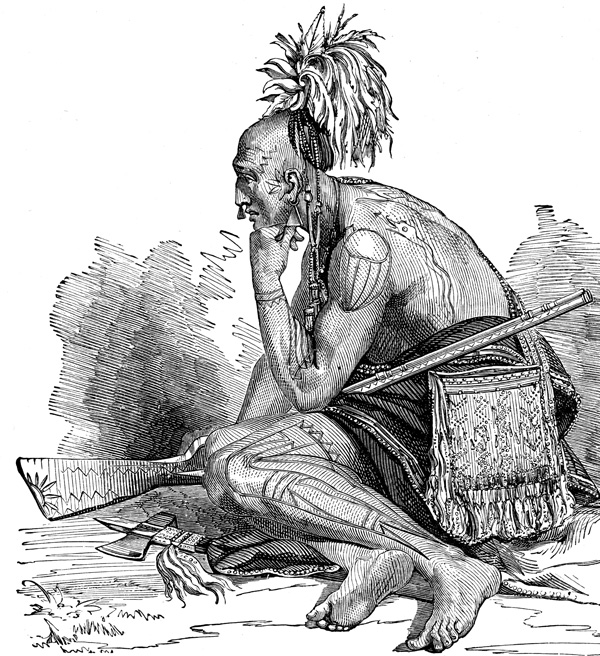
A Huron Indian warrior
........all that I can do is to declare sincerely the desire that I have for it. After that, if my Soul be burned in Hell, you will be the cause of it. But, whatever you may do, I will always pray to God, because I know him; and perhaps he will have mercy on me, for you say that he is better than you." "But," said one of our Fathers, " what made you first think of believing?" "Even before you came to this Country," he replied, " I had escaped from a great many perils in which my Companions perished. I saw very well that it was not I who extricated myself [19] from these dangers. I had this thought, that some more powerful Spirit, who was unknown to me, gave me favorable aid" (although the Hurons attribute to dreams the source of all their good fortune); 
"I was convinced that all that was only nonsense, but I knew no more about it. When I heard of the Greatness of God, whom you preach, and of what Jesus Christ had done when he was on Earth, I recognized him as the being who had preserved me, and I resolved to honor him all my life. When I went to war, I recommended myself to him night and morning. It is to him that all my victories are due; he it is in whom I believe; and I ask you for Baptism, so that he may have pity on me after my death." 
Was it possible to refuse such a Man? We Baptized him publicly, with some others, on Holy Saturday, and gave him the name of Eustache. When he had performed his Devotions on Easter Sunday, he started for the War with some of our best Christians, who had remained solely for the purpose of celebrating that holy Day, although the Troops whom [20] they were to join had already departed. But, before separating, finding that a considerable number of persons were assembled there belonging to various Nations, they wished of their own accord to hold a Council. Here, in a few words, are the resolutions that they took:
"Let us hereafter be but one body and one mind, since we all serve the same Master. Whenever any one of us passes by a Village wherein a Christian dwells, let him not lodge elsewhere. Whenever any one is afflicted, let him seek consolation among the others. Let us not reveal one another's faults to the Infidels; but let it be recognized, through the friendship that we shall have for one another, that the Name of Christian is a tie more binding than Nature's bonds.
'' Let us inform our Relatives who are not of the same Faith as we, even if they be our fathers and our children, that we do not wish our bones to be mingled together after our death, since our Souls will be eternally separated, and our affection will not continue beyond this life."
 Link (here) to French Jesuit, Fr. Jerome Lalemant, S.J. of his account as found in the Jesuit Relations and Allied Documents of a Huron warrior named Eustace and his story of conversion.

Friday, March 2, 2012

Fr. Jacques Bigot, S.J.: Old School Jesuit Evangelization

Souls in Hell
The usual reply that both the men and the women make, when they do not consent to do what I tell them, in order to prepare themselves to become Christians, is that they are too wicked for that. 
Some say this truthfully, owing to the high opinion that they have of the greatness of our religion; and I endeavor to encourage them, by assuring them that the great God whom they have offended is so good that he will freely forgive them, if they are really desirous of serving him. 
I have seen several who were animated by the few words that I said to them, and who renounced all their vices in a manner that surprised me; and they have manifested great constancy in this, for I have not yet found one in fault from the Beginning of their conversion. Others say it solely through attachment to their evil ways, which they will not abandon. 
I endeavor, as much as I can, to inspire them with Fear of the fires of hell, in which all burn who have ever fallen into the same evil ways that I reprove in them. I show them some pictures of hell that I have; or I direct some fervent Christian, who is capable of instructing them, to show and explain these to them. 
Sometimes I am present at these explanations, without saying anything, in order to see what ideas our Christians form of our mysteries, and what replies are made by those whom they Instruct. When any new-comer arrives, his relatives come to beg me to lend them these instructive pictures, that they may explain the same to him. Haregouessemit came this morning to ask me for them. If you could procure me some pictures of the Judgment, of hell, of purgatory, and of paradise, such as you know would suit the minds of these Savages, you would Infinitely oblige me. 
Link (here) to Fr. Jacques Bigot, S.J. and his letter in The Jesuit Relations and Allied Documents

Sunday, February 12, 2012

Rene Goupil "Felled To The Ground By A Hatchet-blow"

Captured by the Iroquois near Lake St. Peter, he resignedly accepted his fate. Like the other captives, he was beaten, his nails torn out, and his finger-joints cut off. On the thirteen days' journey to the Iroquois country, he suffered from heat, hunger, and blows, his wounds festering and swarming with worms. Meeting half way a band of two hundred warriors, he was forced to march between their double ranks and almost beaten to death. Goupil might have escaped, but he stayed with Jogues. At Ossernenon, on the Mohawk, he was greeted with jeers, threats, and blows, and Goupil's face was so scarred that Jogues applied to him the words of Isaias (53:2) prophesying the disfigurement of Christ. He survived the fresh tortures inflicted on him at Andagaron, a neighbouring village, and, unable to instruct his captors in the faith, he taught the children the sign of the cross. This was the cause of his death. Returning one evening to the village with Jogues, he was felled to the ground by a hatchet-blow from an Indian, and he expired invoking the name of Jesus. He was the first of the order in the Canadian missions to suffer martyrdom. He had previously bound himself to the Society by the religious vows pronounced in the presence of Father Jogues, who calls him in his letters "an angel of innocence and a martyr of Jesus Christ." 
Link (here) to The Catholic Encyclopaedia

Tuesday, November 1, 2011

This Good Catechumen

This good Catechumen, between 12 and 14 years old, answered by fleeing, leaving there his presents, and him who offered them, without saying to him a single word. Having now recognized her constancy, we prepared her for Baptism. 
The devil tried to oppose this, for she was seized by a sort of obsession, so violent that she instantly turned her head around, with horrible distortion, and her stomach grew enormously swollen. We saw that she was utterly terrified, and unable to utter a word, except, " I am afraid, I am afraid." This happened to her three times, and always at a time when none of us could be called to see her in this condition. 
There were urgent requests to have her take some medicine, to clear her brain, they said. We were willing to do this, but negligence suddenly seized us. Baptism was destined to cure her; for, since the sacred waters have made her a child of God, the devil has never caused her this fright. She was called Magdelaine of St. Joseph. I hope that some soul dear to God will find in her a wife.
Link (here) to read the mentioned portion of the book, The Jesuit Relations and Allied Documents.
Blogger Note: Picture is not of Magdalaine of St. Joseph, however you can find it (here) 

Thursday, July 14, 2011

Jesuit Chronicles

A Bronze Fo Dog
The remains of the goods found probably belonged to the San Felipe galleon, which sailed carrying a large cargo of Chinese porcelain from the Ming Dynasty and which disappeared without a trace in 1576, maritime historian Edward Von der Porten said. The Asian sculpture, located underwater by means of signals from a metal detector, 
coincides with descriptions noted in the 18th century by Jesuit missionaries such as Fr. Fernando Consag at an earlier moment and later by Fr. Miguel del Barco, Junco said. "The goods we are studying coincide with the notes of Fr. Miguel del Barco, who in his chronicles says that some Indians brought to one of the missions a bronze candlestick in the shape of a dog," the archaeologist said. "The object we found is probably similar to the one described by the priest, or it could be the lid of a censer," Junco said. 
The so-called "Dogs of Fo" - the Chinese word for Buddha is Fo - actually represent lions and were considered protectors of sacred sanctuaries, usually Buddhist temples.

Link (here) to the full article at Fox News

Tuesday, May 17, 2011

Jesuits Celebrate 400 Years Of Missionary Activity In Canada

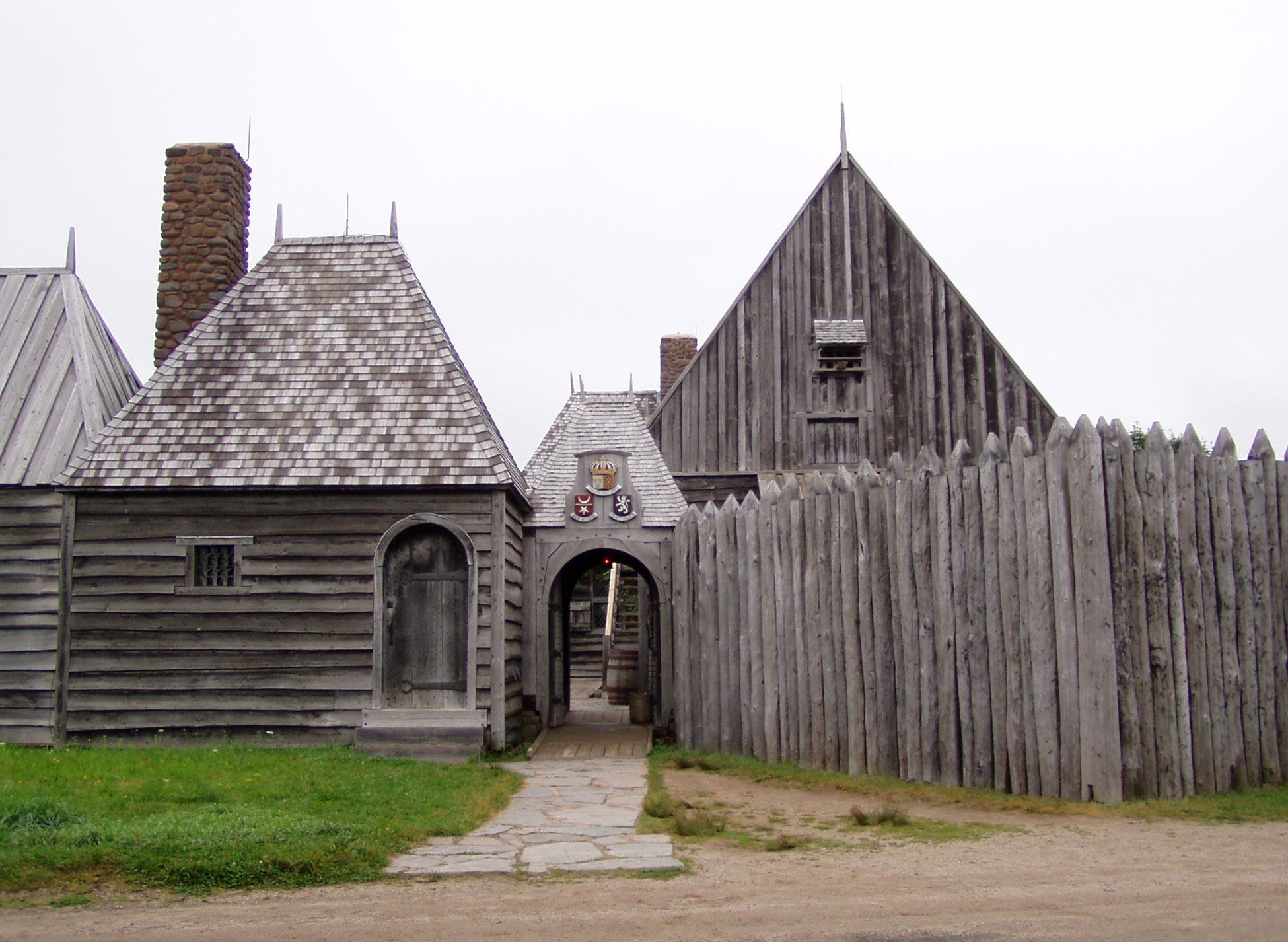
Port Royal, Nova Scotia
400 years ago French Jesuit priests landed at the trading post of Port-Royal in today's Nova Scotia; join us at Port-Royal National Historical Site on Sunday, May 22, 2011 at 12:00 noon as we celebrate and re-enact that historic landing. "The Jesuits have been an integral part of Canada's rich and diverse history and we continue to be active across this great country," says Father Jim Webb, S.J., Provincial of the Jesuits in English Canada.  Special guests attending include: the Lieutenant Governor of Nova Scotia, the Honourable Mayann E. Francis, Member of the Grand Council, Grand Chief Keptin Antle Denny, and the Archbishop of Halifax, His Excellency, the Most Reverend Archbishop Anthony Mancini.  A travelling exhibition highlighting the story of the Jesuits in Canada will be unveiled and a historical vignette will be performed. Following the events at Port-Royal, a Mass will be celebrated at St. Louis Catholic Church in Annapolis Royal at 3:00 p.m.
Link (here) to the full story at Digital Journal.

Saturday, April 9, 2011

De Smet And Sitting Bull

It was stated at one time that Sitting Bull, while hating the white Americans and disdaining to speak their language; was yet very fond of the French Canadians, that he talked French, and that he had been converted to Christianity by a French Jesuit, named Father De Smet. How true this may be is uncertain, but probably there is some foundation for it. 
The French Jesuits have always been noted for their wonderful success in winning the affections of the Indians, as well as for the transitory nature of their conversions, and it is very possible that Father De Smet may have not only baptized Sitting Bull at some time, but induced him and his braves to attend mass, as performed by himself in the wilderness. 
The benefits of the conversion seem however to have been only skin deep, as far as preventing cruelty in war is concerned. (Whittaker, A Complete Life of General Custer, Volume 2, 535).
Link (here) to Diogenes: In Search of an Honest Politician.

Monday, February 28, 2011

Fr. Jean-Baptiste de la Brosse, S.J.

Montagnais Indian winter encampment
The party sat in silence, listening for the bells, which on the stroke of midnight began to toll. The village was aroused, and the people hurried to the chapel, and there, before the altar, lay the old Jesuit, dead. They watched by the corpse until daylight, when the post officer ordered four men to take a canoe and go to Ile-aux-Condres. A fearful storm was raging in the Gulf, and ice floes almost choked the wide expanse of water. "Fear not," said the officer to the fishermen; "Father Labrosse will protect you." They launched the canoe, and great was their surprise to find that, while the tempest howled and the waves and the ice seethed like a caldron on each side of them, a peaceful channel was formed by some invisible hand for their craft. They reached Ile-aux-Coudres — over sixty miles, as the crow flies, from Tadousac — without accident. Father Cornpain was standing on the cliff, and, as they neared the shore, he cried out, 
"Father Labrosse is dead, and you have come to take me to Tadousac to bury him!" How did he know this? The night previous he was sitting alone in his house, reading his breviary, when suddenly the bell in the church (dedicated to St. Louis) began to toll. He ran down to the church, but the doors were locked, and when he opened them he found no one within, and still the passing bell was tolling. As he approached the altar, Father Compain heard a voice saying, "Father Labrosse is dead. 
 This bell announces his departure. "To-morrow do thou stand at the lower end of the island and await the arrival of a canoe from Tadousac. Return with it, and give him burial." And at all the mission posts where Father Labrosse had preached — Chicoutimi, I'lle Verte, Trois-Pistoles, Rirnouski, and along the Baie-des-Chaleurs — the bells, of their own accord, rang out the death of the old Jesuit at the same hour. And for many a year, whenever the Montagnais Indians of the Saguenay visited Tadousac, they made a pilgrimage to his grave, and whispered to the dead within through a hole in the slab of the vault, believing that he would lay their petitions before God.
Link (here) to The Atlantic Monthly

Sunday, February 20, 2011

The Jesuits of Nebraska

Chimney Rock, Nebraska
When Archbishop John Carroll of Baltimore was appointed as administrator, his authority ceasing in 1815. From that time the bishop of New Orleans ruled until 1827, when it came under the jurisdiction of St. Louis. In 1850, Rome established the "Vicariate Apostolic of the Territory East of the Rocky Mountains." This vicariate included all territory west of the Missouri river to the Rocky mountains, and from the southern boundary of Kansas to the British possessions. Rt. Rev. John B. Miege, S. J., was appointed vicar apostolic.
In 1857 Kansas was cut off, and the remaining part was erected into the Vicariate of Nebraska. This vicariate was gradually trimmed down until 1885, when, comprising Nebraska and Wyoming, the Diocese of Omaha was erected. Two years later, in 1887, took place the establishment of the present Diocese of Lincoln. Its history is no less interesting. If Coronado's Expedition entered the present state of Nebraska, it must have been somewhere within the limits of the Lincoln diocese. However, the first authentic records we have of Catholic priests ministering within the present borders of Nebraska, and of the Lincoln diocese, are those of the Jesuit Indian missionaries. Many of the early traders and trappers who dwelt in these regions had been baptized as Catholics, but, being far removed from churches and priests, they retained only the name and some traditions.
The Jesuit Fathers, Peter John De Smet and Christian Hoecken, visited and baptized among the Indians living along the Missouri river. Father De Smet, in a letter dated December 16, 1839, writes, "A few days ago I also baptized two young Omahaw's, from 18 to 20 vears old. One of them was the son of Aurora and Nelson as missions.  Opetanga (the great dog) Chief of his tribe, and nephew to the famous Blackbird."' In 1840 Father De Smet accompanied Captain Drips and the American Fur Co.'s caravan up the Little Blue river, through the present Jefferson, Thayer, Nuckolls, Clay, Adams, and Kearney counties, to the Platte river, thence along the south shore to where Julesburg, Col., now is, crossed the river there, and proceeded through Wyoming to Oregon. He saw Chimney Rock on May 31, 1840. He returned in the fall along the Missouri river from Ft. Benton. He passed through Nebraska again in 1841, with Fathers Point, Mengarini, and three lay brothers. On these journeys Father De Smet met several tribes of Indians, but it is not known, at present, whether he baptized any of them.
Link (here) to the book entitled History of Nebraska

Jesuit Missionary On Seeing A Wagon Train

Father De Smet tells of the great government wagon trains he met on the Oregon Trail in 1858: 
 
"Each train consisted of twenty-six wagons, each wagon drawn by six yoke of oxen. The trains made a line fifty miles long. Each wagon is marked with a name as in the case of ships, and these names served to furnish amusement to the passers-by. Such names as The Constitution, The President, The Great Republic, The King of Bavaria, Louis Napoleon, Dan O'Connell, Old Kentuck, were daubed in great letters on each side of the carriage. On the plains the wagoneer assumes the style of Captain, being placed in command of his wagon and twelve oxen. The master wagoneer is admiral of this little land fleet of 26 captains and 312 oxen. At a distance the white awnings of the wagons have the effect of a fleet of vessels with all canvas spread."

Link (here) to the Overland Trails of Nebraska

Wednesday, February 16, 2011

Jesuit Butte

Priest Butte, Montana
Priest Butte near Choteau on the Choteau-Fairfield highway is topped with three crosses and named for the three Jesuits Fr. A. Hoecken and  Imoda and Br. Magri— who founded a Jesuit Mission among the Blackfeet Tribe in 1859. The Jesuits focused on learning the language and religious conversion. The mission moved outside of Cascade after a hostile reaction from Native Americans.
Link (here) to read the full article at the Great Falls Tribune