Showing posts with label Pope Francis. Show all posts

Monday, May 12, 2014

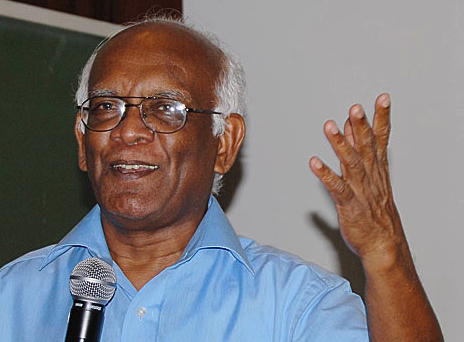
Fr. Michael Amaladoss, S.J. Under Scrutiny Of Pope Francis' CDF

Fr. Michael Amaladoss, S.J.
The Vatican is investigating a Jesuit theologian from India for allegedly espousing unorthodox beliefs, raising new questions about whether Pope Francis — the first Jesuit pope — is in fact moving the Catholic Church in a new direction.
News of the threatened censure of the Rev. Michael Amaladoss, whose best-known book is “The Asian Jesus,” follows on the heels of a blunt warning on orthodoxy and obedience that the Vatican’s doctrinal watchdog, Cardinal Gerhard Mueller, delivered to a group of nuns who represent most American sisters.
Mueller’s April 30 speech to sisters from the Leadership Conference of Women Religious was seen as an unexpected setback in negotiations over a Vatican investigation of the nuns that began a year before Francis was elected. Mueller’s hard line also seemed out of step with the new style of openness and flexibility that has marked Francis’ young papacy. Church sources say that Amaladoss, a highly regarded expert on interreligious dialogue and Christology, first came under scrutiny by Mueller’s office a year ago. They said Amaladoss believed that his initial responses to questions about his views on the uniqueness of Jesus and the Catholic Church had answered Vatican objections. But in January, Mueller’s office returned with a demand that Amaladoss write an article publicly endorsing the Vatican’s views or face silencing. For decades, that level of severe sanction was a hallmark of the hard-line treatment of theologians under Cardinal Joseph Ratzinger, who later became Pope Benedict XVI.
In early April, Amaladoss met with Mueller and other officials from the Congregation for the Doctrine of the Faith and he “agreed to rework … those issues in the light of the dialogue,” the Rev. Edward Mudavassery, who oversees the Jesuits in India, wrote in an email.
“I understand it was an open and honest meeting trying to clarify objectionable issues,” Mudavassery said. “We all know that Pope Francis is a man for dialogue. It seems to me that the CDF, too, may follow this path to sort out differences because these men under the scanner are genuine and loyal to the Church and to the teachings of Jesus.” Francis reportedly knows about the investigation but does not seem overly concerned that it will end in punishing Amaladoss, according to Jesuits familiar with the case.
Francis knows Amaladoss because of his long and distinguished career as a Jesuit, both as a theologian and author of hundreds of books and articles, and also as a longtime assistant at the Jesuit headquarters in Rome.
Link (here)

The Pope Francis Clampdown On LCWR

The clampdown on the nuns began in 2012, when the Congregation for the Doctrine of the Faith issued its original doctrinal assessment after investigating the organization. Then it chastised the sisters for staying silent on some of the church’s signature issues, including birth control, euthanasia, homosexuality, and the ordination of women. Instead, in their work in schools, hospitals, and centers for the poor, they were just doing what they could to help the population, rather than acting as missionaries for the church. Their silence on the issues was interpreted as an endorsement, which was particularly annoying to the United States Conference of Catholic Bishops, which felt the sisters were undermining the status quo.
According to the doctrinal assessment of the LCWR, the sisters were “moving beyond the Church” and as such, creating “a serious source of scandal” that is incompatible with religious life. 
The nuns’ next trial of faith will be their August assembly, which will be seen as a litmus test for just how seriously they are taking the Vatican’s criticism. Their options will be to get in line with with the bishops and cardinals or break away and form their own group outside the Holy See’s jurisdiction. Francis, for his part, does not appear flexible on the topic. In several interviews, including one last September with the Jesuit magazine America, he dismissed the idea of women as equals. “I am wary of a solution that can be reduced to a kind of ‘female machismo,’ because a woman has a different make-up than a man. But what I hear about the role of women is often inspired by an ideology of machismo,” he said then. Now it is up to the nuns to flex their muscles or succumb.
Link (here)


So I tweeted “Catholic sisters teach me what it means to persevere without the benefit of institutional power.” And I added #WhatSistersMeantoMe. Framing things in that way, I thought, meant that people could show their gratitude for sisters, and read other messages of support, without being in any way negative. No need to be anti-Vatican or anti-bishop or anti-anything. Just pro-sister.
A few people commented that the Vatican’s assessment of the LCWR wasn’t intended as a critique of all U.S. sisters. Which is true. The LCWR is a kind of professional organization that often issues statements on behalf of the religious orders it represents. But that observation misses the point that the LCWR assessment came on the heels of a lengthy Vatican investigation of all women’s religious orders in this country-an “Apostolic Visitation,” to use the official term, investigating the sisters’ “quality of life.” 
In other words, it wasn’t surprising that many sisters felt beleaguered and demoralized.

Wednesday, May 7, 2014

Bergogliano And Anti-Bergogliano Factions

This turmoil was exemplified by the monumentally lethal “Dirty War” that raged in two phases in Argentina from 1973 until 1983. By this time Bergoglio was serving amid growing controversy as the Provincial Superior of the Society of Jesus in Argentina (1973 to 1979), and then as the Rector of the Philosophical and Theological Faculty of San Miguel until 1986 when he was abruptly removed. His actions or inactions during this period are now being re-examined as he assumes papal power. Referring to the enthusiasm with which he accepted his new role, the New York Times observed that “he was less energetic when it came to standing up to Argentina’s military dictatorship during the 1970s as the country was consumed by … the Dirty War. He has been accused of knowing about abuses and failing to do enough to stop them.” “History condemns him,” declared a senior Brazilian academic. “It shows him to be opposed to all innovation in the church and above all, during the dictatorship, it shows he was very cosy with the military.” Francis rejected suggestions that he had hard-right sympathies, claiming that it was merely his “authoritarian way of making decisions” while he was head of the Argentinian Jesuits in the 1970s “that created problems” in the past. Nevertheless, such problems were substantial and the criticism he faces has been emphatic. For example, a presently serving provincial of another Latin American country and one of the most senior figures in the Society of Jesus confided his negative views in an e-mail quoted by Paul Vallely, in his new biography, Pope Francis: Untying the Knots (2013): 

Yes, I know Bergoglio. He’s a person who’s caused a lot of problems in the Society and is highly controversial in his own country … As Provincial he generated divided loyalties: some groups almost worshipped him, while others would have nothing to do with him … He left the Society of Jesus in Argentina destroyed [and] we have spent two decades trying to fix the chaos that the man left us … It will be a catastrophe for the Church to have someone like him in the Apostolic See. 

 As Vallely observes, “this constituted an extraordinary counterblast” to the acclaim that otherwise met the election of Pope Francis, but it was “far from a lone voice” from within the Jesuit order to which Bergoglio had dedicated a major part of his adult life. It is clear that great bitterness enveloped Bergoglio during his time as Provincial Superior, as Vallely’s account reveals. Regarded as a gifted and charismatic young man, Bergoglio had enjoyed a rapid ascent through the ranks to head the order at only thirty-six, just three months after taking his perpetual vows. Under his leadership the province broke up into Bergogliano and anti-Bergogliano factions, driven, Vallely argues, by two polarising forces: Vatican II and Peronism.
Link (here)

Friday, April 25, 2014

We Agreed

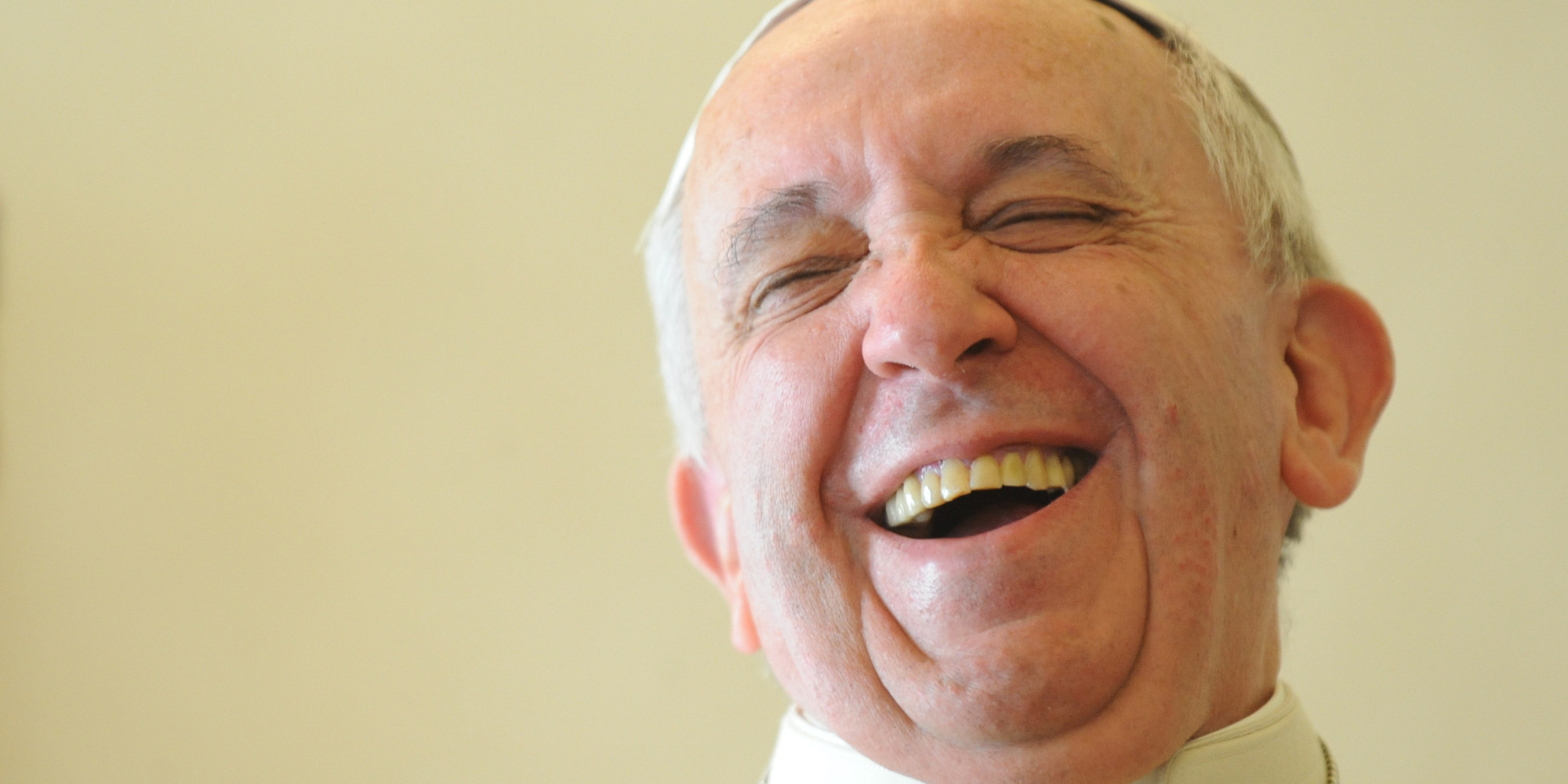
Pope Francis has a great smile. His preternaturally straight teeth and crinkly-happy eyes are prominently featured on the cover of the U.S. edition of his first book of writings, The Church of Mercy, which came out on Easter Sunday. Apparently, this was intentional. "His smiling face on the cover displays beautifully one of the major attributes he keeps talking about, which is joy," said Steve Connor, the director of new product development at Loyola Press. The small, Jesuit organization won the rights to print the book over several major publishing houses, he said, but that didn't necessarily change how the book was packaged. 

"One of the things we agreed to in getting the bid is that we wouldn’t change any of the language in book," he said. The collection, originally put together by the Italian professor Giuliano Vigini, was sanctioned by the Vatican, so the English-language version had to stay pretty much the same as the original text. "You don’t really have a lot of wiggle room to change what the book is about. How a major press would have done it is not much different than how we did it."
The one thing Loyola did have control over, though, was branding: How do you sell a book of theological reflections to a mass-market audience? Make it pretty, for starters. "We wanted a beautiful cover, making it attractive for a U.S. audience to read," Connor said. The look of the book was one of the only things the press could control, which makes each design decision seem more significant: the subtle patterns that look like they were modeled after couch upholstery, the round, friendly font, the palette of sepia tones. These were all thought out—as Connor said, "the muted colors give a sense of seriousness to the book."

Thursday, April 24, 2014

The Pope Francis Effect

A year after Pope Francis’ election, one of the first measurable “Francis effects” may be emerging. The Jesuits, officially known as the Society of Jesus, have seen a 65 percent increase in inquiries from men seeking to join their religions order, according to the Jesuit Conference based in Washington D.C. For many Jesuit vocations directors across the country, that is a dramatic increase from what they were used to under the years of Benedict and previous popes.
The new wave of interest in the order, founded in 1540 and known for its commitment to service, social justice and education, represents a dramatic increase from what vocation directors were used to under the years of Benedict and previous popes.
“They’ve certainly been the largest numbers that I’ve seen in my time in this job,” said The Rev. Charles Frederico, who runs the Jesuit’s east coast vocations office, which stretches from Maine to Georgia
Link (here)

Saturday, March 15, 2014

"Bergoglio's List,"

Gonzalo Mosca was a radical on the run. Hunted by Uruguay's dictators, he fled to Argentina, where he narrowly escaped a military raid on his hideout. "I thought that they would kill me at any moment," Mosca says.

With nowhere else to turn, he called his brother, a Jesuit priest, who put him in touch with the man he credits with saving his life: Jorge Mario Bergoglio.
It was 1976, South America's dictatorship era, and the future Pope Francis was a 30-something leader of Argentina's Jesuit order. At the time, the country's church hierarchy openly sided with the military junta as it kidnapped, tortured and killed thousands of leftists like Mosca. Critics have argued that Bergoglio's public silence in the face of that repression made him complicit, too, and they warn against what they see as historical revisionism designed to burnish the reputation of a now-popular pope. But the chilling accounts of survivors who credit Bergoglio with saving their lives are hard to deny. They say he conspired right under the soldiers' noses at the theological seminary he directed, providing refuge and safe passage to dozens of priests, seminarians and political dissidents marked for elimination by the 1976-1983 military regime. Mosca was 27 then, a member of a leftist political movement banned by the military government in his home country of Uruguay. Bergoglio answered his call, and rode with him for nearly 20 miles (30 kilometers) to the Colegio Maximo in suburban San Miguel.
"He gave me instructions: 'If they stop us, tell them you're going to a spiritual retreat,' and 'Try to keep yourself a bit hidden,'" Mosca recalled in an interview with The Associated Press.
Mosca said he could hardly breathe until they had passed through the seminary's heavy iron doors, but Bergoglio was very calm. "He made me wonder if he really understood the trouble he was getting into. If they grabbed us together, they would have marched us both off," said Mosca, who stayed hidden in the seminary for days, until Bergoglio got him an airplane ticket to Brazil. Soldiers prowled inside the walled gardens, sniffing for fugitives. But a full raid on the spiritual center was out of the question since Argentina's dictators had cloaked themselves in the mantle of Roman Catholic nationalism. And a constant flow of people masked Bergoglio's scheming from an air force outpost next door. Several new books assert that Bergoglio's public silence enabled him to save more people. "Bergoglio's List," by Vatican reporter Nello Scavo, is already being developed into a movie, its title playing on the "Schindler's List" film about the Nazi businessman whose subterfuge saved hundreds of Jewish prisoners during the Holocaust
Link (here) to read the rest

Sunday, March 9, 2014

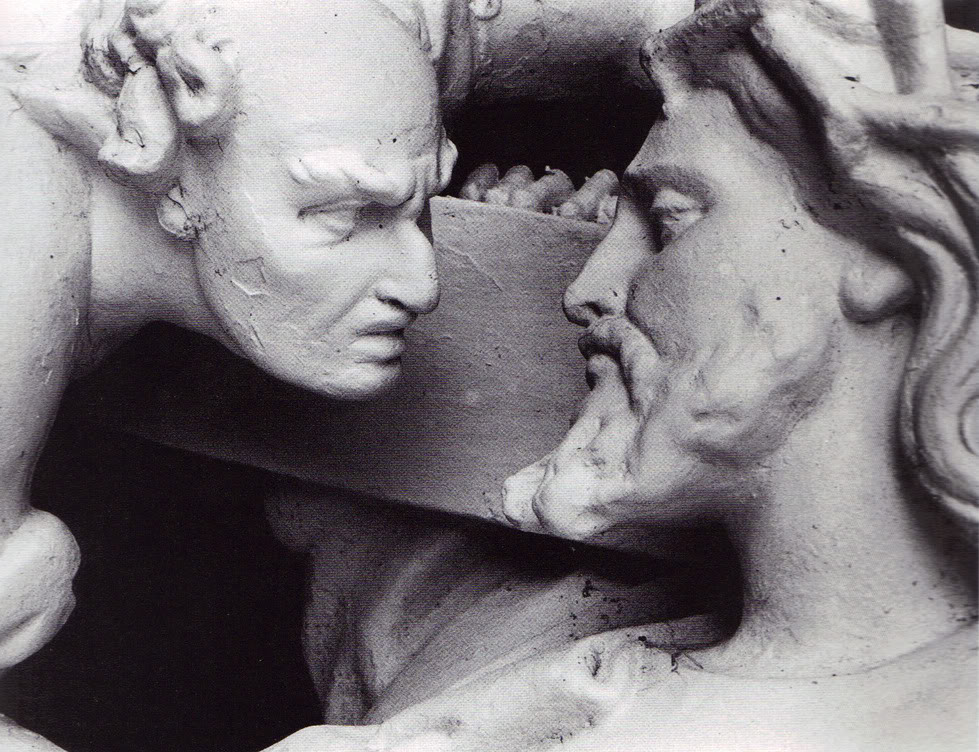
Pope Francis On The Duel Between Jesus And Satan

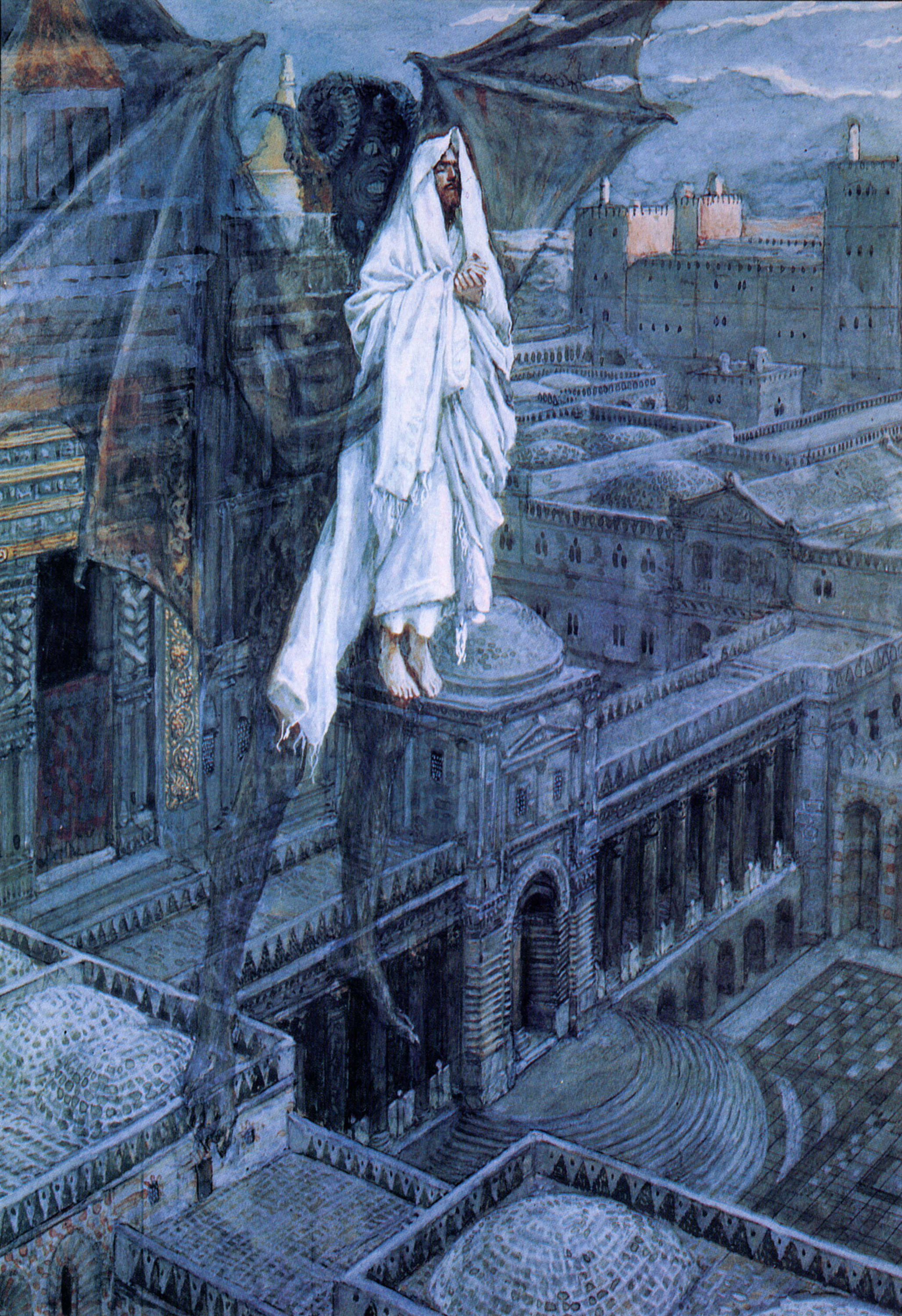
Francis spoke of the Gospel of the first Sunday of Lent, which every year presents the story of Jesus'  temptation in the desert, when the Holy Spirit descended upon Him after His baptism in the Jordan, urging Him to openly confront Satan in the wilderness for forty days, before beginning His public ministry:
"the tempter tries to divert Jesus from the Father's plan, in other words from the path of sacrifice, love the offering of Himself in expiation.  He tries to make Him choose the easy path of success and power. The duel between Jesus and Satan is a rally of quotations from the Holy Scriptures. The devil, in fact, to divert Jesus from the way of the cross, presents Him with false messianic hopes: economic well-being, indicated in the ability to turn stones into bread;  a lifestyle of the miraculous and spectacular seen in the idea of throwing Himself off the highest point of the temple of Jerusalem, to be saved by angels, and finally a shortcut to power and domination, in exchange for Him openly worshipping Satan. There are three groups of temptations: we too know them well".
Jesus, the Pope explained, 
"firmly rejects all these temptations and reiterates His determination to follow the path set by the Father, without any compromise with sin and with the logic of the world. Notice how well Jesus answers Satan, not entering into a dialogue as Eve had done in the Garden of Eden . Jesus knows that you cannot dialogue with Satan, because he is too cunning.   This is why Jesus, instead of entering into a dialogue like Eve, chooses to take refuge in God's Word and responds with the power of this Word.  We should remember this when we are tempted: do not argue with Satan, always defend ourselves with the Word of God.  And this will save us ".
In his response to Satan, the Lord reminds us, first, that "man does not live by bread alone, but by every word that proceeds from the mouth of God" (Mt 4:4; cfrDt 8.3), and this gives us strength, supports us in our battle against the worldly mentality that lowers man to the level of his most basic needs, causing him to lose his hunger for what is true, good and beautiful, the hunger for God and His love. Also remember that "It is also written: 'Do not test the Lord your God'" (v. 7), because the road of faith also passes through darkness, doubt, and is nourished by patience and perseverance. Finally remember that "it is written:" The Lord, your God, shall you worship and Him alone shall you serve '"(v.10), that is, we have rid ourselves of idols,  of vain things, and build our lives on the essentials. These words of Jesus will then been translated into actions. His absolute faithfulness to the Father's plan of love will lead Him after about three years to the final showdown with the "prince of this world" (Jn 16:11), the hour of the passion and cross, Jesus will return and there His is the final victory, the victory of love! "
Dear brothers, the Pope concludes, 
"is a fitting occasion for all of us to undertake a journey of conversion, by sincerely taking this Gospel passage into consideration. Let us renew the promises of our Baptism: renouncing Satan and all his works and seduction, to walk the path of God "to arrive at Easter in the joy of the Spirit" (cf. Collect, I Sunday of Lent Year A)".
Immediately after the Marian prayer, the Pope greeted, as usual, the various groups present in St. Peter's Square, recalling the campaign launched by Caritas International against hunger in the world, and announced the beginning of the usual spiritual exercises for the Roman Curia, which will begin this afternoon at the house of the Divine Master in Ariccia, a small hill top town South of Rome.  The retreat will end Friday, March 14th: "I hope that the Lenten journey which has just begun will be a fruitful one for you all and I ask you to remember me and my collaborators of the Roman Curia in your prayers, as we begin this evening a week of Spiritual Exercises . Thank you. Have a good Sunday and a good lunch. Goodbye".
Link (here) to Asianews.it

Wednesday, March 5, 2014

Jesuit Bishop Appointed By Pope Francis, " The New Bishop Is Arguably Very Conservative."

Bishop Michael Barber, S.J.
"The bishop hasn't responded to any inquiries or letters or phone calls," said Matt Werner, a longtime East Bay resident and Newman Hall parishioner since 1998. He wrote to Bishop Michael Barber, S.J. last month, requesting that he reconsider the dismissals. "He's been completely silent on the topic." Without any explanation from the diocese, Werner and others are left wondering whether the progressive ways of Newman Hall, which serves East Bay residents, including the UC Berkeley community, may be a contributing factor. "All are welcome here," Werner explained. "Gays, lesbians, people who may not find a home at other Catholic churches. We want to make it a home for everyone." For this reason, some are questioning whether Barber might be uncomfortable with Edens' admission that he is gay, Werner said. But at this point, he said, "We're in the dark. There are a lot of different theories and rumors and one of them is that [it is because] Father Bill Edens is an openly gay priest ... and the new bishop is arguably very conservative."
Link (here) to the full article at East Bay Express

Thursday, February 27, 2014

A Complicated Relationship With Liberation Theology

The former Jesuit Cardinal Jorge Mario Bergoglio has had a complicated relationship with liberation theology, clashing with left-leaning members of his Jesuit order who took up its politicized call to confront Argentina’s violent military dictatorship in the 1970s.
Nevertheless, Francis fully embraces its call for the church to have a “preferential option for the poor.”
The Vatican newspaper, L’Osservatore Romano, has been on a rehabilitation campaign of sorts, saying that with the first Latin American pope, liberation theology can no longer “remain in the shadows to which it has been relegated for some years, at least in Europe.”
Link (here) to read the full story at the Globe and Mail

Francis And Benedict On Romano Guardini

Many people don’t know that Pope Francis planned to write his thesis on Romano Guardini, the distinguished theologian and liturgist who had a profound influence on Joseph Ratzinger.  Ratzinger even named one of his most important books with the same title as that of one of Guardini’s, namely, The Spirit of the Liturgy.  (We need to read and apply what Ratzinger wrote now more than ever, by the way.) [Magister corrected his own entry which now reads: "It was precisely on Guardini that the Jesuit Bergoglio was planning to write the thesis for his doctorate in theology, during an academic sojourn in Germany in 1986 at the philosophical-theological faculty of Sankt Georgen in Frankfurt: a plan that was later abandoned."] Pope Benedict, the day he stepped-down, quoted Guardini twice in his final speech as Pope.
Link (here) to Fr. Z

Wednesday, February 5, 2014

Fr. Thomas Reese, S.J. "But Then There Are People Who Want To Spin The Pope’s Point Of View To Further A Particular Agenda"

comments are worth worrying about.
“There are basically three kinds of inaccurate comments,” Reese said. “There are the pranksters, and there are people who simply make mistakes because they don’t understand the issues being discussed. It’s hard to get worked up over those things.
“But then there are people who want to spin the pope’s point of view to further a particular agenda, and that’s very problematic and reprehensible.”
Link (here) to The Washington Post

Sunday, February 2, 2014

The World Of Jesuit Higher Education.

While our Holy Father was addressing a distinguished delegation from a highly regarded school founded by the Congregation of the Holy Cross, I am quite confident that he did not exempt from the application of his exhortation the twenty-eight colleges and universities founded by his (and my) religious order, the Society of Jesus. There is no question that these institutions also have a crucial role in 
“the uncompromising witness… to the Church’s moral teaching, and the defense of her freedom, precisely in and through her institutions, to uphold that teaching as authoritatively proclaimed by the magisterium of her pastors.”
It may be that there are some within the Jesuit network of higher education institutions who are willing to compromise on such matters, but I know that there are dedicated, faithful people who view such compromise as a betrayal of one’s duty as a disciple of Christ. Pope Francis is clearly one of them, for he recognizes that the unambiguous witness of the Christian cannot compromise on any matter central to the Catholic faith. Time will tell to what extent his words and the sentiments they carry are shared within the world of Jesuit higher education.
Link (here) to the blog entitled Mirror of Justice, read in its entirety this post by, Fr. Robert John Araujo, S.J.

Thursday, January 30, 2014

The First Recruit

Pope Francis recently proclaimed his favorite Jesuit, Peter Favre, a saint, short-circuiting the typical“first recruit,” and he tutored the Jesuit founder in Greek while Ignatius schooled his pupil in his signature “Spiritual Exercises.”
canonization process that can drag on for centuries. Favre, who lived from 1506-1546, was a roommate of St. Francis Xavier and St. Ignatius of Loyola, the founders of the Jesuits, at the University of Paris. The Jesuits call Favre Ignatius’
Francis also moved three others along the path to sainthood, including approving a miracle attributed to the intercession of Sister Maria Teresa Demjanovich, a native of Bayonne, N.J., who died in 1927; and advancing the causes of Spanish priest Emanuele Herranz Estables and Polish layman George Ciesielski.
Favre was beatified by Pope Pius IX in 1872, but he was never credited with the required miracle that would formally elevate him to sainthood. Francis – the first Jesuit elected pope – waived that requirement and, according to the Vatican, “enrolled him in the catalogue of the Saints.”
It was the second time last year that Francis has dispensed with tradition, as is his style. In declaring Pope John XXIII a saint earlier this year – he'll be formally canonized with Pope John Paul II next year – Francis waived the required second miracle for the pope who convened the landmark Second Vatican Council (1962-1965). Speaking to a consortium of Jesuit magazines last year, Francis praised Favre’s “dialogue with all, even the most remote and even with his opponents; his simple piety, a certain naivete perhaps, his being available straightaway, his careful interior discernment, the fact that he was a man capable of great and strong decisions but also capable of being so gentle and loving.”

Link (here) to The Charlotte Observer
Read more here: http://www.charlotteobserver.com/2014/01/24/4634855/pope-francis-names-peter-favre.html#.UusAxvv9XAU#storylink=cpy

Wednesday, January 8, 2014

Pope Francis, “We Jesuits Wish To Be Etched In The Name Of Jesus,”

Pope Francis’ brief homily was largely on the recently canonized companion of St. Ignatius, Peter Faber. But the Pope also had some remarkable things to say about what he thought was the heart of the Jesuit (and hence his own) vocation. The Pope’s relationship with the general of the Order, Aldo Nicholas, is cordial.This homily, however, might be called not an exhortation to Franciscan poverty, Dominican preaching, Benedictine “ora et labora,” or even Jesuit obedience, but to Augustinian “restlessness.” Almost everyone, in any age, who reads St. Augustine, including popes, is struck by his famous passage that reads: “Thou hast made us for Thyself, O Lord, and our hearts are restless until they rest in Thee.” Such a powerful passage is peculiar to no religious order, or even to any religion or philosophy, but is the heritage of every human being who is aware of what goes on in his own soul.
“We Jesuits wish to be etched in the name of Jesus,” Pope Francis continues, using the words of St. Ignatius: “This means to think as He does, to will the good with Him, to see as He sees, and to walk with Him. It means to do what he has done and with the same sentiments, with the passion of His Cross.”
The Pope, following St. Paul, does not present an easy doctrine. “The heart of Christ is the heart of God, who, through love, has ‘emptied’ Himself out. Every one of us Jesuits who follow Jesus ought to be disposed to ‘empty’ himself. We are called to lower ourselves: to be of those who have emptied themselves.”
Link (here) to read the rest of Fr. James Schall's fantastic article

Tuesday, January 7, 2014

Radical Disobedience

Pope Francis has approved the decision taken by the Jesuit’s superior general, Fr. Adolfo Nicolás and five other members of the Jesuits’ international council to dismiss Fr. John Dear for being ‘obstinately disobedient to the lawful order of Superiors in a grave matter.’ 

Fr. Adolfo Nicolás states, Fr Dear “was duly informed … that his failure to obey the command that he return to the specified house of the Order by a specified date would be cause for his dismissal from the Society of Jesus.” 
 Fr John Dear is famous in the USA for his protesting  a wide range of issues, including U.S. policies on Latin America, nuclear weapons development, and the cooperation of Jesuit educational institutions with American military recruiting programs such as the ROTC. He is also a regular columnist in the dissenting US journal, The National Catholic Reporter. In an emailed statement to NCR Monday, the provincial of the Maryland province, Jesuit Fr. James Shea said Fr. Dear was dismissed from the order as of Dec. 20 “following an extended period of dialogue between the leadership of the Maryland Province and John regarding his ministerial assignment and time he requested to discern his vocation. The process was initiated in the fall of 2012 after John declined to return to his Province to live in a Jesuit community while continuing his ministry of peace and social justice, including lecturing and writing’.
Link (here) to Protect the Pope to read the full story

Monday, October 28, 2013

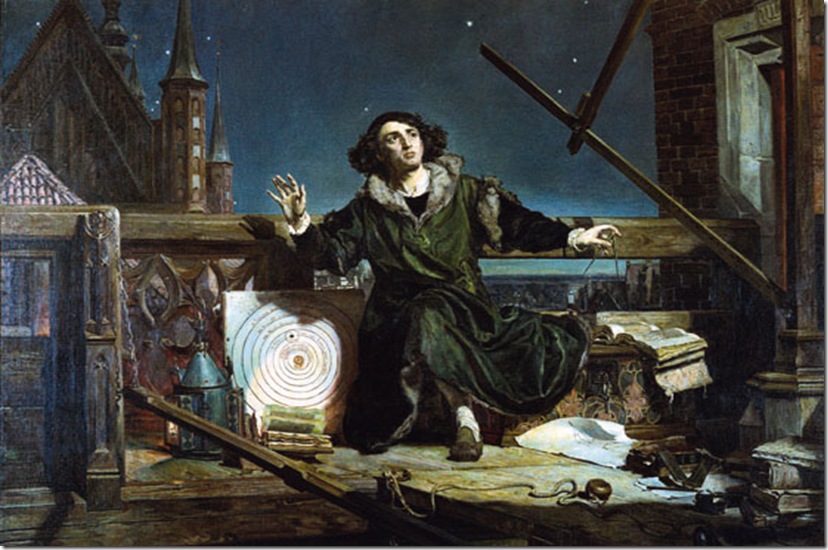
“A Copernican Revolution”

Jan Matejko's Conversations with God
In an interview with L’Osservatore Romano, Father Cristian Martini Grimaldi, an Argentine Jesuit who has served for decades as a missionary in Japan, recalled the future Pope Francis’s leadership as a Jesuit provincial. Father Grimaldi, who was sent to Japan by the future Pope, now directs the martyrs’ museum in Nagasaki.

Father Grimaldi recalled how Father Jorge Mario Bergoglio would emphasize that the Jesuits under his care must take responsibility for their actions.
In Argentine Catholic culture at the time, Father Grimaldi recounted, priests would wait for the lay faithful to come to parishes before interacting with them. Father Bergoglio, he said, instituted “a Copernican revolution”: he instructed Jesuit novices to go out and teach the catechism in poor neighborhoods and invite the poor to church. 
Link (here) to Catholic Culture

Saturday, October 19, 2013

Pope Francis, "The Presence Of The Devil Is In The First Page Of The Bible And The Bible Ends With The Presence Of The Devil, With God's Victory Over The Devil."

Did not Jesus call us to cast out demons? Did He not charge to us the task of healing? The Pope himself pointed this out recently when he during a homily at Casa Santa Marta after the reading on how some accused Jesus of casting spirits out in the name of Beelzebub and about how evil can attack. The Pope, as reported by Vatican Radio, noted that all along, 
"and even in our days, there is the temptation to belittle the figure of Jesus. Some priests when they read this Gospel passage, this and others, say: 'But, Jesus healed a person from a mental illness.' They do not read this here, right? It's true that at that time you could confuse epilepsy with demonic possession, but it is also true that there was the devil! And we have no right to simplify the thing, as if to say: 'They were not possessed; they were mentally ill.' No! The presence of the devil is in the first page of the Bible and the Bible ends with the presence of the devil, with God's victory over the devil." 
In this regard, warned the Holy Father, "we must not be naive." They are words spoken by a man who understands the spiritual component, words that should be sent to every parish in North America, Western Europe, and Australia -- where the devil has been turned into a cartoon as the Church bowed before scientism, listening, with all due respect, to Freud more than to Jesus. Will that change? How many cases are medical or psychological issues? How many have at least a partial demonic element? Judging from how many times Jesus cast out evil spirits before effecting a cure, the answer would seem to be, if not most, "many." Muteness. Deafness. Crippling ailments. Female problems. Epilepsy. Are not these all some of the illness Jesus cured by expurgating the devil?
Link (here) to Spirit Daily

Friday, October 11, 2013

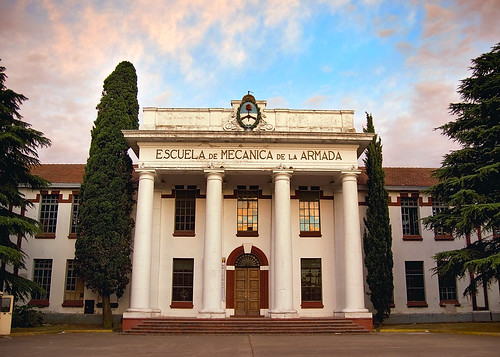
Naval School of Mechanics

The Vatican has firmly denied these claims and there have since been many reports of the "quiet diplomacy" used by Pope Francis, who was then named Jorge Mario Bergoglio and head of the Jesuit order in Argentina. There was no official word on the content of the talks between Francis and Jalics, who was born in Hungary and now lives in a German monastery. Francis has said he experienced "a period of great internal crisis" at the time of the junta and admitted to making mistakes in his leadership. A recent book by an Italian journalist, however, said he took in many leftist students at risk of being jailed by the dictatorship and advised hi
s priests on how best to avoid being spied on. It also published transcripts from testimony given by Bergoglio to prosecutors investigating the crimes of the junta in which he said he lobbied for the release of Jalics and Orlando Yorio.
The two young Jesuits who were preaching in the slums were taken in March 1976 to the notorious Naval School of Mechanics, a torture centre run by the junta. They were freed after five months. 
Father Franz Jalics now lives in a monastery in Germany. Following controversy after the Pope's election in March, Jalics released a statement saying: "Yorio and I were not reported by Father Bergoglio". "I myself formerly tended to believe that we were reported. At the end of the 1990s however it became clear to me after numerous conversations that this assumption was baseless," Jalics said.
Link (here)

Wednesday, October 2, 2013

“I Used To Do Abortions Before My Conversion"

A former abortionist’s far-fetched dream of surrendering the medical instruments with which he had once performed abortions to Pope Francis became a reality recently, when, to his astonishment, Dr. Antonio Oriente found himself face to face with the pontiff.
In a testimony posted to Facebook, Dr. Antonio Oriente expresses his surprise at the encounter, explaining that he had originally decided not to go to Rome for a conference of gynecologists to which he was invited, because of a father-in-law in “grave health” and the fact that there was no guarantee he could even see the pope personally. But at the last minute, he changed his mind.
Oriente, the vice president and founder of the Associazione Italiana Ginecologi Ostetrici Cattolici (AIGOC), told ACI Presna, “I used to do abortions before my conversion, and I had the desire to entrust the [instruments] to the Holy Father, after I had failed to do it with John Paul II nor with Benedict XVI.” A fellow member of AIGOC had confirmed that the group would be included in a papal audience for the conference, but said only a small number would be able to meet personally with the Holy Father. Of AIGOC, he said, only the president and secretary were in that number. “I knew I could not confer with the Pope, and that therefore my desire to give him the surgical instruments which I used as an abortionist would have been nearly impossible,” Oriente said in his testimony. But despite these reservations, and worries about bringing the instruments on a flight, Oriente decided to take the flight up from Messina to Rome, “after I prayed and asked the Lord just the same”. 
Link (here) to Lifesite to read the full story

"I'm Not Francis Of Assisi"


"I'm not Francis of Assisi and I do not have his strength and his holiness. But I am the Bishop of Rome and Pope of the Catholic world. The first thing I decided was to appoint a group of eight cardinals to be my advisers. Not courtiers but wise people who share my own feelings. This is the beginning of a Church with an organization that is not just top-down but also horizontal. When Cardinal Martini talked about focusing on the councils and synods he knew how long and difficult it would be to go in that direction. Gently, but firmly and tenaciously."
Link (here) to the full interview by  Eugenio Scalfari of Pope Francis 

Link (here) to the twelfth rule of Saint Ignatius' Spiritual Exercise and his his complete discourse, TO HAVE THE TRUE SENTIMENT WHICH WE OUGHT TO HAVE IN THE CHURCH MILITANT


Twelfth Rule
 We ought to be on our guard in making comparison of those of us who are alive to the blessed passed away, because error is committed not a little in this; that is to say, in saying, this one knows more than St. Augustine; he is another, or greater than, St. Francis; he is another St. Paul in goodness, holiness, etc.