Showing posts with label Canadian Jesuits. Show all posts

Saturday, February 1, 2014

Fr. David Nazar, S.J. On The Church And The Ukraine

Ukrainian protestors
The struggle against corruption and for democracy in Ukraine has become the Church’s struggle for dignity, “The Church’s role is quite significant in this whole call for a truer justice through peaceful means,” said Fr. David Nazar in a Jan. 26 e-mail to The Register. Bishops, priests, nuns and lay brothers have been in the middle of protests in the main square of the Ukrainian capital. Ukrainians have been protesting against President Viktor Yanukovych since November, when the president shelved an agreement to deepen ties with the European Union and made clear his plans to forge tighter ties with Russia. The anti- government protests have been getting stronger and have recently been met with violence from Ukraine’s security forces. “The overall and enduring atmosphere on the square is peaceful non-violence,” reports Nazar. “There is no alcohol allowed. There is prayer every hour. There is no retaliation for the violence — and now five killings — by the special forces, except the stones to keep them at a distance. You really have to be impressed with the nature of this revolution.”
honesty and peace, says a Canadian Jesuit in Ukraine.
Nazar is a former provincial superior of the English Canadian Jesuits who has been in Ukraine over the last decade helping the order there set up schools and a novitiate program to accommodate a flood of young men seeking to become priests in the Catholic Church’s largest male religious order. Nazar has written for a Jesuit publication in Italy that the protesting Ukrainians have chosen Western, democratic and Christian ideals.
“The Ukrainian people are European, even if the government is not,” wrote Nazar. “It is these very values, whose roots are Christian and which the West takes for granted, that represent the longing of the people and the healing of the country.” Nazar’s report to The Register from Kiev’s Independence Square comes just as Canadian Conference of Catholic Bishops’ president Paul-André Durocher has urged the prayers of all Canadian Catholics for peace and justice in Ukraine.
Link (here) to the Catholic Register of Canada

Wednesday, March 20, 2013

Pope Francis, "Pitting Rich Against Poor, You Are Unfaithful To The Gospel"

Jesuit Archbishop Terrence Prendergast of Ottawa told Canadians last week that while the new pope is all about ‘social justice’, it may not be the flavor of social justice that people associate with Latin America.Prendergast said that former Cardinal Bergoglio, as the Argentinean Provincial at that time, took a “very strong stance that the Jesuits should stay out of political issues and certainly not take up the liberationist theology.”
Liberation theology, which uncritically borrows various currents of Marxist thought, narrowly interprets the teachings of Jesus as they relate to liberation from unjust conditions that may be economic, political, or social.
In 1984, the Sacred Congregation for the Doctrine of the Faith headed by then Joseph Cardinal Ratzinger (Pope Emeritus Benedict XVI), condemned liberation theology as a “novel interpretation of both the content of faith and of Christian existence which seriously departs from the faith of the Church and, in fact, actually constitutes a practical negation.”
Archbishop Prendergast said that at the time, Cardinal Bergoglio was criticized by his brother Jesuits for standing with the Church. “He was criticized by his brothers for that, but nonetheless his stance was that — similar to Pope Benedict’s — Marxism goes beyond what the social justice of the Church should embrace,” said the Archbishop during an interview with CFRA 580 NewsTalkRadio.
Former Cardinal Jorge Bergoglio wrote in his 2011 book Sobre el cielo y la tierra (On heaven and earth) that the Church is as opposed to economic liberalism (economic decisions are made by individuals, not by collective institutions or organizations) as it is to communism (an atheistic system that abolishes private property to create a classless social order). 
“When you pick up a volume of the social teaching of the Church you are amazed at what it condemns. For example, it condemns economic liberalism. Everyone thinks that the Church is against Communism, but it is as opposed to that system as it is to the savage economic liberalism which exists today. That is not Christian either and we cannot accept it.” “We have to search for equality of opportunities and rights, to fight for social benefits, a dignified retirement, holidays, rest, freedom for trade unions. All of these issues create social justice. There should be no have-nots and I want to emphasize that the worst wretchedness is not to be able to earn your bread, not to have the dignity of work,” he wrote.
 Reflecting on why then Cardinal Bergoglio would take such a stand, Archbishop Prendergast said that it is one thing to “create an interest in the poor and serve their cause” but that it is quite another thing to “cause divisions in society” by “pitting rich against poor”. “If you cause divisions in society pitting rich against poor, you are unfaithful to the Gospel because the Gospel calls us to be reconciled, rich and poor, male and female, slave and free, are all to be one in Christ. That’s the Church’s teaching,” he said.

Monday, February 25, 2013

Fr. Alan Fogarty, S.J. New Mission

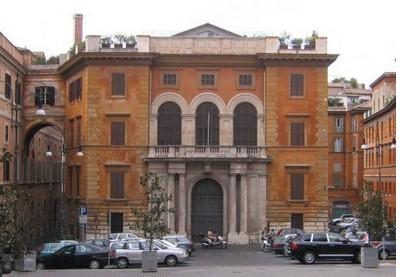
Pontifical Biblical Institute
Jesuit Father Alan Fogarty has been appointed the next president of the Gregorian University Foundation, which oversees the fundraising operations of the consortium of three Jesuit institutes of higher education in Rome: the Pontifical Gregorian University, the Pontifical Biblical Institute and the Pontifical Oriental Institute. “Serving the universal church as president of the Gregorian University Foundation is a great opportunity to give myself to the mission of the Society of Jesus in ways previously unimagined. I very much look forward to building relationships in support of the three consortium institutes,” Fr. Fogarty said.
Link (here) to Jesuit.org

Tuesday, January 8, 2013

Percy of Newcastle On The Jesuit Missionary

Eustace Sutherland Campbell Percy, 1st Baron Percy of Newcastle
To the continental mind, however skeptical or hostile, this is obvious obvious alike to the Belgian freethinker confronted with Cardinal Désiré-Joseph Mercier and to the Czech politician who meditates a new concordat with Rome. For in Europe a united and self-organised Church is still a ubiquitous power, a formidable factor in the political life of every state, and reason, which might find a dozen ready explanations of the existence of state churches or of scattered and ephemeral sects, is forced to seek a more potent motive to account for such continuity of existence and concentration of strength. But the English mind, confronted to-day with the reassertion by the Anglican Church of its independence from the State, the American mind disturbed by the rapid growth of the Roman Church in the United States, and the Protestant mind as a whole, influenced by the revived ideas of catholicity and reunion, must now be impressed by much the same considerations. We have here clearly no code of morality at the service of government, no mere sectarian fashions in doctrine, but a corporate consciousness persisting from century to century. 
The same course of reasoning may carry the investigator a little further. This conception must be something more than what is known as the "saving of souls' The Jesuit missionary among the Hurons might risk his life to "turn little Indians into little angels' to quote the words of one of them, by surreptitious baptism of dying infants ; he might be satisfied to win a convert at the torture-stake by the promise of the "French heaven"; but, both as a matter of reasonable deduction and of historical fact, it was no such restricted policy that had created the tremendous organization of his Order and inspired its Generals, or that gave to the New France of the seventeenth century the character that endures in the province of Quebec to-day.
 In our own times, the colonial administrator in Africa knows from experience that missionary teaching, even when deliberately confined to the plainest moralities and the simplest hopes of heaven, is inseparable, in the mind of the native learner, from ideas of corporate life and effort which distinguish it sharply from Mohammedan proselytism and, in some cases, still more sharply from the official view of the proper relations between Western civilization and backward races.
Link (here) to read the full piece by Lord Eustace Percy of Newcastle

Thursday, November 8, 2012

Justice Et Foi

A Jesuit-founded think-tank in Quebec has accused Canada's bishops of turning away from Catholic social teaching and toward the Government of Prime Minister Stephen Harper. In an open letter to Canadian Conference of Catholic Bishops (CCCB) chairman Archbishop Richard Smith of Edmonton, the Montreal-based Centre Justice et Foi (Justice and Faith Centre) said recent decisions by the bishops reflected "a political conservatism that has nothing to do with the Gospel". "You seem to put the preservation of your ‘good relations' with the conservative Government above all other considerations," Justice et Foi director Elisabeth Garant wrote. She also criticised the CCCB for meeting with Immigration Minister Jason Kenney at a time the Government was tightening rules for immigrants and abolishing its post of chief counsellor for social justice
Link (here) to the extreme left leaning Catholic newspaper, The Tablet

Thursday, October 18, 2012

French Canadian Jesuit Severely Beaten

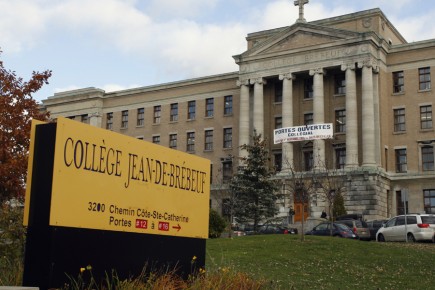
College Jean-de-Brebeuf
An 86-year-old Jesuit priest may lose the use of an eye after being beaten outside a Jesuit retirement home in Pierrefonds. Father Louis Bourgeois was found at about 11 a.m.Monday lying on the ground near a Jesuit residence called Villa St. Martin, located at 9451 Gouin Blvd. W., where he lives. Bourgeois, an avid camper, was on a short walk when the attack occurred. “He was just going to clean his camper. Because the camper is just a bit far from the house, beyond the garden, so he was just out there cleaning,” said the director of Villa St. Martin, Father Gabriel Cote. Bourgeois was perhaps attacked by a squatter in the camper, though no witnesses can confirm those details. “It's the theory that he probably surprised somebody who was in the camper,” said Cote. It’s believed he crawled to a nearby parking lot, where he was discovered by a passerby. When police arrived, Bourgeois was confused, severely injured, and could not clearly describe what had happened. He was taken to Sacre-Coeur Hospital where he underwent surgery. His life is not in danger but he suffered injuries to his head and upper body, and  may lose the use of one of his eyes. Because of his age, he is being monitored closely. “They're keeping him calm. I sensed that he wanted to say a lot of things, but we just reassured him and we're fortunate to have a chaplain at the hospital who's his Jesuit brother also - so he's well taken care of,” said Cote. Twenty-four hours later, police were still hoping to talk to Bourgeois about what happened. "We're trying to learn if this person was assaulted by people. We're trying to see what was happening on the site," said Jean-Pierre Brabant of the Montreal police department. College Jean-de-Brebeuf sent out a newsletter Tuesday to alumni informing them of the attack and its severity.
Link (here) to read the original piece and watch  video of the attack site

Wednesday, July 25, 2012

Pere Pierre Cholenec, S.J., Pere Claude Chauchetière, S.J. And The Lily Of The Mohawks

Lily of the Mohawks
The Jesuits’ record of  Catherine or Kateri Tekakwitha states that she was a shy and modest girl who avoided social gatherings and wore a blanket over her head because of the small pox that had destroyed her skin as a child. After smallpox killed her mother, father and brother and scarred her face she was adopted by family members. Tekakwitha was very skilled with traditional women’s work, which included making clothing, belts, mats, baskets, boxes, and preparing food, and a part of seasonal planting and intermittent weeding. Pressured to consider marriage around age 13, she would not agree to it and ran away. Although she had to suffer greatly for her faith, the young woman remained devout. Rejected at by her family and neighbours, Tekakwitha went to Kahnawake, the new aboriginal Christian colony in Canada. Here she lived a life dedicated to prayer, penitential practices, and care for the sick and aged. Every morning, even in bitterest winter, she stood before the chapel door until it opened at 4 a.m. and remained there until after the last mass. She was devoted to the eucharist (communion) and to Jesus crucified. Claude Chauchetière and Pierre Cholenec were Jesuit priests who played important roles in Tekakwitha’s life. Both were based in New France, an area which was considered dangerous and unappealing, due to wars with the Iroquois and the cold weather. Cholenec was present in New France before Chauchetière, having left for Canada in 1672. Both Chauchetière and Catherine arrived in Kahnawake in 1677. Chauchetière was the first to write a biography of Tekakwitha’s life, followed by Cholenec Chauchetière wrote that he was very impressed by Catherine. He had not expected an aboriginal to be so pious and he was certain Tekakwitha was a saint. 
Jesuits then believed that natives needed the guidance of Christians in order to be set on the right path. Chauchetière says that such close contact with natives in Kahnawake changed some of his set notions about aboriginals – mainly his ideas about human difference.
Tekakwitha died on April 17, 1680, at 24. Devotion to Tekakwitha is responsible for establishing Native American ministries in Catholic Churches all over the U.S.A. and Canada. Hundreds of thousands have visited shrines to Tekakwitha erected at both St. Francis Xavier and Caughnawaga and at her birth place. Pilgrimages at these sites continue today and she is also honoured at the yearly Lac Ste. Anne Pilgrimage.
Link (here) to  Mayerthorpe Freelancr

Thursday, July 12, 2012

What Time Is It?

The Ontario Provincial Police are seeking the public’s help in identifying a nude man who has approached women in several incidents this year. The incidents have taken place at the Rockwood Conservation Area and at the Jesuit Centre just north of Guelph. There have been approximately a dozen incidents since the beginning of this year. OPP reports the man typically approaches women from brush or wooded areas, asks the time and then returns to the same area from which he came. The incidents typically take place during daylight hours and there has so far been no physical contact between the suspect and victims. The man is described as late 40s to early 50s, 5’9” to 5’11”, Caucasian, clean shaven, reddish brown hair balding on top, 180 to 200 pounds with a chubby build and no accent or visible tattoos. Police ask the public not to  approach the suspect but rather to call 911 immediately.
Link (here) to Guelph Mercury

Saturday, April 7, 2012

Eustace Of The Hurons Was Baptized On Holy Saturday

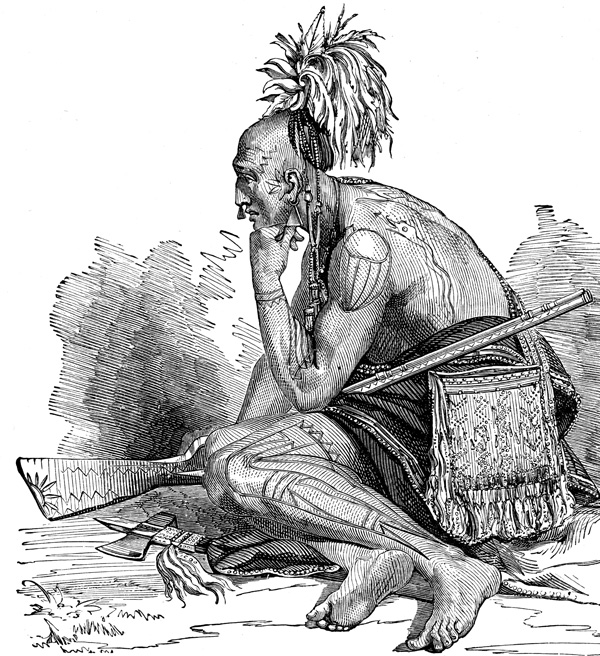
A Huron Indian warrior
........all that I can do is to declare sincerely the desire that I have for it. After that, if my Soul be burned in Hell, you will be the cause of it. But, whatever you may do, I will always pray to God, because I know him; and perhaps he will have mercy on me, for you say that he is better than you." "But," said one of our Fathers, " what made you first think of believing?" "Even before you came to this Country," he replied, " I had escaped from a great many perils in which my Companions perished. I saw very well that it was not I who extricated myself [19] from these dangers. I had this thought, that some more powerful Spirit, who was unknown to me, gave me favorable aid" (although the Hurons attribute to dreams the source of all their good fortune); 
"I was convinced that all that was only nonsense, but I knew no more about it. When I heard of the Greatness of God, whom you preach, and of what Jesus Christ had done when he was on Earth, I recognized him as the being who had preserved me, and I resolved to honor him all my life. When I went to war, I recommended myself to him night and morning. It is to him that all my victories are due; he it is in whom I believe; and I ask you for Baptism, so that he may have pity on me after my death." 
Was it possible to refuse such a Man? We Baptized him publicly, with some others, on Holy Saturday, and gave him the name of Eustache. When he had performed his Devotions on Easter Sunday, he started for the War with some of our best Christians, who had remained solely for the purpose of celebrating that holy Day, although the Troops whom [20] they were to join had already departed. But, before separating, finding that a considerable number of persons were assembled there belonging to various Nations, they wished of their own accord to hold a Council. Here, in a few words, are the resolutions that they took:
"Let us hereafter be but one body and one mind, since we all serve the same Master. Whenever any one of us passes by a Village wherein a Christian dwells, let him not lodge elsewhere. Whenever any one is afflicted, let him seek consolation among the others. Let us not reveal one another's faults to the Infidels; but let it be recognized, through the friendship that we shall have for one another, that the Name of Christian is a tie more binding than Nature's bonds.
'' Let us inform our Relatives who are not of the same Faith as we, even if they be our fathers and our children, that we do not wish our bones to be mingled together after our death, since our Souls will be eternally separated, and our affection will not continue beyond this life."
 Link (here) to French Jesuit, Fr. Jerome Lalemant, S.J. of his account as found in the Jesuit Relations and Allied Documents of a Huron warrior named Eustace and his story of conversion.

Friday, January 27, 2012

Fr. Lawrence Abello, S.J. "Rest In Peace"

Fr. Lawrence Abello,S.J.
Fr Lawrence Abello SJ, renowned professor, inventor and a devout companion of Mother Teresa passed away on January 22, 2012 at St Xavier's College, Kolkata. Born in Leuven, Saskatchewan, Fr Abello joined the Jesuits in 1956; he volunteered for the Darjeeling Mission, and took his final vows in 1974. He taught philosophy in India, earned a PhD in physics from Wayne State University, Detroit and held two patents for his inventions. Fr Abello was a champion of the unborn, immersed himself in the service of the poor and guided many who chose to work with the poor in Kolkata. He is survived by brothers Fr Louis and Tony Abello and sister Ms Giacinta Auser. He will be sadly missed by many. Fr Abello will be laid to rest in the Jesuit cemetery at Kolkata.
Link to (here) Tancred and The Eponymous Flower


Thursday, December 15, 2011

Prevalent Intemperance

The Montagnais Mission.
This was centered at Tadoussac, and ministered to the Montagnais, Bersiamites, Porcupines, Oumaniwek, Papinachois, and other tribes of the Lower St. Lawrence and the Saguenay. Tadoussac had, from the earliest historic times, been a favorite harbor and trading-station for the French; for, being at the junction of two great rivers, it was convenient as a place of assembly for the natives of the lower country. The first priests in the district had said mass there; but it was not until 1640 that a Jesuit mission was formed by Father Jean du Quen, its sphere of influence soon reaching to the upper waters of the Saguenay, Lake St. John, Hudson Bay, and the coast of Labrador. Du Quen was actively assisted by Charles Meiachkwat, a Montagnais convert, who erected the first chapel, became a catechist, and made extended tours through the neighboring tribes. In time, there were associated with Du Quen, Fathers Buteux and Druillettes. Protracted missionary tours were made by them, with results which were considered satisfactory as compared with other missions; although they had serious difficulties to contend with, in the prevalent intemperance which the fur trade introduced among the natives, the belief in dreams, the laxity of morals, and the wiles of medicine-men, or sorcerers, as they were called by the Jesuits.
Link (here) to The Jesuit Relations and Allied Documents

Monday, November 28, 2011

The Jesuit College Of Quebec

"(W)ith the Approbation of His Excellency the Governor, there is a School opened in the Jesuit College, by Patrick McClement, where he teaches English in the best Method, with Writing, Arithmetic vulgar and decimal, the Extraction and Use of the square and cube Roots, Book-keeping, Mensuration of all Manner of Superficies and Solids, &c. &c." Quebec Gazette, Sept. 5, 1776 
The Jesuit College of Quebec Collège des Jesuites est 1635
This advertisement marked the beginning of Patrick McClement's short career as the first government authorized paid lay teacher in the province of Quebec. Although discharged soldier John Fraser had probably been teaching there for several years, McClement was the first to receive the governor's approval. After the Conquest of 1760, religious communities such as the Ursulines, the Jesuits and the Sulpicians re-established their schools. And a number of laypeople, mostly male anglophone Protestants, established private schools to teach boys subjects as varied as first-language literacy and dancing.
Link (here) to read the full story at The Gazette

Galvanized

Fr. Peter Bisson, S.J.
Plans to put an outdoor, industrial recycling facility next door to the Martyrs' Shrine have shocked the Jesuits and galvanized a campaign to protect the environmentally sensitive Wye Marsh. The Jesuits are asking Midland, Ont.'s town councillors to reverse their decision to rezone a site to allow Recycling Specialties Inc. to bring in truckloads of metal, paper, cardboard, wood, plastic and other material for sorting and processing. Neither the Jesuits who run Martyrs' Shrine nor Sainte-Marie Among the Hurons — a provincial park built around a recreation of the first Christian settlement in Ontario and the graves of St. Jean de Brébeuf and St. Gabriel Lallemant — were notified before the zoning change on April 26.  Previously zoned highway commercial, the land directly across from the front steps of the shrine is now zoned industrial. The direct neighbours of the site fell outside of the Ontario Planning Act's mandatory 120-metre notification zone and on the other side of the town's border with the Township of Tay. "We've been good neighbours for almost 100 years, so this really took us by surprise," said Jesuit Father Peter Bisson. The Jesuits have teamed up with Huronia Historical Parks to launch a "Protect Martyrs' Shrine/Sainte-Marie Among the Hurons" Facebook page. "We think this could really damage the prayerful atmosphere of Sainte-Marie, especially the church where the grave sites are, as well as the shrine," said Bisson.
Link (here) to the Catholic Register

Tuesday, November 1, 2011

This Good Catechumen

This good Catechumen, between 12 and 14 years old, answered by fleeing, leaving there his presents, and him who offered them, without saying to him a single word. Having now recognized her constancy, we prepared her for Baptism. 
The devil tried to oppose this, for she was seized by a sort of obsession, so violent that she instantly turned her head around, with horrible distortion, and her stomach grew enormously swollen. We saw that she was utterly terrified, and unable to utter a word, except, " I am afraid, I am afraid." This happened to her three times, and always at a time when none of us could be called to see her in this condition. 
There were urgent requests to have her take some medicine, to clear her brain, they said. We were willing to do this, but negligence suddenly seized us. Baptism was destined to cure her; for, since the sacred waters have made her a child of God, the devil has never caused her this fright. She was called Magdelaine of St. Joseph. I hope that some soul dear to God will find in her a wife.
Link (here) to read the mentioned portion of the book, The Jesuit Relations and Allied Documents.
Blogger Note: Picture is not of Magdalaine of St. Joseph, however you can find it (here) 

Monday, October 31, 2011

Edmonton Jesuit College 1913-1942

Charles Camsell Hosital
The Camsell is best known for flickering lights, screams at night and security guards posted to keep would-be ghost hunters away. The hospital opened in 1945 at a Jesuit college, (here) becoming a federally operated tuberculosis sanatorium for Inuit and First Nations patients. The current asbestos-lined structure was erected across the street in 1967, evolving into a general acute-care hospital by the 1970s. It's unlikely the haunting is spectral-voiced Roy Orbison, though the crooner checked in with bronchitis for more than a month in 1984. It was shuttered in 1996, and plans to retrofit the facility repeatedly fell through. The building eventually sold for $3.6 million in 2004. Vacant for the past 15 years, the building's mystique has been bolstered by rumours of rampant abuse and legends of a mass grave.
Link (here)

Tuesday, June 7, 2011

Cardinal Archbishop of Mexico City, Norberto Rivera Carrera, "Affront To Christian Values"

Cardinal Norberto Rivera Carrera
According to an open letter published on May 25 by the Jesuit provincial superiors (see English translation following article), the Miguel Agustín Pro Juarez Center for Human Rights (PRODH), is “a constant engagement in favor of the right to life of all” which “merits our support.”  The letter also claims that the PRODH’s center’s then-director,  
“is a religious with an excellent reputation with the Church” whose “expertise is recognized in the Church in Mexico.” The superiors add that Fr. Arriaga “acts in conformity with the directives which are given to him by his Jesuit superiors.”  
However, the Cardinal Archbishop of Mexico City, Norberto Rivera Carrera, had already expressed a very different view of the organization, in a letter to the Canadian bishops which was published following the Jesuit communique.  PRODH
“does NOT represent the sentiments of the Church and has been characterized by its support and encouragement of groups and activities that are an affront to Christian values,” the Cardinal wrote, 
according to a translation of part of his letter published by the Toronto Catholic Register. “With respect to the theme of defence of life, the organization has supported pro-abortion groups and promoted the purported woman’s right over her body, against unborn life,” the Cardinal added. When LifeSiteNews asked the Jesuit superior of Francophone Canada, Jean-Marc Biron, to discuss the proof gathered by this news agency of PRODH’s pro-abortion activities, Brion’s press secretary responded by saying that “we are not going to grant you an interview either on or off the record."
Link (here) to read the full article at Lifesite

Wednesday, May 25, 2011

Last Jesuit Missionary At Tadousac

Tadousac
So the purple shadows of those lofty hills, which guard the Saguenay, fall about the ancient and now disused chapel of the Missionary of Holy Cross, where it stands, but a few yards from the shore, and the sea-mists enshroud it, and the dead lie buried beside it, resting solemnly in the peace of the little grave-yard, while it remains, more than aught else, a shrine, preserving the memory of the illustrious and saintly Jesuit, whose footsteps, upon the mountain tops, were beautiful, bringing good tidings.


Last Jesuit Missionary at Tadousac,
at the age of 58 years,
and was buried in the chapel at Tadousac.

Tuesday, May 17, 2011

Jesuits Celebrate 400 Years Of Missionary Activity In Canada

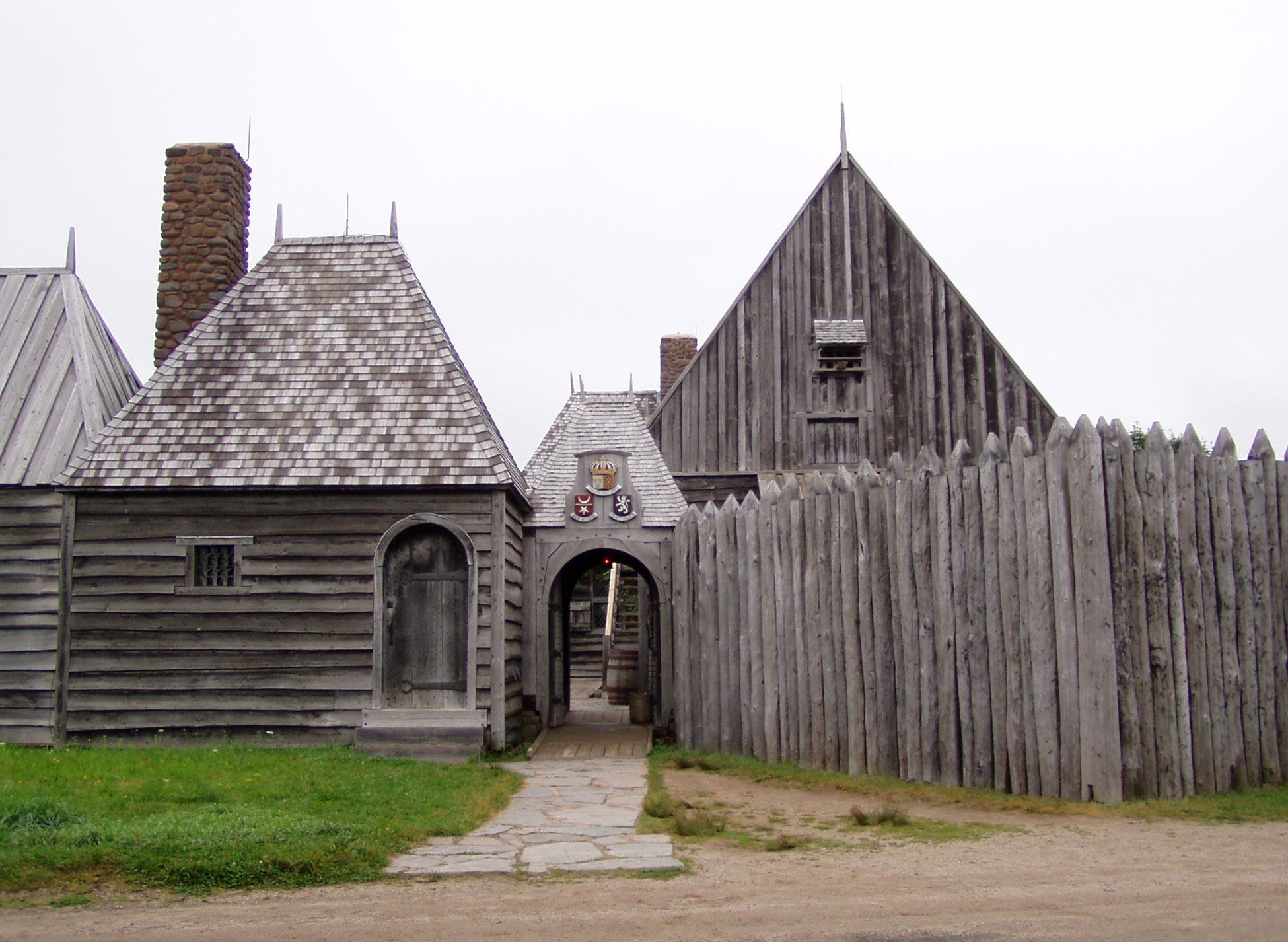
Port Royal, Nova Scotia
400 years ago French Jesuit priests landed at the trading post of Port-Royal in today's Nova Scotia; join us at Port-Royal National Historical Site on Sunday, May 22, 2011 at 12:00 noon as we celebrate and re-enact that historic landing. "The Jesuits have been an integral part of Canada's rich and diverse history and we continue to be active across this great country," says Father Jim Webb, S.J., Provincial of the Jesuits in English Canada.  Special guests attending include: the Lieutenant Governor of Nova Scotia, the Honourable Mayann E. Francis, Member of the Grand Council, Grand Chief Keptin Antle Denny, and the Archbishop of Halifax, His Excellency, the Most Reverend Archbishop Anthony Mancini.  A travelling exhibition highlighting the story of the Jesuits in Canada will be unveiled and a historical vignette will be performed. Following the events at Port-Royal, a Mass will be celebrated at St. Louis Catholic Church in Annapolis Royal at 3:00 p.m.
Link (here) to the full story at Digital Journal.

Tuesday, May 10, 2011

Jesuit Church And Seminary In New France

The religious architecture of New France provides the first examples of the use of slate roofing in Canada. The initial churches, stripped down imitations of the monumental classic architecture of 17th-century France, used foreign building materials. 
The 1666 Jesuit church built on the Place du Marche at Quebec, and designed in the form of a latin cross with a bell tower at the transept crossing, had a French-slated hipped roof. A second example was Notre-Dame-de lmmaculet-Conception established as the parish church of Quebec in 1664. Seminaries and roofing company Toronto also used French slate. At Quebec, the Jesuit College was slate covered and the second Ursuline Convent was partly roofed with slates. 
Accounts indicate that the nuns bought 38 000 slates in 1674 and paid Maltre Robert Pepin “piqucur d’ardoise” for installing both slates and shingles. In 1687, 36 000 slates, with 300 feet of lead and 60 000 nails were sent to Montreal from the port of La Rochelle in France to cover the Sulpician seminary then being built.
Link (here) to read the full article.

Thursday, April 21, 2011

With Fr. James Kelly, S.J. On Manitoulin Island

There are many factors that get in the way of my seeing much of the rest of Manitoulin Island outside of our weekly visits to Anderson Lake - not having a license being the main one, but we're also pretty busy here most of the time, so that cuts down on potential traveling time!!-.  So, you can understand that I was rather looking forward to spending a day or 2 with Fr Jim Kelly, who has parishes in 4 other locations on the Island (M'Chiging, Gore Bay, Mindamoya and Sheshawaning. ) a few weekends ago. Besides the fact that I knew I'd get along with Jim amazingly well, I was eager to see some other parts of this beautiful Island, but also to visit other parishes. As attached as I am to Wiki, I needed to experience how other parishes live their faith on Manitoulin Island.
Link (here) to Dan Lackmen's blog A Beautiful Journey With Christ.