Showing posts with label No Collar. Show all posts

Sunday, March 23, 2014

I Think That Is What Pope Francis Wants Too

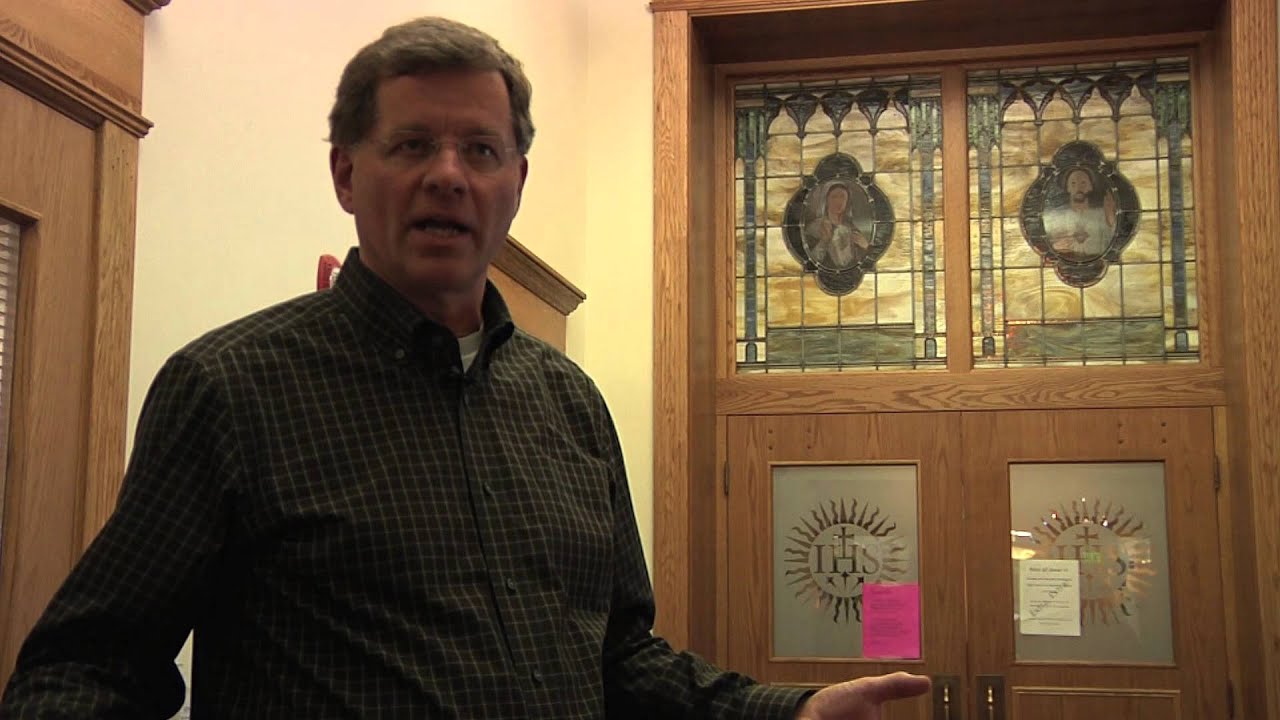
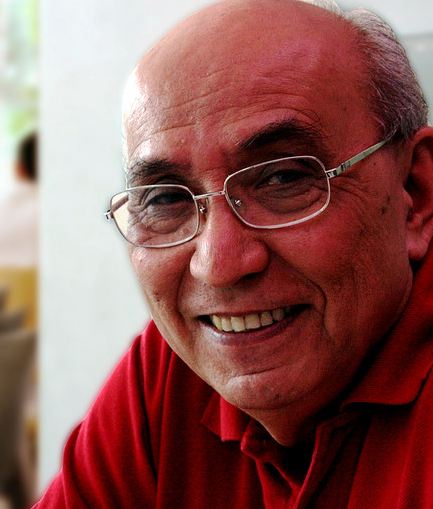
Fr. Martin Maier, S.J.
Fr Martin Maier SJ gave the address, which received a rousing clap at the conclusion from the congregation. He said of Romero that, “the heart of Romero’s spirituality and his pastoral action was the Option for the Poor”, adding that “it is also at the heart of Pope Francis’ spirituality”. Fr Maier felt the key insight of Romero was “conversion to the poor, and I think that is what Pope Francis wants too”. A German Jesuit and liberation theologian, he spent many years in El Salvador, and continued serving while persecution was strife. He continues to visit El Salvador, including teaching a theology course and ministering at the weekends at the same parish where he was originally a parish priest.
Amongst the people at the service who knew Archbishop Romero personally was El Salvador’s Ambassador to Britain, Werner Matias Romero. In a word of thanks at the end he reported that, “in an exciting year 2014 for El Salvador, where we went to the polls twice and elected a new president, I am hopeful that Archbishop Romero will continue to be our inspiration”.
There had been bidding prayers for El Salvador and for trouble spots of the world, particularly Syria and the Middle East, the Ukraine and the Russian Federation. Also, there were prayers for the work of the Archbishop Romero Trust and the ministry of the Church of St Martin in the Fields in favour of the poor and dispossessed.
Link (here)

Friday, June 7, 2013

Fr. Greg Boyle, S.J., "Have You Ever Met Anybody Who Would Agree With That?"

Fr. Greg Boyle, S.J.
In an August  5, 2010 video interview with NonprofitNews Jesuit Fr. Greg Boyle was asked about the overturning of the referendum to ban homosexual ‘marriage’ Proposition 8.  
Fr. Boyle replied:
These things are actually easier than people make them out to be it seems to me. I think it’s always important to kind of say, ‘how does God see sexual orientation.’ Does God feel like that same-sex marriage could happen? I don’t think anybody who has a connection to God and God’s understanding and depth of compassion who’s gonna say no. And this is contrary to the party line.”
Fr. Boyle returned to the question later in the interview, speaking of opposing same-sex ‘marriage’ as “demonizing people.”  He said, “You cannot demonize people [whom] you know. It obliterates that forever. So, that’s important in all these issues, gay marriage, etc. All you need to know is the gay couple who have kids, and that obliterates forever anybody’s inclination to say this is wrong. “ Fr. Boyle also ridiculed the Catholic Church’s refusal to ordain women to the priesthood.  “You know the Vatican just said that the ordination of women is a grave sin,” he said. “Have you ever met anybody who would agree with that, I mean my 85-year-old mother doesn’t…”
Link (here) to Lifesite News
Link (here) to read about the new scientific study of identical twins on the "born this way" topic debunking DNA links to sodomy.

Sunday, June 2, 2013

Fr. Nawras Sammour, S.J. "We Need To Step Back And Realize That We Went Too Far,"

Fr. Nawras Sammour, S.J.
For Jesuit Father Nawras Sammour, the ongoing conflict in Syria is a professional challenge and a personal "have all left." Tens of thousands of Syrians have died and millions have been displaced in more than two years of fighting between President Bashar Assad's government and rebels seeking his resignation. "Sometimes I can't believe we Syrians have reached that level of violence," Father Sammour said. "I'm shocked. Shocked. "We need to step back and realize that we went too far," he told Catholic News Service May 31 during an interview at JRS headquarters near the Vatican. In a situation that is so tense and so divided, particularly among different Muslim groups, Father Sammour said Syria's small Christian communities may be frightened. But with Christian aid programs and partnerships with others providing assistance, they also enjoy a certain respect as non-partisans looking only to help others. Father Sammour is Jesuit Refugee Service's regional director for the Middle East and lives in Damascus, Syria. He was born in Aleppo, and his mother, brother and sister still live there, but his nieces and nephews
Link (here) to CNS 
Link (here) to watch a video documentary of the violence and destruction in Aleppo

Wednesday, May 29, 2013

Fr. Gary Uhlenkott, S.J. Is Now On Leave, As The Federal Investigation Continue

Fr. Gary Uhlenkott, S.J,
What’s wrong with this picture? Federal agents raid a Catholic university in the state of Washington, and find a trove of child pornography, purchased with the credit card of a professor—who happens to be a Jesuit priest.
Father Gary Uhlenkott, S.J. is now on leave, as the federal investigation continues. We don’t know all the details, but federal officials say that more than $1,600 of porn was ordered with his credit-card account and shipped to his physical and/or internet address.
Horrifying? Certainly. A scandal? No doubt. But let me take a different perspective on this wretched affair. Leave aside, for now, the question of Father Uhlenkott’s guilt or innocence. Here’s what I want to know: How could he (or someone using his identity) spend $1,600 on videos of any description, without attracting someone’s attention? Can you, dear reader, spend $1,600 on your own entertainment—even assuming it’s healthy, licit entertainment—without prompting questions from your spouse, your boss, your parents, your colleagues, or your accountant? I certainly can’t. And unlike Father Uhlenkott, I haven’t taken a vow of poverty.
Link (here) to Catholic Culture to read Phil Lawler's full piece


Monday, April 22, 2013

Martin J Schade Former Jesuit, "Being A Jesuit Meant Being A Roman Catholic, And The Limitations Of A Doctrinal, Dogmatic Church Reached Its Threshold In My Personal Life."

Fr. Roger Haight, S.J.
I'm grateful for the vision I have in that it brought me to an entire new understanding of reality. I have recentlyPierre Teilhard de Chardin and Karl Rahner as my most supporting philosophers/theologians. Besides this vision, the second imperative of Jesuit life, "Do Everything for the Greater Glory of God," instilled in me the desire to be a "man for others", which is, itself, another Jesuit motto.With my vision and motive of life rooted, the Jesuits then gave me the world of spiritual direction. The very first thing a Jesuit novice receives in Jesuit life is a spiritual director, the person to whom one shares "where God is in your life". Spiritual direction and daily prayer are to become basics in a Jesuit's life. Each year a Jesuit is to do eight day retreats, where one engages with God the elements of Ignatius of Loyola's well-known spiritual exercises.
finished a PhD thesis entitled, Incarnation: A Harmony of One Love, One Heart in the Totality of Reality. I use two Jesuits,

In Jesuit spirituality one learns the movements of life where there is consolation and desolation. With these movements, one is frequently called to the necessity of discernment; reflecting and praying with the continual question of, "Where is God in this?" Jesuits are well known for their spirituality of discernment. (For more information on the Jesuits one can read "The Jesuits! Who are they?" which I published in the Jamaica Gleaner, Tuesday, October 7, 2003).
Besides all these significant reasons behind my gratitude for the 21 years of life as a Jesuit, I thank God for the philosophy of education the Jesuits gave me. As stated, Jesuits find God in all things. Thus their understanding of education sees the entire person, body, soul and mind, in the one student. The Ratio Studiorum of the Jesuits has proved itself historically and globally with the existence of many Jesuit high schools and universities around the world. St George's College and Campion College here in Jamaica are two examples. Jesuit education is based on critical, philosophical thinking, always asking the "why?" question. Another reason for my gratitude is the strong sense of mission that the Jesuits gave me. Jesuits are known as "men on a mission". Interestingly, I continue to live my Jesuit mission by having brought philosophy and ethics to the University of Technology, Jamaica (UTech). 
I originally came to Jamaica in 1982 to teach philosophy at St Michael's Seminary. I still bring that same Jesuit mission to Jamaica, but now it is in Jamaica's only national university. 
Philosophical, critical thinking must be instilled in our curricula. It is my mission to live this out. Another mission in which the Jesuits instilled in me is to break down the division of religions. We humans fight and kill in the name of God and religion. A first major movement of Pope Francis is his urging all religions to unite for peace and justice. This mission is lived out at UTech with our nine years of the Interfaith Awareness Day sponsored by the Faculty of Education and Liberal Studies and the Jamaican Council for Interfaith Fellowship.
Still, another reason for my gratitude is the living a cultural life of communal living. With a world that is mostly capitalistic, all out for their own profit, as a religious order, in comparison to diocesan priesthood, Jesuits live in community. It is a true 'communistic' existence, where the community lives "from each according to their ability, to each according to their need".
So with this strong prayer of gratitude for my life as a Jesuit, why did I leave?
The irony of my vocation is that with the very vision the Jesuits gave me and the motivation behind it, I could no longer limit my God, nor my 'self'. The Jesuits made me the fullest being I could have been, until my point of departure. I was approved by Father General Peter Hans Kolvenback in 1998 to profess solemn vows, but it was time to move on. 
Being a Jesuit meant being a Roman Catholic, and the limitations of a doctrinal, dogmatic church reached its threshold in my personal life.
My discovery of reality brought me to the fact that all aspects of the universe is dialectical, and therefore is masculine and feminine, having animus and anima. Living with merely a masculine understanding of priesthood and having "authority" only from a male perspective limited my God, my Self and, for me, my church. As a Roman Catholic priest, John Paul II forbade priests to even discuss women priesthood. In my vision and in my theology, 
God cannot be selective in the call to priesthood. We are all called to this vocation. I find it a travesty of justice that in my church women cannot be priests. As much as Catholic philosophy and theology speak of the equality of all humans, women are still second-class citizens. 
I could no longer actively minister in an institution which expected blind obedience to such a travesty. The world has seen what happens when those in authority passively sit back and do nothing. Historically, Jesuits have regularly had their hands slapped by Rome for their theological and social positions. What happens when one speaks out with a new vision? 
The Jesuit, Roger Haight, SJ, who was my primary mentor in writing my new philosophy and theology has been silenced by Rome; he is not to teach at a Roman Catholic institution and has also been forbidden to teach at any protestant school of theology. It has been deemed that his Christology does not conform with formal Roman Catholic theology in light of the divinity of Jesus the Christ. Oh, how we limit God! 
So my gratitude for my life as a Jesuit passes over to my love for the church. If a Jesuit vision could awaken me from my dogmatic slumber, my hope and prayer is that this same Jesuit vision of Pope Francis can awaken the Roman Catholic Church from its dogmatic slumber.
Link (here) to the Jamaica Observe to read the full article by ex-Jesuit priest  Martin J Schade


Tuesday, April 9, 2013

I Think Reese Knows That; He Just Doesn’t Like It

Fr. Thomas Reese, S.J.
There are a couple of technical slips in Niraj Warikoo’s article in the Detroit Free Press on the reception of holy Communion by gay activists (e.g., I hold a professorial chair at Sacred Heart Seminary, I am not a “chairman”, and one of my longer quotes is condensed to the point of confusing), but generally his presentation of my views (and I think of Abp. Vigneron’s) is well done.

Only the comments of Fr. Thomas Reese, S.J. require, as per usual, contextualization, if not challenge. Per Reese: “Most American bishops do not favor denying either politicians or voters Communion because of their positions on controversial issues” and Peters’ views are “in a minority among American canon lawyers.“

Re Reese’s first comment—and setting aside his transparent attempt to steer the Canon 915 discussion into the voting booth, wherein no one thinks it applies—Reese is commenting on how bishops act whereas I am commenting on how canon law expects bishops and others to act. 
Reese’s claim about bishops’ (in)action, even if true, would not make my views (actually, the 1983 Code’s views, resting on settled Church teaching) wrong, it would simply mark them as ignored. To be sure, the implications for me if my views are wrong, and for others if my views are right, are pretty obvious, but my hunch is, Reese knows that.
Re his second comment, Reese cites no canon lawyers who regard my position as “minority” (as if being in agreement with John Paul II, Cdl. Burke, then-Cdl. Ratzinger, and the PCLT could leave one worrying about one’s ‘minority status’) though a few canonists have expressed alternative interpretations of the law. That’s fine, of course, it’s what lawyers do, but that only pushes the real question—namely, whose interpretation of the law is the more sound—back a bit. Eventually that fundamental question pops back up and needs to be addressed. Finally, it seems to me that most of those (rather few) canonists who do express alternative interpretations of Canon 915 do not, when one gets right down to it, disagree with my read of the law, rather, they hesitate over whether the facts of individual cases meet the criteria set out in Canon 915. Fact questions are very important, I grant, but they lend themselves to resolution based on objective information. 
I’ve always said that and so have the US bishops. What concerns me, and what I spend most of my time defending in this matter, is the basic point that Church law requires, upon the demonstration of certain kinds of facts, that canonico-sacramental consequences follow.
But again, I think Reese knows that; he just doesn’t like it.
Link (here)  to the canon law blog, entitled In Light of the Law to read Dr. Edward Peters post.

Thursday, March 14, 2013

Fr. Bruce Morrill, S.J., “Absolutely Stunned”

The appointment of a Jesuit priest as the new pope of the Roman Catholic Church “absolutely stunned” Bruce Morrill, the Edward A. Malloy Professor of Catholic Studies at Vanderbilt University Divinity Schooland a Jesuit priest himself. “It is quite breathtaking to see a Jesuit selected,” said Morrill, who is the only Jesuit priest in Tennessee.  
“The selection of Jorge Mario Bergoglio is a strong indication that the cardinals wanted to go with someone at least a few steps removed from the disarray within the Vatican curia right now,” Morrill said.
 Morrill also said that it is highly significant that the new pope is from South America and the first non-European leader of the church in more than 1,000 years. “Bergoglio is the son of Italian immigrants but he is still an Argentinian. One issue that he might be expected to address is the huge number of defections from Catholicism to the Pentecostalism in Latin America in recent years.”
Morrill noted that any cardinal appointed by Pope John Paul will be an arch-conservative by most people’s standards. “I do think there will be great deal of hope on the part of many Catholics that perhaps he will be more empathetic for those in poverty in Latin America,” 
Morrill said. Morrill is a member of the Society of Jesus, the religious order commonly known as the Jesuits.
Link (here)

Monday, January 28, 2013

Jesuit On The Wave Of Energy

Fr. Ladislas Orsy, S.J.
A 91-year-old Jesuit who served as an expert at the Second Vatican Council said, "I'm just beginning to understand the depth and breadth of the council" and its teachings. Jesuit Father Ladislas Orsy, a visiting professor at the Georgetown University Law Center in Washington, told an audience in Rome Jan. 24 that while every ecumenical council in church history led to debate -- and sometimes even schism -- it always has taken more than 50 years for a council's teachings and reforms to take root in the Christian community. "Granted we may see a great deal of confusion today; granted we may even see a denial of the council or we may even hear a way of explaining away the council," Father Orsy said during a speech that was part of the Week of Prayer for Christian Unity celebrations at Rome's Centro Pro Unione. Vatican II can be examined as a historical event, and theologians can use a variety of scholarly tools to propose different interpretations of its teachings, but one thing Catholics cannot deny is the church's teaching that the Holy Spirit is active in its ecumenical councils, he said. Father Orsy asked his audience, "Are you surprised that there is a bit of disarray today in the Roman Catholic Church when this happened in the case of Nicea, dealing with the very foundation of our faith?" 
The Council of Nicea in 325 affirmed the divinity of Christ. Nicea's deliberations led to debate and division, he said, but over the centuries "this wave of energy" of the Holy Spirit "quietly took possession of the church and the confusion sorted itself out." 
Today, he said, mainline Christians, while divided on a variety of issues, profess the basic tenets of their faith using the Nicean creed. "Just looking at what happened after Nicea," he said, "it is not farfetched" to think that the work the Holy Spirit began at the Second Vatican Council continues in the church and "maybe, shall we say, 100 years from now," people will recognize how deeply it impacted the church. The Jesuit said he hoped to live a "few more years" so he could try to understand more about where the Holy Spirit is leading the church through the teachings of Vatican II and the continuing process of that teaching taking root in the lives of Catholics. In his talk, Father Orsy looked particularly at "Dignitatis Humanae," Vatican II's declaration on human dignity and religious freedom. The Jesuit canon lawyer said the document, approved on the last day of the council, takes the visions of the church, the world and the human person expressed in the other Vatican II documents and applies them to "real-life situations."
Link (here) to read the rest of the story to CNS

Tuesday, October 16, 2012

Planets

Fr. Karl Rahner, S.J.
Karl Rahner lived on two different planets. Yet the Jesuit theologian’s analysis was virtually identical. “We are at the beginning of the little flock,” Rahner said in his book The Shape of the Church to Come (Crossroad), published around the same time. Rahner, however, adds a crucial warning. The “little flock” does not mean “little sect.” The little flock is called to profess the Christian faith and the cross, not to defend “cozy traditionalism and stale pseudo-orthodoxy,” not to live “in fear of modern society.”
Link (here) to the US Catholic

Friday, July 20, 2012

Fr. Paul Carrier, S.J. Named Haitian Victims Lawsuit

Fr. Paul Carrier, S.J. in Haiti
"Before many of these sexual abuse victims met Douglas Perlitz, they were homeless, without food and had very little clothing. Now, many of these victims are still homeless, without food, have very little clothing and are also suffering from the emotional and physical trauma Douglas Perlitz inflicted on them," Mitchell Garabedian said. "These victims are in a much worse position today than when they began attending Project Pierre Toussaint, met Douglas Perlitz and were sexually molested by him." Perlitz pleaded guilty in 2010 to traveling from the U.S. to Haiti for the purpose of engaging in sexual conduct with a minor. He is serving a 19-year, seven-month federal prison sentence. 
Days before his sentence, Perlitz claimed he became involved in a sexual affair with Carrier shortly after arriving at Fairfield University as a freshman in 1998. Fr. Paul Carrier, S.J. was the school's director of campus ministry and chaplain. Shortly after that claim, Carrier's Society of Jesus, New England Province began an investigation and suspended him of clerical duties. Attempts to contact the Society of Jesus and Timothy P. O'Neill, his Boston lawyer, for comment were unsuccessful Wednesday. In the past O'Neill has denied his client did anything wrong and cast doubt on Perlitz' claimed relationship with Carrier. Court documents and Haitian sources claim Carrier and Hope Carter frequently visited Perlitz and his program in Haiti. 
The new suit alleges that Carrier saw Perlitz show a pornographic video to a student, heard Perlitz arrange a rendezvous with a boy, watched Perlitz press his body against a boy's back in an embrace and was a visitor when a boy slept in Perlitz's bedroom. "All of these circumstances should have alerted Father Carrier ... that something was amiss in Perlitz's dealings with the boys in his care at PPT," Garabedian wrote in the suit. The suit claims that Fairfield University raised over $600,000 for the Haiti Fund, which turned the money over to Perlitz. Stanley A. Twardy Jr., the school's lawyer, has maintained that Fairfield University is a "separate and distinct entity" from Project Pierre Toussaint. He and other defense lawyers are asking Chatigny to dismiss the cases. 
Link (here) to CT Post

Friday, July 6, 2012

Fr. Karl Rahner, S.J. Verses The Real Presence

Fr. Karl Rahner, S.J.
In the sixteenth century the rise of Protestantism produced a crisis of faith in the Catholic Church. Whole nations were lost to the Catholic Faith mainly because Catholic leaders especially bishops and theologians were seduced by the so-called reformers. There never was a Protestant reformation, that is in plain Anglo-Saxon a lie, there was only a Protestant rebellion.
Thank God there was a Catholic reformation. Reformers like Teresa of Avila, John of the Cross, Ignatius Loyola – that is what the Church needs today. Dear Lord how she needs these saintly courageous reformers today. These bishops and theologians, I am now speaking of the sixteenth century, denied that Christ had instituted the Sacrament of Holy Orders and thus conferred upon priests the power to change bread and wine into His own body and blood, and this is the heart of the crisis in the Catholic church today. It is the sixth Chapter of Saint John’s Gospel but now on a global scale.
Pope Paul VI uses two words to summarize this Eucharist Crisis, they are transignification and transfinalization. These terms are a synthesis of the widespread radical ideas pervading once Catholic circles as we enter the third millennium – how well I know. What I will do now is identify the two principal leaders of this devastating Eucharistic error. The error of transignification. This is the view that Christ’s presence in the Eucharist means when the consecration at Mass is performed only a change of meaning or significance of the bread and wine takes place. Their substance do not change only a change of meaning or significance of the bread and wine takes place their substance does not change. The consecrated elements are said to signify all that Christians associate with the Last Supper. The bread and wine acquire a higher meaning than merely food for the body. But they remain bread and wine. 
We get some idea of how deeply this error has penetrated Catholic thought, when we read what Karl Rahner writes about the Eucharistic consecration. Rahner therefore is the first of the two master teachers of profound error on the Real Presence. I will quote now from Rahner’s language, not always so clear, I chose the clearest part that I could find. Quote Karl Rahner, “the more recent approaches suggest the following considerations, one has to remember that the words of institution indicate a change. But not give any guiding line for the interpretation of the actual process. As regarding transubstantiation it may be said, the substance, essence, meaning and purpose of the bread are identical but the meaning of a thing can be changed without changing the matter. The meaning of the bread has been changed through the consecration something which served profane use now becomes the dwelling place and the symbol of Christ who is present and gives Himself to His own.” unquote Karl Rahner. 
 From the Encyclopedia of Theology edited by Rahner and defining the meaning of transubstantiation. What takes place through the Eucharistic consecration the significance the meaning attached to the bread changes but the bread remains bread. Rahner’s ideas are permeating the Eucharistic theology of whole nations.
Link (here) to read the full talk by Fr. John A Hardon, S.J.

Saturday, April 28, 2012

Jesuit Priest Offering "Sex Class" Course

Fr. Christian Rutishauser, S.J.
Nestled amid farmland and forests in central Switzerland, the tiny hamlet of Edlibach is not a likely hotbed of controversy. But that may change in May when a Jesuit priest and a Catholic theologian begin offering sex classes for couples at the village’s Jesuit center. The seminar, entitled “Make Time and Room for Sensuality,” is intended “to remind people that Catholic doctrine considers sex to be an expression of love and not just a functional act for making babies,” Christian Rutishauser, the priest organizing the course, said in an interview earlier this month with the German-language newspaper Neue Luzerner Zeitung. “Until now, the Church has expressed particular prohibitions and set conditions for sex. It has said little about how sex can be active and positive.” In the same newspaper, theologian Eugen Bütler, a sex therapist from the city of Luzerne who will be conducting the seminar, said the course will help couples “go beyond the usual quarter-of-an-hour sex.” 
According to promotional materials, instruction will take the form of discussions, meditation and unspecified “body exercises.” Participants will also be encouraged to put what they learn into practice on the spot—retreating to private rooms at Edlibach’s Lassalle-Haus spiritual center for “time for love.” A Catholic-themed course that instructs participants how to improve their sex lives, then urges them to get actually find “time for love” on the premises, would seem destined to incur the wrath of religious leaders. Indeed, both Rutishauser and Bütler declined TIME’s request for interviews because of fears over a possible backlash from the Catholic Church. 
In an email to TIME, Bütler said Catholic authorities are “allergic to this theme and see a lot of problems with the course,” without specifying what those problems are or whether he and Rutishauser are under pressure to cancel the project. Although the Lassalle-Haus spiritual center is run by Jesuits, it is not linked to any physical church. And unlike regular parish priests who serve their congregations, Jesuits are mainly involved in missionary work and education. Rutishauser is program director at the center, organizing courses that primarily deal with worship, meditation and spirituality.

Link (here) to Time Newsfeed

Monday, March 26, 2012

Italian Jesuit In Communion Controversy

Fr. Franco Annicchiarico, S.J.
.....celebration of Mass in the Chapel of La Sapienza University of Rome (photo), run by the Jesuits ( http://www.uniroma1.it/sapienza/cappella/i-gesuiti ): The celebration was chaired by the Deputy Chaplain, Father Franco Annicchiarico, S.J...... while I was still kneeling, the celebrant has shunned me wandering and began to distribute Communion to the other. After a second of dismay I got up and went to sit on the front bench. Needless to say my dismay and my desolation: "To refuse communion because I showed devotion to the Holy Eucharist, as if I were a heretic, an excommunicated, which gives a public scandal! It allows the communion to practicing homosexuals, and even full-blown and you deny me just because I knelt down! "
Link (here) to the Italian blog Messa en Latino to read the full post.
Blogger Note: Website is in Italian use translation tool.

Friday, January 27, 2012

Fr. Lawrence Abello, S.J. "Rest In Peace"

Fr. Lawrence Abello,S.J.
Fr Lawrence Abello SJ, renowned professor, inventor and a devout companion of Mother Teresa passed away on January 22, 2012 at St Xavier's College, Kolkata. Born in Leuven, Saskatchewan, Fr Abello joined the Jesuits in 1956; he volunteered for the Darjeeling Mission, and took his final vows in 1974. He taught philosophy in India, earned a PhD in physics from Wayne State University, Detroit and held two patents for his inventions. Fr Abello was a champion of the unborn, immersed himself in the service of the poor and guided many who chose to work with the poor in Kolkata. He is survived by brothers Fr Louis and Tony Abello and sister Ms Giacinta Auser. He will be sadly missed by many. Fr Abello will be laid to rest in the Jesuit cemetery at Kolkata.
Link to (here) Tancred and The Eponymous Flower


Sunday, January 15, 2012

Hug And Money

Fr. James Hug, S.J.
The Center of Concern’s president, Jesuit Fr. Jim Hug, calls the Rethinking Bretton Woods project the “most sophisticated” of his agency’s four priority programs. The others are Ecology and Development, Education for Justice, and the Global Women’s Project. Rethinking Bretton Woods is working to reform the national and global financial institutions and policies created at an international conference in 1944 in Bretton Woods, N.H., so that they better serve human rights and community well-being, Hug said. The project is in the capable hands of Argentine scholar and international lawyer Aldo Caliari. But Caliari is frequently away from his desk holding workshops with academicians, nongovernmental organizations, government officials and intergovernmental organization staff around the world.
Link (here) to NCR

Sunday, November 6, 2011

Former Jesuit Clown, Now Just A Clown

Former Jesuit Priest Nick Weber
"To be a priest, you don't have to be a clown," says Nick Weber, 34, a Jesuit priest since 1970. Smearing on greasepaint, he adds: "To be a clown, you don't have to be a priest." Finally, putting his act and his faith together, Father Weber concludes: "But to be me, you have to be both priest and clown." And so, indeed, he is, the producer and principal attraction of the Royal Lichtenstein Quarter Ring Sidewalk Circus based in Santa Clara, Calif. From August through May every year, he and two student assistants take "the world's smallest circus" to more than 100 cities, traveling in a camper jammed with props, Jingles the poodle, an Asian pheasant, a fox from the Arctic Circle and Penelope, a spider monkey. The circus plays shopping centers, Indian reservations, even mental hospitals—where one patient was heard to yelp delightedly: "They're crazier than we are." The show is pure slapstick fun, interspersed with low-key morality tales and a few fleeting messages of faith. "I make an art of not laying my formal religious trip on people," Weber says (instructing his audience: "You don't have to call me Father"). But the show's purpose is "pre-evangelical—to soften up people to accept the surprise that God is present. God is a free spirit. He must be preached everywhere. In the temple, God is no longer a surprise."
Link (here) to the Sept 04th 1974 People Magazine to read the full piece.

Thursday, September 29, 2011

Jesuit On The Burden Of Raising Children

Fr. Joaquin Bernas, S.J.
Influential Jesuit priest and constitutional lawyer Fr. Joaquin Bernas, SJ said that family planning as proposed in the controversial Reproductive Health (RH) bill is not necessarily "anti-life", putting him at odds with conservative Catholics who oppose the bill. In a column published in the Philippine Daily Inquirer on Monday, Bernas sought to clarify what being "anti-life" precisely means, for the term has been used "in the most pejorative way" in current RH bill debates. "It is used in the sense of being against existing life. Murder, in other words," he said. However, he said that in the currently toxic debate on contraceptives, "anti-life" could be construed to include people who do not want to add more human life to an already crowded population. He cited for example a married couple who decide to abstain from acts that bring about life, and a man who chooses a celibate life because he feels he can accomplish things without the burden of raising children. "I would not categorize such a person as being anti-life," Bernas said. "People like him love life so much that they take it upon themselves to contribute in some other ways to the improvement of the quality of life of those who are already born."
Link (here) to GMA

Wednesday, July 20, 2011

Fr. John Dear, S.J. Calls The United States, "The Biggest Global Terrorists"

Fr. John Dear, S.J.
In less than two months, the US military and its media machine will tell us to mark the tenth anniversary of the September 11th attacks by celebrating their warmaking efforts --and continuing to live in fear. We were attacked, so we bombed Afghanistan, Iraq and Pakistan, killed hundreds of thousands of people, tortured thousands more, rebuilt our nuclear installations, threw out our basic liberties and spied on millions. In our so-called “war on terrorism,” we became the biggest global terrorists, threatening the planet with drones, bombs, and a spanking-new nuclear weapons arsenal.
Link (here) to read the full diatribe.
Sunday, June 12, 2011

Fr. Roberto Jaramillo, S.J. "The Amazon Is In The Hands Of The Drug Trade."

Fr. Roberto Jaramillo, S.J.
..........the Amazon is in the hands of the drug trade. The outskirts of the cities are hostage to the sale and consumption of drugs. Half of the violence in this city is tied to drugs. Young people in the suburbs see no other options in life than smoking marijuana or snorting cocaine."
Link (here) to read an extensive interview with Fr. Roberto Jaramillo, S.J. at Latinamerican Press

Wednesday, June 1, 2011

Controversial Jesuit Removed From PRODH In Mexico

Fr. Luis Arriga Valenzuela, S.J.
.....the provincial leaders of the Jesuit order in Canada and Mexico issued a statement defending Arriaga and PRODH on Wednesday of last week, Arriaga’s exit was announced only two days later on the PRODH website. Luis Arriaga Valenzuela ends his term as director of the PRODH Center,” the site’s headline reads in Spanish, and added that the “new leader” is to be Jesuit priest José Rosario Marroquín Farrera. No mention was made of Arriaga’s next destination.  In the transition ceremony, Fr. Arriaga gave a speech defending his administration of PRODH, and openly endorsed his organization’s ongoing association with the pro-abortion All Rights for Everyone Network (Red Todos los Derechos para Todas y Todos) which is also listed by "D&P" as one of its grant recipients. The network is openly pro-abortion, and includes as one of its members the group “Catholics for the Right to Decide.” Arriaga also revealed during the speech that PRODH has been a member of the coordinating committee of the organization for the past year. Fr. Arriaga’s exit marks the end of a 22 year career with PRODH. Since Arriaga rose to the leadership position of the organization in 2007, PRODH signed multiple pro-abortion “human rights” declarations, urging the decriminalization of abortion in Mexico in accordance with Mexico City’s abortion-on-demand law, which permits and even finances abortions for any reason during the first 12 weeks of pregnancy. 
Link (here) to read the full article at Lifesite.