Showing posts with label You Won't Find This At America. Show all posts

Sunday, July 15, 2012

Fr. Vincent P. Miceli, S.J. "Violate The Lex Orandi And You Must Inevitably Destroy The Lex Credendi."

Once again we find that Cardinal Newman foresaw another serious attack upon the Christian Faith. This time he warned Christians against innovators who would relax Christian forms and usher into the Church liturgical frenzy. Such devotees of change question every Christian form of prayer, every posture of devotion, every devotion itself and the very personal or traditional symbols of the faith. Their lust for innovation is used as a battering ram against the stability of long-established, time-tested sacred rites, which have been witnesses and types of precious Gospel truths for Christian communities. Hurriedly, even violently, they replace divine forms with new diluted Masses, new prayers, new sacraments, new churches, new terminologies - all of which confuse the faithful. Newman writes: "No one can really respect religion and insult its forms. Granted that forms are not immediately from God, still long use has made them divine to us for the spirit of religion has so penetrated and quickened them, that to destroy them is, in respect to the multitude of men, to unsettle and dislodge the religious principle itself. In most minds usage has so identified them with the notion of religion, that one cannot be extirpated without the other. Their faith will not bear trans planting . . . . Precious doctrines are strung like jewels upon slender threads." [John Henry Newman, Parochial and Plain Sermons, Vol. II, Christian Classics Inc., Westminster, Md., 1966, pp. 75, 76]
Liturgical détente has led to the loss of the sense of the sacred. To realize this tragic event we must reflect on what the sense of the sacred really comprises. The sacred is a mystery. It heralds the presence here and now of the world above, the world of the divine, and it fills man with incomparable reverence. The sacred reveals that the religious sphere is set apart, wonderfully superior and distinct from the rest of man's existence. But this apartness, far from precluding contact between the religious and natural spheres of man's existence, is actually a precondition for their fruitful intercommunion. 
Sacredness is one of those ultimate data perceived in and by itself, unexplainable, indivisible, mysterious. Sacredness is a reality which does not exist solely outside man as a knower, but it invades and involves the whole man as a free person. 
The sacred seizes each man in his ontological, intellectual, psychological and historical developments. [Alice von Hildebrand, Introduction to a Philosophy of Religion, Chicago, Franciscan Herald Press, 1970, Chap. IV, pp. 32-39] Thus the sacred must be approached, not with curiosity the way we approach an objective problem, but with awe and trembling, the way we approach mysteries. For the sacred represents the divine call from above, forcing the man of good will, like Moses before the burning bush, like the three Apostles before the transfiguration of Christ, to his knees in a prostration of adoration. The challenge emanating from the sacred is so powerful that man cannot remain indifferent to it. In the presence of God, the Source of Sacredness, man either adores with the prayer, "Thy Will be done," or rebels with the cry, "I will not serve!" Thus God is the ineffable Someone at the summit of every experience of the sacred. This Summit of the Sacred claims the first place in every intelligent being's life, angels and men. Religion is man's response to the sacred, to God, the Supreme Ruler, Prior, Independent yet ever-present Other. The sence of the sacred presents man with these paradoxical experiences. God is presented as totally Other, transcending man, yet He is simultaneously experienced as being intimately present, nearer to man than man is to himself, filling man with awe and yet desiring to give Himself to man in intimate communication and communion. St. Paul reminds us that "in Him we live and have our being."
The sacred also brings man the experience of God's brilliance and luminosity. Thus man's response to God is his response to the numen or the numinous, that is, to the wholly illuminating, fascinating and ravishing Reality who is God. The experience of the Mysterium Tremendum suffuses the being of man with awe, a mixed feeling of reverence, fear and wonder accompanied by an acute, grateful consciousness of one's creatureliness in the presence of an infinitely good Creator. In the experience of the sacred a "shudder" moves the whole person which, speechless, trembles to the deepest core of its being. The sacred presents God as the Mysterium Fascinans before whom the posture of prayer and adoration is the only adequate response called for by the whole of man's being. Thus religion and the sacred always go together. Indeed, religion vanishes with the loss of the sacred, and vice versa. Religion flourishes with growth in the consciousness and love of the sacred. The moment the sense of the sacred diminishes in a people, it is a sure sign that the faithful are becoming secularized, materialized, paganized. For them they have lost an awareness of the presence of God and of His Kingdom that descends from above. [Rudolph Otto, The Idea of the Holy, Oxford University Press, N.Y., p. 6]
The sacred applies not only to God but to all beings and things that have a special connection with Him- angels, saints, miracles, churches, sacraments, etc. Moreover, there are sacred places and times. The Holy Land where Christ lived, died and redeemed man is a sacred place. Then too, sacred times reenacts, relives historically events, e.g. the daily Mass liturgy and especially, Holy Week which relives the events of man's salvation. But in all sacred instances, eternity is not pulled down to the level of time, rather time soars into eternity. For the sacred is above time, though inserted in time and capable of ransoming time. Thus, the sacred, as essentially related to religion can redeem and blot our man's faults committed in time. By transcending and transforming time through a life and liturgy of faith in the true religion, the sacred does not obliterate time, but saves and sanctifies it. The Source of the Sacred embraced man and his history when the Son of God forever embraced in His divinity the sacred humanity he received from Mary, His Mother.
Man, therefore, is capable of transforming his domain of the non-sacred, of the profane, with the sense of the sacred or of degrading that domain and himself by obliterating in himself his love for the sacred. Man attacks the sacred when he rejects God and the true religion. The Antichrist will be the hater and destroyer of the sacred par excellence. For he will promote himself and his affairs on this earth as his only and ultimate concerns- and those will be the destruction of the image of Christ in the souls of men and the branding of those same souls with his own and Satan's seal. Thus the Antichrist would find modern times much to his liking. For in our generation a social climate charged with hatred of God has produced what even the atheist men of culture have sardonically referred to as the "Savage Sixties" and the "Sick Seventies." For once man rejects God, man becomes what Kierkegaard calls "the eternal zero." This is logical and necessary for, since his awareness of himself is founded on his awareness of God, the godless man, rootless and directionless, is at sea in an absurd world. Of course, he has an identity crisis. And with his animus against God and the sacred, he becomes a menace and a plague to the faith and holiness of his fellowmen. For when he breaks the sacred chains of love that bind him to God, he ends up breaking even the chains of civility and decency that should bind him to his fellowmen. Moreover, it is not surprising that the man who has rejected God and the sacred continues to talk about God, religion, liturgy and the Church. Now, however, he speaks of man from infancy to maturity. Now he experiments with these sacred realities as if he were tinkering with toys or automobiles. Now this "uncommitted interest," this neutrality toward divine, sacred realities is a typical game of ridicule played by the spiritually defeated and exhausted "playboys," choosing to be smart and clever rather than sacred and serious. These atheistic, intellectual snobs refuse to realize that God, religion, the liturgy and the Church can never be merely interesting or amusing myths. The sphere of the sacred is really uninteresting in the shallow, cute sense of that term. For the sacred sector demands one's total self-donation to God, one's eternal salvation being jeopardized if one refuses to say "yes" to God. Trivial things and affairs can be the subject of interest and cleverness. But adherence to the sacred realm is a tremendously serious, ultimate, tragic affair. It is the awful, shuddering one thing necessary for which all else must eventually be put aside, even temporal life itself. When one jokes about the sacred, one is well on the way to participating in the sacrilegious.
For the rejection of the sacred as revealed in the dynamics of ridicule or in the cult of the clever always degenerates into the dynamics of hate and the cult of self, both of which lead to hatred of God, of the Church, of others and finally of oneself. Thus, in our times a social climate charged with hatred of God, poisoned with irreducible religious-moral-political tensions and with hourly seditious preachments bereft of all truth, of all objectivity, of all love is the logical, violent result of the loss of the sense of the sacred. A society sickened from its rejection of God and the sacred necessarily produces a sick culture. In a modern play, Prometheus Unbound, Prometheus, the Titan who stole fire from Zeus, the god of the gods, is confronted by the foul furies and asks them wonderingly: "Can anyone exult in his own deformity?" Dostoevsky's Underground Man answers with a soul-searing affirmation: "I am a sick man . . . , I am a spiteful man. I am an unpleasant man." Underground Man then adds that he finds his only enjoyment "in the hyper-consciousness of his own degradation." [Duncan Williams, op. cit. p. 57] Today the Christian and post-Christian savage is idealized in philosophical, political, ethical, literary and theological works as the authentic man-come-of-age- the Rebel Hero of Paradise Lost, the Promethean Savior of a Cosmos Regained. From the heights of this hateful, overweening pride such a man has created a culture in which he defines his fellowman as "that most precious capital," "that useless passion," "that walking bag of sea water." This is the spirit of the Antichrist who will hate everyone made in the image and likeness of God. For as sacrilegious man he will hurl these slogans against his fellow man from a rhetoric of hatred that takes satanic joy in destroying the dignity, sacredness and divinity with which God has endowed men created and redeemed by His Son. Much of the new liturgy has been drained of the numinous and the sacred. The new forms are without splendor, flattened, undifferentiated. Why was kneeling replaced by standing? Jesus himself fell on his knees and on his face as he prayed to his heavenly Father. Satan too knows the meaning of worship and man's need for it. He tried to get Jesus to fall down and worship him. Why has the liturgical year and the Mass been so unfortunately mutilated against the wishes of the faithful? In fact, the faithful are now confused about the Mass, the feasts of the saints, the holy seasons. 
Why was the Gloria, that prayer of total concentration on God's Majesty and Goodness, restricted practically to Sundays alone, and only to those Sundays outside of Lent? Moreover, is the faith really renewed and vivified by obscuring our sense of community with the Christians of apostolic and ancient times? 
The new liturgy no longer draws us into the true experience of reliving the Life of Christ. We are deprived of this experience through the elimination of the hierarchy of feasts and the at random changing of the dates of famous feasts. [Dietrich von Hildebrand, The Devastated Vineyard, Franciscan Herald Press, Chicago, 1973, pp. 70ff] Then too, the new forms are the result of experimentation. But one experiments with things, with objects that one wants to analyze. Experimentation is the method of science. The wretched idolatry and vulgarity of tinkering with sacred realities has, unfortunately, penetrated the Church and produced a mediocrity-ridden liturgy, a show for spectators that distracts from the holy, frustrates intimate communion with God and trivializes, where it does not suppress, sacred actions, symbols, music and words. In reality such diminished liturgies have renewed nothing. Rather these innovations have emptied churches, dried up vocations to the priesthood and sisterhood, driven off converts and opened the doors wide to a flood of renegades. Even though valid in its essence, such a new liturgy cannot inspire for it is colorless, artificial, banal, without the odor and flavor of sanctity. A humanized and popularized, man-oriented liturgy will never produce saints. Only a divinized, God-oriented liturgy can accomplish that miracle. One suspects that many priests realize the banality of the new liturgy. That is why they often become, during the Mass and other ceremonies, actors and entertainers. They put on a show in order to gain the attention of the congregation. These comedians in chasubles preach a utopian Christianity rather than the true Christianity. Their treasure is man rather than God; their emphasis this-worldly rather than other-worldly; their goal progress rather than sanctity; their apostolate is immanent rather than transcendent; their means to their goal is the way of revolution rather than the way of the cross; they preach a secular Church instead of the Sacred Church founded by Christ; the essence of their morality is self-assertion rather than self-denial; the Christ they present to the congregation is the Humanist Christ rather than the God-Man crucified Christ; they speak in tongues of protest rather than in tongues of fire, the fire of love flaming forth from the Holy Spirit; they genuflect before the world and stand before Christ; they work for a democratic Church instead of a hierarchic Church; they are moved by resentment and envy instead of radiating the joy of Christ. In our times, then, it is not any longer a secret that the enemies within and outside the Church want to destroy belief in the divinity of Christ. Once the liturgy is humanized, Christ the center and Object of it becomes the humanist, par excellence, the liberator, the revolutionary, the Marxist ushering in the millennium; he ceases to be the Divine Redeemer. We must be alerted to these shadows of the Antichrist who plan, by convincing us to abandon our sacred forms, at length to seduce us into denying the Christian faith altogether. The Church is attacked by these children of Satan in and outside her fold, because she is a living form, "the sacrament- the sign and instrument- of communion with God and of unity among all men"; because she is the visible body of religion. 
Hence these shrewd masters of sedition know that when her sacred forms go, religion will go also. Violate the lex orandi and you must inevitably destroy the lex credendi. That is why they rail against so many devotions as superstitions; why they propose so many alterations and changes, a tactic cleverly calculated to shake the foundations of the faith. 
We must never forget, then, that forms apparently indifferent in themselves become most important to us when we are used to using them to nurture our lives in holiness.
Places consecrated to God's honor, clergy carefully set apart for His service, the Lord's Day piously observed, the public forms of prayer, the decencies of worship, these things, viewed as a whole, are sacred relatively to the whole body of the faithful and they are divinely sanctioned. Rites sanctified by the Church through ages of holy experience, cannot be disused without harm to souls. Moreover, in the words of Newman, "Liturgical reformists must ever be aware of the following truth; Even in the least binding of sacred forms, it continually happens that a speculative improvement becomes a practical folly, and the wise are tripped up by their own illusions." [Newman, op. cit. pp. 78] Bishops would be wise to follow Newman's conclusions in this war on the sacred liturgy:
Therefore, when profane persons scoff at our forms, let us argue with ourselves thus - and it is an argument which all men, learned and unlearned, can enter into: "These forms, even were they of mere human origin (which learned men say is not the case, but even if they were), are at least of a spiritual and edifying character as the rites of Judaism. And yet Christ and his Apostles did not even suffer these latter to be irreverently treated or suddenly discarded. Much less may we suffer it in the case of our own; lest stripping off from us the badges of our profession, we forget that there is a faith to maintain and a world of sinners to be eschewed." [Newman, op. ct. pp. 78,79]
The Fathers of the Church emphasize the corruption of the liturgy that will prevail at the last days. As the end draws near, the Church will be subjected to a fiercer, more diabolical persecution than any previously suffered. There will be a cessation of all religious worship. "They shall take away the daily sacrifice." Some Fathers interpret these words to mean that the Antichrist will suppress for three and a half years all public religious worship. Others remind us that the Antichrist will set up his throne within the Temple of God and demand worship of himself from his depraved followers. We are living in times so wicked that many nations will not allow innocent, defenseless human beings natural birth much less the opportunity to receive the grace of supernatural birth. St. Augustine wondered whether in the days of the Antichrist Baptism would be administered to infants of Christian parents. The reign of the Antichrist will be effected before Moses and Simon the Sorcerer displayed before Peter and John. St. Cyril writes: "I fear the wars of the nations; I fear divisions among Christians; I fear hatred among brethren But enough! God forbid that it should be fulfilled in our day! However, let us be prepared." [John Henry Newman, Discussions and Arguments on Various Subjects, p. 102. Newman quotes St. Cyril's Catechism, xv, 16, 17] Unfortunately, it has happened in our day; the liturgy is a sign of contradiction among Christians today; 
the Holy Mass that once united Christians now, with the new liturgy, fiercely divides Christians. Many Catholics, because of the dilution of the sacred in the new liturgy, and the breezy manner in which many radical priests celebrate it, cannot attend such liturgies; they find it morally impossible to have to endure the desacralized antics allowed by the liturgical storm troopers. Hence they stay away. Thus we see that, over and above the persecution of blood and death, there is even today a persecution of craftiness and subversion. 
The precursors of the Man of Sin are very effective in splitting up and dividing Christians. They are successful in dislodging many from the rock of salvation, in driving many into heresy and schism, depriving them of their Christian liberty, strength, peace and their household in Christ. How do we recall a sacrilegiously sick society that functions on the fashionable fallacy that murder is the best therapy for the world's problems to the sanity and sanctity of the sublime? We, especially all true followers of Christ, must help man return to the nature and deep significance of the sacred. Only when men grasp and appreciate the nature, meaning and value of the sacred will they be equipped and willing to understand and courageously confront the moral disvalues of their dying society. Truly an awareness of the sense of the sacred is a barometer that accurately indicates the vitality of the religion, morals and culture of a people. A blindness to the nature of the sacred is a sure preparation of society and mankind for the coming of the Antichrist. On the other hand, a clear vision and love of the sacred will enable mankind to see the unearthly beauty of the holy and to fall in love with God who is Holiness itself.
Link (here) to Mary's Touch to more of Fr. Vincent P Miceli, S.J. work

Vincent Peter Miceli was born into an Italian immigrant family in New York City in 1915. One of ten children, Vincent manifested a scholarly propensity from the earliest age. He also developed a staunch work ethic which he exhibited throughout the 77 years of his life. While still in school he would leave school and begin work at 3 p.m. until 10 p.m. delivering books six days a week. When he was 21, he became interested in the Society of Jesus and received his degree from Spring Hill College in Alabama in 1942. Following major seminary, he was ordained in St. Mary's Kansas which was then still a Jesuit school.  He acquired his S.T.L. from the Jesuits' St. Louis University in 1950 and was privileged to be in Dietrich von Hildebrand's last class in 1960 before receiving his Ph.D. from Fordham University in 1961.

Thursday, June 28, 2012

Their Lives Are Not “Nothing.”

Guardian Angel escorts a soul to Heaven
The human race now claims authority to decide who lives and who dies. Some actual human beings are not “human” enough to live. To get rid of them has something “noble” about it, like saving the race from itself. Yet I want to look at the aborted from another angle. We sometimes say of martyrs that they died for a noble cause. We do not recognize that “the aborted” represent a significant part of the human race, that part which is killed by our choice not to have them among us. But who are they? Both the aborted and those who manage to be born have the same ultimate origin. Each human life begins in conception. 
The human soul does not cause itself to exist. The origin of each human life is ultimately in the Godhead. Each is an image of God intended for eternal life. This includes each aborted child no matter at what stage its demise was decreed by another not allowing him to continue to exist in this world. But in that sense, it is too late. It already exists. The total number of human beings who have existed – perhaps some hundred billion thus far on this planet – includes the aborted. 
It also includes those who aborted them directly or indirectly. Those who kill the aborted are generally not called to judgment in the courts of this world. But the world is created in ultimate justice. The aborted exist for eternal life, but also to identify who killed them. The aborted remain members of the human race with all the dead. Without being asked, they are killed. Their lives are not “nothing.”  
Link (here) to the Catholic Thing to read the full article by Georgetown professor Fr. James Schall, S.J.

Wednesday, April 11, 2012

Jesuit Says, "The Mercy Of God Is Divine Mercy"

The Mercy of God
by Fr. John A. Hardon, S.J.
If there is one divine attribute that we spontaneously associate with Christ and Christianity it is the attribute of mercy. Mercy, we may safely say, is the distinctive quality of being a Christian: to be a Christian is to be merciful. There are many reasons for this. One reason cannot be that the word mercy, just as a word, is so common in the New Testament. By actual count, justice is used almost three times as often as the word mercy in the New Testament. This is not a matter of arithmetic; it is a matter of spirit. The spirit of Christianity is the spirit of mercy.
Pope John Paul II went so far as to say that “Jesus Christ is the incarnation of Divine Mercy.” Surely Christ is the incarnation of God. But among the divine attributes which most distinguishes who Christ is as the incarnation of the God-head, none identifies Christ more concretely and distinctively than mercy.
Our scope in this article is to cover three areas of a subject which is as vast as our faith. First, what does the Church understand by mercy? Then, how is Christ really incarnate Divine Mercy? And then very pertinently, how do we not only have the option but the obligation of responding to the profound mystery of the Mercy of God who became Man out of love for us? What is mercy? It comes in two stages. First stage. Mercy is love shown not only to those who are in need. Mercy is love shown not only to those who are in want. Need expresses the real objective absence or lack in someone. Want is rather the subjective, the psychological desire to get whatever a person wants. Can people need what they don’t want? Yes. Objectively they may need many things which subjectively they may not want. Do people want things which they don’t need? Do they ever! Nevertheless this is not a clever distinction.
Read the rest of the lengthy article (here)

Monday, February 20, 2012

Jesuit On Democratic Totalitarianism

Catholicism, much to its surprise, suddenly finds itself in the eye-sight of the absolute state because it is now the remaining body of reasoning that articulately opposes this power extension into all aspects of human life. No one should be fooled into thinking that a democratic totalitarianism is not possible. It is in fact happening before our very eyes. It will be very smooth and enticing. It will reward those who assist it along the way.
What is thus of particular interest is the way that administration spokesmen use dissident Catholics to play off Catholics against the hierarchy. 
The U.S. bishops have become remarkably alert to the threat against its public institutions in a way that many self-announced Catholic politicians, universities, hospitals, and publicists have not. The fact is that those Catholic sources that support the administration’s move can anticipate reward on the condition that they serve to justify doctrinally what is going on in the name of “democratizing” Catholicism. 
Link (here) to the full article by Fr. James Schall, S.J. at The Catholic World Report

Thursday, February 2, 2012

To Blog Or Not To Blog

America did not have a blog when I was hired, and there was some question as to whether we should dip our toes in those waters. Commonweal had recently launched a blog with great success, yet we did not enjoy the same editorial independence. 
The Jesuits who publish America were already a target in the mostly conservative Catholic blogosphere; there was little question that an America blog would quickly become a subject of those other bloggers’ scrutiny. The editorial staff always took great care in crafting its positions, yet blogs by their nature do not always allow for such moderation. 
We began with a compromise: a blog on Scripture and preaching, which built on our popular “Word” column on the Sunday readings. We recruited a roster of biblical scholars and encouraged them to connect their exegesis to contemporary events. The blog slowly built an audience, but we still felt we needed a forum to weigh in on breaking news. 
Eventually we launched “In All Things, a group blog that includes among its contributors the writers Sidney Callahan and Michael Sean Winters. The blog has proved more controversial than our Scripture blog, and has raised questions for some about where the positions of the editors end and those of our bloggers begin. In an environment often marked by vitriol, we have tried to encourage charity, not always to great success. 
Yet for better or worse, blogs are often the place where ideas are thrashed out in today’s twenty-four-hour news cycle, and we want to be part of the conversation. 
Read Maurice "Tim" Reidy's entire piece (here) at Church

To Counteract Infidelity And Immorality Among The Students Of The Jesuit College

The May devotion [to our Lady] in its present form originated at Rome where Father Latomia of the Roman College of the Society of Jesus, to counteract infidelity and immorality among the students, made a vow at the end of the eighteenth century to devote the month of May to Mary. From Rome the practice spread to the other Jesuit colleges and thence to nearly every Catholic church of the Latin rite (Albers, "Bluethenkranze", IV, 531 sq.). This practice is the oldest instance of a devotion extending over an entire month. (Catholic Encyclopedia, “Special Devotions for Months”) Yet, although many Catholics know that May is dedicated to the Mother of God, it may be a bit of a puzzle as to why May was chosen for this special honor. What is it about May that makes it suited to be the Month of Mary?
Link (here) to the New Theological Movement to read the rest of the story.

Monday, November 21, 2011

“What Is The Nature Of This Reality”

Consider the following: in the known universe, there could be up to one million million galaxies, each containing one million million stars, which itself might constitute 4% of a much larger unseen universe (if theories of dark matter and dark energy are true), the totality of which might have any number of dimensions -- between 4 and 57, depending on which theory is invoked. According to current theory, this universe came into existence in a Big Bang 14 thousand million years ago at what is taken to be the beginning of time, and it may be one of an infinite number of universes. From the smallest scales (microscopic aspects) of our universe which confront us with quarks as fundamental building blocks of matter (as we know it at the moment), to the possible existence of the Higgs Boson (the ‘God’ particle), to notions of quantum foam and virtual particles in a quantum vacuum, to the large-scale structure of the cosmos which presents us with exotic objects such as black holes, the reality which we call the cosmos provokes wonder and leads to fundamental questions which affect every human being: “What is the nature of this reality”, “what does it all mean”, “what is my place in this cosmos”, “what is the origin and fate of what I behold”, “what is the meaning of life”, and, simply, “why”
Link (here) to the full essay by Fr. David Brown, S.J. at The New Jesuit Review

Wednesday, November 9, 2011

Jesuit On Belief

The difference between faith and reason in technical affairs is that we can accept the testimony of others that they know. We do not take our busted car to the beauty stylist. We do not go to the grocer in order to cut our hair. We go to those who know: the mechanic, the barber. In all crafts and professions, some are better than others. So we, in fact, live and act in a daily world of trust. We think nothing of it. Is religious faith, in principle, any different? Not really. This faith understands that something else that we do not see is true, because we accept the testimony of someone who saw. The only issue, then,  is whether the witness is telling us what he saw, however odd it might seem to those who did not see. If we thought for a moment that the witness was telling us something that was not as he said it was, we might still believe him, but we are deceived. This is why the credibility of the witness is such an issue.
The essence of the Christian faith — that is, what it attests — is that God, the Logos, became man in Jesus Christ, who was true man. This is how He described Himself. He said that He is sent by the Father, His Father. He tells this to a number of fishermen who seem by no means naïve. He does a number of things to confirm His divine power. They see what He does. These apostles and others surrounding Christ are told to make known this Good News, that He is
Why He did not do it Himself might be wondered about, but He is crucified in a public trial in Jerusalem under the authority of Rome. Since that time, right up to today, we have folks who live in the company of those who attest to these truths, the ones that have been handed down about this Man-God. But at the basis of all our ability to “believe” is not more belief, but finally seeing. The apostles saw what He did and told us. Christ on His part simply said, “I have seen the Father.” He did not say, “I believe in the Father.” The reason is that He did see. 
Link (here) to read the rest of the article Fr. James Schall, S.J. in Crisis Magazine

Monday, November 7, 2011

Manilla Jesuit On The Dead, Dwarves, Kything, Hypnotism And Synchronicity

Fr. Jaime "Fr. Bu"  Bulatao, SJ
Fr. Jaime Bulatao, S.J., the founder of the Department of Psychology in Ateneo de Manilla University can communicate with creatures that are normally invisible such as the dead and the dwarves. In one of his experiences, he asked a favor from a dwarf named “Anilaida” to help fix a diamond ring for a family. “As soon as the [Vargas family] got [home], they put the ring and the diamond in the middle table. Within ten minutes, [the ring and the diamond] disappeared. [When] they came back from lunch, they went up, and on top of the pillow, there was the ring and the diamond put into it, so you can be sure that there were energies at work. And furthermore, there was intelligence. [Anilaida] understood English,” he says. The psychology professor doesn’t keep his gift to himself. In fact, he allows many of his students to explore the workings of the normally invisible entities to either help them develop their sixth sense or satisfy their curiosity for a bizarre experience.
One of the many things that he taught was kything or the ability to send one’s presence somewhere where he is not physically present. Another would be the experience to communicate with someone without the use of direct words whether that person is physically present or not. It works in such a way that both you and the person you want to communicate with end up thinking about each other, allowing you both to communicate even with the absence of concrete words. 
Lisa, one of the students who Fr. Bulatao had taught, narrated her spiritual encounter with her mom. “Father, in a way, hypnotized me. He made me think of my mom, and she already passed away. At that moment, I really felt she was there, so in a way, I was able to communicate with her,” she says. In all of these things, Fr. Bulatao talks of the positive energies working around people. These are what make the illusionary occurrences a reality, such as the bending of the fork done only through rubbing its surface. In the same way, these positive energies are capable of telling one about the future or an answer to a yes-or-no question. “There’s… something else besides us. In the West, they talk of cause and effect. In the East, they talk of synchronicity. I discovered it by accident,” he says. “I was in Meralco Theatre [when] the people had asked me to do an illustration of hypnosis. While I was there, I hypnotized the whole group. I said, ‘Go up into the ceiling.’ Sure enough, when they were already near the ceiling, I shouted, ‘Be careful of the lights.’ The light [bulb] right then and there burst. So, I call that synchronicity… meaningful events that join together at the same time. Simultaneous,” he adds.
Link (here) to read the full story at The Guidon 
.

Friday, November 4, 2011

Fr. James Schall, S.J. "Islam May Be As Fragile As Communism"

The major change Islam looks to is not modernization or objective truth but, in a stable world, the submission to Allah of all men under a caliphate wherein no non-believers are found. We still look back at communism, at least the non-oriental variety, with some astonishment in this regard. Almost no one thought it could “fall” without a major military encounter. That it disintegrated so quickly and so completely seems incomprehensible to anyone but a John Paul II. He understood its frailty, its failure to understand the human soul and its origins…. Religion or faith, even in Islam through Averroes, has been conceived as a myth designed to keep the people quiet. The scholars could quietly let the caliphs and the imams rule if the intelligentsia were left free to pursue philosophy, which was conceived to be anti-Koranic in the sense that the Koran did not hold up under scrutiny about its claims.  The fragility of Islam, as I see it, lies in a sudden realization of the ambiguity of the text of the Koran. Is it what it claims to be? Islam is weak militarily. It is strong in social cohesion, often using severe moral and physical sanctions. But the grounding and unity of its basic document are highly suspect. Once this becomes clear, Islam may be as fragile as communism.
Link (here) to Spengler's commentary on Fr. Schall's piece

Wednesday, October 26, 2011

"Rebellion Manifesto" Author Receives Funding From Protestant Organization

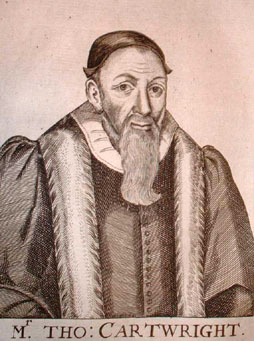
Thomas Cartwright the Presbyterian founder 
My Fordham colleague Patrick Hornbeck (Theology Department) and I were awarded a grant in January 2011 from the Louisville Institute (Presbyterian)  (funded by the Lilly Endowment) to conduct a pilot study of "deconversion" among Catholics, and to begin to develop theological analyses of the reasons so many (even most) Catholics in the United States are marginally affiliated or non-affiliated with Catholicism as it is officially defined. This project will run from 2011-2013, and we intend to publish our findings in an article.
Link (here) to the personal website of Fordham University Theology Professor and America magazine contributor Tom Beaudoin 
Link (here) Tom Beaudoin's Rebellion Manifesto. More (here)  and (here)
.
From Tom Beaudoin's Project Description
This project joins fresh research in practical theology to the lived experiences of Roman Catholic laity who were once affiliated with the church and proposes to explore the process and the practice of “deconversion” in Roman Catholicism by undertaking a series of interviews with Catholic laity who have deconverted or are in the process of deconversion, as well as with pastoral workers whose perspectives on deconversion will serve as a basis for critical comparison; by observing in those interviews patterns that might help generate models that illustrate deconversion as a form of theological practice; and by correlating our findings with the limited scholarly literature on deconversion, which has relied largely on Protestant and evangelical churches. This research contributes to the
"understanding of lived Christianity in the United States by providing the beginning of a way to theologically appreciate deconversion in Catholicism,"
both in its own right and for the purpose of comparison with other Christian traditions.
Link (here) to the Louisville Institute website

Thursday, October 13, 2011

A Jesuit Responds To "The Rebellion Manifesto" At America Magazine

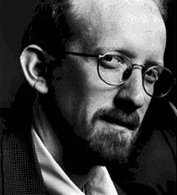
 Fordham Professor Tom Beaudoin
Did it occur to Professor Tom Beaudoin that the teachings of the Church are not designed to reflect what any society appears to want at any given time? Still, he imaginatively pits the “overwhelming majority (all non-ordained persons)” against “the small minority (the ordained).” I happen to be in the latter category, but I find the reality of being one of the ordained unlike the broad characterization offered by Professor Beaudoin does not pit me against those whom I am called by my particular vocation to serve. Having served on most weekends in local parishes for the last eighteen years since my ordination, I don’t find myself or the other clergy with whom I labor being pitted against the faithful. Rather, what I have found and continue to find in parishes across the country is that the People of God, the Body of Christ, whom I encounter, come together to pray, to celebrate and receive the sacraments, and ask God to help us reinforce our faith so that we may be worthy disciples of His Son. I do not see anyone from either segment of the Church as Professor Beaudoin describes it, “Looking at the world and the church in this moment” and declaring “that now may be some kind of privileged time for [OWS] action.” Beaudoin asks in oratorical fashion: “Will Catholics take it [i.e., OWS action] up?”
Link (here) to the full piece at Mirror of Justice blog by Fr. Robert John Araujo, SJ
Read the original "Rebellion" piece at America (here)

Wednesday, October 5, 2011

Got Any Ideas For The New President Of America Magazine?

Recently Father John P. Schlegel, S.J.took over reigns at America Magazine as President and Publisher. Take the opportunity in the comment box to give your own creative ideas on ways to make America a better vehicle for the Jesuit mission. Such as story ideas, new writers, new directions and maybe more importantly constructive criticism.

Monday, September 19, 2011

"S.J." Solid and Catholic

by Fr. JAMES GroenIngs, S. J
Devotional in character; of value for purposes of meditation and preaching. The author follows the biblical account, and approved commentators. 
He "has thought it wise not to draw from private revelations no matter how venerable the names connected with them may be. Since it is difficult to distinguish between what is in reality revealed in these revelations and what is the result of pious meditation, the author judged it more in accordance with his very calling as teacher and interpreter of the Gospel to rely solely on the Gospel narratives and the interpretation by the Fathers and by men scientifically trained for that purpose." 
In this Father Groenings reflects the spirit of the Society to which he belongs. And it is precisely this fact which makes one feel secure, in picking up a devotional work with "S. J." on the title page, that it is going to be solid and Catholic. It is to be hoped that this book will drive out of the market a fearful example of how these matters should not be handled which was inflicted on the American Catholic public a year or two ago.
Link (here)

Sunday, July 24, 2011

Fr. John P. Markoe, S.J. "The True Church Of Jesus Christ"

 ARE YOU AMONG THE ENEMIES OF CHRIST?

    Jesus Christ established only one Church. He said, "Thou art Peter, and upon this rock I will build my Church." Notice He does not say Churches. He said, "There shall be made one fold and one shepherd."  In His prayer at the last supper He said, "I pray for them also who through their word shall believe in Me; that they all  may be one, as Thou, Father, in Me and I in Thee, that they also may be one in Us; that the world may believe that Thou hast sent Me."
    Today we see many Churches. We see Catholic, Lutheran, Baptist, Methodist, Episcopalian, Presbyterian, and many other kinds of Churches. But Christ founded one Church, therefore all these different denominations cannot be His. If you invite a friend to dine at your house and many guests come, having invitations, you know that these invitations are false, because you only wrote one. Christ founded only one Church.  Therefore, there is only one true Church. Consequently, all other Churches must be false.
     Christ said, "He that is not with Me is against Me."  Therefore, those who do not belong to that one Church of Christ, are against Him. They are associated with the enemies of Christ. They may not mean to be against Him, yet they are against Him.  Is it not deplorable to be against Christ, to be among they enemies of God! How said to die amongst the enemies of God! How miserable the condition of those who die in that state!
     How can it be avoided? By immediately becoming a friend of God. By joining the one true Church of Christ. That is the only way. But what is that one true Church? Christ speaking to His followers, said, "You are the light of the world.  A city seated on a Mountain cannot be his"  His Church, therefore cannot be hard to find!
     Which Church goes back to Jesus Christ and the twelve Apostles. A family is Irish if of Irish descent. Similarly, that Church is the true Church of Christ, which goes back to Christ. The only Church which goes back to Christ is the Catholic Church.  Therefore, it is the only true Church of Christ.  All others, started by men, are impostures.
       The Lutheran Church was founded by Luther. It is Luther's Church not Christ'sThe Baptist Church was started in our own country in the year 1639, less than three hundred years ago, by Roger Williams. It is not the Church of Christ, but of Roger Williams.  The Methodist Church was started in England in the year 1739, less than two hundred years ago, by John WesleyIt cannot be the Church of Christ. So likewise all the Protestant Churches were started by men. None of them existed four hundred years ago. Therefore, not one of them founded by Christ.  Christ founded His Church in Palestine, almost two thousand years ago. The Catholic Church alone existed since the days of Christ.  It alone goes back to Christ and the Apostles.  It is of Divine descent from Christ Himself.
       It is the same Church that Christ built upon a rockHe said, "The gates of hell shall not prevail against it."   "Behold I am with you you all days even to the consummation of the world." That is, His Church will last in all its purity, until the end of time.  He did His work well.  Men cannot build new and better Churches than the one Christ built!
John Wesley
      "He that is not with Me is against Me."  If you love Jesus, you will prefer any evil, even death itself, to being against Him; to being a help to His enemies.  "He that gathereth not with Me, scattereth." What sacrifices did you not make in the late war because you loved America! Will you not do something to show that you love God?  Would you have loved America if you had belonged to the army of her enemy?  Do you love God by remaining among the enemies of Christ?
      But you may say you are to old to change. To be a Christian and to love God is good enough.  But you must love God in the way He wants to be loved.  You do not love God the way he wants to be loved unless you do what He demands, unless you belong to the Church He founded for your welfare.
      It is never to late to begin.  The twelve Apostles were born in the Jewish religion.  Their forefathers had been Jews more than a thousand years. Yet they left the old Jewish religion to be true followers of Christ.
      A sensible man will gladly return to the right road from which he has wondered.  Thousands have done so and found supreme happiness in the Catholic Church, the true Church of Jesus Christ.

This essay comes from the booklet entitled, The Triumph of the Church written by Fr. John P. Markoe, S.J. originally published in 1926. This booklet contains a Nihil Obstat by Joannes Rothensteiner Censor Librorum Sti. Ludovici die 11 Nov., 1926, an Imprimatur by Joannes J. Glennon Archiepiscopus Sti. Ludovici Sti. Ludovici die 11 Nov., 1926

For further information on Fr. John P. Markoe, S.J. go (here) , (here) , (here) and (here)
Fr. John P. Markoe, S.J.
An All-American football player and graduate of West Point with Dwight Eisenhower and Omar Bradley; 
a soldier who was jailed for drunkenness in a Mexican saloon and later drummed out of the Army; a lumberjack in Minnesota; a buck private in the Minnesota Guard who was called back for active duty during World War I; a Roman Catholic priest who had given up drinking and smoking but was kicked out of  St. Louis University for being a civil rights activist; 
a mathematics professor at Creighton University. All this describes Fr. John Markoe, S J.   

Thursday, June 16, 2011

Georgetown University Receives Thousands Of Dollars From Multinational Islamic Organization

Georgetown's John Esposito
Georgetown University has some explaining to do based on documents obtained exclusively by PJM from a confidential law enforcement source. The documents reveal a scheme to pass $325,000 through the Council on American-Islamic Relations (CAIR), which has been identified by the FBI as a front for the Hamas terrorist organization
The money was paid to Georgetown by the 57-nation Organization of the Islamic Conference (OIC) to promote its “Islamophobia” agenda, which includes its stated international objective of criminalizing any criticism of Islam. 
Even more troubling: evidence that Georgetown is not the only American university to cooperate with CAIR and the OIC in their joint plan to subvert the First Amendment right to free speech. The plot was apparently initiated in 2006 by discussions between the OIC, CAIR, and Georgetown’s Prince Alwaleed Bin Talal Center for Muslim-Christian Understanding (CMCU). An email dated November 20, 2006, sent from OIC permanent observer to the UN Abdul Wahab to Nihad Awad and Hadia Mubarak — a CAIR board member and Georgetown CMCU “senior researcher” — urged them to expedite arrangements. The email also promised that funds would be transferred to Georgetown as soon as the OIC received a letter from John Esposito, director of Georgetown’s CMCU.
Link (here) to the lengthy article and back story at Pajamas Media 
Link (here) to Jihad Watch

Tuesday, June 14, 2011

Jesuit Bishop In Syria, "“We Do Not Want To Become Like Iraq. We Don’t Want Insecurity, Islamization, And The Threat Of Islamists Coming To Power"

Jesuit Bishop Antoine Audo of Aleppo
The Syrian government must resist the uprising – and has the people’s backing in quelling forces seeking “destabilization and Islamization” – according to one of the country’s most respected Catholic bishops.   In a strongly worded defense of President Bashar al-Assad’s response to the protests and instability, 
Bishop Antoine Audo accused the media, including the BBC and Al Jazeera, of  “unobjective” reporting and unfairly criticizing the Syrian regime. The Jesuit who is the Chaldean Catholic Bishop of Aleppo went on to warn that, if Assad’s government were overthrown, it would cause widespread instability, a breakdown of basic services such as electricity, increased poverty, and a drive towards Islamization. 
Speaking from Aleppo in an interview with the Catholic charity, Aid to the Church in Need (ACN), Bishop Audo said, 
The fanatics speak about freedom and democracy for Syria, but this is not their goal.   They want to divide the Arab countries, control them, seize oil, and sell arms.   They seek destabilization and Islamization.   Syria must resist will resist.   80 percent of the people are behind the government, as are all the Christians.” 
Bishop Audo warned that, if President Assad were ousted, Syria would suffer the problems of a post Saddam Hussein Iraq, with a widespread breakdown of law and order. “We do not want to become like Iraq. We don’t want insecurity, Islamization, and the threat of Islamists coming to power.“Syria has a secular orientation. There is freedom. We have a lot of positive things in our country.” The bishop was speaking after reports on Monday, June 13, of a third refugee camp being set up on the border between Turkey and Syria, amid no sign of an end to the violence and instability which dates back to the end of January.  The Syrian government has been strongly criticized for a hard-line military response to the uprising amid reports that the security forces have killed hundreds of protestors and injured many more. 
United Nations Secretary-General Ban Ki-moon has condemned Syria’s armed retaliation against protestors as “unacceptable.” But the bishop stressed the scale of violence against Assad’s regime, saying how more than 100 police were killed within a few days, adding that the government had a right to defend itself. He said, “In some media organizations, such as the BBC and Al Jazeera, there is an orchestration to deform the face of Syria to say the government does not respect human rights and so on.” 
“The government respects people who respect law and order. Syria has a lot of enemies and the government has to defend itself and the country.” “There is a war of information against Syria. The media reporting is unobjective. We have to defend the truth as Syrians and as Chaldeans.” Stressing how the violence was centered on the country’s borders, especially in the northern sector overlooking Turkey, he said that, for most of the people in the Aleppo area, there was relative calm. But he did warn of increasing poverty, transportation and other communications problems, and described growing unemployment. He said,  
“Generally, life in Aleppo is very normal. Everything is continuing, but there is less work and transportation is poor.” In a reference to the country’s 1.5 million Christians, he said, “Our situation as Christian faithful is not really any different from other communities. We want peace and security.” “We do not want war and violence, and we very much hope that in the next few weeks the situation will be better.” 
As a Catholic charity dedicated to the persecuted and other suffering Christians, Aid to the Church in Need has worked with Bishop Audo to provide long-standing emergency aid for thousands of Christian refugees arriving in Syria from Iraq.
Link (here) the blog entitled, The Realm of the Virgin Mary 
Link (here) to the statement on the same subject by the public relations department of the Syrian Jesuits.

Wednesday, May 11, 2011

Jesuit On Fatima And Moral Miracles

Question: Has the Fatima message had a direct impact on your own life and ministry?
ANSWER BY FR. JOHN HARDON, S.J. : Much of what I have spoken and written, certainly since my graduate studies in Rome, has been deeply motivated by what I understood was the essential message at Fatima.
I learned from Fatima that Our Lady, having first obtained from her Son, to work a physical miracle continues obtaining from Him other physical miracles like at Lourdes,
but she especially wants her Son to work moral miracles of surpassing the natural laws of the human will. I believe it is more difficult to convert a hardened sinner than it is to raise a Lazarus from the dead.
And Mary is capable of working such miracles. My priesthood has taught me devotion to Our Lady and expecting her to work miracles of conversion. She'll do it. I believe that Fatima is especially the sign in our age of the moral miracles that God wants to work in a proud, self-preoccupied, pleasure-intoxicated mankind. Miracles are being worked. I tell people to expect miracles. And the most important kind of miracles you should ask God to work through Our Lady's intercession.
Link (here) to the full question and answer piece.

Thursday, February 24, 2011

The Holy Father On The Great Jesuit Doctor Of The Church

St. Robert Bellarmine, S.J.
At his weekly public audience on February 23, Pope Benedict XVI spoke about the contributions of St. Robert Bellarmine (1542-1621), and especially his work defending the integrity of the Church. A highly influential figure in the Church during the time of the Reformation, St. Robert Bellarmine defended Catholicism against attacks and encouraged genuine reform, the Pope said. “With great clarity and the example of his own life, he clearly teaches that there can be no true reform of the Church unless this is first preceded by personal reform and conversion of heart on our part.” The great theological works of St. Robert Bellarmine—who was named a Doctor of the Church by Pope Pius XI—examined the nature of the institutional Church, the Pope observed. His work illustrated “the relationship between the interior richness of the Church and her visible exterior features.” While serving as a Vatican official, diplomat, and teacher, the Jesuit scholar did not neglect his own interior life, the Pope said. “His burden of office did not, in fact, prevent him from striving daily after sanctity through faithfulness to the requirements of his condition as religious, priest and bishop.” 
Link (here) to Catholic Culture

Tuesday, January 25, 2011

Pro Life Jesuit Cracks Open The Kennedy, Jesuit and Abortion Links

In what can only be described as a brave and bold action, Jesuit Priest Robert John Araujo, SJ delves into waters.

Here is the introduction and excerpt of Fathers article.

Catholic Teaching, Senator Kennedy, and Abortion


This posting is not intended to delve into the subject of Senator Kennedy’s views on a variety of issues. Rather, it is an opportunity to bring to the attention of those who visit this site some relevant information about what may have contributed to Senator Kennedy’s change of position regarding the matter of abortion.
I have been reading Albert Jonsen’s 1998 book The Birth of Bioethics. For those unfamiliar with Dr. Jonsen, he most recently taught at the University of Washington’s School of Medicine. He is a Ph.D. holder who studied religious ethics at Yale University in the mid-1960s. At that time, he was a young Jesuit priest. In 1975 he left both the order and the priesthood and married.
He has one of the most interesting and credible accounts of how Senator Edward Kennedy and his brother, Robert, had the occasion to encounter a group of priests who provided information to the Kennedy brothers about ethical views on issues such as abortion. I will state at the outset that I find many of Dr. Jonsen’s conclusions in his book that I have cited regrettable and inconsistent with Catholic teachings on a number of pressing issues. But these disagreements are not the motivation for writing today.
It is his account of a meeting he attended in the summer of 1964 at the famous “Kennedy Compound” in Hyannisport, Massachusetts that I discuss. Jonsen’s invitation to attend the meeting according to his account came by way of Fr. Joseph Fuchs, another Jesuit priest, who had taught moral theology for many years at the Pontifical Gregorian University. Then Fr. Jonsen had met Fr. Fuchs on the campus of the University of San Francisco one summer afternoon. According to Jonsen, Fuchs asked him if he would like to attend a meeting that was to take place on Cape Cod to assist Senator Kennedy who was standing for reelection to hear the views of several Catholic theologians so that he, the Senator, could formulate his political stance on the abortion issue.
According to his account, Jonsen accepted the invitation and attended the meeting. Once they arrived in Boston, Dr. Jonsen states that he and Fr. Fuchs were driven “at breakneck speed” to Hyannisport by Fr. Robert Drinan, another Jesuit who was then the Dean of Boston College Law School. In addition to these three priests, all Jesuits, they were joined by two other priests, Fr. Richard McCormick, a fourth Jesuit, and Fr. Charles Curran, a diocesan priest then teaching moral theology at the Catholic University of America. In attendance at the meeting were Senator Edward Kennedy and Attorney General Robert Kennedy. Dr. Jonsen says that he and Fathers Drinan and Fuchs “struggled with the problem posed to us.” However, in Jonsen’s estimation, Fr. McCormick was “particularly articulate.”
Jonsen states that to the best of his recollection the theologians agreed with the Church’s teaching that abortion was immoral but were in further agreement that “a rigorously restrictive ethics of abortion into law was unlikely to be enforceable or to achieve its positive goals without significant attendant social evils.” He does not specify in his book what these “significant attendant social evils” were.
Jonsen further contends that the theologians present at the Kennedy Compound on that day favored the American Law Institute’s 1962 draft which would withdraw protection from the fetus (during the first twenty-six weeks of its life) and thus allow abortion when a woman’s health was at risk, the fetus had a severe defect, or the pregnancy was the result of rape or incest. This position they advanced did not then nor does it now coincide with the Church’s teaching.

Link (here) to the full post by Fr. Robert John Araujo, S.J. , his post is at the Mirror of Justice blog.

Fr. Robert John Araujo, S.J. is a professor at St. John's University, he was an associate and then professor of law at Gonzaga University from 1994 to 2005. He has served for the past ten years as an advisor to the Holy See. He is presently Professor of Ethics and International Relations at the Pontifical Gregorian University in Rome. He is also the Robert Bellarmine University Professor of Public and International Law at Gonzaga University. Link (here)