Showing posts with label Ignatian Art. Show all posts

Tuesday, July 9, 2013

Nomina Sacra

A Christogram is a combination of letters (a monogram) that forms an abbreviation for the name of Jesus Christ. A monogram consists of linking overlapping letters or graphemes to form one symbol. Different types of Christograms are associated with the various traditions of Christianity. However, the most popular Christograms are IHS, INRI, and the Chi-Rho. Each of these Christograms represents Christ, and they are included among the so-called Nomina sacra (Latin: “Sacred names”) of Jesus. The Nomina sacra were abbreviated divine titles in early Greek language versions of Jewish and Christian scriptures.

Many early Christian manuscripts and monuments contain the Greek Christogram for the name ‘Jesus’, “IH” (iota-eta), spelled in Greek as ΙΗΣΟΥΣ (iota-eta-sigma-omicron-upsilon-sigma - Iēsous),). In the second century, it became common to also add the third letter of the name – sigma – giving one IHS. Note that here the Greek letter eta was transliterated as the letter H in the Latin-speaking West (Greek eta and Latin-alphabet H had the same visual appearance and shared a common historical origin), while the Greek letter sigma was either transliterated as the Latin letter C (due to the visually-similar form of the lunate sigma), or as Latin S (since these letters of the two alphabets wrote the same sound). Because the Latin-alphabet letters I and J were not systematically distinguished until the 17th century, “JHS” and “JHC” are equivalent to “IHS” and “IHC.”
Those who mistook the abbreviation IHS for an acronym, gave it pious interpretations in Latin such as Iesus Hominum Salvator (Jesus Saviour of Men), In Hoc Signo (vinces) – In this sign (you shall conquer) or In Hac Salus – In this (Cross) is Salvation. Some even created versions in English where “IHS” is interpreted as an abbreviation of “I Have Suffered” or “In His Service.” Such interpretations are known as backronyms.
Such “readings” of the nomina sacra are indeed interesting, because they are like theological poems; they are acrostic midrashes on Jesus’ name or on religious iconography. But they have nothing to do with the “real” meaning of the abbreviation. They represent meanings attached to the abbreviation which represent the ideas of the later readers of texts, and more commonly, of the later “readers” of paintings and representations of the cross and crucifixion.

Jesuit connections

In the fifteenth century one finds anagrams of Jesus and Mary in Spain, They crowned the fretted steeples of the Burgos Cathedral, sculptured on a gateway at Elgueta, and echoed in a thousand forms throughout Castile, Biscaya and Guipúzcoa. Ignatius’ grandmother, who had lived in the times and had heard the sermons of St Vincent Ferrer, put the letters IUHS at the beginning of her will.
In the time of Ignatius of Loyola it was not unusual for his Basque countrymen to put the name Jesus at the beginning of written documents. It was used by the notaries of Azpeitia, friends of Ignatius, in place of the customary flourishes in their writing.

In the Flos Sanctorum, which Ignatius had read during his convalescence, there is a legend of St Ignatius of Antioch, in whose heart, opened after his death, this monogram was found engraved in letters of gold

From his early extant letters [Barcelona 1524] it was Ignatius’ custom, which he kept throughout his life, to prefix his monogram (in its several variants): jhus, IHS, ihs, to many of his written communications. Ignatius used to write the abbreviation in four small letters crossing the upper stroke of the h with a bar: ihus (as in his ballot for the election of the general). He may have presumed, as many did, that the anagram was a shortening of the Latin name of Jesus, which in the Middle Ages many wrote as Ihesus. The symbol is also used in important documents, such as the first edition of the Spiritual Exercises.
After the approval of the Society of Jesus as a new religious order in the Church, the IHS has become an integral symbol of the Jesuit identity, expressing a complex history and a deep spiritual significance.
Ignatius wished the name of Jesus to be engraved in a conspicuous place in all houses of the Society, as its members “should not be called by any other name”. Polanco describes the laying of the first stone with the anagram of IHS inscribed on it over the main doors of the college of Gandía [1550] and the house of Barcelona [1553]. The monogram is found in stone on the facade of many a Jesuit church and school throughout the world, including the mother church of the Jesuits, the Church of the Gesú in Rome, which features a majestic “IHS” in its dome, and the basilica of Bom Jesu in Goa. One can find the “IHS” on the front of buildings in old city centres in Eastern Europe or in the jungle missions of Paraguay, usually indicating 

Monday, April 29, 2013

Fr Marko Ivan Rupnik, S.J. And The Incarnation


Jesuit theologian Fr Marko Ivan Rupnik will lead a Marian symposium, entitled La Fede Professata dalla Pietra (Faith Professed in Stone), at Ta’ Pinu Sanctuary hall between Friday and Saturday. Fr Rupnik, of Slovenia, who will be making three interventions in Italian, will speak about the Mystery of Incarnation as the beginning of Christian art. Fr Rupnik is an artist who communicates faith with mosaic art. 
Fr Rupnik is the author of various spiritual books. He is known for his unique style of art, through which he brings forth the message of faith based on Sacred Scripture and Holy Tradition with a special emphasis on the beginning of iconography with its roots in Eastern Europe. 
With a doctorate from the Faculty of Missiology at the Gregorian Pontifical University of Rome, he works at the Centro Aletti of Rome, of which he is the director. He is also professor at the Oriental Pontifical Institute in the Gregorian University and in the Pontifical Liturgical Institute of St Anselm. Fr Rupnik is also a member of the Pontifical Council for Culture.
Link (here) toThe Times of Malta

Wednesday, April 17, 2013

Ton Of Arrupe

A one-ton granite statue of Jesuit Father Pedro Arrupe, the 28th superior general of the Society of Jesus, University of San Francisco in March as part of the university’s Pedro Arrupe Week celebration. The life-sized statue is based on a well-known photograph of Fr. Arrupe kneeling in prayer. 
It was carved in China under the direction of Jesuit Father Tom Lucas, university professor of Art and Architecture. Fr. Arrupe served as superior general of the Jesuits from 1965 to 1983 and is renowned for his dedication to faith and social justice. 
He educated students to be men and women for others and instilled in his students a sense of faith that does justice. Today, the University of San Francisco counts these among its core values, and a residence hall, immersion program, living-learning community and social justice program are named for Fr. Arrupe at USF.

Link (here)

Thursday, March 21, 2013

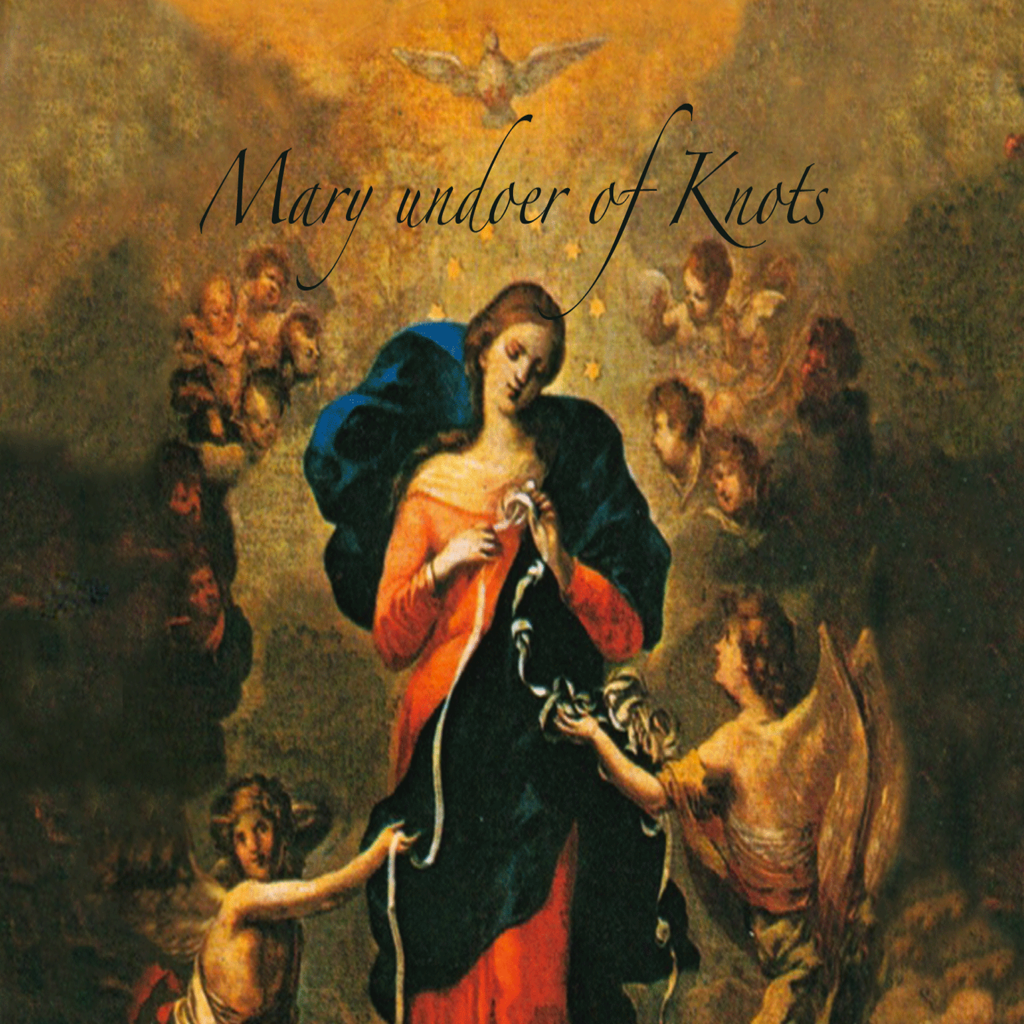
Undoer Of Knots

An Argentinian silversmith, Juan Carlos Pallarols, is handcrafting a simple silver chalice for Pope Francis, which will be embossed with two images of the Blessed Mother:
Our Lady of Lujan, an Argentinian image of the Immaculate Conception, associated with a 17th century miracle, and Our Lady Undoer of Knots, a German devotion which Cardinal Bergoglio brought to Argentina in the 1980′s and has since promoted there.  
The same silversmith collaborated with Cardinal Bergoglio in designing another chalice, embossed with the image of Our Lady Undoer of Knots, which the Cardinal presented to Pope Benedict shortly after he ascended to the Chair of St. Peter.
Link (here) to Mary Victrix

Monday, December 10, 2012

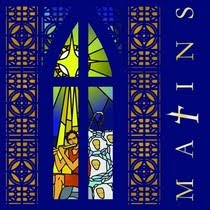
Jesuit Christmas Music

All-time favorite Christmas sounds is a CD simply titled Matins from Jesuit Communications, the media arm of the Society Of Jesus order in the Philippines.
While truly timeless in style and guaranteed effective if you crave quiet moments,
it is however not the type that will land in the charts.

Link (here)

Monday, November 5, 2012

Communists Hit

 
The city's 115-year-old statue of Father Jacques Marquette was vandalized recently, prompting officials to offer a reward. "It looks like spray paint. I don't know," said Emily Lewis, the president of the Marquette Beautification and Restoration Committee. "His face is red, there's some insignia on his chest, there are streaks on his robe." The statue, which was first erected in the city in 1897, currently stands to the north of the Lake Superior Community Partnership building.


Link (here) to The Mining Journal

Wednesday, January 11, 2012

"Get Off That Ship - Provincial"

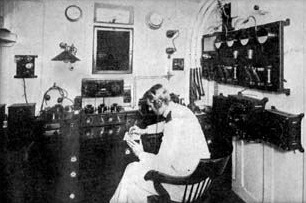
The Marconi Room of the Titanic
While he was having a meal in the first class dining room he got chatting to a wealthy American couple. They liked Fr. Frank Browne, S.J. and asked him to stay on the Titanic with them until the boat reached New York. The American couple even offered to pay the rest of his fare to New York but Fr. Browne told them that his superior in Dublin would never allow it so he had to get off the ship when it stopped in Cobh. The American man said to Fr. Browne, ‘come on down to the Marconi room and we’ll send him [the Jesuit superior] a Marconigram (a message sent via radio) and we’ll tell him that we’ll pay your way to New York’. When Fr. Browne went down to the Marconi room he took a picture. It was the only picture to be taken of the room - and any films you’ve ever seen that have had the Marconi room in it based it on Fr. Browne’s photograph. The telegram was sent by the wealthy Americans to the Irish superior of the Jesuits but after the Titanic stopped in Queenstown in Cobh, Fr. Browne was instructed to return to Dublin. The water near Queenstown in Cobh wasn’t deep enough for the Titanic to dock so the only way it could be reached was by another boat called the Ireland. The Ireland set off towards the Titanic with bags of mail and the 123 Irish passengers who boarded the ship. Captain Tobin was in charge of the Ireland and he had a small envelope addressed to Fr. Browne. Inside was a note with five words on it - it read: ‘Get Off That Ship - Provincial’. “Fr. Browne kept the note in his wallet for the rest of his life and said that it was the only time that holy obedience saved a man’s life,” he laughs.
Link (here) to The Derry Journal

Saturday, August 20, 2011

Twenty-Nine Years Before

In 1585, Fernando Selma painted a portrait of Ignatius Loyola, from waxen casts taken from the dead body twenty-nine years before, 
and from the recollections of Father Bibadeneyra, the Hagiologist, which was reckoned the best representation ever made of the stern and melancholy countenance of the great first Jesuit. 
The fate of this interesting picture is not known; but it may have been the original of that striking portrait which hangs in the church of San Miguel, at Seville.
Link (here) to read the mentioned portion of the book entitled, Annals of the Artist of Spain

Wednesday, December 8, 2010

Jesuit Mosaic

Cardinal Sean Brady will on Wednesday preside over the dedication of the Chapel of all the Saints of Ireland at the Pontifical Irish College here in Rome.The chapel has undergone extensive renovation and now features a mosaic designed by Jesuit Priest Fr Marko Ivan Rupnik.
Link (here) to Vatican Radio and listen to the whole story

Sunday, August 8, 2010

A Jesuit Father's Film On A Catholic Polish Resistance Fighter

A film about the Holocaust – produced by a Jesuit priest – finds itself on a possible path to the Academy Awards. The 37-minute documentary is called “The Labyrinth,” and 
tells the story of Marian Kolodziej, a Polish Catholic resistance fighter during World War II who survived more than five years in Auschwitz. 
Three years ago, Kolodziej’s work was discovered by Jesuit Father Ron Schmidt, who came to Auschwitz to produce a documentary on an annual interfaith conference held there.
.
Link (here) to the full story at National Jesuit News

Thursday, May 13, 2010

Jesuit Porcelain And Fr. François-Xavier d'Entrecolles, S.J.

Jesuit Porcelain, a name given to Japanese porcelain of the 18th century, which the Jesuits had caused to be decorated with Madonnas, images of the saints, and Christian emblems. It is now rare.
Link (here)
Photo of Jesuit Porcelain tea cup (here)
.
A valuable independent authority is the Jesuit missionary Pere Francois-Xavier d'Entrecolles, who frequently resided at what he calls his Chretiente at Ching-te Chen, and wrote from there two letters upon the porcelain manufacture, dated 1712 and 1722, towards the close of the long reign of the Emperor K'ang-hsi, the culminating period of ceramic art in China. Where these two authorities differ it is usually the worthy missionary who is right; as, for instance, in the question of the colour of the glaze of the old Lungch'iian porcelain, which he states to be green, bordering upon olive, while Julien will have it to be blue.
Link (here)

Saturday, May 1, 2010

A Statue Of St. Ignatius Of Loyola Carved From Wood

The lettering on the book is now burned and some sealer has been applied. On the left side of the book it says in Latin "Constitutiones Societatis Jesu" which in English would be "Constitutions of the Society of Jesus." 
 On the right side is "Ad majorem Dei gloriam" which is the motto of the Society of Jesus (commonly called the Jesuits.) 
The motto is also in Latin and translates to "For the greater glory of God."
 
Link (here) to traditional wood carver Hans Schwalm's site

Sunday, February 28, 2010

Jesuits On The American Frontier

"Crossing the Divide: Jesuits on the American Frontier" contains extremely accurate documentation of the new world this group of Jesuits entered as they crossed cultural, linguistic and religious divides. The exhibition displays dictionaries of Native-American languages, as well as extremely accurate maps and detailed journals. Of significant importance are the sketches and water colors of Nicholas Point, S.J., and the Moses Linton album, a chronicle of the work and travels of Pierre De Smet, S.J. This album is on display for the first time.
Link (here)
Five Bears by Fr. Nicolas Point, S.J. (here)
Hat Tip to Rome of the West (here)

Tuesday, January 12, 2010

Angels Good and Bad

In an image crowded with symbols, Divine Love stands triumphant. He touches his arrow to the wound of Christ;
above the cross is the emblem of the name of Jesus and a dove, representing the Spirit, from whom come the words, "I have come to cast fire upon the earth." Below the cross laurel wreathes await the victorious followers of Christ crowding around
who include a few Jesuits sketched in behind Divine Love's bow. Cupid, meanwhile, is bound and blindfolded, and his arrows lie broken.


Link (here) to the Netherlands Jesuit Fr. Paul Begheyn his piece covers traditional Jesuit subjects.

Sunday, January 10, 2010

An Old Jesuit Book At St. Joseph's University


Imagines praepositorum generalium Societatis Iesu
(1748; Rome, 1751)

Arnaldo Van Westerhout

SPECIAL COLLECTIONS, FRANCIS A. DREXEL LIBRARY
SAINT JOSEPH’S UNIVERSITY

Link (here)
Photo (here)

Tuesday, January 5, 2010

The Jesuits and the Wierixes

There was close cooperation between the Wierix family and the Society of Jesus. Out of a total of 2,333 prints made by the Wierixes, at least 10 percent have a clear Jesuit connection. Many of these engravings were used by Jesuit missionaries all over the world, and were, often with stunning results, copied by European Jesuits or abroad by local artists for churches and other buildings in Europe, India, China, Japan, and the Americas. The work of the Wierixes thus became a hallmark of Jesuit identity and iconography.

It is remarkable that Wierix was explicitly mentioned in the Dutch translation of the Latin jubilee volume that the Plantin Press published in 1640 for the Flemish Jesuits on the occasion of the first centenary of their order. In the opening lines of his poem on the worldwide oppression of Jesuits—here symbolized in an emblem with a printing press—

Dutch Jesuit poet Adriaen Poirters (1605-1674) wrote:

My press is famous for its finest plates
left to us by Albert Durer or Wierix,
or still cut today by a skilful master:
rarely if ever art has died as time goes by.

The most important body of work by the Wierixes for the Jesuits is the 153 engravings for the influential meditation book by the Spanish Jesuit Jeronimo Nadal, Evangelicae historiae imagines, of which the first edition appeared in 1593 in Antwerp, although negotiations about the involvement of the Wierixes had already started in 1586. It is "the earliest such series of the whole of the New Testament of any size or importance ever produced," according to Church historian Fr. John O'Malley, SJ, and "may represent the Jesuits' greatest and most successful artistic achievement of the 16th century," in the words of art historian Gauvin Alexander Bailey.

Link (here) to the complete article by Fr. Paul Begheyn, S.J.

A Wierix of St. Ignatius of Loyola

Wednesday, May 20, 2009

Picture Of The Day: St. Ignatius of Loyola At Manresa


St. Ignatius Loyola at Manresa


Nancy Carty McDevitt


UNIVERSITY OF DETROIT JESUIT HIGH SCHOOL AND ACADEMY

This is one of two murals depicting scenes from Ignatius's life by the artist for the high school's renovated chapel, constructed in the early 1930s. The chapel is dedicated to the Jesuit North American martyrs.

Link (here)

Friday, April 17, 2009

Jesuitly Overwhelming

Standing in the church of St Francis Xavier Catholic Church the former Jesuit seminary at Tepotzotlén, Mexico, the eye is dazzled by a seething mass of elaborate wood-carved ornament, coated in flashy gold leaf. Ledges project from the riot of scrolls, pilasters and acanthus-leaves, supporting brightly painted statues of the Holy Family and Roman Catholic saints. These are early 18-century altarpieces, five of them, reaching from floor to ceiling and dominating the church interior. The effect is overwhelming.

Link (here)

More (stunning link) (here)

Saturday, November 15, 2008

Jesuit Museum

Celebration of art
Two special exhibitions will highlight the 15th anniversary of the Museum of Contemporary Religious Art at St. Louis [Mo.] University. The interfaith museum, founded by director, curator and priest Terrence E. Dempsey, S.J., is located in a renovated chapel at the Jesuit university.
Link (here)