Sunday, May 6, 2012
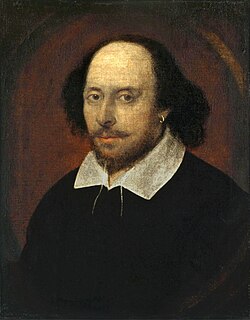
A Jesuit Saint And Shakespeare
Sunday, June 19, 2011
The True End Of Man
If His own rational creatures do nothing without some object or design, the same must, with far greater reason, be said of the infinite Creator, who could not make man, the crown and complement of creation, without a wise purpose, so that human existence might not be useless, so to speak, and meaningless.
Friday, May 20, 2011
Fr. Emanuel Alvarez, S.J.
Sunday, January 23, 2011
Sarcotis
Tuesday, February 16, 2010
A Jesuit Epic "Columbus" By Fr. Ubertino Carrara, S.J.
An epic poem on the discovery of America, entitled " Columbus," written by Ubertino Carrara, an Italian Jesuit. This poem was first published, in 1715, at Rome. The author was a Neapolitan, and of noble descent ; and was for many years professor of polite literature at Rome in the Jesuits' College. He is said, in the Biographie Universelle, to have continued in this station till his death ; but this seems to be contradicted by a passage in the poem itself. Near the end of the last book of the Columbus, there are the following lines, which imply, that the poet had resided at least ten years in America." At me jam dudum defunctum finibus Indis, Dedoctum Latias, et barbara verba sonantem, Tybridis ad ripas; ubi, post duo lustra reversus, Fassus crine senem. Jam me gratissimus amnis Reptatam geminis a Fundatoribus oram, Semiferina inter Caribum commercia, voces Suadet amor quassam cursu revocare phaselum Dulcibus expector vix agnoscendus amicis, Accipit averso labentem gurgite ; nosco Altricisque Lupae caveam ; gradiorque sub umbra Heliadum, quas digrediens arbusta reliqui." Lib. xn. 941.
Blogger Note: Translated very clunky-like with a web translator, definitely not slavishly accurate.
" But me jam for a long while deceased to cease Indis Dedoctum Latias , and barbarously lashing sonantem Tybridis to ripas ; when , after two may traverse to return Fassus hair old age. Jam me gratissimus stream Reptatam to double a Fundatoribus oram, Semiferina among Rottenness wares voces To recommend love a shaking a race to call back phaselum Sweetly expector scarcely agnoscendus friendship , To consider oneself indebted to repulse labentem whirlpool ; to become acquainted with Altricisque Lupae hollow place ; to conduct one's self up to, under shade Heliadum , whom to depart a vineyard planted with trees remainder "
As the author died in 1715, the same year in which his poem was published, and as he had then just returned from America, it may be fairly inferred, that the poem was chiefly written, or greatly modified, on this side of the Atlantic. There are passages, likewise, which indicate familiarity with the scenery of the Canary Islands and the West Indies.
The "Columbus" is constructed according to the most approved rules of epic song. The unities are fully preserved ; and the whole plan of the poem, including episodes and characters, would no doubt receive the sanction of the Stagyrite, except perhaps the introduction of the heathen mythology, in connection with Christianity, which admits of no other defense than the practice of some of the predecessors of Carrara ; particularly of Camoens in the "Lusiad." The author obviously meant to have authority for the arrangement of the principal parts of his poem. Like the "Aeneid," it consists of twelve books ; and the whole number of lines differs but little from that of the epic of Virgil.
Link (here) to a much larger and fuller explanation of Columbus.
Thursday, February 11, 2010
Book Jesuit
By Michael F. Suarez, S.J. and H. R. Woudhuysen
"This magnificent reference work is a tribute to - and celebration of - a revolutionary invention ... An extraordinary tour de force, a cornucopia of bookish information ... These volumes, then, are a paradise for book-lovers " (Noel Malcolm, Sunday Telegraph).
THE book about books: “The Oxford Companion to the Book”, edited by Michael F. Suarez, S.J. and H. R. Woudhuysen, is a unique work of reference about all aspects of the book, from ancient times to the present day. It includes traditional subjects such as bibliography, palaeography, the history of printing, editorial theory and practice, textual criticism, book collecting, and libraries as well as new aspects and developments in the history of the book that have come up with electronic publishing. The “Oxford Companion” pays particular attention to how different societies shape books and how books shape societies - throughout the world, from Europe and North America to the Middle East, Asia, Latin America, and Sub-Saharan Africa.
The first part of this monumental two-volume “Companion” is a series of introductory essays which provide generic histories of the book ranging from writing systems, the ancient and the medieval book, through central aspects of book production, theories of text, editorial theory and textual criticism. The second part covers the whole history of the book from A to Z in more than 5,000 entries, in brief definitions, biographical entries and more extensive treatments about
Link (here) to read the full review
Wednesday, February 3, 2010
Tom Playfair
"TOMMY! " No answer.
" Tommy—do you hear me ? Get up this moment, sir. Do you think this house is a hotel? Every one's at breakfast except yourself."
Miss Meadow, Tom Playfair's maternal aunt, stood without the door of Master Playfair's sleeping apartment. She paused for a moment, partly to gain her breath (having come up three pairs of stairs to arouse Tom) and partly to await some reply from our sleeping hero.
The silence, however, was simply emphasized by the ticking of the great clock in the hall.
" Tommy!" she resumed at length, in a higher key, " do you hear me ?"
Her strained ears caught the dull sound as of some one turning lazily in his bed. " Now you're awake, sir, jump right up, and dress for your breakfast."
"Sho! scat!" came a yawning voice from the room.
"Dear me!" cried poor Miss Meadow, "the boy doesn't mind me in the least."
"What's the trouble, Jane?" queried Mr. Playfair, who just then issued from his room.
" I can't get that Tommy out of bed. He's growing worse every day, George. Last week he was late for school five times."
"I'll fix that, Jane," said Mr. Playfair. And he took one step toward Tom's sleeping-room, when the door of that apartment opened a few inches, discovering a young face peering anxiously from beneath a mass of tangled hair.
"Pa," said the apparition, "I'm dressing just as fast as I know how. I heard you, auntie, and I'm coming right away."
Link (here) to the book entitled Tom Playfair, by Fr. Francis Finn, S.J.
Thursday, January 21, 2010
Monumenta Historica Societatis Iesu
A few years ago, over lunch in an Indian restaurant near Harvard Square, I learned that one of the best examples of organizational agility was founded in 1540 through a papal bull issued by Pope Paul III. My lunch companion was Father John W. O’Malley, (pictured left) a leading historian of the Renaissance church, member of the American Academy of Arts and Sciences, and a Jesuit priest. O’Malley spent years researching the early decades of the Society of Jesus, often refered to as the Jesuits, poring over the Monumenta Historica Societatis Iesu, a 157 volume record of the early years of the Jesuit order including letters from the founding members, rules and directives, and quarterly reports on the state of the order. O’Malley’s research resulted in The First Jesuits, the definitive study of the first quarter century of the order, which won the American Philosophical Society’s prize for the best cultural history published that year. O’Malley’s book strips away many of the stereotypes and misconceptions that have surrounded the Jesuits over the centuries, and presents an unvarnished account of the foundation and early decades of the order.
Link (here) to Don Sull's blog at the Financial Times
The Transcript Of The St. Robert Bellermine's Inquisition Of Galileo

For Sale a vellum bound transcript of the
Jesuit Saint Robert Bellarmine's
Link (here) to the eBay auction for $750.00
or (here) $3,500.00
.
1589 Jesuit Cardinal Robert Bellarmine of Galileo Inquisition
Rare & Valuable Vellum Bound Collection of Controversial Writ
This is a wonderful and rare offering of the following work written in Latin
Main author: Bellarmino, Roberto Francesco Romolo, Saint, 1542-1621.
Title details: Disputationes Roberti Bellarmini Politiani Societatis Iesu…
Published: Ingolstadii : Ex typographia Davidis Sartorii, 1589
Subject: Catholic Church
Apologetic works
Counter-Reformation
Church and state
Language: Latin
Publisher: Ingolstadii : Ex typographia Davidis Sartorii, 1589
Unique features: rare and excellent contents; ~ 7in X 4.5in (17cm x 11.5cm)
Wednesday, January 20, 2010
Nigerian Jesuit Fr.Uwem Akpan's New Story "Baptizing The Gun"
“Please, where can I get a mechanic?” I ask when he gives up on pushing.“Lagos mechanics? Don’t trust any Lagosian. I’m a Lagosian. Once they see you’re a stranger, they’ll cheat you or dismember and sell your car piecemeal, no matter how old. Just listen to me.” He pushes the Beetle again. “O.K., let’s see your engine,” he says when we come to a junction. Fearfully, I open the hood. He bends down and disconnects a tube and hands it to me. “Suck this, man. The problem must be the fuel filter.”
Suck? I’ve never fixed anything in a car before. Back at my parish, I have a driver. “I think we should get a mechanic.”
“Damn it, man, you don’t need a fucking mechanic!”
He takes off his sunglasses to reveal small, angry eyes. I grab the tube. Petrol gushes into my throat, and I let go of the tube, coughing. I puke on the front of my blue-and-white buba shirt. The petrol soaks into my clothes, its cold sting reaching the zipper of my jeans. Ignoring my state, he bends down again to study the engine.
I see a pistol bulging in the right pocket of his trousers.
Why didn’t I wear my priestly habit? Why didn’t I borrow one of those church vehicles with “Catholic Archdiocese of Lagos” emblazoned on its sides?
I begin to plead with the Lagosian. “Please, I’m a Roman Catholic priest and . . .”
“So? You Nigerian clerics just want everything free! You flash your status at every chance.” When he talks, the two gold teeth burn in the night, as if he were chewing flames.
Link (here) to read the full story at The New Yorker
Photo of a Lagos street scene.
Friday, January 15, 2010
305 Year Old Jesuit History For Sale

with 18th century ROSARY
This set is comprised of an extremely rare antique Jesuit (Society of Jesus) Latin book dated 1704 and
an antique late 18th century rosary
The leather bound hard cover book measures about 6 3/8" x 4 1/2" x 2" and has 740 pages
The book is entitled: EPITOME INSTITUTI SOCIETATIS JESU
The book is in good condition for its age (305 years old!)
As you can see from the pictures, the top and bottom covers are worn
and the last three pages of the index are torn. Apart from this, the book is in very good condition.
The antique wood and bronze late 1700's rosary measures about 19 1/2" long stretched out.
I believe the beads are made of seeds, same as those used in rosary belts.
One of the medals is marked in French Church of Saint Anne de Beaupre
(it was the first church of the French-Canadian settlers who colonized North America)
before the church became the Basilica
Link (here) with more pictures
Blogger Note: this book is not in public domain go (here)
Sunday, January 10, 2010
An Old Jesuit Book At St. Joseph's University

(1748; Rome, 1751)
Arnaldo Van Westerhout
SPECIAL COLLECTIONS, FRANCIS A. DREXEL LIBRARY
SAINT JOSEPH’S UNIVERSITY
Link (here)
Photo (here)
Tuesday, April 21, 2009
God And His Works
LONENESS—NOT LONELINESS
LAMARTINE tells us that solitude always helped to make him a better man and to draw him closer to God. All through his variegated career he felt this, and even when he was living with the most agreeable people and moving in entirely congenial society, he felt the need of finding that complete solitude which from his childhood had been one of life's necessities. " Nothing is worth an hour's quiet communing with oneself," he declares. " It was in the country that I sought and found it. There was not much beauty there certainly, but it was solitary; there were not many fine trees or beautiful flowers, but there was God and His works, and that was enough."
Link (here) to the full essay by Fr. David Bearne, S.J.
Friday, January 16, 2009
St. Peter's Complaint
A small portion of the poem by St. Robert Southwell, S.J.
O pools of Hesebon ; the baths of grace,
Where happy spirits dine in sweet desires,
Where saints rejoice to glaze their glorious face.
Whose banks make echo to the angel's quires ;
An echo sweeter in the soul rebound,
Then angel's music in the fullest sound !
Link (here)
From the e-book the Complete Poems By St. Robert Southwell, S.J.