Showing posts with label Jesuit in the Philippines. Show all posts

Friday, June 6, 2014

The Jesuit Elephant

It seems that elephants roamed the Philippines not just in prehistoric times but as late as the 17th century, as Jesuit Ignacio Francisco Alcina in his multivolumeHistoria de las islas e indios de Bisayas(1668) as a “torre de carne” (tower of flesh) that some Christian saints referred to as “Goliath” because of the size. (The iconic Japanese monster Godzilla may not look like it, but its name when read in Japanese sounds like “gorilla.”)  Alcina noted that the Visayan word for elephant was “gadya,” and that the ivory (“garing” in Tagalog, hence one of the attributes of the Virgin Mary, “Tower of Ivory,” is “Torre ng Garing”) was used for bracelets, ear pendants, daggers and sword hilts, and even jewelry boxes.
described by the
According to Alcina, elephants were not to be found in the Visayas but in Jolo. These were smaller than elephants from Cambodia and India, and were prized for their: ivory tusks that were made into religious images of the Santo Niño, the Virgin Mary, and other saints; bones, similar to ivory, that were fashioned into jewelry; hide that was made into breastplates, helmets, and armor that protected the wearer from sword and lance but not from an arquebus or musket; and, last but not least, meat that was eaten, too!
Alcina wrote: “The natives of that island (Jolo) eat the flesh. One of our fathers who stayed there told me that he had eaten the meat and that it was tougher than beef and did not taste as good.” Elephants were said to be intelligent, hardworking, and fierce when provoked. They were modest, too. When told that elephants were never seen mating, that they concealed themselves when they mated, Alcina remarked: “A lesson in modesty for men who sometimes and even frequently lack the modesty which these brute animals observe so well.”

What I found fascinating, though, was the fact that Alcina saw elephants in Manila where they were received as gifts from Cambodia and neighboring countries. Alonso Fajardo, governor-general from 1618 to 1624, gave the Jesuits a tamed elephant that served them many years hauling logs, beams and posts during the construction of the Jesuit residence in the city.
Alcina talked fondly about their pet elephant and of its sad end:
“I have heard unusual and very strange stories related about it… I shall tell only one, which seems to have a connection with the friends of Bacchus (Greek god of grape growing and wine) of whom there are many here. It seems that if they were not watchful, he went to the wine cellar or store room, either at the Colegio or that of the Procurator General, sniffed out the casks which contained wine, very easily uncovered them with his trunk and siphoned out one entire cask at one time; thus showing his joy with a thousand gambols. If, perchance, he took in too much he would be intoxicated and cause some violence. However he was able to get out into the countryside until it passed; afterwards he returned to the house very docile.
“When he felt hungry, they say, he used to go among the houses of the natives; they knew what he wanted and gave him either rice or various fruits to eat. In this manner he went to many dwellings, as though asking alms, until he was satisfied. He approached the doors of the houses of those who would not give him anything and struck the posts and tore them off and flattened the houses, thus they were careful to give him something immediately so that he would not harm them. This happened when days passed without his returning to our house where what was needed was given him.
“He lived for years until a Brother of ours, angered by some mischief or other, whether stealing food or drink, who was in a house in the field where the elephant was taken to haul logs, which were newly cut, fastened the beast with strong ropes to a large tree and left him there to die of hunger. Since this animal had cost him little, he was little concerned about it perishing.”
Quite a sad end for the pet elephant in the 17th-century Jesuit house in Manila whose name is lost to history. I hope that inhumane Jesuit brother was castigated in life and in the hereafter for his cruelty.

Link (here) to The Inquirer

Tuesday, April 22, 2014

Jesuit In The Philippines Touched By The Divine Mercy

Falling In Love with His Divine Mercy
by Suzette T. Yu-Kho (ICA batch 1991)
Like many Catholics, I once took my faith for granted: I did not attend Mass regularly, stopped going to Confession and avoided religious people. I strayed away from the Faith and began dabbling in other forms of worship. I even took part in an East Indian “healing” seminar (it only lasted for a day). Each of them guaranteed the same results: true peace and happiness. Yet despite all their sweet words and the promise of Eden, I felt empty. As I plunged deeper into sin, I thought there was no escape. There was no way that I could go back to the Church and face God being the sinner that I was--I was incredibly ashamed of myself! How could I stand there singing hymns with other “saintly” people who never committed such atrocious deeds? I could not fathom confessing to a priest once again who in my mind would surely rebuke me; consequently, for a quite a long time, I did not receive the Holy Eucharist either.
Years later, I was still in my predicament when I heard of Stanley Villavicencio: a Filipino lay person who touched the lives of sinners from all around the world and opened their hearts to Jesus Christ’s Divine Mercy.
His testimony was mind-boggling: after three days of being pronounced “clinically dead” in Chong Hua Hospital in Cebu, he came back to life, much to the shock of his doctors and family members who were busy arranging his funeral. He claimed to have seen Jesus upon his death amidst a garden filled with various kinds of beautiful flowers. Jesus then showed him the film of his life starting from the time he was a young boy up to the moment of his death. Whenever he committed a venial sin, the film would slow down; whenever he committed a mortal sin, the film would stop and enlarge itself.
Nothing could be denied since the film had the exact date and time of when the sins were done--even the minutes and seconds were recorded! He also said the sins he confessed to a priest felt lighter compared to the sins he did not confess. After reviewing the film of his life, Jesus then sent Stanley back to earth with a mission and that was to spread the word of His Divine Mercy.
He told Stanley that He would be communicating with him very often. In this dream-like state, Stanley could see, touch and even embrace Christ. Stanley was also asked to obey his authorities (Cardinal Vidal and Msgr. Cris Garcia, his spiritual director) who instructed him to write down the messages he would receive every time there was an encounter with Jesus.
Msgr. Cris Garcia who had been endowed with the gift of internal locution was made aware of each encounter simultaneously by Jesus Himself; he in turn would confirm the messages with Cardinal Vidal. To date there have been 31 encounters with our Lord since 1993. Jesus’ main message is simple: the doors of His Mercy are still wide open to penitent sinners. Souls should not hesitate to come back to Him even if their “sins be as plentiful as the stars in the sky”. If people refuse to pass through the doors of His Mercy, they have to pass through the doors of His Justice after the period of time He allots. He is also asking us to pray the Chaplet of Divine Mercy unceasingly, receive the Sacraments of Penance and Holy Eucharist often and celebrate the Mass regularly. The Chaplet of Divine Mercy is a powerful tool against hell for a dying soul: if prayed for a dying soul, God will see the soul through the wounds of His Son instead of through that person’s sins. If a repentant sinner prays the Chaplet for himself even just once, God will also be merciful to him because Jesus says that He will stand between the sinner and His Father upon that person’s death. Furthermore, Jesus promises that on the Feast of the Divine Mercy (the first Sunday after Easter) “the soul that will go to Confession and receive Holy Communion shall obtain complete forgiveness of sins and punishments”. Church officials say that the graces one receives during Divine Mercy Sunday is similar to the graces obtained during baptism. Stanley’s resurrection was so miraculous that the doctor who attended to him decided to enter the seminary.
He is now a Jesuit priest doing missionary work in Africa besides being the head of the Jesuit Hospital of the Philippines. Stanley’s testimony is also supported by 22 bishops and 2 cardinals in the Philippines as well as various Church leaders throughout the world including the late Pope John Paul II
(who during his lifetime was promoting the Divine Mercy devotion and fulfilled the vision of Saint Faustina in the 1930s by declaring the first Sunday after Easter as the Divine Mercy Sunday in 2000; Pope John Paul II incidentally died on the eve of the Divine Mercy Sunday in 2005). His story has attracted a huge number of people from different countries and has converted many to Christianity. When he went to China to deliver his message, he miraculously started speaking in Mandarin even though he had no background on the language. By the end of his speech, the Chinese audience had tears in their eyes: they understood every word he said and 200 of them embraced the Catholic Faith right away!
Link to the full article (here)

Monday, April 15, 2013

What If Ten Percent Of Catholics Went To Mass?

This 90-year-old Jesuit priest told the bishops in a meeting in Baguio, right before martial law, “that if 10 percent of the Catholics in the Philippines went to Mass on Sundays, there will not be enough cathedrals, churches, chapels, visitas, etc., to accommodate these 10 percent, and we priests will have to say not four or five Masses, but even more.” The fact remains that most Catholics in the Philippines live far away from churches, and even if there are easily accessible churches or chapels, there would be no priests to say Mass even in the city proper or in the towns or barrios and sitios. If indeed 80 percent of the now more than 90 million Filipinos are Catholics (at least nominally), what a mind-boggling problem we would have in how to evangelize and catechize these millions to become true Christians in spirit and in truth. 
Link (here) to the original article by Fr. Emmanuel V. Non, S.J.

Wednesday, February 6, 2013

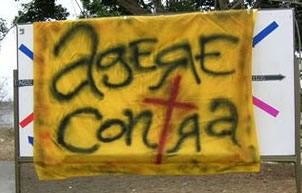
Agere Contra And Freedom

St. Ignatius was keenly sensitive to interior motions that draw us away from God – proposing things that bring us away from God as pleasurable, or things that bring us toward God as undesirable. He called these “desolation.” And he proposed that we work against – “agere contra” – desolation, that is, that we work against our unfreedoms in our relationship with our selves in our relationship with God. This is in his “Rules For the Discernment of Spirit.” “Agere contra” is as much a principle of Ignatian Spirituality as is “magis” or “finding God in all things” or “ad majorem Dei gloriam.” It is what fasting and abstinence are all about, especially in the season of Lent. Concretely, if you habitually postpone doing your homework because you just have to watch TV for two hours every night, “agree contra” may mean that you decide to watch TV less. If you truly dislike the person who grates against your spirit at work, “agere contra” may mean that you decide to communicate with and understand that person better. If you normally think you know everything better than others and so have the right to lecture all who approach you, “agere contra” may mean that you consciously pause and listen to what others have to say.
Link (here) to full post by Fr. Joel Tabora, S.J. is a Jesuit Priest and currently President of Ateneo de Naga University.  He chairs the Association of Jesuit Colleges and Universities Asia Pacific, as well as the Committee on Advocacy of the Catholic Educational Association of the Philippines.  He is a board member of the Coordination Council of Private Educational Associations (COCOPEA) in the Philippines.

Monday, December 10, 2012

Jesuit Christmas Music

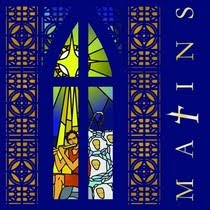
All-time favorite Christmas sounds is a CD simply titled Matins from Jesuit Communications, the media arm of the Society Of Jesus order in the Philippines.
While truly timeless in style and guaranteed effective if you crave quiet moments,
it is however not the type that will land in the charts.

Link (here)

Saturday, April 7, 2012

Cum Magno Amore Et Cum Magna Anima

Fr. Frank Reilly  SJ, wrote to me Easter Sunday of 1980: “Help the youth of the high school discover Christ in their lives.” We all hunger for this center, this meaning, this mission, this Christ. The wise and the foolish have the same hunger, but what separates the wise from the foolish is they do the “tasks” necessary: first, they search for the their God-given mission and try to discover and, second, once discovered, they try to live it with great love and great soul—cum magno amore et cum magna anima.
Link (here) to read the full piece by Fr. Carmelo "Tito" Caluag, S.J.

Wednesday, January 11, 2012

The Jesuit House of 1730

The Jesuit House of 1730 is for the adventuresome. Even in Cebu, few know of the existence of this house located between Zulueta and Binakayan Sts. Permission is needed to see the house presently owned by the Sy family, owners of HoTong hardware. Though not open to the public, with advanced notice the house can be visited. But visitors be warned that it is now a warehouse, and will require some walking over cables, reinforcing bars and other construction material. The house can be dusty and the air stale. The house was once the residence of the Jesuit superior in Cebu. To coordinate work in their Visayan missions, the first Jesuit mission superior, Antonio Sedeño opened a residence in Cebu in 1595. The site of the 16th century residence is uncertain. This residence which is still standing is believed to have been built in 1730. A relief plaque inside the residence bears this date. The Jesuits were in possession of this house until 1768 when they were expelled from the Philippines. Upon their expulsion, Jesuit properties were put on public auction. A Spanish family, the Alvarez, acquired the house. The house passed through various owners until the Sy family acquired the residence. At one time, the residence became an exclusive club for Cebu’s elite. Early in this century, the existence of the house was first documented by Fr. William Repetti, S.J., seismologist and archivist of the Jesuits. He noted its existence in a book he published in 1936. In the book, a reproduction of an old painting of the house indicated that a tower stood beside it, probably built as a watchtower for seafaring raiders.
Link (here) to read the full article.

Tuesday, November 1, 2011

Jesuits And Poltergeists

In the 1970s, the late Jesuit ethnologist Fr. Francisco R. Demetrio compiled a dictionary of Philippine folk beliefs and customs, with a chapter providing intriguing insights on our concept of death, spirits and the afterlife. Demetrio wrote that in Malaybalay, Bukidnon province,
“the ghost of a person returns three days after death. If there is constant noise in the house where the dead once lived, it means that there is something the dead had forgotten to tell to those left behind. People put candles at all openings in the house if they don’t want the ghost to come.”
These raucous spirits have been called poltergeist (from the German poltern, meaning “to knock,” and geist, meaning “spirit”), manifesting themselves through disembodied knocking or pounding, and inanimate objects floating or thrown about. Spiritualists believed that these paranormal entities are harmful demons, while parapsychologists consider these as psychokinetic phenomena emanating from troubled individuals.
Letter to a Jesuit
Interestingly enough, our national hero Jose Rizal witnessed this type of supernatural activity while he was in Dapitan, which he related to a Jesuit priest, Fr. Antonio Obach, in a letter dated April 12, 1895. Father Obach provided a copy to the Jesuit Mission Superior in a missive dated May 4, 1895.
This missive was later included in the multivolume work “Jesuit Missionary Letters from Mindanao” of noted historian Fr. Jose S. Arcilla, S.J.
In Rizal’s narration, the poltergeist phenomenon centered on Josephine Bracken, who feared her foster father, George Tauffer, had died and was haunting her:
“Here since Saturday night in this round house many things have been happening apparently without explanation. The English lady woke up last night while her cups were being broken and the lamp burned unusually bright. She believes her father has died. I advised her to talk with you, and the third time that she addresses a question, ‘In God’s name, I ask you what you want.’ All her cups, tea kettles, saucers, etc. fell down at the same time. All the boys and I saw it.” “…Tell us what to do, if it will be better to exorcise the clinic, sprinkle it with holy water. It might be good if you come and see the place. If it is certain that he has died in Manila the day before yesterday, is there a more conclusive proof to support the existence of the soul? I have talked to it, but it does not answer, nor does it perform this thing in my presence. Romulo will give you more details.”
Josephine’s defense
Father Obach acceded to Rizal’s request and visited his clinic, along with another Jesuit priest, Fr. Esteban Miralles. Josephine explained that what had happened was an unusual and frightening event. Father Obach suggested that she might have engaged in spiritism, but she denied the accusation.
He further narrated that: 
“Doctor Rizal defended her, that since childhood she had been and was a Roman, Apostolic Catholic. I answered him there were many who were Catholics only in name but did not practice their religion. In the end, I enjoined them to recite on their knees on turning to bed and on rising, one ‘Our Father’ and the ‘Creed,’ and if the things continued, to sprinkle the room with blessed water, that they should not be scared.” “…The next day they informed me the English lady did what I told her and that nothing had happened. Until today, May 4, there have been no further visits from beyond the tomb.”
What could have prompted the poltergeist events in Rizal’s clinic? Father Obach’s missive to the Mission Superior may provide a clue. Two days prior to the haunting, Rizal’s sister, Trinidad, accompanied by her nephew Antonio Lopez, arrived in Dapitan on a mail boat along with Josephine. However, the two women were indifferent and uncommunicative to each other during the entire trip. Father Obach wrote that:  
“What caused the greatest surprise is that Trinidad returned to Manila on the same boat. I waited in vain for Rizal to talk to me about his future bride, although according to someone’s report, his entire family is against his marrying her; that on Trinidad’s arrival, there were crying and recriminations which led to the latter’s return to Manila. Later, there was clearly vocal opposition from Manila, Rizal’s sister who, with her son and her nephew, is sailing to Manila on the next mail boat, leaving Doctor Jose completely alone.”
Link (here) to the full article at the Inquirer. 

Saturday, October 29, 2011

Murdered Jesuits Case Still Unsolved

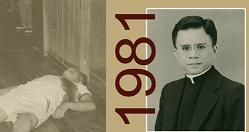
Fr. Godofredo Alingal SJ
1981, April 13: Fr. Godofredo Alingal, SJ, parish priest of Kibawe, Bukidnon.  Shot in his convent by three suspects. One acted as lookout, two proceeded to his room. He was shot as soon as he opened the door, according to an account published in the book, “That We May Remember” published by the Promotion of Church Peoples’ Rights in May 1989. The Bishop of Bukidnon in 1981, Bishop Francisco Claver, SJ, said, “We start with this one fact: If there is anything certain in the many uncertainties that surround the murder of Father Alingal, it is this: He was gunned down because of his unflinching proclamation of the Gospel of Justice.”
Link (here)

Thursday, September 29, 2011

Jesuit On The Burden Of Raising Children

Fr. Joaquin Bernas, S.J.
Influential Jesuit priest and constitutional lawyer Fr. Joaquin Bernas, SJ said that family planning as proposed in the controversial Reproductive Health (RH) bill is not necessarily "anti-life", putting him at odds with conservative Catholics who oppose the bill. In a column published in the Philippine Daily Inquirer on Monday, Bernas sought to clarify what being "anti-life" precisely means, for the term has been used "in the most pejorative way" in current RH bill debates. "It is used in the sense of being against existing life. Murder, in other words," he said. However, he said that in the currently toxic debate on contraceptives, "anti-life" could be construed to include people who do not want to add more human life to an already crowded population. He cited for example a married couple who decide to abstain from acts that bring about life, and a man who chooses a celibate life because he feels he can accomplish things without the burden of raising children. "I would not categorize such a person as being anti-life," Bernas said. "People like him love life so much that they take it upon themselves to contribute in some other ways to the improvement of the quality of life of those who are already born."
Link (here) to GMA

Monday, May 16, 2011

At The Jesuit Ateneo University In The Philippines

"Hail Mary Squad"
In the time of Jose Rizal, to be an Atenean is to have a liberal education. Jose Rizal studied Latin and Greek and learned the arts and sciences. A true Atenean is a devotee of the Sacred Heart of Jesus. Jose Rizal carved the Statue of the Sacred Heart in wood with a penknife. A true Atenean is a devotee of Our Lady. Jose Rizal prays the rosary. This is the reason why the Ateneo Basketball Team was once known as the Hail Mary Squad because they always pray the rosary before each game. And this is also why we sing our Alma Mater Song:
“Mary for you! For your white and blue! We pray you’ll keep us, Mary, constantly true! We pray you’ll keep us, Mary, faithful to you!” As an agnostic, you have to be careful when you sing this song. Mama Mary can convert even the most hardened sinners. The Campus Ministry in Ateneo never cease to give the Miraculous Medal every year. It is not called Miraculous Medal for nothing. If you receive that medal and pray a Hail Mary a day devoutly for a month, you will be converted. If you are incredulous, try it.
Link (here) to the great blog entitled, The Monks Hobbit

Saturday, May 14, 2011

Former Jesuit Ruben L.F. Habito On His Jesuit And Zen Experience

I went to Japan in 1970 in my early 20s, sent by the Jesuits to help out in the work there. And so, when I arrived I was enrolled in a language school and there I learned about Japanese culture and language and how to accustom myself to living and working in Japan. My spiritual director at the time, at the language school in Kamakura, was Fr. Thomas Hand. He was an American Jesuit from California who had already been practicing Zen himself under Yamada Koun-Roshi (whose Zen center was right there, in Kamakura). So, he recommended that I join him there at the San’un Zendo. So I did. That is what got me into the practice of Zen. This was as I was preparing my own studies for the priesthood in the Jesuit order.

And what was it about the practice of zazen that stuck?

I found it a very simple and direct way of coming to a point of stillness, without using discursive thought and without a lot of preliminaries. Of course there are physical and other preliminaries such as taking the posture, and so on. We had to go through eight introductory talks in the San’un Zendo as beginners before we could even join the rest of the group of sitters or being introduced to the Roshi. Again, the basic practice of zazen, is a very direct and simple way of being still. I found that very attractive and also very powerful. I came from a tradition of spiritual practice in the Jesuit order based on the spiritual exercises of St. Ignatius of Loyola. These spiritual exercises can also lead to a very deep spiritual experience but it arrives there going through a lot of discursive language and theological presuppositions, and so forth, beginning with considerations of how the world is in a mess, and how I am part of that mess.
Link (here) to read the full interview of Ruben L.F. Habito at Sweeping Zen

Thursday, April 21, 2011

Father Johnny Go, S.J.

Fr. Johnny Go, S.J.
A Holy Week retreat runs from Thursday to Saturday to cater to people whose schedules or locations prevent them from attending face-to-face prayer sessions. Prepared by Jesuit priest Johnny Go along with other Jesuits, the retreat titled “The Fugitives of Lent” takes off from the stories of the people whom Go calls the “bad guys” of the season – Judas Iscariot, who betrayed Jesus Christ; Pontius Pilate, who sentenced him to death; and Peter the Apostle, who denied his Lord thrice. In Go’s effort to try something different this year, four comic book characters take center stage in the brief preparatory module for the retreat. In the first few web pages of the retreat, Go invites participants to go deep into the characters of “the comic world’s worst villains” – Frankenstein, The Penguin, Dracula, and Lex Luthor.
Link (here) to read the full article at CathNews Philippines

Tuesday, April 19, 2011

Zamboangueno Jesuit On Holy Week

Fr. Buddy Wee, a Zamboangueno Jesuit priest who teaches Religious Studies at the Ateneo de Zamboanga University said in understanding the true meaning of Lent, one must be willing to change for the better. He also emphasized traditional Church customs of asking penitents to fast and abstain finds essence in the willingness to sacrifice for a better good. It also re-introduces one to a selfless devotion . While Fr. Wee said lent highlights self sacrifice through fasting and abstinence, alms giving and care for others, these traditions must be carried out not only during the Lenten season but through everyday of our lives. The Christian world enters Holy Week this week, the highpoint of the observance of the Lenten season, as devotees are expected to congregate in churches, for prayers, hear mass, seek penance and renewal with the Divine Almighty. Fr. Wee called for prayers and the faithful to read the Holy Book and reflect on the words of God to find true meaning this Holy Week.
Link (here) to Zamboanga Today Online

Tuesday, February 8, 2011

And Three Times Whacked The Jesuit Priest’s Face

American troops liberating Bilibid Prison in 1945
A Jesuit chaplain about his daily rounds, stopped by a young boy whose heart was bad. He knew his days were numbered, but every night he told the priest, "Father, I’d be happy if I could just see one Yank coming in full battle dress beyond that barbed wire fence." His wish was finally granted, when the Rangers stormed the camp one night, and took him to safety. Some American prisoners were confined at the Davao Penal colony until the first months to liberate the Philippines in June 1944. The prisoners were ordered to turn in everything: knives, cigarette lighters, matches, etc. 
One American Jesuit forgot a rusty opener of a sardine can he kept in his bag. The officer in charge discovered it, and three times whacked the priest’s face for this oversight. The prisoners were blindfolded, bound together like cattle, their shoes were removed, and were marched into the open. Herded into trucks, 1,300 of them were put aboard a small transport. 
They were left below deck, 584 men in a hold measuring 70 feet. For the next 96 hours they stood and slept -- if they could -- on their feet. By squeezing themselves more tightly together, they made some room so that six men could sit down at a time. 
This lasted for 21 days. The transport finally arrived in Manila. The American Jesuit priest, weakened by dysentery and malnutrition, stayed for a while at Bilibid prison and thence moved to Cabanatuan. He usually blacked out on rising from sleep, and once, he lost his balance and fell to the cement floor, badly bruising his knee and shoulder. 
The knee swelled and he could not stand on it. This was a lucky fall. It saved him from being sent to Japan with another batch of prisoners.
Link (here) to read the full account at Business World online.

Tuesday, September 7, 2010

The Asia Forest Network is not a Catholic organization, but it works with groups including the Jesuit-backed Environmental Science for Social Change movement, in supporting the role of communities in protection and sustainable use of Asia’s forests.
Link (here) to CathNewsAsia

Wednesday, August 11, 2010

A Musical Fundraiser For Jesuit Seminarian In The Philippines

MANILA, Philippines - The Jesuit Communications Foundation, Inc. (JesCom) presents the Philippine Madrigal Singers in “Madz Goes Jesuit: From Traditional to Contemporary Sacred Music,” a fund-raising concert for the benefit of the Jesuit Seminaries, on Aug. 18 and 19, 7:30 p.m. at Teatro Aguinaldo, Camp Aguinaldo, QC. The Madz will trace the development of religious music from the classical era to the post-Vatican II era that gave birth to Filipino liturgical music spearheaded by well-known and beloved Jesuit composers like Fr. Manoling Francisco and Fr. Eddie Hontiveros, among others.
Link (here) to the full article.

Friday, August 6, 2010

“Go back To Day One Of Your Arrival," Says Philippino Jesuit

Theresa "Gang" Badoy
Gravitating to media after college, Gang Badoy landed an ABS-CBN assignment to interview a hundred Filipinos in America for the Philippine Centennial Celebration in ’98. Exciting at first, eighteen interviews with Fil Ams considered successes saw her attention wandering to “ordinary Filipinos" struggling for survival. The network wasn’t interested in such stories. So she quit and lived on odd jobs until a lucky break at WTHR-NBC’s Eyewitness News in Indianapolis. Starting as an intern, she worked her way up to desk editor. That took care of her work visa. In six years she had a condo, a BMW and an Italian fiancé. But still restless, she woke up terrified one morning. “Is this it?" she asked.   
“Go back to Day One of your arrival," advised her long-standing best friend, the young Jesuit priest Joey Fermin
Gang returned to the first entry in her travel diary and read: “I’m leaving RP so I can come back braver." 
Link (here) to the full article at the Philippine GMA-NEWS.TV

Monday, July 12, 2010

Fr. Timoteo Ofrasio, S.J. "Share With The Faithful We Serve, Is To Live And Teach Fidelity To The Church."

What, to me, is the challenge for Jesuits today—and which we can share with the faithful we serve— is to live and teach fidelity to the Church. In his rules for thinking with the Church, which is expressed in and by the Jesuit vow of obedience, Ignatius exhorts us, above all, to “ever be ready and prompt to obey in all things the true Spouse of Christ our Lord, our holy Mother, the hierarchical Church.” Fidelity and obedience to the Church, in the person of the Pope and the local bishop, is the mark of a true Roman Catholic Christian, even when sometimes—or many times–we do not understand certain decisions or actions that cause us much hurt and confusion. 
We may question certainly; we may represent; we may disagree, even dissent probably—but in the end, when we have exhausted all means to make our voices heard, we humbly bow and accept the inevitable because as Ignatius teaches us, God’s will is manifested in our all-too-human superiors and Church leaders. This is a hard saying for many, I know, and maybe even my fellow Jesuits will dispute this, but there is no other way we can preserve the unity of the Church which we all love, if we do not live and practice obedience to her. 
Unfortunately, this Mother Church is not a democracy, and this is probably one of the reasons why “the gates of hell has not prevailed against it” for 2000-plus years. Only time will tell if our voices were disinterested and prophetic, or were they voices of vested interests under the guise of “for the common good.”
Read the rest of the homily (here) of Fr. Timoteo Ofrasio, S.J.at The Monk's Hobbit.
Photo is of a statue of St. Peter at St. Peter's Basilica within the Vatican

Friday, July 9, 2010

The Apostle Of Leece

St. Bernardino Realino (1530-1616), the Apostle of Leece, was of the Italian nobility. Before entering the Society of Jesus, he was an accomplished lawyer. He was also a chief tax collector, a mayor, and a judge. He also became a superintendent of the fiefs of the marquis of Naples. Yet, despite his success, St. Realino found himself unfulfilled with worldly honors. When he heard God’s call, he gave up everything to be a religious, a priest, a Jesuit. He became a model confessor, a sincere preacher, and a diligent teacher of the faith to the young.  He was a dedicated shepherd of souls and a pastor to the poor, the slaves, the sick, and the prisoners. When he was 32, he wrote to his brother, “I have no desire for the honors of this world, but solely for the glory of God and the salvation of my soul.”
Link (here) to the Philippine Province of the Society of Jesus to read the full article