Saturday, May 14, 2011

Nancy Pelosi Has Reconsidered Her Position On Jesuit House Chaplain

A spokesman for Rep. Nancy Pelosi said that the House minority leader’s concerns about Father Patrick Conroy, the Jesuit nominee for House chaplain, have been addressed. Pelosi had reconsidered her support for Father Conroy’s nomination after learning that the Oregon Jesuit province, to which the nominee belongs, recently made a record sex-abuse settlement. “Father Conroy has responded to additional questions posed to him,” said spokesman Drew Hammill. “Based on his answers, the leader sees no obstacle to his being named chaplain.” Rep. Peter Fazio of Oregon said that he expected that Father Conroy’s background would be “thoroughly examined” by House members. 
Link (here) to read the piece at Catholic Culture

Jesuit Deeply Disapointed In Nancy Pelosi

The Very Rev. Patrick Lee, superior of the Oregon Province of the Society of Jesus, said in a statement that he is “deeply disappointed” by the reaction to Conroy’s nomination. “Fr. Conroy is an excellent priest worthy of the nomination made by Speaker Boehner,” Lee said. “He has never been the subject of an allegation of child abuse.” The Rev. Patrick Howell, a member of the Oregon Province and rector of the Jesuit community at Seattle University, where Conroy worked for four years in the 1990s, said that most incidents of abuse happened decades ago and that the perpetrators are “under supervision and very restricted.”
Link (here) to read the article at the National Review Online

Fr. Patrick Conroy, S.J. Reported "Pass" To The Archbishop Of Seattle In 1986

In 1986, on his own initiative, he wrote a letter to the Archbishop Raymond Hunthausen in Seattle to report a “h@mosexual pass” made by another priest Fr. Dennis V Champagne, after the victim told Conroy about the incident many years later.  He never received a response from the archdiocese, but the young man in question stepped forward publicly in 2002, and the priest in question resigned.
Link (here) to read the full article in Human Events 

Former Jesuit Ruben L.F. Habito On His Jesuit And Zen Experience

I went to Japan in 1970 in my early 20s, sent by the Jesuits to help out in the work there. And so, when I arrived I was enrolled in a language school and there I learned about Japanese culture and language and how to accustom myself to living and working in Japan. My spiritual director at the time, at the language school in Kamakura, was Fr. Thomas Hand. He was an American Jesuit from California who had already been practicing Zen himself under Yamada Koun-Roshi (whose Zen center was right there, in Kamakura). So, he recommended that I join him there at the San’un Zendo. So I did. That is what got me into the practice of Zen. This was as I was preparing my own studies for the priesthood in the Jesuit order.

And what was it about the practice of zazen that stuck?

I found it a very simple and direct way of coming to a point of stillness, without using discursive thought and without a lot of preliminaries. Of course there are physical and other preliminaries such as taking the posture, and so on. We had to go through eight introductory talks in the San’un Zendo as beginners before we could even join the rest of the group of sitters or being introduced to the Roshi. Again, the basic practice of zazen, is a very direct and simple way of being still. I found that very attractive and also very powerful. I came from a tradition of spiritual practice in the Jesuit order based on the spiritual exercises of St. Ignatius of Loyola. These spiritual exercises can also lead to a very deep spiritual experience but it arrives there going through a lot of discursive language and theological presuppositions, and so forth, beginning with considerations of how the world is in a mess, and how I am part of that mess.
Link (here) to read the full interview of Ruben L.F. Habito at Sweeping Zen

Thursday, May 12, 2011

Jesuit Numbers Decline 70%

Fr. Howard Gray, S.J.
The New York Times reported that the number of Jesuits has fallen by 70 percent since 1954 and that several Jesuit colleges have been forced to confront the real possibility that the order might soon disappear from their campuses. The Jesuits, formally known as The Society of Jesus in the United States, have been an integral part of the Georgetown community since the school's founding by Archbishop John Carroll, S.J. Dedicated to learning, service and faith, they play active roles in the educational, religious and social facets of the university. But even Georgetown's highly visible and involved Jesuit community has been impacted by the recent downward trend in the number of new priests joining religious orders. Georgetown's Jesuit community has seen an almost 50 percent decline in members in the past 36 years, dropping from 122 in 1975 to 64 today, according to The Washington Post. 
Fr. Howard Gray, S.J., special assistant to President John J. DeGioia, entered the Society of Jesus in 1948 following his high school graduation. For him, the decline in the number of new members is very visible in the community. "There were about 10 to 12 of us that entered the Jesuits out of high school," he said. "Times have changed now."  
He added that this dip in numbers poses several challenges for the future of the order. "When you have a decreased population you count on and that population is aging, that affects your mobility and flexibility," he said.
Link (here) to read the full article in The Hoya.

Inside The Oregon Deal

Michael Pfau
The settlement of more than 500 individual claims, the result of over a year of negotiations, is believed to be the single-largest clergy sex-abuse bankruptcy settlement in the United States. It is also the first bankruptcy among the 10 Jesuit provinces nationwide. While a number of Catholic Dioceses have filed for bankruptcy, including the Spokane Diocese, the Jesuits are the first religious order to seek bankruptcy protection. The Oregon Province covers Washington, Idaho, Montana, Oregon and Alaska. Seattle sexual abuse attorney Michael Pfau, who represents 150 of the victims and played a role in brokering the settlement, said the money for victims, while significant, is secondary in importance to exposing wrongs and forcing change. “It took courage for the men and women we represent to come forward, tell their story and challenge such a powerful institution,” Pfau said. Although Pfau has represented hundreds of victims of clergy sexual abuse, he believes the bankruptcy will shed further light on what he perceives as a problem of institutional neglect. “Our clients and their communities deserve answers and deserve closure and this settlement is a big step toward accomplishing those goals,” Pfau said. A steering committee of seven victims and their attorneys began negotiating with the Jesuits several months ago. The same committee will recommend to all claimants that the offer be accepted. Under the terms of the proposed settlement agreement, approximately 70 percent of the payout will come from insurance assets. The remaining 30 percent will be paid directly by the Oregon Province.
Link (here) to read the full article at Othello Outlook

Wednesday, May 11, 2011

O Jesus, This Is For Love Of You


The video is from Fatima highlighting an

evening candlelight procession

with about 80,000 people

in the court yard of the shrine

singing Ave Maria.
Jesuits at Hiroshima and Our Lady of Fatima

Jesuit On Our Lady Of Fatima's Peace Plan

Mary's Peace Plan:  
"So here you have Our Lady trying to turn a whole world that is moving 
and rushing towards Atheism, away from God, by her Peace Plan at Fatima". 
Listen to the 44 minute lecture by Fr. Vincent Miceli, S.J. (here)

Jesuit On Fatima And Moral Miracles

Question: Has the Fatima message had a direct impact on your own life and ministry?
ANSWER BY FR. JOHN HARDON, S.J. : Much of what I have spoken and written, certainly since my graduate studies in Rome, has been deeply motivated by what I understood was the essential message at Fatima.
I learned from Fatima that Our Lady, having first obtained from her Son, to work a physical miracle continues obtaining from Him other physical miracles like at Lourdes,
but she especially wants her Son to work moral miracles of surpassing the natural laws of the human will. I believe it is more difficult to convert a hardened sinner than it is to raise a Lazarus from the dead.
And Mary is capable of working such miracles. My priesthood has taught me devotion to Our Lady and expecting her to work miracles of conversion. She'll do it. I believe that Fatima is especially the sign in our age of the moral miracles that God wants to work in a proud, self-preoccupied, pleasure-intoxicated mankind. Miracles are being worked. I tell people to expect miracles. And the most important kind of miracles you should ask God to work through Our Lady's intercession.
Link (here) to the full question and answer piece.

Jesuit On Romance, Disappointment, Agnosticism, Visions And Mary's So Called Visitations

I believe in life after death because I am a romantic, ...........Without life after death, life is not a romance it is a sick tragedy, a cosmic joke. If God loves us, then I think he would want to meet us face to face, not just through a glass darkly. Love requires presence, communication and communion.  
I am agnostic when it comes to visions and visitations. Too many are the product of psychosis and hallucinations. 
Too many promote fear rather than love. Too many do not sound like the Mary or Jesus of the gospels. I would not trade the Magnificat for all of Mary’s so called visitations.
.
Link (here) to read the original article entitled Happy Endings by Fr.Thomas J. Reese, S.J.
Marian apparitions of the Twentieth Century (here)

Tuesday, May 10, 2011

The Jesuit Church Of Saint Paul Saint Louis In Paris France

In the Rue Saint-Antoine is the old church of the Jesuits, gorgeous in marbles, gilding and stucco, as is the wont of the architects employed by those wary fathers. It was built from the designs of Francois Derraud from 1627-41. The remains of the conventual buildings are now occupied by the College Charlemagne. The expenses of the building were defrayed by King Louis XIII. and Cardinal Richelieu, who celebrated his maiden mass there. It was the second cupola erected in Paris, the first being that belonging to the Carmelite church. It is Italian in style, the facade being very similar to that of S. Gervais, recalling the Gesu and S. Ignatius at Rome, and is adorned with statues of S. Louis, by Lequesne; of S. Catherine, by Auguste Preault; and of S. Anne, by Etex. Bourdaloue and archbishop Huet of Avranches are buried there, and in a crypt below lie the Jesuits who have died in the convent from its foundation until the suppression of the order. The numerous monuments were swept away at the Revolution: a rich sculptured coffer for the heart of Louis XIII., and another by Coustou le jeune, containing Louis XIV.'s heart. The tabernacle was of silver gilt, but it is no more. The only contents now of any interest are a picture representing the abbey of Longchamps, attributed to Philippe de Champaigne, and a fine work by Delacroix, Christ in the Garden of Gethsemane. Although his first known picture, it is an example of his splendid colouring and grand composition. Victor Hugo's first child was born in the parish, and baptized at S. Paul's, and to commemorate the event the poet presented two holy-water stoops, in the shape of shells, very beautiful in design.
Link (here) to the book Churches of Paris

St. Andrew Bobola, S.J.

It was during the reign of Casimir V. that the Society of Jesus in Poland gave a glorious martyr to the Church. Saint Andrew Bobola was born in 1590, of an illustrious family; in 1611 he entered the Society of Jesus; and some years later, when the plague broke out in the town of Vilna, he devoted himself to the care of the sufferers with a heroism that excited universal admiration, and well-nigh cost him his life. He was subsequently appointed to the Jesuits' residence at Bobrinsk, on the Berezina. The province of Lithuania was at this period torn by religious warfare; the clergy and bishops remained firmly attached to the orthodox faith, but a portion of the population had fallen into schism, and it needed all the apostolic zeal of their pastors to recall them to the true faith. 
Among these devoted missionaries Father Bobola was foremost, and, as an instance of the wonderful success that crowned his efforts, we are told that he converted the whole city of Janow, where, when he began to preach, there were but two Catholics. In 1657, while preaching in the neighborhood of the town, he was surprised by a band of rebel Cossacks, whose ravages at that period created general consternation throughout the kingdom. 
He was seized by them and carried to a neighboring wood, where, upon his refusal to deny his faith, the barbarians cruelly scourged him. They then dragged him to Janow between two horses, put out his eyes, burnt his sides with lighted torches, tore off the skin of his back, while the martyr continued to repeat: 'Jesus, Mary, assist me; enlighten and convert these blind men ; Lord, Thy will be done.' At last his tongue was torn out, and soon afterwards his blessed soul went to receive his reward, on the eve of the Ascension, 1657.
Link (here) to read the original story along with other exciting tales of Jesuit heroism contained in the book The Jesuits.

Jesuit Church And Seminary In New France

The religious architecture of New France provides the first examples of the use of slate roofing in Canada. The initial churches, stripped down imitations of the monumental classic architecture of 17th-century France, used foreign building materials. 
The 1666 Jesuit church built on the Place du Marche at Quebec, and designed in the form of a latin cross with a bell tower at the transept crossing, had a French-slated hipped roof. A second example was Notre-Dame-de lmmaculet-Conception established as the parish church of Quebec in 1664. Seminaries and roofing company Toronto also used French slate. At Quebec, the Jesuit College was slate covered and the second Ursuline Convent was partly roofed with slates. 
Accounts indicate that the nuns bought 38 000 slates in 1674 and paid Maltre Robert Pepin “piqucur d’ardoise” for installing both slates and shingles. In 1687, 36 000 slates, with 300 feet of lead and 60 000 nails were sent to Montreal from the port of La Rochelle in France to cover the Sulpician seminary then being built.
Link (here) to read the full article.

Monday, May 9, 2011

The "Social Justice" Trap

What is Social Justice?  Ask 10 people, get 10 different answers ranging from social responsibility, racial equality, and economic distributism to the ubiquitous "isms" of the 20th Century: Marxism-Leninism, Fabian Socialism, Maoism, Islamic Collectivism, and European Socialism that inspired the latest utopianism, Global Collectivist Society. In a relativist world where all ideas are thought to be created equal, any and all ideas that advanced the development of "the human being" in history are subject to reinterpretation and adulteration. Therein lies The "Social Justice" Trap. 
"Social Justice" originates in the 19th Century writings of Italian Jesuit Luigi Taparelli who articulated the idea that free will is not the sole condition of the dignity[1] of man.  
Rather, man's social existence (natural dependence) carries moral dimensions.  As such, one cannot equate "the good" with the pleasurable nor the useful; in fact, the autonomous individual who pursues material existence cannot experience true transcendence, for it is grace that transforms the (informed) conscience and moves us to choose the greater good over the fulfillment of individual desires. 
Link (here) to the great article at American Thinker.

Abortion Providor Planned Parenthood And Boston College's Jack Dunn

Boston College's Gasson Hall
the Cardinal Newman Society as having "long criticized Catholic colleges for promoting practices that it believes are inconsistent with Catholic doctrine," the Chronicle of Higher Education says that, during last month's debates about federal support for Planned Parenthood, the Newman Society released a report, in which Catholic colleges and universities were criticized for mentioning Planned Parenthood. A detailed list can be found here. 24 colleges have since removed mention of Planned Parenthood, but some -- including some "more-prominent institutions on the list," such as Boston College -- said that they had not deleted such mention. Said Jack Dunn, a spokesman at Boston College:
The Cardinal Newman Society has no academic standing and has been admonished by Catholic bishops for using scare tactics that are designed to induce elderly donors into supporting their misguided efforts. As a Jesuit, Catholic university, Boston College has never been influenced by them.
Officials at Gonzaga University, the University of San Diego, the University of San Francisco and Dominican University of California all countered the Newman Society's report and said that references to Planned Parenthood remained on their webpages.
Link (here) to Care 2to read the full piece.

Sunday, May 8, 2011

Fr. Joseph Dias, S.J. On Baptismal Names

Fr. Joseph Dias, S.J.
A Jesuit priest in Mumbai is campaigning for children to be baptized with traditional Christian names to maintain their identity. Father Joseph Dias claims his campaign has received support from Pope Benedict XVI. “The pope recently warned parents against giving children celebrity-inspired names and urged them to turn to the Bible for inspiration instead,” he said today. 
Father Dias quoted the pope as saying in a recent homily that “every baptized child acquires the character of the Son of God, beginning with their Christian name, an unmistakable sign that the Holy Spirit causes man to be born anew in the womb of the Church. A name is an indelible seal that sets children off on a lifelong journey of religious faith.” 
The baptismal name should give a person a Catholic identity and it can be a powerful motivating factor, giving a “purpose and direction” to his or her life, he said. Father Dias said he has been counseling parents to give meaningful Christian names instead of naming their children after perfumes, Russian ballerinas, pop stars and regions. “Children are not merchandise or commodities or places,” said the priest, who is the assistant director of REAP (Reach Education Action Program, which aims to empower slum children and women through education), a Jesuit initiative in Mumbai. The priest said he was surprised to come across children named Aspirin, John Kennedy, Prince Albert, Ben-Hur, Brooklyn, Diana, Adelaide  and Diamond.
Link (here) to the full article UCANEWS

Saturday, May 7, 2011

Jesuit Set To Become Chaplian Of The US House Of Representatives

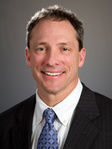
Fr. Patrick J. Conroy, S.J.
Speaker John Boehner (R-Ohio) said Friday he plans to nominate a Jesuit priest to serve as the next House chaplain. The Rev. Patrick J. Conroy would succeed Father Daniel P. Coughlin, who retired last month after more than 11 years of service. “We are honored that Father Conroy has agreed to serve as House chaplain,” Boehner said in a statement. “His dedication to God’s work, commitment to serving others, and experience working with people of faith from all traditions will make him an asset to the House community. We look forward to having his counsel and guidance in the people’s House.”
Conroy entered the Society of Jesus in 1973 and was ordained a Catholic priest in 1983. He currently teaches theology at Jesuit High School in Portland, Ore., according to the statement, and previously served as a chaplain at D.C.'s Georgetown University for 10 years, ending in 2003. 
Boehner, who is Catholic, nominated Conroy in consultation with House Democratic Leader Nancy Pelosi (D-Calif.), also a Catholic. “The Capitol Hill community will be blessed with the addition of Father Patrick Conroy to our ranks as House Chaplain,” Pelosi said in the same statement. “His experience working with young people, tending to the spiritual needs of a variety of communities, and serving for 38 years as a thoughtful and committed Jesuit priest will 
serve him well in this new role,” she added. “Following in the distinguished footsteps of Father Daniel Coughlin, he will provide guidance and comfort, ministering to the needs of the Capitol Hill community in an interfaith way.”

Friday, May 6, 2011

A Book Review Of The Jesuit Authored "Divine Mother, Blessed Mother"

While attending a Catholic Record Society conference in England a while back, I came across Francis X. Clooney’s book Divine Mother, Blessed Mother among those Oxford University Press had put on display. I skimmed a few pages and surmised that it might be the fruit of anti-Marian feminism grafted onto anti-missionary ecumenism. I was wrong. It’s even worse. It’s an invitation to apostasy. 
In the preface, Clooney, a Jesuit priest, recalls that he first visited a “goddess temple” at age 23, in 1973. He has studied Hinduism for thirty years and has taught comparative theology at Boston College since 1984. In Divine Mother, Blessed Mother, he takes three hymns addressed to three Hindu “goddesses” and contrasts them with three hymns addressed to Our Lady, in order to teach us “what it means to worship a goddess.” 
He is writing, he says, with feminist scholarship as his “guiding frame,” to contribute to the rectifying of “gender imbalances.” No surprise, then, that his tome is dedicated to women who are “silenced” and “ignored,” especially in the Catholic Church.
Link (here) to the full and lengthy review of the book at The New Oxford Review.

Birth Order Of Jesuit Saints

Here are the birth orders of two Jesuit Saints:
  • St. Ignatius Loyola - founder of the Jesuits (eleventh child)
  • St. Francis Xavier - perhaps the greatest missionary (thirteenth child)
Link (here) to Taylor Marshal's Canterbury Tales

Thursday, May 5, 2011

Jesuit On His Experiences Of The Blessed John Paul II Beatification

The things that struck me most was the way in which millions of people gathered in one place could be so full of a genuine joy and celebration....I have often commented on how well everyone treated everyone else, how genuinely nice people were, but there was a different and even better spirit hovering over this moment.
It was a moment of real jubilation, a moment of real joy, so much so that I saw more than a few tears on the via and walking into the square. 
There was a sense in pride in the great and rich diversity of people that were there from all over the world, each feeling joy in celebrating who they were and where they were from without doing it to the detriment of others......Today, at the beatification it was a time to celebrate..."
Link (here) to read the full and lengthy blog post at The Road to La Storta written by Mr. Michael Rogers, S.J. a scholastic.

Jesuit Universities Removing Planned Parenthood From Their Websites

In an interview with Tim Drake, senior writer for the National Catholic Register, Cardinal Newman Society President Patrick Reilly talked about the changes made. “The underlying problems at these colleges are still there and need to be addressed, and that takes time. But we do know that, as often happens at these institutions, problem faculty, staff, and students create these links and it’s not until we bring it to the attention of college officials that they’re able to do anything about it,” he said. “We’re excited. That’s nearly 20 percent,” he said of the percentage of schools taking action in response to the CNS report. “The tide is turning. These schools don’t want a bad reputation. We expect to see more changes in the upcoming weeks.” He said the links to Planned Parenthood and pro-abortion groups on Catholic college websites “point to larger problems at these institutions” and that pro-life advocates and watchdog groups like the Cardinal Newman Society must remain vigilant.
Link (here) to read about it at The Cardinal Newman Society
Link (here) to the story at Life News

An Interview With Fr. James Martin, S.J.

Have you ever not said something or not did something because you were afraid you might get in trouble with the church?
Yes.
What idea do you think is the most important idea right now for the church to be talking about?
How to combat sex abuse.
Have you ever said something or done something that was outside the boundaries of church rules because you knew it was the right thing?
Yes.
Link (here) to the full written interview of Fr. James Martin, S.J. with 21 questions

Wednesday, May 4, 2011

Killing Osama Bin Laden Is Morally Valid Says Georgetown Jesuit

For many people, Osama bin Laden’s guilt or innocence never needed to be adjudicated in a court of law, and an American bullet to his head was judgment enough. Scholars cautioned,  however, that there’s a difference between judging a man’s actions and judging his soul. The Rev. John Langan, a Jesuit professor of Christian ethics at Georgetown University, said killing bin Laden to prevent future attacks is morally valid, but cautioned that vengeance is ultimately a divine, not human, right. “I knew people who died in 9/11,” Langan said. “I feel deeply the evil of that action. But I  am part of a religious tradition that says that we don’t make final, independent judgments about the souls of other men. That rests with God.”
Link (here) to the full post at Anglicans United.

Distributing The 166 Million Dollars

Native Americans who reported s@xual abuse at Jesuit-run schools are telling their stories to court-appointed reviewers as part of an effort to determine how to distribute a $166.1 million settlement reached last month with an order of Jesuit priests. Some of the interviews happened in Great Falls last week, while others have taken place in Missoula and Polson. "It's hard. These are very difficult stories," attorney Andrew Chasan of Boise, Idaho, told the Great Falls Tribune for a story published April 28. "This may be only the second or third time they've told this story in their lives." The settlement money will be distributed among more than 450 claimants based on the severity of the abuse they suffered and other factors, he said.
Link (here) to the full AP story

Tuesday, May 3, 2011

Jesuit Reaction To The Removal Of An Extreme Liberal Bishop

Fr. Frank Brennan, S.J.
The sacking of Toowoomba Catholic Bishop William Morris was a "heavy-handed exercise of ecclesiastical authority," Jesuit priest and lawyer Father Frank Brennan said yesterday. 
Father Brennan said questions had been raised about the orthodoxy of Bishop Morris, effectively sacked by the Pope for his support of the ordination of women and other Liberal reforms, after his ordination as bishop 18 years ago. 
In a widely circulated letter, Father Brennan said he had first known the bishop when he was secretary to Archbishop Francis Rush in Brisbane. He was "then a very successful parish priest of the huge Gold Coast parish" before being made bishop of Toowoomba in 1993.
Link (here) to the full piece at The Australian