Thursday, July 9, 2009

Jesuit Doctor Of The Church Cardinal Bellarmine On The Holy Souls In Purgatory

Cardinal Bellarmine observes that we may well believe that the souls in Purgatory pray and obtain graces for us, since the rich man in hell prayed for his brothers, although he suffered much more than they suffer in Purgatory. And Francisco Suarez, S.J., who praises this opinion as pious and probable, confirms it by these words:
"The souls in Purgatory can pray for those who earnestly implore their deliverance of God, and who endeavour to obtain it by good works. For their prayers can but be useful to those persons whom they do not know, but whom God knows. Nothing then prevents them from begging God to assist these persons in necessity, to forgive their offenses, to preserve them from temptations, etc."

This is therefore another reason for believing that our good works applied to the dead have more power to draw down on us great gifts from heaven. For although the dead may not know in particular who we are, nor of what we stand in need, they can always recommend their benefactors to God, and implore Him to give them what they desire for His glory and for their salvation. " It is, in fact," says Suarez " a duty of charity and gratitude; why then should they refuse to acquit themselves of it? We have then," concludes the same Doctor, " a holy and real reason for doing good to the souls in Purgatory, so that we may have a greater share in their prayers."

Link (here) to the book entitled The Twelve Months Sancified by Prayer: November, by Fr. Antoine Ricard D.S.G.

Wednesday, July 8, 2009

Jesuit Editor In Chief On Legionaire Publisher And President Obama

When we Catholic journalists prepared to meet with the president last Thursday morning, NCR publisher Joe Feuerhard reported that his son had told him to ask the president, “How is it to be the coolest guy in the world?”
I can’t say we saw that well-known cool Thursday morning, except perhaps in his interchange with Fr. Owen Kearns, L.C.
but Barack Obama appeared, as he so often does, to be utterly comfortable in his own skin.

Link (here) to the full post by Fr. Drew Christiansen, S.J. the Editor in Chief of America magazine, his post is entitled, The Obama We Met

Fr. Owen Kearns, L.C. is a member of the Catholic religious order of priests, the Legionaries of Christ. He is the publisher of the major American Catholic newspaper called The National Catholic Register.

David Gibson at Pontifications could not contain his "Legion Bashing", read his thoughtless comments (here) on the Catholic meeting with the President.

Jesuit On Sister Francis Joseph, R.A.

Sister Francis Joseph, R.A. (Religious of Assumption) celebrates her 90th birthday with a party in the garden of Saint Francis of de Sales Church. Sr. Francis has had her picture taken with Popes while she worked with groups of religious in Rome. She tells tales of dinners with Pope John Paul and Father Pedro Arrupe.

Link (here) to the post of Fr. George Bur, S.J. his blog is entitled, The Spirit Blows Where It Will.

Photo of Fr. Bur, S.J. and Sister Francis

Jesuit Reflections On The Fourth Of July

It’s a day to celebrate our freedom as individuals and as a nation. Along with the oratory and patriotic words, our celebration of the day ought to also occasion a renewed commitment to recognize our connection with others.

On the Fourth of July we should let our faith remind us that each of us is connected to every other person in the world, and independence doesn’t mean isolation. On the contrary, just as the diminishing of freedom anywhere lessens freedom everywhere, it’s also true that freedom anywhere offers hope for freedom for people everywhere.

Link (here) to the post by Fr. Frank Majka, S.J. and his blog, The Bridge.

Tuesday, July 7, 2009

Former Jesuit Seminary, Now In The Care Of SSPX

A historic Jesuit church in St. Marys will be demolished tomorrow to make way for construction of a brand new church at the same site. Historic Immaculata Church on the grounds of Saint Mary's Academy and College will be removed on Monday as the first phase in the project to build a new Immaculata. It will take about a month to complete the first phase of demolition and site preparation, and will cost between $10-$12 million dollars.The new church will be built in the exact same place as the old one; right in the heart of campus. The new Immaculata will be approximately 45,000 square feet, will seat about 1,300 people and will be built in the traditional gothic style. When it's complete, it will be one of the largest churches of this style built in the U.S. in the last few decades.

Link (here)

The Jesuit And The Kingdom Of Ethiopia

On the llth of February, 1626, the court and the nobles of the land were assembled in the open air. Two rich thrones were occupied by the monarch Susenyos and his distinguished guest, and a surrounding multitude gazed upon the imposing ceremony in silence.

" The hour is come,"
exclaimed the Jesuit Alphonso Mendez,

" when the King shall satisfy the debt of his ancestors, and submit himself and his people to the only true head of the church."
A copy of the Gospel was produced, and the monarch, falling upon his knees, took the oath of homage.
" We King of the kings of Ethiopia, believe and confess that the Pope of Rome is the true successor of the Apostle St. Peter, and that he holds the same power, dignity, and dominion, over the whole Christian church. Therefore we promise, offer, and swear sincere obedience to the holy father Urban, by God's grace Pope and our Lord, and throw humbly at his feet our person and our kingdom."

As the Emperor rose from his position, Ras Cella Christos, suddenly drawing his sword, shouted aloud,
" What is now done is done for ever; and whoso in future disclaims the act, shall taste the sharp edge of this trusty weapon. I do homage only to true Catholic kings."
The monks, clergy, and noblemen followed the example of their superiors ; and the assembly was closed by a public edict, proclaimed through the royal herald, that all Abyssinians should, under pain of death, forthwith embrace the Roman religion. Palaces and revenues were set apart for the ministers of the new faith; seminaries for youth were established throughout the country, and baptism and ordination went on in peace. The success of the Jesuits increased rapidly, and many thousand souls were enrolled, who had been converted from the delusions of the Alexandrian creed.

Link (here) to the excerpt of the book entitled, The Highlands of Aethiopiana.

Photo is of the castle of Emperor Susenyos of Ethiopia called, Fasilidas Castle Gondar Ethiopia.

Monday, July 6, 2009

The Jesuit Challenge!

Fr. Diego Laynez, S.J. removed to Brescia early in 1544, where the doctrines of Luther and Calvin were in great favour. He preached, and was admired as usual; but an apostate monk, whose name we must regret not to know, announced that he had arguments against purgatory so conclusive, that Laynez must be silenced by them, if not convinced.
Laynez challenged him to a public contest. In those days such disputes, the chief intellectual amusements of an age when books were still rare, were greatly enjoyed. Numbers thronged to hear the discussion, which was opened by the monk, who went through all his arguments without interruption ; Laynez listening with downcast eyes, in perfect patience, till his antagonist had exhausted his subject.
Then, with the accuracy of a prodigious memory, Laynez went through the objections in the order in which they had been stated, taking up each point, and refuting the Lutheran's view so fully and clearly, that an extraordinary result followed. For not only did the audience pronounce for Laynez, but the monk owned himself vanquished, returned to the faith of the Church, and became a warm friend of Laynez from that time.

Link (here) to the portion of the book entitled, Ignatius Loyola and the early Jesuits.

Fr. Pasquale Borgomeo, S.J. "Rest In Peace"

A former director of Vatican Radio, Jesuit Father Pasquale Borgomeo, died Thursday in Rome after a long illness. He was 76.

Father Borgomeo was with Vatican Radio for 35 years, and died "with a spirit of acceptance of God's will, accompanied by the prayers of his brothers in the Society of Jesus, his family and friends, and especially, the Holy Father, who was informed of his worsening health," said Jesuit Father Federico Lombardi, his successor.

Father Lombardi is the director of the Vatican press office, including Vatican Radio and Television.

Father Borgomeo's funeral will be held Saturday.

The priest left the directorship of Vatican Radio in 2005 due to his health condition. He had been named the director 20 years before, in 1985, and this after working as an editor with Vatican Radio since 1970. Father Borgomeo had referred to his role as an "exciting adventure."

Pasquale Borgomeo was born in Naples in 1933. He joined the Jesuits in 1948 and was ordained in 1963.

L'Osservatore Romano said that the priest "pursued no other objective than bringing the voice of the Pope [...] to all the corners of the earth."

A must see Jesuit historical time line with pictures from the Hungarian Jesuits (here)

Sunday, July 5, 2009

Former Jesuit On The Tenacity Of Lucifer And Signs Of The Anti-Christ

Listen to a riveting interview with Fr. Malachi Martin who became an Irish Jesuit priest at age 33 in 1954 and later left the Society of Jesus. Fr. Martin discusses the film "The Exorcist", the tenacity of Lucifer, the angelic battle that is going on today, the war between the angels and demons for our souls, on major and minor exorcisms, how to discern mental illness from demonic possession and oppression, on the anti-Christ, Fr. Martin points us to the Second Letter of St. Paul to the Thessalonians and the three signs of the anti-Christ. The Church Fathers; St. Gregory of Nissa, St. Gregory the Great and St. Basil were also mentioned by Fr. Martin as the early experts on the rise of the Anti-Christ.

Listen to the interview (here)

Photo (here)

Jesuit On The Sights He Saw In Goa, India

A state barge with a gilded awning, manned by eighteen rowers in scarlet frocks and caps, the latter fronted with a wrought plaque of hammered silver, waited under the walls of Fort Agoada, on the northern horn of the bay; and a British revenue schooner, protecting the salt trade, tacked backwards and forwards across its mouth. The barge pulled alongside; the Viceroy, unable to come on board—his wife lay in a dying state—sent the chief officers of his Government to offer a welcome to Lord Ripon, his viceregal brother from Bombay. It was then determined that the party on board the Clive should find themselves off the quay of Old Goa by seven next morning, where they were to be received with due honours on landing. The Archbishop kindly offered to say Mass at the shrine of St. Francis Xavier as soon as we landed ; and it was arranged that the visitors should be taken round the antiquities of the city before leaving the place to embark once more on board the Clive.

Link (here) to the full account given by

Fr. John Hungerford Pollen, S.J.


Writer; born in 1858 in London, England; died there in 1925. Educated at Munster, Germany, Oratory School, Birmingham, England, and London University. He entered the Society of Jesus in 1876, and was ordained in 1891. He devoted his life principally to the study of the history of the Society of Jesus and the lives of English, Irish, and Scottish Catholics since the Reformation. He was vice-postulator for the beatification of the English martyrs, and one of the founders of the Catholic Record Society. He was the author of Acts of the English Martyrs (1891), The Bedingfield Papers (1909), Papal Negotiations with Mary, Queen of Scots (1901), and English Catholics in the Reign of Queen Elizabeth (1920), and a contributor to The Month and the Dublin Review. Link (here)

Photo is of a modern barge in Thailand but I think you can get an idea of what Fr. Pollen, S.J. was writing about.

Saturday, July 4, 2009

The Roman Catholic Church in Jamaica was entrusted to the Jesuits in 1837 and this arrangement continued until 1956 when the diocese of Kingston was established.

Link (here)

Coffee, Tea And Jesuit

Fair trade and organic coffee farming is the topic as a Jesuit High School mathematics and science teacher is on a large-scale research and environmental expedition in Costa Rica this week. Jennifer Cournia, a 1997 Jesuit graduate, is in Coope Tarrazú, a farming cooperative located in the small town of San Marcos de Tarrazú.

Link (here)

Friday, July 3, 2009

280 Men In Formation

About 280 men are currently in Jesuit formation in the United States. The Jesuits are praying for more. Being good disciples of Ignatius Loyola, they are also working to encourage vocations as well as praying for them. An article in Holy Cross Magazine describes how this works on one Jesuit campus. The idea of a vocation gets mentioned. One of the most effective “mentioners” isn’t even a Jesuit.

Link (here) to Loyola Press blog

The Payoff

The White House announced that Doug Kmiec (here) will be the new Ambassador to Malta.

Link (here) to Fr. Z

Rebel Nun At Jesuit School Of Theology At Berkeley

Some sisters surmise that the Vatican and even some American bishops are trying to shift them back into living in convents, wearing habits or at least identifiable religious garb, ordering their schedules around daily prayers and working primarily in Roman Catholic institutions, like schools and hospitals.
“They think of us as an ecclesiastical work force,”

said Sister Sandra M. Schneiders,

Link (here)
"The Potty Mouth" at America's In All Things (here)
Father Donal Godfrey, S.J., a prominent Jesuit University Official is to speak at a gay-rights Dignity USA conference. Link (here)

Thursday, July 2, 2009

Jesuit Radio Station On The Run

Rev. Ismael Moreno, station manager of Jesuit-run Radio Progreso in the northern Honduran city of San Pedro Sula, said
Radio Progreso is broadcasting from a secret location because soldiers seized the station on Sunday
within hours of when troops in the capital dragged Zelaya from the presidential residence and put him on a plane to Costa Rica. Troops have mounted surveillance outside the homes of grassroots activists and that some 200 pro-Zelaya demonstrators had been briefly detained and beaten by police.

Link (here)
Previous piece on Radio Progresso (here)


If you are broadcasting religious content why would you have to operate clandestinely?

Jesuit On Tradition

An excerpt from a speech by Jesuit Father Samir Khalil Samir

Tradition means continuity, identity and renewal
Tradition (Lat. tradere) means passing on one’s precious legacy which will in turn be passed on to others and so on. Thus tradition presumes continuity in the here and now. It does not mean going back but assumes instead finding in one’s roots the inspiration that guarantees continuity, strengthens one’s identity and renews the present; in short, continuity, identity and renewal.

When tradition becomes identified with the past and stops inspiring the present it is dead. Because it no longer exists it is treated as something sacred; by making it sacred it is buried because it is no longer understood.

Increasingly we find ourselves in this situation in our Arab and Muslim societies. No longer do we have a future or a present; we are simply stuck with the past. We go back to the past and turn it into a myth, something sacred, for we have nothing else.

In reality in doing this we reinforce our cultural and spiritual death. The notion of tradition in today’s Muslim world means going back to the way things were in 7th century, an age that becomes sacred. We often focus on outer details like the beard, the veil or niqāb, the miswāk (a kind of long toothpick from a root that Islam’s prophet used), the long white tunic, etc.

Conversely, Christians (most notably in the West) tend to reject their traditions. Some people think that they must forget or even reject their past to be modern. The danger in that case is of losing one’s roots and authenticity. It is a danger I see in Europe.

This can drive some to become traditionalists, to hang on to some details (for example, the Latin mass, the cassock, etc.). The rise of Mgr Lefevbre and his followers is a mirror image of the rejection of tradition.

Link (here) to his full speech.

Fr. Daniel Berrigan, S.J. Jesuit Arsonist

In burning the draft files, the Catonsville Nine used napalm, the gelatinous flammable substance that was then burning the flesh of Vietnamese women, men and children during the Vietnam War. “It was Philip who came up with the idea,” Berrigan said. “In the military section of the Georgetown University library, a friend found a copy of the Green Beret manual with instructions for making napalm from soap chips and kerosene.” Before the stunned eyes of Selective Service employees, several of the group lifted the files from their drawer marked A1 and carried them out to the parking lot, because, said Berriga.

Link (here) to the flattering piece on the arsonist Jesuit in America
Previous piece on Fr. Berrigan (here)
Photo from 1968 of Fr. Daniel Berrigan, S.J. in handcuffs flashing a peace sign (here)

Wednesday, July 1, 2009

Jesuit Who Proselytize Win Souls

But while Jacques Cretineau-Joly denies with such confidence the aim of the Jesuits to proselytize, and yet gravely tells us that, " nevertheless, the number of Catholics was yearly increased," he says in the very same sentence that this was owing,
" above all other causes, to the prudence combined with the zeal of the Jesuits."
How could their zeal have effected this, unless it had been zeal to effect it by proselytism? and wherein could their prudence be combined with that zeal, unless in their attempts, like his own, to conceal or deny it ?

Link (here) to the book published in 1863 entitled The Poor Gentlemen of Liege: The History of the Jesuits in England and Ireland

More Than Meets The Eye ? Honduras Democracy And Jesuit Radio

The signals of two Tegucigalpa-based television stations and a provincial radio station were blocked early Sunday morning, according to international press reports and local journalists.
The signal of Canal 8, a national, government-owned television station, was reinstated late Monday night, local reporters said. Radio Progreso, a Jesuit-run radio station in the northern city of El Progreso, was back on the air on Tuesday afternoon, reporters told CPJ.
However, the private television station Canal 36, which CPJ sources said had supported Zelaya, remained off the air as of Tuesday afternoon.

Link (here)

More Honduran news (here)

No Coup!

Th Honduras President was trying set himself up as socialist dictator, He was relieved of his duties by the Supreme Court and Legislature of Honduras.

Before his ouster, President Manuel Zelaya was no democratic saint himself. He was doing battle with the other branches of government over his legally questionable efforts to eliminate presidential term limits. The Supreme Court and Congress declared a referendum on the subject unconstitutional, and the prosecutor's office and electoral tribunal had the ballots confiscated. When the army refused to organize the vote, Zelaya fired the commander of the armed forces.

Link (here)

On Jesuits in Honduras (here) , (here) , (here) and (here)


Slovenian Jesuit

There is also a proud, if seldom known, record of contributions made to America by Slovenian missionaries. Mark Anton Kappus, a Slovenian-born Jesuit missionary, scholar, and superior of Jesuit missions in the enormous territory of Sonora and Pimeria Alta in northern Mexico and southern Arizona, came to America in 1687 and returned to Europe in 1701 to report that California was not an island, as it then had been generally believed.

Link (here)

Tuesday, June 30, 2009

John Ayscough On Jesuit Martyr Robert Southwell

I have often heard it urged that ' Lead, kindly Light' should not be sung in church because it is not a hymn, but a poem; and this has always struck me as being the most scathing, because wholly unconscious and unintentional, satire upon hymns. Certainly there are innumerable hymns (and hymn-books), though there is only one' Lead, kindly Light.' But I must say the same line of criticism ought to bar the ' Dies Irae,' the ' Urbs Caelestis Jerusalem,' and ever so many of the breviary hymns, which are poems if any exist.

Apart from the breviary and missal Latin hymns, the finest I know, of which the inspiration is Catholic doctrine, are those of Father Robert Southwell, the Jesuit martyr. I often wish some of our excellent Catholic magazines, on both sides of the Atlantic, would reproduce some of them instead of ' original' Catholic poetry. Of one of them Ben Jonson said that he would willingly have burnt much of his own work if it could have given him the authorship of that poem.

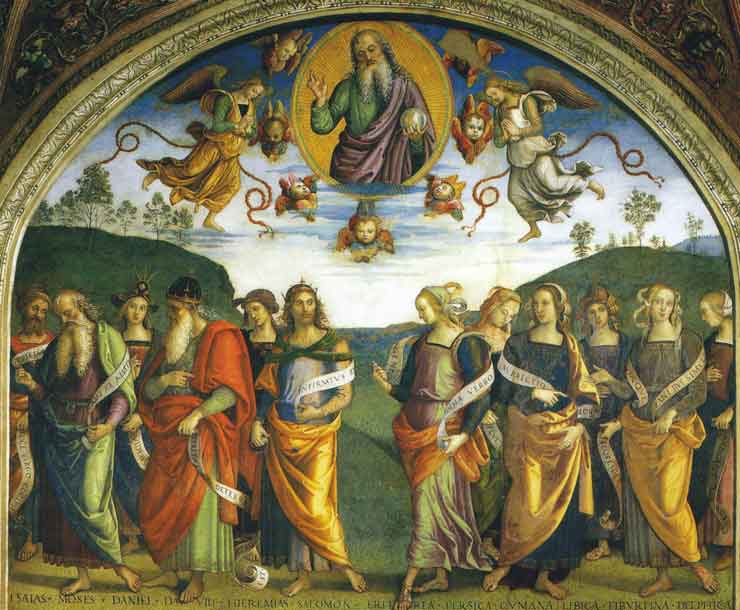
As for Milton's most glorious ode and hymn, ' On the Morning of Christ's Nativity,' I would give all' Paradise Lost' and all' Paradise Regained' for it. It is as exquisite as Perugino's ' Prophets and Sibyls,' with the super-added stateliness and majesty of Michelangelo.

Link (here) to the portion of the book entitled Pages from the Past, by famous English Catholic prelate and writer John Ayscough. More literary works by Ayscough are; French Windows, Catesby's Story, John Ayscough's Letters to his Mother and Discourses and Essays