Wednesday, February 6, 2008

Sin , Sex and shots at The Tombs: My Georgetown Legacy

GU Fosters Mind, Body, But Not Soul
By
Feb 05 2008

“For what does it profit a man if he gain the whole world and lose his soul?”— Mark 8:36
The solicitations arrive often. The alumni magazine, the annual appeal from the Georgetown Fund and, of course, the many reminders of the upcoming 10-year reunion. My goodness, has it really been a decade since we strode across the stage, with a hangover, to receive an overpriced diploma? As I recall those glory days, I can’t help but grin remembering the long hours of debate with rowdy and drunken roommates from Darnall Hall’s first floor and those all-too-short nights with the beautiful ladies I am still surprised I was able to bed.
By most accounts, my Georgetown career was a great success. I earned two degrees in political theory and classics, hosted a radio show, wrote a column for THE HOYA and won the historic Philodemic Society’s Merrick Debating Medal. I interned for both Michael Novak and Robert Novak and made many connections that served me well when I fulfilled my senior-year dream of visiting every congressional district and insular territory after graduation. Afterward, I find myself back in my native Minnesota plotting to run for political office as an independent, and I am very proud to say I graduated from the Hilltop.
Yet, I have never given a dime to Georgetown — and I never will. You see, in the decade since, I also look back on my beloved alma mater with great regret and sorrow. Georgetown is an elite institution with an international reputation that punches a card for lawyers, doctors, bankers and a good number of politicians.

It is not, however, a university that graduates many Christian gentlemen or women of virtue. The social scene at Georgetown, then as now, revolves around ever-present alcohol (a guy from New Jersey sold me a fake ID my first week of school) and always available “random hookups.” Sin, sex and shots at The Tombs are good for the temporal senses — but bad for the immortal soul.

I confess to my brother and sister Hoyas — I was no saint during the four years I attended the oldest Catholic University in America. As I once quipped to a friend, “At Georgetown, I was a conservative Catholic by day, a liberal Protestant by night.”
The failings of the student body are well-reflected in a morally bankrupt (and ever dwindling) Jesuit community and secular-minded administration. A school more concerned with endowment size than the eternal soul of its students, it is a far cry from John Henry Newman’s ideal of a Catholic University. The president of Georgetown is not even a member of the Society of Jesus.
John Carroll, founder of Georgetown, and Ignatius Loyola, founder of the Jesuit order, would hardly recognize the wimpy technocrats that compose an order of priests once referred to as “the Pope’s Marines.”


Larry Flynt is more at home in Gaston Hall (and a more frequently invited guest)
than Pope Benedict.


As I reflect on those days, I also recall an arrogant young man who cared more for himself than others and, while educated well in mind, was poorly taught in body and spirit.

I recall the insanity of the notorious fight with the “English” department over keeping Shakespeare in a department more concerned with gender and sexual identity than great literature, and the utter absurdity of fighting the Jesuit community over having crucifixes in the classroom.

Georgetown’s professors care more for the philosophy of the ’60s than the timeless truth of 2,000 years learned from Catholic thought and tradition.

How many Georgetown students today have ever even had a class on Catholicism or the Catechism?

Georgetown is many great modern things — yet a Catholic university dedicated to the eternal truths of man and God, it is most surely not.
It has been a decade now since last we met. A decade to learn, travel, reflect and get far away from Georgetown. A decade to go to confession and ask forgiveness for my many failings as a man and a Hoya. Yet it has also been a decade to clearly see the truth.

Georgetown University is a great school for pre-professionals and pompous Bill Clinton wannabes.

I was one of them, and it was a great time. It is a horrible place for those who want an authentic Catholic university that prepares not just the mind, but also the soul, for the hard battles that lie ahead. My advice to my fellow members of the class of 1998 — send your money and your children to Notre Dame.
Cain Pence (COL ’98) is a writer and political activist in Minneapolis.
He can be reached at CainPence.com.
An old photo of Cain on the left and his mother in the center
Link (here)

More McGuire, More Charges: This Time Statutory Rape

Jesuit priest pleads not guilty to traveling outside U.S. to have sex with minor
By Jeff Coen
Tribune reporter
February 6, 2008

A Jesuit priest pleaded not guilty Wednesday to charges that he traveled outside the U.S. to engage in sex with a teenage boy. Rev. Donald McGuire, 77, was present for his arraignment before U.S. Magistrate Judge Arlander Keys in the Dirksen U.S. Courthouse. He was first charged in a complaint last fall and was indicted by a federal grand jury last week.
McGuire is charged with traveling with the teen to Austria, Switzerland and Nicaragua and with traveling interstate to Minnesota to engage in sex with him. The offenses are alleged to have occurred in 2000, 2001 and 2002. After he was charged, McGuire was released from custody but ordered confined to his Oak Lawn apartment.
But McGuire, who is said to suffer from congestive heart failure, has been allowed to travel to a clinic in Cleveland for treatment. He is to return to the facility in coming weeks for follow-up treatment, his lawyer, Stephen Komie, said Wednesday. McGuire faces up to 15 years in prison if convicted. He was convicted in 2006 in Wisconsin of molesting two students from Loyola Academy in Wilmette during trips near Lake Geneva in the 1960s. He is appealing his 7-year prison sentence. The Jesuits are seeking to dismiss him from their order.

Link (here)

The Left Is Losing The Liturgy Fight, The Theological Fight And Now The Political Fight

Does Obama Have a Catholic Problem?
February 6, 2008
Posted by J. Peter Nixon
A provocative headline, to be sure, but I was looking at some exit poll data tonight and noticed how Obama was performing significantly lower among Catholic Democrats than among Democrats generally. Obviously there are a lot of other factors at work here–race, ethnicity, gender, class, etc.–but the results were still interesting:
All Data from CNN Exit Polls
State/Obama’s Share of Catholic Democrats/Obama’s Total Share of Democrats
NM 37(42)
CA 27(34)
CT 39 (47)
NJ 28 (44)
NY 30 (40)
DE 35 (53)
TN 40(41)
MO 50(49)
MA 33(41)
IL 48 (65)
Again, this is a complicated issue and it’s been clear for some time that it is very hard to speak of a cohesive “Catholic” vote among the electorate. But the fact that Obama did much more poorly with Catholic Dems relative to all Democrats in states that he won like DE, CT, and even his home state of IL is interesting.
Many are skeptical of the idea that, given the diversity of American Catholics, that there is any distinct message that will appeal to us. I think that’s probably right. But I remember back in 2000 and the early years of the Bush Administration how deliberate he was in trying to invoke certain Catholic themes (remember the Dorothy Day reference?).
Any thoughts? As for me, it’s time I turned in.
Link todah Un-Commonwheel article (here)

Tuesday, February 5, 2008

Blog Watch: The Bride And The Dragon

Flights Into Evolutionary Cosmic Myths...The Infection
"The Church is evolving into a higher form...the Church is seeking self-knowledge..."

--Paul VI, Dialogues, Apostle for Our Time Pope Paul VI

by Msgr. John C. Clancy.

Joseph Cardinal Ratzinger: "In Catholic milieus, the Second Vatican Council encouraged the accord with that general tendency [optimism toward the world]. Prior to it, the awakening of theology and an entire new understanding of Scriptures, the Fathers, Liturgy, and an openness in relations among divided Christians had raised a new enthusiasm for science. It had even set back the traditonal pragmatism of a great part of theology students. Such theological knowledge appeared to them as a promise of new possibilities for the faith, new roads for the Church."


The signal sent by Teilhard went further. In a bold vision, he included the historical movement of Christianity within the cosmic process of evolution from Alpha to Omega. This process was conceived as the Noogenesis, that is to say, the development of consciousness in the evolution of men, to form a Noosphere above the Biosphere.

"This means that evolution is henceforth understood as a type of technical and scientific development in which Matter and Spirit, the individual and the society constitute a global ensemble, a divine world. The conciliar constitution on the Church and the Modern World [Gaudium et spes] followed the same train of thinking. The Telhardian maxim: "Christianity means more progress, more of the technical"


was what encouraged the Conciliar fathers from both wealthy and poor countries to feel a more facile and concrete hope to translate and spread this notion rather than the complicated discussions about collegiality of Bishops, primacy of the Pope, Scriptures and Tradition, priests and lay people. (Joseph Cardinal Ratzinger, Les Principes de la Theologie Catholique - Esquisse et Materiaux, Paris: Tequi, 1982, pp. 374-375).


Of Teilhard de Chardin, Sean Hyland writes:


"The French Jesuit Pere Teilhard de Chardin (1881-1955) was one of the most well-known theologians of the 20th century. However, his writings were condemned several times by the Holy See...[the final time in 1962--SH] Teilhard denies the immutability of God:"


As a direct consequence of the unitive process by which God is revealed to us, he in some way 'transforms himself' as he incorporates us." (The Heart of Matter, p. 52-3; in Smith, op. cit.p. 104)"I see in the World a mysterious product of completion and fulfillment for the Absolute Being himself" ( The Heart of Matter, p. 54; in Smith, op. cit.p. 104)

"De Chardin.. attempted to create a fusion of Christianity and evolutionary theory, taught not so much Catholicism as New Age Hinduism, as his teachings were to all in intents and purposes, pantheism (the belief that God is everything). De Chardin was a New Ager, possibly one of the first Catholic clerics to fall into this error, and certainly the most influential. Clearly this view is in no way compatible with Catholic doctrine, and the history of his disputes with Rome bears this out."--

Teilhard de Chardin: Rogue Theologian Teilhard writes: “

"I can be saved only by becoming one with the universe. Thereby, too, my deepest pantheist’ aspirations are satisfied, guided, and reassured. The world around me becomes divine, And yet the flames do not consume me, nor do the floods dissolve me. For, unlike the false monisms which urge one through passivity into unconsciousness, the 'pan-Christism' I am discovering places union at the term of an arduous process of differentiation. I shall become the other only by being utterly myself. I shall attain spirit by bringing out the complete range of the forces of matter. The total Christ is consummated and may be attained only at the term of universal evolution.”

(Christianity and Evolution P. 128, How I believe; Teilhard de Chardin, p.81-82)In his book, Global Responsibility: In Search of a New World Ethic (1991),

Hans Kung writes that "participation in this new “ethic” (religion) will not be optional. He states, Any form of... church conservatism is to be rejected ... To put it bluntly: no regressive repressive religion - whether Christian, Islamic, Jewish or of whatever provenance has a long-term future ... Its ethics is to function for the wellbeing of all, it must be indivisible. The undivided world (sic) increasingly needs an undivided ethic. Post modern men and women need common values, goals, ideals, visions. But the great question in dispute is: does not all this presuppose a religious faith?... What we need is an ecumenical world order!”

[SH: read world government acting also as arbiter of religions in the new pantheon]---(emphasis added throughout above)Note: It is unseemly for a pope (as with JPII and Benedict XVI) to say they "believe in" the theory of evolution. A theory is not part of a Creed, and personal opinions are of no useful purpose to the Faithful. Moreover as Cardinal Ratzinger (today Benedict XVI) suggested (approvingly?) above, such theories can infect approaches to theology and metaphysics in general. And to speak of an "awakening in theology" in an evolutionary context which led to Vatican II seems a presumptuous assertion, to be sure. A theory should be bracketed as a theory, not entertained as a world view, especially in this case where these theories are under increasing multi-level critical scrutiny by many scientists with all the requisite bona fides, today, even if the philosophical / metaphysical presuppositions of much of the "science" establishment is threatened by such inquiry into their dogmas.


Photo is of de Charin in the field
Hat Tip MDV

Budhindi And The Society

Buddhism and Hinduism

For quite some time the Society of Jesus has been a promoter of Buddhism. Such support became apparent with the landmark books of Fr. Henri de Lubac, Aspects of Buddhism, [1951] and La Recontre du Bouddhisme et de l’Occident [The Meeting of Buddhism and the West, 1952]. De Lubac gave a special emphasis to the Japanese Amida Buddhism and wrote another book entitled simply Amida, published in 1955.

Now then, before his election Fr. Arrupe had been a priest in Japan for a long time and assimilated many customs of Buddhism there. Even after becoming the General of the Jesuits, it was common to find him pictured in photos barefoot and seated cross-legged in Buddhist meditation. Again, this direction didn’t change under Fr. Kolvenbach, who was also Buddhism-oriented. In the 25 years of his term, the Jesuits were allowed or even encouraged to mix Buddhism with Catholicism. I offer two examples that came to the public attention:

Fr. Anthony de Mello, who was born and lived in India, taught a kind of mystical syncretism between Catholicism, Buddhism and Hinduism. There is no indication that he was ever censured by Fr. Kolvenbach. In 1998 the Vatican made a posthumous condemnation of de Mello’s works. Shortly after, however, the censure was lifted and changed into a simple warning.


Fr. Jacques Dupuis, a Belgian who also lived and taught in India, wrote many works proposing the assimilation of Buddhist and Hinduist principles into the Catholic Faith. He was invited by the heads of the Society of Jesus to teach in the Gregorian University in Rome and became director of its prestigious magazine Gregorianum. He was then invited by the Vatican to be a consultor at the Pontifical Council for Interreligious Dialogue. After all this, one of his works was placed under suspicion. But in the end, there were no practical consequences.
John Paul II shortly would praise him publicly for his “pioneering” work, and lay any lingering suspicion to rest.
Link to the blog Tradition In Action this is an excerpt from a post entitled, JESUITS: HIGH OR LOW SPEED?

How can we forget Fr. Robert Kennedy, S.J., Roshi, Is A Jesuit Priest and Zen Teacher In The White Plum Lineage, Buddism

Photo of Shiva the destroyer of the world.

Hat Tip MDV

Boston College Says, "The Mass Is To Contraversial"

The students who were pro-life at BC wanted a "Mass for Life" before they departed for D.C., Campus Ministry at BC didn't want to have a "Mass for Life" before the March because it was "too controversial." Feel fee to post that.
Link (here) Hat tip Some Wear Clerics

Little Dark Jesuit Kid: On Ash Wednesday

{Many people are asking me about ash wednesday and the season of lent so i decided to post this one from our Jesuit Ordo. Hope this helps. May you have a meaningful and Christ-centered Lenten season this year.}

Arthur W. Nebrao, Jr., SJ
Zamboanga City and Bilibid Prisons, Philippines http://www.jvpfi.org/, http://www.jesuits.ph/ and er2ol.blogspot.com


Traditionally, the ashes for the Ash Wednesday service come from burning the palm fronds from the previous year’s Palm Sunday celebration. They are made by burning palm fronds which have been saved from the previous year's Palm Sunday, the Sunday before the Easter. They are then blessed by a priest.Ashes are a biblical symbol of mourning and penance. In Bible times the custom was to fast, wear sackcloth, sit in dust and ashes, and put dust and ashes on one's head.Blessed ashes having been used in God's rituals since the time of Moses (Numbers 19:9-10, 17).They also symbolize death and so remind us of our mortality. Thus when the priest uses his thumb to sign one of the faithful with the ashes, he says, "Remember, man, that thou art dust and unto dust thou shalt return," Getting self-ashed:Of course, it is easier to purchase them from a religious supply house. However, if you burn the palm fronds yourself, don’t add any other ingredient—just burn the ashes plain. Add a little oil to the ashes so that they will stick to people’s foreheads.Don’t overestimate how much you need! It is amazing how far a small amount of ashes will go!Lent is a preparation for the celebration of Easter. For the Lenten liturgy disposes both catechumens and the faithful to celebrate the paschal mystery: catechumens, through the stages of Christian initiation; the faithful, through reminders of their own baptism and through penitential services.

.
Some Notes on the Lenten Season

(lifted from the Jesuit Ordo of the Philippine Province)

1. The Sundays of Lent are so important that not even a solemnity can take their place. Solemnities occurring on these Sundays are observed on the Saturday preceding.

2. The weeks of Lent from Ash Wednesday to the Saturday before Palm Sunday take precedence over the memorials of saints, which may be celebrated only according to the norms established by liturgical statutes.

3. The Alleluia is always omitted where it is found in the Liturgy of the Hours and in the celebration of the Mass.

4. The Te Deum and the Gloria are suppressed except on solemnities and feasts, and also on festive occasions.

5. In the Office: the antiphon at the Invitatory, hymn at the Office of Readings, Morning Prayer and Evening Prayer, and the antiphon at Daytime Prayer and Night Prayer are found the proper of this Season.

6. Flowers and decorations at the altar are prohibited; the organ and other musical instruments may be used only to accompany the singing, except on Laetare Sunday (4th Sunday of Lent) and during solemnities and feasts.

7. Catholics are obliged to fast on Ash Wednesday and Good Friday and are to abstain from meat on Ash Wednesday, Good Friday and all the Fridays of Lent. We are also reminded, as stipulated in the Code of Canon Law, that there are other works and means of doing penance: prayer, acts of self-denial, almsgiving and works of personal charity.

.

Attending Mass daily or several times a week,

praying the rosary,

making the way of the cross,

teaching the illiterate to read,

reading to the blind,

helping at a soup kitchen,

visiting the sick and shut-ins and

giving an overworked mother a break by baby-sitting—

all of these can be even more meaningful and

demanding than simply abstaining from meat on Friday.

Jesuit Says, Catch Me If You Can

Antiwar Jesuit given probation
ALBUQUERQUE -- Jesuit Fr. John Dear was sentenced Jan. 24 to six months of probation, 40 hours of community service and $510 in fines and fees for actions during an antiwar protest at the Santa Fe office of U.S. Sen. Pete Domenici, R-N.M., in September 2006. Dear said in a statement sent to NCR that he would not pay the fine, do the community service or cooperate with the probation. Dear was told that he could not leave the state without permission and that he will be subject to regular drug testing. Dear received the harshest sentence of his five codefendants.
U.S. Magistrate Don Svet called Dear a “renegade priest” and “a coward,” according to an Associated Press report. “I’m not interested in making a martyr out of you,” he said. Dear used his time in court Jan. 24 to continue his protest against the Iraq war. “This war is unjust, morally sinful and just downright impractical,” he said.
Dear writes a weekly column on NCRcafe.org. He devotes his Jan. 22 and Jan. 29 columns to his trial. Dear told NCR that he expects a warrant for his arrest to be issued soon and he expects to do jail time.
-- Dennis Coday

Jesuit On Ocean Heat

Old ideas given new push at energy summit
By Daxim LucasPhilippine Daily Inquirer
02/06/2008

MANILA, Philippines-- “We want to make sure that this summit is not just all talk. We will not just walk the talk, but we will also stalk the walk.” Thus said Energy Secretary Angelo Reyes at the end of the Philippine Energy Summit on Tuesday, vowing to ensure that the resolutions and recommendations arrived at after almost a week of consultation would not go to waste.
.
Another radical idea, which was well-received by Arroyo -- though she did not name it in her speech -- was the ocean thermal energy conversion (OTEC) concept proposed by Fr. Daniel McNamara S.J., which would convert heat stored in the ocean into electric power. The President promised more research funding for the project as proposed by the Jesuit scientist.


Link (here)

A Jesuit, The Holy Father And The Curia's Lenten Retreat

Pope, Roman Curia prepare for Lenten Retreat
Vatican, Feb. 5, 2008 (CWNews.com) - Pope Benedict XVI (bio - news) and the leaders of the Roman Curia will begin their annual Lenten Retreat on Sunday, February 10. Cardinal Albert Vanhoye, SJ, the former rector of the Pontifical Biblical Institute, has been appointed by Pope Benedict as the preacher for this year's retreat. The French Jesuit scholar also secretary to the Pontifical Biblical Commission from 1990 to 2001, serving under then-Cardinal Joseph Ratzinger-- who, in 2006, elevated Father Vanhoye to the College of Cardinals. The Lenten Retreat, held in the Redemptoris Mater chapel of the apostolic palace, includes three preached meditations each day along with Mass and Benedict, Eucharistic adoration, and the Liturgy of the Hours, and ample time for private prayer and contemplation. During the week-long retreat, all papal audiences will be cancelled-- including the regular weekly public audience on Wednesday-- and the regular operations of Vatican offices will be significantly slowed as top officials join the Pope for the spiritual exercises.
Link CWN (here)

G.K. Chesterton at the Jesuits' College of the Holy Cross in Worcester Mass

" I am not much of a Crusader, that is for sure, but at least I am not a Mohamedist!"
Link to this great video at, Some Wear Clerics (here) G.K Chesterton

A Jesuit On Canonical Justice

“They must be severely punished”
Church in Mexico working on standards for dealing with clerical sexual abuse
Late last month, a symposium was held at the Pontifical University of Mexico on how to use canon and civil law to sanction clerics who commit wrongdoing. A major goal of the symposium was to formulate a code of conduct to prevent sexual misconduct -- especially the sexual abuse of children and adolescents -- by clergy of the Catholic Church in Mexico. “We expect to have a code of conduct and a strategy to prevent the committing of crimes and to safeguard the physical and spiritual integrity of the faithful, especially of minors,” said Fr. Mario Medina Badam, dean of the canon law faculty at the university. “It would be very helpful if the Mexican Conference of Bishops establishes clear norms to regulate the ethical and professional conduct of clerics and other Church personnel.” More than 100 specialists, lawyers and clerics with expertise in canon law analyzed Church documents relevant to solving the sex-abuse problem at the Jan. 22-24 conference.
Jesuit Fr. José Luis Sánchez-Girón, professor of canon law at the Pontifical University of Comillas in Madrid, Spain, presented an exhaustive analysis of the “Charter for the Protection of Children and Young People,” published in June of 2002 by the U.S. Conference of Catholic Bishops.
In addition, Fr. Sánchez-Girón reviewed the Essential Norms derived from the Charter, with the objective of adapting the documents to the circumstances and necessities of the Church in Mexico. Another document considered as a foundation for the new code was “Criteria in Relation to Inappropriate Conduct, especially toward Minors, by Clergymen,” published in 2003 by the Secretariat for Ordained Ministers of the Archdiocese of Mexico. Cardinal Norberto Rivera Carrera, Prime Archbishop of Mexico, said in a speech at the outset of the meeting that violations of the Sixth Commandment, including
“corruption of minors, sexual harassment, sexual abuse and rape committed by a cleric, must be considered very grave crimes because they provoke loss of confidence in human relations and have devastating consequences for the offended person and his or her family, for the Church and for the offender himself.
” For that reason, said the cardinal, priests guilty of such conduct “must be severely punished, by the ecclesiastical as well as the civil law.”
Cardinal Rivera warned, however, of falling into a rigid, persecutorial attitude when dealing with the problem, illustrating the Christian way to understand the application of disciplinary norms by quoting an exhortation of the Council of Trent: “Bishops should remember they are pastors and not executioners, and they must treat their subjects with love as their children and brothers… but if punishment is unavoidable, then they must use rigor with mildness, justice with mercy and severity with softness.” (Council of Trent, Session XIII, Chapter 1.)
Link to the California Catholic Daily article (here)

Monday, February 4, 2008

Inside-out And The Spiritual Exercises: Common Sense Boundries In Dealing With Buddists And Hindus

Fr. Francis X. Clooney, S.J. writes a blog post entitled, Inside-out with Fr. Nicolas, in America Magazine about the Exercises in an Asian setting.

Here is a small portion of his post.

According to reports we find on the Web, Father Nicolas admits that it is still an open question how the Exercises might be presented to people of Asia's faith traditions, and to what effect. He is quoted as saying,
"The question is how to give the Ignatian experience to a Buddhist, not maybe formulated in Christian terms,
which is what Ignatius asked, but to go to the core of the experience. What happens to a person that goes through a number of exercises that really turn a person inside-out. This is still for us a big challenge."
Link (here)


My own personal experience with the Excercises is that the closer I stayed to the Elder Mullins translation the better my experience. When I first started with the Exercises I was given a coffee table version entitled Moment by Moment, I found it honestly, uninspiring. I eventually moved over to the classic version. I missed out on the first couple of purgative meditations, I had to back track in order make up for some missing homework so-to-say. Honestly, I really do not think that the Exercises are for non-Christians. My spiritual director told me that only in the last half century where the Exercises readily given to Catholic laymen. And only in the past few decades where women given opportunities to participate in the full excersises. A Jesuit once told me that making the Exercises, turns a Catholic into a super-Catholic. What is the definition of the Spiritual Exercises? If you break them down, and use non-Biblical source material what good is Ignatius' subtle meditative points? The genuis of Ignatius was that he culled 2,500 or so New Testament passages and pulled out 50, layed them out in a quasi-Church calander order. Another important point, is that Jesus is our retreat master, not our spiritual director. How can I have a personal relationship(union) with Jesus and mediate on his life if I am using non-Christian source material. If the Spiritual Exercises of St. Igantius are not used in a spiritual exercise, they can not there for be called The Spiritual Exercises of St. Ignatius.

Sunday, February 3, 2008

Fr. Philip L. Bourret, S.J. "Rest In Peace"

“A man who has served God and His Church well”
Fr. Philip L. Bourret, retired priest reportedly ordered by his Jesuit superiors to stop saying traditional Latin Mass, dies at 94. Jesuit Fr. Philip L. Bourret, reportedly ordered by his superiors in March 2006 to stop saying the traditional Latin Mass or face suspension, died Jan. 29 in Regis Infirmary of the Sacred Heart Jesuit Center in Los Gatos. He was 94. A Mass of Christian burial will be held at 7:30 p.m. on Wednesday, Feb. 6 at Sacred Heart Jesuit Center, 300 College Ave., Los Gatos. His burial will be at 10:30 a.m. on Thursday, Feb. 7 at Santa Clara Mission Cemetery in Santa Clara. According to an obituary published in the San Jose Mercury News,
Fr. Bourret had been a Jesuit for 78 years and a priest for 66. “Most of his priestly ministry took place in Asia, where he was a pioneer in the Catholic Church's use of radio and television for educational and religious purposes,”
said the obituary. “For the past several years, Fr. Bourret has been in active retirement at Sacred Heart Jesuit Center in Los Gatos. During his retirement he continued his work in Catholic radio and television.” A story published by St. Joseph's News Service on March 23, 2006 reported that
Fr. Bourret had been "commanded" by his immediate superior, Fr. John Martin, to stop saying the traditional Latin Mass at a small private chapel in Santa Clara. The story said Fr. Bourret was offering the traditional Latin Mass once a week on Tuesdays at “a small independent chapel” used by retired priests.
But that came to an end when Fr. Martin, his immediate superior, learned about it and told Fr. Bourret to stop or face suspension. “There is no excuse for Fr. Martin, or any other Jesuit superior, doing this to a man who has served God and His Church well for nearly 70 years,” Anthony Gonzales, president of the St. Joseph’s Men Society, commented at the time.
Link (here)

Should We Also Blame The Jesuits For Educating The Murdering Despot Fidel Castro?

This line of reasoning has never made sense to, it only makes sense if they worked in a colloborated detailed operation. Which they did not nor has any Jesuit ever claimed it. So, if Fidel Castro went to school in Cuba at Jesuit institution and had Jesuit mentor named Fr. Armando Llorente (here) who should we blame, the Jesuits or Fidel for the endless list of atrocities he has commited? I say Fidel.
Should we blame the School of the Americas or should we blame the gunmen of the six slain Jesuits? I say the gunmen.


So, on the anniversary of a notorious massacre in El Salvador, Landis and other troublemakers visited Fort Benning, with malice aforethought. ''I crawled underneath the fence and entered their area,'' he said. He and nine others then walked a quarter of a mile toward the school before MPs caught them. (Wow, what security! If we can't do better than that at an Army base in Georgia , what will happen at our borders or in Iraq?) Anyway, more ''trespass'' charges were filed and Landis copped a plea before a federal judge in Georgia, who gave him 30 days. He'll do his time at a county calaboose in this area at a time yet undecided.
The massacre in El Salvador, by the way, involved the murders of six Jesuit priests and two others who were making waves. That death squad was a product of what then was called Fort Benning's School of the Americas,
which offered courses in murder, torture and kidnapping family members of political foes.


Link (here)

When Jesuits Get To China, This What They Face, Hurry Up!

China has become a nation who without conscience aborts their own future generations. And this is Satan's ultimate victory here. Is this conscience loss regarding the transcendent dignity and inherent right of human life to be blamed exclusively on atheistic Communism?

Have not the recent influences of Western morals of secular humanism, materialism, hedonism, and ultimately unmitigated egoism, also contributed to this Chinese terrorism of the womb?

In any case, the combination amounts to self-inflicted Chinese genocide, which so saddens the God that creates and loves the ethnical uniqueness of China.

New macabre manifestations of this conscienceless abortion mentality include the recent opening of five restaurants in the region of X, which began serving 'fetal soup' at the price of 300 Yuan (approximately $40) a bowl! Recent medical publications have praised the exceptional health benefits for the consuming of 'fetal remains' (this jargon allows them to overlook what this really is-unborn baby bodies).

Therefore, local entrepreneurs jumped on the opportunity to distribute this new health breakthrough to the chosen few who could afford the price. So evil and scandalous is this fetal soup trade that the Government shut down the Web sites advertising the restaurants, in fear that they would scandalize the reputation of the People's Republic to outside countries and businesses.

Link (here) to The Seven Sorrows of China full book review.

Link (here) To Jesuits going back to China.

Saturday, February 2, 2008

"Progressive" Jesuit Cardinal Concerned About The Undueing Of The Collegeville Biblical Mentality

Cardinal Carlo Maria Martini, the former archbishop of Milan and a former rector of the Pontficial Biblical Institute in Rome, published his recommendations in the Feb. 2 issue of La Civiltà Cattolica, a Jesuit-run journal that enjoys a semi-official Vatican status. Martini, a Jesuit, is widely regarded as a leading voice for the progressive wing of the Catholic church.

His essay on the Synod suggests concern that next October’s Synod could be an occasion for reconsidering, or even reversing, choices about scripture made by the progressive majority at Vatican II.

Pope Benedict XVI has appointed Cardinal Marc Ouellet of Quebec, another scripture scholar, to lead the October synod on the topic of “The Word of God in the Life and Mission of the Church,” along with Austrian-born Bishop Wilhelm E. Egger of Bolzano-Bressanone, Italy, as his special secretary. The synod is scheduled to meet Oct. 5-26.

In substance, Martini’s essay is a defense of the Vatican II document Dei Verbum, the Dogmagtic Constitution on Divine Revelation, which he calls “perhaps the most beautiful” text of the council.

Though Martini does not make the point, it is also the Vatican II document with which a young German theologian named Joseph Ratzinger, today Pope Benedict XVI, was most involved.

Link to full article (here)

Now We Are Talking

“Relentless attack on Planned Parenthood”
Pro-lifers getting ready for Lenten vigils outside abortion sites
News from the Trenches "Pro-life advocates in 59 cities across 31 states are preparing to launch the next wave of a unique nationwide pro-life campaign, 40 Days for Life," said David Bereit, national campaign director for 40 Days for Life.

"From February 6 until March 14, people across America will join together for 40 days of prayer and fasting for an end to abortion, 40 days of constant, peaceful vigil outside abortion facilities and Planned Parenthood offices and 40 days of intensive pro-life community outreach."
Such vigils outside abortion facilities in California are planned in Tahoe (vigil at West End Abortion site, Reno, Nevada), Monterey area (vigil at Planned Parenthood in Seaside), Bakersfield, Sacramento and Los Angeles. The list of 40 Days for Life locations is posted online at: www.40daysforlife.com/location.html. Details for each city are available on this site. The campaign dates of Feb. 6 through March 16 coincide with the Christian season of Lent. "That's what local groups asked for," said Bereit.

"Lent is a season of prayer, fasting, repentance and renewal. It is our prayer that the efforts of the thousands of people who will participate in 40 Days for Life in their hometowns will touch hearts and minds, save lives -- and help mark the beginning of the end of abortion in America."
During the first nationally coordinated 40 Days for Life effort in the fall of 2007, communities from coast to coast took part in the initiative. "The results were staggering," said Bereit. "Over 100,000 people united in prayer and fasting, more than 22,000 people took to the streets to participate in peaceful prayer vigils outside abortion centers, abortion facilities experienced sharp setbacks -- some cutting back hours and others closing for days at a time -- and at least 340 innocent children were spared from death by abortion." Even Planned Parenthood -- the nation's largest abortion chain -- noted the impact of 40 Days for Life during the first wave of the campaign. The organization circulated numerous "crisis" e-mail alerts to abortion advocates around the country, calling for their financial help to fight back against the pro-life campaign.

Cecile Richards, national president of Planned Parenthood, described 40 Days for Life efforts as "unprecedented assaults," and the CEO of one large Planned Parenthood operation in New York wrote, "Planned Parenthood is under attack and we need your help to fight back!"
RIGHT NOW, THE LARGEST ANTI-CHOICE PROTEST WE'VE SEEN IN A VERY LONG TIME is taking place. An extremist group and its 40 Days for Life Campaign has launched a relentless attack on Planned Parenthood health centers" [emphasis included in original]. "Following the tremendous impact experienced during the first wave of 40 Days for Life, we can't wait to see what life-saving results will be accomplished from February 6 until March 16," said Bereit.

Link (here)
Cecile Richards is the daughter of Former Texas Govenor Ann Richards and was a long time employee of Democratic Speaker of the House Nancy Pelosi.

Jesuit Legacy In St. Louis, This Is The Kind Of Work That Has Ceased

Shrine of Saint Joseph, in Saint Louis, Missouri.

At one time the largest parish in Saint Louis, serving Germans, this is now a shrine. Originally built in 1844, it was dramatically enlarged in 1865-6 and again in 1881. The towers were originally much taller, but were truncated in 1954 for safety reasons. By the late 1970s this church was going to be demolished; but the lay organization, The Friends of the Shrine of St. Joseph, raised funds to restore the church to its former glory. The surrounding area was a dangerous industrial area, but now a neighborhood has grown up around it.

The altar dates from 1867, and its design is adapted from the Jesuit's Gesu
church in Rome.

It is inscribed with ITE AD JOSEPH, "go to Joseph". During the cholera epidemic of 1866, the parish had 10-15 funerals per day. Pledging to Saint Joseph to build a monument in his honor, the parish prayed for the end of the epidemic; being spared, they built this altar.

This is the site of the only authenticated miracle in the midwestern U.S. Ignatius Strecker, a German immigrant, who was diagnosed as having only two weeks to live, was immediately healed upon kissing the relics of Peter Claver here. Also in the high altar is this statue of Saint Ignatius of Loyola (1491-1556), founder of the Society of Jesus. This church was originally staffed by the Society. The Jesuit's altar has statues of Saints John Berchmans (1599-1621), Aloysius Gonzaga (1568-1591), and Stanislaus Kostka (1550-1568), all of whom died young.

Inscribed in Latin is Patronus Juventutis — patron of youth. This altar was to inspire boys to the priesthood.At the top is Quam pulchra est casta generatio — How beautiful is the chaste generation (Wisdom 4:1).

.

Mass times:

Sunday, 11 a.m.

First Friday, noon

2nd Sunday, Padre Pio devotion and rosary before Mass

3rd Sunday, Mass sung in Latin


Thank you Mark Scott Alben of Rome of the West (here) (tons of awsome pictures)

Fr. James Martin S.J. Notes Improvement In Seminary Selection Process

Former gay priest finds new life in hospice care

Lawn Griffiths, Tribune
As a gay priest, Leonard Walker could no longer endure the Roman Catholic Church's growing hostility to homosexuality. But he wanted to leave quietly, "without notice and certainly without scandal."
In his final year at Queen of Peace Parish in Mesa, Walker commonly told his brother priests and friends, "I literally felt like a Jew wearing a Nazi uniform." Walker left the parish in November 2005, after 31 years as a priest. He objected strongly to a new Vatican policy to vigorously screen out gay men from getting into Catholic seminaries.
But his leaving was anything but quiet. His action generated wide news coverage, even in the international media.Now living in Kingman where he shares a home with a partner, the 59-year-old Walker recently reflected on his departure from the church and his life now. "It became impossible for me to any longer wear the 'uniform' of an institution that I had loved enough to leave home at 14," he said, and then devote 11 years of seminary and more than three decades as a priest in the Society of Divine Savior, or Salvatorians order. Walker found a job as a hospice chaplain in Mohave County and is assigned to about 20 hospice patients. On most days, he sees two or three, but "on tough days, it's up to five," he said. He regularly journeys to such small towns as Meadview, Chloride and Dolan Springs. "I have no regrets," he said. "I discovered my integrity, and that is worth everything. Being able to go into (hospice) ministry made all the difference in the world." I did not resign the priesthood as some protest or some political stunt to get the church to recognize me as a gay individual," he said. But his church "increasingly and aggressively became anti-gay," he said. The Diocese of Phoenix has not communicated with Walker since his resignation, said spokesman Jim Dwyer. Much of that is because he is a religious order priest, under authority of its own superior general, and otherwise "employed" by a diocese by what are called faculties granted by a bishop. Walker said the church has reversed itself from the 1997 U.S. Catholic Conference's pastoral message, "Always Your Children," which contains such statements as "homosexual persons who are living chaste lives should have opportunities to lead and serve the community" and "homosexual orientation cannot be considered sinful, for morality presumes the freedom to choose."
A close observer of the church, Jim Martin, associate editor of America magazine, a Jesuit national Catholic weekly, said the Vatican implemented its tougher rules in 2005. While he had no numbers about enrollment impacts, he said "people who are in vocation work have told me that people pulled out of the application process after that came out." How rigidly seminaries follow the screening rules varies, he said. One provision is that men who have homosexual tendencies must have been free of such feelings for at least three years before applying to seminaries. "Underreported is that it has prevented gay men who feel they can live celibate from even applying to seminaries and religious orders," Martin said. "So in a sense, it is a self-selection process." The policy was "dispiriting" for some priests, already suffering low morale from the American sexual abuse crisis, he said. Especially affected, Martin said, were celibate gay priests who "learn from the Vatican that your kind is no longer welcome, even though you have been working hard for the church and living chastely for a few decades."
For Leonard Walker, the policy maligned extraordinary priests and led "gay youth and struggling adults" to suffer depression, self-hate and suicidal thoughts. The priest said the grief he underwent from the abrupt departure from parish work could have been far more severe had he not found acceptance in the hospice field.
"I have been so well received to my surprise and shock," he said. He serves as a "nondenominational minister," and he makes it clear that he is not with the Catholic Church. "I live with my partner - he is retired, finally," Walker said. "He retired early at 55 and moved up here from Tucson, and now we are together. So, it is a very open, welcoming community, and I was surprised. Nobody would have expected that." A native of Chicago and ordained in 1974, Walker said, "I didn't come out to myself (as gay) until I was 30, and that was a real struggle because I was a very devoted son of the church."
Today, Walker says he feels "spiritually more whole, spiritually more centered" by serving a wide community where many find themselves alienated from "whatever church they have been in." "I have to trust God far more than I ever did as a priest where there was such security and insulation," he said.
Link (here)

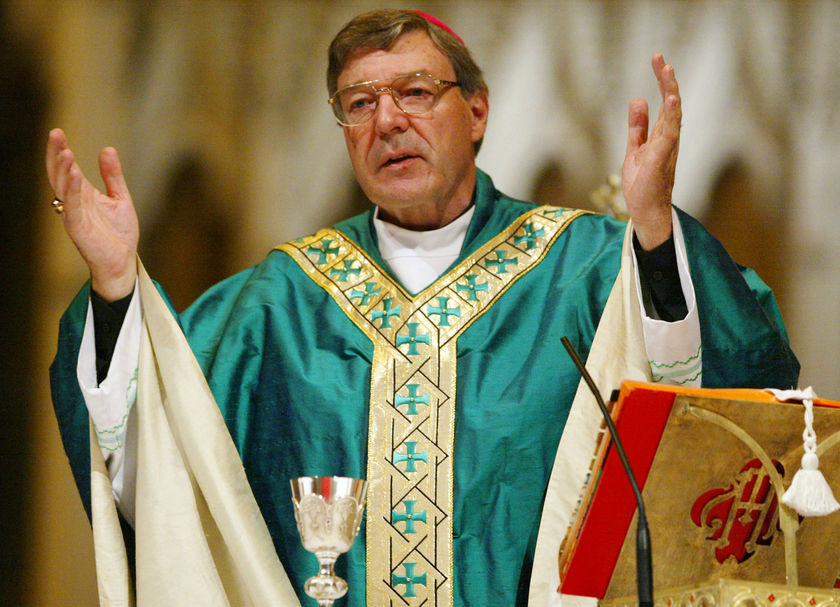
Cardinal George Pell On Jesuit Karl Rahner

God's love cures suffering
By Cardinal George Pell
February 03, 2008
IN Australia we don't hear as much about Pope Benedict as we used to hear about Pope John Paul. Therefore, it is a surprise to learn that larger crowds come to Rome for Pope Benedict's audiences than his predecessor attracted.
The Pope spent his earlier life as a professional theologian in German universities and the Roman Curia. Catholic and Protestant theology in Germany is high powered and often dense. The Jesuit Karl Rahner was one of the most influential theologians of the last century, and his brother, Hugo, also a theologian, once quipped that he waited for his brother's works to be translated into English so he could understand them!
Pope Benedict can regularly escape from this world. Just before Christmas, the Pope issued his second encyclical (or letter) on the virtue of hope, to follow his first one on love. This is not an easy read, but I bought half a dozen copies to give to friends; something I haven't done with a papal letter for many years.
Adult Christians do not have inflated expectations about the goodness of human nature, as they believe in original sin, that primeval flaw in human hearts. But Christians, who believe a good God is ultimately in charge, are hopeful, not cynics, constrained to avoid the ultimate questions about happiness and suffering, life and death. This Pope's short work explains the true shape of Christian hope and its essential link to faith as explained by Jesus and the New Testament writers. This hope is life-changing and life sustaining.
Many unbelievers, as distinct from doubters, reject the claim that there is an afterlife and, especially, that the one true God will judge each of us. The Pope confronts both these problems. He acknowledges that more of the same after death can appear like a curse rather than a gift: endless, monotonous and ultimately unbearable. We don't know much about the blessed life of heaven, except that it won't be a succession of days, but like plunging into an ocean of infinite love, where time no longer exists. The Pope also insists that the need for justice is the strongest argument for faith in eternal life. The image of the Last Judgment is not an image of unreasonable terror, but an image of the one merciful God creating justice, where the differences between criminals and victims are not ignored, but all those with good will are purified as the scales of justice are balanced. The faith in scientific and political progress which sustained unbelievers for the last 200 years has stalled, killed off especially by the communists and the Nazis. The Pope is claiming that only God can create justice, that only God's love can cure centuries of suffering. A world condemned to create its own justice is a world without hope.
Cardinal Pell is Australia's most senior Catholic cleric.
Link (here)

Education Is Big Business, Where Does Business End And Evangelization Begin?

Collaborative effort
How to make everyone's input count
By Erik Cassano
Collaboration. To Fr. Michael Graham, S.J. , it’s more than just a business buzzword, it’s the key to developing and maintaining a culture of teamwork in any organization. Employees want and deserve to be kept in the loop with regard to what your business is trying to accomplish, says the president of Xavier University, and they need to see how their jobs fit in to the larger picture. Graham says the only way you can accomplish that is through building a culture that values collaboration and considers ideas from everyone. Smart Business spoke with Graham, who has been the president of the $152 million Jesuit Catholic school since 2001, about how leaders can involve everyone. Collaboration is key. I’m increasingly convinced that an older-style, command-and-control form of leadership does not work effectively. You get much more out of people if you capture their hearts and souls because then they’ll work for you as hard as they can because they are as passionate about the overall objectives as you are. Having people work across networks that are formed or reformed on the basis of the issue that needs to be addressed is absolutely key. Something I’ve also come to believe is leadership needs to be inspirational. That relates directly to big-picture-mission kinds of questions. One of the things I can provide is a sense of the direction, the hill we’re going to take, so to speak. Why we’re taking this hill and why your helping us take this hill will help you feel better about your life and make you a better person. In other words, connecting the individual’s sense of themselves with the larger corporate project is terribly important, and it’s something you have to do at regular intervals across your community. Find people who value teamwork.Make sure you attract people who believe in a collaborative approach, and that you reward collaboration and don’t encourage, for lack of a better term, ownership activity when it starts to pop up. Having said that, there are also times when someone has to make a decision and people need to feel empowered to make a decision. Otherwise, everything devolves into endless talk. As we look at people, and we’ve been doing a lot of key hires in the past several years, that is one of the things we check on, to see what a person’s reputation is for collaborative engagement. To some degree, it’s how you structure what the tasks are, who you have come together on a certain project so that people get used to working across boundaries. Our departmental boundaries have become blurred in recent years with regard to that. It’s still traditional in many ways, but there are many more dotted lines now because of the need for participation across the old silos and boundaries. Tasks to be solved, especially big-picture and really important ones that have the capacity to advance our frontiers, can’t be answered within any one silo. You need people from a variety of previously sectored-off sections of the organization. Our world is a much more complex place. We have an awakening sense in the private sector that the kinds of issues we face are only going to be addressed collaboratively. Our business students are a great case in point. There is no way we ourselves can educate our business students for the world they are going to enter when they graduate. We need the expertise of all hands on deck across the university. But we also need an engaged partnership with the business community so they can give us feedback on our curriculum, what they’re looking for in a business school graduate. That departs completely from the older mindset that we know the answer and the solutions, and we’re going to shape our students according to what we think is best. That’s just not the case anymore, nobody believes that. Collaboration sets an example for our students as to what they’re going to need in their professional careers.
Tap into people’s passions.
You need to harness people’s passions. When you harness their passions, they’ll do 100, 120, 160 percent, whatever the number. They’ll do it in a way that is much easier than if they don’t understand. It’s also the right thing to do. I come to work, I’m a priest, so I shouldn’t be doing this work if someone who isn’t a priest could be doing it just as well as me. So I can bring something to this, and it’s this sense that here are whole people with whole lives, they go home to a husband or wife or kids and they have struggles and so on. Everybody wants to have a sense of purpose in life, that somehow living your life becomes easier, better, more rewarding and meaningful if you have a sense of contributing to something that is bigger, broader and more lasting than yourself. The university can offer that because what we’re about is very big. People ought to have that sense of meaning and purpose. We’re owed that as human beings, and I’m in the happy position of being able to supply that because of my position of leadership.

Link (here)

A Jesuit Brother, On Limburger Cheese And Lawrence Welk

Memories of city markets leave a good taste in many mouths
Why is it that the foods we enjoyed decades ago invariably seem to taste better than today's offerings? Last week I talked about a Saturday shopping trip to the old Belair Market on Gay Street in the late 1950s. Several readers, in turn, offered their gustatory impressions on this Baltimore institution:


.........one impression arrived from a member of the Jesuit order, Brother Paul Cawthorne: "My grandfather, a German immigrant, each Saturday would proceed from his home at 1727 N. Collington Avenue down to the Gay Street Market where he would regularly purchase a securely wrapped portion of Limburger cheese and a small heavy loaf of real pumpernickel bread, not what passes for pumpernickel now. "
"What is contained in the jars commonly sold [as Limburger cheese] nowadays is a pale shadow of the reality, which, to attain its requisite ripeness, must be aged in goat dung. In fact, unwrapping real Limburger was like opening up the series of Russian dolls, from biggest to smallest, except that the surprise was not smaller, but grander, as the odor increased with the unwrapping of each layer. "
"Once unwrapped, the cheese was duly smeared upon the small dark heavy slices of pumpernickel, and my grandfather would have his weekly treat. His only problem after his snack was finding a place to put the cheese, because my grandmother refused to allow the effulgence of that cheese to permeate other foodstuffs in her refrigerator."
Cawthorne continued:
"When we lived just around the corner from my grandparents, at 1734 N. Gay Street, in the shadow of the American Brewery a half-block from the statue of Gambrinus raising a flagon of spiritus frumenti, my mother's favorite shopping venture on any given Saturday was to go to the Monument Street Market, where she would buy brains, kidneys, and shad roe (in season). Sunday would be our treat day. Breakfasts were regularly pretty dull in our house, but Sunday's breakfast might consist of brains or shad roe on scrambled eggs and toast."
Is this a Baltimore thing? My grandfather's idea of a high time on Saturday night was a glass of beer, Limburger on soda crackers and the Lawrence Welk Show on television.

Link (here)

Friday, February 1, 2008

Jesuit's Exclusionary Comments On Sainthood

"You can't buy a halo, but the process for getting someone canonized takes a lot of time and effort and work to do the research," said the Rev. Tom Reese, senior fellow at the Woodstock Theological Center at Georgetown University. "That costs money." There are, he said, larger issues."This is the kind of canonization I don't think is terribly helpful," said Reese, a Jesuit and former editor of the magazine America. "We don't need any more kings or princes or bishops . . . We need to find saints that connect to ordinary people." The cult of beautiful people and royalty and superstars -- that should not be what the church is about.
Link (here)

Chain Of Command

Jesuit says congregation trying to decide how to respond to pope
By Cindy Wooden
ROME (CNS) -- As the General Congregation of the Society of Jesus discusses and deliberates the order's present and future, one of the big questions faced by the 225 Jesuit delegates is how best to respond to the encouragements and concerns of Pope Benedict XVI. "The warmth and enthusiasm and trust that is coming from Pope Benedict now is inviting a renewed and enthusiastic response from the society," said Jesuit Father David Smolira. The priest, former head of the Jesuits' British province and current director of the Jesuit Institute in Johannesburg, South Africa, met reporters Feb. 1 to explain how the General Congregation was working.
After the delegates elected Father Adolfo Nicolas to be the new Jesuit superior general Jan. 19, they began discussing issues of concern that would impact the more than 19,000 Jesuits worldwide. Included in the discussion, he said, was the need to respond to the letter Pope Benedict sent to the outgoing superior general, Father Peter-Hans Kolvenbach, praising the Jesuits' contributions to evangelization and urging them to reaffirm their fidelity to contested points of church doctrine, particularly regarding sexual morality and relations with other religions.
Father Smolira said the pope's "expression of confidence and trust" in the Jesuits "requires a responsible and enthusiastic response." The congregation delegates "have taken a considerable amount of time to read and reflect among ourselves and to decide how best to respond to that letter," he said.As of Feb. 1 they had not decided whether the response would take the form of a letter to the pope or if it would be included in the decrees issued by the congregation, he said.The decrees, addressed to all the Jesuits, set the agenda for the Society of Jesus and are documents intended to guide the work of the superior general. The pope had asked the Jesuits to reaffirm their "total adhesion to Catholic doctrine, in particular on those neuralgic points which today are strongly attacked by secular culture."
As examples the pope cited the relationship between Christ and religions, some aspects of the theology of liberation, and "various points of sexual morality, especially as regards the indissolubility of marriage and the pastoral care of homosexual persons."
Father Smolira said it is obvious that among Jesuits, as among Catholics at large, there are a diversity of views on "those neuralgic issues," and that challenges Jesuits, particularly theologians, to continue seeking the truth "in a way that is faithful to church teaching." "There are always tensions there and I think we need to find ways to manage that tension appropriately," the priest said.
The Jesuits must "develop and use the intellectual apostolate in the service of the church."
Father Smolira said the first two weeks after Father Nicolas' election were devoted to small-group discussions on four main themes: Jesuit identity and mission; obedience and how it is lived in the modern world; Jesuit structures of governance; and collaboration with others, including laypeople.
END
Link (here)