Saturday, February 9, 2013

SLU Speaker Neblett, "Thank God For Abortion"

Saint Louis University is highlighting Black History Month with a keynote address by pro-abortion journalist and MSNBC TV host Touré Neblett this evening, Feb. 7, at 7 p.m. in the Carlo Auditorium of Tegeler Hall. Neblett will speak on “How Racism Functions Today and Ways to Deal with it to Get Success.”
“Without question, one of Saint Louis University’s greatest strengths is our diversity,” said University President Lawrence Biondi, S.J. “Here at SLU, people of diverse beliefs, diverse backgrounds and diverse faiths come together to learn, to live and to lead.” On January 25, 2013, Neblett, described on the MSNBC program The Cycle, how he and his girlfriend had an abortion, saying that the “choice saved my life.” He further went on to thank God for abortion. “I cannot imagine arguing against a woman’s right to control her own body, and thus her life,” said Neblett. Prior to the election, Neblett tweeted: “Girls, get your abortions NOW in case the Republicans win.”
Link (here) to The Cardinal Newman Society to watch Neblett video

Martin Online

The United States Conference of Catholic Bishops and Catholic Relief Services have announced that they will host an online discussion devoted to social ministry and legislative priorities. The discussion, which will take place on February 15, follows the Catholic Social Ministry Gathering, which begins on February 10 at the Washington Marriott Wardman Park hotel. Speakers at the gathering include Cardinal Seán O’Malley of Boston, Father James Martin of America magazine, and Mark Shields and David Brooks of PBS. The online discussion offers “an opportunity to hear about the Church’s priority messages from the Catholic Social Ministry Gathering in support of programs that protect human life and dignity.” Participants will offer the opportunity to “ask questions and engage in dialogue.” 
Link (here) to Catholic Culture

Friday, February 8, 2013

A Place Of “Epiphany”

Aesthetically, the task was to create a beautiful interior which was artistically coherent—properly proportioned, scaled, detailed, and ornamented—despite the eccentricities of the existing geometries and structural conditions, which was no small task with the given parameters and budget. 
But principally, over and above all these considerations, it was essential to transform the chapel into, as Fr. Richard C. Hermes, S.J. would later say, a place of “epiphany”, a space that served to manifest God’s ever-greater Glory 
and facilitate our encounter with the same Living God; or, as Hans Urs von Balthasar would say, an example of theological aesthetics. 
Link (here) to read about Tampa Jesuits new chapel

Thursday, February 7, 2013

“Insuper, Promitto Specialem Obedientiam Summo Pontifici Circa Missiones.”

The expression, “the missions,” in modern English refers to the “foreign missions,” such as India, Africa, and so on. It makes no difference to the meaning and reference of the expression that those territories are no longer considered mission territories—in fact, many parishes in the United States and in Europe are staffed today by African and Indian priests. Despite changes in the ecclesial situation, the expression “ the missions” retains its meaning as indicating places “other,” to which missionaries are sent. The problem is that the Latin, which was in all likelihood composed by Ignatius himself, does not speak of the missions but simply of missions. It runs: “Insuper, promitto specialem obedientiam Summo Pontifici circa missiones.” As many of you will recall from the first week of freshman Latin class, that language contains no articles, so the phrase “circa missiones” can be translated either as “in regard to the missions” or as “in regard to missions,” depending on the context and the meaning intended by the original author. And it is clear that Ignatius did not mean for the fourth vow to apply just on those occasions when a Jesuit was sent to “the missions.” It was rather, as he put it—this time in Spanish, not Latin—“nuestro principio y principal fundamento” “our starting point and principal foundation,” the starting point and principal foundation of the Society of Jesus itself. (with effort) be construed as referring generally to any missions that the Pope gives to the Society, which include the whole work of the Society itself, conducted in the Pope’s name by the Society’s General Superior; secondly, because after the vow, the vovens says the words, “according to the same apostolic letters and the Constitutions.” In those apostolic letters, the popes who approved the Society—Paul III and Julius III—indicate clearly what they mean by the missions referred to in the vow. In Paul III’s bull, the anniversary of which we celebrate today, we read: 
Whoever desires to fight as a soldier of God beneath the banner of the cross in our Society, which we desire to be designated by the name of Jesus, and to serve the Lord alone and the Roman pontiff, his vicar on earth, should, after a solemn vow of perpetual chastity, bear in mind that he is part of a Society founded chiefly for this purpose: to direct its efforts primarily at the progress of souls in Christian life and doctrine and at the propagation of the Faith by means of public preaching and the ministry of the word of God. 
A second bull, entitled Exposcit debitum, promulgated in 1550 by Julius III incorporates these words of Paul III’s (which originate with Ignatius and his original Jesuit companions), but changes some things. First, he specifies that the Society is to serve the Church under the Roman pontiff (and not, in the first instance, to serve Roman pontiff); secondly, by a change in word order, he makes more prominent the mission of propagating of the Faith and adds the word “defensionem et,” so that purpose of the Society is the propagation and defense of the Faith.
Link (here) to the full article by Fr. Kevin L. Flannery, S.J.  at The New Jesuit Review

Jesuit-run Journal America, Slammed J.F.K. For Pandering To Protestant Bigots

Catholic media throughout the nation, including the Jesuit-run journal America, slammed J.F.K. for pandering to Protestant bigots. The publication of the Holy Cross Fathers, Ave Maria, noted: “No man may rightfully act against his conscience. To relegate your conscience to your ‘private life’ is not only unrealistic, but dangerous as well…because it leads to secularism in public life.” Appalled that the Church did not give Jack carte blanche, J.P. K. wrote to a friend in the Vatican, “I am really more than annoyed or upset – I am downright disgusted! . . .I deplore the pettiness of the Catholic Press and I deplore the weakness of some of the hierarchy for not speaking out, at least in some measure in Jack’s defense. . . .My relationship with the Church will never be the same and certainly, never the same with the hierarchy.” And it wasn’t.
Publicly, the Kennedys patronized the Church, but privately they helped create a shadow church of religious laymen and clergy who helped them rationalize their own version of Catholicism. The Catholic pro-abortion movement, for instance, was hatched at the Kennedy compound in Hyannis Port. In the summer of 1964, Bobby and Ted Kennedy met at the Cape with some leading dissident priests – Robert Drinan, Richard McCormick, Joseph Fuchs, and Charles Curran – to figure out how Catholic politicians could pander to the growing abortion movement without upsetting their Catholic constituencies. 
According to one witness, the theologians “concurred on certain basics. . .that a Catholic politician could in good conscience vote in favor of abortion.” The action plan developed that week in Hyannis Port, in sociologist Anne Hendershott’s judgment, contributed to effectively neutralizing the Catholic laity and “helped build the foundation for the [Democratic] party’s reincarnation as the party of abortion.” New York’s Cardinal John O’Connor, criticized a 1984 letter signed by pro-abortion Democratic Vice Presidential nominee Geraldine Ferraro, concerning Catholics for a Free Choice because it contained “some things about abortion relevant to Catholic teaching which are not true.” Senator Edward Kennedy went ballistic, suggesting that anyone who opposed Ferraro was a bigot. He accused Archbishop O’Connor of “blatant sectarian appeals” and argued that not “every moral command” could become law. Ted Kennedy also scuttled the late Robert Bork’s nomination to the Supreme Court with scurrilous charges of racism and other slanders because Bork was perceived as pro-life. The Kennedy’s shadow church has damaged Catholic standing in the public square and has given cover to the likes of Mario and Andrew Cuomo, Joe Biden, John Kerry, Dick Durbin, and Nancy Pelosi. All in all, a sad legacy for a family that American Catholics once put on a pedestal.
Link (here) to The Catholic Thing

Wednesday, February 6, 2013

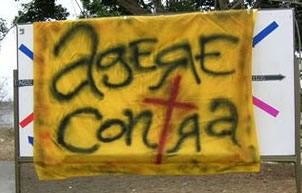
Agere Contra And Freedom

St. Ignatius was keenly sensitive to interior motions that draw us away from God – proposing things that bring us away from God as pleasurable, or things that bring us toward God as undesirable. He called these “desolation.” And he proposed that we work against – “agere contra” – desolation, that is, that we work against our unfreedoms in our relationship with our selves in our relationship with God. This is in his “Rules For the Discernment of Spirit.” “Agere contra” is as much a principle of Ignatian Spirituality as is “magis” or “finding God in all things” or “ad majorem Dei gloriam.” It is what fasting and abstinence are all about, especially in the season of Lent. Concretely, if you habitually postpone doing your homework because you just have to watch TV for two hours every night, “agree contra” may mean that you decide to watch TV less. If you truly dislike the person who grates against your spirit at work, “agere contra” may mean that you decide to communicate with and understand that person better. If you normally think you know everything better than others and so have the right to lecture all who approach you, “agere contra” may mean that you consciously pause and listen to what others have to say.
Link (here) to full post by Fr. Joel Tabora, S.J. is a Jesuit Priest and currently President of Ateneo de Naga University.  He chairs the Association of Jesuit Colleges and Universities Asia Pacific, as well as the Committee on Advocacy of the Catholic Educational Association of the Philippines.  He is a board member of the Coordination Council of Private Educational Associations (COCOPEA) in the Philippines.

Tuesday, February 5, 2013

La Storta

The experience of mystical acceptance and confirmation at La Storta would continue to be significant for Ignatius. 
He frequently referred to it in his diary and other writings. The vision served as a frame of reference and source of consolation. For example, while writing in his diary about a decision regarding the practice of poverty for the Jesuit community, Ignatius said that he gained confidence from the vision, with these thoughts growing in intensity and seeming to be a confirmation, 
even though he receive no consolations about his matter, and Jesus' showing himself, or letting himself be felt, seeming to him to be somehow the work of the Most Holy Trinity, and remembering when the Father place him with his Son.

Monday, February 4, 2013

Tarillion, S.J. On Constantnople

Constantinople is a universe containing an immensity of Christians. They reckon at least two hundred thousand Greeks, and the Armenians perhaps are eighty thousand, amongst the permanent inhabitants, omitting those that come and go, whom commerce and the court circulate. The plague affords a striking proof how populous this city is. I have seen, myself, two hundred thousand people mown down by the mortality. The dead that passed the portals to be inhumed outside the city, gave us the means to make this calculation. And yet the streets were as full of living people a few weeks subsequently, as if nobody had died.
Many families that inhabited the town in the time of the Genoese, are still at Pera and Galatea ; they amount to about four hundred persons ; they are the ambassadors' interpreters ; while some are doctors, a profession from which they derive consideration, and free admission to the Turkish lords, without even excepting the seraglio. The retinue and households of the several ambassadors and the merchants of then nations, in all almost three thousand persons, are the most distinguished of the Christian Franks. The crowd is increased by the Christian vessels, and the streets near the shore are often to be seen thronged with their newly-landed. The Catholic slaves of Constantinople, who are working the ships, or chained to the gallies, or imprisoned in the bagnio of the Grand Seignior, are 5,000; there are 20,000 others in possession of his subjects. A native of Ragusa, M. R. Galani, a Dominican, and titular archbishop of Ancyra, a gentleman of great regularity of life, and who is strictly attentive to his duties, is ecclesiastical superior to all these Catholics. The situation of our house is such, that we can easily assist this population. At the centre of Galatea, near the sea, in the thoroughfare of all that come from the bottom of the harbour, appears the finest church in Turkey. The pillars that support, the balustrade that terminates the vestibule, and hems the staircase that conducts to it, these are all of snowwhite marble. It possesses the prerogative of mosques, a cupola, and a covering of lead. The nave is decorated by sepulchral monuments of ambassadors of France and of Princess Tekeli; you will find her mother's mausoleaum in a separate chapel. This pious and courageous princess died at Nicomedia. To render her the services which for several years she had received at Constantinople, the Jesuits considered it a duty to visit Nicomedia as long as she resided there. A mission had commenced at Nicomedia, which, impracticable without a plausible pretext, such as a visit to this princess, expired when the lady died.
Link (here) to the full 18th century letter by Father Trallion, S.J.

Friday, February 1, 2013

The Maxims Of St. Peter Claver, S.J.


1. 
Man's salvation and perfection consists in doing the will of God, which he must have in view in all things, and at every moment of his life; the more he accomplishes this divine will, the more perfect he will be.

2. 
To do the will of God, a man must despise his own; the more he dies to himself, the more will he live to God. But to acquire this double advantage we must love God, and the more we purge the heart of self-love, the more shall we love God.

3. 
To love God as he ought to be loved, we must be detached from all terrestial love ; we must love nothing but Him; or if we love anything else, we must love it only for His sake.

4. 
Let a man direct all his thoughts, words, and actions, solely to the glory of God, incessantly striving for submission to His will, insomuch as to desire neither evil nor good, unless God wills it; and in whatever trials he may be placed, the peace of his soul cannot then be troubled.

5. 
To derive true profit from whatever happens, a man should be silent amidst reproaches, injuries, and ill-treatment, whether there be any fault on his side or not; and when people contend with him, let him prefer silence to victory.

6. 
To make rapid progress in virtue a man must carefully guard his tongue, and let truth, peace, and edification be in all his words. Let him say much in few words; and that he may always speak well, let him always speak either of God or with God.

7.
 Let him prefer nothing to obedience, no matter who commands; submitting to all creatures for the sake of God, and doing all that is required of him with great peace of mind. If however he cannot do all, and is asked the reason, let him be content with simply saying that he could not; and whatever may be said, let him answer nothing—no, absolutely nothing: whatever reproaches may be made, let him be silent, accepting all for the sake of God; provided there be nothing contrary to God, or to obedience. This is indeed the way in which to vanquish self."

Link (here) to the Maxim's of St. Peter Claver, S.J.

You Don’t Have To Be Catholic To Become A Jesuit

Two years ago, Boston College professors, one of whom was Jewish, were having a conversation. The Jewish professor joked that BC’s “men and women for others” programs were so inclusive that he felt like he could be a Jesuit himself. The other professor earnestly replied that you don’t have to be Catholic to become a Jesuit. Moving past the hilarious image of Father Leahy’s reaction to this story, I feel that this anecdote has a solid point. Over the past few decades, volunteer organizations at BC have exploded in popularity. The Student Service Organizations homepage lists over two dozen programs. In addition, hundreds of students join the PULSE program, simultaneously learning philosophy in the classroom and engaging in community service in the greater Boston area. 
In his inaugural address, former President George H.W. Bush likened volunteer organizations to “a thousand points of light … spread like stars throughout the nation doing good.” BC’s numerous service organizations embody this idealistic vision of selfless volunteerism. This explosion in service programs creates a conundrum, however. The Volunteer and Service Learning Center’s mission statement claims the Center promotes “conscientious service in the context of Catholic social learning and contemporary Jesuit education.” 
This bold statement reminds me of a conversation I recently had with an ordained faculty member. He praised the rapid increase in student service participation, yet questioned the legitimacy of its underlying Jesuit foundation. “Men and women for others,” he claimed, “could have been Gandhi’s slogan, and Gandhi was neither Catholic nor Jesuit.”
Link (here)

Thursday, January 31, 2013

St. Peter Claver, S.J. And Our Lady of Monserrat

The monastery of Montserrat
It is a custom in the Society to send the novices on a pilgrimage to some place of devotion, in memory of that which the founder St. Ignatius, at the beginning of his conversion, made to our Lady of Monserrat. They always go on foot, live on alms, and lodge as much as possible in the hospitals. The pilgrimage assigned to young Peter Claver must have pleased him much, for it was no other than Monserrat itself. He and his two companions set out with their superior's blessing, their staffs their only provision for the journey. The fatigues of the way caused no diminution of his prayer and austerities. On arriving at a resting place, his first care was to repair to the church with his companions, to adore our Lord in the sacrament of His love Besides the days appointed by the superior, he received permission to communicate on several other days. After spending some time in prayer, he begged alms from door to door; and what ever he might receive his piety was always satisfied with it. If it was inconsiderable, he was delighted, because his love of poverty and suffering made it precious; if it was abundant, he was equally delighted, because it enabled him to relieve the poor. Thus all turns to the good and profit of a soul that loves God. When the three young novices came to a place where they were to stop, they collected the children in some public street or square, and conducted them in procession to the church, singing prayers and canticles. It was an edifying sight, and attracted great crowds. The novices by turns catechized, and made moving exhortations on the duties of a Christian. Young Claver's zeal and powerful words produced a sensible impression on all present. The fire with which the Holy Ghost inflamed his heart passed into the hearts of his auditors; and the usual fruit of his discourse was a lively sorrow for sin, and a sincere love of God.
As soon as they came in sight of Monserrat, Claver prostrated himself to pay respect to the Mother of God, whose sanctuary is there. Rough as was the path, up the holy mountain, love made it sweet and easy to him; nor could the beauty of the surrounding scenery divert his mind for a moment from the sight of the celestial beauties which occupied it. 
But who could describe the transports of his heart on beholding that venerable image, which represents the majestic beauty of the Queen of Heaven, whom he had always tenderly loved as a mother! He spent three whole days in this holy place, as much moved by the charity, as he was edified by the example, of the worthy sons of St Benedict, to whom the monastery belongs. To derive the principal fruit which the novices proposed to themselves as the result of their pilgrimage, they made their confession with lively marks of contrition, and then received with most tender devotion the Body of our Lord. Claver spent all his spare time before the miraculous image of the virgin, and he would willingly have remained there all his life. To no one did he ever relate all the favors he there received from the Queen of Saints; but whenever, in after life, he recalled this pilgrimage to mind, he shed such sweet tears, that it was easy to judge of the delight his soul had tasted.
Link (here)

Wednesday, January 30, 2013

San Francisco Archbishop On St. Peter Claver, S.J. And The Humana Vitea Wars

Archbishop Salvatore Joseph Cordileone
The 56-year-old is a native of San Diego and grew up in a strong, inter-dependent Italian-American family, with his paternal grandparents living next door and his maternal grandparents a few miles away. During his childhood he was in constant contact with his grandparents, who spoke the old Sicilian dialect with his parents, as well as with his entire extended family on both sides. They didn’t keep every feature of life from the old country; as he says, “our generation lost the old Sicilian (Calabro-Sicilian) language”. But the family remained loyal to the traditional pieties of Sicilian Catholicism. St Joseph was the focal point of their devotions. On the feast day of Jesus’s foster father they set up an altar in their home with his statue and three loaves of bread to represent the Holy Family, which included a braided loaf of bread for Our Lady. They would stage a drama of the Holy Family coming into the home, with a young girl as Mary, an older man as Joseph and, on several occasions, the young Salvatore was in role as Jesus. The archbishop says there was never a time when he struggled with his faith or did not believe in God. He did, however, feel the stirrings of a vocation, while also feeling drawn to being a husband and father. “My main challenge in seminary was interior, in discerning if this was really my call,” he explains. “When I entered the seminary at the age of 19, in 1975, I felt strongly inclined in that direction but was not yet absolutely convinced that God was calling me to be a priest. It was when I gave my life totally to God, I felt a burden was lifted from my shoulders, and had the confirmation of my vocation to the priesthood."
At seminary he developed a keen attachment to St Peter Claver, S.J. a favourite saint whose courageous ministry to African-Americans and radical holiness has inspired him throughout his 30 years of priesthood. Now, as a member of the Church hierarchy, he continues to pray to the patron saint of slaves, for “commitment to the Church’s mission and for graces to help the poor and marginalised”.
As Archbishop Salvatore Joseph Cordileone was a seminarian in the 1970s, the obvious question is whether he inclined more to the spirit of rebellion of that time or if he held true to the Church’s time-honoured teachings. “I’m quite a law-abiding type who doesn’t have a problem with authority,” he says, “but more than that, the Church’s teachings are completely rational and made sense to me.” It was the time of the Humanae Vitae wars: did he have any problems with any of the details in the most resisted encyclical of the age? No, in fact, in 1978 he and some fellow seminarians travelled from San Diego to San Francisco so that they could attend a symposium held by the archdiocese in honour of the 10th anniversary of Humanae Vitae.
Link (here) to The Catholic Herald

Tuesday, January 29, 2013

Forged Jesuit, "It Only Takes A Minute And Half To Become A Jesuit Priest"

Mark Landis dressed as a Jesuit
Most art forgers do it for the money and some have made millions replicating famous masterpieces. But 58-year-old Mark Landis, a soft spoken Louisiana native, is not your typical copy cat. The highly prolific, skilled painter, has been forging well known works of art for 30 years, with the sole purpose of donating these "originals" to museums around the country. Dressed as a businessman, or in more recent years, as a Jesuit priest, Landis has approached over 50 museums, 20 States, offering them coveted paintings for their collections. Sometimes the works will be donated in a relative's name, like his mother, other times he will offer the work simply to be philanthropic. He would never take money for the work, not even a tax deduction. Mr. Landis would often go under his own name, or Father Scott, speaking with museum heads around the country. Several accepted the works and some were even hung among their permanent collections. However many were discovered quite quickly as inauthentic. Last week, the Avant Diaries released a video inviting viewers in to the strange world of Mr. Landis where the artist explains, "About all I've got is an ability to draw or paint…Sure it's not real, but if something's attractive or beautiful that's what counts."
Link (here) to watch the documentary video

Monday, January 28, 2013

Casting Call At Georgetown

Georgetown University’s Law Students for Reproductive Justice held auditions for the vile play Vagina Monologues last week, according to the university’s law school website. The auditions took place in the Gewirz Student Center on campus. The obscene play distorts human sexuality by placing sinful activity in a favorable light, including lesbian activity and masturbation. It seems to take delight in reducing sexuality to the satiation of selfish pleasure and even declares a lesbian rape of a teenage girl her “salvation” which raised her into “a kind of heaven.”
Link (here) to The Cardinal Newman Society

Jesuit On The Wave Of Energy

Fr. Ladislas Orsy, S.J.
A 91-year-old Jesuit who served as an expert at the Second Vatican Council said, "I'm just beginning to understand the depth and breadth of the council" and its teachings. Jesuit Father Ladislas Orsy, a visiting professor at the Georgetown University Law Center in Washington, told an audience in Rome Jan. 24 that while every ecumenical council in church history led to debate -- and sometimes even schism -- it always has taken more than 50 years for a council's teachings and reforms to take root in the Christian community. "Granted we may see a great deal of confusion today; granted we may even see a denial of the council or we may even hear a way of explaining away the council," Father Orsy said during a speech that was part of the Week of Prayer for Christian Unity celebrations at Rome's Centro Pro Unione. Vatican II can be examined as a historical event, and theologians can use a variety of scholarly tools to propose different interpretations of its teachings, but one thing Catholics cannot deny is the church's teaching that the Holy Spirit is active in its ecumenical councils, he said. Father Orsy asked his audience, "Are you surprised that there is a bit of disarray today in the Roman Catholic Church when this happened in the case of Nicea, dealing with the very foundation of our faith?" 
The Council of Nicea in 325 affirmed the divinity of Christ. Nicea's deliberations led to debate and division, he said, but over the centuries "this wave of energy" of the Holy Spirit "quietly took possession of the church and the confusion sorted itself out." 
Today, he said, mainline Christians, while divided on a variety of issues, profess the basic tenets of their faith using the Nicean creed. "Just looking at what happened after Nicea," he said, "it is not farfetched" to think that the work the Holy Spirit began at the Second Vatican Council continues in the church and "maybe, shall we say, 100 years from now," people will recognize how deeply it impacted the church. The Jesuit said he hoped to live a "few more years" so he could try to understand more about where the Holy Spirit is leading the church through the teachings of Vatican II and the continuing process of that teaching taking root in the lives of Catholics. In his talk, Father Orsy looked particularly at "Dignitatis Humanae," Vatican II's declaration on human dignity and religious freedom. The Jesuit canon lawyer said the document, approved on the last day of the council, takes the visions of the church, the world and the human person expressed in the other Vatican II documents and applies them to "real-life situations."
Link (here) to read the rest of the story to CNS

Saturday, January 26, 2013

All Judgment Laid Aside


TO HAVE THE TRUE SENTIMENT  

WHICH WE OUGHT TO HAVE IN THE CHURCH MILITANT

Let the following Rules be observed.
First Rule. 
The first: All judgment laid aside, we ought to have our mind ready and prompt to obey, in all, the true Spouse of Christ our Lord, which is our holy Mother the Church Hierarchical. 

Second Rule. 
The second: To praise confession to a Priest, and the reception of the most Holy Sacrament of the Altar once in the year, and much more each month, and much better from week to week, with the conditions required and due. 

Third Rule. 
The third: To praise the hearing of Mass often, likewise40 hymns, psalms, and long prayers, in the church and out of it; likewise the hours set at the time fixed for each Divine Office and for all prayer and all Canonical Hours.
Fourth Rule. 
The fourth: To praise much Religious Orders, virginity and continence, and not so much marriage as any of these. 

Fifth Rule. 
The fifth: To praise vows of Religion, of obedience, of poverty, of chastity and of other perfections of supererogation. And it is to be noted that as the vow is about the things which approach to Evangelical perfection, a vow ought not to be made in the things which withdraw from it, such as to be a merchant, or to be married, etc. 

Sixth Rule. 
To praise relics of the Saints, giving veneration to them and praying to the Saints; and to praise Stations, pilgrimages, Indulgences, pardons, Cruzadas, and candles lighted in the churches. 

Seventh Rule. 
To praise Constitutions about fasts and abstinence, as of Lent, Ember Days, Vigils, Friday and Saturday; likewise penances, not only interior, but also exterior. 

Eighth Rule. 
To praise the ornaments and the buildings of churches; likewise images, and to venerate them according to what they represent. 

Ninth Rule. 
Finally, to praise all precepts of the Church, keeping the mind prompt to find reasons in their defence and in no manner against them. 

Tenth Rule. 
We ought to be more prompt to find good and praise as well the Constitutions and recommendations as the ways of our Superiors. Because, although some are not or have not been such, to speak against them, whether preaching in public or discoursing before the common people, would rather give rise to fault-finding and scandal than profit; and so the people would be incensed against their Superiors, whether temporal or spiritual. So that, as it does harm to speak evil to the common people of Superiors in their absence, so it can make profit to speak of the evil ways to the persons themselves who can remedy them. 

Eleventh Rule. 
To praise positive and scholastic learning. Because, as it is more proper to the Positive Doctors, as St. Jerome, St. Augustine and St. Gregory, etc., to move the heart to love and serve God our Lord in everything; so it is more proper to the Scholastics, as St. Thomas, St. Bonaventure, and to the Master of the Sentences, etc., to define or explain for our times41 the things necessary for eternal salvation; and to combat and explain better all errors and all fallacies. For the Scholastic Doctors, as they are more modern, not only help themselves with the true understanding of the Sacred Scripture and of the Positive and holy Doctors, but also, they being enlightened and clarified by the Divine virtue, help themselves by the Councils, Canons and Constitutions of our holy Mother the Church. 

Twelfth Rule. 
We ought to be on our guard in making comparison of those of us who are alive to the blessed passed away, because error is committed not a little in this; that is to say, in saying, this one knows more than St. Augustine; he is another, or greater than, St. Francis; he is another St. Paul in goodness, holiness, etc. 

Thirteenth Rule. 
To be right in everything, we ought always to hold that the white which I see, is black, if the Hierarchical Church so decides it, believing that between Christ our Lord, the Bridegroom, and the Church, His Bride, there is the same Spirit which governs and directs us for the salvation of our souls. Because by the same Spirit and our Lord Who gave the ten Commandments, our holy Mother the Church is directed and governed. 

Fourteenth Rule.
Although there is much truth in the assertion that no one can save himself without being predestined and without having faith and grace; we must be very cautious in the manner of speaking and communicating with others about all these things. 

Fifteenth Rule. 
We ought not, by way of custom, to speak much of predestination; but if in some way and at some times one speaks, let him so speak that the common people may not come into any error, as sometimes happens, saying: Whether I have to be saved or condemned is already determined, and no other thing can now be, through my doing well or ill; and with this, growing lazy, they become negligent in the works which lead to the salvation and the spiritual 42 profit of their souls. 

Sixteenth Rule. 
In the same way, we must be on our guard that by talking much and with much insistence of faith, without any distinction and explanation, occasion be not given to the people to be lazy and slothful in works, whether before faith is formed in charity or after. 

Seventeenth Rule. 
Likewise, we ought not to speak so much with insistence on grace that the poison of discarding liberty be engendered. So that of faith and grace one can speak as much as is possible with the Divine help for the greater praise of His Divine Majesty, but not in such way, nor in such manners, especially in our so dangerous times, that works and free will receive any harm, or be held for nothing. 

Eighteenth Rule. 
Although serving God our Lord much out of pure love is to be esteemed above all; we ought to praise much the fear of His Divine Majesty, because not only filial fear is a thing pious and most holy, but even servile fear—when the man reaches nothing else better or more useful—helps much to get out of mortal sin. And when he is out, he easily comes to filial fear, which is all acceptable and grateful to God our Lord: as being at one with the Divine Love. 
Link (here) to CCEL

Friday, January 25, 2013

A Friend Of Charles Dawson

was a friend of Charles Dawson, a Jesuit, a paleontologist, and a theologian. 
 He participated in the discovery of Peking man and Piltdown man. 
He is popular for his theological theories 
which are considered heretical by the Catholic church. 
Link (here)

Martin's Conscience And Obedience

One can say that in a perfect world justice and fidelity would always be one, but we see in some cases they are not: the person's conscience does not allow him (or her) to live out the vow of obedience and so he speaks out; or the person's vow of obedience does not allow him to speak out so he remains silent.  Remember that an informed conscience is the ultimate arbiter in the moral life, and one should never violate one's conscience, where, as the Second Vatican Council taught, we hear the echo of God's voice. 
Link (here) to the full article by the New York Province Jesuit, Fr. James Martin at America 
St. Ignatius of Loyola the founder of the Society of Jesus on conscience and obedience (here)

Thursday, January 24, 2013

Aloysius Jin Luxian SJ, Bishop Of Shanghai

He’s had more comebacks the Deng Xiao Ping. Deng famously was deposed twice only to bounce back a third time and reshape modern China. Aloysius Jin Luxian SJ, bishop of Shanghai, has been knocked about and pushed over by life, the Catholic Church in China and at the Vatican, by the Jesuits and the Communist Party on so many occasions you could expect him to be punch drunk by now. As recently as last year, his patiently prepared succession plan for leadership of the Shanghai diocese came to an abrupt halt in a single speech. His successor, Bishop Ma Daqin, earned the hostility of the Communist Party and removal from office in a single short speech shortly after his episcopal ordination. So with Ma sidelined and Aloysius Jin’s succession plans thwarted, it was back to the drawing board in Shanghai. But reversals, challenges, conflicts, misunderstandings and opposition are the staples of Jin’s long life, the outline of which is contained in his memoirs published in Chinese in 2008 with the English translation becoming available in late 2012. The worst thing he says about anyone in his memoirs is that they are or were naïve. And he says it of himself frequently enough through the account of his own life as it takes its, at times, tortured path. But what is endearing about his account is the way the almost fresh-faced innocence of the young man still survives in the 90-something’s record of how his long life – including 27 years in various forms of imprisonment – has unfolded. Surprise, wonderment and gratitude flow with the pages.
Link (here) to  UCANEWS

Wednesday, January 23, 2013

James V. Schall, S.J.

Thus, Schall reaches eighty-five, not in the world’s greatest shape, but still breathing. His hearing is now magnified by electronic contraptions to a degree that makes him wonder how much he wants to hear. But he is still vain enough to admit that he does not want to miss anything. He was asked by his students to give “A Final Lecture at Georgetown,” which he did and called it “A Final Gladness.” It can be found on Youtube. It sums up many years of doing something that he always loved doing.
Link (here) to The Catholic Thing for the full article

Fiat Ladetur

The Disclade Carmelites of Port Tobacco
Dear Sister in Xt                                              Georgetown College,                        
March 30th 1830.
I received yesterday your letter informing me on the outside, of the death of your venerable, and beloved Mother Clare Joseph Dickenson & in the inside of her long painful agony. Both are awful & distressing things, but fiat laudetur .... & as Sister Angela imparts news, it must be good, 
for indeed there can be no better death than agonizing with Christ—I immediately gave information to all as you requested—& today we all have said our Masses, & BTM their beads for her happy repose. 
You lose a great deal in her, it is true; but her love will be greater in heaven towards Mt. Carmel—You need not fear but that God will supply her vacancy. Even when he took Elias, Carmel did not sink lower. Please to offer my comforting condolence to all the Sisters distressed no doubt on account of the loss of so virtuous a Mother, but I hope that their sorrow will be short, & meritorious—And Father Francis will help to comfort you since he gained the race—or, I do not know, perhaps he lost it—

Remember me in your holy prayers.
Respectfully yours

Tuesday, January 22, 2013

He Raised The Baby From The Dead

Father Necktou was the Jesuit Provincial in the South West of France for many years. The priests who knew him regarded him as a Saint and Prophet. He prophesied the suppression of the Jesuit Order well before its occurrence in 1773. After the suppression occurred as he predicted, he lived as a secular priest in Poitiers. His public reputation for holiness during this period induced a young grieving mother whose baby had just died to bring it in hope to Father Necktou. It was attested by several witnesses that he raised the baby from the dead and returned it to its mother. He died in 1777 roughly 20 years before the French Revolution.
Link (here)

Fr. John C. Ford, S.J. And Gaudium Et Spes

Fr. John Cuthbert Ford, S.J.
The Role of  Fr. John C. Ford, S.J. and Germain Grisez 
in Helping Pope Paul VI Write Humanae Vitae 4

Father Ford and Germain Grisez had been friends since 1964, when Grisez wrote his first book, Contraception and the Natural Law. Grisez sent the manuscript to Father Ford, who made good suggestions for strengthening the work, and Grisez then sent it to the Bruce Publishing Company in Milwaukee where I was at that time working as an editor.

Pope Paul VI early in 1964 directed that bishops around the world prepare a confidential inquiry about developments regarding contraception in their territories, and about their own views. Cardinal Patrick A. O’Boyle of Washington, D.C., then president of the U.S. bishops’ conference, asked Ford to help prepare the report for the United States. On June 6 Ford, acting with O’Boyle’s authority, had the first of several private audiences with Paul VI. Paul was certain of the truth of the Church’s teaching on contraception and was also encouraged by the response he received from bishops throughout the world affirming that teaching.

But some advisers had suggested to him that Janssens’ claim that the new anovulant pill was not truly contraceptive because it did not interfere with the physical performance of the marital act might be true. As I noted earlier, there was only one magisterial statement on this matter, Pius XII’s in the final address of his pontificate in September 1958, a month before he died. Paul VI thus thought that a thorough study was needed to make sure that the Church would not ask more of faithful Catholic married couples than God did. He also thought that the Council was not the place to consider this matter and he therefore decided to enlarge the Papal Commission for the study on population, family, and births. He did this on June 23, 1964, but did not spell out his mandate although he called attention to Pius XII’s judgment.

In October, Paul VI appointed Ford to this Commission. Grisez congratulated him, and over the following months the two had telephone conversations about developments. But Ford, respecting the confidentiality of the Commission’s proceedings, did not share any of its documents or discuss his own work.

But John R. Cavanagh, a Washington, D.C. psychiatrist also appointed to the Commission, was less concerned about confidentiality. In the summer of 1965 he discussed the Commission’s initial meeting at length with Grisez and others, and shared the official English translation of the Report on the Fourth Session of the Commission Set Up by the Holy See to Study the Problems of Population, Family, and Birth-rate with Grisez. After studying it, Grisez called Ford, and the two then freely discussed the Commission’s work.

De Riedmatten, the Commission’s Secretary General, skillfully managed the opening meeting of the enlarged Commission. He invited John T. Noonan, Jr., whose soon-to-be published book was a massive argument for the view that the teaching could change, to summarize his thesis favoring change. Instead of focusing on the question of the birth control pill or even on the truth of the Church’s constant and firm teaching, de Riedmatten urged that the Commission decide whether the teaching was “reformable” or “irreformable.” Twelve of the nineteen members of the theological section thought it could be changed. The other members of the Commission—physicians, demographers and sociologists, married couples, and pastoral workers—sat in on almost all the discussions of the theological section. Cavanagh said that as a result he and other non-theologians on the Committee began to think, for the first time in their lives, that the Church might approve using contraceptives.

Ford was surprised to find the theologians so predisposed to change. In discussing Noonan’s book with Grisez, Ford raised questions about its historical accuracy, and Grisez’s research greatly impressed Ford who tried but failed to get Grisez appointed to the Pontifical Commission. Ford when in the US lived in the Jesuit residence near the Catholic University, where he had been teaching and had resigned his professorship to work at the Council. Grisez often visited him at his residence and helped him prepare to see Pope Paul again.

Early in November Ford requested an audience with the Pope and was soon called to Rome. The section on marriage in the penultimate draft of Vatican II’s The Church in the Modern World (Gaudium et Spes) was not clear about contraception. Because he wanted the Council to reaffirm the teaching of Casti Connubii, Pope Paul put Bishop Carlo Colombo, his personal theological advisor, to work drafting amendments. On November 22, the Pope, having called Ford in for a private audience, asked him to work with Colombo and told him to return the next day with the draft amendments.

When Ford returned, Paul VI told him not to leave Rome as he had planned. Ford and some of the other theologians from the Commission were appointed theological advisors to the conciliar subcommission that would deal with the amendments. The subcommission did not welcome the Pope’s initiative. Wishing to avoid open conflict as the Council drew to a close, Paul VI allowed the subcommission to revise the amendments. The result was that the Council left “certain issues” about the morality of contraception to be resolved after the Commission on Population, Family, and Birth-rate completed its work. But at the Pope’s insistence, the celebrated footnote 14 in paragraph 51 was included in the final text of Gaudium et Spes; as I showed above, a careful reading of the text of GS, 51 and footnote 14 leads to the conclusion that the Council, which ended in December, 1967, taught that contraception is a gravely immoral act.
Link (here) to Christendom-Awake

A Jesuit Suggested Filumena

In 1802 an inscription, with the first and last letters destroyed, was found in the catacombs which stood thus, lumena pax tecum fi. 
A Jesuit suggested that Fi should be put at the beginning of the sentence instead of the end, and by this remarkable trick, produced Filumena. 
Thereupon a devout artizan, a priest, and a nun, were all severally visited by visions of a virgin martyr, who told them the story of Diocletian's love for her, of her refusal, and subsequent martyrdom; and explained that, having once been called Lumena, she was baptized Filumena, which she explained as a daughter of light! Some human remains near the stone being dignified as relics of St. Filomena, she was presented to Mugnano; and, on the way, not only worked many miracles on her adorers, but actually repaired her own skeleton, and made her hair grow. 
So many wonders are said to have been worked by this phantom saint, the mere produce of a blundered inscription, that a book, printed at Paris in the year 1847, calls her ' La Thaumaturge du igme Steele,' and she is by far the most fashionable patroness in the Romish Church.
 Filomena abounds in Rome, encouraged by the example of a little Filomena, whose mosquito net was every night removed by the saint, who herself kept off the gnats. She is making her way in Spain; and it will not be the fault of the author of La TJianmaturge if Philomene is not as common in France. The likeness to Philomela farther inspired Longfellow with the fancy of writing a poem on Florence Nightingale, as St. Philomena, whence it is possible that the antiquaries of New Zealand, in the twenty-ninth century, will imagine St. Philomena, or Philomela, to be the heroine of the Crimean war.*
Link (here) to History of Christian Names

Monday, January 21, 2013

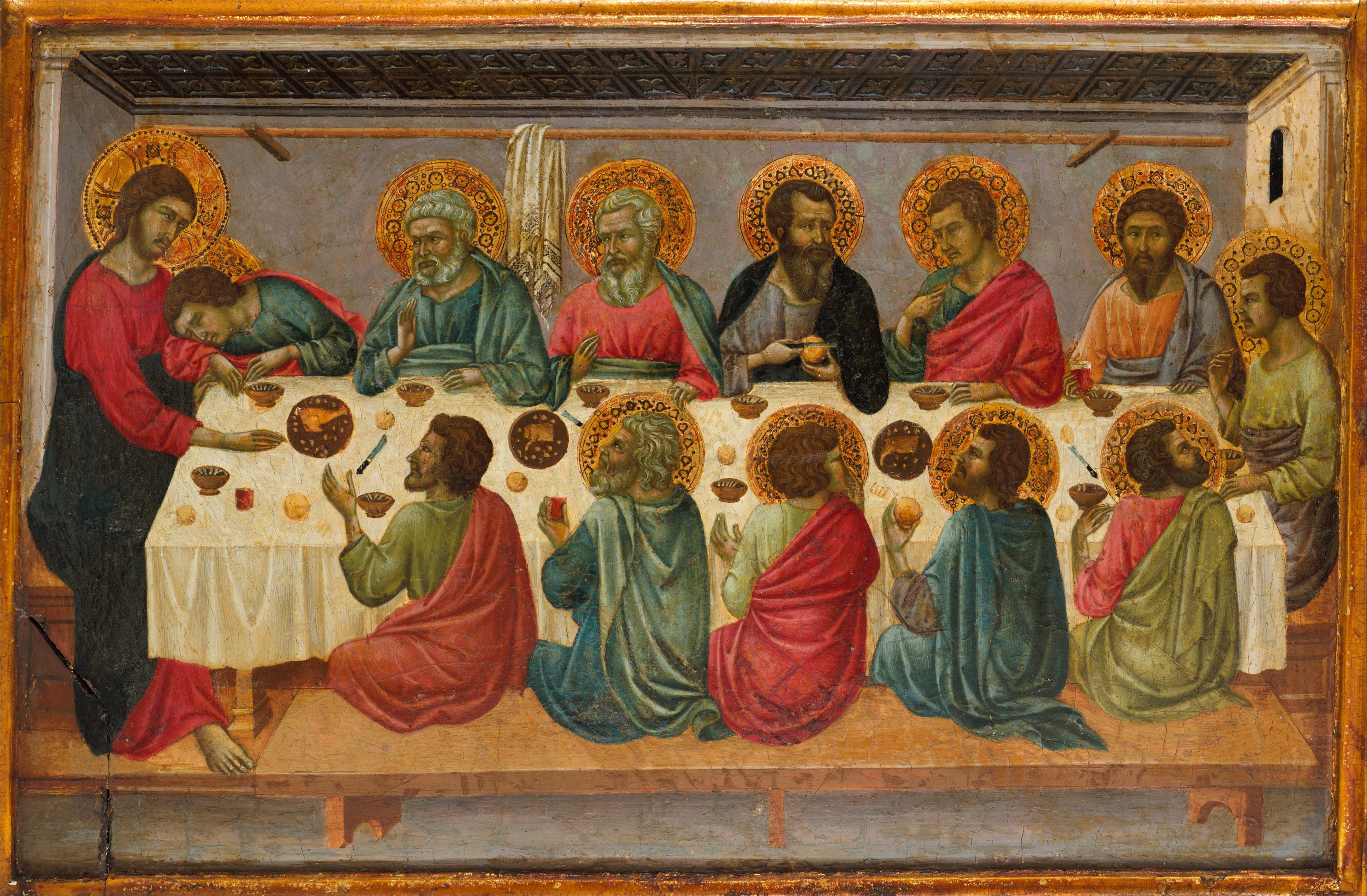
Fr. Maurice De La Taille, S. J. Victory Over Death In The Supper

David built the altar small, it was enlarged later by Solomon (II Kings, XXIV, II foll.). Cyril develops the allegory, showing that not only was death destroyed at the moment when our Lord partook of the Supper, but, also, that on the very Eucharistic altar a sacrifice was offered by our Lord whereby death was overcome: for, He says, it was offered on an altar, which later as it were grew, until gradually the Eucharistic celebration was spread throughout the nations. The victory over death in the Supper is found in writers of the Middle Ages. The following is a chant in a prayer Oratio ad communionem (A. H. 51, 297), in an English manuscript prayer book of the eighth or ninth century:
"For thy all-powerful Flesh is food indeed;
And thy Blood, O Jesus, the true drink of the faithful
By this sacred mystery thou didst redeem us from death
That we may live in thee, O Lord, in faith and sobriety.
Deign therefore we beg of thee, that we may be
Partakers of this holy mystery, to the glory of thy name."
But at a much earlier date, we find in the most ancient of our anaphorae, what I believe to be the expression of the same idea; I refer to the passage which introduces the Supper narrative:

"And who when He was given over to His voluntary Passion, in order to overcome death, to break the ties of the devil, to trample hell underfoot, to illuminate the just, to come to the end, and to manifest His Resurrection, taking bread and giving thanks to thee, said: 'Take ye and eat, this is my body which shall be broken for you,'" 
etc. (Latin Verona Fragments, ed. Hauler, 1900, p. 106-107).
That is to say, the ends enumerated, though all reflect the Redemption, seem nevertheless to be referred to the actual consecration of the Eucharist, as the cause of it all. Christ, as it were, willed to celebrate the rite, in order to redeem us from death, from the power of the devil, from the pains of hell, and to restore us to light and life.
Link (here) to the full work by Fr. Maurice De La Taille, S. J. entitled, THE MYSTERY OF FAITH Regarding The Most August Sacrament And Sacrifice Of The Body And Blood Of Christ