Tuesday, January 18, 2011

Jesuit Water Works

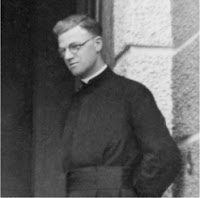
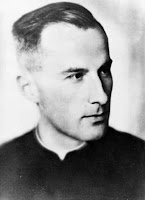
Fr. Hermann Bacher, S.J.
Social Centre Ahmednagar is a non-government organization, working in the drought prone and severely environmentally degraded regions of Maharashtra in Central India. 
According to its website, the organization was founded by Jesuit Father Hermann Bacher  (here) in 1966 
with the aim of alleviating poverty and hardship of the small and marginal farmers through development of water resources and increased agricultural productivity.
Link (here)

Monday, January 17, 2011

Old Issues Resurface

According to the Tampa Police Department, a man in 2002 accused Monsignor Norman Balthazar and another priest of s@xually assaulting him in 1971. The victim said he was 9 at the time and an altar boy at Christ the King. The state declined to press charges. The other priest had died by the time the victim came forward, according to police. Besides Balthazar, two other Christ the King priests were accused of molestation dating back to the 1980s SNAP said. Murphy said Christ the King's current pastor, 
Father David Toups, ran an announcement about the allegations against the Rev. Jan Sanders, a visiting Danish Jesuit during the 1980s,
in June's church bulletin, asking people to come forward with concerns.
Link (here) to the full St. Petersburg Times article.

Jesuit Cardinal Bea and Maria Valtorta

Cardinals Cushing and Bea
“Theologians and bishops have problems with supernatural phenomena,” he pointed out, recognizing the taboo-nature of the subject in many ecclesial circles. While this may be the case, the popular portrayal of Maria Valtorta's work, as being perceived negatively in the Church, is not fully accurate either. Pope Pius XII was a great supporter of Valtorta's writings, explaining: “Publish this work as it is. There is no need to give an opinion on its origin, whether it be extraordinary or not; whoever reads it will understand.” Other eminent Catholic leaders and intellectuals have been influential supporters of Valtorta's revelations after studying her writings, in addition to the former Pope. 
They include the Jesuit cardinal Augustine Bea, himself an ecumenical star at Vatican II, 
to Msgr. Hugo Lattanzi, a former dean of the Faculty of Theology at the Pontifical Lateran University, to Fr. Gabriel M. Roschini, the renowned Church Mariologist and philosopher, as well as Fr. Gabriele Allegra, famous for translating the entire Bible into Chinese. Fr. Allegra, who was the first Scriptural scholar to be beatified by Pope John Paul II in 2002 and is currently awaiting canonization, once wrote: “ I hold that the work of Valtorta demands a supernatural origin.”
Link (here) to the full article at News For Growing Christians

Sunday, January 16, 2011

To Cure The Errors Of The Times

St. Ignatius of Loyola at Manresa
The Spiritual Exercises of St. Ignatius of Loyola
An excerpt of Ignatius', 
Rules for Right Thinking with the Church
To have a great esteem for the teachings of the Fathers and theologians. The former, like St. Jerome, St. Augustine, St. Gregory, have laboured above all to form the hearts of Christians; the latter, following the course opened by St. Thomas, St. Bonaventure, etc, have had for their aim to cure the errors of the times, and to enlighten the faithful with exact notions and well defined dogmas. Coming in an age succeeding the Fathers, they have had, like them, the Holy Scriptures and the writings of antiquity to instruct them. They have had besides the ordinances and definitions of councils, the rules and constitutions of the holy Church; and the Spirit of God has powerfully assisted them in profiting by all these resources in order to direct the faithful in the ways of salvation.
Link (here) to the Spiritual Exercises of St. Ignatius of Loyola 

A Jesuit Vow

Fr. William O'Brien Pardow, S.J.
There was no music, no singing, no panegyric, no spoken word of sorrow or esteem in the whole ceremony. The body was placed in the poorest of coffins, interred in the lowliest ground with the most meager of inscriptions marking the grave, and there was no sign of deference or distinction in the mass or the absolution or the final blessing of the body at the grave.
Poverty was the keynote of the ceremony through it all, and that is in the vows of the Jesuits when they consecrate their services. They have to take the three vows, poverty, chastity, and obedience. From the time they enter the novitiate until they die humility is the ideal they seek.
In death and in life they hold to the ideal so that although the priests of the Jesuit community and the parishioners would do greater homage to the beloved rector, the customs of the order would not permit. So Father William O’Brien Pardow, S.J., whose entire life had been lived in the most simple fashion, was buried according to the precedents of his order.

Link (here) to read the entire post at Church historian Pat Macnamera's blog Irish Catholic Humanist

Saturday, January 15, 2011

Rejection In July 1968

Maryland Province's Colombiere House
As head of the Maryland Province of the Society of Jesus, which extends from North Carolina to Ohio, the Very Rev. Edward J. Sponga, 50, was, in effect, the Jesuit equivalent of a bishop. Last week Father Sponga quietly abandoned his vow of celibacy to marry Mary Ellen Barrett, 33, a nurse at a Roman Catholic hospital in the Philadelphia suburb of Darby, Pa., and the divorced mother of three children. In so doing, he became the highest ranking ecclesiastic of the 350 or so priests who have left the Catholic Church in the U.S. within the last two years in order to wed. The marriage came as a considerable shock to Father Sponga's fellow Jesuits, none of whom had any clue to his intentions. 
Born in Philadelphia, he joined the Jesuits at the age of 17, earned a doctorate in philosophy from Fordham, and became a strong advocate of reform within the society. In 1957 he was named head of the Jesuits' Woodstock College, where he helped develop a brilliant staff of teaching theologians, which included the late Father John Courtney Murray
Three years ago, Father Edward J. Sponga was named Maryland provincial, supervising 800 priests, lay brothers and seminarians. Sponga first met Mrs. Barrett several years ago, when she came to him for spiritual counseling. She was divorced from her husband last February and was granted custody of the children. Although automatically excommunicated for marrying, he insists that he is "still Catholic" in outlook and will continue to attend Mass. "I had to make a decision between those values I had lived as a priest and new values," he says. "It was a question, basically, , of what I wanted as a person. It's not that I reject the values of the priest hood." Nor does he reject the value of celibacy. "I can see many difficulties," he adds, "if priests tried to operate as married men."
Link (here) to the full July 1968 Time Magazine article.
Photo of Fr. Edward J. Sponga, S.J. (here)

Friday, January 14, 2011

Cleans Me From My Hidden Ills

All good, holy, wise, and powerful physician, cleanse me from my hidden ills! How many are there that I do not recall?
May your grace with which to search my reins and heart be with me. Show me the evil desires and evil works that you see but I do not. 
Look down kindly and open a fountain of waters so that while there is time they may be washed away and blotted out by your grace.
Amen
With gratitude to Companion Of Jesus

Église Saint-Étienne de Lille

The church of Saint-Etienne, a former Jesuit college chapel, now converted into a military hospital, when the seventeenth or eighteenth th century. The vault of the nave rests on pilasters of the Corinthian order, and those on the low sides of the pilasters of the Ionic order. In the choir, decorated with murals, is seen a painting of Victor Mottez, the Martyrdom of St. Stephen, above the altar.

Link (here) to the English translation and (here) to the original French book published in 1866

Tuition For The Holy Family

THE LIGHTER SIDE. 
Three friends — a Franciscan, Jesuit, and SVD — paid homage to the Christ Child in Bethlehem. The Franciscan was interested in the manger to serve as reminder of the strict poverty their order professed. 
The Jesuit was more interested to have Jesus enrolled at the Ateneo. Knowing of the Jesuit’s intention, Mary whispered to Joseph, “Can we afford their tuition?” 
When they looked around for the SVD, he was nowhere to be found. They discovered later he had run after the 3 Kings … soliciting donations for the mission!

Thursday, January 13, 2011

The Elected Leader Of The Republican Party Is A Catholic And Jesuit Educated

Speaker of the House John Boehner
Despite there being only 28 Jesuits colleges and universities in the country, nearly one in every ten members of the 112th Congress has attended a Jesuit school for undergraduate or graduate studies. A total of 53 members—41 in the House and 12 in the Senate—have attended a Jesuit secondary education institution. In the House of Representatives leadership, the new Speaker of the House John Boehner (R-OH) and Minority Whip Steny Hoyer (D-MD) are both alumni of Jesuit universities, having attended Xavier and Georgetown, respectively.
Link (here) to Vox Populi of Georgetown University

Father Ippolito Desideri, S.J. The First Jesuit In Tibet

“He was an indomitable figure,” translator Michael Sweet said about Father Ippolito Desideri, an Italian Jesuit who traveled to Tibet in 1716 and stayed until 1721. “His writing is wonderful. It’s a very accurate description of the land, the customs, the commerce, the people, the religion,” Sweet said. Sweet and Leonard Zwilling are the driving forces behind the translated book, a project they embarked on years ago. “This was something that germinated over many years,” Sweet said. He and Zwilling had been active in the Buddhist studies program at UW-Madison, where they learned of Desideri’s work. “We had a unique vantage point by having Tibetan knowledge and Mike’s Italian language skills. He started translating the work in about 2003 and it took seven years,” Zwilling said. “We joke that it took longer to do this book than Desideri spent in Tibet.” Desideri’s exploits made for fascinating work for the translators.
“It’s this tale of a guy making his way from Italy across the sea to India, over the Himalayas, across the Tibetan plateau in winter,” Sweet said. 
Desideri brought no intellectual baggage with him, because he was essentially the first European to learn about Buddhism from Tibetan scholars. “He didn’t have any preconceptions,” Zwilling said. “He had the good fortune, or misfortune perhaps, of being in India at a time of great turmoil. He’s the only Western witness to a very tumultuous time in Tibet. It’s a very important writing historically.” Desideri had such an affinity for languages and such acute perception skills that he was the right man at the right time to encounter Tibetan intellectuals and engage them in dialogue over their own religion, Sweet said. His time spent there produced the first dialogue between a Western thinker and Tibetan Buddhist culture.
Link (here) to Square

Wednesday, January 12, 2011

Liberation Theology Radio

Provoke Radio--a weekly, Jesuit-sponsored social justice radio program available on many radio stations across the U.S. and online. Provoke highlights those individuals and organizations who work tirelessly on behalf of the poor and marginalized, peace and justice - and in so doing, make a difference in the world. http://www.provokeradio.com
Link (here) to the dissident Catholic organization, Call to Action

“Living Around A Whole Lot Of Wealth Is Not Good For Christians,”

another Amish farm near Queen City, an elder stroked his long beard as he listened to a list of concerns expressed by locals. The man, who like many Amish asked that his name not be used, said he got along well with his “English” (non-Amish) neighbors, but acknowledged that many still had misunderstandings about the Amish faith. “I can actually see how they feel if they know no different,” he said. 
His family moved from the Fort Wayne, Ind., area five years ago to escape the city and strict zoning laws, and find a good community to raise their children. “Living around a whole lot of wealth is not good for Christians,” he said. 
The family sold their 80-acre farm and used the money to buy 300 acres in Schuyler County, on which they raise calves and operate a sawmill. Now, they share a 900-acre tract with 16 or 17 other Amish families, he said. “We don’t want them to feel we’re coming in to crowd them out,” he said of the locals. “The land was for sale.”
Link (here) to RNS to read the full story
Photo source (here) 


Why?

In 1965 there were 5,277 Jesuit priests and 3,559 seminarians; 
in 2000 there were 3,172 priests and 389 seminarians.
Link (here)

He Was Really A Jesuit

Cristoforo Barbato
For some years Cristoforo Barbato was editor in charge in Rome for some Italian magazines, as Stargate, Extra Terrestrial and Stargate Magazine. During that period he wrote on the magazine "Stargate" many reports about Fatima Apparitions and the famous "Third Secret". After the publication of those reports, precisely in the year 2000, he received several e-mails from a person who qualified himself as a Vatican insider. From those e-mails rose up the story of a presumed Vatican Intelligence Agency, whose code would be S.I.V.: "Servizio Informazioni del Vaticano", which in Italian means "Vatican Information Services". In short the Vatican Secret Services. Barbato, at the beginning, was very skeptical and did not rely on him. After one year of such an epistolary contacts (in the meantime the insider revealed himself as a S.I.V. membership, belonging to the Jesuit Order and working by the Holy See), the Italian freelance demanded a meeting with him, as a necessary condition to carry on the contacts. In spite of the risks the Vatican insider accepted, and I suppose he was aware it was necessary considering his baffling revelations. Two meetings took place in a public space in Rome in 2001. After that at least his identity was clear: he was not a mythomaniac; he was really a Jesuit  working by the Holy See.
Link (here) Alien-UFO.com 
Blogger Note: This post is not serious and should not be taken as credible, but as a curiosity of the internet. 

Tuesday, January 11, 2011

An Embrace Of Abortion

Fr. Robert Fredrick Drinan, S.J.
"The broader public evaluation of Robert Drinan's career might fall into three groups," Father Schroth writes. There were his severe critics, his devoted followers and a third group of "admirers, who respected him as a champion of human rights but had serious reservations on his abortion position." 
Among "those who strongly disliked him, most did so because of his abortion position," Father Schroth explains. However, for "his devoted supporters," Father Drinan's "lifelong commitment to human rights around the world is the unifying, idealistic glue of his public life." 
Surely, Father Drinan viewed his apparently evolving abortion position differently than did his critics. He has spoken of the "horror" of abortion and insisted that "an unborn child must be respected as a precious gift from God." But he long opposed making abortion a crime in America's pluralistic culture and even seems to have thought laws limiting abortion to certain hard cases had a left-handed way of legitimizing those abortions. Whatever the case, many thought it appeared that Father Drinan supported abortion. And Father Schroth says that many admirers, who would follow Father Drinan "on the other justice issues and even accept the general principle that not all immoral activity can be controlled by law," remained "puzzled by what they consider(ed) his inconsistency on abortion."
Link (here) to the full book review in the Catholic Setinal of "Bob Drinan" is Jesuit Father Raymond Schroth

Jesuits In NAZI Germany

Fr. Lothar Konig, S.J.
Fr. Alfred Delp, S.J.
The Kreisau Circle was a loose association of aristocrats, civil servants, clergy, and Social Democrats who gathered in small, secret meetings to plan a post-Nazi constitutional government, one based on Christian social-justice principles. Rosch, as Jesuit provincial, had been invited to help link the group with the Catholic bishops. He brought with him Lothar Konig and Alfred Delp. In the mid-1930s, Rosch had been catapulted from his position as rector of a boys school in Austria to superior of the Jesuits' South German province. He immediately distinguished himself as an outstanding administrator, and soon gained the confidence of the German bishops. Rosch had contacts in Rome at the highest levels, including the Jesuit superior general and Robert Leiber, a German Jesuit who served as secretary to Pope Pius XII  Rosch corresponded regularly with them, giving details of the plight of harassed and imprisoned, treatment of Russian prisoners of war prisoners of war, in international law, persons captured by a belligerent while fighting in the military. International law includes rules on the treatment of prisoners of war but extends protection only to combatants. In one letter he described Germany's situation as "the apocalypse of the twentieth century."  Unlike Rosch, whose leadership position and combative personality had led to frequent run-ins with the Gestapo, Konig pursued his underground work behind an imperturbable facade. Placed in charge of the house of studies known as Berchmanskolleg, he had managed to wrest the building from the SS, which had requisitioned it, by offering it to the Wehrmacht as a military base and hospital. The army's special communications system  proved useful, and working quietly in the background, Konig was able to keep the country's bishops informed about events elsewhere. He would move about in cloak-and-dagger fashion, sometimes appearing from nowhere on a bishop's doorstep, bringing the latest news, and encouraging the hierarchy in its struggles with the Nazis. He produced a list of the dead from the nearby Dachau concentration camp (some said he had coaxed a cleaning woman into letting him into the room where the camp's records were kept), as well as a text describing conditions at the camp. He sent these documents to Rome.
Link (here) to the complete and riveting article.
A Jesuit priest emailed me that The No Asshole Rule should be mandatory reading for every Catholic priest.
Link (here) to Protestant blogger Richard Beck, his blog is entitled Experimental Theology.

Is This How Treat Our Fellow Baptized Catholics?

Despite the fact that Jared Lee Loughner has been stalking Congresswoman Giffords for nearly 4 years (here)
Despite the fact that Jared Lee Loughner is described at a "left-wing pothead" by his classmates.(here) 
Despite the fact that Jared Lee Loughner has Demonic inspired shrine in his back yard (here) 
Despite the fact that Jared Lee Loughner was a registered Independant and didn:t vote in 2010 (here).
Despite the fact that Jared Lee Loughner was a 911 Truther (here)
Despite the fact that Jared Lee Loughner was a George Bush hater (here)
Despite the fact that Jared Lee Loughner took photos of himself in a red g-string waving a gun (here)
and says his favorite books include Adolf Hitler's Mein Kampf, Karl Marx's Communist Manifesto (here),
described himself as an atheist (here) and adored Che Guevara (here)

Yet Kevin Clarke a blogger at America's In All Things, somehow ties the tragedy of Tuscon to Glenn Beck and Sara Palin and their millions of readers, listeners and voters. This is an excerpt of Clarke's post entitled, The Tuscon Tragedy.
In the dazed aftermath of the mayhem in Tucson, there has been much digital ink spilled measuring out the blame for the attack on the indiscriminate rhetoric of America's permanent campaign culture as if specific percentages of culpability could be affixed to the loose and unpleasant lips of a Glenn Beck or Sarah Palin. I am not about to defend the lazy and toxic hyperbole of the prevailing political culture, certainly there has been far too much talk of tyranny, treason, and "second amendment" responses in recent cultural-political "debates."
Link (here) to read the entire post at In All Things the blog of America Magazine.

Sources

After 1945 the Jesuits organized the YCW (Young Christian Workers), and in the space of five years, from 1948 to 1953, the movement provided more candidates to the Society of Jesus than Belen college with its two thousand students.
Link (here) the book entitled, The Church in Revolution by the self confessed controversial Marxist Priest Francois Houtart

Monday, January 10, 2011

“The Reformation In Ten Parts”

Augustinian Priest Martin Luther after nailing his Ninty-Five Theses to the Castle Church in Wittenberg,
A proposal from Ignatius Productions and give you the opportunity to be part of this ambitious project.

Please CLICK HERE to see a video giving you all the details about this project. After you have watched this explanation of the extent of this project we are sure that you will want to support Father Mitch through your prayers and donations to insure this project is completed. Don't forget that it is just as important that you share this exciting project with your friends and family members.
Link (here) to Fr. Mitch Pacwa, S.J. and his Ignatius Productions 

On June 15, 1520, Pope Leo X issued a rebuttal to Luther's 95 Theses, a papal encyclical titled Exsurge Domine. This document outlined the Magisterium of the Catholic Church's findings of where Luther had erred.

With regard to St. Ignatius, his birth, his conversion, and the foundation of his order, evidently kept pace with the necessity then existing in the Church for new auxiliaries. The very same year in which Christopher Columbus conludes his treaty with Ferdinand of Castile, and sallied forth to the discovery of a new world; God brought St. Ignatius into being, doubtless with the design that the conversion of so many barbarous and savage nations should be the fruits of the zeal and labors of his spiritual children. Six years after Ignatius, in the year 1497, Francis Xavier was born, and that same year, the first voyage of Vasco de Gama to the East Indies took place. In 1521, Martin Luther declared in the Diet of Worms, in presence of Charles V., his obstinate persistence in heresy, and retired to Wartzburg, where, becoming as he audaciously says, " a new

iJesuit

Recent and best selling Loyola Press titles include My Life with the Saints, by James Martin, S.J.; Heroic Leadership by former Jesuit Chris Lowney; How Big is Your God, by Paul Coutinho, S.J.; Finding God, Our Response to God’s Gifts (an innovative parish-wide faith formation program integrating prayer and spirituality into traditional religious education) and over 120 titles in e-book format. Three iPad apps are available one of which was an inaugural product upon iPad launch. 
Link (here) to the full press release

An Abortion Free Liberation Theology Field Trip

Holy Cross collaborated with Boston College, Boston College High School, and Boston College School of Theology and advocated three social justice issues: the closing of the Western Hemisphere Institute for Security Cooperation, the DREAM Act (a bill that would provide illegal alien students who graduate from U.S. high schools the opportunity to earn conditional permanent residency if they complete two years in the military or two years at a four-year institution of higher learning), and support for a climate change policy.  Holy Cross students met with Senators John Kerry (pro-abortion) and Scott Brown (pro-abortion) and Representatives Mike Capuano (8th District), Barney Frank (pro-abortion) (4th District), and Jim McGovern (pro-abortion) 3rd District).  The group met with staff members from Sen. Brown, Sen. Kerry, and Rep. Capuano’s office, and met personally met with Rep. McGovern and Frank.
Link (here) to read the full public relations piece from The College of the Holy Cross

Sunday, January 9, 2011

Big Money In Big Oil

“Since Chevron is committed both to protecting shareholder value and to protecting human rights, the company needs to take more seriously the fact that in 2008, Chevron shareholders representing more than $ 35 billion in market value called on the company to increase its measurement and transparency of human rights activities,” said the Very Rev. Thomas Krettek, provincial of the Wisconsin province of the Society of Jesus (the Jesuits), the lead filer of the proposal. “An ever-growing percentage of shareholders understand that protecting shareholder value requires clearly and substantively protecting human rights.” Chevron does have a brief human rights statement and has initiated a training program for employees, but there is a growing concern that the company is not keeping pace with its competitors.  

The Politics Of A Pro Abortion Jesuit

At a community supper in Newton following the Oct. 15, 1969 antiwar rally on Boston Common, Jerome Grossman, one of the rally’s organizers, noticed a priest talking with a young Vietnamese man whose father was in jail in Vietnam. “He seemed unusually kind and considerate to the young man,’’ Grossman recalled. “There was no question as to where his sympathies lay on the war.’’ Grossman, a businessman-turned-antiwar activist, was looking for a credible candidate to run for Congress against the hawkish incumbent.
The priest, Father Robert F. Drinan, the Jesuit dean of Boston College’s law school, would become his candidate. Eleven years later, in May 1980, Grossman had dinner in Washington with Drinan, who was expected to run for a sixth term in Congress. 
Grossman recalled that something seemed to be bothering Drinan, but he did not let on what it was. But Drinan had learned that after years of receiving passive approval from his Jesuit superiors to serve in Congress, Pope John Paul II was preparing to order him not to run for reelection. Those two events serve as bookends for a searching biography by Raymond A. Schroth, whose title, “Bob Drinan,’’ seems jarring to those, especially in the Massachusetts press corps, who invariably addressed him as “Father Drinan.’’
Link (here) to the full article at the Boston Globe