Tuesday, June 10, 2008

Fr. W. Norris Clarke, S.J., "Rest In Peace"

Services Set for W. Norris Clarke, S.J., Professor and Thomist Philosopher
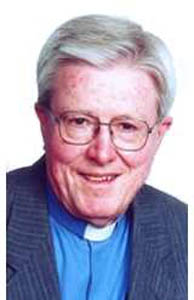
Norris Clarke, S.J., professor emeritus of philosophy, died Tuesday, June 10 at St. Barnabas Hospital in the Bronx following a stroke. He was 93. Viewings will be held from 3 to 5 p.m. and from 7 to 9 p.m. on Sunday, June 15 in the Loyola Hall Chapel on the Rose Hill campus. Services are set for 10:30 a.m. on Monday, June 16 in the University Church.

A native New Yorker, Father Clarke was born in 1915 and attended Loyola High School. He graduated, enrolled at Georgetown University in 1931 and entered the Society of Jesus two years later. His deepening interest in Thomist philosophy was developed at College St. Louis in England in 1936. He continued his studies at Fordham, earning a master’s in philosophy in 1939. He earned his doctorate from Catholic University of Louvain in Belgium, where he studied under Roman Catholic philosopher Louis De Raeymaeker. Father Clarke was ordained into the priesthood in 1945 and joined the Fordham faculty 10 years later as an assistant professor of philosophy.

He taught for three decades before becoming an emeritus professor in 1985. "Norrie Clarke was the rare combination of scholar and teacher who continued to have a transforming influence on his students well into his '90s," said Joseph A. O'Hare, S.J., former president of Fordham. In 1961, Father Clarke helped found the International Philosophy Quarterly (IPQ), a journal promoting theological dialogue between Europe and the Americas. He served as editor until his 1985 retirement. Even though officially retired, Father Clarke continued to teach in Fordham’s philosophy department and to publish articles. In 2007, he was honored by his peers at a philosophy colloquium on campus, where he presented a talk, “Integration of Personalism and Thomistic Metaphysics in Twentieth-Century Thomism.”

Father Clarke considered his philosophical journey as one moving from strict Thomism to a perspective revitalizing Thomistic philosophy to include an “implicit dimension of personalism.” He felt that the latter was inspired by the writings of Pope John Paul II.The colloquium coincided with publication of a revised edition of his 1979 book, The Philosophical Approach To God (Fordham University Press, 2007). Additionally, the Press will publish a book of his essays on Thomistic philosophy in the fall of 2008, The Creative Retrieval of Saint Thomas Aquinas.

The author of eight books and more than 70 articles, Father Clarke was the recipient of numerous awards, among them the “Aquinas Medal” from the American Catholic Philosophical Association and a Fordham “Outstanding Teacher Award.” He held honorary doctorates from Villanova University and Wheeling Jesuit College.In June 2000, International Philosophy Quarterly published a Festschrift in honor of Father Clarke’s 85th birthday and his longstanding editorial service. Presenting articles were religious philosopher Louis Louis Dupré, T. Lawrason Riggs, professor of the philosophy of religion at Yale University, and the late Gerald A. McCool, S.J., (FCRH ’40) professor emeritus of philosophy and former chair of the department.Father Clarke resided at Loyola Hall, where he was house confessor. Link (here)

Read an awesome reflection and personal insight on Fr. Clarke, by fellow Jesuit and former student Joe Koczera, his blog City and the World offers a rich and exciting view of a contemporary Jesuit, read his post entitled, Remembering W. Norris Clarke, S.J. (here)

Hebrew Jesuit

Israel's Hebrew-Speaking Catholics
Interview With Father David Neuhaus
By Karna Swanson
JERUSALEM, JUNE 8, 2008 (Zenit.org).- For a Hebrew-speaking Catholic living in Israel, fostering Jewish-Catholic relations isn't simply a part of the faith, it's a way of life, according to an Israeli priest. Jesuit Father David Mark Neuhaus, who comes from a Jewish family, is the secretary-general of the Hebrew-speaking Catholic Vicariate in Israel, known also as the the Association of St. James, and serves as the priest in charge of the Hebrew-speaking Catholic community in Haifa. In this interview with ZENIT, Father Neuhaus comments on the history, mission and challenges facing the Hebrew-speaking Catholic community in Israel.
.
Q: You say on your Web site that being a Hebrew-speaking Catholic community within a predominantly Jewish society is a new experience in the history of the Church. What led to the establishment of the Association of St. James?
.
Father Neuhaus: The Association of St. James that became the Hebrew-speaking Catholic Vicariate was officially established as a part of the Latin Patriarchate of Jerusalem in 1955. This was shortly after the establishment of the state of Israel. It was founded in order to serve the myriads of Catholics who had immigrated to Israel, often within mixed Jewish-Catholic families, and they came predominantly from Europe. It was also founded as a Catholic presence within Jewish society to nurture a new type of relationship between Catholics and Jews. The new reality of a Jewish state with Hebrew as the official language rendered important the existence of a Catholic milieu in which Hebrew was used and spoken.Among the founders of the Association were Jews who had become Catholics -- mostly in Europe -- and Catholics -- mostly from Europe -- who had a vocation to live in solidarity with the Jewish people in the state of Israel. Our founding fathers and mothers had a vision of a Hebrew-speaking Catholic community at home within the Jewish people in Israel and living its life of faith in profound dialogue and solidarity with the Jewish people. In 2003, Pope John Paul II made the patriarchal vicar of the Hebrew-speaking Catholics, Benedictine Father Jean-Baptiste Gourion, an auxiliary bishop to the Latin patriarch, a step that furthered recognition of this reality within the Church of the Holy Land.
.
Q: What new perspective does a Hebrew-speaking Catholic in the Holy Land have to offer?
.
Father Neuhaus: A Hebrew-speaking Catholic lives within the only Jewish society that constitutes a majority, where the rhythm of day-to-day life is established by Jewish religion, history and culture. For us, the universal Catholic reflection on the Jewish identity of Jesus and the Jewish roots of our faith is not just one element in our renewal after the Second Vatican Council. It is also part of our daily existence. Dialogue with Jews here is not with a marginal minority but with the dominant majority. As part of our attempts to inculturate, we are challenged to integrate into our Catholic identity, into our liturgy and into our thinking, this daily encounter with Judaism and the Jewish people. All of this takes place within the very land that is at the center of the biblical narrative, the land in which biblical Israel, her prophets and Our Lord Jesus walked, taught and lived.

.

Q: There are Hebrew-speaking Catholic communities in the four major cities in Israel. How large are these communities? Are they growing? What are the major obstacles they face?

Father Neuhaus: Today we have communities in the four biggest cities in Israel: Jerusalem, Tel Aviv-Jaffa, Beer Sheba and Haifa, with faithful spread in many other places too. We are a very small community made up of a few hundred people. Despite our small size and the slow rate of growth, our reality is a vibrant one and our centers are true oases of prayer and fellowship.However, there are also numerous problems to overcome. Our communities, small in size, are very diverse. We have faithful from many parts of the world -- from Russia, France, Poland, the United States, Italy, India, etc. -- in addition to Israelis.
Some are Jews and some are not. Some are Israelis, some have been here many years, some have just arrived. Some speak Hebrew, some do not. Some are Catholics by baptism at birth, some are Catholics by baptism late in life. Our priests are predominantly from Europe and it takes many years to learn the language and culture. Our faithful of Jewish origin are often single people who have made courageous decisions in their lives and come to us without families.
Some also have to deal with opposition from their families and the general society because of the choices they have made, and some choose to live in utmost discretion and even secrecy.There is very little institutional support -- schools, social and cultural services -- for Catholics who are Hebrew-speaking, and families who have immigrated to Israel in recent years -- predominantly from the ex-Soviet Union -- often choose to leave Israel if they want to raise their children as Catholics.Those families that do stay often see their children assimilate into a general Jewish secular population that practices no religion. Finally, the small size of our communities necessitates a constant vigilance in order to build community and not allow divisiveness or factionalism to enter.


Q: In addition to Hebrew-speaking Catholics, what other Catholic communities are active in Israel?

Father Neuhaus: Hebrew-speaking Catholics are only a very small part of the wider Catholic Church in Israel. Most Catholics are Arabic-speaking -- either Arab citizens of the state of Israel or Palestinian Arab Catholics in the Palestinian territories.Roman Catholics, under the jurisdiction of the Latin Patriarch of Jerusalem are only one part of the Catholic population.
Most Catholics in Israel are Greek Catholics, and there are Maronite, Syrian and Armenian Catholics too. Relations between Hebrew-speaking Catholics and their Arab brothers and sisters in faith are complex because of our difficult political situation, but unity of the Church is preserved by our ecclesial leadership as a Christian witness to the possibilities of reconciliation and peace.
In Beer Sheba and in Haifa, where political tensions are not as intense, there are Arab Catholics who frequent our communities.Interestingly, at the present time, the patriarchal vicar for the Hebrew-speaking communities, Father Pierbattista Pizzaballa, is also the Custodian of the Holy Land, the head of the Franciscan order in the Holy Land, who has extensive responsibilities within the Arab Catholic community too.The present Latin patriarch, His Beatitude Michel Sabbah, is the first Palestinian Arab patriarch of Jerusalem, and he also speaks fluent Hebrew. I, myself, am secretary-general of the vicariate and am also professor of Scripture at the Arabic-speaking diocesan seminary and at the Palestinian Catholic University in Bethlehem.


Q: In what ways is the Hebrew-speaking Catholic community fostering ties with the Israeli Jewish society?

Father Neuhaus: Our aim is not just to foster ties, but to live within the society. We are not an association for dialogue, but rather a pastoral service for our faithful. However, efforts are made to facilitate integration into Israeli Jewish society.First, we live our lives in Hebrew. Second, our lives follow the rhythm of Jewish Israeli society. Additionally, in our communities we keep up with what is going on in the field of Jewish-Christian dialogue and we try to make our own contribution.
There is still a rather negative attitude to Christianity in general and to the Catholic Church in particular within Jewish Israeli society, partly due to the long centuries of troubled relations between Jews and Christians in Europe.
We see as part of our task bringing to the attention of our society in Israel the enormous changes that the Church has seen in relationship to the Jewish people since the Second Vatican Council.

.

Q: Have Hebrew-speaking Catholics been able to integrate fully into Israeli society? For example, are there Catholics involved in politics, education and business?

Father Neuhaus: Some Hebrew-speaking Catholics -- those who are Jewish Israelis before they become Catholics -- are fully integrated within the society. In addition, some Hebrew-speaking Catholics who came to Israel from elsewhere have indeed made contributions to the society through their integration in daily life. First and foremost, our communities contribute to the general society by being places of life and prayer in the midst of a society at war. One of our special vocations is to pray for peace and justice. In the field of education, we have had a number of prominent members active in teaching in Israeli academic institutions. One of our founding fathers, Dominican Father Marcel Dubois, served as head of the philosophy department at Hebrew University in Jerusalem. Other members teach theology, archaeology, history and other fields in the Israeli universities. Other members are active in the formation of Christians who come to Israel to study here theology and Scripture as well as Jewish studies.
One of our founding fathers, Father Yohanan Elihai, has made an important contribution to the field of linguistics with dictionaries and language manuals that facilitate communication between Hebrew and Arabic speakers. On June 4 he was awarded an honorary doctorate by Haifa University for his work in the field of linguistics. Another founding father, Dominican Father Bruno Hussar, established a community called "Newe Shalom" -- Oasis of Peace -- in which Jews and Arabs live together.
Some members are also fully engaged in the struggle for peace and justice for Israelis and Palestinians. Each individual faithful finds his or her place in the society, and so we come together as doctors, nurses, teachers, social workers, lawyers, bureaucrats, businesspeople, as well as pensioners, students and the unemployed, to make up communities that live ordinary lives that are sometimes extraordinary because of our faith.

An African Jesuit Writes A Book, I Am Not Sure I Would Want To Read It

Book Review: Say You're One of Them (2008)
Uwem Akpan, S.J. North-West Africa Province of Jesuits
By Jennifer Reese
Awe is the only appropriate response to Uwem Akpan's stunning debut, Say You're One of Them, a collection of five stories so ravishing and sad that I regret ever wasting superlatives on fiction that was merely very good. The setting is Africa; the protagonists, children — smart, innocent, greedy, furious, witty — who are caught in the tragedies that have lately befallen the continent, from AIDS to genocide to the comparatively banal business of grinding poverty. Akpan, a Nigerian-born Jesuit priest, writes with precision and sympathy about people of different faiths and nations.

His first tale, ''An Ex-mas Feast,'' delivers a gut punch from which the dazed reader never quite recovers. Eight-year-old narrator Jigana dreams of going to school while living on the streets of Nairobi with his family, including a shiftless, intermittently tender mother who sends him out begging and accepts handouts from her tough-minded daughter, a 12-year-old prostitute.

As the story begins, Jigana's family is intact, if barely, crammed inside their makeshift shanty, hoping for a lavish holiday meal. By the end, even this provisional community dissolves, a portrait in microcosm of the way a whole culture collapses. Hand-wringing journalists have described the misery of Africa's urban poor, but Akpan also captures the humor and fleeting grace that make the degradation infinitely more painful to read about. His youthful protagonists are not the waifs of UNICEF ads or the noble victims of guilt-ridden postcolonial lit. Unlike the unshakably high-minded Valentino Achak Deng of Dave Eggers' earnest quasi-real novel about Sudanese war orphans, What Is the What, Akpan's characters are ordinary, flawed, sometimes funny kids who happen to be caught in a nightmare.

You'll find no relief in the second tale, the masterful ''Fattening for Gabon,'' in which a brother and sister wait for their uncle to sell them into slavery. In one of the most disturbing scenes in recent fiction, he strips off his pants and tries to coach his young charges about sex — a skill they will presumably need in their new life.

The hallucinatory ''My Parents' Bedroom'' dramatizes the ordeal of Monique, a pretty, pampered 9-year-old girl, as her home is destroyed over two bloody nights during Rwanda's civil war in the 1990s. ''When they ask you,'' her mother tells her, ''say you're one of them, OK?'' ''Who?'' asks Monique. ''Anybody,'' answers her mother. The book should be depressing, but the blazing humanity of the characters and the brilliance of Akpan's artistry make this one of the year's most exhilarating reads.
Link (here)

Monday, June 9, 2008

Thyrsus González de Santalla, The 13th General

As an ardent adversary of probabilism González had frequently asked his superiors to have some Jesuit write against the doctrine. He himself had composed a work in which he defended probabiliorism, assigning, however, an exaggerated importance to the subjective estimation of the degree of probability. The general revisors of the Society unanimously rendered an unfavorable opinion on the work, and accordingly, in 1674, the Superior General Giovanni Paolo Oliva refused permission for its publication. González received encouragement from Pope Innocent XI and by his order the Holy Office issued a decree, in 1680, ordering the superiors of the Society to allow their subjects to defend probabiliorism, a permission that had never been denied.
Link (here)

St. Ignatius On Conversations With Others

TO FATHERS BROËT AND SALMERÓN,
September 1541

How to Deal and Converse with others in the Lord

In all your dealings be slow to speak and say little, especially with your equals and those lower in dignity and authority than yourselves. Be ready to listen for long periods and until each one has had his say. Answer the questions put to you, come to an end, and take your leave. If a rejoinder is required, let your reply be as brief as possible, and take leave promptly and politely.
In dealing with men of position or influence—if you hope to win their affection for the greater glory of God our Lord—first consider their temperaments and adapt yourselves to them. If they are of a lively temper, quick and cheerful in speech, follow their lead while speaking to them of good and holy things, and do not be serious, glum, and reserved. If they are shy and retiring, slow to speak, serious, and weighty in their words, use the same manner with them, because such ways will be pleasing to them. I became all things to all men [1 Cor. 9:22].
You must keep in mind that if someone with a lively disposition does not deal with another who is likewise lively, there is very great danger of their failing to come to any agreement, since they happen not to be of the same mind. And therefore, if one knows that he himself is of such a lively disposition, he ought to approach the other, possessing similar traits, well prepared by a close study of himself and determined to be patient and not to get out of sorts with him, especially if he knows him to be in poor health. If he is dealing with one of slower temper, then there is not so much danger of a disagreement arising from words too hastily spoken.
Whenever we wish to win someone over and engage him in the greater service of God our Lord, we should use the same strategy for good that the enemy employs to draw a good soul to evil. The enemy enters through the other's door and comes out his own. He enters with the other, not by opposing his ways but by praising them. He acts familiarly with the soul, suggesting good and holy thoughts that bring peace to the good soul. Then, little by little, he tries to come out his own door, always portraying some error or illusion under the appearance of something good, but which will always be evil. So, we may lead others to good by praying or agreeing with them on a certain good point, leaving aside whatever else may be wrong. Thus after gaining his confidence, we shall meet with better success. In this sense we enter his door with him, but we come out our own.

This is an excerpt of a longer letter found (here)

17th Century French Jesuit Missionary Died At The Hands Of The British, Evangelizing The Indian's Of Maine

History surrounds river anglers
By KEN ALLEN

"Dawn over the Kennebec" by Mary R. Calvert, published by Twin City Printery in Lewiston in 1983, shows the rich history of the Kennebec River -- an ancient travel artery for indigenous people and early settlers. Yes, Maine's rivers and large streams have a history, folks, and anglers cannot escape this fact because we hang around places where significant events occurred. For example, Calvert's section on Father Sebastian Rasle (Râle) caught my attention big time because I fish near the exact spot where Rasle lived with the Norridgewocks, who were part of the Abenaki nation.


In 1695, this French Jesuit missionary came south from Canada and set up a church in the Norridgewock village on the Kennebec near what is now Madison. This river stretch lies off the Father Rasle Road, which parallels Route 201 south of downtown Madison. When fishing there, it's easy to imagine this setting when Rasle arrived, thanks to his descriptions. The village covered the 250-acre intervale surrounded on three sides by the river. According to Rasle, huge cornfields rose from the Kennebec then, but today, magnificent pines and mixed-growth forests have replaced the croplands and Indian dwellings.


Down the Father Rasle Road from 201A on the north end, the highway goes around a sharp, left-hand curve and comes to open pines on the right where folks can picnic or access the river. Just south of the pines, a stone with a plaque commemorates Father Rasle and just down the road further south lies a cemetery. On the back of it stands a tall monument where Rasle's catholic church and dwelling stood. This spot near the monument is also where the British shot Father Rasle in 1724. They thought he had stirred up the Norridgewocks against the English settlements to the south, so they attacked the Indian village and killed this Jesuit priest during the early part of the battle.

It's fun to read about Rasle on the Internet because French versions paint the man as a veritable saint, while English accounts generally portray him as a troublemaking scoundrel. Calvert's book has a 27-page translation of Rasle letters that give more insight into his life, and a passage in one letter gives pause for thought about the good father's influence on the Norridgewocks.
Rasle attended their council meetings and offered opinions on various topics. In one letter, he wrote, "My advice always shapes their resolutions." If you fish this river section, and I have hit it hard in some years, do yourself a favor and read pages 92-129 in "Dawn over the Kennebec." It'll bring history alive, so anglers can enjoy fishing excursions more.
Link (here)
THE CAUSE OF SEBASTIAN RÂLE (1652-1724): IN COMMEMORATION OF THE 275TH ANNIVERSARY OF HIS MARTYRDOM (23 August 1999) A complete history (here)

Sunday, June 8, 2008

On Abortion Father Drinan Was On The Wrong Side: Consistently, Persistently, And With No Public Evidence Of Regret

Demythologizing Father Drinan
By George Weigel
Before the gossamer threads of mythology being woven around the memory of the late Father Robert Drinan, S.J., harden into what some might take for facts, a visit to the historical record is imperative. (1) In a memorial essay in the Washington Post, Colman McCarthy asserted that Drinan’s presence in the House of Representatives “had been sanctioned by...the U.S. episcopate, the cardinal of Boston, [and] his own Jesuit superiors...” That is false.

An exhaustive study by historian James Hitchcock, “The Strange Political Career of Father Drinan,” was published in 1996 in Catholic World Report. Using documents from the archives of the New England Province of the Society of Jesus, Hitchcock demonstrated that the Father General of the Society, Pedro Arrupe, expressed serious concerns about Drinan’s political career numerous times.


On several other occasions, Arrupe tried to communicate, through the New England Province leadership, his desire that Drinan leave electoral political life.
Arrupe eventually withdrew his objections, but as Hitchcock writes, this “occurred [in 1976] only after Drinan had several times run for Congress in defiance of the General’s express command.” In 1972, Cardinal John Krol, president of the U.S. bishops’ conference, stated that Drinan’s presence in Congress was contrary to the policy and wishes of the U.S. bishops. That same year, Bishop Bernard Flanagan of Worcester informed Father Arrupe that both he and Archbishop Humberto Medeiros of Boston disapproved of Drinan serving in Congress. Arrupe reported this to Drinan in a letter, reiterating his command that Drinan cease and desist. Drinan did not reply. A reasonable reading of Hitchcock’s article suggests that Drinan defied or ignored his Jesuit superiors in Rome on a dozen occasions; he seems to have done the same with the relevant U.S. bishops at least four times.
(2) The Post’s McCarthy, like others, suggested that Pope John Paul II ordered Drinan to leave Congress because of pressure from “rankled American conservative Catholics.” That is also false. John Paul’s proscription on priests in elective politics, which was universal in scope, involved the theology of the priesthood. How, the pope asked, could a priest live out his sacramental ordination as an embodiment of the Church’s unity if he engaged in partisan politics? This was a problem in Latin America, where priests were engaged in sometimes-lethal partisanship; it was also a problem in the (somewhat) more genteel halls of Congress.

Hitchcock’s article also offers a depressing reminder that Drinan’s New England Jesuit supporters insisted to Father Arrupe that there was no layman qualified to take Drinan’s seat in Congress – a breathtaking example of clericalism, and another falsehood to boot.


(3) Questions about the secular canonization of Robert Drinan as a forceful champion of human rights are also in order. The abortion license is the gravest (and certainly most lethal) violation of human rights in America today.

Father Drinan was a consistent pro-abortion vote in Congress; in 1980, a National Abortion Rights Action League fundraising letter argued that Drinan’s re-election was essential. After becoming president of Americans for Democratic Action [ADA] in his post-congressional life, Drinan dispatched an ADA fundraising letter urging the election of pro-abortion members of Congress on moral (sic) grounds.


In 1996, Drinan penned a New York Times op-ed attacking the partial-birth abortion ban, misrepresenting the facts about the medical “necessity” of this gruesome procedure, and thanking President Clinton for vetoing the bill.
How any of this comports with a devotion to “human rights” is unclear.

On the great human rights and civil rights issue of American domestic politics these past three decades, Father Drinan was on the wrong side: consistently, persistently, and with no public evidence of regret. In the 1980s, the New England province Jesuit leadership claimed that Drinan’s was a uniquely moral voice in American politics.


That was untrue then; recent, similar claims about Father Drinan’s legacy are also untrue. There is no pleasure to be had in writing these things. The Drinan case is, however, an important cautionary tale about the corruptions of judgment that ensue when truths are fudged in service to political power, and when that power is thought to be of greater consequence than the truth.
George Weigel is a senior fellow of the Ethics and Public Policy Center in Washington, D.C. Weigel’s column is distributed by the Denver Catholic Register, the official newspaper of the Archdiocese of Denver. Phone: 303-715-3215.

Link (here)

Saturday, June 7, 2008

A Jesuit On Dorthy Day

Diaries shed light on unlikely would-be U.S. saint
By Daniel Burke

Some excerpts.
....Over the course of the 20th Century, few people practiced a love of the divine, and the divine in others, as assiduously as Day. The Catholic convert, who co-founded the Catholic Worker movement 75 years ago on May 1, 1933, made "works of mercy" -- feeding the hungry, clothing the naked, and comforting the sick -- the center of her life.
....the Vatican named Day a "Servant of God" in 2000, placing her on the path to sainthood.

She's been called "the most significant, interesting, and influential person in the history of American Catholicism," and been made the subject of numerous biographies, plays, documentaries, and a Hollywood film. Day herself wrote memoirs, a novel, and thousands of columns for the Catholic Worker newspaper.

But Day's personal journals, published this month, reveal the most complete view to date of the snares and hitches on her pilgrimage from Bohemian journalist to Catholic icon, say writers and movement veterans.
Titled "The Duty of Delight," the diaries span from 1934 to just days before Day's death in 1980, and offer a uniquely intimate look at a modern would-be saint grappling with the joys and struggles of everyday life. "Given her place in the history of American Catholicism, the complete journals of Dorothy Day is bound to be a spiritual classic," said the Rev. James Martin, an editor at the Jesuit weekly America and the author of "My Life With the Saints.

"It shows how many plain, old human problems she had to face ... that holiness makes its home among humanity," added Martin. As matriarch of the Catholic Worker movement, including its "houses of hospitality" scattered throughout the U.S., Day's problems abounded. Bed bugs bit, volunteers bickered and bill collectors threatened. As wars raged, fellow Catholics questioned the movement's unbending pacifism.
The journals reveal Day's determination to press on, following the "little way" of her heroine, St. Therese of Lisieux. For nearly five decades, she rose at dawn to attend Mass, prayed the monastic hours, wrote anguished letters to God, examined her conscience and labored to "be gentle and charitable in thought, word and deed." The journals also show Day's playful side, as she watches baseball, chases after grandchildren and laughs at her own foibles.

....In many ways, Day is perhaps an unlikely candidate for sainthood. Before converting to Catholicism, she caroused with the likes of playwright Eugene O'Neill, committed every sin "aside from drug addiction" and had an abortion. Later, she chastised those who called her a saint, saying that everyone is called to holiness. But ultimately, the difference between a saint and a holy person, said writer Paul Elie, is that "a saint makes other people want to be like her." And by that criteria, Day is already among the elect, said Rosalie Riegle, a former Catholic Worker who has written a biography of Day and a history of the movement.
Link to the full article (here)
Photo credit: Dorothy Day facing her last arrest photo by Bob Fitch
More on Dorthy Day (here) , (here) and (here)
Dorthy Day and pacifism (here) , (here) and (here)
Pacificism (here) and (here)
George Wiegel's article on A Catholic Just War (here)

Friday, June 6, 2008

The Jesuit Saint Train's Final Stop #5: Happy Catholic

Father Martin coming June 6 to HC on author blog tourNow this is an interesting idea from Loyola Press ... Father James Martin, author of My Life With the Saints, will be taking a week-long tour of different blogs to chat one-on-one as it were, via the comments boxes. Of course, I jumped at this opportunity since that was a book I really loved. You can read my review here. We'll be chatting about chapters 5 and 6 of his book on Friday, June 6. You can download the pdf of both chapters here. Chapter 5 is about Ignatius of Loyola and I am interested in discussing the use of imagination in prayer. Chapter 6 is about Pedro Arrupe who struggled mightily with obedience to the Church during his tenure as superior of the Jesuit Order. I think that will make a good place to begin a discussion of obedience to the Church and remaining true to one's own convictions. Of course, you might have completely different issues to talk about from these chapters. This is your chance to do it with the author. Also thanks to Loyola Press's generosity, we will be having a giveaway of a signed hardback copy of My Life With the Saints on that day. (Nothing but fun around here, y'all!) If you are commenting, then your name will be entered in the drawing.ALSO, there will be discounts offered to anyone wanting to buy his book. You can't say that you're not getting full value for your dollar at this blog!So download those chapters and put your thinking caps on!
Link (here)
.
Go to Happy Catholic now and visit with Fr. James and Julie D. (here)

A Politician, Chemo Therapy, Our Lady Of Fatima, A Novena And A Jesuit Priest

Cory: I have energy to go to beauty parlor
By Beverly T. Natividad
Philippine Daily Inquirer

05/31/2008
MANILA, Philippines--Like the mother to the nation that she once was, ailing former president Corazon Aquino asked Filipinos Friday night to pray not only for her but for the country as it deals with various crises. Exuding an aura of wellness and looking much better compared to her previous public appearances since she wasdiagnosed with colon cancer, the 75-year-old democracy fighter said prayers would help the country survive its ordeals.
"We all know the difficulties we are going through. Only through prayer can we surmount all of this," Aquino said at a healing Mass for her at the Church of the Gesu in Ateneo de Manila University in Quezon City.
Aquino told reporters she was responding well to chemotherapy and she still had the energy to go out about two or three times a week for occasional visits to her office or to go to a beauty parlor. 'Doctors very positive' It was Aquino's third known public appearance since her family broke the news of her illness on March 24. "At least the chemo is doing me good. The doctors are very positive," said Aquino, who was accompanied to the Mass by her son, Sen. Benigno "Noynoy" Aquino III, and her grandson, Jiggy Aquino Cruz. She said she was feeling much better and her health was "improving slowly." She said doctors had told her that her blood tests showed that she was responding very well to treatment. "My blood work is okay. Kulang na lang appetite ko [It's my appetite that is lacking]," she said. In a speech following the Mass, Aquino again expressed gratitude to numerous Filipinos praying for her as she battles the big "C." 'Who can be luckier than I?' She said that in the midst of her difficult times, knowing that Filipinos were praying for her gave her enough energy to carry on. "I've had good days. But on the days when I'm not feeling all that well, what keeps me going is the thought that thousands of Filipinos are praying for me," Aquino said.
"Who can be luckier than I to have so many praying for me," she added. Fatima's intercession The Mass at the Ateneo last night was the fifth and last healing Mass for the former President.
The series of novena Masses was for the intercession of Our Lady of Fatima for her full recovery. Friday night's Mass was concelebrated by Imus Bishop Luis Antonio Tagle and Aquino's spiritual adviser, (video here) Jesuit priest Fr. Catalino Arevalo.

Link (here)

The Famed Jesuit Cardinal And World War II Heroism

Cardinal Paolo Dezza, 98; Guided the Jesuits
By ALESSANDRA STANLEY
Published: December 22, 1999
Cardinal Paolo Dezza, a traditional Jesuit scholar who was assigned by Pope John Paul II to rein in the religious order in the early 1980's, died in Rome on Friday. He was 98. The Jesuits, formally the Society of Jesus, an order founded in the 16th century, grew politically divided in the social unrest of the 1960's and 70's.
One of the first concerns of John Paul II's papacy was ridding the Roman Catholic Church of Marxist-tinted ''liberation theology'' movements in Latin America, of which Jesuits were often leading advocates.
Jesuits in the United States and Europe were also prominent in theological rifts with Rome. In 1979 the newly elected pope warned a gathering of Jesuits that their order was ''causing confusion among the Christian people and anxieties to the church.'' In 1981, as the battle between conservatives and liberals in the Jesuits intensified, the order's superior general, the Rev. Pedro Arrupe, suffered a stroke.
The Jesuits nominated the Rev. Vincent O'Keefe, an American liberal, to run the order until a successor could be found. The pope instead appointed Father Dezza, who was known as a brilliant scholar and also a traditionalist, as a special pontifical delegate to serve as the Jesuits' interim leader. The pope had attended Father Dezza's lectures when studying in Rome after World War II at the Gregorian Pontifical Institute, where Father Dezza was rector. Father Dezza was also a confessor to Pope Paul VI and Pope John Paul I. Despite the concerns of some Jesuits, his leadership proved deft.
In 1983 the Jesuits chose the Rev. Peter Hans Kolvenbach, a Dutch academic who had mainly worked in the Middle East, to be superior general, and tensionnbetween the Vatican and the Jesuits abated. The pope elevated Father Dezza to cardinal in 1991, even though he was 89, nine years over the age limit to vote to elect a new pope. Cardinal Dezza, who was born in Parma in 1901, began his training as a Jesuit in 1918, right after finishing high school. Ordained in 1928, he was appointed rector of the Gregorian in 1941. During World War II, he was credited with having hidden people wanted by the Nazis. Before the pope asked him to be pontifical delegate to the Jesuits, Father Dezza had held senior administrative positions in the order, including president of the commission of superior studies in 1974. On Monday the pope celebrated the cardinal's funeral Mass in St. Peter's Basilica.
Link (here)

Thursday, June 5, 2008

Jesuit And The Saints Tour Stop #4: The Anchoress

"What saves a man is to take a step. Then another step." -- Antoine de Saint-Exupery
.
Go to The Anchoress and Speak with Fr. James now (here)

The Service Of Authority And Obedience

by Congregation for Institutes of Consecrated Life and for Societies of Apostolic Life
Faciem tuam, Domine, requiram
Instruction
TABLE OF CONTENTS
Introduction
1. Consecrated Life as a witness of the search for God 2. A path of liberation3. Addressees, intent and limitations of the document
FIRST PART
Consecration and search for the will of God
4. Whom are we seeking?
5. Obedience as listening
6. “Hear, O Israel !” (Dt 6:4)
7. Obedience to the Word of God
8. In the following of Jesus, the obedient Son of the Father
9. Obedient to God through human mediation
10. Learning obedience in the day-to-day
11. In the light and in strength of the Spirit
12. Authority at the service of obedience to the Will of God
13. Some priorities in the service of authority
a) In consecrated life authority is first of all a spiritual authority
b) Persons in authority are called to guarantee to the community the time for and the quality of prayer
c) Persons in authority are called to promote the dignity of the person
d) Persons in authority are called to inspire courage and hope in the midst of difficulties
e) Persons in authority are called to keep the charism of their own religious family alive
f) Persons in authority are called to keep alive the “sentire cum ecclesia”
g) Persons in authority are called to accompany the journey of ongoing formation
14. The service of authority in the light of ecclesial norms
15. In mission with the freedom of the children of God
SECOND PART
Authority and obedience in community life
16. The New Commandment
17. Persons in authority at the service of the community, the community at the service of the Reign of God
18. Docile to the Spirit who leads to unity 19. For a spirituality of communion and a communitarian holiness
20. The role of persons in authority for the growth of the community
a) The service of listening
b) Creation of an atmosphere favorable to dialogue, sharing and co-responsibility
c) Soliciting the contribution of all for the concerns of all
d) At the service of the individual and of the community
e) Community discernment
f) Discernment, authority and obedience
g) Fraternal obedience
21. “The first among you must be your slave” (Mt 20:27)
22. Community Life as mission
THIRD PART
In mission
23. In mission with all one's being, as Jesus the Lord
24. In mission for service
25. Authority and mission
a) Persons in authority encourage the taking up of responsibilities and respect them when taken up
b) Persons in authority invite us to confront diversity in a spirit of communion
c) Persons in authority maintain a balance between the various dimensions of consecrated life
d) Persons in authority have a merciful hearte) Persons in authority have a sense of justice
f) Persons in authority promote collaboration with the laity
26. Difficult obedience
27. Obedience and objections of conscience
28. Difficult kinds of authority
29. Obedient until the end
30. Prayer for persons in authority
31. Prayer to Mary

Wednesday, June 4, 2008

The Ignatian Blog Cyber Tour Stop #3 Is At, "The Dawn Patrol"

There are three reason why I love Dawn Eden. First, she has a remarkable ability to cut to the chaste (pun), "As one blogger has noted dismissively, this is a "girl blogs" tour. I would give Father the benefit of the doubt and assume a tour of robust Ignatian, testosterone-fueled blogs will follow". Second, she speaks (here) so eloquently about the former "lifestyle" she used to live and her continued repudiation (and here) of that "lifestyle". Thirdly, I love Mary Jane's, shoes, that is!
.
I also want to highlight a post she wrote about John Brown, S.J. it is important and is a worthy read (here)
.
This is Dawn's post on the up coming tour.


When the saintmeister comes marching in
As noted earlier, Father James Martin, S.J., author of My Life with the Saints, will be making The Dawn Patrol a stop on his blog tour June 4.

(As one blogger has noted dismissively (not dismissively, just an observation...), this is a "girl blogs" tour. I would give Father the benefit of the doubt and assume a tour of robust Ignatian, testosterone-fueled blogs will follow.)


Father James will be parking himself in the comments section on that day, ready to respond to readers, so get your questions ready. His publisher, Loyola Press, will also be raffling off an autographed hardcover copy of My Life with the Saints. Since June 26 is the feast day of St. Josemaria Escriva, I'll be starting the conversation with Father Martin with this quote from St. Josemaria, asking his thoughts on both how the quote reflects the spirituality of the founder of Opus Dei and how it might apply to the saints he describes in his book:

"The world admires only spectacular sacrifice, because it does not realize the value of sacrifice that is hidden and silent."


The publisher is also offering a discount on Martin's book; here are details from publicist Michelle Halm: "Regarding the blog tour, please tell your readers that if they order My Life with the Saints during your Fr. Martin Blog tour, they will save 35% on their order if they place it by June 8. They should use marketing code 2682. They can order online at http://dawneden.blogspot.com/www.loyolabooks.com/martin or call and talk to a real person! 800-621-1008."
Link (here)
Go to the Dawn Patrol (here)

Jesuit Editor: Man Is Called To A Supernatural End—The Face-To-Face Vision Of God In Heaven For All Eternity"

Man lives in two worlds
June 2008
Man lives on two levels; he lives in two worlds. What are those two worlds? They are the world of nature, which we can perceive with our senses—what we can see, hear and feel—and the world of the spirit. The former is visible and the latter is invisible. The former is the order of nature and the latter is the order of grace. Atheists and materialists deny the existence of anything spiritual. According to them all reality is limited to the material universe—what can be perceived by the senses. For them, apparently, the mind and ideas are merely highly refined operations of matter.
Since materialists deny the existence of God and spirit, they also logically deny that there can be anything like a miracle.

They deny the truth of the miracles at Lourdes, and they dismiss the historical account of the miracles of Jesus in the New Testament as “mythology” and highly emotional “fables” invented by the Christians in the first and second centuries to support their claim that Jesus Christ is God and so worthy of divine worship. According to them Jesus worked no miracles and did not rise from the dead on Easter Sunday.

The Catholic view of this is completely different. We hold and believe that God created the heavens and the earth, and that he created all things visible and invisible—that is, the physical universe with its trillions of stars, the angels who are pure spirits and the human soul, which is spiritual and immortal. Since God is infinitely wise and powerful, whatever he makes is perfect for its purpose and is made according to definite principles or laws. There is consistency in everything that God does. He is not a capricious God as some voluntarists have maintained, be they Christian or Muslim or pagan. His works therefore operate according to definite laws and so their actions are predictable. Each of the elements has certain properties, like hydrogen and oxygen, and they always react in the same way in the same circumstances. If that were not true, science would be impossible and there would be no modern technology, no airplanes, no electricity and no computers. There are certain laws for the physical universe and certain laws for the spiritual universe. Certainly God guides everything by his Providence and keeps everything in existence, since he is the sole source of all existence. Why he allows many tragedies to happen remains mysterious to us since we do not see the whole picture.

God rarely intervenes in the physical world, but he does so occasionally, working a miracle by curing someone suddenly of cancer, for example. But God is operative all the time in the world of the spirit, the invisible world. Man is called to a supernatural end—the face-to-face vision of God in heaven for all eternity.

Accordingly God offers his grace to all. Grace is a participation in the divine life and is wholly spiritual. Since grace is offered to all, it means that God is very active in the world of the spirit. His grace comes to us in many ways: through the seven sacraments, through prayer, through hearing or reading God’s word as contained in the Bible. Since man is one being composed of body and soul, and God enlightens the soul with his grace daily, it is not true to say that God is not operative in the world. He is operative on both levels, but his activity is different in each level. Each person has the responsibility to be open and receptive to the enlightenment and inspiration that come to him each day. Each person will be judged by God according to his response. He is with us. Jesus said, “Abide in me as I abide in you” (John 15:4) and “I am with you always, even to the end of the age” (Matt. 28:20).
Kenneth Baker, S.J., Editor of Homiletic and Pastoral Review

Link (here)

Controversial Bishop Banned By Cardinal In Los Angeles, Welcomed At Jesuit USF

USF's Lane Center for Catholic Studies and Social Thought and "Voice of the Faithful" on Friday June 13, 2008 at 7 PM will host Bishop Geoffrey Robinson, in Handlery Dining Room, Lone Mountain Conference Center, USF. Retired Auxiliary Bishop of Sydney, Australia as he speaks on "Confronting Power and Sex in the Catholic Church: Reclaiming the Spirit of Jesus." Because of what the Bishops of Australia referred to as "doctrinal difficulties" in his Bishop Robinson's writings, Cardinal Roger Mahoney denied him permisssion to speak in the Archdiocese of Los Angeles.

In his letter, Cardinal Mahony said he had recently learned of the Australian bishops’ statement about the bishop’s book. He also said he had learned that Cardinal Giovanni Battista Re, the Prefect for the Congregation of Bishops, has urged Bishop Robinson to cancel his U.S. visit. Cardinal Mahony requested Bishop Robinson to cancel his visit, citing Canon 763 of Canon Law.

The canon pertains to a bishop’s duty to safeguard the teachings of the Church in his diocese. “Under the provisions of Canon 763, I hereby deny you permission to speak in the Archdiocese of Los Angeles,” the cardinal wrote. He also urged Bishop Robinson to cancel his entire speaking tour and to work with the Australian bishops’ conference, saying he would expect him to “follow exactly” their recommendations.

Link (here)

Jesuit Attacks Muslim Convert To The Roman Catholic Church

Italian Jesuit Attacks Magdi Allam
Posted by Spengler on May 29, 2008, 1:21 PM
The current issue of the Jesuits’ international monthly Popoli features a blistering attack on Magdi Cristiano Allam and the circumstances of his conversion. The author is the prominent Italian Jesuit Fr. Paolo dall’Oglio, of the Deir Mar Musa monastery in Syria, who warns that Muslims will view efforts on behalf of freedom of religion and freedom of conscience as a “Trojan Horse” whose aim is to cause Islam to disintegrate. Fr. dall’Oglio won the “Euro-Mediterranean Award for Dialogue,” and explains his view of Islam and the West here. The piece has not appeared in translation, and it seems worthwhile to make some excerpts available to English-speaking readers. The editors of Popoli explain,

“The baptism of the noted journalist Magdi Allam administered by Benedict XVI during the Easter Vigil has aroused many comments, including in the Catholic world. In consequence, we publish some considerations of Father Paolo Dall’Oglio . . . a regular contributor to Popoli. The article seems interesting above all for the particular point of view that it expresses, from someone who has carried out years of apostolic activity in the Muslim world, and in position to understand the sensibilities and to intuit the possible repurcussions and ways in which the event might be exploited.”

Below are excerpts from Fr. dall’Oglio’s article, translated with as much fidelity to the writer’s Italian style as I can manage:

.

Title: Eclipse of the Sun.

We hope that we are dealing with an eclipse of the sun.

Monsignor Fisichella, who “personally followed the spiritual path of acceptance of the Christian faith” of the deputy editor of Corriere della Sera, Magdi Cristiano Allam, through to his baptism by the Pope on the Easter Vigil, characterized this as a “special event” (evento riservato). But it was not a suburban parish priest who baptized him, but the successor of St. Peter. The mind turns naturally to Oriana Fallaci, the notorious Islamophobe and great writer who died recently. She was a friend of the Monsignor as well as of the deputy editor, and an important representative of Italian “Islamo-pessimism” in the defense and reconstruction of Judeo-Christian identity in Western civilization. In her view the most dangerous enemy of this civilization is Islam, much more than materialism, secularism and the liberal mentality….In the mirror of Fallaci’s thinking, Muslims feel frustrated in their spiritual aspirations and stuck in an anachronistic caricature, which causes them to drift towards terrorism… The moon of urgent concern for freedom of conscience and religion has blocked the sun of charitable discretion, of respect for Muslim feelings, and of the renunciation of proselytism (and we have already had the incident about praying for the conversion of the Jews in the re-approved Latin liturgy for Good Friday).

It has overshadowed the Copernican Revolution of the Second Vatican Council which also went in favor of Islam, and the renewal of official dialogue between the Holy See and important Muslim organizations. It discouraged numerous efforts to construct harmony and friendship, in the quarters of European cities as well as in the countries, for secular and peaceful Islamic-Christian coexistence.

It neutralized attempts to defuse inter-religious violence and to show how far the Church is from the neocolonialist logic of the Western hegemonic powers (strapoteri), and how a great majority of Muslims are opposed to the logic of hostile confrontation…. Before the world, and on the occasion of his baptism, Magdi Allam has declared his intent to affirm “the authentic religion of truth, of life and of freedom” against the “the root of evil is inherent in an Islam that is physiologically violent and historically conflictive.”

In this fashion he confirmed the Muslim impression, intentionally or not, that there is a an objective strategic convergence of Christian neo-proselytism and the blasphemous actions against the holiest realities of Islam promoted by the northern European media. In other words it is difficult to escape the impression that the sacred banner of freedom of conscience is being used by the West to introduce a Trojan Horse into Islam with the aim of causing it to disintegrate.

Mr. Allam and his catechists should remember that Christian history frequently has registered inconceivable cruelty in the repression of apostasy and heresy. Even recently, to save “Western civilization,” horrible crimes have been committed against the integrity of individuals and against freedom of conscience by regimes who define themselves as defenders of the Church.


Link (here)

Tuesday, June 3, 2008

Jesuit Saintly "Cyber Stop" # 2: A Nun's Life

On Tuesday, June 3, Fr. Martin will visit ANunsLife.org and discuss the saints and the role of the saints in our lives, especially in discerning one’s vocation. Fr. Martin is a Jesuit priest and the author of the book My Life with the Saints. Check out my post from a while back on My Life with the Saints. How this works is that Fr. Martin will be checking in all day on my blog. I’ll create a special post for that day and start the conversation off with Fr. Martin by asking a few questions. He’ll respond via the comment section which is open for anyone to write in any questions/comments for Fr. Martin. He’s here to engage with you so please come and visit throughout the day. I’ve met Fr. Martin, heard him speak, and read his books and can tell you he is a delight! He’s someone who truly lives the Ignatian way of finding God in all things. Since this is a blog about being a nun, religious life, and discerning God’s call, I’m going to ask my Brother Jesuit to begin with a reflection on his call to religious life and how the saints were part of his recognizing God’s call. I invite you to read a chapter of his book which deals one saint in particular who was instrumental in helping Fr. Martin discern his own call. Courtesy of Loyola Press, here is a PDF of My Life with the Saints: Chapter 4 called “The True Self: Thomas Merton.”
Link to Sister Julie's post (here)
Go to A Nun's Life now and visit with Fr. James (here)

God Bless Scholastic Glen Butterworth! Keep It Up The Good Work

Seattle University Jesuit is working hard to defend the dignity of Man. Lets pray for all the women who have lost their dinity and for the men who have robbed it. Oh and by the way, Mike Baldwin is an idiot!
.
By Seattle Crime Blog reporter Mike Baldwin
The Jesuit university with the community-based, progressive ideals, has taken a turn for the oppressive. After an incident that occurred during with winter quarter of this year, adminstrators at Seattle University have decided to take a pre-emptive approach to shutting down any kind of controversial behavior by its students. You may have already seen the story on the front page of today's Seattle Times detailing how one Glen Butterworth, a Jesuit scholastic at the university has created himself a facebook account in order to get word of student-planned, off-campus parties and then use some strong "encouragment" tactics to prevent the parties from ever happening.
"So, too, did another group of students hosting an off-campus party earlier this month — also advertised on Facebook — when Butterworth showed up on their doorstep. Butterworth told those students he knew of their plans and that city police and state liquor authorities would be enforcing any code violations."
- Seattle Times For students at the university, most are aware that these motives are the result of a "c*nt hunt" party - women were to dress like animals, men like hunters - that took place earlier this year that led to panel discussions, mini-protests of the uptight kind, and a new approach to dealing with students that involved Butterworth's gross invasion of the personal lives of students. As a soon-to-be laum of Seattle U, I am disgusted at the tactics of the university. Yes, the university is private, so it is not required to follow the same statutes as public universities. But wasting everyone's time and invading adult students lives - the hosts of the part were 21 - is sickening. I see no valid reason for alerting police and liquor officials of possible misconduct. Seattle U charges a large amount of money for the education it provides. Mr. Butterworth insists that education does not end in the formal classroom. Yes, Seattle U, it does.
Link (here)
HUMANAE VITAE (here)

Monday, June 2, 2008

Devotion To The Sacred Heart Of Jesus: "A Source Of Truth And Goodness"

Pope encourages Sacred Heart devotion as June begins
Vatican, Jun. 2, 2008 (CWNews.com) - Pope Benedict XVI (bio - news) spoke about devotion to the Sacred Heart of Jesus at his regular midday audience on Sunday, June 1. The Holy Father observed that the Sacred Heart devotion, to which the month of June is traditionally located, highlights a symbol of June is traditionally dedicated to the Heart of Jesus,
"a symbol of the Christian faith that is especially dear to ordinary people as well as to mystics and theologians."
The image of the Sacred Heart, he explains, captures the essence of Christ's love "in a simple and authentic way." In celebrating the Sacred Heart, the Pope continued, the Church follows a sequence that "moves toward the center." Beginning with Trinity Sunday, and following with Corpus Christi, the liturgical calendar directs the attention of the faithful first to the "boundless horizon" of God's love, then to the concrete manifestation in the incarnate God, and finally to the
"invisible and ineffable mystery in the human heart of Jesus."
In contemplating the heart of Jesus, Pope Benedict said, Christians look to the center of their faith and of their lives, "a source of turth and goodness from which to draw in the various situations and exertions of daily life."
Link (here)

Jesuit Cyber Tour "First Stop" Some Have Hats

Today June 2, Fr. Martin will be visiting SHH to chat with us ( "us" being regular readers and anyone else who shows up) about the Saints. Throughout the day, Fr. Martin will be answering your questions. There will also be a raffle of an autographed hardcover copy of My Life with the Saints and a special discount if anyone wants to buy copies of his book. Link (here)
Go to Some Have Hats and talk to Karen Hall and Fr. James now (here).

I Came To Ireland To Defend The Faith Of The Holy Roman Church, The One True Path To Salvation.

Blessed Dominic Collins (1566-1602) Irish martyr and Jesuit brother
Here in 1598 he met the Jesuit priest, Father Thomas White from Clonmel, who had earlier founded the Irish College at Salamanca and had come to La Coruña to hear the confessions of Irish soldiers during Lent. Dominic confided in Fr White his intention of joining the Jesuits. Fr White explained the difficulties of studies for the priesthood. Dominic said was happy to be a Jesuit brother. The Jesuits were reluctant to accept him, feeling that a battle-hardened soldier would not settle into religious life, but Dominic persevered and was admitted to the novitiate in Santiago de Compostela. Here he proved his mettle when the Jesuit College was struck by a plague. Dominic tended the victims, nursing some of them back to health and comforting the others in their last hours. A report sent to Rome at this time describes him as a man of sound judgment and great physical strength, mature, prudent and sociable, though inclined to be hot-tempered and obstinate......


When the Desmond rebellion was put down in 1583, Dominic Collins of Youghal became a professional soldier in the Catholic armies of Europe. Ten years later he joined the Jesuits in Santiago de Compostela. Sent back to Ireland in 1601 with the Spaniards going to Kinsale, he was eventually captured and put to death for his faith.


Taken to Youghal on 31st October 1602, he was marched by a troop of soldiers through the streets to the place of execution - the first time he had seen his home town in fifteen years.
He wore his black Jesuit gown and addressed the crowd in Spanish, Irish and English, cheerfully telling them that he had come to Ireland to defend the faith of the Holy Roman Church, the one true path to salvation. So moved were the crowd that the hangman fled and a passing fisherman was forced to do the job. Left hanging on the gallows, the rope eventually broke and Dominic’s body fell to the ground. Under cover of darkness, local Catholics took his body away and buried him with respect in a secret place.
From that day he was venerated as a martyr in Youghal and his fame quickly spread throughout Ireland and Europe. In the Irish Colleges of Douai and Salamanca the Jesuits showed his portrait and many favours and cures were attributed to his intercession. Although used to the rough life of the army camp, Dominic always kept a strange innocence and gentleness. He is one of the most attractive of all the Irish martyrs.

Link to his full bio (here)

Still Barking At Leaves Blowing In The Wind

Priest calls on pope to lift celibacy requirement
May 29, 2008

Bruce Tomaso
The Rev. Donald Cozzens is a Catholic priest who teaches at John Carroll University, a Jesuit school outside Cleveland.
For years he has tracked the decline in the number of Catholic priests. He says that for every 100 U.S. priests who die, retire or otherwise leave ministry, fewer than 35 new ones are ordained. The solution, he argues, is to end the church's celibacy requirement. (He wrote a 2006 book on the subejct, called "Freeing Celibacy.") The 69-year-old priest was interviewed by Nicole Neroulias of Religion News Service. Read the interview after the jump.
10 minutes with ... Donald Cozzens

By NICOLE NEROULIAS.
During his recent trip to America, Pope Benedict XVI attended a youth rally at St. Joseph's Seminary in Yonkers, N.Y. -- the same school where enrollment has dwindled to the point that no new prospective priests are enrolled next fall.As the U.S. church ordains its crop of some 400 new priests in the coming weeks, church leaders hope Benedict's words of encouragement will inspire more men to consider the priesthood. The Rev. Donald Cozzens of John Carroll University, however, believes it will take a major change in Vatican policy on celibacy to revitalize the priesthood.Cozzens, 69, has tracked the decline in vocations for more than a decade, including as rector of Cleveland's St. Mary Seminary from 1995 to 2000. In his 2006 book, "Freeing Celibacy," and in lectures all over the country, he argues celibacy should be optional for Catholic priests. (Some answers have been edited for length or clarity.)Q: What do you see as the reason for the decline in American men wanting to become priests?A: The clergy sexual abuse scandals have taken their toll, but my hunch is that the typical size of the Catholic family is a major factor. Catholics on average are having about two children. And so, the replacement rate in the United States today -- for every 100 priests who either retire or die or leave ministry -- we're ordaining, I believe, less than 35.
.
Q: But you also argue that mandating celibacy for priests is a significant part of this problem?
A: I think celibacy is a great gift, and it's wonderful for people who have the grace and the gift and the calling, but it can be a very difficult situation for men who feel called to the priesthood but not to celibacy. Over the past half dozen years, I've asked probably two dozen men if they've ever thought of being priests, and every one of them has said yes, they have thought of it, but then they add, "I really feel also called to the sacrament of marriage, I'd like to be a husband and a father."
.
Q: When did you start thinking mandatory celibacy should be reconsidered?
A: The first time I thought about the priesthood, from my grade school days, I felt called to be a priest, and the issue of mandatory celibacy was a disquieting condition of the priesthood. But I didn't seriously look at the history of celibacy and its theology until after I was ordained. We've always (historically) had a married priesthood in the Catholic church. It really wasn't until the 12th century that celibacy was made mandatory for diocesan priests, and some historians argue that it really wasn't taken seriously until the 16th century.
.
Q: Given that there are some married clergy now in the Eastern rite churches or who have converted to Catholicism, what's stopping the Vatican from deciding to allow married priests in general?
A: That's a good question! Celibacy is a church policy, it is not a church dogma. Pope John Paul II and now Pope Benedict XVI, they have the freedom to change that policy at any time they feel it would be prudent to do so. There are a number of bishops' conferences who have called upon the Vatican to reflect and discuss the issue of celibacy and whether or not is it wise to legislate celibacy for every person who feels called to the priesthood.
.
Q: Will this policy change within your lifetime?
A: We need to provide the Eucharist to Catholic people, and if the trend continues -- and I think it would be naive to think it's going to turn around soon -- I think the demographic situation might bring about a change in this policy. But, we'd have to hit a critical pastoral need and we'd need leadership from the U.S. bishops and we'd also need the laity and the clergy to say, "Let's examine this policy. Is it really necessary and good for the church?"
.
Q: What about other strategies for boosting seminary enrollment? For example, do you think the pope's visit might inspire more men to consider the priesthood?
A: I wouldn't be surprised if there was an increase in the number of men applying to our seminaries, but I don't believe it will be significant enough to meet the challenges that the U.S. Catholic church will be facing, in terms of the number of ordained priests available for ministry.
.
Q: Is the priest shortage predominantly an American problem?
A: It's a Western problem. We see similar situations, if not worse, in countries of western Europe, and to some extent in eastern Europe. Where we see a different phenomenon would be in developing countries, especially in some of the countries of Africa. Perhaps 30 percent of the priests being ordained in the United States are from foreign countries.
.
Q: If the Vatican decides priests don't have to be celibate anymore, would you get married?
A: Not at my age! I think it's possible to grow into the gift of celibacy. I would have to discern whether or not I was being called to marriage just as I had to discern whether I was being called to the priesthood.I have no idea how many priests would get married. The average age of a priest today is over 60 and marriage is quite a commitment and quite an adjustment. But I do think we'd have more seminarians, if celibacy were optional.

Link (here)

Sunday, June 1, 2008

"Rest In Peace" Fr. Paul Tipton, S.J.

Paul Tipton; Exposed Jesuit Deaths in El Salvador
Rev. Paul Tipton was president of St. Mary's Ryken High School.
By Patricia SullivanWashington Post Staff Writer Sunday, June 1, 2008; Page C08
Paul Smallwood Tipton, 69, who, while president of the Association of Jesuit Colleges and Universities helped expose the assassination of six Catholic priests, their housekeeper and her daughter by the Salvadoran army, died of cancer May 25 at Georgetown University Hospital. He lived in the District and Lusby. Rev. Tipton had just started at the association when he received a call telling him that the sole witness to the Nov. 16, 1989, murders of six Jesuits and two women at Central American University in San Salvador was detained and interrogated by Salvadoran officials, the U.S. State Department and the FBI. He flew from Washington to Miami and took custody of Luisa Cerna, the housekeeper, and her husband. He became active in the case, writing letters that accused the U.S. ambassador of attempting to discredit her. "The reason we Jesuits in the United States are very angry is that the mistreatment of the Cernas effectively has neutralized the only witness who has come forward, and it means probably no other witness will come forward," he told the New York Times at the time. "This particular institution is a voice for peace and justice, and pursuing the people who pulled the triggers is a very personal matter for us." Rev. Tipton later made several trips to El Salvador with U.S. Rep. Joe Moakley, the Massachusetts Democrat who led the congressional task force investigating the killings. The revelations led to a cut in U.S. foreign aid to the Salvadoran government, resolution of the country's civil war and election of a new government. Rev. Tipton was born in Birmingham, Ala., and began studying to be a Jesuit priest in 1958. He attended the University of Virginia and graduated from Spring Hill College in Mobile, Ala. He taught at an El Paso high school while attending graduate school at the University of Texas at El Paso. In 1968, he joined the staff of U.S. Rep. Richard C. White (D-Tex.) and did further graduate work in theological studies at Woodstock College in Maryland, Union Theological Seminary in New York and Catholic University.
He was ordained a Jesuit priest in 1971 in New Orleans. The following year, he was named president of Spring Hill College, where he worked for 17 years.
While there, he and a crew of students raced a 40-foot sloop, "Holy Smoke," in a 180-mile overnight trip in the Gulf of Mexico in 1983. Halfway through the race, an intense storm with near-hurricane strength winds generated 20-foot waves. Rev. Tipton and his crew headed home but almost a third of the 29 boats had major problems. The Coast Guard responded to three Mayday calls and one sailor drowned. Rev. Tipton, who was chairman of the offshore committee of the Gulf Yachting Association, which had sponsored the race, found two of the missing crews the next day on a barrier island, according to a contemporaneous article in the New York Times. He worked at the Association of Jesuit Colleges and Universities in Washington from 1989 until 1996, overseeing the legislative activities of the 28 Jesuit postsecondary schools in the United States.
When Georgetown Visitation Preparatory School caught fire July 8, 1993, Rev. Tipton helped lead the nuns out of their monastery into the courtyard, then joined other priests in rescuing priceless vestments, chalices and paintings. With a friend, Davis Feickert, he removed a massive 1821 painting of Jesus, Mary and Martha in prayer, donated to the Sisters of Visitation by Charles X of France.
By 1996, when he became president of Jacksonville University in Florida, Rev. Tipton had left the Jesuits and become a diocesan priest. He returned to Washington in 2000, working as a counselor to the secretary of labor. In 2001, he started the Provident Consulting Group to provide services to nonprofit and faith-based organizations, a group he ran until his death. In 2003, he became president of St. Mary's Ryken High School, a Catholic college preparatory school in Leonardtown, where for the next two years he developed a long-range financial plan, recrafted the mission statement and increased annual giving by 100 percent. He was a member of numerous educational and civic boards. He had no immediate family survivors. Link (here)
Another artlice great entitled on Father, Former Spring Hill president dies

Saturday, May 31, 2008

Renagade Bishop Denied Right To Preach By Cardinal Mahoney, Welcomed At Jesuit Fairfield University

This is what Cardinal Rode was talking about at the start of GC35
.
"Canon 763 makes it clear that the Diocesan Bishop must safeguard the preaching of God's Word and the teachings of the church in his own Diocese,"

Cardinal Roger M. Mahony, the archbishop of Los Angeles, wrote in a letter to Bishop Geoffrey Robinson. "Under the provisions of Canon 763, I hereby deny you permission to speak in the Archdiocese of Los Angeles." But where Robinson was denied Catholic venues, he found others. On Long Island in New York, he spoke at a Unitarian Universalist parish, which waived its rental fee because, he said, the congregation viewed the bishop and his audience as "an oppressed minority." In New Jersey he spoke at a Lutheran church; in southern California he is speaking at a university, a community center, and a hotel. In New England, the bishops have been quieter.
Robinson spoke at Fairfield University, ( on Saturday, May 24th at Fairfield University Dolan School of Business, Dining Room www.fairfield.edu/catholicstudies ) a Catholic college in southern Connecticut, as well as at St. Susanna Church and the Paulist Center.
Cardinal Sean P. O'Malley has declined several requests for comment. At the same time, Voice of the Faithful, the reform organization founded in Wellesley, last week gave Robinson its top honor as a "priest of integrity." And Liturgical Press, the Catholic publishing house that is printing Robinson's book, "Confronting Power and Sex in the Catholic Church," said it sold out its first run, of 3,000 copies, and is rushing a second run into print.

Read the full Boston Globe article (here)