Friday, December 21, 2007

Jesuit States, Conditions In Turkey A "Wake Up Call"

Priest: EU Needs Firm Hand With Turkey, Doubt Its Compliance With Europe's Standards
By Miriam Díez i Bosch
PADUA, Italy, DEC. 20, 2007 (Zenit.org).- It is time for the European Union to act firmly with Turkey, which still does not have a clear sense of respect for religious freedom, says a specialist on the issue of rights in that country.
Jesuit Father Paolo Bizzeti said he considers last Sunday's assault on a priest in Turkey a wake-up call to the European Union.
Father Bizzeti, author of "Turchia. Guida per i Cristiani" (Turkey: Guide for Christians) and founder of the Amici del Medio Oriente (Friends of the Middle East) group concerned with religious issue, spoke to ZENIT about the stabbing of Capuchin Father Adriano Franchini. "Without giving too much importance or launching shouts of scandal -- which are not lacking -- this umpteenth episode of violence shows a malaise spreading through a nation which, even if on one hand it has taken enormous steps in democratic and pluralist management, on the other hand, it has not developed a clear consciousness about religious freedom," Father Bizzeti contended.
He added: "In Turkey we find a tragic situation which, if not faced with due resolve by the government, places under debate the capacity of this great and noble country to accept the European model about defending minorities. The European Union has to react firmly to the repeated violent acts, which can not be classified as simple coincidences." Father Franchini, 65, was discharged from the hospital Wednesday.
Link (here)
More on the Hagia Sophia (here), (here), (here) and (here)

St. Peter Canisius, S.J. Saint Of The Popes

Optional Memorial of St. Peter Canisius, priest and doctor


St. Peter Canisius (1521-1597) was born at Nijmegen, Holland, at the very time that Luther began to rebel against the Church and St. Ignatius Loyola was laying the foundations of the Jesuit Order. After studying the arts, civil law and theology, St. Peter joined the Jesuit Order and was ordained a priest in 1546. He is noted especially for the following services to the Church: he defended the Catholic faith against the Protestants; by preaching, writing, founding colleges and seminaries, he caused Catholic life to flourish; he rendered invaluable services to the ecumenical Council of Trent; he wrote many Catechisms which were translated into twelve languages in his own life time. He died in Fribourg, Switzerland.

.
Before the reform of the General Roman Calendar today was the feast of St. Thomas, now celebrated July 3. Previously St. Peter Canisius' feast was celebrated on April 27.
It is the Sun, the Redeemer, whom we await. "I am the light [the sun] of the world" (John 8:12). Christ is the light of the world because of the faith which He has infused into souls. He has enlightened the world by His teaching and by the example of His life. In the crib, in Nazareth, on the cross on Calvary, in the tabernacle of our churches, He answers the eternal questioning of the benighted soul. O Radiant Dawn O eternal Sun, come and enlighten us, for where Thou art not, there is darkness, death, and wickedness. "Come and enlighten all who sit in darkness and in the shadow of death." "But now [you are] light in the Lord" (Eph. 5:18). In the Church the light has now appeared to us on the first Christmas night, on the day of our baptism, daily in the Mass and at the time of Holy Communion, and in the many inspirations and promptings of grace. How thankful we should be for this light, which is Christ. But we have yet to reach the full measure of the stature of Christ. Alas! we let ourselves be burdened by earthly sorrow, we are distracted by the excitement of the moment, and our spiritual growth is hampered by our attachment to the things of this world. Fervently we should repeat that plea of Holy Mother the Church. "0 dawning Sun of righteousness, come and enlighten us, who yet sit in the darkness of suffering, of human reasoning, and of self-love." The light of Christ will be revealed perfectly only when we meet Him at the time of His second coming. Then we shall be brought into the light of glory, and we shall "shine as the sun in the kingdom of the Father" (Matt. 13:48). "Sown in corruption we shall rise in incorruption" (I Cor. 15:42). May the day of enlightenment come soon!
Excerpted from The Light of the World by Benedict Baur, O.S.B.

.
St. Peter Canisius, the remarkable Jesuit who almost single-handedly reevangelized Central Europe, founded dozens of colleges, contributed to the rebirth of Catholicism by his prodigious writings, and laid the groundwork for the Catholic Reformation north of the Alps. He was born at Nijmegen, Holland, in 1521, and his father was an instructor to princes in the court of the duke of Lorraine. St. Peter Canisius was part of a movement for religious reform as a very young man and in 1543, after attending a retreat given by Blessed Peter Favre, joined the Jesuits and was the eighth professed member of the Society of Jesus. He worked first in the city of Cologne, becoming a spokesman for the Catholic party. He became a consultor to the cardinal of Augsburg at the Council of Trent and in 1547 was called by St. Ignatius to Rome. He was sent to Sicily to teach, then, after his solemn profession in Rome, was sent back to Germany as the first superior of the German province of the Jesuits. Peter next began to restore and found colleges, first in Vienna and Prague, and then in Munich, Innsbruck, and throughout northern Germany. He attracted vocations to the Jesuits, and the society began to flourish in Central Europe. He organized the Jesuits into a compact unit and made the society a leading force in the Counter-Reformation. He was in contact with all the Catholic leaders in Germany, and wrote fourteen hundred letters giving support to those laboring for reform. He was the adviser of the emperor and the confidante of three popes. He was consulted by papal legates and nunciatures and was a severe critic of religious and clerical life in post-Reformation Germany. He recommended far-reaching reforms and had a profound effect upon the education and spiritual life of the clergy. Through his efforts, seminaries were founded, and the popes sent him on important diplomatic missions. In the midst of his many labors, he edited and published editions of the Fathers of the Church, catechisms, spiritual manuals, and textbooks that went into countless editions even in his own lifetime. He died on December 21, 1597, at Fribourg, Switzerland, and was canonized and declared a Doctor of the Church in 1925.
Patron: Germany; Catholic press; catechism writers.
Things to Do:
See Celebrating the Feast of St. Peter Canisius and Celebrating the former Feast of St. Thomas the Apostle for ideas.


From Catholic Culture (here)
Prayer to St. Peter Canisius, Patron of Catechism Writers
Dear Doctor and Defender of the Church, to you the Master must have said: "Well done, composer of books which have taught and inspired countless persons in many lands." Help those who compose catechisms to communicate the true teachings of Christ in ways that can be understood by our contemporaries so that they will be moved to follow Jesus. Amen.
Link (here)

Thursday, December 20, 2007

Jesuit Cardinal Carries His Cross As A Witness To Others

Cardinal's lecture tour shares insights on life and beliefs June Tsai
In November, Cardinal Shan Kuo-hsi, of the Roman Catholic Church embarked on a lecture tour around Taiwan titled "Farewell to Life." Shan was born in Hebei Province, China, in 1923 and joined the Society of Jesus in 1946, being ordained a priest in the Philippines in 1955. Shan served as the bishop of Hualien from 1979 to 1991 and the bishop of Kaohsiung between 1991 and 2006. The late Pope John Paul II elevated him to cardinal status in 1998. He was diagnosed with cancer in August 2006. A few days after the cardinal's 84th birthday, Taiwan Journal staff writer June Tsai interviewed Shan Dec. 5 about his life, belief, concerns and plans for the future. This interview has been edited for length and style.
.
TJ: How did you first become a man of God?
Shan: Both of my parents were Catholics, so I was baptized when I was very young. Yet, the story of how I truly became a man of God is a long one. When I was a young student, a neighbor died after suffering for three days because there was no doctor in my village. The sound of his cries made me think of becoming a doctor, so I could help save lives. During my high-school years, northern China was gripped by the worst drought in more than 100 years. The Sino-Japanese War [1937-1945] was also waging in China, with the Kuomintang, the Communists and the Japanese commanding different areas. This blocked the flow of goods, and a large number of people died of hunger. At that time, my wish was to become an engineer to help manage the flooding of the Yellow River that was one of the causes of the constant famine in northern China. Yet such a project was not possible without a well-functioning government. By the time I needed to decide what to study at university, it was impossible to fulfill both those wishes because there were no related departments in the two universities in northern China. I then thought of becoming a priest, since I had been inspired by the example of my principal at elementary school, Gaspar Lischerong, who was a Hungarian Jesuit priest. I saw him defending refugees in the church, literally with his own body, against Japanese soldiers. Moved by his selflessness, a Japanese official even ordered his men to stand guard outside the church to protect those inside from being harassed by other Japanese troops. I thought if I became a priest, I could still fulfill my wishes by encouraging people to pursue medical or engineering careers to save lives. I therefore decided to go to Beijing and join the Society of Jesus. After studying in Beijing for two years, and before the Communists came to power in 1949, the church sent me abroad to study for the priesthood. I spent 14 years studying and teaching in different countries, finally ending up in Vietnam in 1961. The Jesuit society had just started doing missionary work in Vietnam, and my job was to train missionaries.
.
How was the Roman Catholic Church in Taiwan when you arrived on the island?
Shan: I came to Taiwan later than my other colleagues, in 1963. Most of the Jesuits in Taiwan came directly from China after 1949. Prior to that date, there were only several Dominican missionaries and less than 10,000 converts. There are now about 300,000. Having been expelled from China, young Chinese priests, like myself, came to Taiwan. When I arrived, missionary work in Taiwan was very active in comparison to Taiwan under the Japanese. In those days, there were many of us, all young and full of spirit. Catholic churches, schools, clinics and youth centers sprung up almost overnight. So far, we have built 49 Catholic schools in Taiwan, including three universities. No other religious group in Taiwan has set up so many educational institutions. During those peak years, more than 30 hospitals were established, offering free medical services, and there was a twentyfold increase in the amount of converts. In recent decades, however, due to rapid economic development and a change in values, people seem to have lost interest in religion, and the number of converts has stopped growing.
.
It is estimated that 60 percent of Taiwan's aborigines are Christians, while less than 3 percent of Han Taiwanese are. Why is this so?
Shan: The aborigines have their beliefs, though they are not particularly structured. They did not want to adopt religions held sacred by the Han Chinese, who had driven their ancestors to remote mountainous areas. In addition, Western religious groups offered relief during times of scarcity. Those are some of the many reasons that Taiwan's aborigines converted to Christianity.
.
Would you say today's society in Taiwan is atheist?
Shan: There is a medley of different beliefs in society today. In terms of the Buddhist faith, many believers accept folk traditions and Taoist beliefs. This is true for followers of Taoism as well. Religious belief in Taiwan has a very practical purpose, which may have something to do with the agricultural society from which it developed. People can pray to different deities for many different purposes, to ensure a good harvest, to bring more wealth, for example. Even thieves have an appropriate deity to pray to. You cannot really call people atheists, yet their lives are distinctly materialistic.
.
Is this the greatest difficulty you face when preaching in Taiwan?
Shan: Exactly. Globalization has helped the spread of a single value, which I call "practical atheism." This leads to a life without God, with ordinary people seeking only material gains. All the world's religions face the same challenge.
.
What can the church do to counter this tendency?
Shan: It can set a good example by conducting itself in daily life according to Christian values.
The Mount of Beatitudes Social Welfare Park in Kaohsiung that you initiated began construction last year.
.
Are you going to realize your childhood dream through this project?
Shan: When I became the bishop of Kaohsiung in 1991, I thought of how to serve people in southern Taiwan. After one year of observation, I realized that young people in Kaohsiung and Pingtung Counties were leaving old people behind to seek work in the cities. One part of this project, therefore, offers care and a place for the elderly to live. The second part of the project includes a halfway home for children. A high divorce rate, domestic violence and a growing number of unmarried mothers have all given rise to children without parental care. The park will also include a life-education center, which will teach people to treasure their lives. Normal school education seldom deals with the reality of young people committing suicide.
.
How do you view life after having been diagnosed with cancer?
Shan: I was shocked at first and asked "Why me?," as I do not drink alcohol or smoke. After half an hour of praying, I became peaceful and asked instead, "Why not me?" I do not have any special privilege that prevents me from becoming afflicted. I am almost 85 now and many people do not even live to this age. I regard this disease as a gift from God, reminding me to make good use of the remaining days of my life. I set out on my tour of Taiwan because I felt like sharing my experience with all those people who had also contracted incurable diseases, hoping to help them live with dignity and even gratification. When my doctors saw me on television or in the newspapers, they told me to rest more. I replied that a year ago, they had told me I only had four and a half months to live. I told them I could use all that extra time any way I wanted, and that their powers of healing must be excellent to have given me more time to live. They laughed. I calmed them down by explaining that I would rest in the future. After all, it's a blessing to still be able to do something.

Link (here)

How About This For A Retreat Center?

Poland's devils on display in exorcism centre
December 20, 2007
A CATHOLIC priest plans to open the centre for people believed to be possessed by the Devil.
The exorcism centre has been authorised by the Catholic Church and will be built in Poczernin, 30km east of the Baltic city of Szczeczin. It is expected to have a chapel and guest rooms, and will be built near the edge of a forest. It also plans to offer spiritual help to the needy, newspaper reports said, adding that 50 exorcists currently worked in Poland.

Link (here)
Picture is St. Francis Borgia, S.J. (here)

Tuesday, December 18, 2007

Jesuit Cardinal Speaks Out

Cardinal Navarrete: “I Am the Same as Before”
Jesuit Canon Lawyer Comments on Receiving Red Hat
By Jon Korta
ROME, DEC. 18, 2007 (Zenit.org).-
A former rector of the Pontifical Gregorian University never imagined that at 87 years of age he would be made a cardinal. Cardinal Urbano Navarrete Cortés shared that reflection in this interview with ZENIT. The Jesuit cardinal, an expert in canon law, also revealed the two requests he made of his community.

.
Q: How did you receive the news of your nomination as a cardinal?
Cardinal Navarette: On Oct. 16, the day before it was made public, the secretary of state [Cardinal Tarcisio Bertone] called me because I had been entrusted to study a juridical point. We discussed this point that was very simple for me. Then point-blank, he told me: "Tomorrow at noon, the Pope will proclaim that you are a cardinal." My reaction? At the age that I am -- I am already 87 years old -- to begin new things seems strange to me. The day of the announcement -- obviously I kept the pontifical secret until 12 the following day -- I went to see my superior when there was no longer danger of violation. The father rector made it public, and I said two things: I asked my superiors to leave me in the same place that I am, for the days of life which the Lord gives me; in the second place I asked my companions that they not change anything in how they deal with me, that I am the same as before and I would like them to treat me as before.

.
Q: Can we say, then, that the Holy Father has awarded you with the title of cardinal because of your extensive work as a canon lawyer?
Cardinal Navarette: In what refers to the aspect of reward, I think I have few merits, but I can say with all sincerity that I have dedicated many hours of my life to work that is secret, in the Vatican Archives. For me, teaching was my principal obligation, and if I had to dedicate time to other things I had to squeeze them in at night if necessary, but all my life the first priority was to follow the educational formation of the canonists. I dedicated countless hours to the codification of the Latin Code and also to the Eastern Code, as well as an instruction on the process of marriage. These were hours that were dropped into a well, seen by no one. Perhaps the Pope wished to reward this aspect, my work. And evidently this honor overflows to the Gregorian and to the Jesuits.

.
Q: For many years you worked with Cardinal Joseph Ratzinger in the Congregation for the Doctrine of the Faith as a consultor. What can you say of Benedict XVI?
Cardinal Navarette: I can say that having worked many times with Cardinal Ratzinger that he is an extraordinarily intelligent man. He is a man who in his mission as prefect listened to everyone, and then at the end made a synthesis without letting any relevant data escape, with an extraordinary capacity for understanding all the relevant material that the consultors highlighted, and then synthesized in the moment the central crux of the issue at hand.

Link (here)

Irish Jesuit Stand Up For Decency

Sexist Internet Gambling Ads Banned in the Tube
Paddy Power, the Irish bookmaker known for its shocking advertisements that in the past have depicted a scandalous scene of Jesus Christ gambling during the Last Supper, have overstepped their boundaries once again, this time with an inappropriate ad showing female breasts....on a man. London Underground (also known as "The Tube") has banned an ad campaign by Paddy Power that features a man who appears to be breastfeeding a baby. The poster ad, one of three that promotes the company's new online bingo business, has been banned by LU operator Transport for London's compliance committee.A spokesman for Paddy Power said that the poster, which uses the strap line "Where have all the women gone?", was banned on the grounds that it had the "potential to offend public decency". "I'll say!" agrees Gambling911.com Senior Editor, Payton O'Brien, and a staunch advocate for decency. "No greater felicity can genius attain than that of having purified intellectual pleasure, separated mirth from indecency, and wit from licentiousness”.
Disturbing Trend
Paddy Power has previously fended off the wrath of Christians in overwhelmingly Roman Catholic Ireland over an advert depicting Jesus and the Apostles gambling at the Last Supper. The billboard posters, on display in the Irish capital, adapt Leonardo da Vinci's famous painting of the event to show Jesus with a stack of poker chips, Judas with 30 pieces of silver and other apostles clutching hands of cards ......Father Micheal MacGreil, Jesuit priest at St Francis Xavier's Church in central Dublin, branded the advert "grossly inappropriate and vulgar". "This is an insult to the religious sensitivities of a lot of people and should be withdrawn immediately," he told Reuters. The Irish Independent headline reads, "It's holy war over Jesus the gambler poster".

Link (here)

Look What Happens When The Priesthood Gets Behind The Life Issue

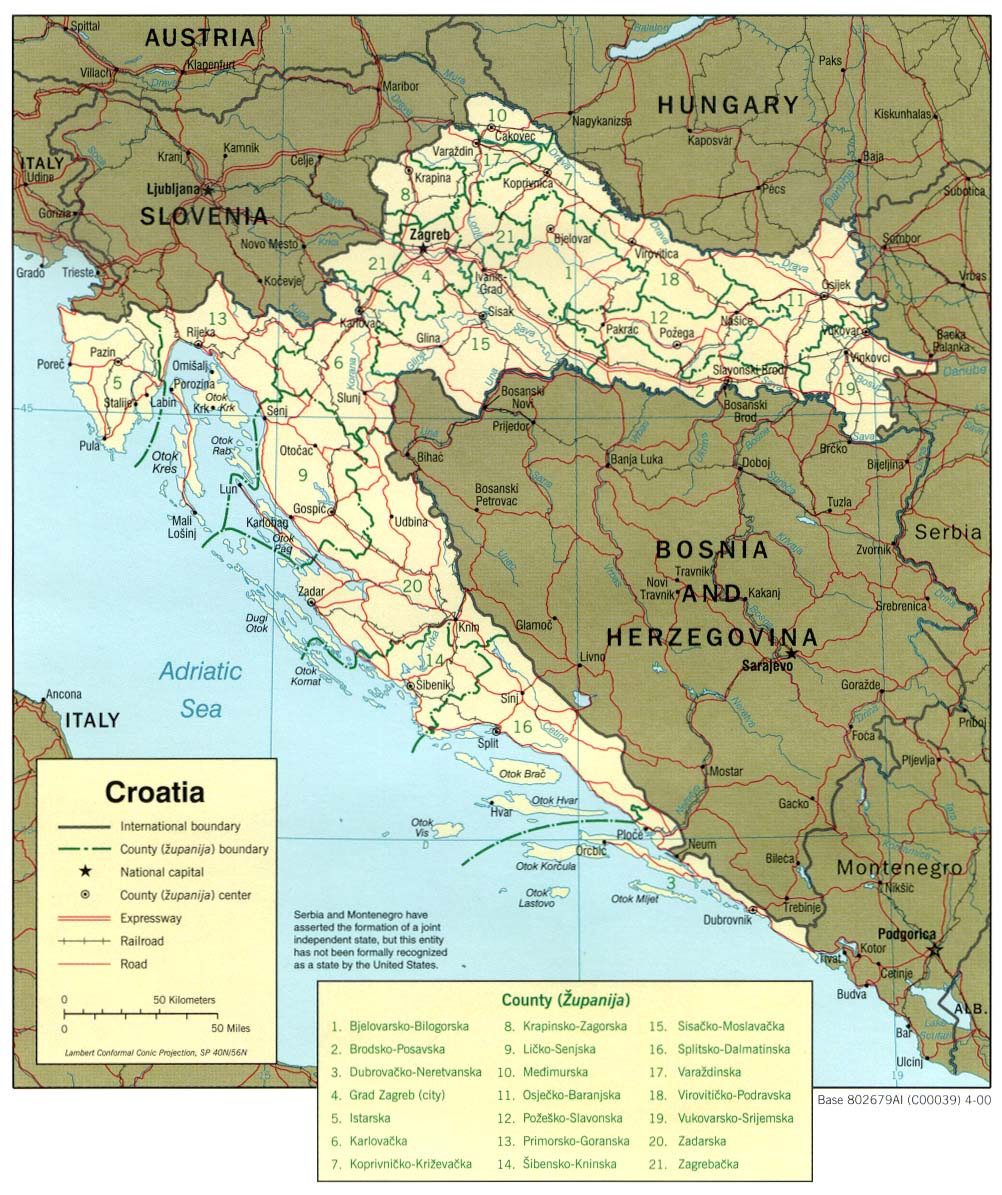
Abortion in Croatia is Down 90% Since 1989 Thanks to Strong Catholic Bishops
By John-Henry Westen
ZAGREB, December 17, 2007

(LifeSiteNews.com) - Croatia has experienced a very dramatic drop in the abortion rate from 1989 when the nation's 51,289 abortions were nearly equal to the number of live births. The latest statistics, from 2005, indicate there were 4,563 abortions - a drop of nearly 90% since 1989. Significantly the law on abortion has not changed. The main reason for the change of hearts and minds on abortion in the country has been the strength of the leadership of the Catholic hierarchy according to pro-life activists and others familiar with Croatia. Dr. Antun Lisec the director of Human Life International in Croatia attests that his many successes in saving the lives of unborn children in the country comes thanks to the superb support and cooperation of Catholic bishops and priests in the nation which is over 80% Catholic. Canadian Catholic novelist and painter Michael D. O'Brien, who won the Croatian national Buvina award for achievement in faith and culture, has travelled to Croatia three times in order to do research for his latest novel just released by Ignatius Press. (To order O'Brien's latest novel Island of the World click here: http://studiobrien.com/site/index.php?option=com_content&task=view&id=152&Itemid=1 )During his trips O'Brien had frequent contact with the nation's Catholic hierarchy and told LifeSiteNews.com that their success in fighting the culture of death is not surprising given their outstanding courage. "The culture of death in its many forms has assaulted that nation relentlessly, has crucified that church relentlessly," said O'Brien. "They have maintained a dynamic orthodoxy in their seminaries, in their clergy, in their religious orders. There is no vocation crisis in Croatia. And they are united totally with the Holy Father.""The fruits of this are more than evident," continued O'Brien. "They are a sign for the West." O'Brien observed: "When you have been bombed, when you have been imprisoned, when you have seen your own lay people and priests tortured and exterminated you do not let yourself be intimidated by the subtle nuances of dissident theologians. The corrupt moral theology, so dominant in Western Europe and the Americas has little or no influence." "The people have tasted death in many forms and they recognize it when it comes in theological disguises," concluded O'Brien. While many bishops, and bishops conferences in the West and Europe have, when dealing with the issue of embryonic stem cell research refused to touch the underlining issue of in vitro fertilization (IVF), the Croatian bishops conference did just that. Going straight to the core of the debate on embryonic stem cell research, the bishops in 2005 noted that IVF, the source of most of the worlds embryos for embryonic stem cell research, is "a serious crime against conceived human lives and their dignity". Jim Hughes, Vice President of International Right to Life Federation, commented to LifeSiteNews.com on the work of the Catholic bishops in Croatia saying, "Thank God for their leadership. Hopefully their efforts will resonate throughout the world to give courage to other bishops and faithful to speak up in defense of human life."

Disgusting!

Jesuit Church to be leisure centre
By John Hogan
EXCLUSIVE
AFTER 20 months of speculation about its future, it has been revealed today that the Jesuit Church is to be turned into a leisure centre. Plans have been submitted for a €12m development which includes a leisure centre and restaurant at the Sacred Heart Church in the Crescent. The former church was bought from the Jesuit Order in March 2006 by Galway-based businessman John O'Dolan, at a reported cost of €4m.John Kennedy of Elliot Design, who Mr O'Dolan contracted to draft plans for the building, said that proposals have been submitted to Limerick City Council for the installation of a leisure centre in the building.The proposed centre consists of a 20 metre swimming pool, a spa located in the basement, a 15,000 sq ft gym and a restaurant adjacent to the facility.
Link (here)

Monday, December 17, 2007

Georgetown Theologian John Haught On Why He Thinks Like De Chardin

I found an interesting interview in Salon.com with John Haught, I culled three questions out of a couple of dozen. I think a secular interviewer allows for a less cautious response, then say if Haught would be interviewed by The National Catholic Register. It is still a statement of fact that the writings of Fr. Tielhard de Chardin, S.J. are still banned by the Vatican. They are not allowed to be taught or referred to in any educational setting, do to the fact that they incompatible with the Catholic faith, you can read more about the Vatican decrees (here). De Chardin's Piltdown man is also a known hoax you can read more about the hoax (here)
.

John Haught has set out to answer by proposing a "theology of evolution." Haught is a Roman Catholic theologian at Georgetown University and a prolific author. His books include(review) "God After Darwin," "Is Nature Enough?" and the forthcoming "God and the New Atheism." He's steeped in evolutionary theory as well as Christian theology. Haught believes Darwin is "a gift to theology." He says evolutionary biology has forced modern theologians to clarify their thinking by rejecting outdated arguments about God as an intrusive designer. Haught reclaims the theology of his intellectual hero, Jesuit priest and paleontologist Pierre Teilhard de Chardin, who died more than half a century ago. Teilhard believed that we live in a universe evolving toward ever greater complexity and, ultimately, to consciousness.
Haught is an intriguing figure in the debate over evolution. He was the only theologian to testify as an expert witness in the landmark
2005 Dover trial that ruled against teaching intelligent design in public schools. Haught testified against intelligent design, arguing that it's both phony science and bad theology. But Haught is also a fierce critic of hardcore atheists like Richard Dawkins and Daniel Dennett, who claim that evolution leads logically to atheism. He says both sides place too much faith in science. "Ironically," Haught writes, "ID advocates share with their ideological enemies, the evolutionary materialists, the assumption that science itself can provide ultimate explanations."
.
So if you're a person of faith who wants to be intellectually responsible, you can't just shove all this science into a drawer. You do have to deal with it.
Exactly. Theology has always looked to secular concepts to express, for its particular age, what the meaning of God is. In early Christianity, St. Augustine went to Neoplatonism. Later on, Thomas Aquinas did something adventurous: He went to a pagan philosopher, Aristotle, to renew the understanding of Christianity in his own time. Islamic and Jewish philosophers and theologians have done the same thing. But as we move into our own time, theology has to deal with other concepts in order to make sense of its faith. Darwin's thought seems to be more important intellectually and culturally than it's ever been. My view is that theology, instead of ignoring or closing its eyes to it, should look it squarely in the face. It has everything to gain and nothing to lose by doing so. In my view, Darwin's thought is a gift to theology.
.
Why? Because it forces theologians to sharpen their thinking?
Yes. I came to this idea of evolutionary theology long ago when I was still a young man. I read the works of a famous Jesuit paleontologist named Teilhard de Chardin. Teilhard was saying in the early 20th century pretty much what I'm saying today. In many ways, my vocation as a theologian has been to expand on the work he started. Teilhard was sent by his superiors to study geology and paleontology. He was a priest at the time, trying to figure out what the evolutionary character of life on Earth had to do with his Christianity. He wrote essays synthesizing evolution into a broad understanding of his faith, including a deeper understanding of God. His religious superiors thought these essays were a bit too adventurous. So they shipped him off to China, which is the wrong place to send people who like to dig up old bones. Teilhard got involved in expeditions that uncovered Peking man and other interesting evolutionary phenomena. During all this time, 25 or so years in China, he was developing his ideas, synthesizing Christianity and evolution, and writing his major work, "The Phenomenon of Man," now translated as "The Human Phenomenon." But he couldn't get it published in his own lifetime because the church wasn't ready for it. But after he died, his lay friends flooded the religious world with his publications, and Teilhard ended up having an enormous influence on religious thought. Some major Catholic theologians were steeped in Teilhard's ideas by the time the Second Vatican Council came along. If you read the documents from that council, you can see the imprint of Teilhard's attempt to unify evolution and Christianity. Teilhard argued that the universe is still evolving.
.
Wasn't that the cosmic process he was trying to explain?
He put the Darwinian story of nature in the larger context of cosmic evolution. He saw the emergence of what he called "more" coming in gradually from the time of the big bang. Atoms become molecules. Molecules become cells. Cells become organisms. Organisms become vertebrates with a complex nervous system. Nervous tissue developed and eventually became complex in humans. He saw this process of growing complexity as something that's still going on. This planet is itself becoming more complex. And the process is accelerating today at an enormous pace because of communications technology, engineering, economics and politics. The globe is shrinking. We're able to connect instantaneously with other parts of the Earth, in the same way that nerve fibers carry an electronic message from one part of the body to the other. We should place what's happening now in the context of the previous phases of evolution and the cosmos. And we should expect -- and hope for -- the universe to keep becoming "more."

Link to Salon.com book review (here)

Jesuit Co-founder Of Political Party In The Philippines

Subversion law to stay buried -- defense chief
By Nikko Dizon, Christian V. Esguerra, Jerome Aning, Nestor P. Burgos Jr.Visayas Bureau, InquirerLast updated 11:41pm (Mla time) 12/17/2007
MANILA, Philippines -- Defense Secretary Gilbert Teodoro said Monday the modernization of the Armed Forces of the Philippines was more important than the revival of the Anti-Subversion Law, adding that it was an issue that would “spawn a lot of controversy and debate.” “I’d like to think about it very well,” Teodoro told reporters when asked if he would support the revival of Republic Act No. 1700, which was repealed in 1992 to pave the way for the government’s peace talks with the Communist Party of the Philippines (CPP) and its armed wing, the New People’s Army (NPA). “To me, as secretary of national defense, equally important or more important, is the means to enforce the law, meaning to say, our fill-up rate in terms of personnel and our modernization and capability upgrade,” he said. The defense chief admitted that with such a law, the Armed Forces and the police would have an easier time addressing the insurgency problem. “But would the body politic want it? That’s another question,” he said. The idea of Representative Jose Solis of Sorsogon, an NPA-infested province, to revive the Anti-Subversion Law to stamp out the country’s decades-old insurgency problem was initially supported by President Gloria Macapagal-Arroyo. But Malacañang quickly backtracked on the law’s revival after it encountered vehement protests from lawmakers, human rights victims and civil liberty advocates. Senate President Manuel Villar said the Senate would shut down any bill that would revive the Anti-Subversion Law even if the President supported it. “Most of the senators are against it. There is no place for it in the present time,” Villar told reporters in Iloilo City on Sunday before he opened the Iwag Festival in Pototan. “Reviving RA 1700 is retrogressive. It is like going back to the primitive years when we labeled people as communists and insurgents. It will be a throwback to the Jurassic era when mere membership in a group was grounds for punishment when what should be sanctioned are overt illegal acts and not mere organizational affiliation,” Villar said later in a statement. Deputy Minority Leader and Bayan Muna Representative Satur Ocampo, who went underground during martial law, on Monday said the revival of the Anti-Subversion Law would not solve the insurgency problem. Ocampo warned that it would only lead to “massive warrantless arrests, search and seizures, illegal detention, and worsen the sorry state of human rights in the country.” Speaker Jose de Venecia expressed his categorical opposition to the President’s plan, saying it was not the way to solve the decades-old communist insurgency in the country. “I am against the revival of the Anti-Subversion Law,” he told reporters in a press conference. De Venecia, who had been at odds with the President over the recent broadband network scandal, said he was instead supporting her amnesty proclamation covering the Communist Party of the Philippines.
The Speaker said using the Anti-Subversion Law to crush insurgency would only
drive Leftist groups from the “parliamentary process.” So far in the Philippines, at least six congressmen identified with the Left have brought their struggle inside the walls of parliament. Reviving the Anti-Subversion Law at this time would not greatly help the government in its campaign to end the communist insurgency, according to Jesuit priest Fr. Romeo Intengan, cofounder of the Partido Demokratiko Sosyalista ng Pilipinas, which has links to National Security Adviser Norberto Gonzales
. Intengan, in a statement, said: “A law like RA 1700 by itself is a two-edged sword. It will be helpful only if government political and military intelligence is excellent, if police investigators, state prosecutors and judges are sufficiently competent and courageous, and the citizenry is cooperative. Otherwise, the CPP will simply go underground and set up new front organizations and economic conduits harder to detect than before.”
Link (here)

Old Jesuit Retreat Center

Pend Oreille Lodge offered luxurious comfort
Posted: Saturday, Dec 15, 2007
Bob Gunter
Folks, I have been sort of snowed and iced in for a few days. I think I would have had a fearful bout of cabin fever if it had not been for the ability to sit and think. And that is what I have been doing a lot of -- just thinking about places I would like to re-visit. Places like Taft's and the little cafe in Harold's. It was worth fighting all the smoke just to get one of Harold's toasted ham and cheese sandwiches. I would like to re-visit the Dolphin House, the first building in Sandpoint that was constructed to be used as a school.After mentally walking the streets of Sandpoint and remembering the places I had experienced, I turned my mind to places I had heard about and would have liked to have seen. Places like: The old Farmin School on Second and Main. The Knights of Pythias building, Rink's Opera House, and the Norway Lodge out Colburn way all joined the parade of places I wished I could have seen and experienced. My thoughts turned to a place I had heard about but no longer existed when we moved to Bonner County. It was called the Pend Oreille Lodge and it was located on Contest Point, about two miles across the lake from Sandpoint. James (Jim) Moore and Delbert (Dee) Haynes built it in 1947 just after World War II. It was constructed of native rock and cedar and could be reached by a two-mile boat ride or a six-mile trip along a narrow, winding road. Room rates were $10 in the luxurious lodge and gourmet meals, such as fresh salmon steak, cost $2.25.

The Pend Oreille Lodge operated until 1949. It was then purchased by the Society
of Jesus to be used as a summer retreat for theological students. The lodge on the lake reopened December 1965 and offered furnished rooms and dormitory accommodations for skiers. James Veilleux, manager of the lodge, stated, "...it has turned essentially into a dinner and supper club type." It was in March of 1968 that fire totally destroyed the grand old lodge.


As I said, I was too late to see the lodge but, over time, some of the people who did experience it shared with me their memories. Annabelle Riffle said, "I was working at the time of the fire at the Edgewater and I saw the lodge burning across the lake." Bob Nelson recalled, "We used to go out there by boat for dinner. Some people who went by boat could not return because of a storm on the lake and they had to spend the night at the lodge." Jim Parsons Jr. remembered, "I worked there opening night in the kitchen with the head chef, Katie Pierce. We traveled back and forth to work in wooden boats powered by a 7 1/2 hp Scott Atwater outboard motor. A great lodge built before its time."Edwin Nurmi recalled, "I remember going to a Shrine Club dinner at the lodge soon after it was built. A boat took us from the City Docks to the lodge." Lana Kay Hanson played piano with a group that performed at the lodge. She has both good and bad memories, "It was an amazing building and I remember the beautiful cedar wood. They did not use nails but it was put together by wooden pegs. The fireplace in the lobby was large enough to walk in. The view from the lodge was incredible and especially from the cupola. We had played there on Saturday night and left most of our instruments and equipment and it all burned when the lodge burned down." I am sure many of you remember the lodge and on occasion, when you sit and think, good memories of the times you spent there pass through the landscape of your mind.

Link (here)

Sunday, December 16, 2007

When Will Weston Start Its Courses?

Pope: seminaries must teach Latin Mass
Posted by Damian Thompson
14 Dec 2007
Bad news for England’s ludicrously overstaffed Catholic seminaries, one of which employs 37 staff for 32 students. The Pope wants them to teach trainee priests how to say the traditional Latin Mass. They won’t like that! The Pope wants trainee priests to be able to read the Latin Missal England’s seminaries are all pretty much in the same mould: Left-leaning, liturgically trendy, politically correct, therapy-obsessed and terrified of a younger generation of conservative Catholics. Most of them would rather teach Unitarian circle-dancing than the Tridentine Mass. But they may not have much choice. The pontifical commission Ecclesia Dei, unimpressed by certain bishops’ sour response to the liberation of the Latin Mass, realises that there is a shortage of priests who know how to celebrate the complicated ancient liturgy. Since demand for it is rising, seminaries will need to address this problem. In America, some bishops have anticipated this situation. Two seminaries in Pennsylvania – St Vincent, Latrobe, and St Charles Borromeo, Philadelphia – have just announced that they will be teaching the “extraordinary form”, as it is now known. There are four seminaries in England and to say that they are not bursting at the seams is putting it mildly. I reckon there are not many more than 100 English seminarians in all of them combined. Yet the bishops cannot reach agreement on which, if any, to close. The seminaries, you see, employ a whole army of hand-wringing, Tablet-reading types whose job it is to mould trainee priests in their own image. The really good boys will be sent to plum parishes, then shuffled around the diocesan curia a bit until they return to the seminaries as lecturers; then, if they are really, really good, they are made an auxiliary bishop. (None of which, of course, is supposed to cast aspersions on the academic standards at these institutions. Why, at one seminary, there are no fewer than three – three! – people with doctorates on the teaching staff of around 30.) Anyway, teaching seminarians to follow the rubrics of the Missal of Blessed Pope John XXIII doesn’t fit into this picture at all. Just think of the shrieks of horror if the Holy Father puts his foot down. I can’t wait.
Link (here)

When Smart People Say Stupid Things

Bobby Schindler Reveals Shocking Support by Catholic Clergy for Sister's Euthanasia Killing
By Steve JalsevacDecember 14, 2007 (LifeSiteNews.com) -
Bobby Schindler, the brother of Terri Shiavo, the young woman who was dehydrated to death in Florida in 2005, has become a prominent opponent of euthanasia since that wrenching time for his family. In a recent Challenge magazine interview with Alex Schadenberg of the Euthanasia Prevention Coalition, Schindler revealed the shocking details of the support from many prominent Catholic clergy for the court ordered removal of food and hydration from Terri. Bobby is a practicing Catholic as was his sister. Schindler stated that his sister "was not dying, not attached to any type of machinery and was only being sustained by food and water via a feeding tube." He noted that Catholic teaching does not allow a person "regardless of any advanced directive or even the sworn testimony of another person" to refuse food and water with the intent to cause their own death or that of another. Still, Fr. Gerard Murphy of the Diocese of St. Petersburgh, Florida actually helped Judge Greer make the decision to dehydrate and starve Terri to death. Fr. Murphy did not consult with any members of Terri's family and did not even visit Terri. Murphy did however consult with Michael Schiavo's attorney, George Felos, an assisted suicide/euthanasia activist, and testified on behalf of Michael Schiavo. Bishop Lynch of the Diocese of St. Petersburg refused to help the family stop the euthanasia death order and supported Father Murphy's seriously flawed position. The bishop eventually issued a confusing statement that was of no help to the situation and after that the Florida bishops supported Bishop Lynch's position. Other prominent US clergy also made public statements condoning what was happening to Terri.
Schindler said Jesuit Father John Paris, professor at Boston College, commented on Pope John Paul II's statement mandating life sustaining treatment. Paris said in these situations, "I think the best thing to do is ignore it and it will go away. It's not an authoritative teaching statement. The problem here is that non-Catholics think when the Pope says 'Jump,' we all say, 'How high?'"
Father Kevin O'Rourke, ethics professor at the Loyola University of Chicago Medical School, told the Miami Herald that preserving Terri's life was "blasphemy." He also said, "For Christians, it is a blasphemy to keep people alive as if you were doing them a favor." Father Richard McBrien, theology professor at the University of Notre Dame, told Bill O'Reilly of Fox News that, "This is not a question of euthanasia," directly contradicting the Vatican. "This is the removal of an 'extraordinary' means of sustaining life …" Fortunately, there were many other priests and some bishops who were appalled by what was happening. The Vatican began issuing their own statements. Cardinal Javier Lozano Barragan, president of the Pontifical Council for Health Care, said, "Food and hydration are never considered medicine. To remove them means euthanasia, it means killing, and so this woman was killed by hunger and starvation. Let's stop with the euphemisms - they killed her." Then, on March 31, Cardinal (Renato) Martino issued the strongest statement yet from Rome, when he said, "Whoever stands idly by without trying to prevent the death of Terri Schindler-Schiavo becomes an accomplice to murder." Terri was successfully murdered as she succumbed to the extended withholding of food and water on March 31, 2005.See the complete interview as published in the November The Interim newspaper at http://www.theinterim.com/2007/nov/08schindler.html
Link to original (here)

Saturday, December 15, 2007

Polish - American War Hero, Jesuit Educated

Casimir Lenard, veteran of three U.S. wars and fighter for the betterment of the Polish American community and the people of Poland, dies at 89.
Washington D.C. December 9, 2007 –
Col. Casimir I. Lenard AUS (Ret.) died Friday afternoon of a long illness. At exactly the same moment, the Polish American Congress –the organization with which he was closely associated for more than 30 years – was holding a recognition ceremony during which Lenard was awarded with the first-ever Polish American Congress Medal of Freedom.
"Poles around the world are in mourning over this terrible loss of someone who served in the trenches fighting for freedom around the world," said Frank Spula, president of the Polish American Congress. "Cas and his late wife Myra , both of whom served as directors of the Washington D.C. office of the Polish American Congress, worked tirelessly on behalf of our organization for the betterment of more than 10 million Americans of Polish heritage. We honor his memory like we do for Kosciuszko, Pulaski and all those who have honored the Polish motto 'For Your Freedom and Ours.'"
Cas Lenard was born on March 10, 1918 to a family of Polish immigrants in
Chicago . At the age of 10 he was enrolled in the Jesuit Gimnazjum in Chyrow ,
Poland , where he completed the eight-year course of study.
Upon his return to the United States he attended Northwestern University , in Evanston , Illinois , where he received a Bachelor of Science degree in Economic History. In reaction to the September 1, 1939 , Nazi invasion of Poland he joined, as a private, the Chicago Black Horse Troop, 106th Cavalry, Illinois National Guard. In 1941 he was commissioned 2nd Lieutenant, Cavalry with duty at Fort Riley , Kansas . He requested and was assigned to the 1st U.S. Infantry Division – "The Big Red One" – scheduled to be the first U.S. Army unit to go overseas (on the H.M.S. Queen Mary, August 2, 1942 ).As a member of the 1st Reconnaissance Troop, Lenard was engaged in overseas combat duty from 1942 to 1945. He participated in Operation Torch with the 1st Infantry Division as part of The Center Task Force amphibious landing on November 8, 1942 at Oran, North Africa; in Operation Husky, one of the largest combined operations of World War II— the invasion of Sicily, on July 10, 1943 at Gela, Sicily; and, in the D-Day amphibious landing of the 1st U.S. Infantry Division on June 6, 1944 at Omaha Beach, Normandy, France. He also served as press and radio censor with the Supreme Headquarters of the Allied Expeditionary Forces in London , Paris , Spa ( Belgium ), and Luxembourg City. After his discharge from Army active duty in 1945, he married Casimira ( Myra ) Lamot, and participated in his family restaurant business, known as "Lenard's Little Poland" in Chicago and "Lenard's Casino" Summer Resort inBeverly Shores , Indiana .
During the Korean War, he volunteered for active army duty, from August 1951 to 1957, under special assignment with the Headquarters Berlin Command and later at Headquarters Fifth U.S. Army in Chicago , Illinois .In 1962, he was selected from more than 40 candidates nationwide, for a five-year tour of active duty with the General Staff at the Pentagon, where he became Chief of the Army Intelligence Reserve Office. Starting in 1967 heserved one year in Vietnam , as Commanding Officer, Technical Intelligence Detachment, and later as director, U.S. Element Combined Military Interrogation Center in Saigon (disseminating studies and reports world-wide.) From September 1968 to June 30, 1970 he was a military intelligence research analyst at the U.S. Army Institute of Land Combat at Fort Belvoir , Virginia .Col. Lenard retired after 30 years of distinguished military service, for which he was awarded the Silver Star Medal with Cluster, the Legion of Merit, the Meritorious Service Medal, the Bronze Star Medal with "V" for Valor, the French Croix de Guerre with Palm, seven overseas campaign ribbons (Algeria-French Morocco, Tunisia, Sicily, Normandy, Northern France, Ardennes-Alsace and Rhineland) and numerous other citations, the last being the Normandy Medal of the Jubilee of Liberty, presented by Virginia Congressman Thomas M. Davis III on Capitol Hill on May 15, 2001.Upon retirement from the military, he became the first executive director of the Polish America Congress, Washington D.C. Office, from July 1970 to 1974.
After leaving the Polish American Congress Washington D.C. Office in 1974, he became Project Manager of the US Bicentennial Ethnic Racial Council, which organized nationwide conferences and coordinated local and national U.S. Bicentennial activities, providing many opportunities for Polonia participation.From 1991 to 2000, as a volunteer and team member he worked with Myra on a large number of projects, such as:• The administration of grants of The National Endowment for Democracy (NED), totaling several million dollars, through the Polish American Congress Charitable Foundation (PACCF), to support the budding Polish underground, Solidarity, and Citizens' Committees with urgently needed technical resources and finances.• Playing a lead role with Myra in supporting Poland 's membership in the North Atlantic Treaty Organization (NATO).• Reinvigorating national ethnic community leaders into the Central and East European Coalition (CEEC) to work harmoniously on common issues, precipitated by threats of Russian moves at re-establishing its sphere of influence in Central and Eastern Europe, most specifically US Foreign Assistance programs and NATO enlargement.• Forming, in the final days of the campaign, the NATO Ratification Working Group, going beyond the ethnic organizations to include nationwide veterans, religious, and union groups to support the ratification in the US Senate of the accession of Poland , Hungary and the Czech Republic into NATO.Col. Lenard also served on the Board of Directors of the American Red Cross, Baltimore Office, which is the seat of the International Tracing Center for uniting families separated by war; as well as membership as a board member of the Citizens Flag Alliance, a coalition of more than 140 nationwide organizations including 13 Polish American organizations, working for the passage of the Flag Protection Amendment to the US Constitution. He was well-known for his advocacy of close relations between Poles and Jews, the two groups that suffered the most under German Nazi rule.
For his work with the Polish American Community, the Polish American Congress, and dealing with improving Poland's position in the world, Colonel Lenard and his wife Myra, either jointly or as individuals, received, among others, the following awards:• Commander's Cross of The Order of Merit of the Republic of Poland with Star, presented by Jerzy Kozminski, Poland's Ambassador to the USA (individually, on February 25, 2000);• Commander's Cross of the Order of Merit of the Republic of Poland, presented by Poland's Foreign Minister, Wladyslaw Bartoszewski (individually, on May 3, 1995);• A Polish Cavalry saber with inscription "For Your Freedom and Ours From The Grateful Nation of Poland," presented by Poland's Prime Minister Jerzy Buzek during the NATO Summit in Washington DC (jointly, in April 1999);• The Polish National Alliance's "Gold Cross Legion of Honor" (awarded jointly in December, 1998) by Mr. Edward J. Moskal, President of Polish National Alliance and the Polish American Congress;• The Polish Apostolate "Pride of Polish American Community Award, presented by Adam Cardinal Maida, Archbishop of Detroit on August 29, 1999 (awarded jointly);• The Founders Award (presented individually on November 22, 1992) by the PAC Washington Metropolitan Area Division; and • The Grand Cross of the Order of Merit of the Republic of Poland by Lech Kaczynski, President of the Republic of Poland, presented by Poland'sDefense Minister Mr. Aleksander Szczyglo on July 15, 2007.• The Polish American Congress Medal of Freedom (awarded individually) onDecember 7, 2007 .

Polish Defense Minister Aleksander Szdzyglo (right) decorates Cas Lenard with the Grand Cross of the Order of Merit.
"Cas' loyalty and devotion were, outside of his family, always first and foremost to the Polish American community here in the United States ," Spula added. "He was a soldier in every sense of that word and his example of selfless dedication was inspiring for all who had the privilege of working with him. This organization, like many others, needs many Cas Lenards to succeed."When he was awarded the Polish American Congress Medal of Freedom, in a ceremony that due to his illness he could not attend, Lenard issued the following greeting: "Of all of my associations, my involvement with the Polish American Congress and time with the Washington office are some of the most memorable and rewarding. I know that my wonderful life partner, Myra , felt the same way. I accept this honor on behalf of both of us."Myra Lenard died on May 1, 2000 . They are survived by their three children: George, Antoinette and Elizabeth as well as their grandson Jeffrey Lenard – a member of the Washington D.C. Fire Department.The viewing will be held on Friday, December 14, 2007 , from 6:00 pm to 8:00 pm at Murphy Funeral Home in Arlington , VA.
Col. Lenard will be buried with full military honors at Arlington National Cemetery on February 14, 2008 . A Mass of Christian Burial will precede the funeral at the Ft. Myer Chapel at 10:15 a.m.
Link (here)

Curia States: Dupuis, Haight And Sobrino Have Underminded Christian Missionary Spirit

Vatican tells missionaries to save souls, not just do deeds
VATICAN CITY — Roman Catholic missionaries should aim to win souls and not restrict themselves to humanitarian good works, the Vatican said Friday. A new 19-page document, which was personally approved by Pope Benedict XVI,draws on a controversial Vatican declaration he issued in 2000 that asserted Catholics alone have "the fullness of the means of salvation." The new document, issued by the same doctrinal office where Benedict was the longtime head, aims to correct a "growing confusion" among theologians who argue that "it is enough (for missionaries) to build communities which strive for justice, freedom, peace and solidarity." It also seeks to debunk the notion that it is "possible to be saved without explicit knowledge of Christ and without formal incorporation in the Church." Citing words of the late Pope John Paul II, the document affirms that "every person has the right to hear the 'Good News' of the God who reveals and gives himself in Christ," and said "this right implies the corresponding duty to evangelize." The document comes as the Catholic Church finds increased competition from Pentecostals and evangelicals, particularly in Third World countries, and charges of improper "sheep stealing" from Orthodox churches, especially in Russia.
The statement is a follow-up to Dominus Iesus, the 2000 document produced when Benedict was still known as Cardinal Joseph Ratzinger, which said non-Christians are in a "gravely deficient situation" on the question of salvation. "Notwithstanding Dominus Iesus, there has a been a cooling of missionary spirit in recent years," said Archbishop Angelo Amato, undersecretary of the Congregation for the Doctrine of the Faith, the Vatican's top doctrinal office. The doctrinal office, which Ratinger headed up to his 2005 papal election, is now headed by Cardinal William Levada, the former archbishop of San Francisco.

Amato specifically cited the work of three Jesuit theologians — Jacques Dupuis,
Roger Haight and Jon Sobrino — who have been criticized by the Congregation in
recent years. He suggested their work had undermined missionary spirit by
casting doubt on the uniqueness of Christ as the universal savior of mankind.

"The fundamental problem is a pluralistic theology of religion, which essentially states that all religions are equally valid in leading a person to salvation," the Rev. Agostino di Noia, an American who serves as undersecretary of the Congregation, told Vatican Radio on Friday. "Now let's say the missionary implications are being addressed in this document." Earlier this week, acting at the behest of the Congregation, U.S. bishops also rebuked the Rev. Peter C. Phan, a Vietnamese-American theologian teaching at Georgetown University, for writings that they say conflict with church doctrine on the uniqueness of Christianity and Catholicism. Friday's statement rejects conversion by force or by means "which do not safeguard the freedom and dignity of the human person." It also stresses that evangelization among non-Catholic Christians should be undertaken with "true respect" for their traditions and in a "sincere spirit of cooperation." Orthodox leaders, particularly in Russia and other former Soviet countries,have accused Rome of seeking to convert Orthodox Christians, a charge that the Vatican has denied. Yet Friday's document asserts that the "work of ecumenism does not remove the right or take away the responsibility of proclaiming in fullness the Catholic faith to other Christians, who freely wish to receive it."

One Jesuit theologian who is active in ecumenical relations said Friday that there is no necessary conflict between evangelization and interreligious dialogue. "We as Catholics need to be clear about our own self-identity if we are going to be capable of being effective dialogue partners,"

said the Rev. Keith F. Pecklers, an American who teaches at the Pontifical Gregorian University in Rome. "But there's a delicate balance," Pecklers said, "between bringing others to Christ and respecting the different religious traditions where they exist."
Link (here)

Friday, December 14, 2007

Scranton Jesuits, Donate 6 Million Dollars To Jesuits

Jesuits to donate $6M
BY Sarah Hofius Hall
12/14/2007
The Jesuit Community of Scranton on Thursday announced $6 million in donations, which officials say are representative of the Jesuits’ 65 years of local service.
The funds will be divided among three groups, with the University of Scranton, Scranton Preparatory School and the health care fund of the Maryland Province of the Society of Jesus each receiving $2 million. The Jesuits are members of the Society of Jesus. The announcement, which was made at the university’s Estate, the once-home of the Scranton Jesuits, was “filled with a sense of mission and a sense of service,” said Rev. George Aschenbrenner, S.J., rector of the Jesuit community.It’s because of the Jesuits’ hard work and simplicity of life that the donation is possible, he added.There are no definite plans yet for the donations to the university or Scranton Prep, but Prep’s president, the Rev. Herbert Keller, S.J., and university President Rev. Scott R. Pilarz, S.J., said they would be used to strengthen the institutions’ Jesuit ideals. The donation addresses challenges of health care for aging Jesuits and of fostering Jesuit and Catholic traditions of education with a declining number of Jesuits, said the Rev. Bernard McIlhenny, S.J., administrator of the Scranton Jesuit community.The Jesuits have a long history in Scranton, arriving in 1942 to administer the then debt-ridden University of Scranton. The Estate, which was donated by Worthington Scranton, became their residence. They established Scranton Preparatory School in 1944, and in the 1950s, the Jesuits moved the university from Wyoming Avenue to its current location around the Estate.
Link (here)

Thursday, December 13, 2007

More On The Alaska Story

Abuse victims: One keeps faith, one loses it
By James DeCrane
12/11/2007
Catholic Anchor
ANCHORAGE, Alaska (Catholic Anchor) - Anger, betrayal and embarrassment are powerful emotions that James Niksik and Peter Kobuk say plague them every day.The men say Joseph Lundowski, a church missionary, abused them when they were young boys in the Western Alaska village of St. Michael. The men shared their thoughts and feelings at a press conference with the media on Nov. 19, after the Society of Jesus, Oregon Province, confirmed a $50 million settlement between the Jesuits and more than 100 Native Alaskans.Of all those victims, many, like Niksik, have left the church, unable to reconcile their Catholic faith with their emotions.But despite the horrendous ordeal of being sexually abused as a 12-year-old boy,
Peter Kobuk holds on to his Catholic belief. In fact, it has helped to sustain him in some ways.“I pray the rosary every day — and if I need to, 15 decades. I’ll do that and read the bible,” he said.Kobuk said he recognizes that what happened to him is a result of man’s fallen nature and not a failure of God.“Human beings are corrupt,” he said, but that’s because they are human. Kobuk said he goes to frequent confession and Communion. He told the Anchor that he is able to look past the humanness of the priest and realize that God is still present in the sacraments. A step toward closureIf Kobuk were able to face his abuser, what would he say? “I would ask him – ‘why?’ You gave Communion to Catholics, you prayed the rosary — why as a man of God would you do that?” he said. Despite his hurt and pain, Kobuk said he would forgive his abuser if he were still alive and had asked.While Kobuk is still an active Catholic, he says he does feel a sense of betrayal from some people in the church — especially from those who tell him he should put his abuse in the past.“They say it’s in the past, let it be,” he said. “It’s not in the past, it was like it was yesterday for me.”
For Kobuk and Niksik, the settlement is a start towards closure, because they say it is an acknowledgement that the abuse happened. But Kobuk says more must be done to help with the healing process. Getting counselors to come out to the individual villages would be a start, he said. Right now it’s a minimum three-hour round trip flight into Anchorage for a 45-minute counseling session. Also, more rigorous training for priests and religious leaders who come out to the villages would help, he said, especially a focus on what it’s like to work in a native culture.“Victims of families are forgotten, my own children and family have been affected by my anger,” Kobuk said, stressing that it is not just the victim who suffers from clergy sex abuse, but whole communities.Above all else, these hurting communities need prayer, he said. There must be a return to deep spirituality and a more focused prayer life for everyone, especially priests, he said. "Now is the time to come back to prayer and pray the rosary and have a devotion to the Blessed Mother.”
Link (here)

No Good News Here

Jesuits pay $1.6M to priest's family over molestation allegations
By GILLIAN FLACCUS
The Associated Press
LOS ANGELES
The Jesuits have agreed to pay $1.6 million to the family of a Roman Catholic priest who committed suicide after alleging he was molested by a Jesuit brother at a retirement home run by the religious order, the family's attorney said Wednesday. The Society of Jesus, commonly known as Jesuits, reached the settlement with the family of the late Rev. James Chevedden on Thursday, the second day of a jury trial in Santa Clara Superior Court in San Jose, said attorney Mark Meuser. A Jesuit official confirmed the settlement, but said the order does not admit liability in the case. John McGarry, the provincial superior for the California Jesuits, also insisted that the late priest's allegations of sexual abuse were not central to the case. The priest's brother, John Chevedden, said Wednesday that the settlement brought some closure, but didn't ease the pain. "It's an important step," he said. "It shows how my brother suffered under the Jesuit hierarchy." Chevedden spent the early years of his Jesuit career in Taiwan, but returned to the United States in 1995 after suffering what appeared to be a nervous breakdown, Meuser said. He was placed at the Sacred Heart Jesuit Center in Los Gatos to recover, but jumped off scaffolding in 1998 and severely injured both his legs. Chevedden alleged that during his recovery, he was molested by Brother Charles Leonard Connor although he didn't report the abuse until several years later, when Connor was under investigation in another molestation case. In 2001, Connor pleaded no contest to one count of lewd conduct with a vulnerable adult and was ordered to serve six months of house arrest for sexually abusing mentally disabled adults who worked at the retirement home. The Jesuits also agreed to pay $7.5 million to the two disabled men. In 2002, however, Connor moved back to Sacred Heart and Chevedden told his family and his therapist about his own alleged abuse by Connor. He also made several attempts to leave the facility, which houses elderly, retired and infirm Jesuits.
Jesuit superiors met with Chevedden but found the allegations were not credible and called the lawsuit "groundless." Two years later, on his 56th birthday, Chevedden jumped to his death from a six-story building in San Jose. His family filed a sexual abuse and wrongful death lawsuit against the Jesuits in May 2005. "It's depressing that something like that could happen in an order," said Chevedden's brother. "The Jesuits proclaimed the highest standard for ethical conduct."
December 12, 2007

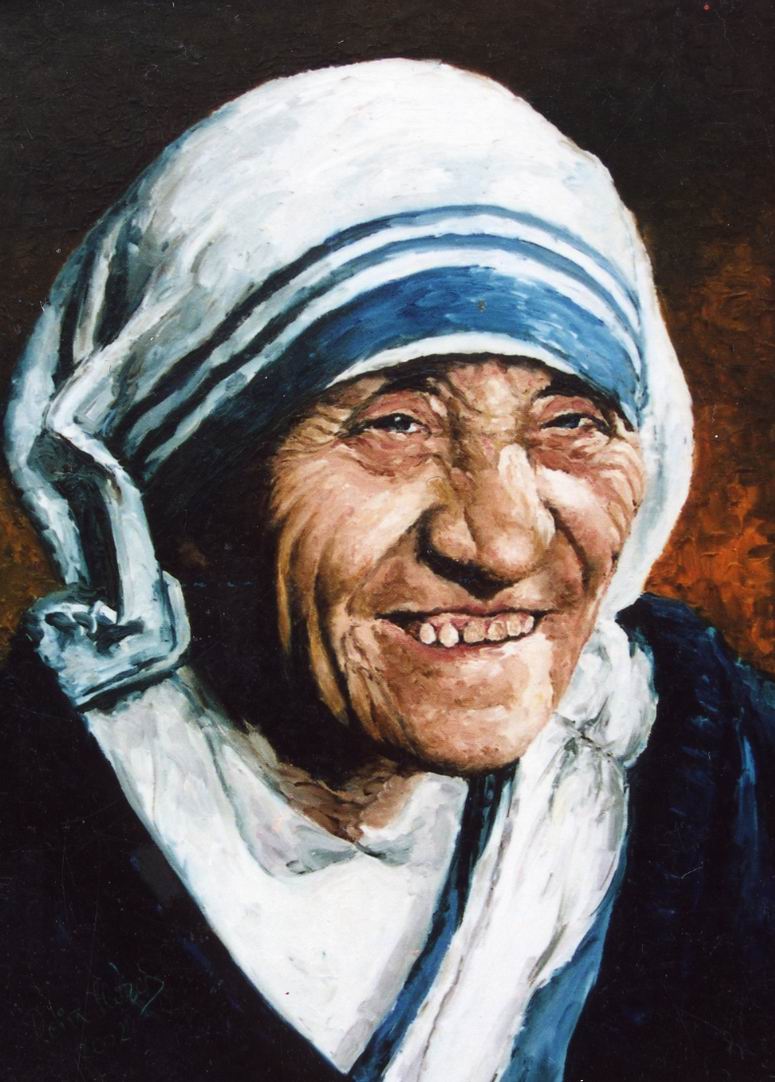
Mother Theresa And The Jesuits Of India

Lapierre visits city college
December 13 2007
Express News Service
MANGALORE: Dominique Lapierre, the author of famous novel, The City of Joy, a novel based on the life of Mother Theresa and the great city of Kolkatha, visited the St Aloysius College here on December 10. He was in the city along with a group of French tourists who are on a cruise to India. Lapierre visited the College Chapel and made a brief visit to the Information Technology Centre of the St Aloysius College. He was accorded a warm welcome by Fr Denzil Lobo, S.J., the Director of AIBA & AICS. Lapierre appreciated the good work done by the Jesuit fathers and said that he himself was an alumnus of Jesuits and had close contact with the Jesuit fathers of Kolkata region.

Wednesday, December 12, 2007

USCCB Comes Down Hard, On Georgetown's Theology Department

"Being Religious Interreligiously"
Bishops’ Doctrine Committee corrects theologian for relativistic book
Washington DC, Dec 11, 2007 / 11:40 am (CNA).-

In a shot across the bow to all Catholic theologians, whom are proponents of Liberation Theology. The left was shockingly rebuked, not by Rome, but by the USCCB. The American bishop's gave a stinging indictment to the Catholic Left's, Fr. Peter C. Phan for not adhearing to the fundamentals of Christianity.

The Doctrine Committee of the United States Conference of Catholic Bishops has examined a work of theologian Father Peter C. Phan, “Being Religious Interreligiously: Asian Perspectives on Interfaith Dialogue.” Father Phan, a priest of the Diocese of Dallas, Texas, is a professor in Georgetown University’s Department of Theology. The Congregation for the Doctrine of the Faith asked the American bishops’ Doctrine Committee to evaluate the book. The committee asked Father Phan to clarify points of concern over a period of two years. The committee’s evaluation was presented in a document titled “Clarifications Required by the Book ‘Being Religious Interreligiously: Asian Perspectives on Interfaith Dialogue’.” The committee said that Father

Phan’s book uses “certain terms in an equivocal manner” that “opens the text up to significant ambiguity.” It added that “a fair reading of the book could leave readers in considerable confusion as to the proper understanding of the uniqueness of Christ.”


The committee focused on three areas of theological concern: Jesus Christ as the unique and universal Savior of all humankind; the salvific significance of non-Christian religions; and the Church as the unique and universal instrument of salvation. In his book, Father


Phan had qualified the uniqueness of Christ, saying that terms referring to Christ as “unique” “absolute” and “universal” “should be removed and replaced by other, theologically more adequate equivalents.”


The committee clarified Catholic teaching saying, “It has always been the faith of the Church that Jesus is the eternal Son of God incarnate as man. The union of humanity and divinity that takes place in Jesus Christ is by its very nature unique and unrepeatable… Because humanity and divinity are united in the person of the Son of God, He brings together humanity and divinity in a way that can have no parallel in any other figure in history.” According to the committee’s statement, Father


Phan’s book questions the Church’s mission to spread the Gospel to all. He states that “non-Christian religions possess an autonomous function in the history of salvation, different from that of Christianity,” and that “they cannot be reduced to Christianity in terms of preparation and fulfillment.” The Doctrine Committee said the book’s argument leads to the conclusion that there is some kind of moral obligation for the Church to refrain from evangelizing and people of other religions. Father Phan’s book says that religious pluralism “may not and must not be abolished” by conversion to Christianity.


The Committee noted that “[t]his call for an end to Christian mission is in conflict with the Church’s commission, given to her by Christ Himself: ‘Go, therefore, and make disciples of all nations…’” It was “incoherent” to believe that Jesus Christ is the Son of God made man, but still argue that it would be better if people did not know this important truth. Father


Phan’s book also asserts that the Church’s claim to uniqueness and universality “should be abandoned altogether” because of the Church’s human failings and her historical entanglement with sin and injustice.


While acknowledging the sinfulness of Church members, the Doctrine Committee affirmed “the holiness of the Church is not simply defined by the holiness (or sinfulness) of her members but by the holiness of her head, the Lord Jesus Christ.” The committee declared that because all grace flows through Jesus, that grace must be seen in relationship to the Church, the “universal sacrament of salvation.”

The full text of the Doctrine Committee’s statement is available at www.usccb.org/dpp/statementonbeingreligiousinterreligiously.pdf

Link (here)

Tuesday, December 11, 2007

News Alert! God The Father Is Still God The Father

On God The Father, Not God the Mother
Here is an excerpt of the Mark Brumly piece in Ignatius Insight.


Cardinal Ratzinger made a similar point in The Ratzinger Report: "Christianity is not a philosophical speculation; it is not a construction of our mind. Christianity is not ‘our’ work; it is a Revelation; it is a message that has been consigned to us, and we have no right to reconstruct it as we like or choose. Consequently, we are not authorized to change the Our Father into an Our Mother: the symbolism employed by Jesus is irreversible; it is based on the same Man-God relationship he came to reveal to us." Now people are certainly free to reject Christianity. But they should be honest enough to admit that this is what they are doing, instead of surreptitiously replacing Christianity with the milk of the Goddess, in the name of putting new wine into old wineskins. Taking Another TackHere proponents of feminine "God talk" often shift gears. Rather than argue that Jesus’ teaching was merely the product of a patriarchal mindset to which even He succumbed, they say that Jesus chose not to challenge patriarchalism directly. Instead, He subverted the established order by His radical inclusivity and egalitarianism. The logical implications of His teaching and practice compel us to accept inclusive or gender-neutral language for God, even though Christ Himself never explicitly called for it.This argument overlooks an obvious point. While affirming the equal dignity of women was countercultural in first century Judaism, so was calling God "Abba." Some feminists counter with the claim that the very idea of a loving Heavenly Father was itself a move in the feminist direction of a more compassionate, intimate Deity. The first century Jewish patriarch, they contend, was a domineering, distant figure. But even if that were so–and there is reason to doubt such a sweeping stereotype of first century Judaism–revealing God as a loving, compassionate Father is not the same as revealing Him as Father/Mother or Parent. That Jesus corrected some people’s erroneous ideas of fatherhood by calling God "Father" hardly means we should cease calling God "Father" altogether or call Him Father/Mother.Feminists also sometimes argue that Scripture, even if not Jesus Himself, gives us a "depatriarchalizing principle" that, once fully developed, overcomes the "patriarchalism" of Jewish culture and even of other parts of the Bible. In other words, the Bible corrects itself when it comes to male stereotypes of God.But this simply is not so. Granted, the Bible occasionally uses feminine similes for God. Isaiah 42:14, for example, says that God will "cry out like a woman in travail." Yet the Bible does not say that God is a woman in travail, it merely likens His cry to that of a woman.The fact is, whenever the Bible uses feminine language for God, it never applies it to Him in the same way masculine language is used of Him. Thus, the primary image of God in Scripture remains masculine, even when feminine similes are used: God is never called "She" or "Her." As Protestant theologian John W. Miller puts it in Biblical Faith and Fathering: "Not once in the Bible is God addressed as mother, said to be mother, or referred to with feminine pronouns. On the contrary, gender usage throughout clearly specifies that the root metaphor is masculine-father."

Link (here)

They Call It DeMello Yellooo... That's Right!

A history of modern contemplation
By THOMAS C. FOX 12/14/07
Contemplative prayer traditions are alive and spreading in the West and have been for the last four decades, resulting from a revival in interest in both Christian and Eastern meditation practices. While the revival was not necessarily a direct result of the Second Vatican Council (1962-65), the council helped open doors to interreligious dialogue and spawned interest in Eastern religious practices. It was in October 1965, as the council was drawing to a close, that Pope Paul VI proclaimed Nostra Aetate, the “Declaration on the Relationship of the Church to Non-Christian Religions,” which contained the following revolutionary paragraph: “The Catholic church rejects nothing that is true and holy in these (non-Christian) religions. She regards with sincere reverence those ways of conduct and of life, those precepts and teachings which, though differing in many aspects from the ones she holds and sets forth, nonetheless often reflect a ray of that Truth which enlightens all men.” The council, in effect, gave permission to spiritual pilgrims, and some Western clergy traveled east. Trappist Fr. Thomas Merton, Benedictine Fr. Bede Griffith, Benedictine Sr. Pascaline Coff and Fr. Edward Hays, among others, traveled to Asia and began to share their experiences with Western Catholics. Hays opened an ashram, called Shantivanum, incorporating Eastern meditation practices, near Leavenworth, Kan.

The writings of Jesuit Fr. Anthony de Mello and Fr. Raimundo Panikkar spread
interest in Eastern ways. About the same time, Eastern contemplative practices
were entering the West through popular culture.
In 1968 the Beatles traveled to India where, with considerable fanfare, they studied transcendental meditation with its principal guru master, Maharishi Mahesh Yogi. Transcendental Meditation centers soon were appearing in cities across America. Christian contemplative prayer, rooted in meditation, dates back to the Desert Fathers and Mothers beginning in the third century. These practices were widespread in the church, lasting until the Middle Ages when slowly they gave way to more vocal and formal prayer forms. It was in the mid-1970s that a number of Benedictine monks, working independently in England and the United States, began investigating the practice of pure contemplative prayer. In 1975 Benedictine Fr. John Main began weekly meditation groups at his monastery in London and then, later, in Montreal. That same year Benedictine Fr. Thomas Keating started the practice at St. Joseph Abbey in Spencer, Mass. Both men’s practices represented a major rediscovery of a lost Christian tradition, though there are subtle differences. Main’s efforts led to the formation of the World Community for Christian Meditation and Thomas Keating’s to the Contemplative Outreach. The two groups have collaborated for 30 years and maintain close ties. Both practices involve the repetition of a sacred word or phrase. Prayer is viewed as an opening of one’s whole being to God, moving beyond thoughts, words and emotions.
Other contemplative practices began to spread in the 1970s, including Zen and Tibetan tradihons. A Vietnamese Buddhist monk and Zen master, Thich Nhat Hanh,
popularized a form of meditation called mindfulness. In the 1960s he taught Buddhist thought at a Buddhist university in Saigon, and in 1965, during the Vietnam War, a group of his students issued a call for peace. A few years later, Nhat Hanh traveled to the United States and met with Martin Luther King Jr., urging the civil rights leader to publicly denounce the war.
Nhat Hanh also visited Merton at his Kentucky monastery, the Abbey of Gethsemani, near Louisville, Ky. After the visit Merton told his students, “Just the way he opens the door and enters a room demonstrates his understanding. He is a true monk.” This monk-to-monk dialogue represented a breakthrough in East-West communication. Those bonds were knotted when Merton wrote an essay, “Nhat Hanh Is My Brother.” Later, Living Buddha, Living Christ became one of Nhat Hanh’s most popular books. On the subject of mindfulness, Nhat Hanh writes: “The moment when you go back to your breath and you breathe mindfully, holiness is there, because mindfulness is the substance of holiness. God is there, the Holy Spirit is there at the same time.”
Link to original article (here)
More on DeMello (here), (here) and (here)