Monday, January 7, 2008

Cardinal Rode To Jesuit's, "We Are Not Happy"

Excerpts of the homily pronounced by Cardinal Rodé,
Prefect of Religious ("Institutes of Consecrated Life and Societies of Apostolic Life"), in the opening Mass of the 35th General Congregation of the Society of Jesus, this morning in the Gesù:

.
Consecration to service to Christ cannot be separated from consecration to service to the Church. Ignatius and his first companions considered it thus when they wrote the Formula of your Institute in which the essence of your charism is spelled out:

“To serve the Lord and his Spouse the Church under the Roman Pontiff”

(Julio III, Formula I). It is with sorrow and anxiety that I see that the sentire cum ecclesia of which your founder frequently spoke is diminishing even in some members of religious families. The Church is waiting for a light from you to restore the sensus Ecclesiae....Love for the Church in every sense of the word, – be it Church people of God be it hierarchical Church – is not a human sentiment which comes and goes according to the people who make it up or according to our conformity with the dispositions emanating from those whom the Lord has placed to direct the Church. Love for the Church is a love based on faith, a gift of the Lord which, precisely because he loves us, he gives us faith in him and in his Spouse, which is the Church. Without the gift of faith in the Church there can be no love for the Church. I join in your prayer asking the Lord to grant you the grace to grow in your belief in and love for this holy, catholic and apostolic Church which we profess. With sadness and anxiety I also see a growing distancing from the Hierarchy.
The Ignatian spirituality of apostolic service “under the Roman Pontiff” does not allow for this separation. In the Constitutions which he left you, Ignatius wanted to truly shape your mind and in the book of the Exercises (n 353) he wrote "we must always keep our mind prepared and quick to obey the true Spouse of Christ and our Holy Mother, the Hierarchical Church”.

Religious obedience can be understood only as obedience in love. The fundamental nucleus of Ignatian spirituality consists in uniting the love for God with love for the hierarchical Church....

Ignatius placed himself under the orders of the Roman Pontiff “in order to not err in via Domini”

(Const 605) in the distribution of his religious throughout the world and to be present wherever the needs of the Church were greater. Times have changed and the Church must today confront new and urgent necessities, I will mention one, which in my judgment is urgent today and is at the same time complex and I propose it for your consideration.

It is the need to present to the faithful and to the world the authentic truth revealed in Scripture and Tradition.

The doctrinal diversity of those who at all levels, by vocation and mission are called to announce the Kingdom of truth and love, disorients the faithful and leads to a relativism without limits. There is one truth, even though it can always be more deeply known. It is the “living teaching office of the Church, whose authority is exercised in the name of Jesus Christ” (DV 10) which is the voucher for revealed truth. ... May those who, according to your legislation, have to oversee the doctrine of your magazines and publications do so in the light of and according to the “rules for sentire cum ecclesia”, with love and respect.

Hat Tip to Rorate Caeli link (here)

More on Rode (here) and (here)

Sunday, January 6, 2008

Jesuits Appear To Be Frozen In Postures Of Avant-Garde Dissension

The Future of the Jesuits

December 28, 2007
On a quick trip to Rome a few weeks ago, I made it a point to visit the Gesu, the mother church of the Society of Jesus, and to pray for the Jesuits and their general congregation opening January 7. I found much of the church's magnificent Baroque interior concealed by scaffolding set up for a housecleaning before that crucial event. The symbolism couldn't have been more apt. Just as the Gesu, in the historic heart of Rome, needed renovating, so does the Society itself.

Rather than operating at the cutting edge of the Church, Jesuits in recent decades have fallen increasingly behind the times and, not unlike the Gesu, now stand in need of some serious renewing.

This is not an anti-Jesuit polemic. I am grateful for the education I received from the Society. Over the years I've known many Jesuits, and most have been — and still are — admirable men, loyal sons of the Church deeply devoted to the service of the people of God. Many have been, and still are, my friends. Yet as 217 Jesuits from around the world convene at the Society's headquarters near St. Peter's Square for the 35th general congregation in the order's history, they face the challenge of not only electing a new General Superior but setting directions for a body in long-running crisis. Business as usual won't work. The Jesuits need an overhaul and they need it soon. Numbers underscore the urgency.

Forty years ago there were 35,000 Jesuits in the world. Now there are 19,000. The dropoff has been even steeper in the United States, where the Society counted over 8,000 members in 1965 and now has under 3,000.

True, the Society still has an impressive presence — in the U.S. alone, 28 colleges and universities and 40 secondary schools. But how Jesuit are those institutions? The colleges and universities have boards of trustees with a majority of lay members; four have lay presidents, with more presumably coming; on most Jesuit campuses, Jesuits are a small and shrinking handful, while the percentage of Jesuit teachers in the high schools has dropped from roughly half in the mid-1960s to single digits now.

The problem goes beyond declining numbers. Among the very few theologians whom the Vatican's Congregation for the Doctrine of Faith has criticized by name in recent years, four have been members of the Society.

A larger reality is the phenomenon of "tacit dissent" that Peter McDonough and Eugene C. Bianchi (himself an ex-Jesuit) found among many of the 430 current and former Jesuits whom they interviewed for Passionate Uncertainty, their 2002 report on the Society in the U.S. The Jesuits' problems are neither new nor uniquely theirs. In 1973 Time magazine declared the Society "a microcosm of the tensions and turmoil that are sweeping the Roman Catholic Church as a whole."

But although the Church still has lots of problems, it's moved on since 1973, while many Jesuits appear to be frozen in postures of avant-garde dissension out of the past.

I repeat — today's Society has many exceptions to this picture. But the picture is accurate enough to merit concern.
Two years ago Father Peter-Hans Kolvenbach, S.J., General Superior of the Society since 1983, announced that he would retire in 2008 when he turned 80. The delegates to the 35th general congregation have the task of choosing a successor and setting policy for the years ahead. People who care about the Jesuits should wish them much success. That's what I prayed for at the Gesu when I was there.
.
Russell Shaw is a freelance writer from Washington, D.C. You can email him at RShaw10290@aol.com.
To purchase Shaw's most popular books, attractively priced, in the Catholic Exchange store, click here.

Link to original article (here)

"Pro Omnibus Et Singulis" Blog, By Matt The Jesuit Novice

Prayer at the Tomb of Ignatius
Tomorrow, January 7th, the 35th General Congregation of the Society of Jesus opens with a Mass at our Mother Church in Rome, the Gesu. The ceremony will include lighting a vigil candle at the altar of St. Ignatius, pictured to the right, to be kept burning the duration of the congregation; Jesuit communities around the world will be similar candles burning in their chapels symbolizing our 'union of hearts and minds' to use St. Ignatius's words. The prayer to be offered at the tomb is quite fitting I think. ( GC 35 )

Read the prayer (here)
Read the blog (here)

"Ad Majorem Dei Gloriam" Blog by Joe Garcia

"Measure twice, cut once."
...yes, dear Internet, I could quote Scripture* all day.As you are doubtlessly aware from the incessant ESPN coverage, the Society of Jesus has begun its 35th General Congregation. This should interest you, and definitely does me, because God has a special mission -- in a "should you choose to accept it" sort of way -- for the SoJ. Being the product of magnificently Ignatian pedagogy, I have begun to delve into what is likely to be said and done and debated at the GC35 (which sounds like a new convertible from Infiniti, I know).The hard part has been to not rush to the keyboard, indices flying, to rattle off some knee-jerk reaction. Part of that added Ignatianness for which my parents ponied up good tuition money requires that I look carefully at things and try to explain them in the most charitable manner possible.It is, quite specifically, in THAT vein that I am observing a measured silence. There is much in what I have read so far about/from/regarding GC35 that , er, concerns me. (Charitable enough?) Being quite fortunate to have plenty of Jesuit pals and lurkers here -- but not quite yet fortunate enough to have gotten all of them to see things my way in all matters at all times -- I choose to tread carefully and not let the lesser angels of my nature go mental. The goal here, natch, is to emit light and not heat. Although sometimes heat is a necessary result, it's never the intended thing.So, until then, please pray the delegates at GC35 focus on bringing Christ, sacramentally, to as much of this benighted world.
-J.
* That was a joke, people. Lighten up.
Read Joe's blog (here)

Indian Jesuit Novitiate, Mount St. Joseph's In Karnatka Province, Bangalore

Nice site/blog from India, lot's of stuff on GC 35
Mount St. Joseph is a Jesuit house of formation of Karnataka province.
Mount- a place of peace and quiet, filled with lush greenery-far away from the madding crowd contains Novitiate, Dhyanashrama-a retreat house, schools, a technical institute and a parish. Mount is a mother house of hundreds of Jesuits who are serving Christ across the world. This blog brings all the Novitiate news, campus news, information on Jesuits and resourceful material in Ignatian Spirituality.
Link (here)

Georgetown Theology Department Defiant, Over Defiant Book

GU Theology Professor Rebuked by US Bishops
By Jan 05 2008

After Georgetown theology professor Fr. Peter Phan did not comply with the requests of a committee of U.S. bishops to submit clarifications of his controversial book on Catholicism and interfaith dialogue, the committee took the task upon itself on Dec. 10. The United States Conference of Catholic Bishops’ Committee on Doctrine issued a 15-page statement that rebukes Phan for questioning the uniqueness of Jesus Christ and the Catholic Church in his 2004 book, “Being Religious Interreligiously: Asian Perspectives on Interfaith Dialogue.” The report was issued after Phan did not clarify statements made in his book, which the committee had asked him to do by Sept. 1. The report includes no mention of disciplinary action against Phan. Phan and members of the Committee on Doctrine could not be reached for comment. The report, titled “Could Easily Confuse or Mislead the Faithful,” addresses three areas questioned by Phan’s book: the role of Jesus Christ as the universal Savior, the salvific significance of non-Christian religions and the idea that the Church provides the only path to salvation. But Phan’s book is not without supporters.


Terrence Tilley, chair of Fordham University’s theology department and president-elect of the Catholic Theological Society of America, a position Phan held from 2001-2002, defended Phan’s work in the context of contemporary religious publication. “Phan is doing a form of comparative theology that is cutting edge, and there are going to be disagreements about how well he fits in the [Catholic] tradition, but this is a major open question, not a solved problem,” Tilley said. He added that Phan is addressing “an important set of issues going on in theology today.”
The Committee on Doctrine’s report rejects Phan’s assertion that other historical figures besides Jesus Christ may have a role in salvation. “In the Church’s teaching, Jesus is not merely preeminent among many savior figures,” the report says. The report also criticizes Phan’s support of religious pluralism, claiming his book could be interpreted as a call for the end of missionary and conversion efforts by the Church. “The reader is led to conclude that there is some kind of moral obligation for the Church to refrain from calling people to conversion to Christ and to membership in his Church,” the report says. “Such a conclusion … is in fact an alteration that blurs Church teaching.” In his book, Phan used the Church’s historical missteps to argue that it has no right to claim existence as the unique and universal body of salvation, especially when considering the successes of many other religious institutions around the world. While the report recognizes errors made by the Church throughout history, it emphasizes that Jesus ultimately makes the Church holy. “The holiness of the Church is not simply defined by the holiness (or sinfulness) of her members but by the holiness of her Head, the Lord Jesus Christ,” it says. In the report’s conclusion, the committee members say they were obligated to act to ensure that Catholics are not misguided by Phan’s book. “While ‘Being Religious Interreligiously’ addresses a number of issues that are crucial in the life of the contemporary Church, it contains certain pervading ambiguities and equivocations that could easily confuse or mislead the faithful, as well as statements that, unless properly clarified, are not in accord with Catholic teaching,” the report says.

Tilley noted that the Church supports inter-religious dialogue and is not trying to suppress it by examining Phan’s book for ambiguities. He said that the Church’s investigation of Phan’s book has only made it more popular, a common trend in controversial religious publications. “If they wanted to suppress it, they would have ignored it,” he said.
Tilley also said that Church’s contemporary challenge is to strike a delicate balance between the promotion of inter-religious dialogue and strict adherence to its theological traditions. “You have to say, ‘Yes, I am committed to my position, but I want to learn from yours as well as persuade you of mine,’” he said.
Link (here)

Saturday, January 5, 2008

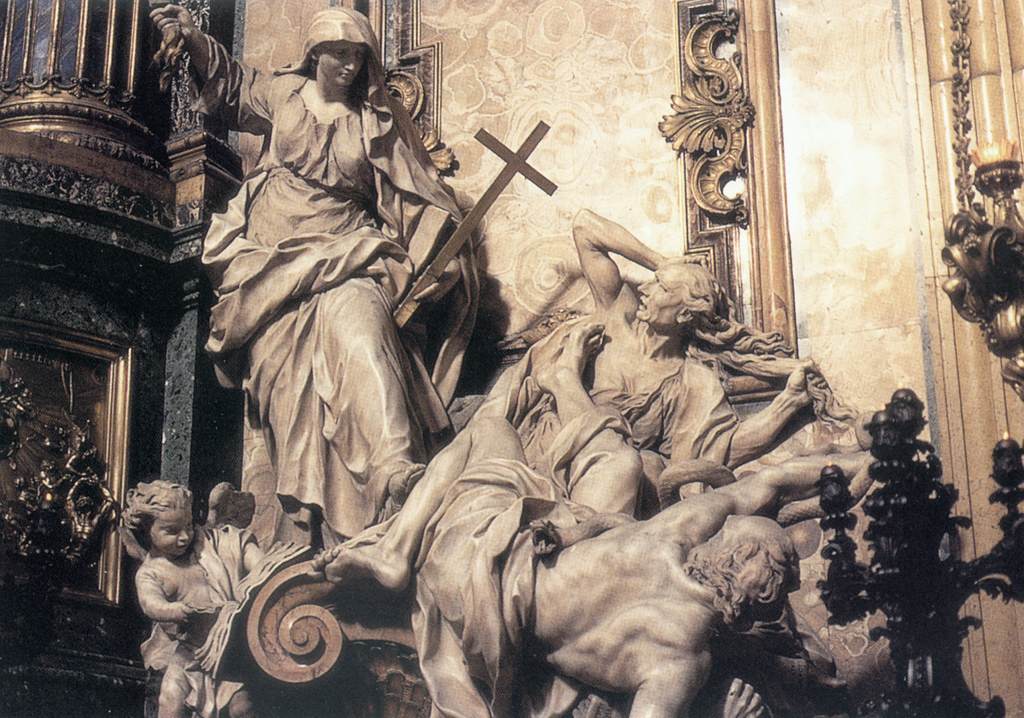
The Eucharistic Heart Of GC 35, "The Church of the Gesu"


Santissima Nome di Gesù

Gesu Links (here) , (here) , (here) and (here)


Fordham Professor More Interested In Exorcising Malachi Martin Then Demons


Book Review: A Sociologist's Journey into the American Heart of Darkness
Kevin Christopher
Book Review American Exorcism:Expelling Demons in the Land of Plenty
By Michael Cuneo. Doubleday, New York, 2001.
For skeptics and most other people, the word exorcism immediately evokes images of Catholic priests, holy water, and bizarre, other-worldly behavior. Most of the popular literature and media coverage focus exclusively on this Hollywood version of modern exorcism, a vicarious adventure into the dangerous side of religious experience. American Exorcism takes us beyond such cliché into the real believing subculture and the broader phenomena of demonology and ritual. Author Michael Cuneo—who teaches anthropology and sociology at Fordham University in New York City—delves deeply into modern American beliefs in demon possession and the various practices of demon expulsion. Although his opening chapters focus mostly on exorcism as a Roman Catholic ritual, Cuneo is quick to disabuse readers of the common assumption that the task of expelling demons is limited to priests. His later chapters closely examine the history and current practice of Middle-America exorcism—the deliverance ministries of Baptist, Charismatic, and Pentecostal churches and deliverance groups. Cuneo is also careful to make sure the reader understands that although Protestant deliverance ministry and the resurgent Catholic rite of exorcism are essentially grass-roots practices, the renewed popular belief can be credited almost entirely to Hollywood. “This conjuncture of commercialism and religious ritual, of profits and piety, should come as no surprise,” Cuneo writes. “Over the course of the twentieth century the popular cultural industry, with its endless run of movies, books, and digital delights, has gained a pervasive influence over the national consciousness. It has become part of the very air that Americans breathe and, as such, it has attained an enormous capacity for shaping everyday beliefs and behaviors. . . . When Hollywood and its allies put out the Word, somebody’s guaranteed to be listening” (p. 50). Cuneo repeatedly reminds the reader of the role of American media in the resurgence of the belief in demonic possession. Only the most willfully naïve reader could overlook the role of motion pictures, TV talk shows, book publishers, and the insatiable appetite for publicity among exorcism authors and self-styled “researchers” after reading Cuneo’s perceptive accounts of the rise of demonic awareness in the land of plenty. American Exorcism is a remarkable synthesis of interviews, historical research, media studies, and hands-on field research. He interviews the various players in the modern exorcism revival. He offers compelling assessments of desires and motives of the exorcists and the possessed—tempered by objective evidence and judgment. He shows forbearance and sympathy to those who participate in exorcism and deliverance ministry, but he is also skeptical and frank.
Cuneo begins his book with a poignant and timely lamentation of the modern Catholic priesthood: “The past three decades haven’t been particularly kind to the Catholic priesthood. One would be hard-pressed to find another profession that has fallen harder or further from grace in so short a period of time.” ( I thought this book was on exorcism?) He notes the dramatic thinning of the ranks beginning in the 1960s and 70s, the frantic scramble to find relevance in the modern world, and the endless sexual scandals. The image of the Catholic priest, writes Cuneo, “has more often been the priest as pious fraud, the priest as philanderer, the priest as yesterday’s man—equivocating, beleaguered, and thoroughly redundant.”
In one exceptional area, however, the priest remains a cultural hero. “That area,” writes Cuneo, “is exorcism, and it is the priest-as-exorcist that has somehow managed, in defiance of all odds, to retain a heroic grip on the popular American imagination.”
Modern Catholic liberals (No dought this includes the author) had hoped that exorcism would be relegated to Church history along with the other medieval trappings (I.E. Traditional Latin Mass) and customs(Going to Church). What such Catholics never anticipated, according to Cuneo, was the modern media’s role in breathing new life into the ancient rite of exorcism (Like "Nip / Tuck" and "Desperate Housewives").

In the first four chapters Cuneo deftly sketches out the sundry sources of the exorcism renewal. He begins with the well-know pop Ursprung: William Peter Blatty’s 1971 novel, The Exorcist, and the 1973 film of the same title that it inspired. He characterizes Blatty’s work as massive structure of fantasy resting on a flimsy foundation of a priest’s 1949 diary account of the possession of a young boy in Mount Ranier, Maryland. Cuneo then introduces the reader to fascinating and seldom-cited sources: ex-Jesuit priest Malachi Martin, author of the 1976 book Hostage to the Devil; paranormal authors Ed and Lorraine Warren, and, surprisingly, the grandfather of pop-psychology and self-help, The Road Less Traveled author Scott M. Peck.
Malachi Martin pronounced his final vows as a Jesuit in 1960 and took a position at the Vatican’s Pontifical Biblical Institute. He abruptly left his post in 1964 and the Society of Jesus in 1965, after being granted a provisional release by Pope Paul VI.
Nearly forty years later, there are conflicting accounts of why Martin, such a promising scholar, left everything behind. Cuneo writes: According to the most popular account (which is the one usually favored by Martin himself), he felt morally compelled to leave the priesthood in protest over the new, decidedly more liberal, direction the Catholic Church was taking as a result of the Second Vatican Council.
Unfortunately this stricken-soldier-of-conscience version of events hasn’t always squared with the facts. Far from being a tormented conservative during his years in Rome, Martin was actually a theological liberal, and while the council was in full swing, he was closely (and publicly) aligned with such leading liberal lights as Monsignor George Higgins and the eminent American Jesuit John Courtney Murray. Digging further, Cuneo finds “fairly reliable evidence” (Most likely based on accounts by screwball former Jesuit Robert Blair Kaiser see his accusations here , this could be considered detraction or calumny and should not considered "fairly reliable evidence" ) that Martin threw away his religious career in the wake of “romantic intrigue”—
an affair that occurred in 1964 while he taught theology part-time at Loyola University of Chicago’s Rome Center.
If readers are to believe Martin, Satan was hard at work in New York City in the 1970s. He claims that the possessions and exorcisms described in Hostage are true accounts.
Cuneo checks with Catholic experts, including Franciscan Father Benedict Groeschel, the expert Catholic officials turned to in the 1970s and 1980s when they were confronted with the “inexplicable.” Groeschel was not aware of anything on the scale Martin portrays. Furthermore Groeschel and others insist that for the mainstream Catholic Church, exorcism was the last resort; earthly explanations were preferred and pursued first. In his 1983 book People of the Lie: The Hope for Healing Human Evil, Peck is unequivocal about his belief in demonic possession and remains a staunch believer in supernatural demonic possession to this day. Many in the charismatic deliverance movement see People of the Lie as a mainstream validation of their beliefs. When Cuneo asked Peck in a phone interview whether he thought that exorcism would someday become the serious subject of scientific investigation, Peck expresses doubt for absolutely shocking reasons. He is not pessimistic due to the fact that there is no credible evidence for the reality of demonic possession. Instead he asserts—in the tradition of a dime-a-dozen pseudoscientist rather than a trained psychiatrist—that the “country’s intellectual and religious elites,” are to blame, including “the leadership of the American Catholic Church,” who “have seemed determined to keep the door shut.”
In Part III: “Charismatic Deliverance Ministry,” Cuneo sets Catholicism aside and begins with an account of a fifteen-minute exorcism of a young man named Paul. Paul, plagued by years of aberrant sexual fantasies and violent feelings, had driven 200 miles to Kansas City to obtain an exorcism from Protestant deliverance ministers Ellen and Felix. The rite Cuneo describes is not an all-night vigil of sweating priests dodging projectile vomit. It involved a prayer, a recitation of Psalm 37 and Luke 10:17–19, some speaking in tongues, a prayer of repentance followed by a prayer of exorcism appealing to the power of Jesus Christ, repeated six times for each demon within Paul. Cuneo remarks that “whole business” was “orderly and efficient.” He also includes a postscript stating that six months later, Paul claimed that he had not experienced any of his old symptoms and “for the first time in his life felt truly at peace with himself” (81).
Cuneo then recounts the history of the rise of modern Pentecostal and Charismatic deliverance ministry. Although it dates as far back as the very beginning of Pentecostalism on Asuza Street in Los Angeles in 1906, the modern revival can be traced to the 1960s. At that time, deliverance ministry was a sporadic guerrilla movement, led by mavericks like Disciples of Christ minister Don Basham, Pentecostal minister Derek Prince, and, among Charismatic Catholics, a Dominican priest named Francis MacNutt. Cuneo’s historical account of the deliverance ministry from the 1960s through the 1980s is filled with quotes out of his interviews, providing an intense human portrait of what both leaders and followers in the movement felt and the role deliverance ministry played in their lives.
Readers will also find a continuing interplay between Catholic and Protestant brands of exorcism. For instance, Malachi Martin’s Catholic pulp thriller Hostage to the Devil was a great influence on some of the modern Charismatic deliverance ministers Cuneo spoke with, and many Catholics turned to charismatics in their quest to infuse their faith with renewed fervor.
Cuneo spends time at the Hegewisch Baptist Church in Indiana with Pastor Mike Theirer, “the hardest working exorcist in America.” His account stands in complete contrast to the more private and peaceful affair described above. Theirer’s deliverance sessions are auditorium affairs. “Throughout the auditorium, demoniacs are paired off with exorcism ministers,” writes Cuneo, who himself rushed help wrestle down a particularly violent demoniac to prevent him from further battering Pastor Mike. People belched and (literally) vomited their demons out in an intense charismatic spectacle. Cuneo’s close involvement with congregations practicing deliverance ministry gives him a compelling inside look and first-hand perspective on the conformist (sometimes cult-like) pressures exerted on members regarding belief and practice. Considering also the distinctive style of so many charismatic prayer groups: the ecstatic worship the gushing emotionalism, the breathless solidarity. All of this gave rise, as often as not, to an atmosphere of suggestibility, of hothouse conformity. Individual charismatics, even relative newcomers, easily surmised what was expected of them in the way of belief and conduct, and there was no shortage of cues to help them along. Imagine a fairly new recruit to the renewal movement, impressionable, eager to please, seeing two or three, or fifteen or sixteen spiritual brethren writhing and moaning in demon-induced torment. And then seeing the performance repeated time and again. It would take an iron act of will, arguably, for such a person not to go along for the ride.
Cuneo describes how he himself was confronted by an overly zealous charismatic convinced that he was possessed at a 1997 symposium on deliverance. He also describes interview accounts of fascistic ( The term "fascistic" looses it real meaning when improperly applied ) group leaders who quashed dissenters by attributing their complaints to demons of willfulness and condemning them to corrective exorcisms. (interesting)
He stresses, however, that such abuses are the exception rather than the rule. Michael Cuneo’s conclusions on the actual existence of demons and the use of deliverance ministry and exorcism will almost certainly disappoint many Skeptical Inquirer readers who feel that the throat of patently unscientific nonsense should be slit wide open. Cuneo reserves judgment on many matters for which skeptics will see a clear verdict. After sitting in on fifty exorcisms, he is unequivocal about the fact that he saw nothing supernatural—
certainly nothing out of The Exorcist or Malachi Martin’s salacious (This word salacious is not properly used, see definition here) pulp-religion paperbacks. However, he remains equivocal about the possibility that demons exist.
While his views on the efficacy of exorcism are tempered by documented tragedies of exorcists inadvertently killing their hapless subjects, Cuneo, who conducted follow-up interviews of people whose exorcism he had observed, apparently accepts that exorcism have been a useful “therapy” for some. Cuneo does emphasize one conclusion that all skeptics will gladly embrace. The Holy Army of priests, ministers, and laity who do battle with demons vying against God for the souls of men itself benefits from the power of one subtle creature which unquestionably influences the hearts and opinions of millions: American mass media.
Without Hollywood, ABC, or Malachi Martin’s publisher, the exorcism business
would never have gotten off the ground.
While Cuneo may in some cases be slow to condemn what is scientifically damnable, I believe that no skeptic’s library on occult or supernatural claims would be complete without American Exorcist. Cuneo has done quality research on all level and from many angles. He opens the door for readers into a strange but amazing world, where people fervently believe that Satan and his minions are at work in a struggle that is simultaneously personal and cosmic. He also does an excellent job tracking the media’s role in popular belief, and he is refreshingly scathing in pointing out those who see religious beliefs as a means to pop fame. ( I think Cuneo is more interested in tenure, than anything else )

Link to review (here)
.
An Instruction for a stable group of Exorcists in each diocese?Maybe, according to the Italian religious news website Petrus...Benedict XVI ... would intend to providentially deal [with the problem of diabolic forces] with an instruction, which could be published in the first months of the next year, that would determine that Diocesan Bishops... all over the world confer the mandate to perform exorcisms on a stable number of their priests. There have not been official confimations by the Vatican, being just a rumor for the moment.
.
Jesuits on the subject: St Francis Borja, S.J.
(here) , Fr. William Bowdern, S.J. (here) , Anneliese Michel/Emily Rose, Fr. Adolf Rodewyk, S.J. (here) , Fr. Joseph de Tonquédec, S.J. (here) , Fr. Walter H. Halloran, S.J (here) and Former Jesuit Malachi Martin (here)
.
More on the subject: The Devil Is Real
(here) , Fr. Gabriele Amorth (here) , St. Pio of Pietrelcina (here) , Exorcism (here) and Excorcist (here)
.
More news on the subject: Daily Mail, "Pope's exorcist squads will wage war on Satan"
(here)
Yet more news from the Vatican: UPI story, (here)

A Look Back To The 34 General Congregation, Via Time Magazine

Monday, Sep. 12, 1983
Looking for a New General

By Janice Castro.
With John Paul's blessing, the Jesuits meet to elect a leader
Pope John Paul II has traveled tens of thousands of miles to interpret and preach the Gospel to the world's 784 million Roman Catholics. But the short trip he took last Friday morning, to an imposing gray stone building just one block from St. Peter's Square, rivaled many longer journeys in historic significance: for the first time in nearly 450 years, a Pope was paying an official visit to the headquarters of the Society of Jesus, the most powerful and prestigious of Catholic religious orders for men.
By celebrating a Mass to open the Jesuits' 33rd general congregation, which is meeting to elect a new superior general, John Paul was also making a conciliatory gesture to a spiritual organization, some of whose 26,000 members have been at odds with him on the proper role of the church, and the Jesuit order, in contemporary society.
The Pope underscored these differences in his homily, quoting St. Paul: "I urge you to lead a life worthy of your vocation." The gathering in Rome last week of 220 delegates from Jesuit provinces around the world may bring to an end two years of uncertainty over the order's future. The underlying question: What kind of political role may Jesuits play while fighting for social justice? The issue was raised, indirectly, in 1981 when the Pope overruled the wishes of the Jesuits' ailing superior general, Father Pedro Arrupe, now 75, who had designated Father Vincent O'Keefe, 63, a former president of Fordham University, as his successor until elections could be held. Instead, John Paul appointed Father Paolo Dezza, now 81, a philosopher and former rector of Rome's Gregorian University, known for his traditional views on theological and social issues.
That unprecedented intervention in the affairs of the society drew hundreds of letters of protest from Jesuits. It also made unmistakably clear the Pope's unhappiness with certain trends within the order.
Addressing delegates to the congregation, John Paul last week reminded them of the need "to promote the justice, connected with world peace, which is an aspiration of all peoples. But this action must be exercised in conformity with your vocation as religious and priests, without confusing the tasks proper to priests with those that are proper to lay people." Previously, the Pope had expressed his displeasure with some Jesuits who have openly challenged church teaching on such issues as birth control, the ordination of women and the celibacy of priests. Under Arrupe, a charismatic Basque priest who was elected in 1965 as the 27th successor to the society's 16th century founder, St. Ignatius of Loyola, Jesuits often took a direct role in politics. In 1967, for example, Father Arrupe told American Jesuits that they could not remove themselves from the civil rights struggles then being waged.
When Jesuit Activist Daniel Berrigan was in prison for his 1968 attempt to destroy U.S. Army draft records, Arrupe visited him, thereby giving tacit approval to Berrigan's civil disobedience.
Jesuit Father Robert Drinan served as Congressman for the Fourth District in Massachusetts until the Pope forbade him to seek re-election in 1980. Jesuits have been most active politically in Central and South America. Two priests of the order hold minor posts in Nicaragua's Sandinista government. Others have been deeply involved in revolutionary movements in El Salvador, Guatemala, Brazil and elsewhere. During his 1980 visit to Brazil, the Pope applauded priests for defending the rights of the oppressed but warned them explicitly against seeking or holding political office. To some extent, the forces that brought some Jesuits into conflict with the Pope are linked to broader changes overtaking the church.
Jesuit membership in most Western industrialized nations is falling, and the
ranks have been reduced worldwide from 36,000 in 1965 to 26,000 today.
But the society is still growing in such Third World countries as India and Zaire. India, for example, now has more Jesuits (3,200) than any other nation except the U.S. (5,500), where the order's primary concern is education (it operates 28 colleges and universities and 47 high schools). Like the Pope, the Jesuit general serves for life. Arrupe, who suffered a massive stroke in 1981, is the first head of the order to step down. When the delegates closet themselves this week for several days of meditation before casting their votes, their first act will be to accept Arrupe's resignation. The society's time-honored electoral rules are strict; no delegate may advocate the candidacy of another, let alone propose himself. If there is a leading candidate, it may be Dezza's Pope-appointed deputy, Father Giuseppe Pittau, 54, an Italian scholar with a Ph.D. in political science from Harvard. He is respected by his colleagues and trusted by the Vatican, although he has generally progressive views on social activism. Still, the delegates might select a priest virtually unknown outside the ranks of the order. A once obscure Cardinal from Cracow might understand that choice best. —By Janice Castro. Reported by Walter Galling/Rome
With reporting by Walter Galling
Link (here)

Time Magazine, Jesuits Suffer Due To Lack of Ordinations

Though more recently established, more traditionalist movements and religious orders such as Opus Dei and the Legionaries of Christ have gotten more attention of late, the Jesuits are still far and away the largest clerical order in the Church.

They too, however, have suffered from declining ordinations, down to fewer than 20,000 members from a peak of 36,000 in the 1960s.

The election for the latest successor of St. Ignatius, the 16th century founder of the Jesuits, will take place in the days following next Monday's opening of the 35th General Congregation(GC35 , GC 35), a meeting of 226 delegates elected from the orders geographical "provinces" around the world. Though there is no set date for the election, which requires a three-fourths majority of delegates, Jesuit sources say by mid-January there should be a new Superior General.

Link to Time Magazine's article "Jesuits to Elect a New Black Pope"

GC35, A Word From Our Corporate Sponsors

Jescom introduces Negroponte and XO laptop to Rome

The communication secretariat hosted a conference that presented M.I.T. Professor Nicholas Negroponte and his amazing laptop computer to an audience that included people from religious orders, Vatican offices and Italian businesses on October 29, 2007. In this 43 minute podcast Negroponte discusses the history of the XO laptop, more commonly known in the press as the "One Hundred Dollar Laptop." He also explains its key points such as low power consumption, high-quality screen, durability and advanced connectivity.

Along the way he answers a number of questions such as whether this XO laptop is a full-fledged computer (the answer: yes it is, and it can run Windows and Linux, do email, browse the web.) He spends a great amount of time explaining the educational philosophy and goals which he considers to be more important than the technology itself.
The One Laptop Per Child non-profit organization (OLPC) originally planned to release the computers just through governments, but it has recently reached out to religious orders and other groups to implement the educational changes that the laptops represent.
Link to original story (here)
.
The just think how many "One Hundred Dollar Lap Top's" the Oregon Province could have purchased, instead of spend their money this one expense (here) !

Jesuit Fr. Tom Rochford, On GC 35

Three days to go
(General Congregation) It’s the end of the week and we are actually on schedule, with a few minor exceptions. The buzz level is starting to rise around the halls, though, as delegates to the congregation begin arriving. Today I saw John Mace and John McGarry. Mace is now the superior in East Timor; we used to run into each other whenever I was in Manila for a visit or a meeting. He was the superior of the community for young Jesuit students. McGarry is the California province provincial. We did a videotape for him when he came to “new provincial school” here in Rome a few years ago. Many friends will be here, so right now I want to sit and talk, to catch up on how things have changed since I last visited them. This isn’t the time for just sitting and chilling with friends, however, with only a few days before the formal opening of the congregation at Monday’s Mass at the Gesù Church. Tomorrow morning we have a final run-through of the new digital voting system that we are using for the first time. We are renting it from the company that takes care of the Vatican’s big meetings. Since we only have a general congregation at broad intervals, it doesn’t make sense to invest in a sophisticated system that would certainly be outmoded by the time of the next congregation. I spent much of the afternoon learning how to control the votes. (Remember, it is “F4” to open the voting and “F9” to close it, and keep your finger away from the Cancel button; but don’t be nervous—there are only 226 of the smartest guys in the world watching to see what the result will be. Gulp.) I took Fr. Don Doll shopping this morning. He is a terrific photographer who teaches at Omaha’s Creighton University and has done stories for National Geographic and other top publications. We needed to get a backdrop for the portrait he will take of the new superior general, whoever he will be. Don is a lot of fun, and I told him I appreciated his presence because he has so many technical gadgets that he makes me look like someone on a technological diet. I appreciate that and am glad to be working with him. We will be putting up lots of images from Monday’s Mass and the other events as the congregation starts to unroll. The pressure is building, but it is also exciting.
Link to Fr. Tom Rochford's GC35 Rome weblog (here)

Karen Hall, "GC35 Is Our Business ! "

I See Red Flags...They're Everywhere...

I swear, my plan for the last year has been to keep an open mind about GC35 and to hope for the best, if not for outright miracles. And to tell you the truth, I'm still hoping for outright miracles. Because it is obvious to me from what I've read so far that we are going to need them.
"Who is "we?" I can already here a certain faction of Jesuits screaming at me. Our GC, our fearless leader, our business, you don't even begin to understand, etc. etc. etc. But here's the thing. Your real fearless leader -- no, not him, the other Basque -- yes, the short one with all the archaic "man of his time" notions -- sent you out into the world. So you're out here, changing people's lives in ways that are not minor and, regardless of what you may believe, have the highest possible eternal consequences. That's why we get to have an opinion about your business. You can't be out here in the world, and then go into a huddle and tell us it's none of our business.

It's only none of our business if you don't come back out of the huddle. Let me put it in more concrete terms. We are the parents who spend years and years of hard work raising our children and going through the enormously difficult task of instilling our faith in our children, helping them hold on to it during the gangrene (teen) years, and then paying an enormous amount of money to send them to your colleges where they are taught that Jesus never performed miracles and the Church is wrong about (fill in the many blanks) and they should feed the poor because justice is the #1 concern of any true Christian and Hell...? Are you serious? And that is one of many, many reasons that GC35 is our business. I happen to think that there are much bigger reasons -- and it's hard to come up with "bigger reasons" than the fate of your child's soul.

Bigger than that is the fact that the world is in deep, deep trouble. And here's a clue: it's not because of Global Warming. Which brings me to my first tirade: GC35's heavy duty focus of environmental concerns. How can I be against saving the environment? I don't have time now to count the ways, but stay tuned. Let me just tell you what I notice: abortion doesn't make the list of the Jesuit concerns in the year 2008. But we have GOT to do something about the plight of the polar bears. Yes, I know, the sky is falling. We have to do everything we can to prop it up because it is, after all, completely the fault of Evil Human Beings (all contrary scientific evidence notwithstanding or even examined) and, of course, we have the power to change it.

The first point I'd like to make is that current ocean temperatures are not nearly as high as they were when St. Ignatius was sailing them. And the second point is that if Jesus had come down on a cloud and told him that the sky was indeed falling, his response would not have been to call a meeting of his guys to discuss what they should do to keep the sky from falling!!!! The meeting would have been, "The sky is falling, we have to work harder to save as many souls as we can, because the clock is ticking! We need more Jesuits and more boats."


Remind me, where on the list of GC35's priorities is anything that has anything to do with the salvation of souls, given the fact that the sky is falling? (According to Creighton's GC35 site, "Out of its concern for Justice, a new awareness of the ecology drew more response than any other topic." My problem with the emphasis on "justice" is, always has been, and always will be its myopic focus on this life. What profiteth a man if he saves the planet and in the process, allows many to lose their souls? Kill a baby, plant a tree. Doesn't work, guys.

Link to Karen Hall's post (here)

Pray For GC 35, From Bellermine Blog

Now It's Our Turn!
For centuries the Jesuits sacrificed everything by taking up the cross for us. The tide has turned. The Jesuits (GC35) need our help. We, like the Jesuit founding fathers, must take action. The timing is crucial. My brothers and sisters in Christ, lets answer the call.
Grab your beads.
Get on your knees.
Pray and fast.

"That is the answer."

Thanks John Micheal, read his full post (here)
Link to St. Robert Bellermine Blog (here)

Friday, January 4, 2008

Why Do They Have To Say Such Dredful Things? With Regards to GC 35

"It is not our job to just repeat the catechism..."
Read the full article on GC35 in Time Magazine (here)

More In The Northwest, "No Bankruptcy Yet" Says Whitney

Jesuits settle Colville Reservation abuse claims for $4.8 million
THE ASSOCIATED PRESS
SPOKANE, Wash. -- A $4.8 million agreement has been reached to settle claims by 16 people who said they were sexually abused by Jesuit priests decades ago at an Indian school near Omak. The settlement with the Oregon Province of the Society of Jesus, which oversees Jesuit activities in Washington, Idaho, Montana, Oregon and Alaska, also requires the Roman Catholic order to raise at least $200,000 within a year to pay for a homeless shelter or homeless services in the Omak area.
The settlement, reported Friday by The Spokesman-Review newspaper, brings total payments by the Jesuits to about $73 million in 194 sex abuse complaints, including $50 million paid to more than 100 Alaska Natives who said they were victimized by 15 Jesuit priests, brothers and others.
"I'm sorry for the pain and suffering this has caused," said the Rev. John D. Whitney, superior of the Oregon Province. "We can only now hope for healing." Jesuit leaders hope to resolve about 11 pending claims in the province without resorting to bankruptcy, although settlements to date have cost the order nearly all of its investment funds, Whitney said. "We're running pretty close to the line," he said. "If bankruptcy becomes necessary, we will be prepared, though it is not imminent in any way." The latest settlement covers accusations by people who attended St. Mary's Mission and School on the Colville Reservation in the 1960s and early '70s against the Rev. John J. Morse, who now lives in Spokane, and James Gates, a Jesuit brother now living in Michigan. Both are bound by what Jesuit leaders describe as a "safety plan," including a requirement that they be escorted when they leave their residence building. Morse, who was removed from Our Lady of Fatima church in Moses Lake in 2006, has denied the accusations against him.
Link (here)

Thursday, January 3, 2008

Rome And The General Congregation Of The Society Of Jesus, 35

Jesuit and Provincial GC 35 Links
.
Fr. Don Doll, S.J., Magis Productions (here) Photographic coverage of GC35.
Fr. Tom Rochford, S.J., Tom's Communications Blog (here) Blogging Rome and GC 35 with photographs.
Fr. Tom Rochford, S.J., Jesuit Voices (here) Podcast's of GC 35 new and insights
The official Society of Jesus, GC 35 news page (here) Press releases from the society updated regularly.
Creighton University, Understanding GC 35 (here) This is neat site, not so polished a lot of truthfulness and honest self appraisal. GC 35 attendees should visit this site.
The Irish Jesuits, A Window On GC 35 (here) the comings and goings of the Irish Jesuit's in Rome.
Jesuits In Europe, General Congregation 35 (here) a little dry, but informative and newsie.
The Australian Jesuits, Province Express (here) an online magazine format, looks good, nice graphics and informative.
Jesuits of The United States of America, America Magazine (here) the online version of the controversial magazine. Will most likely blame George Bush's "War on Terror" if they don't like the outcome of GC 35. I am being sarcastic! Not really.
India's, Goa Jesuit's (here) keep an eye on this one, especially if the new S.G. is an Indian
Jesuit Conference of East Asia and Oceania (here) Missions, missions and more missions, they are never in the MSM, that is a good thing.
The Jesuit Madurai Province (here) St. Francis Xavier's back yard loads of Jesuit Indian history has taken place in this province.

Jesuit General Interest Blogs
.
Some Have Hats (here) Karen Hall, is skillful with the written word, noted for her pointed and direct commentary.
The City and the World (here) Joe Koczera, S.J. writes extremely well, this site does not get bogged done in recipe's, mushy subjects or off-base theology. A very solid and spiritual blog, I look forward to reading his insights on GC 35 and the future of the Society.
A Little Battallion (here) A group effort( Karen Hall Joe Garcia Mark Mossa, SJ Steve Bogner )blog typically conservative with a Fr. John Hardon, S.J. out look on the Society
The Good News of Christ (here) a blog by Fr. Ben Hawley, SJ, I love its pastoral message, Father should have wonderful insights on GC 35, it is also refreshingly a-political.
St. Robert Bellarmine Blog (here) John Michael will have interesting and thought provoking commentary on GC 35. He likes to dig into the untilled garden, let see what he comes up with.
Good Jesuit, Bad Jesuit (here) Joseph Fromm (that's me) searches the globe for interesting Jesuit news and events. Does not shy away from the unfortunate or the glorious aspects of the Society.
Italy Guides (here) A great general interest travel website for Rome

GC 35 Stuff

Jesuits blog, podcast and prepare for General Congregation
Over the next four days, Rome’s Jesuit population will increase by about 50 percent. The Society of Jesus’ 35th General Congregation, convoked to elect a new superior general, begins Monday morning with Mass in Rome’s Gesu Church, the site of the tomb of St. Ignatius, the Jesuit founder. The 225 delegates to the General Congregation will be joined by many of the 446 Jesuits who live and work or study in Rome full time.
About 20 of the delegates live in Rome, working at the Jesuit headquarters, the Jesuit-run Pontifical Gregorian University or at the Vatican, like Jesuit Father Federico Lombardi, director of the Vatican Press Office, Vatican Radio and the Vatican Television Center. The remaining 200 are being housed in remodeled or modified rooms in Jesuit institutions all over the city.
While reporters are not allowed into the General Congregation sessions, several Jesuits are preparing to share the inside story with cybernauts: U.S. Jesuit Father Don Doll, an award-winning photographer, already is in Rome and posting photos on his site; U.S. Father Thomas Rochford, the head of communications for the Jesuits, has a blog and a relatively new podcast going; and, of course, the Jesuit press office has prepared a Web site to keep Jesuits and other readers informed.

Men Of Christ " New Orleans Province" Not Yet Priests, But Almost!


Some of the Jesuits in Formation of the New Orleans Province, December 2007
From first-year Novices to newly-ordained Priests without last vows, those men who are still in various phases of their Jesuit formation are encouraged to meet as a group each year. Since a large number of them are taking, or teaching, classes during the regular academic year, this formation gathering is usually scheduled sometime during the Christmas break when most everyone is free to attend. It is a time to get to know one another better, to nurture friendships, to share experiences, to deepen one's spirituality, and to support and be supported by one's brothers in the Lord.
Link (here)


Former Jesuit Has Not Made A Decision As To What Kind Of Christian He Wants To Be

A new spiritual home
Ex-Jesuit priest takes post as education director at Baptist Church in Halifax
By RICHARD WOODBURY
It’s a sign of the times that the Baptist Church is welcoming a former Jesuit priest with open arms but it’s not a surprise, says a religion expert. "Fifty years ago, this wouldn’t have happened. A Jesuit would not have been invited into a Baptist church and a Baptist wouldn’t be invited into a Catholic church. That’s just the way it was," Jennifer Dimoff, a professor in the department of religion and philosophy at Mount Saint Vincent University, said in a recent interview. Since Nov. 1, John Gahan of Wolfville has been serving as the interim director of Christian education at the First Baptist Church in Halifax. The former Jesuit priest ended his 21-year tie with the order two years ago.

Mr. Gahan said that during his time off, he examined his life and tried to figure out what he wanted to do next. The 49-year-old left the Jesuit order because his beliefs no longer matched up with those of the order, he says. The fact that Roman Catholic priests can’t marry and that women can’t be ordained were two of the divisive issues. In the Baptist church, as in all Protestant churches, ministers can marry and women can become ministers.

Parishioners are pleased with Mr. Gahan’s work, said Rev. John Boyd, who has been with the First Baptist Church for 20 years. He said the congregation is very open and welcoming."We actually receive as members of our church anyone that comes from any other Christian church. We accept their baptism and their own Christian experience as valid, as long as they want to be part of our congregation and work along with us."

Although there are a lot of differences between Jesuits and Baptists, there are a lot of similarities, he says. "We have a common faith in Jesus and want to follow his teachings and bring people to an understanding of faith." The main difference has to do with the decision-making structure. With the Baptists, the congregation decides and votes on issues such as whether to allow same-sex marriage (which the First Baptist Church supports). For example, they voted on whether to hire Mr. Gahan, to which there was unanimous approval.

With the Roman Catholics, decisions are made by church leaders, such as priests, bishops and the Pope. As the director of Christian education, Mr. Gahan works with and provides support to the teachers and co-ordinates special events. Before becoming involved with the Baptists, Mr. Gahan said he had stereotypes about the church being judgmental and not very welcoming.

He thinks differently now. "The church is so open and ecumenical, and inclusive. . . . It’s a really inviting and open church." Mr. Gahan said people often joke about the situation.

He was recently having lunch with the minister from St. Andrews United Church in Wolfville and the secretary of that church asked him: "Can’t you make up your mind which church you’re going to be involved with?" He is thinking about converting, but he hasn’t made a decision yet.
.
The original article in Novo Scotia News (here)
John Gahan mentions that he is an adherent of Jungianism, read about Carl Jung and its threat to Catholicism (here) , (here) , (here) and (here)

Radical Hindu And Jesuit Tensions In India

Hindu extremists convert 2,000 Christians in India
A Hindu group claims to have converted 2,000 tribal Christians to Hinduism in Gujarat.
Posted: Thursday, January 3, 2008, 22:29 (EST)
A Hindu group claims to have converted 2,000 tribal Christians to Hinduism in Gujarat. According to UCA News, the conversion ceremony took place late December, at Vyara, 1,300 kilometers southwest of New Delhi. The town is the headquarters of newly created Tapi district. Hindu groups alleged through media that they converted some 2,500 tribal Christians at a public function.
Jesuit Father Stanny Jebamalai, who works in the area, confirmed to UCA News that some 2,000 Christians had joined Hinduism. Since 1998, when the Bharatiya Janata Party came to power, tribal belts in the state have witnessed sporadic tension during the Christmas season. Christian missionaries have been accused by the Hindu groups of exploiting tribal property and trying to forcefully convert people to Christianity promising money and jobs.
For the reconversion, "Hindu groups brought tribal Christians from Gujarat's Dangs and Tapi districts, as well as from neighboring Maharashtra state. In speeches at the gathering, Hindu leaders reportedly accused local Christians of joining with Maoists to fight Hindu landlords and convert more people to Christianity," reported UCA news.Meanwhile, Tapi's deputy collector, NS Halbe told media that the function had government permission and that local authorities have confirmed the conversions. Father Jebamalai told UCA News the "induced and forced" conversion of tribal Christians was aimed at creating "a sense of fear among Christians and prevent missioners from working in the area". Christian leaders in the state say that Hindu radicals fear tribal and lower-caste people receiving an education because it may lead them not only to stop slaving for upper-caste Hindus but also to question the idea of high-caste superiority. Christians in Gujarat have been persecuted, beaten and imprisoned in the state due to the growing presence of anti-Christian elements aiming to subdue Christianity. In 2003 the Hindu nationalist Bharatiya Janata Party, which rules Gujarat, adopted the Freedom of Religion Act, in reality making any conversions illegal. Violators face up to three years of imprisonment and/or a fine of up to 50,000 rupees (around £650).

Link to original article in Christian Today Australia (here)

Wednesday, January 2, 2008

A Synopsis Of G.C. 34

Chastity in the Society of Jesus
A Summary of Decree 8, from the 34th General Congregation of the Jesuits

This is just a small portion of the summary, I think it gives you an idea of the Jesuitspeak that will be at G.c.35

What follows is a summary of Decree 8, one of 26 Decrees dealing with the Mission of the Society Jesus today issued by the 34th General Congregation [GC34] of the Society of Jesus. The congregation met in Rome in the first three months of 1995. Its work affects the immediate future of Jesuits worldwide. Introduction Today "men and women experience their sexuality as a gift which enables them to express intimate love and commitment." There remain, however, questions and doubts "about the meaning and value of priestly or religious chastity." Though challenges exist, the Jesuits of GC 34 remain convinced that "fidelity in chastity characterizes the life of the Society today" as it did so in the past by God's goodness.
.
The Call to Chastity
For Ignatius, members of the Society are "rooted in a fundamental detachment and a determination to serve God totally" made possible by a deeply personal love for Christ. Jesuits are called to "embody in his life that singleness of vision and readiness for mission which is the Ignatian understanding of the angels." Jesuits are called to this gift of God to a discipleship and renunciation in freedom for the universal charity of God towards all men and women.
.
The Apostolic Character of Chastity
Consecration to God through chastity witnesses to Christ's comprehensive engagement of human beings. It is a prophetic reminder of our eternal life with God. Chastity is, therefore, essentially apostolic. Chastity reinforces the value of marriage. "Both point to a love and fidelity deeper than sexual expression and of which Christian marriage and religious chastity are divergent and sacred realizations." Human love freely offered to all is a powerful sign leading others to God. Thus, the Jesuit lives in radical apostolic availability.
.
The Matter and Meaning of the Vow of Chastity
The vow of chastity "arises from and is based upon a conscious and free decision under grace." For the Jesuit, this "vow entails the obligation of complete continence in celibacy for the sake of the Kingdom of heaven."
.
The Cost of This Discipleship
The loss of conjugal intimacy, denying himself a family and affective bonding are painful choices for the Jesuit. Other joys are possible but cannot remove all of the void. He lives in a solitude that can be both desert and cross. The poverty that flows from the vow of chastity completes and fulfills his life but it comes at a great cost.
.
Normative Principles and Guidelines:
1. Familiarity with God and friendship with Christ grow with a life of prayer.
Guidelines: Jesuits should "seek the conscious presence of the Lord" private prayer as well as community prayer, through the Eucharist, the sacrament of reconciliation, an annual commitment to the Spiritual Exercises and a devotion to the Blessed Virgin.
2. Community life supports a life lived in the denial of wife and children. Thus, apostolic chastity cannot be lived in a life withdrawn from others.
Guidelines: "Our houses are to be communities where the life of prayer and the interchange with one another of religious values habitually characterize daily life." Communities ought to be hospitable while at the same time observing a certain privacy.
3. The life of ministry strengthens our attachment to the Lord. This attachment is the source of chastity. Chastity is our way of relating to others.
Guidelines: The manner of proceeding of a Jesuit "ought to preclude any ambiguity about their lives, enabling those to whom they minister to rely instinctively upon their disinterestedness and fidelity." It is important that those in ministries such as spiritual direction, counseling or therapy keep appropriate professional boundaries. Cultural differences require sensitivity on the part of Jesuits.
4. "Discernment and self-discipline are imperative for fidelity in chastity."
Guidelines: Religious discretion entails the practice of the examination of conscience, mortification, and custody of the senses. Any failure in fidelity to the vow can afflict others cruelly.
5. Spiritual maturation goes along with affective maturation. This latter "means the development and the integration of all the forces and emotions of the human personality."
Guidelines: The individual Jesuit is responsible for his own human growth. He should not attempt to isolate himself from life's challenges and crises. He must give his feelings and creativity appropriate expression and develop an educated sensibility for the humane achievements of life. He must avoid a lifestyle that puts him under excessive affective stress or necessitates his suppressing his own feelings, thus leading to some kind of psychic disturbance. Friendships can "support a life of dedicated chastity" and "deepen the affective relationship with God." Spiritual direction is essential. Superiors "can further in their communities an atmosphere of understanding and of friendship."
6. The Account of Conscience and Spiritual Direction are critical.
Guidelines: There should be mutual confidence and openness between Jesuits and superiors. Spiritual directors must be appropriately trained. Jesuits will be "as effective in helping others to lead a chaste life" as the Jesuit is faithful in his integrity and awareness of his own innermost self. "Chastity is a shared responsibility of all Jesuits to safeguard seriously and to further through their mutual fraternal support and friendships as well as through the aid they offer superiors in their care for their companions and for the Society."
7. The admission of candidates into the Society as well as their possible dismissal depend on a realistic examination of a person's charism and character for a life demanding celibate chastity. The ability of superiors to carry out their responsibilities depends on the openness of both candidates and fellow Jesuits.


Guidelines: Superiors should try to probe issues of emotional strain and inner distress of candidates. Anyone not able to live the vow of chastity with integrity should leave the Society. Those who repeatedly violate chastity should leave. Superiors should challenge those involved in inappropriate relationships.


Recommendation to Father General "Establish a commission of experts who can examine thoroughly the issues attendant on the fidelity and credibility of chastity in the Society and on a sound affective formation of young Jesuits and those already formed."

Link to the full synopsis (here)
More on chastity: (here) , (here) and (here)
Jesuits on chastity: (here) , (here) and (here)
Chastity is a gift: (here) , (here) and (here)
Some Jesuits and their problems with chastity: (here) , (here) , (here) , (here) and (here)

"GAME ON"!!!!!!! GC35 Is Almost Here

The heck with Iowa and New Hampshire! This is the best contest going. However we have no idea who running. The winner will be the leader of 19,000 Roman Catholic priests. Creighton has now put up the official Jesuit information site to track the comings and goings of G.C. 35. Below is the intro to the Creighton website, I have the link at the bottom of the post.
.
Preparing for G.C. 35
This site is designed to help Jesuits, partners and friends of Jesuits to better understand the upcoming General Congregation of the Society of Jesus. At the Congregation, a new Superior General will be elected and a number of topics regarding important aspects of the Society's mission and ministry will be discussed. The Congregation will begin on January 7th in Rome and will continue in session until it is completed, possibly for several months. The general information to the left will help in understanding what a Congregation is and how this one was prepared for. In the column to the right is our summary of the topics that will be discussed at the Congregation. Other topics can be introduced as well. We invite discussion about G.C. 35, through the Sharing link. Please feel free to share your ideas about the topics or your questions about the Congregation. Fr. David Schultenover, S.J., a delegate of the Wisconsin Province of the Society, has agreed to send periodic notes about his experiences at the Congregation. We will post news about the election of the new General as well as the official public press releases about the Congregation. We also plan to have links to the documents of the Congregation as soon as they are available, as well as commentary and discussion on them.
Link (here)

Tuesday, January 1, 2008

Fr. Ray Blake's, Saint Mary Magdalen Blog, New Years At The Vatican

Fr. Ray Blake is awesome! A must read, for any critical Catholic thinker. This is his New Years Day post. The pictures are awesome!
New Years Eve And Day
I am as you might expect a great fan of the sartorial revival that is going on in Rome. I have always been a proponent of the seamlessness of the Church: the Church today is a direct continuation of the Apostolic Church. Wearing vestments that belong to his immediate predecessors ratifying their reign and his succession.
I was always a great admirer of the Great John-Paul, and like many asked how the shy Bavarian professor would ever fill his shoes, what all this revival is about is seems to be simply saying it is the Office of the Papacy that matters. Wearing the coat of arms of John XXIII or the mitre of Benedict XV means that Benedict XVI is only important in so far as he is their successor.
Fr Justin has makes some interesting comments on this on his blog about the Pope dressing in harmony with the basilica, he also mentions the extravagance of the previous Master of Ceremonies. The whole point of vestments is to cover up the personality of the priest or bishop, not to emphasise it. He is important because of what he is not who he is. I do like the return of the Throne, the idea of the Chair of Peter is so important for Catholics. I also like the way the cope is held open, with the suggestion of "alter Christus" being crucified, being led.

Link to post (here)

"Against The Grain" 2007 Blog-O-Rama

"Against The Grain", intellectually superior, critical without contempt and with a heartfelt love of our Savior! Please read his year in review.


Against The Grain - 2007 Highlights
Well, that's a wrap . . . of 2007. From the archives, a look back with a highlight from each month of blogging (As you can see, some familiar and reoccurring themes to this year):
Thoughts on Pope Benedict's "Spe Salvi" December 30, 2007.
Further Responses to "A Common Word" November 29, 2007
"A Common Word" and Christian-Muslim Dialogue October 27, 2007
Pope Benedict's Critique of Capitalism September 27, 2007
Elvis: "There is a bigger King . . ." August 19, 2007
Readings in Islam: "Islam, Fundamentalism, and the Betrayal of Tradition" July 2, 2007.
The Persecution of Christians in Iraq June 9, 2007.
Just War, Pacifism and Catholic Tradition May 31, 2007.
Pope Benedict, Islam and the Prospect of Reform April 23, 2007.
[Hiatus from blogging during March 2007]
Israel-Vatican Relations and the Fundamental Agreement February 12, 2007.
The Execution of Saddam Hussein and Church Teaching on the Death Penalty January 07, 2007.