Showing posts with label St. Ignatius of Loyola. Show all posts

Monday, May 12, 2014

The Dark Angel Worship Cancelled At Harvard

UPDATED: May 12, 2014, at 8:15 p.m.
The Harvard Extension School Cultural Studies Club has dropped its sponsorship of a re-enactment of a Satanic “black mass” ritual, which was scheduled to occur Monday evening at Cambridge Queen’s Head Pub. A spokesperson for the Satanic Temple, which was facilitating the black mass, said that the organization no longer plans to hold a black mass this evening.
The Harvard Extension School Cultural Studies Club originally said that it planned to relocate its reenactment of a Satanic black mass ritual, scheduled for Monday night, to an off-campus site, citing in an email that “misinterpretations about the nature of the event were harming perceptions about Harvard and adversely impacting the student community.”
The club wrote in its email around 5 p.m. that they planned for the event to be held at The Middle East nightclub in Central Square at 9 p.m. But Clay S. Fernald, the general manager of The Middle East, said Monday evening that the nightclub will not host the event, and that negotiations with the Harvard Extension Cultural Studies Club had fallen through.
Link (here) to The Crimson 
St. Ignatius of Loyola and the Discernment of Spirits (here)

Wednesday, April 30, 2014

Fr. Leonard Boase, S.J., On Our Dominant Fault

But why is it so good to discover our dominant fault? Because in the developing of our inward life, as in business or in a battle, or in a course of study, success follows from skilful ordering, or rationalising, or strategy. In order to build up our spiritual character with success we must plan, we must concentrate our attack. If we try to overcome all our faults at once we shall probably fail; we have to pick out one point and hammer away at that. And, therefore, obviously it should be a strategic point.
But notice, our dominant fault is not necessarily the most serious sin that we fall into. A man may fall once in a way, not as a habit, into serious sin through drink, and yet the fault which he would be well advised to deal with first may be something quite different, say a bad temper. A dominant fault is one which is the root of many others: dig that out and the rest will die too. The faults of which we are speaking are habits. Diamond cut diamond: habits are only cured by habits. 
Therefore it is not enough to review our progress once a week or once a fortnight, when preparing for confession. We have to keep the matter more constantly before our minds: we ought to make an examination of conscience every day, and that with particular attention to the dominant habit we are trying to overcome. This self- inspection should be relatively brief; there is a danger in excessive introspection. St Ignatius of Loyola, in a letter to a Portuguese priest, once wrote "If by the grace of God our Lord the soul is at peace with God' (that is, if it is free from mortal sin) 'make the confession short, without entering into details.' So, too, a daily examination of conscience must not be made the occasion of exasperating one's nervous system. We should give more time to asking God for pardon and help, and to strengthening our resolves, than we give to the actual examination of our conscience."
Link (here) to  BEFORE THE THRESHOLD Fr. Leonard Boase, S.J.

Friday, April 18, 2014

St. Ignatius, As The Servant Of God

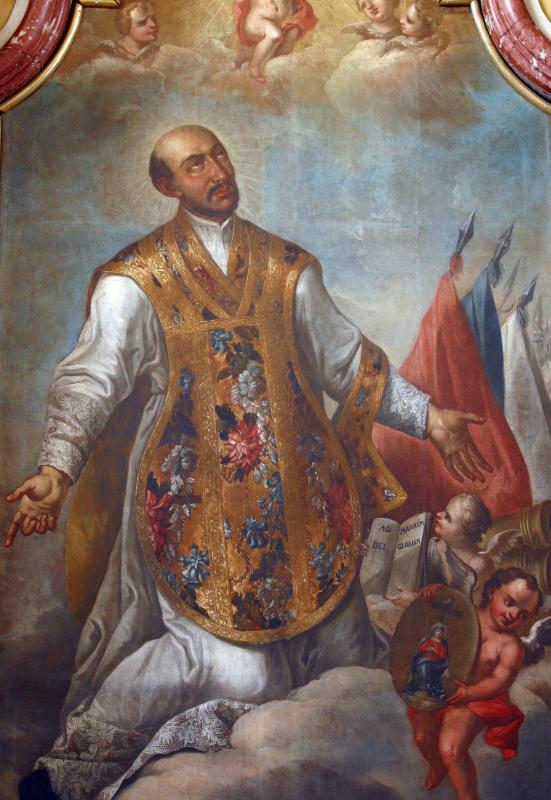
Saint Ignatius came back from St. Paul's this bright Easter week in April, on a Friday, one of the greatest men of modern days. The world, if it has not recognized the saint, has recognized the society he formed, and the place he filled in it. When he stood on the threshold of their house, his institute numbered but a few; yet it had made good progress for the short time of its existence. Besides the professed fathers, some were studying in Paris, and about twelve were in Rome. They had survived persecution and turned bitter enemies into ardent friends, and they had separated to go where the successor of St. Peter had pointed out. They had done wonders of charity; and the church had now acknowledged them as a new development of the love of God.
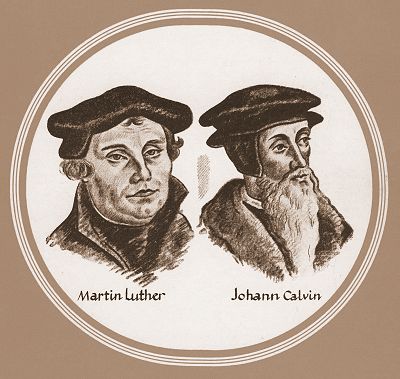
With Luther and Calvin, a new trial had fallen upon Christendom, and the Society of Jesus was just what the Church at that moment wanted.
A cry had arisen against religious orders. And this cry was met, not by a cowardly hiding of the evangelical councils as a cause of offence, but by the confirmation of a new order, which was to live in the world's sight, and whose enclosures were to be nothing less than the boundaries of the earth. Ignatius, as the servant of God, now began his generalship, by setting his house in order and writing the constitutions. We look on these acts with a peculiar interest.
Link (here)

Tuesday, March 11, 2014

Fr. Cuthbert Lattey, S.J., "The Giving Of St. Ignatius of Loyola's Spiritual Exercises To Be The Most Important Work Of The Members Of His Order."

But the modern man will ask: "What is Christ to mean to me?" And what is His message for our time, for our cities, for our men and women? Does Christ really matter? Is there any workable theory as to how He is to matter? These and many other such questions we may sum up under a single heading, "The Christ of Experience," and attempt but a partial answer thereto, for otherwise "the whole world would not hold the books that should be written."
St. Ignatius of Loyola certainly thought that he had such a workable theory of the practical significance of Christ, and endeavored with all his might to press it upon his fellow-men, so much so, indeed, that it appears fairly safe to say that he considered the giving of his Spiritual Exercises to be the most important work of the members of his Order. These Exercises represent, as it were, his philosophy of the life and teaching of Christ, and that in the form which he thought best suited to influence men; they represent Christ, but Christ in action, and Christ in action means the Christ of experience. The chief truths of our religion are there, but organized by a master-mind for a tremendous offensive. 
The delicate psychology of the Exercises and their historical significance need not be dwelt upon here. The end of the nineteenth century, indeed, marked a new era in their history, in that it saw them extended to all ages and classes of Catholics, even to the opening of a number of special houses for the purpose. A survey of the movement may be found in Father Charles Plater's Retreats for the People, in the Westminster Library. It has even spread to those outside the Church, and in Paul Bull's Threefold Way we have an attempt to interpret the Exercises to Anglicans, while in the pamphlet Towards a New Way of Life: a Review and Re-dedication, published by the Student Christian Movement, we have a presentation that is meant to be palatable even to Nonconformists. Needless to say, in these two non-Catholic works there are some significant "adaptations" of the Exercises; all the same, much remains that is good and solid, and cannot but bear fruit in the well-disposed.
Link (here) to the book entitled, "Back to Christ" by Fr. Cuthbert Lattey, S.J.

Wednesday, October 2, 2013

Pope Francis On St. Ignatius Of Loyola, "Ignatius Who Founded The Society, Was Also A Reformer And A Mystic. Especially A Mystic."


"Ignatius, for understandable reasons, is the saint I know better than any other. He founded our Order. I'd like to remind you that Carlo Maria Martini also came from that order, someone who is very dear to me and also to you. Jesuits were and still are the leavening  -  not the only one but perhaps the most effective  -  of Catholicism: culture, teaching, missionary work, loyalty to the Pope. But Ignatius who founded the Society, was also a reformer and a mystic. Especially a mystic."

Link (here) to the full interview by Eugenio Scalfari of Pope Francis 

Link (here) to read about St. Ignatius' mystical vision at Manreza

Tuesday, July 16, 2013

Satan’s “Optimism.”

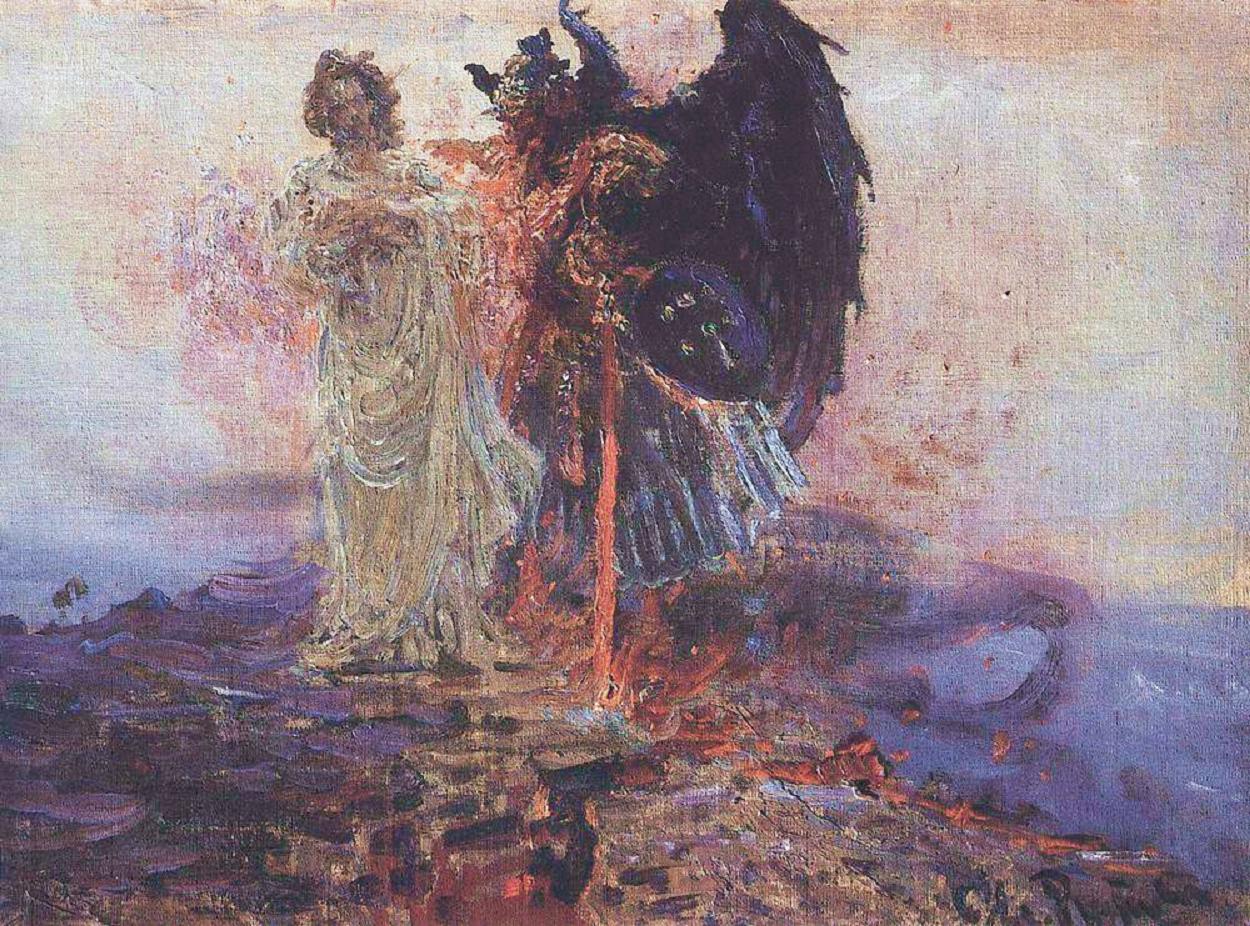
Ilya Repin's " Get Behind Me Satan "
Jesuit Father Gerry Blaszczak analyzes Pope Francis’ frequent references to the devil in terms of the doctrine of St. Ignatius of Loyola, which emphasizes the grim work of the enemy to discourage and spread despondency among those who are attempting to live a spiritual life.  We are all familiar with the dynamic of temptation, which often has a very optimistic dimension.  The forbidden fruit promises a happiness which we are led to believe God cannot give, or refuses to give.  But everything changes once we consent, unless we have managed to deaden our consciences.  The Liar becomes the Accuser and our entanglement with sin becomes a more and more morbid preoccupation with our own negative spiritual experience.  This is hardly optimistic.  It is also why Satan appears as an angel of light, and why in a particular way, he uses the image of woman, depersonalized and debased, to falsify the way of beauty.  We need to be convinced that something that feels so good cannot possible be wrong, and so pornography becomes art, sex becomes mysticism and sodomy becomes marriage.  This is Satan’s “optimism.”
Link (here) to Mary Victrix  to read the full piece

Friday, May 31, 2013

Georgetown Hardly Reflects That St. Ignatius Who Stood Preaching In The Pouring Rains Of Paris To Stop Young Men From Losing Their Souls For The Sake Of Carnality,”

Academy Award winner William Peter Blatty, whose best-selling book and blockbuster film The Exorcist were situated at his alma mater, Georgetown University, announced today that he has delivered a “Petition” on behalf of more than 1200 alumni, students, parents, teachers, and other laity from around the world. The “Petition” prays that the Catholic Church will grant several remedies, including, if made necessary, the removal or suspension of top-ranked Georgetown’s right to call itself Catholic and Jesuit in its fundraising and representations to applicants. The Petition cites a Vatican Decree issued on July 11, 2012, at the request of the Archbishop of Lima, that ordered the Pontifical Catholic University of Peru, a very prominent Latin American university, to cease calling itself “Catholic” and “Pontifical” while declaring that it continued to be ecclesiastical property and subject to the requirements of Church law. On the order of Pope Benedict XVI, the Vatican Secretary of State, Cardinal Tarcisio Bertone, based the decision on the university’s failure to comply with Ex corde Ecclesiae, the 1990 Apostolic Constitution for Catholic Universities and that the University of Lima persists “in continuing to orient its institutional initiatives according to standards that are inconsistent with the norms and morality of the Church.”
Georgetown University is, likewise, Church property legally entrusted to the Society of Jesus nearly 200 years ago and to a civil corporation that administers it. Georgetown also received a pontifical charter that has never been abrogated.
The Georgetown effort was first announced two months before the Peru decree, on the heels of an unprecedented rebuke of Georgetown and its first lay president by His Eminence, Donald Cardinal Wuerl, the Roman Catholic Archbishop of Washington, over Georgetown’s invitation to HHS Secretary Kathleen Sebelius to be a graduation ceremony speaker in may 2013. 
Despite this and two petitions collecting almost 60,000 voices, Georgetown did not relent. The editors of the Archdiocesan newspaper wrote in an editorial then regarding Georgetown: “When the vision guiding university choices does not clearly reflect the light of the Gospel and authentic Catholic teaching, there are, of course, disappointing results.” The Father Kings Society’s Canon Law action, based on Georgetown’s failure for more than two decades to comply with the requirements of Ex corde Ecclesiae, was being planned even before the Sebelius scandal. 
“The Scandals that Georgetown has given to the faithful are too many to count, and too many to ignore any longer,” Blatty said. “Today Georgetown is the Borgia university, reflecting more the spirit of Alexander VI, than of Archbishop John Carroll, John Henry Cardinal Newman, or Pope John Paul II. Georgetown hardly reflects that St. Ignatius who stood preaching in the pouring rains of Paris to stop young men from losing their souls for the sake of carnality,” Blatty said. 
Link (here) to The Father King Society to read the full release.

Tuesday, May 28, 2013

Southern Baptist Professor Molly T. Marshall On St. Ignatius Of Loyola

Molly T. Marshall
St. Ignatius of Loyola sent people on mission with this instruction: “Go, set the whole world on fire and in flame.” Fueling destruction was not on his mind. He had already seen enough of the travesty of war, having been seriously wounded in the Battle of Pamplona in 1521. Rather, he was concerned with fomenting desire for God and passion for the gospel. History tells us that his Society of Jesus was an ardent mission movement, proclaiming grace and forgiveness in places newly discovered in the 16th century.
Stirring into flame this “holy longing” to love God and serve expansively depends upon receptivity to the Spirit of God. It is the Spirit within who wills to work through us for God’s good purposes. Yet, many Christians regard the listing ways of the Spirit with suspicion, perhaps because we can never control holy presence.
The celebration of Pentecost is gaining ground among Baptists as we become more acquainted with the rhythms of the Christian year. Wearing hues of orange and red, hearing Scripture read in several languages, viewing moving streamers, reminiscent of wind, flames and tongues, will add a rather exotic touch to worship this coming Sunday. The more liturgical pastors will wear their bright red stoles, looking combustible as they seek once more to describe the coming of the Spirit.........Anywhere persons are growing in generosity, as St. Ignatius prayed, to “give without counting the cost.” Anywhere persons are laboring without expecting any reward other than to hear, “Well done, good and faithful servant.” Is God’s Spirit as active today as in the early fervor of proclaiming the resurrected Lord? Yes, if we are willing to make room for the Spirit. The Holy Spirit is God present with us, transforming us to live into the patterns of resurrection so that our hearts burn within us for the sake of the world as we travel in Christ’s company. Come Holy Spirit; set our hearts on fire.
Link (here) to read Molly T. Marshall full piece

Friday, May 24, 2013

It Was In That Cave Where He Wrote The Spiritual Exercises

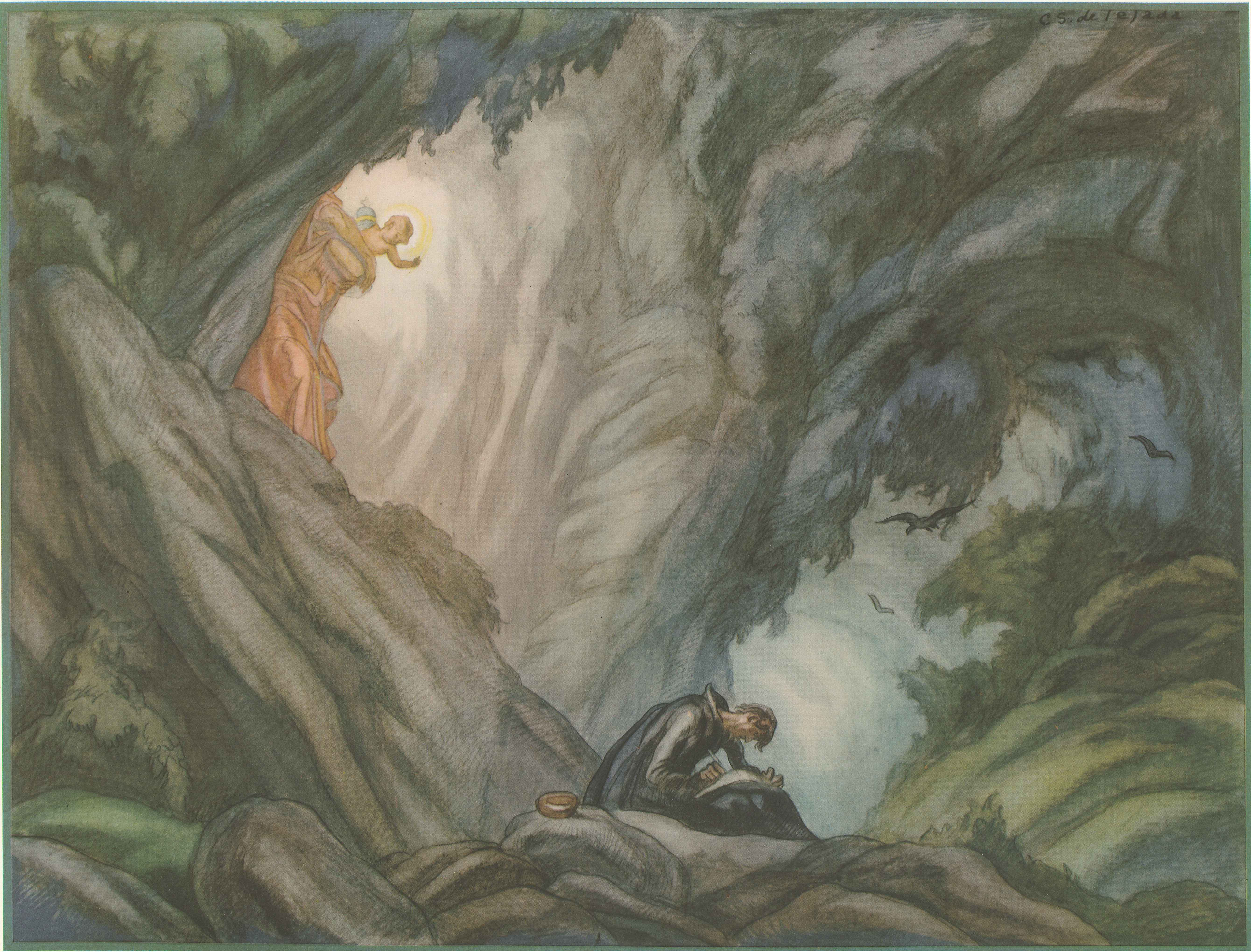
Priest Josep Maria Bullich, S.J. attends a mass at the Cave of Saint Ignatius of Loyola in Manresa, Spain. Saint Ignatius of Loyola, founder of the Company of Jesus, arrived in Manresa in March 25, 1522 after leaving his sword and knife at the altar of Our Lady of Montserrat. He stayed in a cave outside the town for 10 months. He spent hours each day praying and working in a hospice. It was in that cave where he wrote the Spiritual Exercises, a compilation of meditation, prayers and contemplative practices guiding to find God in all things that is one of the central characteristics of Jesuit spirituality. Pope Francis has been the first Jesuit elected as Pope.
Link (here) to The Windsor Star

Tuesday, May 21, 2013

First, In The Purgative Way; Next, In The Illuminative; And Finally, In The Unitive.

St. Ignatius of Loyola, the founder of the Society of Jesus, should be ranked among those apostolic the ministry of salvation and taught the principles of holiness. Truly he was born to help men. God taught him much, and from these heavenly communications Ignatius composed his admirable book of Exercises. This work is exceedingly well fitted to direct souls in the paths of salvation and perfection,  The clients of this great Saint then look upon him as a mediator and a patron in the important matter of eternal salvation, and as a guide and pattern in the dangerous paths of the spiritual life. The virtues of Ignatius, therefore, which are herr proposed for meditation, will be arranged in accordance with the three degrees of the spiritual life.
men who have exercised
Hence, the Saint will be presented as a bright model—first, in the purgative way; next, in the illuminative; and finally, in the unitive. 
At the end some considerations will be added on the Saint's most precious death. Each meditation will be accompanied by a prayer to St. Ignatius, three of his practical sayings, an example, a practice, and an aspiration to be made frequently during the day. The meditations will be ten in number, in memory of the ten months which St. Ignatius spent at Manresa, amid great bodily sufferings and heavenly joys of soul. These meditations can be used for the ten Sundays, or for the nine days proceeding the Saint's feast; and for the feast itself, in order to secure his powerful protection and obtain the grace to imitate, in some degree, his wonderful virtues. The meditations will also serve to gain more largely and surely the plenary indulgences, which two Popes granted for the purpose of promoting and spreading devotion to St. Ignatius. By the brief "Splendor Paterna gloria," our most holy Lord, Gregory XV., granted a plenary indulgence to all the faithful, who, on the feast of St. Ignatius, after confession and communion, shall pray for the Pope's intention in a church of the Society.
Clement XIII. graciously issued the following:
Decree.
Plenary indulgence of the ten Sundays in honor of St. Ignatius of Loyola, 
at the audience granted by the Holy Father, (January 27, 1767).

Moved by the humble prayer of Lawrence Ricci, General of the Society of Jesus, our most holy Lord, Clement XIII., kindly granted a plenary indulgence for all their sins to all the faithful, who, on ten consecutive Sundays before the feast of St. Ignatius, or on any other ten Sundays of the year, shall, with true repentance, confess their sins, go to communion, make pious meditations, pray or perform other Christian works in honor of the said Saint, and for the glory of God, and shall devoutly visit a church of the Society. This indulgence can be gained on any one of the ten Sundays. His holiness willed that this favor should hold good for all time to come. 

Given at Rome, in the office of the Secretary of the Sacred Congregation of Indulgences, 
on the day and in the year of the aforesaid audience.
CARDINAL ANTONELLI. S. Borgia,
Secretary to the Sacred Congregation of Indulgences.
 
Link (here)

Wednesday, May 8, 2013

Wherein He Saw Christ Like The Sun

Carl Heinrich Bloch's Transfiguration

CONCERNING THE EXERCISES AND CONSTITUTIONS.

After this, I asked the pilgrim about the Exercises and Constitutions, that I might understand how he had written them. He replied that the Exercises had not been composed all at once, but that when he noticed anything profitable to himself he noted it down in any way which seemed likely to be of use to others, such as the method of examination of conscience by drawing lines and the like. 
In particular he declared that the method of election arose from that changeable state of mind he perceived in himself when he lay sick at Loyola of his broken leg. He told me he would answer my question about the Constitutions in the evening. He sent for me the same day before we had supped. 
At this time his countenance was as of a man abstracted from outward things beyond the common. He made a protestation which came nearly to this, that it showed with what simplicity and good intention he told these things, declaring that he knew for certain that he had exaggerated in nothing, and that, though he had often offended our Lord, yet he had never consented to mortal sin since he began to serve Him; yea, rather, his devotion and ease in finding God had continually increased up to this present, when it was greater than in all his life before; and now he could find God whensoever and as often as he would, and many visions were vouchsafed to him, the greater number like unto those before mentioned, wherein he saw Christ like the sun; and this came upon him often, tending to confirm him when he was speaking of matters of great moment.
Visions fell often to his lot when he celebrated the Sacrifice of the Mass, and again with exceeding frequency when he was fashioning the Constitutions. And this he could the more easily affirm for that he had written down daily what things were done in his soul, and he was even then looking out what he had written. 
Even as he spoke he showed me a moderately large bundle of papers collected out of his writings, and read me a good number of them. 
The greater part were visions confirming some of the Constitutions. In these he saw sometimes God the Father, sometimes the Trinity of Persons, sometimes the Most Blessed Mary, [now interceding, now approving. He spoke 'of two points in particular, in the determining whereof he had spent forty days, saying Mass daily, and with daily abundance of tears. 
The question was whether our church should have revenues, and whether the Society could make use of them. The method he observed in drawing up the Constitutions was to say Mass day by day, showing and offering to God each point whereof he treated, and praying about it. He offered his Mass and made his prayer always with tears. I wanted to read all those papers of the Constitutions, and besought him to let me have a short loan of them, but he would not.
Link (here) to The Testament of Ignatius Loyola: Being "Sundry Acts of Our Father Ignatius ... " By Saint Ignatius (of Loyola), Luis González de Cámara

Wednesday, April 24, 2013

St. Ignatius Said, “Hierarchical And Catholic.”

And so the Church was a Mother, the Mother of more children, of many children. It became more and more of a Mother. A Mother who gives us the faith, a Mother who gives us an identity. But the Christian identity is not an identity card: Christian identity is belonging to the Church, because all of these belonged to the Church, the Mother Church. Because it is not possible to find Jesus outside the Church. 
The great Paul VI said: “Wanting to live with Jesus without the Church, following Jesus outside of the Church, loving Jesus without the Church is an absurd dichotomy.” 
And the Mother Church that gives us Jesus gives us our identity that is not only a seal, it is a belonging. Identity means belonging. This belonging to the Church is beautiful. And let us ask the Lord for this parresia, this apostolic fervor that impels us to move forward, as brothers, all of us forward! Forward, bringing the name of Jesus in the bosom of Holy Mother Church, and, as St. Ignatius said, “hierarchical and Catholic.” So be it.
Link (here) to Fr. Z