Showing posts with label Jesuit History. Show all posts

Friday, June 6, 2014

The Jesuit Elephant

It seems that elephants roamed the Philippines not just in prehistoric times but as late as the 17th century, as Jesuit Ignacio Francisco Alcina in his multivolume “Historia de las islas e indios de Bisayas” (1668) as a “torre de carne” (tower of flesh) that some Christian saints referred to as “Goliath” because of the size. (The iconic Japanese monster Godzilla may not look like it, but its name when read in Japanese sounds like “gorilla.”)  Alcina noted that the Visayan word for elephant was “gadya,” and that the ivory (“garing” in Tagalog, hence one of the attributes of the Virgin Mary, “Tower of Ivory,” is “Torre ng Garing”) was used for bracelets, ear pendants, daggers and sword hilts, and even jewelry boxes.
described by the
According to Alcina, elephants were not to be found in the Visayas but in Jolo. These were smaller than elephants from Cambodia and India, and were prized for their: ivory tusks that were made into religious images of the Santo Niño, the Virgin Mary, and other saints; bones, similar to ivory, that were fashioned into jewelry; hide that was made into breastplates, helmets, and armor that protected the wearer from sword and lance but not from an arquebus or musket; and, last but not least, meat that was eaten, too!
Alcina wrote: “The natives of that island (Jolo) eat the flesh. One of our fathers who stayed there told me that he had eaten the meat and that it was tougher than beef and did not taste as good.” Elephants were said to be intelligent, hardworking, and fierce when provoked. They were modest, too. When told that elephants were never seen mating, that they concealed themselves when they mated, Alcina remarked: “A lesson in modesty for men who sometimes and even frequently lack the modesty which these brute animals observe so well.”

What I found fascinating, though, was the fact that Alcina saw elephants in Manila where they were received as gifts from Cambodia and neighboring countries. Alonso Fajardo, governor-general from 1618 to 1624, gave the Jesuits a tamed elephant that served them many years hauling logs, beams and posts during the construction of the Jesuit residence in the city.
Alcina talked fondly about their pet elephant and of its sad end:
“I have heard unusual and very strange stories related about it… I shall tell only one, which seems to have a connection with the friends of Bacchus (Greek god of grape growing and wine) of whom there are many here. It seems that if they were not watchful, he went to the wine cellar or store room, either at the Colegio or that of the Procurator General, sniffed out the casks which contained wine, very easily uncovered them with his trunk and siphoned out one entire cask at one time; thus showing his joy with a thousand gambols. If, perchance, he took in too much he would be intoxicated and cause some violence. However he was able to get out into the countryside until it passed; afterwards he returned to the house very docile.
“When he felt hungry, they say, he used to go among the houses of the natives; they knew what he wanted and gave him either rice or various fruits to eat. In this manner he went to many dwellings, as though asking alms, until he was satisfied. He approached the doors of the houses of those who would not give him anything and struck the posts and tore them off and flattened the houses, thus they were careful to give him something immediately so that he would not harm them. This happened when days passed without his returning to our house where what was needed was given him.
“He lived for years until a Brother of ours, angered by some mischief or other, whether stealing food or drink, who was in a house in the field where the elephant was taken to haul logs, which were newly cut, fastened the beast with strong ropes to a large tree and left him there to die of hunger. Since this animal had cost him little, he was little concerned about it perishing.”
Quite a sad end for the pet elephant in the 17th-century Jesuit house in Manila whose name is lost to history. I hope that inhumane Jesuit brother was castigated in life and in the hereafter for his cruelty.

Link (here) to The Inquirer

Monday, May 26, 2014

Fr. William Doyle, S.J. Chaplain Of The Battle of Ypres "They Speak His Name With Tears"

[The following letter, written by Father William Doyle a few days before he was killed during the advance of Irish troops north-east of Ypres on August 17th, 1917, is a chapter of autobiography needing the fewest possible notes in its elucidation. This Jesuit Chaplain of the Irish Province was the son of Mr. Hugh Doyle of Dalkey, co. Dublin, for many years Registrar of the Dublin Bankruptcy Court; he was forty-four years of age when he wrote this to his father, aged eighty-six.* Educated at Radcliffe by the Rosminians, William Doyle nevertheless became a Jesuit. He studied in Belgium, was ordained at Milltown Park in 1907, was Professor at Clongowes (where he founded and edited The Clongovmian) and subsequently laboured in Limerick and in Dublin. In November, 1915, the call to more strenuous service came to him, and three months later he went to the Front with the 16th Irish Division. For his bravery at Ginchy he was awarded the Military Cross, and he was afterwards commended by his Commanding Officer for the V.C., which, however, he was not to receive. As a preamble to his own letter may be quoted a line from that of a brother-chaplain, written about Father Doyle before his death : "He is a marvel. They may talk of heroes and saints—they are hardly in it!" That exclamation neither the saints nor heroes aforesaid, nor yet the eighth Urban of the scrupulous Decree, will in anywise take amiss.]

July 30th, 1917.—For the past week we have been moving steadily up to the Front. It was half-past one a.m. when our first halting-place was reached, and we marched again at three. It was the morning of July 31st,. the Feast of St. Ignatius, a day dear to every Jesuit, but doubly so to the soldier sons of the soldier Saint. Was it to be Mass or sleep ? Nature said " sleep," but grace won the day; and while the weary soldiers slumbered the Adorable Sacrifice was offered for them. As we fall into the line once more the dark clouds are lit up with red and golden flashes of light, the earth quivers with the simultaneous crash of thousands of guns—the Fourth Battle of Ypres has begun. . . . The road was a sight never to be forgotten. On one side marched our columns in close formation. On the other galloped by an endless line of ammunition waggons, extra guns hurrying up to the Front, and motor-lorries packed with stores of all kinds ; while between the two flowed back the stream of empties and ambulance after ambulance filled with wounded and dying. We marched on through the City of the Dead—Ypres, out again by the opposite gate. A welcome halt at last, with perhaps an hour or more of delay. At that moment the place for sleep did not matter two straws—a thorn-bush, the bed of a stream, anywhere would do to satisfy the longing for even a few moments of slumber after nearly two days and nights of marching without sleep. I picked out a soft spot on the ruins of a home, laid me down with a sigh of relief.
August 1st.—Morning brought a leaden sky, more rain, and no breakfast. Our cook, with the rations, had got lost during the night, so there was nothing for it but to tighten one's belt.
Sunday, August 12th —We have just got back to camp,, after (for me at least) six days and seven continuous nights on the battle-field. I shall give you the principal events of these exciting days, as I jotted them down in my notebook. (August $th.) All day I have been busy hearing the men's confessions, and giving batch after batch Holy Communion. My poor, brave boys—they are lying on the battle-field, some in a little grave dug and blessed by their chaplain, who loves them all as if they were his own children. Do you wonder that, in spite of the joy that fills my heart, many a time tears gather in my eyes as I think of those who are gone ? As the men stand lined up on parade I go from Company to Company giving a General Absolution, which I know is a big comfort to them. Then I shoulder my pack and make for the train which, this time, is to carry us part of our journey. "Top-end for Blighty, boys; bottom-end for Berlin !" I tell them as they clamber in, for they like a cheery word. "If you're in Jerryland, Father, we're with you too," shouted one big giant, and is greeted with a roar of approval.

Sunday, May 25, 2014

The Eight Jesuits Say "We Believe That We Survived Because We Were Living The Message Of Fatima. We Lived And Prayed The Rosary Daily In That Home."

Father Hubert Shiffer was one of these eight Jesuit survivors. He was 30 when the atomic bomb exploded at Hiroshima and lived another 33 years in good health. He recounted his experiences at Hiroshima during the Eucharistic Congress held in Philadelphia (USA) in 1976. At that time, all eight members of the Jesuit community were still alive. Fr. Shiffer, on the morning of August 6, 1945, he had just finished Mass, went into the rectory and sat down at the breakfast table, and had just sliced a grapefruit, and had just put his spoon into the grapefruit when there was a bright flash of light. His first thought was that it was an explosion in the harbor (this was a major port where the Japanese refueled their submarines.) 
Then, in the words of Fr. Schiffer: "Suddenly, a terrific explosion filled the air with one bursting thunderstroke. An invisible force lifted me from the chair, hurled me through the air, shook me, battered me, whirled me 'round and round like a leaf in a gust of autumn wind." 
The next thing he remembered, he opened his eyes and he was laying on the ground. He looked around and there was NOTHING in any direction: the railroad station and buildings in all directions were leveled to the ground. The only physical harm to himself was that he could feel a few pieces of glass in the back of his neck. As far as he could tell, there was nothing else physically wrong with himself. After the conquest of the Americans, their army doctors and scientists explained to him that his body
would begin to deteriorate because of the radiation. To the doctors amazement, Fr. Schiffer's body contained no radiation or ill-effects from the bomb. Conclusion: There are no physical laws to explain why the Jesuits were untouched in the Hiroshima airblast. There is no other actual or test data where a structure such as this was not totally destroyed at this standoff distance by an atomic weapon. All who were at this range from the epicenter should have received enough radiation to be dead within at most a matter of minutes if nothing else happened to them. There is no known way to design a uranium-235 atomic bomb, which could leave such a large discrete area intact while destroying everything around it immediately outside the fireball (by shaping the
plasma). Not only did they all survive with (at most) relatively minor injuries, but they all lived well past that awful day with no radiation sickness, no loss of hearing, or any other visible long term defects or maladies. Naturally, they were interviewed numerous times (Fr. Schiffer said over 200 times) by scientists and health care people about their remarkable experience. 
The eight Jesuits say "we believe that we survived because we were living the message of Fatima. We lived and prayed the rosary daily in that home." Fr. Shiffer feels that he received a protective shield from the Blessed Mother which protected him from all radiation and ill-effects. Fr. Schiffer attributes this to devotion to the Blessed Mother, and his daily Fatima Rosary; "in that house the Holy Rosary was recited together every day." 
Of course the secular scientists are speechless and incredulous at this explanation - and they are sure there is some "real" explanation - but at the same time over 50 years later the scientists are still absolutely bamboozled when it comes to finding a plausible scenario to explain the missionary's unique escape from the hellish power of that bomb. From a scientific viewpoint, what happened to those Jesuits at Hiroshima still defies all human logic from the laws of physics as understood today (or at any time in the future). It must be concluded that some other (external) force was present whose power and/or capability to transform energy and matter as it relates to humans is beyond current comprehension; a plausibility argument for the existence of a Creator who left his "calling card" at Hiroshima. 
Link (here)

Saturday, April 26, 2014

Fr. James Martin, S.J. On The Sacking Of Padro Arrupe By Blessed John Paul The Great

I had my differences with Pope John Paul II, technically my former boss.  (Who doesn't disagree with the boss from time to time?)  He wasn’t always the biggest fan of the Society of Jesus (aka the Jesuits, my religious order), though some of his suspicions seem to have originated with some of his advisers.  
When, in an unprecedented move in 1981, he suddenly removed Pedro Arrupe, the beloved superior general of the Jesuits, from his post, a great many Jesuits were both dismayed and angered.  John Paul, suspicious of the Jesuits’ work in “liberation theology” (an approach that emphasizes the liberation of the poor from suffering, as Jesus had), was apparently told by some advisers that the Jesuits would be disobedient after his public sacking of Arrupe.  
We were not.  Over the years, multiple sources have told me that John Paul was surprised by our fidelity--and pleased.  It changed his view of the Jesuits.
Link (here) to read the full post by Fr. James Martin, S.J. at America's blog In All Things
Superior General Pedro Arrupe, S.J. in a written response to the Holy Father Pope John Paul II "On regrettable shortcomings of the Society of Jesus" (here)

Monday, April 21, 2014

Easter Monday Of 1859

Notre Dame de Paris

It would be difficult to form an idea of the crowd of men that besiege the houses of the Jesuits toward the end of Lent, and one often wonders how the health of these Fathers, generally so delicate, can withstand the fatigue of hearing so many confessions. When they have been engaged in that occupation during the whole day, one or more will come in after time in the evening, or at night, and still the door is opened, and they find the Father they ask for, receiving them with open arms. For a sinner returning to God, a Jesuit never admits obstacle or delay. "At any hour of the day, at all hours of the night, we are ready to assist you," said Father Felix, at the close of one of his retreats. Father Lefebvre, who consecrates himself especially to the direction of men, was, one day, asked how many he had sent, for his share, to the General Communion at Notre Dame. "About eight hundred," was the answer. 
The Fathers seem never so happy as when, on Easter morning, they are worn out and speechless with fatigue—that is their alleluia !" You abuse your strength," said a friend to one of these indefatigable laborers; "nature can not bear such an excess of work." "After me—another" was the simple and almost careless reply. His Superior, to whom it was remarked, on Easter Monday of 1859, that he must be very much fatigued with the past week's labor, answered: "Ah, we have had great consolations! There have been many conversions; our ministry has been blessed; the confessionals were crowded. The Lord be praised!" 
Of his great fatigue, of his weak health—not a word! The ministry at Paris, during the winter, is overwhelming. When a Jesuit is exhausted, they give him a vacation; they send him to preach a retreat in the provinces. So as to lose no time, he travels by night, and generally ascends the pulpit on the day of his arrival. After the first exercises, he is called to hear confessions, and thenceforth all his time is divided between the pulpit and the confessional; that is what they call vacation. 
Link (here) read the full account of the Parisian Jesuits in the book entitled, The History of the Society of Jesus

Friday, April 18, 2014

Fr. Herbert Thurston, S.J. On Good Friday

There is every reason to believe that these solemn prayers in our Good Friday service date back at least to the time of John Cassian and St. Jerome. Very possibly they formed an almost invariable adjunct to the three lessons and the psalmi responsorii, of which, as was said above, the non-liturgical synaxes mainly consisted. In the middle ages I think that they still survived in our English churches in the prayers known as the bidding prayers, and in France in the prieres du prone. 1 But although they must thus have been an almost, daily feature in the life of the Christians of the fourth century, it is only on this one occasion in the whole year that they are heard in our churches now. Probably the apparently meaningless Oremus, which is said in the Mass before the antiphon called the Offertory, marks the place where once they stood.

THE ADORATION OF THE CROSS

After the solemn prayers the next feature which meets us in the morning office of Good Friday is the rite which in the Latin books is described as adoratio crucis, but which amongst our English forefathers was known as the creeping to the cross. There is not, I think, any sufficient reason for dwelling upon the preliminary ceremonies with which that most impressive function is introduced. I content myself with reproducing the rubrics in the Holy Week book, which sufficiently explain the details of what is done. After reading the foregoing prayers the priest puts off his chasuble, and taking down the cross, covered with a veil, from the altar, he goes with the deacon and subdeacon to the Epistle corner of the altar, where he uncovers the top of it, and shows it to the people, singing with the deacon and subdeacon the following Anthem :

Latin

Ant. Ecce lignum crucis
in quo salus mundi pependit.

English

Ant. Behold the wood of the cross, on which
hung the salvation of the world.


To which the choir, prostrate on the ground, answer :

Venite, adoremus. Come, let us adore.

From thence the priest proceeds again to the Epistle corner, where he uncovers the right arm of the cross, singing a second time, in a higher key,

Ecce lignum, etc.,

as before. Lastly, he goes to the middle of the altar, and uncovers the whole cross, singing a third time, still higher,

Ecce lignum, etc.

After which he carries it to a place prepared before the altar, where himself first kisses it, and then all the clergy and laity, two and two, kneeling thrice on both knees, and kissing the feet of the crucifix. During this ceremony two chanters in the middle of the choir sing the following verses, wherein the Redeemer of the world is represented as reproaching the Jews for their ingratitude..

Latin

POPULE meus quid feci tibi ?
aut in quo contristavi te ?

Re-sponde mihi.

V. Quia eduxi te de terra Egypti:
parasti crucem Salvatori tuo.

English

My people, what have I done to thee ?
in what have I grieved thee?

Answer Me.

V. Because I brought thee out of the land of Egypt:

Thou hast prepared a cross for thy Saviour

St. Ignatius, As The Servant Of God

Saint Ignatius came back from St. Paul's this bright Easter week in April, on a Friday, one of the greatest men of modern days. The world, if it has not recognized the saint, has recognized the society he formed, and the place he filled in it. When he stood on the threshold of their house, his institute numbered but a few; yet it had made good progress for the short time of its existence. Besides the professed fathers, some were studying in Paris, and about twelve were in Rome. They had survived persecution and turned bitter enemies into ardent friends, and they had separated to go where the successor of St. Peter had pointed out. They had done wonders of charity; and the church had now acknowledged them as a new development of the love of God.
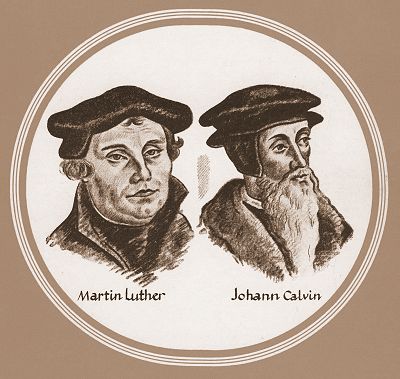
With Luther and Calvin, a new trial had fallen upon Christendom, and the Society of Jesus was just what the Church at that moment wanted.
A cry had arisen against religious orders. And this cry was met, not by a cowardly hiding of the evangelical councils as a cause of offence, but by the confirmation of a new order, which was to live in the world's sight, and whose enclosures were to be nothing less than the boundaries of the earth. Ignatius, as the servant of God, now began his generalship, by setting his house in order and writing the constitutions. We look on these acts with a peculiar interest.
Link (here)

Saturday, April 5, 2014

Jesuit History Up For Sale In Arizona

The owners of a historic southern Arizona ranch where past guests include President Lyndon B. Johnson and John Wayne said Wednesday they are holding out hope for a buyer. Veronica Schultz, 62, said that she and her husband, Richard, have only taken a few calls from people interested in looking at Rancho de la Osa in Sasabe, which lies about 71 miles south of Tucson. They plan to close the site as a guest ranch June 25.
``If it has not been sold or there isn't an offer pending, or something, then we are thinking of becoming the Inn at Rancho de la Osa,'' Veronica Schultz told The Associated Press. ``So an inn but with no horseback riding. That way we could rest for up to four days.'' 
 According to the Arizona Daily Star, the couple is asking $1.9 million for the 239-acre facility which includes nine buildings, 19 guest rooms and a cantina. The ranch, which dates back to 1725, has changed ownership over the years. Originally built by Jesuit priests, the property was a trading post for local tribes as well as a sanctuary for traveling missionaries working for Jesuit priest Eusebio Francisco Kino. 
The ranch was attached to the Gadsden Purchase in 1889 and bought by Col. William Spencer Sturgis. The colonel branded it as La Osa Ranch and added more structures and ran a thriving cattle ranch operation. Investors operated the ranch from 1927 to 1996 when Richard and Veronica Schultz bought it for $800,000. ``It's a signature property in Southern Arizona,'' said Gary Brasher, associate broker with Russ Lyon Sotheby's International Realty which is handling the sale. Brasher said the next owner could keep it as a guest ranch or turn it into a wellness spa or make it a private estate. The couple said they are ready to retire and travel. The demands of running the place last around the clock and they can't keep up. ``I'm the cleaning lady and I'm the pool boy,'' said Richard Schultz, 68. The couple, who plans to settle in a home in Oro Valley, knows their ideal buyer.``I just hope somebody with  as much enthusiasm as us for the property buys it and keeps it going. It's a really special place,'' Veronica Schultz said.
Link (here)

Wednesday, March 19, 2014

On The Restoration Of The Society Of Jesus

This year marks the 200th anniversary of the restoration of the Society of Jesus. For 41 years the Jesuits were in the darkness of suppression. Its story of apparent death and ultimate resurrection can give us great hope.
Link (here) to God in All Things

Monday, February 10, 2014

The Typus Mundi

The titlepage of the Typus mundi says: RR.C.S.I.A. These initials represent 'Rhetoribus Collegij Societatis Iesv Antuerp'1, the Jesuit Order of Antwerp. The book has been composed by senior students of the class of Humanities. Each of them created three or four emblems, including a long Latin poem and short poems in French and Dutch. The names of the students are mentioned after the thirty second and last emblem: Egidius Tellier, Balthasar Gallaeus, Gerardus van Rheyden, Ioannes Waerenborch, Ioannes Moretus, Ioannes Tissu, Nicolaus Coldenhoue, Philippus Helman and Philippus Fruytiers; people of whom we do not know much. At the time Jean Matthiae (1601-1669) was their professor of rhetoric. Such a way of teaching was normal within the Jesuit colleges. The colleges provided a humanist education for a large part of the population. Young people were taught Latin and Greek and rhetorics. In the senior classes they were able to use the classical models and to create persuasive texts. So emblematics had been included into the curriculum for its rhetorical function. Making the emblems themselves, the lecturers learned even better how convincing the rhetoric instrument could be. Emblems in the Typus mundi emphasize the joy the students had in appealing to their wit. The collection they created has less to do with the devotional emblem books the Jesuit Order produced in the same era. In that context images and poetry together supported the exercising of faith, certainly a different aim.
About the Typus mundi

Jan Cnobbaert published the Typus mundi in 1627. The full Latin title means Image of the World, in which Calamities and Perils are emblematically presented along with the opposition in feeling between the Love of God and that of man. These calamities and perils are pointed out in all kinds of objects representing human failures. Swords and crowns for instance, represent the dangers of human power. Furthermore a lot of familiar habits pass by, like pride and vanity. Sometimes the examples are somewhat odd and very humorous: Cupid crushing the world with all its goods with a machine (Erit ex hoc æquior Orbis [31]) or Cupid playing pool using globes as pool balls (in Hâc vincitur, illâc perditur [26]).

The cuts are by Phillip de Mallery (1598-?). Some of the them were already used for the Amoris divini et humani antipathia (1626). But the Typus mundi must have had a larger in influence on the Amoris divini et humani antipathia than vice versa. Some illustations of the Typus mundi can be found in the edition of 1629 of the Antipathia.
A portrait of St. Ignatius Loyola fills the frontispiece, properly speaking the thirty third emblem. Loyola is standing on top of the world, looking into heaven. He despises what is below and respects what is above. Only the important places on earth are marked - the Jesuit seminaries or colleges.
Without any doubt the four editions of the Typus mundi (1627, 1630, 1652 and 1697) proof that it has been a popular book. In addition a part of the emblems has been copied in the first and second book of Francis Quarles's Emblemes (1635). More important is the influence on the Poirters, Ydelheit des weerelts, which exploited the success of its ancestor. 
Link (here) to the Typus Mundi

Monday, December 9, 2013

A Jesuit On The Creche

'Christ plays in 10,000 faces'
Crèche exhibit casts new light on message of Jesus' Nativity

CLAUDIA BAYLISS

For some married couples, a special aura surrounds their first Christmas. That was true for James and Emilia Govan.Together, they purchased their first crèche in 1962. Then, after a few years, they bought a second one. When several more years passed and they acquired a third, they wondered, Jim Govan says, what they were going to do with three Nativities.Although the Govans didn't know it at the time, that question, which led to their decision to collect Nativity scenes, planted the seed for the exhibition now on display at Loyola University Museum of Art in Chicago."Art of the Crèche: The James and Emilia Govan Collection" grew out of what Jim and Emilia shared: the Roman Catholic faith, an attraction to art and -- rooted in their Lithuanian and Italian immigrant backgrounds -- an interest in different cultures.The couple's collection grew slowly at first, Govan recalls during a recent interview by telephone. But in the early '80s, when they had about 20 Nativities and Jim had started reading up on the crèche's history, he and Emilia decided they wanted to document their budding collection. They wanted to learn as much as they could about the lives of the artists and artisans who made them, as well as the materials they used and how the crèches were made. Today, Govan continues to build the collection, in memory of his wife, who died in 2000. He has more than 450, all stored at his home, and has displayed them in churches and other venues -- including the Pope John Paul II Cultural Center in Washington, from 2001 through 2005.The first crèche they bought, however, never leaves Govan's Arlington, Va., home. "It represents in so many ways," he says, "the life I had with my wife. The bond and joy we had together."Although people tend to seek out traditional crèches, Govan's collection, by choice, includes many that are indigenous. The diverse cultures they represent and the sometimes unusual materials they are made of -- including potato clay and cinnamon paste -- draw people in, though. Curiosity about their own ethnic backgrounds leads many to ask, as one person recently did, "Do you have one from Slovakia?" Or Korea? an adopted child wanted to know. He does, he told them, stored in his home.Making the story theirs It's easy for a LUMA visitor to see the collection's enormous appeal. Like the stained-glass windows and Mystery Plays that predate them, crèches tell the story of faith, the


Rev. Mark Bosco says.
The Jesuit priest, an assistant professor of theology and English at Loyola University, gave a talk on the history of the crèche at LUMA on Nov. 27. When the first missionaries were sent out from Europe, "one of the first things they brought with them was the story of the Nativity," Bosco says. Jesuit records show, he adds, that the people they met -- whether from Japan, India, South America, wherever -- "were carving Mary, Joseph and Jesus with the cultural and human characteristics of their own people." Early Christians focused on the cross -- the Crucifixion -- because they saw celebrations of births "as a pagan, a Roman thing," he says. But when the Emperor Constantine issued an edict legalizing Christianity, and after his mother, St. Helena, brought back to Rome from the Holy Land a relic of Jesus' manger, Christians began to focus their attention on His Nativity. Nativities were displayed in the great cathedrals. Then, over time, they became "domesticated," Bosco says, moving into people's homes.
The movement to greater inclusiveness also was occurring in Europe in the 16th century. The Duchess of Amalfi ordered a crèche made in Naples that included 167 figurines, Bosco says. There was the butcher, the baker, and all the other members of a village and the guilds active at that time. The unique Nativity scenes that reflect their makers' cultures communicate the universal need to feel "we belong," Bosco says. "I'm part of this family."

Sunday, November 17, 2013

200 Year Anniversary

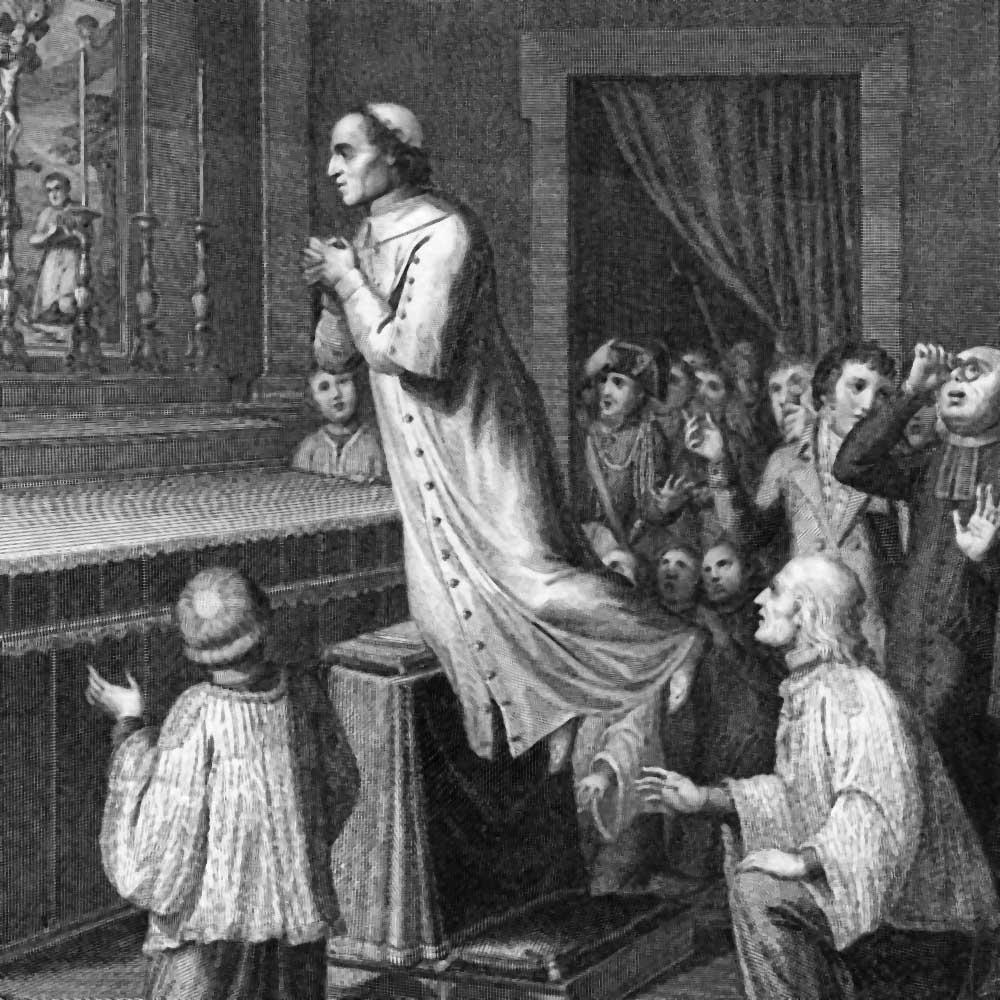
The miracle of Pope Pius VII 'levitating' at Mass on 15 August 1811
The superior general of the Society of Jesus, the Church’s largest male religious institute, has issued a letter commemorating the upcoming bicentennial of the institute’s restoration with the issue of Solicitudo omnium ecclesiarum. by Pope Pius VII. Founded in 1534, the Church’s largest male religious institute was suppressed by Pope Clement XIV in 1773 under political pressure. Father Adolfo Nicolás, the superior, proposed five themes for the 2014 bicentennial year: “creative fidelity,” “love for our Institute,” “fraternal companionship,” “universal mission,” and “faith in Providence.” 

Link (here) to Catholic Culture

His Excellency The Marquis of Pombal, "The Slayer Of The Jesuits"

POMBAL.
"EL MATADOR DOS PADRES."
In one of the principal squares of Lisbon may be seen the statue of King Joseph Emmanuel, son of John V., Don Sebastian Carvalho y Melho, Count d'Oeyras, Marquis de Pombal. The relative position of the figures ought to have been reversed. The minister was the tyrant of the monarch, as well as the scourge of his subjects. In the present notice we shall limit ourselves to giving an account of the manner in which the Marquis de Pombal earned his title of "Slayer of the Fathers," after enumerating the causes of his enmity against the Company of Jesus.
King of Portugal. At the foot of the statue is represented his Minister of State,
Pombal, who was a "philosophic" atheist and an encourager of the Calvinists, had certain reasons of private ambition for wishing to introduce Protestantism into Portugal. While pretending outwardly to be the enemy of the English, he was secretly doing all in his power to bring about a marriage between the Princess de Beira and the Duke of Cumberland —a marriage which would have eventually entitled the latter to the crown of Braganza. Like the rest of the Portuguese, the Jesuit Fathers were naturally opposed to English and Protestant domination in their own country. They were confessors to all the royal family, and Pombal regarded them as the chief obstacle in the way of his designs—an offence which he never forgave them.
.........Pombal was a great builder of prisons. The number of his victims demanded considerable accommodation, for at one particular time in Lisbon he had more than four thousand prisoners of state, and this in a capital of (at that period) one hundred and fifty thousand inhabitants. Dona Eleanora, the Dowager Marchesa de Tavora, was separated from her children. Masters and servants, men and women, disappeared as if the earth had swallowed them up. In letters of the time we find that Pombal was enraged on discovering that some poor ameliorations had been made in the dreadful state of the captives by the pity of subalterns. Besides the De Tavora family a large number of hidalgos had also been arrested and thrown into dungeons that same night. 
Among them was the greatest noble of Portugal, Don Jose de Mascarenhas y Lancastre, Duke of Aveiro and cousin to Dona Eieanora. Several of the Jesuit fathers, amongst whom was the confessor of the Prince Don Pedro, Father Hyacinth da Costa, were also suddenly carried off to prison.
All Lisbon was paralyzed with terror. A hand of iron weighed upon the city. In the streets nothing but mercenary soldiers were to be seen, and the king no longer went out of his palace. Whoever dared to express doubt as to the guilt of the arrested persons, or the least pity for them, was summarily arrested also. According to the laws of Portugal accused persons had a right to be judged by their peers. Pombal denied his victims the benefit of this right. He created a tribunal composed of creatures of his own, and entirely devoid of legal authority. 
This tribunal lie named the "Court of Mistrust," and over it he appointed himself president. As it was not yet, apparently, so much a question of the Jesuits as of the nobility, the French Encyclopaedists were somewhat offended at these monstrosities, and we hear of the "bad effect" produced in the philosophic world of Paris by the frightful vagaries of Pombal, whom, nevertheless, it was desirous to excuse as far as possible, on account of his "generous ideas." Not content with presiding, Pombal took upon himself the "examination" and "instruction " of the cases. It was he who gave the verdict and pronounced the sentence, which still exists, written by his own hand. 
And how was the examination conducted? By intimidation of every kind, shamelessly employed, by "testimony invented," and witnesses forced by torture to assent to accusations which they were never allowed to retract, and thus furnishing a reason for a judicial carnage the attendant horrors of which are, perhaps, unparalleled in the history of any civilized nation. The Tavora family, as well as the other accused, remained silent under the fearful torments to which they were subjected, with the sole exception of the Duke d'Aveiro, who, in the extremity of agony, half dead as he was, and not knowing what he said, assented to whatever was put in his mouth, and thus accused his fellow-prisoners and— the Jesuits. Pombal, on hearing this, uttered an exclamation of ferocious joy. He had obtained what he wanted. What this implied we shall see further on. No sooner had the unfortunate Duke d Avei'ro recovered his senses than, learning what he had done, he retracted, declaring that excess of torment alone had wrenched from him accusations against persons who were innocent. It is needless to say that his earnest entreaties had no effect in inducing Pombal to allow his retractation. Sentence of death was pronounced against the De Tavora family, their relations and friends, as well as all their numerous domestics and dependants, on January 12, 1759. Pombal, fearing the popular indignation, had the scaffold prepared by night, outside the city, in the ■ Plaza of Belem, which was occupied by two regiments of mercenaries. 
The platform, lighted by torches, rose eighteen feet from the ground. The square and the river side were so thronged with soldiers that the spectators took refuge on the Tagus, where from hundreds of boats and other craft arose a mingled murmur of groans and curses. Thus passed the night of January 13. With the first gray sign of dawn arrived the numerous domestics of the Duke d'Aveiro. These were all bound to stakes at one corner of the scaffold and burnt alive. 
Then followed the Marchesa Eleanora de Tavora, alone; a rope round her neck, a crucifix in her hand, and her garments torn into rags by the torture. Pombal was there; for his Memoirs give, with a sort of infernal satisfaction, the full details of which he was an eye-witness on this night. With calm dignity Dona Eleanora mounted the scaffold, pressing to her heart the image of her God. The executioner approaching to bind her feet, she said to him gently : " Man, I pray you not to forget who I am. Do not touch me except to kill me." The man knelt down before her (Pombal himself relates it). Dona Eleanora was of those races who leave no service, even the last, without its recompense. Drawing her ring from her finger, she held it out to him, saying: " Every work deserves its reward. This is all I have, and 1 give it you that you may do your duty well." The executioner rose and did his duty. After this first noble blood had reddened the block the aged Marquis de Tavora, Dona Eleanora's husband, was beheaded, and next the husband of that Dona Teresa who had brought death and destruction on the noble house into which she had been welcomed as a beloved daughter. Then followed the other sons of Dona Eleanora— the youngest of whom was not twenty years old—her daughters, and her son-in-law; then the long file of officers and servants of her household, who died in their torments like brave men and Christians. Last of all, his garments nothing but tatters, came the Duke d'Aveiro, whose racked limbs could scarcely support him. He was fastened on the wheel; and for nearly an hour he struggled with this ghastly instrument of death, which slowly crushed his bones, while the clamor of his appalling agony could be heard even in Lisbon. The butchery at last consummated, the scaffold with all that was upon it was set on fire, and crumbled, with the half-burnt corpses, into the Tagus. After what has been related it matters little to know that all the friends and relations of these victims were kept in prison, their palaces and mansions razed to the ground, and the very sites they had occupied sown with salt. The arms of the De Tavora and their so-called " accopiplices " were effaced in the Hall of the Knights at Cintra, where their escutcheons still remain veiled with black, like the portrait of Faliero in the Ducal Palace at Venice. This last fact is remarkable, because the iniquitous judgment of January 12, 1759, has for long years past been annulled. Pombal lived long enough to feel even in this world the hand of God. All his victims were rehabilitated during his lifetime by decree of the High Court, solemnly given on April 7, 1781 ; and by this same decree Pombal was disgraced.
Link (here) to Catholic World

Tuesday, July 23, 2013

William Crichton, S.J.. "Gulielmus Crichtonius, Societatis Jesu Presbyter"

William Crichton, a learned member of the Society of the Jesuits, who, after a life devoted to the propagation of his faith, died at Leyden, in the year 1596. Of the talents, travels, and misfortunes of this author, the following account is preserved by Dempster :

“ Gulielmus Crichtonius, Societatis Jesu presbyter eruditus et pius, quinquaginta annis religiosé in eadem sociemte transactis, perigrinando, docendo, scribendo, indefesso labore cives suos, hæresi abdieata, Catholicæ Bc. clesias unire annisus est; vir probissimae conversationis, etiam a sectariis, judicatusi Majesmtis regiæ acerrimus propugnator; quippe cum Anglus quidam ei detexisset Elisabetham Angliæ reginam velle se, quacunque ratione, e medio tollere, intercessitl et quantum fieri potuit ab incepto retmxit. Petrus Mathmus, lib. VI. Hist. Gallic. nan-an II. Eoque beneficio Regina dev-incta, cum ille, ex itinere Scotico mari interceptus, in Turrim Londinensem conjiceretur, e vestigia liberum dimisit; ultro confessa, non posse improbum ease, cui curæ esset Regig dignitas et nnimanun salus. silean t ergo perditæ haereticorum voces clamantium, a societate in principes simrios armari; cum hic Jesuita, hostium etiam confessione, longe ab eo fuerit consiiio." Ejus sunt, Excerpta ex SS. Patribus. In primam partem D. Thomas. Lib. I. Theologia Scholastica contra Sectafios. De legitimol Jacobi VI. scotiæ Regis, titulo ad Regni Anglicani successionem. Qua librm Levanli acriptai m pniculum mail, extra omnea Regi; Hhpaniw ditiorm nleguhu: Pro hispani vero in idem regni-m jure, scripta-t Roberta: Penoniur, Jmn‘tu Anglia:Casus Conscientia obiit Lugduni Galliarum, MncxvL Multis annis Collegium Lovanii Scotorum rexit .
Link (here) to Life of the Admirable Crichton.

Wednesday, July 17, 2013

Jesuit Blessed To Become Saint Peter Faber, S.J.

'MOTU PROPRIO' FOR THE WELL-BELOVED JESUIT'

One of Francis's decisions that is certainly personal is that of proceeding - as revealed in "Avvenire" by the journalist and friend of the current pope Stefania Falasca - with the canonization of the Savoyard Peter Faber, one of the founders of the Society of Jesus, now venerated as blessed.
The reasons for this intention are easy to identify in the evident analogy between the way in which Faber carried out his mission during the terrible period of crisis for the Church occasioned by the Protestant Reformation and the way in which pope Bergoglio today intends to fulfill the task of successor of Peter.
Faber, in fact, the historians recount, counter posed the witness of his own life and his insistence on a thorough internal reform of the Church to the theological controversies and to every illusion of being able to impose the authentic faith by force. And in doing so he earned the esteem of saints who nonetheless are considered seasoned champions of the Catholic Counter-Reformation, like Francis de Sales and Peter Canisius. In all probability, the canonization of Faber will take place without the usual ceremony but with a simple pontifical act that will certify the so-called canonization "equivalent." This is a procedure ordinarily used for personages who lived in past centuries and whom the pope, by virtue of his authority, decides to elevate to the rank of saint without the miracle attributed to their intercession, which is instead necessary in normal causes. This procedure has been used, for example, by Benedict XVI for Hildegard of Bingen, by John XXIII for Gregorio Barbarigo, by Pius XII for Margaret of Hungary, by Pius XI for Albert the Great.
Link (here) to Vatican Diary

Tuesday, July 9, 2013

Nomina Sacra

A Christogram is a combination of letters (a monogram) that forms an abbreviation for the name of Jesus Christ. A monogram consists of linking overlapping letters or graphemes to form one symbol. Different types of Christograms are associated with the various traditions of Christianity. However, the most popular Christograms are IHS, INRI, and the Chi-Rho. Each of these Christograms represents Christ, and they are included among the so-called Nomina sacra (Latin: “Sacred names”) of Jesus. The Nomina sacra were abbreviated divine titles in early Greek language versions of Jewish and Christian scriptures.

Many early Christian manuscripts and monuments contain the Greek Christogram for the name ‘Jesus’, “IH” (iota-eta), spelled in Greek as ΙΗΣΟΥΣ (iota-eta-sigma-omicron-upsilon-sigma - Iēsous),). In the second century, it became common to also add the third letter of the name – sigma – giving one IHS. Note that here the Greek letter eta was transliterated as the letter H in the Latin-speaking West (Greek eta and Latin-alphabet H had the same visual appearance and shared a common historical origin), while the Greek letter sigma was either transliterated as the Latin letter C (due to the visually-similar form of the lunate sigma), or as Latin S (since these letters of the two alphabets wrote the same sound). Because the Latin-alphabet letters I and J were not systematically distinguished until the 17th century, “JHS” and “JHC” are equivalent to “IHS” and “IHC.”
Those who mistook the abbreviation IHS for an acronym, gave it pious interpretations in Latin such as Iesus Hominum Salvator (Jesus Saviour of Men), In Hoc Signo (vinces) – In this sign (you shall conquer) or In Hac Salus – In this (Cross) is Salvation. Some even created versions in English where “IHS” is interpreted as an abbreviation of “I Have Suffered” or “In His Service.” Such interpretations are known as backronyms.
Such “readings” of the nomina sacra are indeed interesting, because they are like theological poems; they are acrostic midrashes on Jesus’ name or on religious iconography. But they have nothing to do with the “real” meaning of the abbreviation. They represent meanings attached to the abbreviation which represent the ideas of the later readers of texts, and more commonly, of the later “readers” of paintings and representations of the cross and crucifixion.

Jesuit connections

In the fifteenth century one finds anagrams of Jesus and Mary in Spain, They crowned the fretted steeples of the Burgos Cathedral, sculptured on a gateway at Elgueta, and echoed in a thousand forms throughout Castile, Biscaya and Guipúzcoa. Ignatius’ grandmother, who had lived in the times and had heard the sermons of St Vincent Ferrer, put the letters IUHS at the beginning of her will.
In the time of Ignatius of Loyola it was not unusual for his Basque countrymen to put the name Jesus at the beginning of written documents. It was used by the notaries of Azpeitia, friends of Ignatius, in place of the customary flourishes in their writing.

In the Flos Sanctorum, which Ignatius had read during his convalescence, there is a legend of St Ignatius of Antioch, in whose heart, opened after his death, this monogram was found engraved in letters of gold

From his early extant letters [Barcelona 1524] it was Ignatius’ custom, which he kept throughout his life, to prefix his monogram (in its several variants): jhus, IHS, ihs, to many of his written communications. Ignatius used to write the abbreviation in four small letters crossing the upper stroke of the h with a bar: ihus (as in his ballot for the election of the general). He may have presumed, as many did, that the anagram was a shortening of the Latin name of Jesus, which in the Middle Ages many wrote as Ihesus. The symbol is also used in important documents, such as the first edition of the Spiritual Exercises.
After the approval of the Society of Jesus as a new religious order in the Church, the IHS has become an integral symbol of the Jesuit identity, expressing a complex history and a deep spiritual significance.
Ignatius wished the name of Jesus to be engraved in a conspicuous place in all houses of the Society, as its members “should not be called by any other name”. Polanco describes the laying of the first stone with the anagram of IHS inscribed on it over the main doors of the college of Gandía [1550] and the house of Barcelona [1553]. The monogram is found in stone on the facade of many a Jesuit church and school throughout the world, including the mother church of the Jesuits, the Church of the Gesú in Rome, which features a majestic “IHS” in its dome, and the basilica of Bom Jesu in Goa. One can find the “IHS” on the front of buildings in old city centres in Eastern Europe or in the jungle missions of Paraguay, usually indicating 

Monday, June 24, 2013

Fr Anton Puntigam, S.J. And Archduke Franz Ferdinand

The blood-splattered shirt of Archduke Franz Ferdinand, whose assassination in 1914 triggered the outbreak of the first world war, is to go on display in Vienna on Friday. The once white garment, now stained a dark brown, is to be exhibited in a glass vitrine at the Austrian Military Museum (HGM), which holds more artifacts related to the assassination than any other institute. "This is the undershirt he was wearing beneath his uniform, directly on his skin, so it's much more blood-soaked than the uniform he wore over it," said Thomas Reichl, of the museum. The shirt was in the possession of the Jesuit religious order until 2004 when it was discovered gathering dust in their archives and passed to the HGM on permanent loan. Because of its delicate condition it is only rarely put on public display. This time it will be viewable for 12 days in a dimly lit room.
A Jesuit priest Fr Anton Puntigam (here) and family friend accompanied the archduke and his pregnant wife, Sophie, to Sarajevo where they had been sent by Emperor Franz Joseph to inspect Bosnian military manoeuvres. The priest gave the couple the last rites and was later handed the shirt and the assassin's Browning pistol for safekeeping.
Traveling in an open-top car on 28 June 1914, the archduke was shot at by 19-year-old Gavrilo Princip, a Serb who sought unity for the Yugoslav states and their independence from Austria-Hungary. He was able to take close aim at the archduke's car when it stalled close to the Latin Bridge. The archduke and his wife, who flung herself on her husband to try to protect him and was shot in the abdomen, both died of their injuries shortly afterwards.
Link (here) to The Gaurdian

Tuesday, June 18, 2013

Karl Rahner, S.J, On The Issue Of The "Unchangeable" Teachings

In 1948-9 Karl Rahner, S.J. returned to the theology faculty at Innsbruck and taught on a wide variety of topics which were to become the essays published in Schriften zur Theologie (Theological Investigations). The Investigations is not a systematic presentation of Rahner’s views, but, rather, is a diverse collection of essays on theological topics characterized by his probing, questioning search for truth. 
Rahner was to develop difficulties with Rome. His outspoken, frank approach to issues and his creative, challenging and non-traditional approach to theology often got him into trouble with the authorities who tended to be more traditionally minded, especially on the issue of the "unchangeable" teachings of the Catholic Church. 
In 1962, however, with no prior warning Rahner’s superiors in the Order told him that he was under Roman pre-censorship, which meant that he could not publish or lecture without prior permission. The basic objections of the Roman authorities focused, essentially, on Rahner’s views on the eucharist and Mariology.
Link (here) to the Boston University website