Thursday, June 19, 2008

The Polish "St. Francis", Was A Jesuit For A Short Time

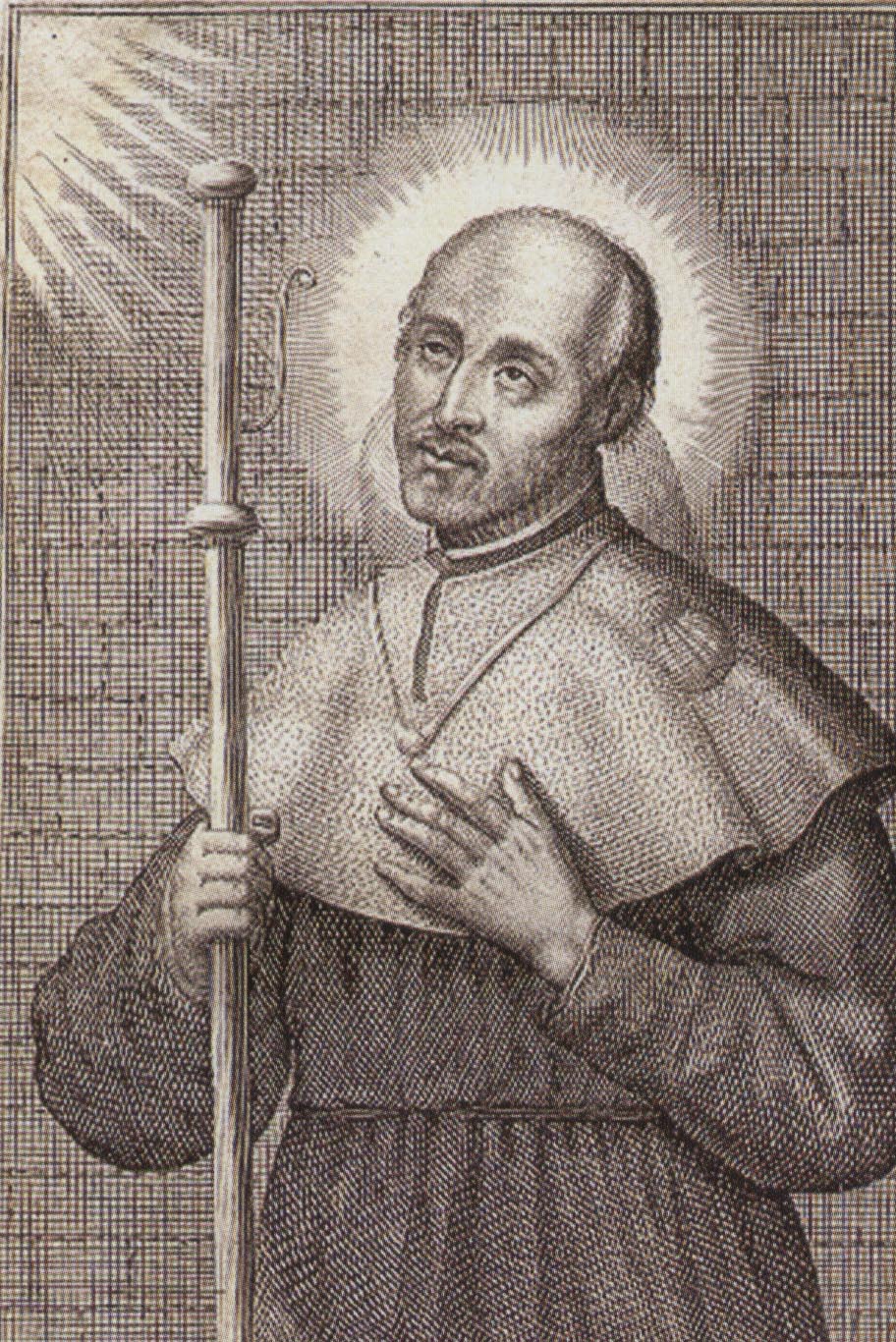
SAINT ALBERT CHMIELOWSKI
TUESDAY, JUNE 17, 2008
Founder of the Albertine Brothers and Sisters, and one of the saints who inspired the vocation of the young Karol Wojtyla, the future Pope John Paul II. Saint Albert Chmielowski was born in Igoalomia, Poland as Adam Hilary Bernard Chmielowski on August 20, 1845 into a wealthy and aristocratic family. He manifested an intense sensibility as a young man to the human condition and ordinary human suffering. He expressed this sensibility through art, and was actively involved in politics. His political participation and patriotic zeal caused him to lose his leg fighting in an insurrection against Czar Alexander III in 1864. He left Poland shortly afterwards to study engineering n Belgium, where he stayed for only a year before deciding to study art in Paris and Munich.

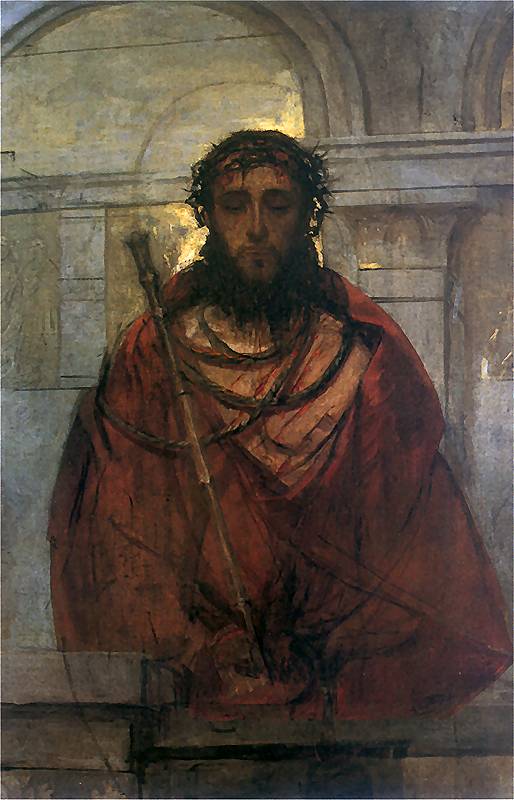
He returned to Krakow in 1874 having resolved to dedicate his art, talent and aspirations to the glory of God. After having an intense experience of the mercy of God, he painted one of his masterworks, entitled “Ecce Homo” (it can be seen with many of his other paintings at http://www.albertynki.pl/galeria_o.php ) and on deeper reflection, discerned that he was being called to give his life to serving the poor and those most in need. He knew he was called to religious life and so he entered the Society of Jesus (Jesuits) in 1880, but realized, after suffering a nervous breakdown, that it was not his place.

He became a Third Order Franciscan in 1887 and a year later founded the Albertine Brothers or Servants of the Poor. He founded the female congregation of the Albertine’s in 1891. The Albertine’s dedicated their lives to serving the poor in every way, from nursing the sick to providing shelter and food and care for homeless children. Brother Albert, as he was now called, left 21 foundations of Albertine’s by the time of his death on Christmas Day, 1916. He was considered a 20th century polish Saint Francis, and was canonized on November 12, 1989 by Pope John Paul II, who had also written a play about him in 1949.

Link (here)

On A Latin American Jesuit Education

An excerpt of a large post.
So if the world had not been smiling by cheering the exclusive club, "Educated by the Jesuits" I would not have processed that with her. I said, "Father Thelen went out to work with the Indians after he was provinicial and i think it was to re-energize. He told me after I exposed the scandal, 'Teresa, you know when to do the right thing.'" He was referring to King's suggestion that Conscience asks us to do the right thing. Hey, I am Jesuit Educated. Aint that something?! Wow that makes me part of an exclusive group.
When I asked Father Tom Hughson, SJ back in the 90's in theology class, "If the people in Latin America were educated by the Jesuits why are they shooting the Jesuits?" he yelled at me for asking the question.
I don't make statements in disguise of questions I thought if we were having a discussion we could help the understand. Shocked, I went to Helena to tell her he yelled at me for asking the question. She said, "Oh, Teresa, you hit something in him." They don't like questions they like group think tanks where being somebody is being from a group instead of being real and open to ideas.

Link (here)

More From Jesuit Arabist On His Apostalic Activities

The Jesuit Arabist Paolo dall'Oglio warns that the pope has confirmed the worst fears of the Muslim world.
His views on the subject bear careful reading. As the editors of Popoli introduce his article, Dall'Oglio is "someone who has carried out years of apostolic activity in the Muslim world, and in position to understand the sensibilities and to intuit the possible repercussions and ways in which the event might be exploited". Dall'Oglio began his article (in Italian - citations are my translation),
"We hope that we are dealing with an eclipse of the sun," that is, a one-time event, and adds: The moon of urgent concern for freedom of conscience and religion has blocked the sun of charitable discretion, of respect for Muslim feelings, and of the renunciation of proselytism ... [Magdi Allam's baptism] discouraged numerous efforts to construct harmony and friendship, in the quarters of European cities as well as in the countries, for secular and peaceful Islamic-Christian coexistence.
It neutralized attempts to defuse inter-religious violence and to show how far the Church is from the neocolonialist logic of the Western hegemonic powers, and how a great majority of Muslims are opposed to the logic of hostile confrontation ... Before the world, and on the occasion of his baptism,
Magdi Allam has declared his intent to affirm "the authentic religion of truth, of life and of freedom" against the "the root of evil is inherent in an Islam that is physiologically violent and historically conflictive". In this fashion he confirmed the Muslim impression, intentionally or not, that there is an objective strategic convergence of Christian neo-proselytism
and the blasphemous actions against the holiest realities of Islam promoted by the northern European media [ie, the satirical cartoons of Mohammed in a Danish newspaper]. In other words it is difficult to escape the impression that the sacred banner of freedom of conscience is being used by the West to introduce a Trojan Horse into Islam with the aim of causing it to disintegrate [emphasis added].
Link to the full and compelling article (here)

Wednesday, June 18, 2008

Jesuit On Sloth Or Not To Sloth

Priest puts PM's public service work ethic in the sin bin
Mark Davis Political Correspondent
June 14, 2008
.
WHEN the Prime Minister burns the midnight oil and insists that Canberra's public servants follow suit he may be leading the nation into sin, a Jesuit theologian says. Father Andrew Hamilton argues that overwork is morally unjustifiable - "in old fashioned Catholic terms it may be a sin" - and that Kevin Rudd has a special responsibility not to encourage such behaviour.


In an article in the online Jesuit magazine Eureka Street, Father Hamilton says Catholic moralists were traditionally more perturbed by the dangers of sloth than excessive work.


With the advent of the industrial revolution their concerns shifted to the exploitation of workers in factories and mines. Now a new ethical problem has emerged: the white-collar worker spending too many hours in front of a computer. "What makes overwork morally unjustifiable is that the time and attention we give to it is disproportionate,"
Father Hamilton says. "If the way in which we work does not offer us space to nurture the significant relationships in our lives, to explore our other gifts, to contribute to our communities and to reflect on the meaning and direction of our lives, we are likely to be overworking."
Father Hamilton, who teaches at the United Faculty of Theology in Melbourne, says the culture of many workplaces encourages employees to idealise overwork. "So those who encourage an environment that makes overwork seem normal and demand that their employees fit into it carry a heavier moral responsibility," he says. "Overwork is particularly dangerous in the public service because public servants must consider the human dignity of those affected by the regulations they frame. "They cannot reliably do this if they or their masters regard as expendable respect for their own dignity. If overwork is a sin, Mr Rudd has no business promoting it."

Link (here)

A Portion Of The GC35 Decrees

III. The response of the Society to the call of the Holy Father

12. To be authentically "contemplatives in action" seeking and finding God in all things, we must continually return to the spiritual experience of the Spiritual Exercises. Aware that they are "a gift which the Spirit of the Lord has made to the entire Church," we should, as we are called by the Holy Father, "focus special attention on that ministry of the Spiritual Exercises."


Link to the full set of decrees (here)

Jesuit In Indonesia, Comments On Religous Intolerance Of Catholics

Indonesia Less Tolerant of Minorities
Minority Christians and Muslims alike face increasing intolerance as religious minorities, the Christian Post reports. "This (religious tolerance) is a situation you don't have in many other countries with Muslim majorities, but tolerance is now under attack," said Catholic priest Franz Magnis, a German-born Jesuit priest and long-term resident, according to Reuters. In general, Indonesia - the world's most populous Muslim country - is considered as tolerant of Christians and other religious minorities. Reports, however, show that more than 100 churches have been closed in Indonesia by attacks from radical Muslim groups or by local governments, according to Compass Direct News. The Muslim sec Ahmadiyya, which many Muslims deem heretical, has also faced increased attacks on mosques in recent months.
Link (here)
More info on the subject at Qantara

Jesuicrat Professor At USF Lauds Politcal Decision By The Supreme Court

Religious, rights groups applaud Supreme Court in habeas corpus case
By Dennis Sadowski (Catholic News Service)
Peter Jan Honigsberg, professor of law at the Jesuit-run University of San Francisco's School of Law, said the first two decisions governed statutory provisions and that in both cases Congress passed White House-proposed bills that restricted habeas corpus rights. The most recent decision, however, addressed a basic constitutional issue and has far broader implications, he explained. For Honigsberg, who visited the Guantanamo Bay prison in May 2007 while conducting research for a book he is writing on the erosion of basic rights in law since the events of Sept. 11, 2001, the court's decision sets the stage for prisoners to present their cases in a U.S. court rather than waiting indefinitely for the federal government to bring individual cases to trial. "The real issue is about whether non-Americans, foreign nationals living outside the U.S. have a constitutional right to file habeas corpus petitions," Honigsberg told Catholic News Service. "That was an issue never really addressed in wartime. It's amazingly significant. To me it's astounding. This is the first time it's happened in wartime and for non-Americans. "So whether they're innocent or not is not what we're looking at. We're looking at the core of this nation: You have the right to appear before a neutral decision-maker," he said. "The Supreme Court is saying even in these times (of war) you have to give these people the chance to have a hearing to say whether they are wrongfully held or rightfully held," he added.
Link (here)


More on the subject
McCain Slams The Supreme Court's Habeas Decision (here)
Habeas Corpus (here) and (here)
Wiki on Habeas Corpus (here)
President Lincoln and Habeas Corpus during the Civil War (here)
Who is in Guantanamo? (here)
The Nuremberg Trials (here) and (here)
FISA Court (here) and (here)
USA PATRIOT Act (here) , (here) and (here)

Tuesday, June 17, 2008

New Superior For Canada

Fr Jim Webb - God's intrepid activist
JEAN LOWRIE-CHINMonday, June 16, 2008
He has braved threats, worked from inner city to deep rural Jamaica, and protected the ballot. But Jim Webb is no Indiana Jones, pursuing adventure for adventure's sake - he is a Canadian Jesuit priest, motivated by a strong sense of Christian social justice. His legendary efforts as a young activist priest in Canada and later in Jamaica have now earned him the top post of Jesuit Superior for English-speaking Canada.

Father Jim recalls how he and his Jesuit fellows from Canada got called to Jamaica in 1986. There were only American Jesuits here, several of them expelled in 1968 from Iraq in a "cleansing" led by an up-and-coming officer named Saddam Hussein.

In the 70s, the late Archbishop Carter and Jesuit Superior Father Ken Hughes thought Jamaica would be well served to have Jesuits from another country. Jim Webb would be the last person to tell you of his key roles in social activism, education and rural agricultural development in Jamaica over the past 22 years. However, St Peter Claver principal Margaret Bolt and the farmers in the St Mary Rural Development Project are always singing his praise. And so do I, having been a part of those first meetings he convened at the Roman Catholic Chancery, to discuss a citizens' initiative to monitor national elections - thus was born CAFFE, Citizens Action for Free and Fair Elections It was Father Jim who recruited the inspiring young Margaret Bolt to be principal of St Peter Claver at Waltham Park in 1986, moving the school's pass rate in Common Entrance/GSAT from three per cent to 70 per cent. The school was able to involve the parents, proving that regardless of the income level or environment, people are willing to go the extra mile to ensure their children's success.

Father Jim's interest in fair elections was sparked by the repugnant practices he had witnessed whenever St Peter Claver was used as a location for polling stations. When he arrived to cast his vote in the 1989 general elections, he was told, "Sorry Father, you vote already." For the 1993 elections, he placed eight volunteers at vantage points to count the comings and goings of voters. They counted 620 voters but the number of votes "cast" was 1,485. FR JIM WEBB... started CAFFE after being told, 'Sorry, you vote already.' Father Jim ensured that CAFFE was in place for the 1997 elections

. That year, the Carter Centre sent a delegation headed by President Jimmy Carter to monitor the general elections. They worked closely with CAFFE and gave the elections their stamp of approval. But even CAFFE was easy compared to the next challenge that Father Jim took on. With an offer to expand his mission in Jamaica, he conducted a survey to ask whether he should stay urban or go rural. Twenty-four out of 25 voted rural. With Catholic Deacon Peter Espeut, they researched various communities and decided on Annotto Bay, St Mary. With the help of CIDA and the Jesuits, the St Mary Rural Development Programme was founded in 1990 with up to 300 farmers in the early years. "The demographics have changed," noted Father Jim. "The land being farmed by the older people was located on hillsides - their predecessors had been granted hard-to-farm land after emancipation. Only machetes and hoes could be used so it was sheer drudgery - they couldn't compete." The programme was able to negotiate the lease of flatlands and Father Jim has witnessed a sea change in the lives of the farmers who have been able to build better homes and buy vans. He is particularly proud of three-time National Young Champion Farmer, 26-year-old Leighton Davis. His struggle to obtain better land for the farmers has been fraught with danger.

Father Jim received a death threat in 2001 and two weeks later his fellow priest Father Martin Royackers was shot dead on the grounds of the Annotto Bay Church. It has never been proved conclusively if this was linked to the threat or if it was a case of robbery.

Born in Antigonish, Nova Scotia, of a devout Catholic family, Father Jim was ordained in 1973 and posted in a poor neighbourhood in Toronto where he threw himself into social justice projects. In the 70s, he chaired the Task Force of Churches for Corporate Responsibility and would attend bank shareholders' meetings to protest against loans to South Africa still under apartheid. In 1979, a South African banker arrived in Canada to meet with the group, protesting that his request of a Canadian banking partner had been turned down "because of the power of the churches". "It was then that we realised that we had won!" exulted Father Jim.

Father Jim also worked to expose the plight of women working in the Freezone in the 1980s. "We saw hard-working women begging for money to buy milk for their babies," said Father Jim. "They had a take-home pay of $60, and a tin of milk cost $16 at the time. We surveyed 100 women and Dr Patricia Anderson wrote a paper which was the basis for our input in an inquiry into the employment practices of the Freezone," he recalls. "The factory owners were furious."

Father Jim has also been chairman of Jamaica's premier high school, Campion College, for the past 10 years. "In 1998, 95 per cent of our students came from private prep schools and only five per cent from public primary," he recalls. "Now we have 32 per cent from the public school system, a better reflection of the Jamaican society." He is happy that during a two-day review in 2005, the school's board and management tried to determine "how Campion fits in with Jesus' Sermon on the Mount". Out of that discussion, the school's mission emerged: "To build the Kingdom of God - a world characterised by social justice, love and respect for the dignity of every person." He added, "It was because of our mission that Grace Baston took up the offer to become our outstanding principal." One of Father Jim's heroes is the late Archbishop of El Salvador, Oscar Romero, who said, "We accomplish in our lifetime only a tiny fraction of the magnificent enterprise that is God's work. it is a beginning, a step along the way."

As an advocate for vocations, Father Jim has recruited five young Jamaicans to study for the priesthood.

We hope they will follow in his footsteps, taking forward God's magnificent enterprise.

Link (here)

A Portion Of The GC35 Decree


Entitled "With Renewed Vigor and Zeal"


Decree 1

A spiritual experience of consolation in the Lord.


Section 3


Our effort to be completely honest with ourselves and with the Lord

included much of the dynamic first week of the Spiritual Exercises:

it helped us to discover and recognize our weaknesses and inconsistencies

but also the depth of our desire to serve.

This required that we reexamine our attitudes and our way of living.


Link to the full text of the GC35 decrees (here)

Jesuicrats: Fighting A War That Does Not Exist

Catholic scholars try to bolster unions
By Rich Barlow
June 14, 2008
The collision of an election year with economic distress - a housing slump, soaring gas prices, shaky corporate-sponsored health and pension plans, among other factors - has made the state of the American worker a campaign issue. One hundred and twelve years ago, in an era of similar uncertainty, William Jennings Bryan, fueled partly by his devout Protestant faith, ran for president (lost) on a pro union platform. more stories like this Since then, unions have ascended and waned. Now, a group of Catholic academics and clergy wants to reinvigorate them and its members, citing their church's teaching as support. Founded by a religion professor at Manhattan College in New York, Catholic Scholars for Worker Justice has several Massachusetts residents on its steering committee.
The group is strictly nonpartisan, though individual members are free to politick on their own. Thomas Kochan, a professor at MIT's Sloan School of Management, supports Barack Obama, for example, and David O'Brien, a Holy Cross historian, is on a Catholic ( disbanded )advisory committee to the Illinois senator. (Remember, non-partisan, right....)
"We need to think about how to rebuild an opportunity for people to make a living wage," said Kochan, a Chestnut Hill resident who worships at St. Ignatius Parish there, explaining the new group's motivation. Catholic Scholars for Worker Justice promises to research and publish the church's teachings on economic justice, while advocating for union organizing in specific cases. For example, the group's founder attended a January vigil to support a union drive at a California hospital run by Catholic nuns. Catholic Scholars' steering committee also has endorsed a bill in Congress that would make it easier for workers to unionize and stiffen penalties on companies that violate rights. The scholars are most concerned about companies illegally firing or disciplining workers for starting or joining unions. In 2005, the federal government ordered back pay or reinstatement to more than 33,000 workers for such union activity, according to Catholic Scholars. "As John Paul II repeatedly reminded us, 'The hour of the laity has struck,' " said Thomas Kohler, Boston College Law School professor. "I hope that Catholic scholars might be one way of . . . doing what the laity are to do, by bringing the insights of the tradition to economic and social life." The Rev. Thomas Massaro, of Cambridge's Weston Jesuit School of Theology, said he joined the group believing in its mission not only to help workers, but to give a clearer profile of the church's teaching in this area. "Most people, even Catholics, are largely unaware of the unequivocal support of church authorities for worker rights and especially the right to collective bargaining." Indeed, the Vatican beat William Jennings Bryan to the prolabor punch five years before his epochal 1896 campaign. That's when Pope Leo XIII issued the encyclical Rerum Novarum, deploring miserable working conditions and endorsing unions. The pope wasn't anticapitalist; he denounced socialism and talked of the value of private property.
But Leo was reacting to "the worst of the Industrial Revolution, the condition of workers," said Catherine Schneider, a Boston College economist who is not with Catholic Scholars but appeared with Kochan last month at an economic justice forum sponsored by Newton's Sacred Heart Parish. ( an example of rigid, century long, fundamentalism )
Papal interest in the matter continued through several pontiffs, she said, culminating with John Paul II's Centesimus Annus, released in 1991, the hundredth anniversary of Leo's encyclical. Locally, the Archdiocese of Boston has long embraced workers. Its Labor Guild, founded in 1945, lends help in such matters as administering contract ratifications. Its new director, Sister Mary Priniski, is on Catholic Scholars' steering committee. Critics accuse the Christian right of becoming an arm of the Republican National Committee.
Are Catholics pushing for unions flirting with the same allegation, given Democrats' perception as the prolabor party since the New Deal? "I have long been active in Democratic Party politics," O'Brien said in an e-mail, "but in recent years, I have been far from satisfied with either party's performance on worker justice." ( The New Deal was 70 years ago, not very new, nor progressive )
Massaro said Democratic support for unions "is not uniformly true. I believe that all politicians need to hear this message continually." That encyclicals are papally signed doesn't guarantee them universal Catholic assent, of course. When John XXIII issued his 1961 text on social justice and labor rights, Mater et Magistra (Mother and Teacher), National Review - founded by William F. Buckley Jr., a Catholic - cracked, "Mater, Sí; Magistra, No." Many Catholics don't even bother to look at these papal pronouncements: "They're not the kinds of documents you just pick up for light reading," said Schneider. But their themes are publicized by American bishops, she added. Harder to reach, perhaps, are her secular colleagues in economics, who focus more on the field's intensely mathematical analysis. But it was not always thus. "We remind students that Adam Smith was a professor of moral philosophy," Schneider said.
Link (here)

Monday, June 16, 2008

17th-century Jesuit Mission: Sainte-Marie Among The Hurons

Rebuilding our history
Written by Maggie Clegg
Sainte-Marie Among the Hurons is back better than ever. Co-ordinator of Marketing Bill Brodeur says they've finished rebuilding after a fire that destroyed some buildings 2 years ago. Brodeur says the reconstruction of the carpenter and black smith shops is now done. Broduer says the recent addition of a wigwam is another new attraction that people are really enjoying. And he's says they're excited to offer an Aboriginal Festival this year from June 14th to the 15th.

Sainte-Marie Among the Hurons is a reconstruction of a 17th-century Jesuit mission just outside Midland on Highway 12 East. Brodeur says it's Ontario's oldest European community and has a dramatic history. He says you'll see an audio visual presentation when you first arrive to get you ready to step back in time.
Brodeur says another historic site nearby in Penetanguishene is Discovery Harbour, a 19th century base from when the British Royal Navy and Military had a big presence here. Brodeur says the sites see about 60 to 70-thousand people every year. Sainte-Marie is open on weekdays right now and will run 7 days a week starting June 28th.
Link (here)

Gesu, Reduex

Lost Baroque Work Is a Spectacle Again
By ELISABETTA POVOLEDO
ROME — Every afternoon at 5:30 sharp, the “ta-da” moment arrives at the Chiesa del Gesù, the mother church of the Jesuit order. As choral music fills the church, a meticulously choreographed light show begins in the left transept of the Chapel of St. Ignatius of Loyola. During the startling crescendo, a painted altarpiece descends slowly, exposing a deep niche in which a majestic silver statue depicts St. Ignatius, founder of the Jesuits, jetting into heaven. It is a quintessential Baroque spectacle, one that fell out of favor about a century ago. At the time, the church’s caretakers retired the canvas altarpiece, which depicts Christ presenting a royal standard to St. Ignatius, and the mechanical apparatus that lowers and raises it, so that the silver statue could remain on display.

“That was the taste of the time,” the Rev. Daniele Libanori, the church’s deputy rector, said of that early-20th-century decision. He is not a huge fan of the larger-than-life sculpture, which was designed around 1698 by Pierre Le Gros the Younger.

(What’s on display today is actually a 19th-century stucco copy plated in silver. The silver original was melted down in 1798 during an occupation by Napoleon’s forces.) “The statue’s a little over the top, but it does make a big impression,” he said. Father Libanori much prefers the altarpiece, which he discovered five years ago, after he first arrived at the church and started exploring its nooks and crannies. He found the enormous canvas, painted around 1695 by Andrea Pozzo, a Jesuit lay brother, under the altar, still wedged into a frame that had been constructed so it could be raised by pulleys. It had been pretty much ruined by mold, he said. In addition to the thrill of finding a lost work by Pozzo, known as one of the Baroque period’s greatest trompe l’oeil specialists, Father Libanori was excited by the prospect of restoring the transept to the way it was conceived in the 17th century.

With the altarpiece back in place, the chapel becomes a spiritual itinerary as well as “the highest expression of the union of all the arts,” he said in a recent interview in his office. “There’s a buildup of anticipation, to know what’s behind the altarpiece,” he said of the sound and light show. The daily spectacle at the Gesù is an object lesson in the religious culture of the Baroque era, when the Roman Catholic Church encouraged artists to stir the emotions of the spectator and the Jesuit order reveled in using theater as a pedagogical tool.

“The Baroque was the century of marvels,” said Marcello Fagiolo, a professor at La Sapienza University of Rome and a leading expert on such theatrical displays. It was not uncommon, he noted, for churches to incorporate elaborate stage sets and use machines and lighting “at times to amaze, and at times to strike terror at God’s punishment.” The idea was to “involve all the senses, manipulate them in an exaggerated manner and heighten sensations through emotion,” Mr. Fagiolo said.

The Pontifical Commission for the Church’s Cultural Heritage enlisted sponsors to finance the restoration of the Baroque machinery, among them Enel, Italy’s largest electricity company, which paid for the lighting. Francesco Buranelli, the commission’s secretary, said the restored chapel, which was inaugurated in April, now “offers a moment of spiritual contemplation as well as powerful emotion.” He added, “Such moments are good for the heart and the soul.” The chapel’s iconography centers on the ascent of St. Ignatius from his earthly mission to instill belief in Jesus Christ to his final glory in heaven.

The daily sound and light show might be considered the Baroque equivalent of a director’s cut. The spoken words — Bible texts and the writings of St. Ignatius, read in Italian — are intended to help the visitor “engage in a deeper contemplation,” Father Libanori said, in line with the mission of the Jesuits. The music is by Domenico Zipoli, an 18th-century Jesuit who ended up in South America doing missionary work. It helps that Pozzo, a master of illusion and the author of a renowned treatise on perspective, designed the entire chapel.

His theories are most evident in the breathtaking vault of the Church of St. Ignatius, another Jesuit church in Rome. At the Gesù, the Baroque apparatus once relied on muscular power to raise and lower the painting, but that is now accomplished by pressing a button. “It’s the same mechanism as a garage door opener but attached to pulleys and a weight,” Father Libanori said.

The spectacle does not actually end with the unveiling of the statue. The show goes on, ultimately illuminating the entire nave of the church, where St. Ignatius is welcomed into an illusionistic vision of heaven where figures spill out onto stucco clouds painted by G. B. Gaulli, known as Baciccia, and then into the church’s dome, where he is united with God. “People tend to leave after the statue is revealed, and I try to stop them — I say, ‘Stay, stay, the best is yet to come,’ ” said Edenia Sinigaglia, a volunteer at the church. “They always thank me afterward.” Father Libanori said that English- and Spanish-language versions of the show were planned, although understanding the Italian text may be moot to the experience.

Link (here)

Sunday, June 15, 2008

Saint To Saint On The Spiritual Exercises And Prayer

A letter to St. Francis Borgia from St. Ignatius of Loyola
.
My lord in our Lord:
May the perfect grace and everlasting love of Christ our Lord be always in our favor and help.
When I hear how harmoniously you have reconciled your spiritual and temporal interests and directed them to your spiritual progress, I find fresh reason, I assure you, for rejoicing in our Lord; and while giving thanks to His Eternal Majesty I can attribute my joy only to His Divine Goodness, which is the source of all our blessings.
And yet I realize in our Lord that at one time we may need some exercises, spiritual as well as corporal, and at another time others.
Because those which have proved profitable for a time may cease to be so later, I will tell you what I think in His Divine Majesty on this subject, since your lordship has asked for my views.
First. I should think that the time set aside for these exercises, both interior and exterior, should be reduced by half.
We ought to increase these exercises when our thoughts have their origin in ourselves or are suggested by our enemy, and lead us to fix our attention on objects that are distracting, frivolous, or forbidden, or when we wish to prevent our wills from taking any satisfaction in them or yielding any consent. I say, as a rule, that as these thoughts multiply we ought to increase our exercises, both interior and exterior, so that we may overcome them, always keeping in mind the individual's character, the varying nature of the thoughts or temptations, and being careful to adapt the exercises to the capacity of the individual.
However, when these thoughts weaken and die out, holy thoughts and inspirations will take their place; these we must warmly welcome by opening to them all the doors of the soul. As a result there will be no further need of so many weapons to overthrow the enemy.
From what I can judge of your lordship in our Lord, it would be better if you were to devote to study about half the time you now give to these exercises. In the future, learning will always be very necessary or certainly useful; and not only that which is infused but also that which is acquired by study.
Some of your time should go to the administration of your estates and to spiritual conversation.
Try to keep your soul always in peace and quiet, always ready for whatever our Lord may wish to work in you. It is certainly a higher virtue of the soul, and a greater grace, to be able to enjoy the Lord in different times and different places than in only one. We should, in the Divine Goodness, strive to attain this.
Second. As to fasts and abstinences, I would advise you in our Lord to strengthen your stomach and your other physical powers, rather than to weaken them. My reason is that, in the first place, when a soul is so disposed to lose its own life rather than offend God's majesty by even the slightest deliberate sin and is, moreover, comparatively free from the temptations of the world, the flesh, and the devil (a condition of soul which I am sure your lordship by God's grace enjoys),
I should like very much to see your lordship imprint on your soul the truth that since both body and soul are gifts from your Creator and Lord, you should give Him a good account of both. To do this you must not allow your body to grow weak; for if you do, the interior man will no longer be able to function properly.
Therefore though I once highly praised fasting and abstinence, even from many ordinary foods, and for a certain period was pleased with this program, I cannot now praise it when I see that the stomach, because of these fasts and abstinences, cannot function naturally or digest any of the ordinary meats or other items of diet which contribute to the proper maintenance of the body.
I should rather have you seek every means of strengthening the body. Eat, therefore, whatever food is allowed, and as often as you find it convenient; but it should be done without offense to the neighbor. We should love the body insofar as it is obedient and helpful to the soul, since the soul, with the body's help and service, is better disposed for the service and praise of our Creator and Lord.
Third. Concerning the harsh treatment of the body for our Lord's sake, I would say, avoid anything that would cause the shedding even of a drop of blood. If His Divine Majesty has given you the grace for this and for all that I have mentioned (it is my conviction that He has), it would be better in the future, without listing here any reasons or arguments, to drop this penance, and instead of trying to draw blood seek more immediately the Lord of all, or what comes to the same, seek
His most holy gifts, such as the gift of tears. This could arise (1) because of our own sins or the sins of others; or (2) while contemplating the mysteries of the life of Christ, either here on earth or in heaven; or (3) from a loving consideration of the three Divine Persons. Thus the higher our thoughts soar, the greater will be their worth.
The third is more perfect than the second, and the second more perfect than the first. But for a given individual the level on which our Lord communicates more of Himself in holy graces and spiritual gifts will be the best level, because He sees and knows what is best for you. Like one who knows all, he points out the way to you.
On our part, with the help of His grace, we will learn by testing many methods, so that we may advance along the way that stands out clearest, which will be for us the happiest and most blessed in this life, leading us directly by ordered paths to that other everlasting life, after having united us in a close embrace with His most holy gifts. By these gifts I understand those that are beyond the reach of our own powers, which we cannot attain at will, since they are rather a pure gift of Him who bestows them who alone can give every good.
These gifts, with His Divine Majesty as their end, are an increase in the intensity of faith, hope, and charity, joy and spiritual repose, tears, intense consolations, elevation of mind, divine enlightenments and illuminations, together with all other spiritual relish and understanding which have these gifts as their objects, such as a humble reverence for our holy mother the Church, her rulers, and teachers.
Any of these holy gifts should be preferred to exterior and visible manifestations, which are good only when they have one or other of these higher gifts as their object. I do not mean to say that we should seek them merely for the satisfaction or the pleasure they give us.
We know, however, that without them all our thoughts, words, and actions are of themselves tainted, cold, disordered; while with them they become clear, warm, and upright for God's greater service. It is therefore that we should desire these gifts, or some of them, as well as spiritual graces; that is insofar as they are a help to us to God's greater glory.
Thus, when the body falls ill because of excessive effort, it is most reasonable to seek these gifts by acts of the understanding and other more moderate exercises. It is not the soul alone that should be healthy; if the mind is healthy in a healthy body, all will be healthy and much better prepared to give God greater service. On how you should act in individual cases, I do not think it wise in the Lord to speak in detail. It is my hope that the same Divine Spirit who has up to now guided your lordship will continue to guide and rule you in the future, to the greater glory of His Divine Majesty.

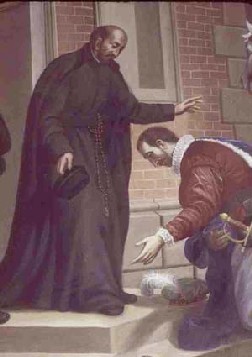
Painting is of Ignatius recieving Borgia
Link (here)

Saturday, June 14, 2008

"I Deliver Justice!" Canisius High School Jesuit Fr. John Strum's Message To Tim Russert

The person who became most important to me at Canisius High School was Father John Sturm, the Prefect of Discipline. He was a former Golden Gloves boxer who entered the Jesuits, and he was tough. He would focus on the few kids who came from the south side of the city--there was only a handful of us from South Buffalo.
Once when I got in trouble I said, "Father don't you have any mercy?" He grabbed me and replied, "Russert, mercy's for God. I deliver justice."
I remember it like it was yesterday. Although I knew how to write, how to report, how to observe, I learned that unless one has discipline, all of it can be lost, and Father Sturm taught me discipline.
Link (here)
.
From the Canisius High School website.
.
Requiescat in Pace, Timothy J. Russert, Class of 1968
Tim Russert (CHS '68) Tim Russert ’68 died suddenly of a reported heart attack this afternoon, Friday, June 13, 2008. The thoughts and prayers of the entire Canisius High School community are with Tim’s wife Maureen, his son, Luke, his father, Big Russ, his sisters and all members of the Russert Family. An articulate and astute son and citizen of Buffalo, New York, Tim eloquently described and defined growing up here in the 1960s.
He stayed close and loyal to his roots always.Tim uniquely represented the Jesuit ideals instilled in the Canisius student. His honesty and integrity earned him the unqualified respect of his colleagues and our nation. Tim embodied the qualities of the son, brother, husband, father, and uncle that made him the extraordinary human being and Catholic that he was.
A faithful, loyal, committed and generous man, Mr. Russert was unquestionably our most accomplished and conspicuous alumnus in 138 years. May the Angels lead him into paradise; may the martyrs come to welcome him, and take him to the new and holy city, the new and eternal Jerusalem.

Extra Ecclessiam Nulla Salus: Fr. Leonard J. Feeney, S.J. And Avery Cardinal Dulles, S.J. Before He Was A Jesuit

EXTRA ECCLESIAM NULLA SALUS: FATHER FEENEY MAKES A COMEBACK
By Michael J. Mazza
Michael J. Mazza is director of catechetics for the Diocese of Sioux Falls, South Dakota
.
It was a bitterly cold winter that year. The Depression had made heating oil as scarce as it had made employment prospects, giving the residents of New England precious little to look forward to as the first few days of 1936 arrived. But in the first month of that year, a small book store opened that would eventually create not only enough heat to warm a continent, but would also serve as the seed bed for one of the most unlikely heresies of the twentieth century.
A small group of lay people opened the doors of the "St. Thomas More Lending Library and Book Shop" for the first time in January, 1936. Located in Cambridge, Massachusetts, it soon attracted a fair number of people from all walks of life who were drawn together by their shared interest in Catholicism. As the book store's influence grew, so did its need for space. In March of 1940, a committed core of the bookshop's patrons—among them the young convert and future priest by the name of Avery Dulles—rented a storefront, and the "St. Benedict Center" was born. Interestingly enough, Dulles, the future Jesuit, had proposed naming the center after St. Robert Bellarmine, but his suggestion was vetoed by the others out of a fear that it would be offensive to non-Catholics
(George B. Pepper, , Lewiston, NY: The Edwin Mellen Press, 1988, p. 3). Father Leonard J. Feeney evidently liked what he saw when he first visited the Center in 1941, and by 1945, with the approval of his Jesuit superior, had become its first full-time priest chaplain. Dismayed by what they perceived as the general decay in their society and the Church in the years after World War II, Fr. Feeney and the devotees of the St. Benedict Center labored vigorously in a variety of ways in an effort to reform both their nation and their Church. Their particular kind of solution to the problems at hand, however, did not leave everyone equally impressed.

Link to the long, lengthy and interesting article (here)

Friday, June 13, 2008

A Model For All Jesuit Educational Institutions

Official party pooper riles Seattle U. students
By Nick Perry • The Seattle Times • June 12, 2008

SEATTLE — Four Seattle University seniors who tried to organize an off-campus party over Memorial Day weekend say it was supposed to be a last hurrah before graduation with a theme that pokes fun at fraternity and sorority types. Women were to wear Victoria’s Secret Pink-brand sweats or Abercrombie & Fitch clothing and talk constantly on their cellphones, according to the invitation on the social-networking site Facebook.
Guys were to wear turned-up — “popped” — collars, aviator sunglasses and flip-flops. The event was dubbed the “Douchebag” party. But when Seattle U. administrators found the invite on Facebook, they were not impressed. “Be advised that your online advertising for the party of Sunday May 25th is potentially in violation of the Seattle University Code of Student Conduct,” wrote Glen Butterworth, assistant to the dean of students, in an e-mail to the seniors. “You will be held responsible if you host an event with a theme of gender bias.”
The seniors decided to cancel their party. So, too, did another group of students hosting an off-campus party earlier this month — also advertised on Facebook — when Butterworth showed up on their doorstep. Butterworth told those students he knew of their plans and that city police and state liquor authorities would be enforcing any code violations. The incidents have some of the 7,500 students at the private Catholic college fuming about what they see as heavy-handed tactics and online snooping by administrators. But Butterworth said the university administration monitors sites like Facebook only when something is specifically brought to their attention, and that they are acting in the Jesuit tradition of “cura personalis” — care of the whole person.
“Our education doesn’t really stop when students leave the classroom,” Butterworth said. “In some ways, it begins there.” But Nicholas Lollini, editor in chief of the student newspaper The Spectator, in an editorial last week compared administrators to baby-sitters who are “flexing their authority in a pre-emptive fashion.”
“It is the responsibility of the institution to provide an integrated and fulfilling academic experience, not to arbitrarily seek out and expose individuals who choose to spend their off-campus time in a fashion that the university does not hold in high regard,” he wrote. Gina Corsiglia, who graduated from Seattle U. earlier this year with degrees in art history and French, said perhaps 50 people were planning to attend the party she was helping organize for May 16: “Everything was going to be great. Everyone was excited,” she said. But then, hours before the party was to start, Butterworth showed up. “I was really mad, actually,” Corsiglia said, after finding out about his visit. “I thought it was pretty outrageous that he came physically to our doorstep. ... We weren’t even going to serve alcohol. It was bring your own beer, if people wanted to come and drink.” Corsiglia said she and her four roommates — three of whom are still students — have always acted responsibly and have been leaders on campus. They felt upset that they weren’t trusted by administrators. “It’s none of their business,” Corsiglia said.
“They had no right to do that. It’s a private residence.” Corsiglia said she advertised on a social-networking site because it’s the easiest way to get in touch with other students: “Everyone checks their Facebook accounts a million times a day,” she said. Butterworth, a Jesuit who lives on campus, said he has stopped by perhaps two dozen student houses either before or after parties in nearly two years at Seattle U. “It’s not uncommon for me to take a little stroll through the neighborhood and let them know about the resources available,” Butterworth said. “I needed them to know, to just be aware, that we enforce student policies, and that the Seattle Police Department and the Washington State Liquor Control Board would be doing the same.”
Butterworth said his intent is not necessarily to shut down parties: “I understand. I want to shake a leg, as well,” he said. “I am just hoping they will be responsible.” Butterworth, 37, has set up his own page on Facebook, a necessary step to view student posts. He said sites like Facebook can be a “cesspool” at times, and that students don’t always realize that careless posts can come back to haunt them. But Butterworth said he doesn’t spend much time on the site, much less police it. As for the “Douchebag” party, Butterworth said that even parodies can be unacceptable if people are encouraged to use offensive language when addressing the opposite sex. “I’m not sure that everyone at this party would have understood it was a spoof or understood the context,” he said. But one of the organizers of the party, who asked to remain anonymous, said he couldn't understand how the advertising showed gender bias when it was poking fun at both men and women. And, he said, Seattle U. needs to find a sense of humor and avoid using such “passive-aggressive” methods to shut down parties.
The issue has been bubbling at Seattle U. since January, when some students organized an off-campus party with a vulgar name that referred to the female anatomy. At that party, men came dressed as safari-style hunters while women came dressed as prey—tigers or lions. The party attracted hundreds but led to an outcry on campus over the name and theme. The campus Office of Multicultural Affairs held two forums at which students talked about freedom of speech, gender, empathy and respect.
Some of the party organizers faced consequences through the university’s conduct code system, although Seattle U. declined to provide details due to student-privacy concerns.

Link (here)

Previous story (here)

Syncretism? Hummm.......

This from the blog called Catholic Dads
.
An excerpt.

The Jesuit I know here has loads of eastern religion books in his study (scant christian) - plagarized a story from the Gospel of Sri Ramakrishna for a homily "don't tell anyone" he cautioned me, when I told him I recognized it, and he has an antipathy for the "bells and smells".
Link (here)

Top Of The Heap

Theology Chair to be Theological Society President
Terrence W. Tilley, Ph.D., chair of Fordham’s Department of Theology, will be installed as the 63rd president of the Catholic Theological Society of America at the society’s 2008 convention on June 8 in Miami. In this position, Tilley hopes to improve the communications between theologians and bishops, and to help to integrate a new generation of theologians into the society.

"New patterns of relating theology to the life of the faith are emerging," he said, explaining his decision to establish "Generations" as this year’s convention theme. "Younger theologians – meaning those who either entered the field or were born after the Second Vatican Council – have neither the baggage nor the ballast that their older colleagues have." The author of many scholarly books and articles, Tilley came to Fordham in 2006. He also has taught at Georgetown University, St. Michael's College, the University of Vermont, Florida State University and the University of Dayton, where he chaired the Department of Religious Studies.

A native of Milwaukee, he earned his bachelor's degree at the University of San Francisco in 1970 and his doctoral degree at the Graduate Theological Union in Berkeley, Calif. in 1976. His wife, Maureen Tilley, Ph.D., also teaches theology at Fordham. Tilley is the third Fordham faculty member to hold this position. The others were Avery Cardinal Dulles, S.J. (1975-1976) and Elizabeth Johnson, C.S.J. (1995-1996).The Catholic Theological Association of America’s purpose, within the context of the Roman Catholic tradition, is to promote studies and research in theology, to relate theological science to current problems and to foster a more effective theological education, by providing a forum for an exchange of views among theologians and with scholars in other disciplines.

Link (here)

More on the Catholic Theological Society of America (here) , (here) and (here)

Thursday, June 12, 2008

Jesuit On Liturgy

Ever Old and Ever New
An excerpt.

Nearly everywhere, the Mass today fails to unite Latin Rite Catholics, even juridically. Liturgical law is rejected, ignored or paid mere lip service by the modernizers (whom Mosebach calls "late Catholic Puritans", p. 135) who always know more than the Church. Some years ago, reformers replaced the older formalism and legalism with the formlessness decried by Mosebach in his book's title. Formlessness is the enemy. (For an articulate discussion of what he means by the contemporary rebellion against "form", see pp. 104-106; 147). A denial of beauty produces formlessness.
Formlessness is a heresy when it refuses certain revealed truths. They are mediated by material, concrete signs and symbols which are in themselves beautiful. In a word, Mosebach is preaching sacramentalism. Loss of form means loss of content!
(p. 206)On the other side, most of the antiquarianism Martin Mosebach so well understands is lost on contemporary Catholics, as it was said to have been lost on the French court in 1654. People know too little of their own church history and they have already for too long been deprived of their liturgical tradition. Those who still go to Mass in the industrialized West are minimally catechized. Perhaps it was always this way, everywhere. The elite with Mosebach's level of erudition could be stuffed into a telephone booth, as a professional liturgiologist once expressed it.

Read the full article (here)

Syncratism? Humm.....

This quote is from a blog by a young Vietnamese gentleman named Viet, he is commenting on his religous identity.
An excerpt.
If you were wondering - our family is both Catholic and Buddhist. They're both very much ingrained in Vietnamese culture, and for the most part are compatible. I once met a visiting Jesuit priest back in high school who was Catholic and Buddhist, and he was also a theoretical physics professor...a walking contradiction, but oh so cool. He was talking about the Big Bang and black holes and all these astronomical issues that would seem to conflict with fundamental Christian views, but Jesuits are cool like that. As I recall, a few Chinese and Japanese emperors had a Jesuit advisor teaching them about astronomy back in the 15-16th century. Plus they're all for contraceptives. Woot!
Link (here)

French Jesuit John Nicholas Grou On What It Takes To Be A Good Spiritual Director

GOOD DIRECTION "Pray for a wise guide whom, when you have found, trust, revere and obey"
Found in the book SPIRITUAL MAXIMS by John Nicholas Grou S.J.
THE main reason which should lead a Christian to give himself to God is that He is the chief and, strictly speaking, the only director of souls. Christ is not only the Way, which He reveals to us by His doctrine and example, He is also the inward Guide, the Shepherd Who provides good pasture and, by secret inspirations and suggestions, leads His sheep to find it. Nevertheless, according to the order of His providence, He makes use of the ministry of priests for the direction of souls. To that ministry He attaches His grace, and through it He gives needful advice and instruction. He is the inner Master; He and He alone can speak to the heart. But He speaks to it most certainly when His ministers in the exercise of their functions speak to the outward ear.
He wills that they be heard and obeyed, as His representatives. Since, therefore, priests are the principal and usual means that God uses for the direction of souls and by them introduces us to the way of perfection, whoever aspires to that perfection (and all ought to do so according to their state) should, if they are free to choose, ask God to enlighten them in their choice in order that they may be rightly guided.
Their prayer will surely be granted, if they ask with real faith. In no matter, however, should one be more on one's guard against being influenced in one's choice by human motives, or by human prudence. We must beware of listening to the suggestions of self-love or nature, which seek ever to be flattered and spared, or to inspirations which are clearly not from God, and which will inevitably lead to deceptions most difficult to retrieve. There is no point concerning which we are more easily blinded, or more apt to be prejudiced. We must place the matter in God's hands, simply and honestly, and resolve to take whoever He indicates, in spite of prejudice or aversion, or of any human feeling whatsoever.
The same caution must be observed when it is a question of changing one's director. Such a change may be right and desirable in certain cases; as, for example, when the director is unskilled or careless, wanting in firmness or gentleness, unspiritual in his direction, or for any other reasons which would seem to make him unsuitable. Having thoroughly weighed the matter in God's presence, we must then act firmly but impartially, putting aside all irrelevant considerations. And the choice is all the more difficult in that good directors are very rare, and the external signs by which we may recognize them most deceptive.
St. Francis of Sales used to say that scarcely could one find one in a thousand, if that! No doubt, the expression is a little exaggerated, but none the less they are scarce. Just think of the combination of qualities which go to form a good director. He must be a man of an interior spirit, experienced in spiritual things, utterly dead to himself and intimately united to God; devoid of self-will, desiring neither to rule nor dominate those whom he guides. He must seek in nothing his own glory or interests but solely the glory and interests of the Master he represents. He must be susceptible of no attachment save that inspired by charity, exercising his ministry with perfect independence; above all method and system, infinitely pliable to the inspirations of grace, able to follow different approaches to meet the different needs of souls and God's designs in their regard.
He must know when to give milk to the young, more solid food to those more advanced in virtue, adapting himself to each age and state of the spiritual life. He must be wise with divine wisdom, gentle without softness, compassionate without weakness, firm without rigidity, zealous without precipitation. With the apostle, he must be all things to all men, [ ] condescending in a certain degree to human misery, prejudice and frailty; ready to exercise unfailing patience and equity of mind; reproving, consoling, urging, restraining, yielding or resisting, as circumstances require; sustaining, encouraging, humiliating, revealing the patient's progress or withholding the knowledge, according to the soul's need.
In a word, he must be a man who, in directing souls, does nothing of himself but wholly seconds the work of grace, neither hurrying nor retarding it. He follows grace step by step, going as far, but no farther, than it leads. Are such men common today? Were they even in the time of St. Francis of Sales, when the interior life was more known and practised?
We cannot, therefore, ask God too earnestly to send us such a director, for it is one of the greatest graces He can give us, one which will be the source of many others. Rightly used it will surely lead us to perfection. Would it not be intolerably presumptuous to make such a choice ourselves, and would it not be most dangerous to look upon it in any but the highest light?
The foregoing applies specially to religious communities, who need nothing less than a saint to direct them, whether it is a question of inciting them to fervour or maintaining them in it. Generally speaking, it is as well for the whole community to have the same confessor, who can maintain the same spirit throughout; but for this, especially in the matter of regularity, union and charity, he will need all the qualities I have enumerated above. I am well aware that not everybody can choose his own confessor, and that it often happens that those who decide the matter for us may not always carry out God's intention for us. There is no doubt that it is very unfortunate to fall, whether one knows it or not, into the hands of a director who has not all the requisite qualities.
Nevertheless, even in this case, God supplies what is lacking in His minister; He takes upon Himself to lead us in His ways, and never will He fail us if we do not fail Him. It was thus He directed St. Paul and St. Mary the Egyptian in the desert, and thus He directs those in heathen lands who are deprived of almost all human help. So, in country places, where priests are perhaps less zealous, the Holy Spirit Himself will always guide holy souls, and teach them the secrets of the interior life.
However that may be, once we have reason to believe that we have found the director God intends for us, we must not fail to give him our complete confidence. When we feel that his words enlighten our darkness, disperse our doubts, awaken us from languor, warm our heart and lead us to serve God more worthily; when we feel by experience that such a man is the instrument of God, really following up the secret operations of grace; above all if he leads us in the way of recollection and prayer and interior mortification (for that is the touchstone of true direction), we must no longer hesitate to place ourselves entirely in his hands, hiding nothing from him, so that he may search out and develop what is hidden even from ourselves.
Generally speaking, God inspires us with the will to begin by making a general confession, so as to inform the priest, not only of our past faults, but of the graces we have received, the dangers from which we have been preserved, the secret attractions we have neglected or followed, and the vices and temptations to which we are most subject. By this means, he becomes acquainted with our whole life and character, the habitual dispositions of our soul, the various tentatives of grace, the obstacles we meet, and the precise point where we stand.
He is thus better able to see what God expects from us, and how he is to cooperate with His designs. We can never be too open with our director in all that concerns our interior life, and, through the whole of his direction, nothing should be kept back, whether as to the lights given us by God, the desires and aversions felt by nature, or the suggestions of the devil, whose artifices we shall never unravel unaided. Anything which secret pride or the temptation of the devil leads us to hide or disguise, is just the very thing we should mention; however humiliating, it must never be concealed. It is also necessary to be on our guard against suspicions or prejudices concerning our director, and the thousand and one imaginations that flit across our mind, or which the devil inserts there in order to lessen our confidence and trust. For this is the one thing he wants to do. As soon as he sees that a director is working hard for our spiritual advancement, he seldom fails to inspire us with feelings of distrust and repugnance. One cannot be too watchful on this point. Almost always, the danger arises from our allowing ourselves to be too critical of the direction given us. 'Why has he forbidden me to do this? Why does he treat me like this?' And so we argue with ourselves; we make judgments and indulge in feelings of resentment, and generally our confidence is undermined, our obedience weakened, and we think of the man instead of seeing God in him.
Here I may remark that one of the most certain signs of a disposition to the interior life is that candour and delightful openness which leads us to hide nothing, neither our defects, our faults or our motives from our director; never to make excuses, speaking plainly even though it means that we shall be humiliated and be thought less of. How rare, and yet how precious in God's sight, is this humble ingenuousness. But it is not enough to be open with our confessor. We must receive his advice and decisions as reverently as if they came from the lips of Our Lord Himself.
There must be no arguing with him, nor must we even mentally dispute whatever happens to be contrary to our own ideas. In all that touches our conscience, we must submit our way of thinking to his, believe the good or evil he tells us of ourselves, never justify what he condemns, nor by false humility condemn what he approves. We pretend that we have not made ourselves clear; that he does not understand us; that he does not see what passes within us, as well as we do. But these are poor excuses, by which we assume the right of private judgment. The confessor judges us better than we can judge ourselves.
Let us hide nothing knowingly, then, from him, and be at peace. Apart from the fact that we are blind in all that concerns ourselves, we know very well that God wills to lead us by the way of faith and obedience; and that we are acting in a manner directly contrary to His intention when we make ourselves not only our own judges but judges of those who are guiding us.
The devil tries to ruin us, through presumption or despair, by representing us to ourselves as better or worse than we really are. These indocile and unsubmissive judgments are always dictated by self-love. They lead the conscience into error and its consequent blindness. They are the beginning of scruples, anxieties and all those miseries born of the imagination. They expose the soul to the most subtle snares of Satan, and to the most dangerous of illusions. The spiritual life has its dangers, and great dangers too, if it is misunderstood. Erroneous ideas of it are not uncommon. This evil must inevitably befall anyone who professes to judge of the workings of God or of our enemy Satan, and to distinguish by his own lights as to what proceeds from nature or from grace. Therefore, when we have clearly and honestly manifested our internal state to our director, we must humbly and quietly submit to his decision. Should he be mistaken -- which could be the case, for he is not infallible -- no harm will accrue to us from his error. God will always bless submission and obedience, and hinder or repair the effects of the mistake. He has bound Himself to do so by His providence, because it is His will that we should see Him in the minister who takes His place. This principle is the sure foundation and only basis of all spiritual direction. I allow that it requires great faith always to see God in a man, who, after all, is subject to error and not exempt from faults; and that it is no little sacrifice to give up our own ideas and convictions in the very matters which concern us most deeply. But without this sacrifice there can be no submission of judgment, and without such submission there is no real direction.
Finally, we must faithfully and without delay perform all that the director bids us do. If, through weakness or indolence, or for any other reason, we have failed to do so, we must tell him so. By this fidelity alone shall we advance. He will often prescribe things that are very painful to nature; practices which will humiliate us in the eyes of others; practices sometimes so apparently petty and insignificant, that our pride will disdain them; practices opposed to our minds, our tempers, our dearest inclinations. But if he has the spirit of God he must act thus, because the design of God, of which he is the interpreter, is precisely our death to self.
We must be determined, therefore, to obey him in all things wherein we do not perceive manifest sin. And if we think it right to offer any remonstrance, it must always be subject to his decision. It would be wrong to put before him such difficulties and impossibilities as are often imaginary, or the effect of strong prejudice or temptation. At any rate, after stating them simply, if he pays no attention to them, we must submit and resolve to obey. This will be easier than it seems, for nothing is impossible to grace and obedience. And if the victory over self calls for great efforts, it will be all the more glorious and meritorious. Virtues are the gift of God, and He almost always bestows them as a reward for some signal effort. Then what was formerly difficult becomes easy. Any number of proofs of this are to be seen in the lives of the saints.
I Cor. ix. 22
Link (here)

Wednesday, June 11, 2008

Obama Fever Has Hit A.M. And The Tablet!

This is from the America Magazine blog, if you had not noticed, they are all for Obama, not really hiding it, are they? "......in a leader like Obama, they are a potent force for greatness."
Obama is rated the most left wing Senator in Washington D. C.. He has a perfect score of 100% from NARAL for infanticide. Check out this $100,000 ear mark! (here). Here are some of Obama's close friends, I guess he is not the change agent everyone thinks is he is? Jimmy Carter II, sounds about right. The list of Obama's close political and personal friends; Pastor Jeremiah Wright (God damn America), Fr. Pfleger (America is the greatest sin on earth), Tony Rezko (Just convicted of 17 felonies, shady real estate dealings with Obama and slum lord), Louis Farrakhan (Enough said), William Ayers (Weather Underground, anarchist, unrepentant terrorist, Obama neighbor and co-worker), Bernadine Dohrn (Ayers wife, 60's radical, she is a public supporter of Charles Manson and political fundraiser for Obama), Jim Johnson ( The former head of Obama's V.P. selection committee, under scrutiny for cozy money lending deals for failed mortgage company Countrywide Financial ) and Rashid Khalidi ( Obama fund raiser, a professor of Arab studies at Columbia University who has drawn fire for some of his criticisms of Israel )


Welcome Austen Ivereigh!
Author: Tim Reidy
We're pleased to announce that Austen Ivereigh has joined our roster of bloggers. A former deputy editor at The Tablet of London, Austen's most recent article for America was about Tony Blair's baptism into the Catholic Church.
This week, Austen offers a British view of the U.S. race for president.


Enlightened religion is deficient in piety, feeling, and popular power, while Evangelicals are too prone to give reason the day off. Without each other as counterbalance, they fall into sterility on the one hand and fundamentalism on the other; yet blended, in American civil religion, and in a leader like Obama,
they are a potent force for greatness.


.
Check back every week for more analysis and commentary from Austen's side of the pond.
Tim Reidy

She Loved Miguel Pro

Well-loved Catholic author Ann Ball passes away
Catholic author Ann Ball
Houston, Jun 9, 2008 / 05:45 pm (CNA).- Ann Ball, a prolific author who wrote lives of the saints alongside Catholic cookbooks, died of a heart attack shortly before midnight on Sunday, her family announced in an email. Though a schoolteacher for many years, she later took over the operation of a security company. Following a regular workday, she would dedicate time to writing, penning several books on the saints and Catholic heritage and traditions.

Commenting on her industriousness, the president of Our Sunday Visitor, Greg Erlandson, told CNA that, "I was always surprised how she was able to run a private investigation office and still find time to write so many books that spiritually edified so many people." In a short autobiography at Catholic Authors, the grandmother of eight wrote that curiosity about the saints led her into the Church and her career as a Catholic writer. She was especially interested in the life of Blessed Miguel Pro, the Jesuit priest and Mexican martyr. “I find it horrifying that so few Americans realize the persecutions of the church that were right next door less than a lifetime ago. I find it equally sad that so few of our American Hispanic Catholics don't know about their own heroes,” she wrote.

She reported that her son, Sam, tells people “My mom is the only person I know who can write a cookbook one year and follow it up the next year with The Catholic Book of the Dead!" Ball also wrote of her early forays into writing. “I have always written things,” she said. “I remember getting up in the middle of the night when I was a child to scribble down a poem or little story. When Mama died, we found some examples of my earliest work among her papers. They were pretty awful.” According to a biography on her web site, Ball also worked with the Basilian Fathers Missions, writing their newsletter and occasionally cooking a meal for visiting priests. Reacting to the news of Mrs. Ball's passing, Erlandson said, "Ann Ball was a remarkable woman--biographer of saints and would-be saints, devotee of Catholic crafts and cookery, collector of holy cards and catholic memorabilia." Erlandson also praised Ball: "She was a big-hearted, straight-talking Texan who provided so many U.S. Catholics with a window on the rich customs and traditions of Hispanic Catholicism. Her knowledge of that tradition was dwarfed only by her love for it." "Ann Ball was one of the hidden treasures of our Church. It was an honor to publish her, and we will miss her dearly," OSV's president told CNA. She is also survived by two sons, a daughter and eight grandchildren.

Link (here)

Jesuit Photographer: Fr. Francis Browne, S.J.

In 1985 a collection of 42,000 photographs – among them, remarkable images and mementoes of the Titanic’s ill-fated voyage – was uncovered in a Dublin basement. They were the work of one man, Francis Browne, a Jesuit priest, who began taking pictures in 1897 and continued to do so until shortly before his death in 1960. Father Browne was, in the words of one critic, “a master photographer with an unerring eye” and his photographs constitute a valuable chronicle of life in the first part of the 20th century. The last photograph of the Titanic, taken by Father Browne as she left Queenstown (Cobh) in Ireland to set across the Atlantic. The Titanic’s passage from Southampton to Ireland (where Father Browne was fortuitously ordered to disembark by his superior), and thence to its doom at the bottom of the Atlantic in April, 1912.
Link (here)

Tuesday, June 10, 2008

Fr. W. Norris Clarke, S.J., "Rest In Peace"

Services Set for W. Norris Clarke, S.J., Professor and Thomist Philosopher
Norris Clarke, S.J., professor emeritus of philosophy, died Tuesday, June 10 at St. Barnabas Hospital in the Bronx following a stroke. He was 93. Viewings will be held from 3 to 5 p.m. and from 7 to 9 p.m. on Sunday, June 15 in the Loyola Hall Chapel on the Rose Hill campus. Services are set for 10:30 a.m. on Monday, June 16 in the University Church.

A native New Yorker, Father Clarke was born in 1915 and attended Loyola High School. He graduated, enrolled at Georgetown University in 1931 and entered the Society of Jesus two years later. His deepening interest in Thomist philosophy was developed at College St. Louis in England in 1936. He continued his studies at Fordham, earning a master’s in philosophy in 1939. He earned his doctorate from Catholic University of Louvain in Belgium, where he studied under Roman Catholic philosopher Louis De Raeymaeker. Father Clarke was ordained into the priesthood in 1945 and joined the Fordham faculty 10 years later as an assistant professor of philosophy.

He taught for three decades before becoming an emeritus professor in 1985. "Norrie Clarke was the rare combination of scholar and teacher who continued to have a transforming influence on his students well into his '90s," said Joseph A. O'Hare, S.J., former president of Fordham. In 1961, Father Clarke helped found the International Philosophy Quarterly (IPQ), a journal promoting theological dialogue between Europe and the Americas. He served as editor until his 1985 retirement. Even though officially retired, Father Clarke continued to teach in Fordham’s philosophy department and to publish articles. In 2007, he was honored by his peers at a philosophy colloquium on campus, where he presented a talk, “Integration of Personalism and Thomistic Metaphysics in Twentieth-Century Thomism.”

Father Clarke considered his philosophical journey as one moving from strict Thomism to a perspective revitalizing Thomistic philosophy to include an “implicit dimension of personalism.” He felt that the latter was inspired by the writings of Pope John Paul II.The colloquium coincided with publication of a revised edition of his 1979 book, The Philosophical Approach To God (Fordham University Press, 2007). Additionally, the Press will publish a book of his essays on Thomistic philosophy in the fall of 2008, The Creative Retrieval of Saint Thomas Aquinas.

The author of eight books and more than 70 articles, Father Clarke was the recipient of numerous awards, among them the “Aquinas Medal” from the American Catholic Philosophical Association and a Fordham “Outstanding Teacher Award.” He held honorary doctorates from Villanova University and Wheeling Jesuit College.In June 2000, International Philosophy Quarterly published a Festschrift in honor of Father Clarke’s 85th birthday and his longstanding editorial service. Presenting articles were religious philosopher Louis Louis Dupré, T. Lawrason Riggs, professor of the philosophy of religion at Yale University, and the late Gerald A. McCool, S.J., (FCRH ’40) professor emeritus of philosophy and former chair of the department.Father Clarke resided at Loyola Hall, where he was house confessor. Link (here)

Read an awesome reflection and personal insight on Fr. Clarke, by fellow Jesuit and former student Joe Koczera, his blog City and the World offers a rich and exciting view of a contemporary Jesuit, read his post entitled, Remembering W. Norris Clarke, S.J. (here)