Saturday, December 15, 2007

Curia States: Dupuis, Haight And Sobrino Have Underminded Christian Missionary Spirit

Vatican tells missionaries to save souls, not just do deeds
VATICAN CITY — Roman Catholic missionaries should aim to win souls and not restrict themselves to humanitarian good works, the Vatican said Friday. A new 19-page document, which was personally approved by Pope Benedict XVI,draws on a controversial Vatican declaration he issued in 2000 that asserted Catholics alone have "the fullness of the means of salvation." The new document, issued by the same doctrinal office where Benedict was the longtime head, aims to correct a "growing confusion" among theologians who argue that "it is enough (for missionaries) to build communities which strive for justice, freedom, peace and solidarity." It also seeks to debunk the notion that it is "possible to be saved without explicit knowledge of Christ and without formal incorporation in the Church." Citing words of the late Pope John Paul II, the document affirms that "every person has the right to hear the 'Good News' of the God who reveals and gives himself in Christ," and said "this right implies the corresponding duty to evangelize." The document comes as the Catholic Church finds increased competition from Pentecostals and evangelicals, particularly in Third World countries, and charges of improper "sheep stealing" from Orthodox churches, especially in Russia.
The statement is a follow-up to Dominus Iesus, the 2000 document produced when Benedict was still known as Cardinal Joseph Ratzinger, which said non-Christians are in a "gravely deficient situation" on the question of salvation. "Notwithstanding Dominus Iesus, there has a been a cooling of missionary spirit in recent years," said Archbishop Angelo Amato, undersecretary of the Congregation for the Doctrine of the Faith, the Vatican's top doctrinal office. The doctrinal office, which Ratinger headed up to his 2005 papal election, is now headed by Cardinal William Levada, the former archbishop of San Francisco.

Amato specifically cited the work of three Jesuit theologians — Jacques Dupuis,
Roger Haight and Jon Sobrino — who have been criticized by the Congregation in
recent years. He suggested their work had undermined missionary spirit by
casting doubt on the uniqueness of Christ as the universal savior of mankind.

"The fundamental problem is a pluralistic theology of religion, which essentially states that all religions are equally valid in leading a person to salvation," the Rev. Agostino di Noia, an American who serves as undersecretary of the Congregation, told Vatican Radio on Friday. "Now let's say the missionary implications are being addressed in this document." Earlier this week, acting at the behest of the Congregation, U.S. bishops also rebuked the Rev. Peter C. Phan, a Vietnamese-American theologian teaching at Georgetown University, for writings that they say conflict with church doctrine on the uniqueness of Christianity and Catholicism. Friday's statement rejects conversion by force or by means "which do not safeguard the freedom and dignity of the human person." It also stresses that evangelization among non-Catholic Christians should be undertaken with "true respect" for their traditions and in a "sincere spirit of cooperation." Orthodox leaders, particularly in Russia and other former Soviet countries,have accused Rome of seeking to convert Orthodox Christians, a charge that the Vatican has denied. Yet Friday's document asserts that the "work of ecumenism does not remove the right or take away the responsibility of proclaiming in fullness the Catholic faith to other Christians, who freely wish to receive it."

One Jesuit theologian who is active in ecumenical relations said Friday that there is no necessary conflict between evangelization and interreligious dialogue. "We as Catholics need to be clear about our own self-identity if we are going to be capable of being effective dialogue partners,"

said the Rev. Keith F. Pecklers, an American who teaches at the Pontifical Gregorian University in Rome. "But there's a delicate balance," Pecklers said, "between bringing others to Christ and respecting the different religious traditions where they exist."
Link (here)

Friday, December 14, 2007

Scranton Jesuits, Donate 6 Million Dollars To Jesuits

Jesuits to donate $6M
BY Sarah Hofius Hall
12/14/2007
The Jesuit Community of Scranton on Thursday announced $6 million in donations, which officials say are representative of the Jesuits’ 65 years of local service.
The funds will be divided among three groups, with the University of Scranton, Scranton Preparatory School and the health care fund of the Maryland Province of the Society of Jesus each receiving $2 million. The Jesuits are members of the Society of Jesus. The announcement, which was made at the university’s Estate, the once-home of the Scranton Jesuits, was “filled with a sense of mission and a sense of service,” said Rev. George Aschenbrenner, S.J., rector of the Jesuit community.It’s because of the Jesuits’ hard work and simplicity of life that the donation is possible, he added.There are no definite plans yet for the donations to the university or Scranton Prep, but Prep’s president, the Rev. Herbert Keller, S.J., and university President Rev. Scott R. Pilarz, S.J., said they would be used to strengthen the institutions’ Jesuit ideals. The donation addresses challenges of health care for aging Jesuits and of fostering Jesuit and Catholic traditions of education with a declining number of Jesuits, said the Rev. Bernard McIlhenny, S.J., administrator of the Scranton Jesuit community.The Jesuits have a long history in Scranton, arriving in 1942 to administer the then debt-ridden University of Scranton. The Estate, which was donated by Worthington Scranton, became their residence. They established Scranton Preparatory School in 1944, and in the 1950s, the Jesuits moved the university from Wyoming Avenue to its current location around the Estate.
Link (here)

Thursday, December 13, 2007

More On The Alaska Story

Abuse victims: One keeps faith, one loses it
By James DeCrane
12/11/2007
Catholic Anchor
ANCHORAGE, Alaska (Catholic Anchor) - Anger, betrayal and embarrassment are powerful emotions that James Niksik and Peter Kobuk say plague them every day.The men say Joseph Lundowski, a church missionary, abused them when they were young boys in the Western Alaska village of St. Michael. The men shared their thoughts and feelings at a press conference with the media on Nov. 19, after the Society of Jesus, Oregon Province, confirmed a $50 million settlement between the Jesuits and more than 100 Native Alaskans.Of all those victims, many, like Niksik, have left the church, unable to reconcile their Catholic faith with their emotions.But despite the horrendous ordeal of being sexually abused as a 12-year-old boy,
Peter Kobuk holds on to his Catholic belief. In fact, it has helped to sustain him in some ways.“I pray the rosary every day — and if I need to, 15 decades. I’ll do that and read the bible,” he said.Kobuk said he recognizes that what happened to him is a result of man’s fallen nature and not a failure of God.“Human beings are corrupt,” he said, but that’s because they are human. Kobuk said he goes to frequent confession and Communion. He told the Anchor that he is able to look past the humanness of the priest and realize that God is still present in the sacraments. A step toward closureIf Kobuk were able to face his abuser, what would he say? “I would ask him – ‘why?’ You gave Communion to Catholics, you prayed the rosary — why as a man of God would you do that?” he said. Despite his hurt and pain, Kobuk said he would forgive his abuser if he were still alive and had asked.While Kobuk is still an active Catholic, he says he does feel a sense of betrayal from some people in the church — especially from those who tell him he should put his abuse in the past.“They say it’s in the past, let it be,” he said. “It’s not in the past, it was like it was yesterday for me.”
For Kobuk and Niksik, the settlement is a start towards closure, because they say it is an acknowledgement that the abuse happened. But Kobuk says more must be done to help with the healing process. Getting counselors to come out to the individual villages would be a start, he said. Right now it’s a minimum three-hour round trip flight into Anchorage for a 45-minute counseling session. Also, more rigorous training for priests and religious leaders who come out to the villages would help, he said, especially a focus on what it’s like to work in a native culture.“Victims of families are forgotten, my own children and family have been affected by my anger,” Kobuk said, stressing that it is not just the victim who suffers from clergy sex abuse, but whole communities.Above all else, these hurting communities need prayer, he said. There must be a return to deep spirituality and a more focused prayer life for everyone, especially priests, he said. "Now is the time to come back to prayer and pray the rosary and have a devotion to the Blessed Mother.”
Link (here)

No Good News Here

Jesuits pay $1.6M to priest's family over molestation allegations
By GILLIAN FLACCUS
The Associated Press
LOS ANGELES
The Jesuits have agreed to pay $1.6 million to the family of a Roman Catholic priest who committed suicide after alleging he was molested by a Jesuit brother at a retirement home run by the religious order, the family's attorney said Wednesday. The Society of Jesus, commonly known as Jesuits, reached the settlement with the family of the late Rev. James Chevedden on Thursday, the second day of a jury trial in Santa Clara Superior Court in San Jose, said attorney Mark Meuser. A Jesuit official confirmed the settlement, but said the order does not admit liability in the case. John McGarry, the provincial superior for the California Jesuits, also insisted that the late priest's allegations of sexual abuse were not central to the case. The priest's brother, John Chevedden, said Wednesday that the settlement brought some closure, but didn't ease the pain. "It's an important step," he said. "It shows how my brother suffered under the Jesuit hierarchy." Chevedden spent the early years of his Jesuit career in Taiwan, but returned to the United States in 1995 after suffering what appeared to be a nervous breakdown, Meuser said. He was placed at the Sacred Heart Jesuit Center in Los Gatos to recover, but jumped off scaffolding in 1998 and severely injured both his legs. Chevedden alleged that during his recovery, he was molested by Brother Charles Leonard Connor although he didn't report the abuse until several years later, when Connor was under investigation in another molestation case. In 2001, Connor pleaded no contest to one count of lewd conduct with a vulnerable adult and was ordered to serve six months of house arrest for sexually abusing mentally disabled adults who worked at the retirement home. The Jesuits also agreed to pay $7.5 million to the two disabled men. In 2002, however, Connor moved back to Sacred Heart and Chevedden told his family and his therapist about his own alleged abuse by Connor. He also made several attempts to leave the facility, which houses elderly, retired and infirm Jesuits.
Jesuit superiors met with Chevedden but found the allegations were not credible and called the lawsuit "groundless." Two years later, on his 56th birthday, Chevedden jumped to his death from a six-story building in San Jose. His family filed a sexual abuse and wrongful death lawsuit against the Jesuits in May 2005. "It's depressing that something like that could happen in an order," said Chevedden's brother. "The Jesuits proclaimed the highest standard for ethical conduct."
December 12, 2007

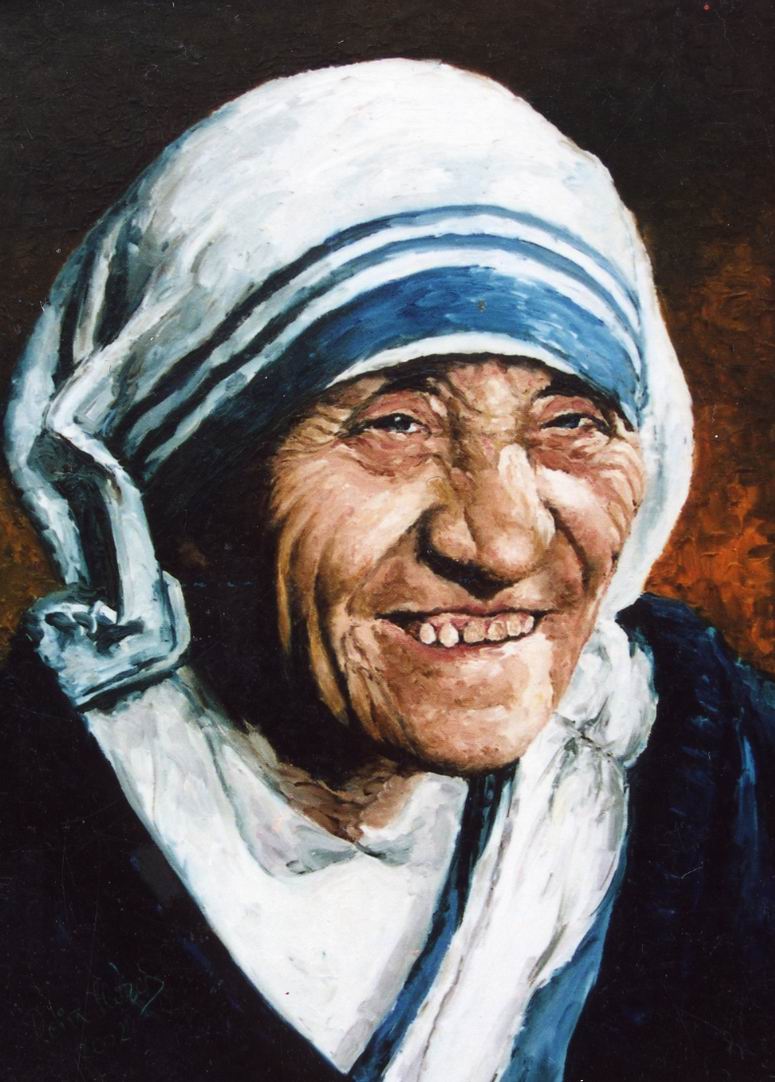
Mother Theresa And The Jesuits Of India

Lapierre visits city college
December 13 2007
Express News Service
MANGALORE: Dominique Lapierre, the author of famous novel, The City of Joy, a novel based on the life of Mother Theresa and the great city of Kolkatha, visited the St Aloysius College here on December 10. He was in the city along with a group of French tourists who are on a cruise to India. Lapierre visited the College Chapel and made a brief visit to the Information Technology Centre of the St Aloysius College. He was accorded a warm welcome by Fr Denzil Lobo, S.J., the Director of AIBA & AICS. Lapierre appreciated the good work done by the Jesuit fathers and said that he himself was an alumnus of Jesuits and had close contact with the Jesuit fathers of Kolkata region.

Wednesday, December 12, 2007

USCCB Comes Down Hard, On Georgetown's Theology Department

"Being Religious Interreligiously"
Bishops’ Doctrine Committee corrects theologian for relativistic book
Washington DC, Dec 11, 2007 / 11:40 am (CNA).-

In a shot across the bow to all Catholic theologians, whom are proponents of Liberation Theology. The left was shockingly rebuked, not by Rome, but by the USCCB. The American bishop's gave a stinging indictment to the Catholic Left's, Fr. Peter C. Phan for not adhearing to the fundamentals of Christianity.

The Doctrine Committee of the United States Conference of Catholic Bishops has examined a work of theologian Father Peter C. Phan, “Being Religious Interreligiously: Asian Perspectives on Interfaith Dialogue.” Father Phan, a priest of the Diocese of Dallas, Texas, is a professor in Georgetown University’s Department of Theology. The Congregation for the Doctrine of the Faith asked the American bishops’ Doctrine Committee to evaluate the book. The committee asked Father Phan to clarify points of concern over a period of two years. The committee’s evaluation was presented in a document titled “Clarifications Required by the Book ‘Being Religious Interreligiously: Asian Perspectives on Interfaith Dialogue’.” The committee said that Father

Phan’s book uses “certain terms in an equivocal manner” that “opens the text up to significant ambiguity.” It added that “a fair reading of the book could leave readers in considerable confusion as to the proper understanding of the uniqueness of Christ.”


The committee focused on three areas of theological concern: Jesus Christ as the unique and universal Savior of all humankind; the salvific significance of non-Christian religions; and the Church as the unique and universal instrument of salvation. In his book, Father


Phan had qualified the uniqueness of Christ, saying that terms referring to Christ as “unique” “absolute” and “universal” “should be removed and replaced by other, theologically more adequate equivalents.”


The committee clarified Catholic teaching saying, “It has always been the faith of the Church that Jesus is the eternal Son of God incarnate as man. The union of humanity and divinity that takes place in Jesus Christ is by its very nature unique and unrepeatable… Because humanity and divinity are united in the person of the Son of God, He brings together humanity and divinity in a way that can have no parallel in any other figure in history.” According to the committee’s statement, Father


Phan’s book questions the Church’s mission to spread the Gospel to all. He states that “non-Christian religions possess an autonomous function in the history of salvation, different from that of Christianity,” and that “they cannot be reduced to Christianity in terms of preparation and fulfillment.” The Doctrine Committee said the book’s argument leads to the conclusion that there is some kind of moral obligation for the Church to refrain from evangelizing and people of other religions. Father Phan’s book says that religious pluralism “may not and must not be abolished” by conversion to Christianity.


The Committee noted that “[t]his call for an end to Christian mission is in conflict with the Church’s commission, given to her by Christ Himself: ‘Go, therefore, and make disciples of all nations…’” It was “incoherent” to believe that Jesus Christ is the Son of God made man, but still argue that it would be better if people did not know this important truth. Father


Phan’s book also asserts that the Church’s claim to uniqueness and universality “should be abandoned altogether” because of the Church’s human failings and her historical entanglement with sin and injustice.


While acknowledging the sinfulness of Church members, the Doctrine Committee affirmed “the holiness of the Church is not simply defined by the holiness (or sinfulness) of her members but by the holiness of her head, the Lord Jesus Christ.” The committee declared that because all grace flows through Jesus, that grace must be seen in relationship to the Church, the “universal sacrament of salvation.”

The full text of the Doctrine Committee’s statement is available at www.usccb.org/dpp/statementonbeingreligiousinterreligiously.pdf

Link (here)

Tuesday, December 11, 2007

News Alert! God The Father Is Still God The Father

On God The Father, Not God the Mother
Here is an excerpt of the Mark Brumly piece in Ignatius Insight.


Cardinal Ratzinger made a similar point in The Ratzinger Report: "Christianity is not a philosophical speculation; it is not a construction of our mind. Christianity is not ‘our’ work; it is a Revelation; it is a message that has been consigned to us, and we have no right to reconstruct it as we like or choose. Consequently, we are not authorized to change the Our Father into an Our Mother: the symbolism employed by Jesus is irreversible; it is based on the same Man-God relationship he came to reveal to us." Now people are certainly free to reject Christianity. But they should be honest enough to admit that this is what they are doing, instead of surreptitiously replacing Christianity with the milk of the Goddess, in the name of putting new wine into old wineskins. Taking Another TackHere proponents of feminine "God talk" often shift gears. Rather than argue that Jesus’ teaching was merely the product of a patriarchal mindset to which even He succumbed, they say that Jesus chose not to challenge patriarchalism directly. Instead, He subverted the established order by His radical inclusivity and egalitarianism. The logical implications of His teaching and practice compel us to accept inclusive or gender-neutral language for God, even though Christ Himself never explicitly called for it.This argument overlooks an obvious point. While affirming the equal dignity of women was countercultural in first century Judaism, so was calling God "Abba." Some feminists counter with the claim that the very idea of a loving Heavenly Father was itself a move in the feminist direction of a more compassionate, intimate Deity. The first century Jewish patriarch, they contend, was a domineering, distant figure. But even if that were so–and there is reason to doubt such a sweeping stereotype of first century Judaism–revealing God as a loving, compassionate Father is not the same as revealing Him as Father/Mother or Parent. That Jesus corrected some people’s erroneous ideas of fatherhood by calling God "Father" hardly means we should cease calling God "Father" altogether or call Him Father/Mother.Feminists also sometimes argue that Scripture, even if not Jesus Himself, gives us a "depatriarchalizing principle" that, once fully developed, overcomes the "patriarchalism" of Jewish culture and even of other parts of the Bible. In other words, the Bible corrects itself when it comes to male stereotypes of God.But this simply is not so. Granted, the Bible occasionally uses feminine similes for God. Isaiah 42:14, for example, says that God will "cry out like a woman in travail." Yet the Bible does not say that God is a woman in travail, it merely likens His cry to that of a woman.The fact is, whenever the Bible uses feminine language for God, it never applies it to Him in the same way masculine language is used of Him. Thus, the primary image of God in Scripture remains masculine, even when feminine similes are used: God is never called "She" or "Her." As Protestant theologian John W. Miller puts it in Biblical Faith and Fathering: "Not once in the Bible is God addressed as mother, said to be mother, or referred to with feminine pronouns. On the contrary, gender usage throughout clearly specifies that the root metaphor is masculine-father."

Link (here)

They Call It DeMello Yellooo... That's Right!

A history of modern contemplation
By THOMAS C. FOX 12/14/07
Contemplative prayer traditions are alive and spreading in the West and have been for the last four decades, resulting from a revival in interest in both Christian and Eastern meditation practices. While the revival was not necessarily a direct result of the Second Vatican Council (1962-65), the council helped open doors to interreligious dialogue and spawned interest in Eastern religious practices. It was in October 1965, as the council was drawing to a close, that Pope Paul VI proclaimed Nostra Aetate, the “Declaration on the Relationship of the Church to Non-Christian Religions,” which contained the following revolutionary paragraph: “The Catholic church rejects nothing that is true and holy in these (non-Christian) religions. She regards with sincere reverence those ways of conduct and of life, those precepts and teachings which, though differing in many aspects from the ones she holds and sets forth, nonetheless often reflect a ray of that Truth which enlightens all men.” The council, in effect, gave permission to spiritual pilgrims, and some Western clergy traveled east. Trappist Fr. Thomas Merton, Benedictine Fr. Bede Griffith, Benedictine Sr. Pascaline Coff and Fr. Edward Hays, among others, traveled to Asia and began to share their experiences with Western Catholics. Hays opened an ashram, called Shantivanum, incorporating Eastern meditation practices, near Leavenworth, Kan.

The writings of Jesuit Fr. Anthony de Mello and Fr. Raimundo Panikkar spread
interest in Eastern ways. About the same time, Eastern contemplative practices
were entering the West through popular culture.
In 1968 the Beatles traveled to India where, with considerable fanfare, they studied transcendental meditation with its principal guru master, Maharishi Mahesh Yogi. Transcendental Meditation centers soon were appearing in cities across America. Christian contemplative prayer, rooted in meditation, dates back to the Desert Fathers and Mothers beginning in the third century. These practices were widespread in the church, lasting until the Middle Ages when slowly they gave way to more vocal and formal prayer forms. It was in the mid-1970s that a number of Benedictine monks, working independently in England and the United States, began investigating the practice of pure contemplative prayer. In 1975 Benedictine Fr. John Main began weekly meditation groups at his monastery in London and then, later, in Montreal. That same year Benedictine Fr. Thomas Keating started the practice at St. Joseph Abbey in Spencer, Mass. Both men’s practices represented a major rediscovery of a lost Christian tradition, though there are subtle differences. Main’s efforts led to the formation of the World Community for Christian Meditation and Thomas Keating’s to the Contemplative Outreach. The two groups have collaborated for 30 years and maintain close ties. Both practices involve the repetition of a sacred word or phrase. Prayer is viewed as an opening of one’s whole being to God, moving beyond thoughts, words and emotions.
Other contemplative practices began to spread in the 1970s, including Zen and Tibetan tradihons. A Vietnamese Buddhist monk and Zen master, Thich Nhat Hanh,
popularized a form of meditation called mindfulness. In the 1960s he taught Buddhist thought at a Buddhist university in Saigon, and in 1965, during the Vietnam War, a group of his students issued a call for peace. A few years later, Nhat Hanh traveled to the United States and met with Martin Luther King Jr., urging the civil rights leader to publicly denounce the war.
Nhat Hanh also visited Merton at his Kentucky monastery, the Abbey of Gethsemani, near Louisville, Ky. After the visit Merton told his students, “Just the way he opens the door and enters a room demonstrates his understanding. He is a true monk.” This monk-to-monk dialogue represented a breakthrough in East-West communication. Those bonds were knotted when Merton wrote an essay, “Nhat Hanh Is My Brother.” Later, Living Buddha, Living Christ became one of Nhat Hanh’s most popular books. On the subject of mindfulness, Nhat Hanh writes: “The moment when you go back to your breath and you breathe mindfully, holiness is there, because mindfulness is the substance of holiness. God is there, the Holy Spirit is there at the same time.”
Link to original article (here)
More on DeMello (here), (here) and (here)

Monday, December 10, 2007

Phan Say's Don't Evangelize, Maybe Phan Should Be Jettisoned From Georgetown?

Book on interfaith relations by theologian differs from Roman Catholic teaching
Roman Catholic teaching has not got much in common with a book on interfaith relations by a Georgetown University theologian. The Rev. Peter C. Phan, in his book "Being Religious Interreligiously: Asian Perspectives on Interfaith Dialogue," writes that the terms "unique" and "absolute" when referring to Christ may "have outlived their usefulness and should be jettisoned," the doctrine panel said.
book on interfaith relations(http://www.theorthodoxromancatholic.com/)
Phan also wrote that religious pluralism "'may not and must not be abolished' by conversion to Christianity," the committee said. That assertion is in conflict with Christ's commission to the church to evangelize the world, the panel said. Phan, a priest in the Diocese of Dallas, declined to comment Monday. He teaches Catholic social thought at Georgetown, which is a Jesuit school in Washington. The Vatican Congregation for the Doctrine of the Faith, the doctrinal watchdog for the church, asked the U.S. Conference of Catholic Bishops to evaluate the book. The bishops' Doctrine Committee spent two years on the review, asking Phan to explain his writing. But the panel said that Phan "did not provide the needed clarifications," so the panel issued the statement Monday to warn Catholics and others that the book could be misleading. No other action by the committee was announced. Julie Green Bataille, a Georgetown spokeswoman, said in a statement that Phan and the school's other faculty have "a long and distinguished tradition" of writing on complex religious issues, and the school "embraces academic freedom and supports the free exchange of ideas."
Link (here)

We Have All Seen These Before

THE TEN MOST COMMON LITURGICAL ABUSES
And Why They're Wrong
By Kevin Orlin Johnson
This RockVolume 10, Number 1 January 1999

Before Vatican II there weren’t any surprises when it came to the Mass. Now in many parts of the United States you’ll find priests improvising as they go along. Even archbishops issue pastoral letters directing things at odds with liturgical regulations. As Pope John Paul II noted in a 1998 ad limina address to the American bishops of the western states, not all of the changes in the liturgy "have always and everywhere been accompanied by the necessary explanation and catechesis; as a result, in some cases there has been a misunderstanding of the very nature of the liturgy, leading to abuses, polarization, and sometimes even grave scandal." "Scandal" is a word much in the news these days, but it doesn’t really mean a shameful or sexual misdemeanor. "Scandal" in the Church’s vocabulary means just what it means in the Bible: a stumbling block, something that obstructs a person’s way to the faith (Matt. 18:6–9).
When the Mass is presented as something casual, entertaining, or improvisational, the whole point of it disappears.
If the priest conducts himself as if Christ were not truly present in the Eucharist, why should the lay people in his parish think the Eucharist means anything? Why should they bother to go to Mass at all? Religious vocations, always sufficient in this country, began dropping off as the new order of the Mass was imposed without the necessary explanation and catechesis. Now many parishes have priests of other nationalities; we have become virtually a missionary country.In an atmosphere of free-form liturgy, it’s up to the laity to know the laws about texts, gestures, the sacred objects used, and the proper conduct of the Mass; to obey those laws; and to see that the clergy obeys them, too. It’s up to us to call our priests back to due reverence when it comes to matters of taste that aren’t covered by law. It’s also important to know the difference between matters of law and matters of taste, because you have to know when you can insist and when you have to persuade. But by and large the laws binding on all priests are enough to bring back the reverence that is all too often missing. If you question some liturgical practice at your parish, go to your nearest Catholic library or bookstore and have a look at these texts: the General Instruction on the Roman Missal (GIRM); the Code of Canon Law (its acronym, CIC, is derived from its Latin title, Codex Iuris Canonici); the Ceremonial of Bishops (CB); and the Ceremonies of the Modern Roman Rite (CMRR). The Documents on the Liturgy 1963-1979 (DOL) published by the Liturgical Press in Collegeville, Minnesota, includes many kinds of regulations in a single volume; so does The Liturgy Documents: A Parish Resource by Liturgy Training Publications at the Archdiocese of Chicago. Check the directives from popes and Vatican congregations, particularly the Congregation for Sacraments and Divine Worship (CSDW). The Congregation publishes the answers to questions of interest in a periodical called Notitiae. These reinforcements of law are binding on all the faithful, and they go into greater detail than the laws themselves can; but mostly they repeat that the laws must be followed in this and every other instance.. Pauline Books & Media publishes many of these documents in inexpensive editions. And if you have a computer, check the Internet. You can easily find the complete texts of just about any Church document, free, including a good many articles from Notitiae.Above all get a copy of the Order of Mass approved for use in the United States. Unfortunately, it’s hard to find the Order outside of huge altar books, which are expensive, or missalettes, which aren’t always accurate.
Pangaeus Press in Dallas publishes an affordable edition of the Order. When you have the applicable laws, write to the offending priest, citing the law, chapter, and verse and quoting it in full. Be objective and charitable; if you can, phrase your concerns as questions. An errant priest simply might not know what he’s doing, but whether he’s negligent or willful he might get obstinate or try to save face when his error is pointed out.
If you get no satisfaction after a reasonable exchange, repeat your concerns to the priest in writing and send a copy to your bishop. It might end up being a longer and less pleasant process than you’d think. So be prepared to repeat the process and to keep the focus on the exact issue and the exact laws that it violates. As frustrating as the process might get, never lose your sense of charity. If your complaint comes to a successful conclusion, don’t crow about it; you haven’t won anything. The law has been fulfilled. The Blessed Sacrament has won. Here are the most common abuses that you find in American liturgies today, with a few references to the laws that prohibit them. Check out those references and you’ll probably find laws on similar problems in your own parish.
.
1. Disregarding the prescribed text of the Order of Mass.
This particular abuse is perhaps the most widespread. You might think that the mere existence of a prescribed, official Order of Mass would be enough to show priests that they’re not to change or improvise, but it isn’t. It’s not uncommon to find lectors eliminating male references to God in the Scripture readings or using the New Revised Standard Version of the Bible (or other inaccurate and unapproved ones) for the readings. You sometimes hear priests changing the words of the Nicene Creed—omitting the word "men" in "for us men and for our salvation" is the most common violation—or omitting the Creed altogether; saying aloud the prayers to be said quietly; or generalizing them, saying, for instance, "Lord, wash away our iniquities and cleanse us of our sins" (instead of "my" and "me"). You hear priests changing the tense and thereby the sense of phrases like "pray that our sacrifice is acceptable" instead of "may be acceptable" or "the Lord is with you" instead of "the Lord be with you." You hear them inviting the congregation to join in prayers specified as the priest’s alone. On occasion you even find priests winging it during the Eucharistic Prayer. And beyond the improvised words you’ll find a lot of flippant practices like using blue vestments for Marian feasts or gingerbread for the Eucharist at children’s Masses. All of this is unlawful: "Regulation of the sacred liturgy depends solely on the authority of the Church, that is, on the Apostolic See and, as laws may determine, on the bishop. Therefore no other person, even if he be a priest, may add, remove, or change anything in the liturgy on his own authority" (Constitution on the Sacred Liturgy, 22, repeated in documents like Sacram Liturgiam; Tres Abhinc Annos; CIC 841, 846; and many other laws and regulations). Deviations from the Order are illicit, and when done intentionally they’re a grave offense both against the Church and the faithful who have a right to an authentic liturgy (Inaestimabile Donum, CSDW, April 3, 1980).
.
2. Interrupting the Mass.
The priest has no more right to interrupt the Mass from the sanctuary than you have to interrupt it from the pews. At the conclusion of Mass the lector or priest may make general announcements for the information of the parish; that’s specified in the Order. But no one may stop the Mass to make announcements, give financial reports, or make pleas for funds (Inter Oecumenici; Inaestimabile Donum). No one may stop the Mass for extra homilies (CSDW, Liturgicae Instaurationes 2(a)) and certainly not for other activities that are themselves unlawful, like skits or "liturgical dance."
.
3. Omitting the penitential rite.
This one is often misunderstood. A priest may choose to use the rite of blessing and sprinkling as given in the Order, in which case he must omit the "Lord have mercy." But a priest can never omit the penitential rite altogether, and he cannot give a general absolution during the penitential rite of the Mass as a substitute for individual Reconciliation (nor can he do so during a communal penance service [CIC 961]). There are other options available to the celebrant elsewhere in the Order. The sign of peace, for instance, is optional (GIRM 112). If he includes it, though, the priest is not allowed to leave the sanctuary to exchange it with the congregation (GIRM 136).
.
4. Replacing or omitting the homily.
A priest may omit the homily only on weekdays that are not holy days. On Sundays and holy days he must give a homily (Sacrosanctum Concilium; CIC 767); it should relate the readings to one another and indicate how their message can be applied to the lives of his parishioners (Paul VI, Evangelii Nuntianidi; Inter Oecumenici). No priest can substitute announcements, financial reports, or pleas in place of the homily, nor add such things to it. Of course the Holy See isn’t going to make a fuss if he takes a couple of sentences at the end of the homily to make an announcement, tell how much is in the building fund, or mention a second collection. Nobody who is not a priest, deacon, or bishop can give the homily at Mass; nobody who is not ordained can give a "talk" or "reflection" in place of the homily (CIC 766–768). Although some few groups like the Society for the Propagation of the Faith have a dispensation to speak on behalf of an order or mission at the time appointed for the homily, it is never permitted without that dispensation—not even if he (or, worse, she) gives a short homily before launching into the appeal. An ordained minister gives a homily structured on certain guidelines; that’s it. Incidentally, he may not leave the sanctuary during the homily (GIRM 97).
.
5. Dictating posture.
There are parishes where the ushers will ask you to stand when you’re kneeling. Many churches are being built now without kneelers to discourage you from kneeling at all. This violates the law and does no honor to Christ nor to the martyrs who died rather than compromise the outward signs of their faith. But if the celebrant and his ushers can’t mandate your posture, the law can, and it does. Everybody at Mass is supposed to be uniform in standing, sitting, and kneeling (GIRM 20), and there are universal rules about it. In this country you are still required to kneel during the Consecration, from after the end of the Sanctus until the Great Amen, even if there aren’t any kneelers (GIRM 21; Appendix to the General Instruction 21). You are required to bow or kneel at the words "by the power of the Holy Spirit" in the Creed (GIRM 98). You are required to genuflect whenever you pass the Eucharist, whether it’s in the tabernacle or publicly exposed except when in procession (GIRM 233; CB 71). And contrary to what you might see these days, the Eucharist’s tabernacle can’t be tucked out of the way. It should be "placed in a part of the church that is prominent, conspicuous, beautifully decorated, and suitable for prayer" (CIC 938). After Communion, though, you’re free to stand, sit, or kneel as you choose.
.
6. Dictating the manner of reception of the Eucharist.
Vatican II never mentioned receiving the host in hand. But when some countries introduced the practice illicitly Pope Paul VI surveyed the world’s bishops to see if it should be allowed where it already existed. Rather than suddenly suppressing reception in the hand, the pope granted an indult intended to let the practice continue for a time in those areas where it already existed. Oddly enough, the bishops of the United States—where the practice did not exist—asked permission of the Holy See to introduce it here. Even more amazingly, they got it. Still, universal Church law does not permit reception of the Sacrament in the hand, and John Paul II disapproves of the practice. The indult that allowed it specified that reception in the hand "must not be imposed" (CSDW, En réponse, 1969). Absolutely no priest or extraordinary minister of Holy Communion may refuse to administer the Eucharist on the tongue. Your right to determine which lawful manner you use is stated in the GIRM (Appendix for the United States, 240b). The chalice cannot be left on the altar for people to pick up and drink from, not even during lightly attended Masses. The celebrant must distribute the Sacrament (United States Bishops’ Directory on Communion Under Both Species, 47). In fact, you’re not allowed to dip your host into the chalice; you have to take the cup and drink from it (DCUBS 45). By the way, as to Eucharistic ministers, it’s important to note that they’re not supposed to help distribute the Sacrament routinely; only if there’s an unusually large number of people at Mass or if they’re sent to distribute extraordinarily outside of Mass, as to the sick. They are not supposed to assist at all when a priest is in attendance. Their office has nothing whatever to do with increased participation by the laity.
.
7. Ignoring rules for reception of the Eucharist.
The official statement of the rules for reception has recently been rewritten by the National Conference of Catholic Bishops, and unfortunately it’s pretty vague. But it still says clearly that "in order to be properly disposed to receive communion, participants . . . normally should have fasted for one hour," abstaining from food and drink except water or medicine. The rewrite also goes to great lengths to say that non-Christians and Christians not in communion with the Church are welcome to come to Mass, but it’s not nearly so clear as it used to be on the fact that they may not receive the Eucharist. The new phrase "ordinarily not admitted to holy communion" makes some Catholics—and too many priests—figure that it’s all right for non-Catholics to take communion on special occasions like weddings or funerals, or if the non-Catholic is a prominent person like a government official or head of state. Exceptions are so few and given in circumstances so rare that it might have been more helpful to write simply "not admitted to holy communion"; but that’s for the bishops to say. Naturally, you’re also required to be free from "grave" sin—what we all used to call "mortal" sin—which means Reconciliation before reception if you have committed a grave offense. And, no, the theology about what constitutes a grave sin has not changed, even if the terminology has.
.
8. Holding hands during the Our Father.
This is oddly widespread in the United States but it’s an illicit addition to the liturgy. The official publication of the Sacred Congregation for the Sacrament sand Divine Worship, Notitiae (11 [1975] 226), states the practice "must be repudiated . . . it is a liturgical gesture introduced spontaneously but on a personal initiative; it is not in the rubrics." And anything not in the rubrics is unlawful, again because "no other person . . . may add . . . anything [to] the liturgy on his own authority" (ibid).Notitiae (17 [1981] 186)) also reaffirms that the priest may never invite the congregation to stand around the altar and hold hands during the Consecration. He stays in the sanctuary and we stay outside of it.
.
9. Performing liturgical dance.
Introducing dance into the liturgy in the United States would be to add "one of the most desacralized and desacralizing elements" leading to "an atmosphere of profanity, which would easily suggest to those present worldly places and profane situations. Nor is it acceptable to introduce into the liturgy the so-called artistic ballet because it would reduce the liturgy to mere entertainment" (Notitiae 11 [1975] 202–205).
.
10. Closing the holy water fonts at some seasons.
This is another innovation introduced spontaneously, and while holy water fonts are not integral parts of the Mass, emptying them during Lent or Advent is wrong no matter how you look at it. It’s not found anywhere in liturgical law, which is reason enough to suppose it to be forbidden. And it makes absolutely no sense. Holy water is a sacramental, so its right use carries with it a certain degree of forgiveness of sin and remission of punishment (Catechism of the Catholic Church, 1668; CB 110–114). There is no positive spiritual benefit in depriving the faithful of this legitimate aid at any time. In fact, removing it during penitential seasons is bizarre—that’s when we need it most. By the way, because the penitential rite of the Mass and reception of the Eucharist remit venial sins, there’s no need to use holy water on the way out of Mass. Unless you’ve been up to some mischief in those few minutes. As a postscript, I mention something that might be categorized as an abuse by the laity: parish-hopping. The Code of Canon Law provides that "The precept of participating in the Mass is satisfied by assistance at a Mass which is celebrated anywhere in a Catholic rite either on the holy day or on the evening of the preceding day" (1248, para. 1). Consequently, you can fulfill your Sunday obligation by going to a Mass anywhere. While your legal membership still remains in your local parish, the only times you are required to check in there are when you want to receive a special sacrament (e.g., marriage, confirmation) for which the priest needs the jurisdiction to administer. Nevertheless, if you flee your home parish when things get ugly, you are in a sense not living up to your responsibility as a lay person. It is your duty to point out that liturgy is not entertainment. The liturgy is reality, the primary reality of this world. Christ is God, the reality on whom the secondary reality of creation depends ("through him all things were made," remember?). And the liturgy is the sacrament by which he comes personally and physically among us. The Mass is indisputably the single most important thing that human beings can do. You have your part to fill in this great work. In fact, that’s what the liturgy is: the word is from the Greek meaning "the laity’s job." We are the Church itself, we are not the Church’s customers. Still less are we the Church’s audience. And we have a right to authentic liturgy (Inaestimabile Donum), liturgy exactly in line with all applicable rules and celebrated with a suitable sense of reverence (CIC 528). So if your priest offers sloppy, illicit, or even inappropriate liturgies, guess whose job it should be to pitch in and fix the problem?
Link to original article (here)

Fr. Mitch Pacwa, S.J. Debates Eric Svedsen On Sola Scriptura

Fr. Mitch Pacwa, S.J. does a magnificent job of laying out the history, defending the canon of scripture and charitably debunking sola scriptura. You can hear the debate via Sonitus Sanctus (here)

Saturday, December 8, 2007

Death To Sin, St. Alphonsus Rodriguez, S.J.

Prayer for New Life through Death to Sin
Though our most holy passion and death,
I beg of you, Lord, to grant to me a most holy life,

and a most complete death to all my vices and passions and self-love,

and to grant me sight of your holy faith, hope and charity.


You will find this prayer and others at Companion of Jesus

O Holy Heart Of Jesus, St. Claude La Colombiere, S.J.

Center of Our Hearts
O God, what will you do to conquer the fearful hardness of our hearts?
Lord, you must give us new hearts, tender hearts, sensitive hearts,

to replace hearts that are made of marble and of bronze.

You must give us your own Heart, Jesus. Come, lovable Heart of Jesus.

Place your Heart deep in the center of our hearts

and enkindle in each heart a flame of love as strong,

as great, as the sum of all the reasons

that I have for loving you, my God.

O holy Heart of Jesus, dwell hidden in my heart,

so that I may live only in you and only for you,

so that, in the end, I may live with you eternally in heaven.

.
From Jesuit, John Brown's Companion of Jesus

Jesuit North American Martyr Saint Patron Of Those Work With Or Recieve Anasthesia

St Rene Goupil studied medicine, and in 1639 offered to work as a medic for the Jesuit missionaries in America. Missionary to the Hurons, working as a donné, a layman who worked without pay. He worked in a hospital in Quebec, Canada in 1640 and was assistant to Saint Isaac Jogues on his missionary travels. He was Captured and tortured by Iroquois, enemies of the Huron, for making the sign of the cross over a child’s head. While they were in captivity, Father Isaac received Rene into the Jesuits as a religious brother. He is the first North American martyr and his death by tomahawk in the head led to his patronage of people who work with or receive anasthesia.
Picture is a statue of St. Rene with the "Indian Child"
Link (here)

Fidel Castro Jesuit Educated

‘The Boys From Dolores’
By PATRICK SYMMES
Miami Springs

Pedro Haber didn't actually start by saying that it was "a difficult year for the Sad Ones." He had said that it was a difficult year for the Dolorinos. The word is rooted in dolor, meaning "pain, ache; sadness, grief." When Pedro said Los Dolorinos it sounded like all of those things, a world of aching and grieving, the ones who suffer. But it had another meaning, for these were the men who, as boys, came from a happy place. Dolores was their old school, the Catholic academy, run by Jesuits. The Colegio de Dolores where they had all met had been a boarding school in eastern Cuba, once upon a time. The sadness had come later.
Everyone in the room, from the busboys on up, spoke the twin languages of this nation-within-a-nation. But not everyone is equally ambidextrous, and thought and speech leapt between Cuba and the United States. At the far right of the room, near the entrance, was a special table reserved for VIPs and the guests of honor. Pedro Haber and I were sitting there, and the accents and vocabulary at this table were a mixture of proper upper-crust Castilian Spanish and plain American English. Two spots over to my right was Pedro Roig, a Dolores alumnus and Bay of Pigs veteran, who was now head of TV Martí in Washington. Immediately on my left was Lundy Aguilar, retired from his professorship at Georgetown University.

And directly across the table was the Reverend Father Juan Manuel Dorta-Duque, one of the last surviving teachers from the old school in Cuba. He was a Jesuit, or more properly, a member of the Society of Jesus, perhaps the most influential of all Catholic orders. Dorta-Duque was eighty-four years old now, but that wasn't old enough to have known Fidel Castro. Dorta-Duque told me that he didn't arrive at Dolores until 1951. But he had known all the Jesuits who had taught Fidel, as well as some of the younger boys from those days, or the younger brothers of the boys who had studied with Fidel. Dorta-Duque lived in a Jesuit home now

, retired from all work but that of joining his fellow Jesuits in their duties of worship and contemplation.
"Yes, I remember them," Dorta-Duque said, leaning forward. He meant that he remembered the students and teachers from long before the Revolution, when the future of the country was in the hallways of Dolores. "But they are all dead," he added.
One of them was sitting at the same table, actually. A survivor, just a few feet away. But Lundy Aguilar didn't hear the remark, and Dorta-Duque's mistake did no harm. Two languages, two minds, a Cuban inside every American. .......The phrase Los Dolorinos harked back to a starting point, before any expulsion from any garden.

The Colegio de Dolores was the capital school of Cuba's second city, the best
education available in eastern Cuba. The richest gathering of the richest part
of Cuba, a school of the chosen few.

All Pedro Haber had meant, what he truly said, was that they, the Dolorinos, had lost yet more friends. Four had fallen from the ranks this year. For this room of Cuban exiles, locked in an actuarial competition with Fidel Castro himself, attrition was a difficult subject. ............The old Dolorinos and their wives had started arriving en masse at 7:00 P.M., most of them not just on time for the cocktail hour, but early. Over the next hour heavy American cars kept rolling into the lot, and then the same progression of aged legs crossed the street. The grass lawn of the country club would hiss as someone explored the possibility of taking a shortcut. A dress shoe came back out of the grass with a sucking sound, and a high heel stabbed an indentation in the lawn that began to fill with runnels of silt. The click of heels on brick soon followed. These men and women, averaging somewhere in their early sixties, cut no corners. Moving slowly, often supporting each other, they made right-angle turns on the brick walkways, which were uneven and slicked with algae. The men, in a mixture of brown and black suits, or sometimes the long-sleeved guayaberas, were jovial, even the one who arrived using a walker. The women had formality and reserve. (It wasn't their reunion; Dolores was a boys school.) Or maybe the women had, in their upright carriage, just the composure required by cream gowns and structured black cocktail dresses, by shoulder wraps of the very gauziest pastels. Their hair was stiff. Usually short, a tropical reality, but fixed in uplifted constructions. Their lips and eyelashes were lacquered with precision. Even on the men, every hair was in place — brushed back, Brylcreemed, ordered and clipped. You had to draw the line somewhere and this was it: neatness of tonsure was a way of fighting back, of defending civilization against its enemies.
The banquet hall of the Miami Springs Country Club is called the Legends Room, but it isn't very big. There were 105 people in there by 8:00 P.M., and most of them were talking, a raucous atmosphere of jokes, bragging, disbelief, laughter, shouts, argument, and monologue, all of it bouncing off long tables of rented glass and dull knives. The crowd was prone to thick glasses and hearing aids, but functional, still able to dance and to argue. The men touched one another constantly, putting a hand on another's arm, pressing a shoulder in their grip, even clutching one another's lapels in a kind of menacing embrace. They wore pins in those lapels, showing off their allegience to political movements, their qualifications as survivors of various disasters, their enlistment in Masonic Lodges, the Elks, Lions, Odd Fellows, and Rotary, or ethnic allegiances, sporting clubs, religious leagues, cultural groups, charitable drives, and other bulwarks against the loss of everything. Ariel Dorfman, a Chilean, said that an exile had only two possessions, the language of his birthplace and the keys to a house that no longer exists. Cubans are joiners, filling their empty pockets with new things.
On the way into the Legends Room, the door charge was $5, collected as a donation to the welfare fund for impoverished alumni of the school. For that money, you received a printed program for the reunion event. It listed the speakers, and featured page after page of pictures, old shots of the Colegio de Dolores in Santiago. There were many of the students of past days, and shots of the signature buildings of Santiago and the surrounding region. .............That was Cuba, but that isn't Cuba. Oriente doesn't exist anymore. Fidel Castro had literally redrawn the map, turning the traditional six into a new fourteen. The old provinces and identifications were blown up and replaced with rational borders and, sometimes, names commemorating Castro's own life.

Part of old Oriente was broken off and renamed Granma province, because Castro had run his boat Granma aground there. How could an exile say he was from such a place? The old Isle of Pines, where a young Castro had served jail time, had been split off to make a province called the Isle of Youth, contractually dedicated to education. Who could acknowledge such things? They didn't sell accurate road maps, either. Never mind if Castro had built a new highway down the middle of Cuba, or that a better map would reveal all the satellite housing cities and rural polytechnic universities that had sprung up across Cuba. Nobody was going to that Cuba. The less accurate the map the better.

I browsed through some copies of old photographs of Santiago, with men in straw hats, and views of the bay, or the old Bacardi rum factory. Next down the table was a Havana telephone guide from 1959. This old phone book, full of period illustrations and corporate optimism, is the single best selling item at the Cuba Nostalgia Fair, a memorabilia mart that draws thirty thousand people to a convention center in Miami once a year.

Link (here)
.
Castro on Catholicism, Holy Father John XXIII on Castro
Castro was raised a Roman Catholic as a child but does not practice as one. In Oliver Stone's documentary Comandante, Castro states "I have never been a believer", and has total conviction that there is only one life.[143] Pope John XXIII excommunicated Castro in 1962 on the basis of a 1949 decree by Pope Pius XII forbidding Catholics from supporting communist governments. The excommunication was aimed at undermining support for Castro among Catholics.
Link (here)
.
Castro the atheist attacks the Catholic Church
Monday, Aug. 22, 1960 from Time Magazine
Castro v. the Church
Fidel Castro last week lashed out at the leaders of the Roman Catholic Church in Cuba as "scribes and Pharisees," "peons of the American embassy" and "Franco Fascists." Castro's rage was aroused by a pastoral letter* condemning "the growing advance of Communism in our country." He shouted that whoever "condemns the revolution betrays Christ" and is "capable of crucifying Christ again."
The Catholic Church in Cuba has only 720 priests, one for each 8,000 Catholics, compared with the U.S. ratio of one for every 760 Catholics. Moreover, Cuba's lower classes consider the church somewhat foreign; 400 of the priests are Spanish-born (most of them anti-Franco, despite Castro's accusation), and another 100 are foreigners from other countries. Although nearly 85% of Cuba's 6,700,000 population is nominally Catholic, regular church attendance is confined mostly to women and children. Castro himself went to Jesuit-run schools for eleven years and wore a religious medal as a guerrilla in the hills. But he is divorced (though not remarried) and does not go to church. His ten-year-old son, under his mother's influence, has become a Methodist.
Yet even Maximum Leader Castro cannot afford to ignore the church. In the past five years, it has been a rallying point for enemies of dictators who fell in Argentina, Venezuela and Colombia. Last week, after pro-Communist gangs attacked crowds leaving Havana Cathedral, Archbishop Diaz threatened that the Cuban Catholic Church might declare itself officially "in silence"—as it is behind the Iron Curtain. As the Castro-Catholic battle got hotter, church attendance showed a sharp and significant upturn.
Link to the Time article (here)
.
Socialist Un-Utopia
Castro's crimes against Humanity
Free Cuba from What?
Fidel Castro's regime is guilty of numerous documentable crimes stretching from the jungles of Peru to the deserts of Ethiopia. Documented reports exist of Cuban troops in cahoots with the Ethiopian government denying food to starving Ethiopians because of their political ideology. In Latin America, Castro funded guerrilla groups throughout the hemisphere generating terror and fear for decades.
At home Castro's regime has created the most repressive police state apparatus in the Western Hemisphere. Cuba is an Orwellian nightmare set in the tropics with Big Brother sporting a beard and cigar. Cuba has refused to ratify any major international law enshrining fundamental human rights. It has refused to sign the International Covenant on Civil and Political Rights.
Castro formed Committees for the Defense of the Revolution(CDR) which operate on almost every block in Cuba. Spying on neighbors and reporting back to the regime. Negative reports can land one in jail. Talking to foreigners invites questioning into your loyalty to the regime. Large numbers of individuals are incarcerated in Castro's prisons for political crimes ranging from speaking against the regime to trying to leave the island.
In June 1991 at a meeting between Fidel Castro and several members of various communist organizations, it was agreed to set up the infamous Rapid Response Brigades. Their principle aim is to "defend the country, the Revolution and Socialism in all circumstances, by confronting and liquidating any sign of counter-revolution or crime." Trying to leave Cuba without government sanction is a criminal offense punishable by prison. Due to this Cubans are unable to build larger more seaworthy crafts, and resort to innertubes, and in some cases fiberglass cannisters in search of freedom.
The Castro regime's response to the AIDS crisis has been mandatory nation-wide testing with forced incarceration for anyone who tested positive for the HIV virus. In addition, Castro has had a long tradition of imprisoning homosexuals and transexuals as "undesirables." Imprisonment is often based on mere suspicion and rumor. Recently it was reported that young people in Cuba are purposely "shooting up" with HIV infected blood so that they can go to these camps to avoid forced labor.
In a letter dated 14 September 1992 that was smuggled out of the same prison by a group of political prisoners, it was reported that a number of prisoners with AIDS rioted on 19 August demanding better food and medical attention. Guards used rubber batons, wooden sticks, and other blunt instruments and an unknown number of prisoners were injured. Several of the AIDS sufferers were transferred to the maximum security area of the prison. Two months earlier a prisoner with AIDS sent to this area had his food quota cut in half and the diet reccomended by doctors withdrawn. The prisoner died three weeks later. The fate of the others is unknown.
Castro's achievements bear mentioning and we shall list them here. First, his regime has had the longest serving political prisoner in world history: over 28 years. Cuba, in 1959 was economically self sufficient, and did not have the tourist-Apartheid of today. Tourist-Apartheid is the situation in which Cuban citizens don't have equal access to certain beaches or restaurants that Tourists do. Reminiscent of the system of segregation of the South, or of Apartheid in South Africa these conditions have been labeled "tourist apartheid."
In forty years Fidel Castro took an island with pre-existing progressive healthcare and drove it into the ground. In 1959 Cuba had 337 hospitals in 1989 the number had decreased to 264. Increases in other areas of Cuban healthcare did not manifest themselves on a per capita basis. Disease in Cuba has steadily increased since 1959. Suicides in Cuba more than doubled from a 1,011 figure for 1970 to 2,220 in 1989.
Link (here)

Jesuit Cardinal Carries His Cross As A Witness To Others

Cancer is my "Angel," says Cardinal
HONG KONG (Zenit.org) :
After being diagnosed with lung cancer last year, Cardinal Paul Shan Kuo-hsi didn't wait to die, but rather got up to inspire others to face life with courage. The Jesuit cardinal, who is the retired bishop of Kaohsiung and former president of the Chinese regional episcopal conference in Taiwan, began his "Farewell to My Life" tour in October. His first visit was to Hsinchu, located on the northwestern coast of Taiwan, and since then has visited the six other dioceses of the island. "I treated the cancer as my 'little angel,'" the cardinal told ZENIT in a telephone interview. "It guides me to tell people that we should have the courage to face the challenges at our life." The tour came to completion Wednesday when the prelate visited Fu Jen Catholic University in Taipei. The university offered him an award to honor his love for life. Cardinal Shan Kuo-hsi turned 84 on Sunday.
The Chinese cardinal said he was "very happy to be a witness of the Gospel" at the last stage of his life. A contribution The cardinal said he had visited a drug abuse center in Taitung and met 300 inmates there Nov. 22. He told them, "The cancer let me know that as I am entering the last stage of my life, I should try my best to contribute the society." He prayed for the inmates and appealed that people should use "love" to settle the problems in their daily life.
Cardinal Shan Kuo-hsi was diagnosed with lung cancer in July 2006. He shared with those he met on the tour that he was shocked with the diagnosis, and with the prospect of only having a life expectancy of 4 to 5 months. "At first I asked the Lord, 'Why me?' When I calmed down, I recognized that it is the will of the Lord," the cardinal said. "He wanted me to help the others by sharing my personal experience with them. "And now, I will confirm that 'Why it is not me?' A cardinal does not have a privilege to stay healthy forever!" He said that after his death, his body will be turned into fertilizer for the land of Taiwan, but his soul will be returned to the Lord. The Chinese cardinal also praised the heroic example of the late Pope John Paul II, who tried his best to live out the last minutes of his life with dignity. Cardinal Shan Kuo-hsi is a native of Hebei province, northern China. He left mainland China after he joined the Jesuits in 1946. He was ordained priest in the Philippines in 1955. He was named bishop of Hualien, Taiwan, in 1979, and bishop of Kaohsiung in 1991. He was elevated to cardinal in 1998, and retired in January 2006.

Link to original story (here)

The Holy Father Continues To Circle The Wagons

New Vatican statement to address central doctrinal dispute
Dec. 7, 2007 (CWNews.com) -
The Vatican will release a new document on evangelization next week, with officials in Rome indicating that it will be an important statement on the duty to spread the Catholic faith. The subject of the new document, which is being released under the auspices of the Congregation for the Doctrine of the Faith, is evangelization. The document will be released on December 14. The importance that the Vatican attaches to the subject is reflected by the list of ranking officials who will participate in a news conference introducing the document. Three cardinals will join in presenting the subject to the press. And because the three cardinals head three separate Vatican congregations, it is clear that the document is the product of careful preparation involving several dicasteries. Cardinal William Levada, the prefect of the Congregation for the Doctrine of the Faith, will chair the December 14 presentation, assisted by Archbishop Angelo Amato, the secretary of the Congregation. They will be joined by Cardinals Ivan Dias and Francis Arinze: the prefects of the Congregation for Evangelization and Congregation for Divine Worship, respectively.
While Vatican officials have not announced a title for the document, or given a topic more specific than the broad theme of evangelization, informed officials suggested that this important new statement would address a lingering controversy over the claim that the Catholic Church is the one true Church of Christ.
In July of this year, the Congregation for the Doctrine of the Faith released, a document entitled "Responses to Some Questions Regarding Certain Aspects of the Doctrine on the Church, reaffirming the central role of Jesus Christ and the Catholic Church in the plan of salvation. That document, released without fanfare, revived a controversy that had been ignited in 2000 by Dominus Iesus (doc), a powerful statement released by the same Congregation for the Doctrine of the Faith (headed at that time by then-Cardinal Joseph Ratzinger), which affirmed the traditional Catholic teaching that the Christ and his Church provide the only means of salvation. The new Vatican document is expected to carry the argument of Dominus Iesus a step further, explaining that because of the unique role played by the Church in the plan of redemption, Catholics have an obligation to spread the faith, thus offering others the best means of attaining salvation.

Link to orginal story (here)

Jesuit On Kennedy And Romney

After Kennedy, it had been rare for candidates to spend much time talking about their religion until President George W. Bush's quest for evangelical support. Asked during a 2000 campaign debate to name his favorite philosopher, he answered "Jesus."

But while Kennedy promised not to let religion influence him, Romney is trying to court religious voters as well as others wary of his particular denomination. "What Kennedy was trying to do was run as a secular American," said Fr. Paul Crowley, a Jesuit who chairs the Santa Clara University's Religious Studies Department. "Now, people who are running for public office have to justify themselves as people of some kind of faith and at the same time be able to assure people that their particular brand of faith is not so exotic or strange," Crowley said.

James Donahue, president of the Graduate Theological Union in Berkeley, said voters want to how a leader's religious convictions affect decisions. "People are going to want to know if your religious beliefs give you the capability to adapt to changing circumstances or whether they are so rigid that you can't adapt."
Read the article (here)

Friday, December 7, 2007

Ten Reasons, Finds Twelve Reasons

"Jesuit universities are not ... indoctrination camps"
Cincinnati's Xavier University provides notice of its new curiously-named "Jesuit Identity Resource" website. The lead post helps clarify any misconceptions you may have picked up about Jesuit universities: John O'Malley, SJ, Georgetown University professor and author of The First Jesuits, offered a presentation on the history of Jesuit education on September 17 on the campus of Xavier University.

In his conclusion, he stated that Jesuit universities:
1. are not churches (or indoctrination camps),
2. have and have always had, the practical purpose of helping people survive economically and get ahead professionally,
3. are for the good of this world,
4. achieve the goodness (of #3) through developing upright and inner-directed human beings,
5. have multiple purposes with different divisions achieving different goals (related to professional, vocational and general skills, a love of learning, and habits of good judgment),
6. can achieve the multiple goals (of #5) - at least in some limited fashion,
7. accept that a belief in a transcendent God is compatible with the best of human inquiry (while into account religious pluralism),
8. reverently foster that belief (of #7),
9. deal with the belief by fostering an ever deeper adult and inner appropriation of it,
10. offer religious instruction commensurate with the sophistication of other instruction,
11.support faith doing justice, by developing citizens with a sense of social responsibility,
12. promote research on issues of particular concern to Catholics and Christians, and programs which alleviate injustice and human suffering.

A Major Hat Tip to Rich at Ten Reasons see his original post (here)

Famous 18th Century Fransican, Was Jesuit Educated, He Warned Catholics Not To Marry Protestants

Anton Joseph Binterim
Born at Düsseldorf, 19 September, 1779; died at Bilk, 17 May, 1855, a theologian of repute and for fifty years parish - priest of Bilk. He attended the Jesuit school in his native town, and then entered the Franciscan Order at Düsseldorf, 8 May, 1796. After his studies at Düren at Aachen (Aix-la-Chapelle), he was ordained priest at Cologne , 19 September, 1802. On the suppression (1803) of the Franciscan monastery to which he was attached, he was forced to retire from the religious life ; after the usual examinations, he was appointed pastor of Bilk, 21 June, 1805, and administered the parish until his death.
Father Binterim was the author of numerous theological treatises in defence of the Church against the attacks of the rationalists of the day, drawing his material from ancient ecclesiastical and literary sources. His many successes in controversy gained him numerous enemies and particularly the hatred of the partisans of Hermes who accused him of unlawful intrigue with Rome , evil transactions with the Jesuits , and treasonable practices against the Government. At one period, he suffered imprisonment for six months in the citadel of Wesel. Father Binterim wrote indefatigably against the existing evil of mixed marriages
and the Prussian legislation of 17 August, 1825, on such marriages , depriving the mother of all rights in the education of her child; he advised the formation of societies to protest against such abuses, and urged on pastors the duty of warning the young of the evils following upon marriages with Protestants . Resisting all offers of preferment, he remained in his parish until his death. He left his large library to the people of his parish . Binterim's writings are chiefly remarkable for their depth of research into the sources of ecclesiastical history and literature. In particular his principal work, "Die vorzüglichsten Denkwürdigkeiten der christkatholischen Kirche mit besonderer Berücksichtigung der Disciplin derselben in Deutchland, frei bearbeitet nach der Schrift des Neapolitaners Pelliccia (de christianâ ecclesiæ primæ mediæ et novissimæ ætatis politiâ)" (7 vols., 17 parts, Mainz, 1825-41), is illustrative of many points of Christian Archæology . In addition to this mention may be made of: "Pragmatische Geschichte der deutschen Concilien" (7 vols., Mainz, 1835-49); and "Die alte und neue Erzdiöcese Köln" (Mainz, 1828-30), a treatise on the geography, statistics, and history of the Archdiocese of Cologne . He also wrote a large number of smaller works on theological , historical, controversial, and apologetic subjects, such as matrimonial questions; the use of Latin in the church ritual; the discussion as to whether St. Peter was ever in Rome , or was Bishop of Rome ; the Monita Secreta of the Jesuits (Düsseldorf, 1853), an old myth revamped in Northern Germany ; the sale of Hosts in Germany and France (2d ed., Düsseldorf, 1852). Link (here)

Voltaire! You can Kiss My Royal Jesuit A........s!

Besançon (Vesontio)
Archdiocese coextensive with the departments of Doubs, Haute-Saône, and the district of Belfort. Few nineteenth-century dioceses have undergone similar territorial changes. The Concordat of 1802 gave the Diocese of Besançon all those districts which, in 1822, constituted the Diocese of St. -Claude. In 1806, Besançon was given jurisdiction over the three parishes of the principality of Neufachatel (Switzerland) which fell under the control of the See of Lausanne in 1814. In 1870, after the annexation of Alsace-Lorraine by Germany , the district of Belfort was withdrawn from the See of Strasburg and attached to that of Besançon. The metropolitan jurisdiction of Besançon also underwent singular changes. In 1802 its suffragans were the Bishoprics of Dijon , Autun , Metz , Nancy , and Strasburg . Under the Restoration, Dijon and Autun were withdrawn from Besançon, the latter becoming the metropolitan of the Sees of Saint-Dié, Verdun , and Belley . In 1874, after the German conquest, the churches of Metz and Strasburg were under the direct control of the Holy See . Local legends attribute the evangelization of Besançon to Sts. Ferréol and Ferjeux, sent thither by St. Irenæus , Bishop of Lyons . Duchesne has proved that these legends belong to a chain of narratives forged in the first half of the sixth century and of which the "passion" of St. Benignus of Dijon was the initial link. The catalogue of the earliest bishops of Besançon is to be read with caution. The first bishop known to history is Celidonius (c. 445); other incumbents of the see were St. Rothadius, a monk at Luxeuil and organizer of the monastic life ; St. Donatus; St. Hugh I (1031-67), prince of the empire, the real founder of the city whose markets, commerce, and schools he established; Cardinal de Granvelle (1584-86), the famous minister of Philip II , who built the palace of Besançon; Antoine-Pierre de Grammont (1662-98), who strenuously opposed Jansenism and the Reformation , strove to uplift the clergy , and, in 1691, transferred to Besançon the University of Dôle; Le Coz (1802-15), former constitutional bishop whose personality provoked in the diocese no little opposition to the Concordat ; Cardinal de Rohan-Chabot (1828-33); Cardinal Mathieu (1834-75), who distinguished himself by his defence of the temporal power, and was a member of the "Opposition" at the Vatican council . He opposed strenuously in his diocese the "simultaneous churches" which sprang up throughout the district of Montbéliard where Protestants are numerous. The monastery of Luxeuil , founded by St. Columbanus (d. 615), gave to the Diocese of Besançon a series of saints . First came the direct successors of St. Columbanus ; the Abbot St. Eustasius who founded a celebrated school in this monastery ; the Abbot St. Valbert who sent monks to found the Abbeys of St. -Valéry, St. -Omer, and St. -Bertin, and died in 665; the Abbot St. Ingofroid; St. Donatus, who became Bishop of Besançon; and St. Ansegisus , author of a celebrated collection of capitularies. The Abbey of Lure was founded at the beginning of the seventh century by St. Déicole (Deicolus), or Desle, disciple of St. Columbanus ; later its abbots were princes of the Holy Empire. The Abbey of Baume les Dames, founded in the fifth century and in which Gontran, King of Burgundy , was buried , was the school where St. Odo, afterwards Abbot of Cluny, studied in the tenth century; at the end of the eighth century there was built near it an abbey for Benedictine nuns , members of the nobility. During the Revolution , the superb church of this abbey was laid waste. Among the other saints of the Diocese of Besançon may be mentioned the hermit St. Aldegrin (tenth century), and St. Peter Fourier (1565-1640), one of those who, in the seventeenth century, inaugurated systematic education for girls. During the Middle Ages several popes visited Besançon, among them Leo IX who consecrated the altar of the old Cathedral of St. Etienne in 1050, and Eugenius III, who, in 1148, consecrated the church of St. Jean, the new cathedral . A council was held at Besançon in 1162, presided over by Frederick Barbarossa , in the interest of the Antipope Victor against Pope Alexander III .

Guido of Burgundy who was pope from 1119 to 1123 under the name of Calixtus II ,
and the Jesuit Nonnotte (1711-93) an adversary of Voltaire, were natives of Besançon. The miracle wrought through the Sacred Host of Faverney, during a fire in the year 1608, is annually commemorated by elaborate ceremonies .

More on Nonnotte,(here), (here), (here) and (here)

More on Voltaire, (here), (here) and (here)

The places of pilgrimage are: Notre Dame du Chêne at Scey; Notre Dame d'Aigremont; the pilgrimage of St. Pierre of Tarentaise at Cirey-les-Bellevaux, where St. Pierre de Tarentaise died in 1174; Notre Dame des Jacobins at Besançon; and Notre Dame de la Motte at Vesoul. Parts of the Cathedral of St. Jean at Besançon were erected as early as the eleventh century. In 1899 the following institutions were to be found in the diocese : 15 infant schools in Besançon and 35 in Vesoul; 1 deaf-mute institute in Besançon; 3 girls' orphanages in Besançon and 3 in Vesoul; 2 protectories in Besançon; 1 house of correction in Besançon and 1 in Vesoul; 2 hospitals and hospices in Besançon and 8 in Vesoul; 12 communities for the care of the sick in their homes in Besançon and 8 in Vesoul; 1 house of retreat in Besançon and 1 in Vesoul; 3 homes for the aged in Besançon; 1 infant asylum , 1 boys' orphanage , and 4 gratuitous industrial schools in Vesoul, all conducted by nuns ; 1 deaf-mute institute and 1 boys' orphanage in Besançon conducted by brothers. In 1900 the diocese had the following religious orders, Men : Capuchins , Eudists , and Marianists at Besançon, and Trappists at Notre Dame de la Grace de Dieu. Women (purely local orders): Sisters of Charity of Besançon, nursing and teaching, founded in 1799; Sisters of the Divine Providence of Frasne-le-Chateau, teaching, founded in 1780; the Daughters of St. James, nursing sisters with a mother-house at Besançon. At the close of 1905 the Archdiocese of Besançon had 657,773 inhabitants, 60 pastorates, 814 succursal parishes (mission churches), and 97 curacies.
Link (here)

17th Century Jesuit Martyr And The Ursalines

The Ursulines of Quebec
The Ursuline monastery of Quebec is the oldest institution of learning for women in North America. Its history begins on 1 August, 1639, when its first members landed in Canada , thirty-one years after Champlain had founded Quebec (1608) and only four after his death. The monastery was established by Marie Huyard de l' Incarnation , declared Venerable by the Holy See (1874), and Madame de la Peltrie , a rich widow of Alen on in Normandy . The former, after ten years of widowhood , had joined the Ursulines at Tours . Her first biographer was her son, Dom Claude Martin, a Benedictine , who died in the odour of sanctity , in 1696. His "Life of the Venerable Mother of the Incarnation " was approved (1677), by the venerable Bishop Laval. Bossuet (Etats d'oraison, IX) calls Marie de l'Incarnation "the Theresa of her time and of the New World ." The letters royal sanctioning the foundation and signed by Louis XIII are dated 1639. After three years spent in the Lower Town, near Champlain's Habitation , the nuns entered (1642) the convent built on the ground they still occupy, conceded to them (1639) by the Company of New France . Their first pupils were Indians, with whom they succeeded better than the Jesuits with their native boys. Marie de l'Incarnation mastered the difficult Indian languages thoroughly, composed dictionaries in Algonquin and Iroquois , also a sacred history in the former, and a catechism in the latter idiom. The first monastery was burned in 1650, but was soon rebuilt.

The Constitutions, written by Father Jérôme Lalemant , uncle of the Jesuit martyr , Gabriel Lalemant , combined the rules of the two Congregations of Paris and Bordeaux , and were observed until Bishop Laval decided (1681) in favor of the former, which binds its members by a fourth vow to teach girls.

The monastery shared at all times the country's fate . It was threatened by the Iroquois in 1661-2, when one of its chaplains , the Sulpician Vignal, was slain and devoured near Montreal by those savages. It underwent the siege and bombardment of Quebec by Phips (1690) and by Wolfe (1759). After the fateful battle of 13 Sept., 1759, the French hero, Montcalm, was buried by night in the convent chapel . The first English governor, Murray, used part of the monastery as his headquarters. On that occasion the rations served to the nuns for nursing the wounded and sick saved them from perishing of starvation. The governors and viceroys, both English and French, were always friendly to the institution. The foundress, who died in 1672, one year after Madame de la Peltrie , practised devotion to the Sacred Heart of Jesus , and had established it in the cloister years before the revelation to the blessed Margaret Mary. The first celebration of the feast in the New World took place in the monastery 18 June, 1700 ( Mandement of Bishop de St-Vallier, 30 March, 1700. The register of the Confraternity of the Sacred Heart begins in 1716. Clement XI (1718) enriched it with indulgences . The first superior elected (1760) after the conquest was Esther Wheelwright, a New England captive, rescued from the Abenakis by the Jesuit Bigot, and a protégée of the first governor, Vaudreuil . Besides the French, the Irish , Scotch and American elements in Canada have given distinguished subjects to this cloister , prominent among whom was mother Cecilia O'Conway of the Incarnation , the first Philadelphia nun , one of Mother Seton's earliest associates. The list of alumnae is not less remarkable. Conspicuous among its pupils were Jeanne Le Ber, the saintly "recluse of Montreal ", and Venerable Mother D'Youville , foundress of the Grey Sisters at Montreal . The Quebec monastery founded convents at Three Rivers (1697), Roberval (1882), Stanstead (1884), and Rimouski , with normal school (1906), besides sending missionaries to New Orleans (1822), Charlestown (Boston) (1824), Galveston (1849), and Montana (1893). During the Revolution several French refugees were chaplains to the monastery , the most notable being Abbé L.-P. Desjardins, who died in France , Vicar-General of Paris . Through him were procured the valuable paintings by Philippe de Champaigne, Lebrun , Collin de Vermont , Peter of Cortona , and others, that adorn the chapel .
Link (here)