Monday, January 14, 2008

Jesuit Fr. Jose Miguel Clemente, Shot In Armed Hold Up In Guatemala

CAFOD priest shot in Guatemala
A Spanish Jesuit, and CAFOD partner, Fr José Miguel Clemente is seriously ill in hospital after he was shot in a roadside hold-up on Thursday, December 20 in rural Guatemala, the agency reported on Friday.
Trying to protect himself from the attack, he drove through the blockade with his arm over his face, but was shot by the robbers at close range. Although he is still alive, the bullets have shattered his arm and destroyed his left eye. Fellow priest, Fr Jorge Sarsanedas, said that Thursdays are common for assaults in the area of Santa Maria Chiquimula because it is market day and people tend to be carrying more money.
He said: "What happened to our brother is no more than part of the 'bad luck that affects everyone here who is forced to live with fear, insecurity and impunity." Sarah Smith Pearse, CAFOD's Latin America communications officer, said: "I know José Miguel - or Josémi as he is known - a gentle, cultured man in his forties who wouldn't hurt a fly. The peacefulness of this man, and the courage and generosity of the indigenous communities with whom he works, contrast savagely with the daily reports of explosive social violence that plague Guatemala through muggings, car jacking and random murder." "Guatemala is today one of Latin America's most turbulent countries, with a history of civil war, entrenched poverty and weak governments. " CAFOD partners, including the parish of Santa Maria Chiquimula, are working to build a better future for Guatemala through peace-building, education and income-generation. "The problems are immense, and hope sometimes seems a futile dream, but in all of the darkness, it is important to bear witness to the courage of priests like Josemi and stand in solidarity with his parish at this difficult time."
Link to Independent Catholic News (here)

Sunday, January 13, 2008

History, Faith and Reason

1,300 years before St. Ignatius of Loyola, there was Tertullian.

Tertullian on the Sacraments
The statement is often made that the early Christians didn't have sacraments and that they were a later "man-made" addition of the Catholic Church. Could this early Christian have gotten it wrong so soon after the death of the last apostles?

"No soul whatever is able to obtain salvation unless it has believed while it was in the flesh. Indeed, the flesh is the hinge of salvation. . . . The flesh, then, is washed [baptism] so that the soul may be made clean. The flesh is anointed so that the soul may be dedicated to holiness. The flesh is signed so that the soul may be fortified. The flesh is shaded by the imposition of hands [confirmation] so that the soul may be illuminated by the Spirit. The flesh feeds on the body and blood of Christ [the Eucharist] so that the soul too may feed on God. They cannot, then, be separated in their reward, when they are united in their works"

(The Resurrection of the Dead 8:2–3 [A.D. 210]).

Hat tip to Crossing the Tiber (here) Thanks JMJ Joe

"Against The Grain" Two Jesuits

In a column for the National Catholic Reporter, Father John Dear expresses mixed feelings about the Jesuits and the future of the religious order: Here is an excerpt from the article that infuriated Father Dear so (Army chaplain sees job as forming ‘people of peace’, by Peter Feuerherd. Long Island Catholic Vol. 45, No. 52. March 21, 2007):
Read the full piece in "Against the Grain" (here)

The Call Of The Temporal King


THE CALL OF THE TEMPORAL KING
IT HELPS TO CONTEMPLATE THE LIFE OF THE KING ETERNAL

Prayer.
Let the Preparatory Prayer be the usual one.

First Prelude.
The first Prelude is a composition, seeing the place: it will be here to see with the sight of the imagination, the synagogues,villages and towns through which Christ our Lord preached.

Second Prelude.
The second, to ask for the grace which I want: it will be here to ask grace of our Lord that I may not be deaf to His call, but ready and diligent to fulfill His most Holy Will.

First Point.
The first Point is, to put before me a human king chosen by God our Lord, whom all Christian princes and men reverence and obey.

Second Point.
The second, to look how this king speaks to all his people, saying:
“It is my Will to conquer all the land of unbelievers. Therefore, whoever would like to come with me is to be content to eat as I, and also to drink and dress, etc., as I: likewise he is to labor like mein the day and watch in the night, etc., that so afterwards he may have part with me in the victory, as he has had it in the labors.”

Third Point.
The third, to consider what the good subjects ought to answer to a King so liberal and so kind, and hence, if any one did not accept the appeal of such a king, how deserving he would be of being censured by all the world, and held for a mean-spirited knight.

IN PART 2
The second part of this Exercise consists in applying the above parable of the temporal King to Christ our Lord, conformably to the three Points mentioned.

First Point.
And as to the first Point, if we consider such a call of the temporal King to his subjects, how much more worthy of consideration is it to see Christ our Lord, King eternal, and before Him all the entire world, which and each one in particular He calls, and says:
“It is My will to conquer all the world and all enemies and so to enter into the glory of My Father; therefore, whoever would like to come with Me is to labor with Me, that following Me in the pain, he may also follow Me in the glory.”

Second Point.
The second, to consider that all those who have judgment and reason will offer their entire selves to the labor.

Third Point.
The third, those who will want to be more devoted and signalise themselves in all service of their King Eternal and universal Lord, not only will offer their persons to the labor, but even, acting against their own sensuality and against their carnal and worldly love, will make offerings of greater value and greater importance, saying:
“Eternal Lord of all things, I make my oblation with Thy favor and help, in presence of Thy infinite Goodness and in presence of Thy glorious Mother and of all the Saints of the heavenly Court; that I want and desire, and it is my deliberate determination, if only it be Thy greater service and praise, to imitate Thee in bearing all injuries and all abuse and all poverty of spirit, and actual poverty, too, if Thy most Holy Majesty wants to choose and receive me to such life and state."

First Note.
This Exercise will be made twice in the day; namely, in the morning on rising and an hour before dinner or before supper.

Second Note.
For the Second Week and so on, it is very helpful to read at intervals in the books of the Imitation of Christ, or of the Gospels, and of lives of Saints.


Link (here)
More (here) and (here)

Fr. Josef Kleutgen, S.J. And St. Thomas Aquinas, Angelic Doctor of the Church

On this day Jan 13, 1883: the German Jesuit theologian Josef Kleutgen, a great defender of Neo-Scholasticism, who influenced Pope Leo XII to order in his encyclical Aeterni Patris (1879) the study of Thomas Aquinas in Catholic schools and seminaries.

Neo- Scholasticism
seeks to restore the fundamental organic doctrines embodied in the Scholasticism of the thirteenth century. It claims that philosophy does not vary with each passing phase of history; that the truth of seven hundred years ago is still true today, and that if the great medieval thinkers -- Aquinas, Bonaventure, and Duns Scotus -succeeded in constructing a sound philosophical system on the data supplied by the Greeks, especially by Aristotle, it must be possible, in our own day, to gather from the speculation of the Middle Ages the soul of truth which it contains.
More on Neo-Scholasticism (here) , (here) , (here) , (here) and (here)

I Hate It When A Review Becomes An Editorial

Just a reminder Tielhard was a "Rogue Theologian." Cardinal Schonborn share's nothing with Tielhard's heretical avant garde positions. However lets get some plugs in for popular atheistic books if we can. The reviewer does not miss a chance to diss one of the most powerful Catholic Cardinals in the world.

in which the cardinal seemed to place Catholic doctrine uncomfortably in alignment with intelligent design theory.


This not a review, just more secular theology.
.
A Catholic theologian on God and science
By Frank Wlson
Inquirer Books Editor
Chance or Purpose Creation, Evolution, and a Rational Faith

By Christoph Schönborn
Ignatius. 181 pp. $19.95
During the year just past, much attention was paid to a spate of atheist tracts, notably Sam Harris' Letter to a Christian Nation, Christopher Hitchens' God Is Not Great, and Richard Dawkins' The God Delusion. Less attention was paid to a spate of books by scientists who happen also to be believers - biologist Joan Roughgarden's Evolution and Christian Faith, astronomer Owen Gingerich's God's Universe, and geneticist Francis Collins' The Language of God. Though the media buzz has tended to focus on the science-vs.-religion angle, it is worth noting that only four of the aforementioned books are by scientists and three of those argue against such a conflict. That said, it is also worth noting that none of the books is by a theologian, and Dawkins' book suffers - as does Hitchens' - not only from a relentlessly hectoring tone, but also from a tenuous understanding of both philosophy and theology. (In fairness, Dawkins seems to have read the Bible pretty thoroughly and is openly appreciative of the Authorized Version's glorious language and literary significance.)
Christoph Schönborn's Chance or Purpose offers a look from the theologian's side. Schönborn, the cardinal archbishop of Vienna, studied theology under Joseph Ratzinger, now Pope Benedict XVI. Together, they edited the Catechism of the Catholic Church. Schönborn's new book may be said to have evolved out of an article of his that appeared in the New York Times in July 2005 headlined "Finding God in Nature," in which the cardinal seemed to place Catholic doctrine uncomfortably in alignment with intelligent design theory.
In his book, however, he goes out of his way repeatedly to differentiate between evolution as the best scientific explanation we have of how species come about and evolution as an ideology maintaining that natural selection has rendered all religious faith untenable. In doing so, he says a number of quite interesting things, among them this: ". . . nowadays, whenever people talk about 'design' and a 'designer,' they automatically think of a 'divine engineer,' a kind of omniscient technician. . . . Here, in my view, lies the most profound cause of many misunderstandings - even on the part of the 'intelligent design' school in the U.S.A. God is no clockmaker; he is not a constructor of machines, but a Creator of natures." Schönborn does not regard "the methodical exclusion of divine involvement" - sometimes called "methodological atheism" - as amounting necessarily to a denial of God's existence. It is, rather, "a straightforward method of science [which] cannot assume the existence of a 'clockmaker' who intervenes. [It] is looking for mechanisms and sets of conditions that can explain the way things happen." What the theologian's perspective contributes most to this debate is that the term God, as theologians understand it, simply cannot be an object of scientific inquiry: God "is not just one cause among others. . . . He does not shape something that already exists. . . . [His] act of creation is not in time. . . ." Science studies nature, and God is not a part of nature.
What is perhaps most interesting is the extent to which Schönborn is sympathetic to the views of the controversial Jesuit paleontologist Pierre Teilhard de Chardin, whose 1960 book The Phenomenon of Man (boasting a foreword by no less an evolutionist than Julian Huxley) gave a Christological spin to evolutionary theory (Christ "becomes the visible center of evolution as well as its goal, the 'omega-point'"). Linking evolution to Christ may sound bizarre, but it is central to the point of Schönborn's book, evident in its title.
Need evolution be thought of as a matter of pure chance? Or might it be purposeful? There is much to be said for Teilhard's attempt to harmonize faith and science. The prologue to the Fourth Gospel refers to Christ as the Logos. Schönborn points out that the Greek word logos, while it does mean "word," can also mean "essential determining factor." In this respect, it has much in common with the Chinese word Tao; in fact, the Chinese translation of the Fourth Gospel begins with the phrase, "In the beginning was the Tao. . . ." The idea that a living principle of intelligence and personality inheres in being itself and is essentially connected to a supernatural intelligence and personality that transcends being is fundamentally what authentic religion is about. Institutions and doctrines and even revered texts, to say nothing of flawed human beings, may obscure and confound that insight - and indeed often have, and with grave consequences - but it is no less profound and worth upholding for that. "It is a fearful thing to fall into the hands of the living God," the Psalmist tells us. "But," as D.H. Lawrence noted, "it is an even more fearful thing to fall out of them."


Link to review (here)

Saturday, January 12, 2008

That Old Sixties Jesuit Stuff: 1660's Or 1960's ?

Fascinated by the mystery
Stanford University professor promotes Gregorian Chant –

wouldn’t “cross the street” for the St. Louis Jesuits


"Sometimes we were treated like a lunatic fringe. A lot thought we were not very 'with it' -- as far as being part of the modern church -- and hoped we would eventually dry up and blow away." So Susan Alstatt told the Dec. 23 San Francisco Chronicle. Alstatt is a 40-year member of a choir with a repertoire little touched by most modern church choirs. That repertoire is Gregorian Chant. The St. Ann Choir is directed by Stanford University music professor, William Mahrt, who for 44 years has directed this schola of male and female singers. Mahrt is also considered by some to be one of the nation’s foremost experts on Gregorian Chant, said the Chronicle, and has a chant library that rivals, or even surpasses, Stanford’s. The professor is worried about the survival of Gregorian Chant. Pope Benedict XVI may have ordered the Vatican choir to return to the chant, but there are few Gregorian Chant choirs in the United States. Beginning in the late 1960s, the chant was muscled out of Catholic churches by bands playing popular music-style songs, which, Mahrt said, he “wouldn’t cross the street” to hear. Mahrt said priests who love the chant have told him it is not accessible to modern worshippers. But to Mahrt, 68, Gregorian Chant is accessible, if it is properly presented.

"When you sing it beautifully and when it really works, there's an absolute still in the church,” he told the Chronicle. “That's the kind of silence that's fruitful and it represents a kind of self-awareness that is also aware of the wider realities, and that kind of silence is where you have your best opportunity to speak to God and to listen to God."

Not all of Mahrt's choir members are Catholic. According to a Stanford Magazine article, Susan Weisberg, who is Jewish, joined the choir in 1989. “When I was young, growing up in New York in the pre-Vatican II days, I would go to midnight Mass at St. Patrick’s Cathedral regularly on Christmas Eve,” said Weisberg. “I was fascinated by the mystery -- the words, the music, the incense. This music has always been with me.” Stanford Magazine noted that, though Pope Gregory I is credited with collecting and organizing what has been called the Gregorian chants in honor of him, scholars have “uncovered correspondences between Western plainsong and medieval chants transcribed in the former Soviet republic of Georgia. The only obvious link is Jerusalem in the 4th century, when Emperor Constantine the Great was transforming it into a flourishing Christian city and pilgrimage center. That date and place would also link Christian chant to Hebrew chanting, since both rely on the Psalms for text.” Mahrt told Stanford Magazine that the chant is “intimately connected with the action” of the Church’s liturgy – its incensing, art, architecture, and, above all, the Eucharist. The liturgy, said choir member Kerry McCarthy, is “the most amazing piece of performance art ever composed -- bigger than anything Wagner ever dreamed of.”


Link to the California Catholic Daily (here)


St. Louis Archbishop Raymond Burke, "Rode's" Georgetowns Fr. Phan

"The Rode Effect"
After consultation with St. Louis Archbishop Raymond Burke, the Aquinas Institute of Theology has canceled its annual Aquinas Lecture for 2008. The Rev. Peter Phan, a Georgetown University professor and former president of the Catholic Theological Society of America, was scheduled to give the prestigious lecture in about three weeks.
Hat Tip to the Curt Jestor (here)

GC 35: Frs. Doll and Schultenover At Barberini Summer Home

On The Road With Doll And Schultenover
The salon is in the Barberini summer home which the Society purchased ca. 1900 and converted into a retreat house (years ago when I was doing research in the nearby Jesuit archives, I recall reading about the transaction carried out by Fr. General Luis Martín). In 1953 it became the House of Writers and the Historical Institute. A couple years ago the Historical Institute moved into the westernmost section of the curia near the curia library (which incorporated the library of the Historical Institute) and the archives building, recently constructed in the southern embankment of the curia gardens. There no longer is a House of Writers. The structure, renamed Residenza San Pietro Canisio, now houses the province infirmary (ground floor) and those who work in Vatican Radio.
Just to be clear about these photos: This is the only room in the house so painted. The rest is spartan by US standards, but clean. No rugs on the floors, not even in the bathrooms. Just tile. No artwork in the rooms, unless the inhabitants put it up — something we visitors are unlikely to do, or be allowed to do — and almost no artwork in the common areas. I shudder to think of what might have been destroyed when the Society converted the Barberini home to a retreat house — although almost certainly by 1900 the murals and other interior artwork would have needed extensive restoration, which the Society could ill afford. It’s also likely that the previous owners and inhabitants had not preserved the original artworks.


Read the full article and see the pictures (here)


Do not Doll and Schultenover remind you a little of Hope and Crosby?

An Account Of Jesuit Missionary Activity In 17th Century China

Field Musuem: Madonna and Child
'UNIVERSAL RELIGION'

"He wanted to make it clear that Christianity was a universal religion," Bronson said. He added the scroll, which was painted on paper and backed with cloth, not only illustrates the long road Christianity took to China; it also survived the ups and downs the faith went through there, only to be subject to the vicissitudes of modern scholarship. It was brought to Chicago by Berthold Laufer, a museum staffer who bought it in 1910 from a prominent family in Singan, China, that had owned it for many generations. Laufer was something of an Indiana Jones, a freewheeling scholar with a taste for exotic travel.

He was one of a few, if not the only, American academics of his day to speak Chinese (in addition to eight other Asian languages.) He dated the scroll to the 17th Century, a period when Jesuit missionaries were known to have arrived in China.

Laufer didn't, however, compare notes with scholars of religion. Most then were clergy and he had a decided distaste for men of the cloth. He dismissed the inspiration for the Madonna scroll as that "wretched, hypocritical Christian religion." In the scroll's lower left corner are two Chinese characters representing the name of a famed artist, Tang Yin, who lived from about 1470 to 1523.

Because that was before the Jesuit period, Laufer decided the signature was a forgery, subsequently added to protect the painting's owners during a period when Christianity was suppressed in China.

FAITH IN DISGUISE

Chinese emperors sometimes declared missionaries and converts personae non gratis, Bronson noted. It was for the same reason the communist regime has persecuted Catholic bishops: Religious attachments to Rome were seen as disloyalty. So a Chinese family with Christian roots would have two choices: Destroy the evidence of their piety, or disguise it - in the case of the Madonna scroll, by adding the name of a noted artist, who presumably lived before the time of the Christian missions. " Thus (Tang Yin's) distinguished name was in every respect a charm and amulet which saved the life of this memorable painting," Laufer wrote in a paper describing his find.
But in more recent decades, opinion about the scroll has shifted, noted Lauren Arnold, an art historian and fellow of the Ricci Institute for Chinese-Western Cultural History at the University of San Francisco.
First, scholars noticed a striking similarity between the scroll and a famous painting, Salus Populi Roman i, housed in a church in Rome. It seemed likely that missionaries had carried a copy of the earlier work to China, where it, in turn, was copied by the scroll's artist.

EARLIER MISSIONARIES

Arnold said that prototype arrived long before Laufer's dating of the scroll. She explained that since his time, scholars have become more aware that the Jesuits weren't the first to missionize the East. Nestorian Christians were there perhaps as early as the 5th Century; Franciscans arrived during the time of the famed Mongol emperor Kublai Khan. Then the history of Christianity in China gets obscure, until the Jesuit missions, hundreds of years later. "To me, the Field Museum's scroll is the missing link," said Arnold, author of "Princely Gifts and Papal Treasures: The Franciscan Mission to China and its Influence on the Art of the West 1250-1350." She noted that Chinese tradition long revered a ( I believe this is a reach and not based in fact, idea promoted by anti- Catholic's ) Madonna-like figure, Guanyin, a goddess of ( Vegetarianism ) mercy. However, before missionaries arrived, she was depicted as a solitary figure. "Then the Franciscans arrive, and suddenly Guanyin is given a male child," Arnold said. "When the Franciscans brought pictures of a Madonna and Child, the Chinese must have said, 'Wow! We can relate to that." 'The Field Museum scroll', she added, completes that cultural transformation: Guanyin has morphed into the Virgin, and Jesus has been transformed into a Chinese infant. Arnold thinks Laufer got it wrong: the signature on the scroll truly is that of a 15th and 16th Century artist. To her mind, it testifies to how quickly China incorporated Christian ideas into its own.

PS their are tinges of anti-Catholicism in this article
Link to the full length article in The Lakelend Ledger entitled Madonna's Travels (here)

Jesuit's Build First Catholic Church In The American Colonies

Foundation all that's left of short-lived church
Museum attempting to rebuild Colonial structure dismantled shortly after it was built, but no one knows what it looked like
By Jenna Johnson
WASHINGTON POST
ST. MARY'S CITY, Md. --

A foundation in the shape of a Latin cross lay buried for three centuries in a Southern Maryland field, an archaeological puzzle piece thought to have been the base of a Catholic church dismantled soon after it was built. Scattered clues supported the idea of a lost church: fragments of plaster and glass unearthed nearby, a wooden tabernacle traced to a prominent family of Catholic settlers and mention of a "good brick Chappell" in the writings of one of the state's Colonial governors. "So, we know it's good, we know it's brick, we know it's a chapel," said Henry Miller, director of research at Historic St. Mary's City. "That's it." Historic St. Mary's City, an outdoor museum on the site of what was Maryland's first Colonial capital, is using those few clues, along with plenty of research and what Miller calls "scholarly best guesses," to rebuild the chapel as it was constructed circa 1667, an estimate that continues to change. The once-buried foundation again supports walls of brick from local clay, bound by lime-based mortar made from more than 2,000 bushels of oyster shells. Flat clay tiles from England line the wooden, barrel-vault roof. The windows, entrance and interior are expected to be completed in the coming years with the help of a federal grant of $400,000, awarded last month. Although the chapel will not be consecrated or used as a place of worship, it is meant to be a close approximation of the original. project already has cost more than $2 million, funded by grants and private donations to the nonprofit Historic St. Mary's City Foundation. The museum is governed by the Historic St. Mary's City Commission, a panel of local historians and professionals appointed by the governor. Benjamin Bradlee, vice president at large of the Washington Post, is the commission's chairman emeritus. The reconstructed church is intended as a monument to when Maryland led the Colonies in religious tolerance. When the chapel was built, Protestants and Catholics worshipped freely in Maryland -- a rarity in European societies torn by religious rivalries. "It was an age of religious friction, of Protestant against Catholic, or all against Quaker," the late archaeologist Chandlee Forman wrote in his 1938 book about the first excavations of the historic city. "The founders of St. Mary's were the true religious 'Pilgrims' in an age of almost universal intolerance."
The group of about 140 settlers, including several Jesuit priests, arrived in southern Maryland in 1634 aboard the Ark and Dove vessels. The Jesuits acquired a parcel, which they named the Chapel Land, and built a wooden chapel that historians think is the founding place of the Roman Catholic Church in British America. That church was destroyed during an attack in 1645 by anti-Catholic and anti-royalist forces. When the Catholic Calvert family again took charge of the colony in 1660, it is assumed the chapel was rebuilt in brick, according to Historic St. Mary's City historians. "It was really an incredible undertaking for the Jesuits, given that there's no precedent" for such a massive brick structure in Maryland, said John Mesick of Mesick-Cohen-Wilson-Baker Architects of Albany, N.Y., which specializes in restoring historical buildings.
In 1694, Colonial governor Francis Nicholson called for moving the state capital to the Protestant stronghold of Annapolis. Soon, Catholic worship was banned, and the brick chapel was ordered shuttered in 1704. The Jesuits later dismantled the building, pieces of which were used to build St. Inigoes Manor House chapel, five miles away. "It would have been better if it blew up or burned down, instead of being recycled," Miller said. "At least then we would have more clues." The largest of the clues was the foundation, uncovered by Forman in 1938. Archaeologists had expected to find a structure similar to that of period churches in Virginia: a shallow rectangular base for a small building. "It was with genuine surprise that in the excavations of the foundation this year, we found a great Latin cross made of brick walls three feet thick and four feet high," Forman wrote in 1938. Washington Post staff researcher Rena Kirsch contributed to this story.


Link (here)

Friday, January 11, 2008

Fifth Exercise


IT IS A MEDITATION ON HELL
It contains in it, after the Preparatory Prayer and two Preludes, five Points and one Colloquy:
Prayer. Let the Preparatory Prayer be the usual one.
First Prelude.

The first Prelude is the composition, which is here to see with the sight of the imagination the length, breadth and depth of Hell.
Second Prelude.

The second, to ask for what I want: it will be here to ask for interior sense of the pain which the damned suffer, in order that, if, through my faults, I should forget the love of the Eternal Lord, at least the fear of the pains may help me not to come into sin.
First Point.

The first Point will be to see with the sight of the imagination the great fires, and the souls as in bodies of fire.
Second Point.

The second, to hear with the ears wailings, howlings, cries, blasphemies against Christ our Lord and against all His Saints.
Third Point.

The third, to smell with the smell smoke, sulphur, dregs and putrid things.
Fourth Point.

The fourth, to taste with the taste bitter things, like tears, sadness and the worm of conscience.
Fifth Point.

The fifth, to touch with the touch; that is to say, how the fires touch and burn the souls.
Colloquy.

Making a Colloquy to Christ our Lord, I will bring to memory the souls that are in Hell, some because they did not believe the Coming, others because, believing, they did not act according to His Commandments; making three divisions:


First, Second, and Third Divisions. The first, before the Coming; the second, during His life; the third, after His life in this world; and with this I will give Him thanks that He has not let me fall into any of these divisions, ending my life.
Likewise, I will consider how up to now He has always had so great pity and mercy on me.
I will end with an Our Father.
Note. The first Exercise will be made at midnight; the second immediately on rising in the morning; the third, before or after Mass; in any case, before dinner; the fourth at the hour of Vespers; the fifth, an hour before supper.
This arrangement of hours, more or less, I always mean in all the four Weeks, according as his age, disposition and physical condition help the person who is exercising himself to make five Exercises or fewer.


Link (here)

More (here) and (here)
Photo credit
Dante and Virgil in Hell
Dante's Inferno

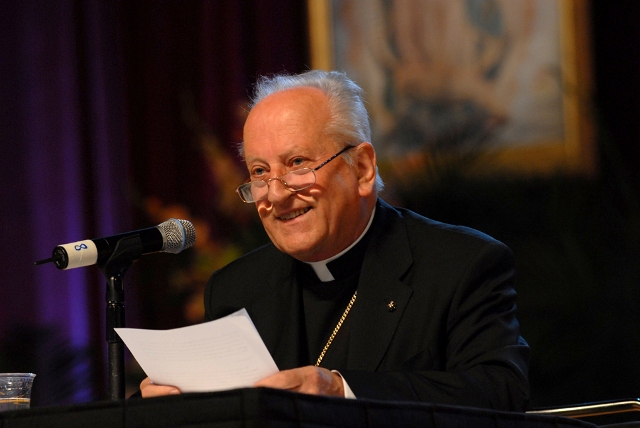
The Perfect Jesuit

Let's construct the perfect Jesuit priest together, shall we?
Attire:

Always wears a roman collar in public.

Always wears black shoes.

Has a cassock in the closet.

Sacraments:

Spends an equal amount of time hearing confessions, that he spends celebrating Mass.

Enjoys marriage prep, he doesn't delegate them to the newly ordained.

Not afraid of the Traditional Latin Mass.

Homilies resemble and follow the points found in the Spiritual Exercises

Evangelization:

Is always leading men in the Spiritual Exercises of St. Ignatius (the Elder Mullens edition "of course" )

Says the name Jesus in casual conversation.

Wears his roman collar out in public.

Spirituality:

Has not forgotten the devotion to the Sacred Heart of Jesus.

Say's Mass in private.

Recognizes the importance of St. Ignatius' devotion to the Blessed Mother

Other attributes:

His favorite Jesuit Saint is not Pedro Arrupe.

Has read and studied The Graces of Interior Prayer, by Poulain.

Help me with more points in the combox, I would love some Jesuit additions.


"It's The Same Old Song" From The Tablet

From the Tablet
Profound questions are raised by the way Cardinal Franc Rodé, head of the Vatican department that deals with religious orders, admonished the Society of Jesus for failing to “think with the Church”. In a sermon at the start of their 35th General Congregation in Rome, Cardinal Rodé told the assembled Jesuits of his “sadness and anxiety” at the Society’s recent record, urging greater fidelity to the hierarchy. Certainly, relations between local Jesuit priests and diocesan bishops have sometimes been adversarial. Given the Church’s episcopal structure, religious orders that stand outside that structure will experience conflicts with it. They can develop a mindset that sees things differently from local bishops’ conferences.

Yet Ignatius Loyola made “thinking with the church” a special obligation ( A founding principle ) on members of his new order. The question appears to be - does “Church” ( I am sure "New Models of Church" are being constructed at this very moment ) equal “hierarchy”?

To Cardinal Rodé, any such conflicts must be resolved in favour of the bishops, who are sacramentally commissioned to think the Church’s thoughts. In the celebrated ( that is debatable ) case of the Jesuit magazine America, whose editor Fr. Thomas Reese departed after incurring Vatican disapproval, there were two views emerging about the right direction for the American Church.

Through a series of strategic appointments, the Vatican had steered the American hierarchy away from the more progressive era represented by Cardinal Joseph Bernardin and Archbishop Rembert Weakland, towards a more conservative model. The new mood was to confront the Church’s internal dissenters, not debate with them.

The American Jesuit province, or a substantial part of it, felt differently. So, probably, did the great majority of American Catholics. The divisions in the American Church are serious, but whether it is a proper role for a religious order that swears obedience to the Pope to take sides against the hierarchy he has appointed is another matter. Part of the problem lies with another but equally valid dimension of the Jesuit role - that of standing at the interface between Church and secular society, explaining one to the other. As Pope Paul VI put it, the Jesuits are there “at the crossroads of ideologies, in the front line of social conflict”. Cardinal Rodé recognised that Jesuit charism, and indeed urged them to greater zeal. But explaining requires understanding, a willingness to engage and explore.

It is no coincidence that Jesuits make up the bulk of theologians investigated by the Congregation for the Doctrine of the Faith, ( understatement ) usually for exploring and engaging too far from the official position.

Instead, according to the cardinal, they should be defending the teaching of the Church. But do Jesuit theologians have no role to play in the development of that teaching? There would have been no Second Vatican Council without them, no Declaration on Religious Liberty, for instance, without John Courtney Murray SJ, no Lumen Gentium without Karl Rahner SJ.

The real issue raised by Cardinal Rodé’s intervention, which it will be vital to thrash out, is whether a duty to conform to the thinking of the hierarchy, particularly if imposed by disciplinary measures, might have such a chilling effect as to discourage all theological research, good as well as bad. ( I will not clean my room, supper is not important to me )

It is not always easy to say immediately which is a constructive and legitimate contribution and which is not; nor are local bishops ( note the Bishop abuse ) always going to be the best judges.


Hat Tip to Anglican blog Covenant read the full post (here)

The "Society Of Jesus" At Its Best

Cincinnati’s seminary a jewel in the crown
ARCHDIOCESE — The seminary for the Archdiocese of Cincinnati is one of the most prestigious institutions in the nation. Founded in the early 1800s, the seminary of the Athenaeum of Ohio-Mount St. Mary’s of the West ranks as the third oldest Catholic seminary in the United States and the oldest Catholic seminary west of the Appalachian Mountains. The school was created by Bishop Edward D. Fenwick, the first bishop of Cincinnati, when he established St. Francis Xavier Seminary and the Athenaeum College on May 18, 1829.

In 1851, the seminary was renamed Mount St. Mary’s of the West to avoid confusion with the original school name of St. Francis Xavier Seminary which grew also to encompass a growing Cincinnati-based Jesuit college. The college was destined to become Xavier University.

The founding of the seminary also served to establish an early library in 1833 that today houses an outstanding theological and historical collection. The collection includes one-of-a-kind manuscripts from as early as the 13th century as well as rare Ohio historic works some of which have been used as part of the Ohio Memory Project, a State of Ohio Bicentennial effort to preserve Ohio history on-line. The present-day campus of the Athenaeum of Ohio-Mount St. Mary Seminary includes 76 acres of manicured grounds surrounding an impressive granite stone building constructed in 1929 in the Mount Washington area east of Cincinnati. Today the Athenaeum of Ohio-Mount St. Mary’s Seminary of the West continues its mission to prepare men for the Catholic priesthood and diaconate as well as to educate more than 200 additional lay graduate students in two other divisions of the institution — the Lay Pastoral Ministry Program (LPMP) and Special Studies. The Athenaeum of Ohio is accredited by the Higher Learning Commission of the North Central Association of Colleges and Schools and by the Association of Theological Schools in the United States and Canada. It is authorized by the State of Ohio to grant the following degrees: Master of Divinity, Master of Arts in Theology, Master of Arts in Biblical Studies, Master of Arts in Religion and Master of Arts in Pastoral Counseling. An external photograph shows the beauty and majesty of the Athenaeum of Ohio, the Archdiocese of Cincinnati’s major seminary.In 2003, the Athenaeum of Ohio-Mount St. Mary’s of the West was rekindling a vibrant past as it reflects a changing church in a new millennium. There are clear indications the seminary’s enrollment is rebounding. There were 41 seminarians studying for the priesthood in 2002-2003. Students from other dioceses without seminaries have found an outstanding priest formation program at Mount St. Mary’s of the West The decline in seminary enrollment, however, pushed the seminary to broaden its scope. Today it is the theological center of the archdiocese. There are more than 150 men and women enrolled in the institution’s Lay Pastoral Ministry Program, created in 1975 as one of the country’s first lay ministry programs. It is designed to train lay Catholics in the various ministries of the present-day Catholic Church. Additionally, the Athenaeum of Ohio-Mount St. Mary’s Seminary includes the Catholic deacon formation program and a pastoral counseling program. Total enrollment exceeds 250, most in graduate degree programs. Ohio’s oldest Catholic seminary stands on the threshold of a new and exciting era. In 2004, the Athenaeum of Ohio-Mount St. Mary’s Seminary celebrated its 175th anniversary, just one year after the State of Ohio celebrated its bicentennial year.

Link (here)

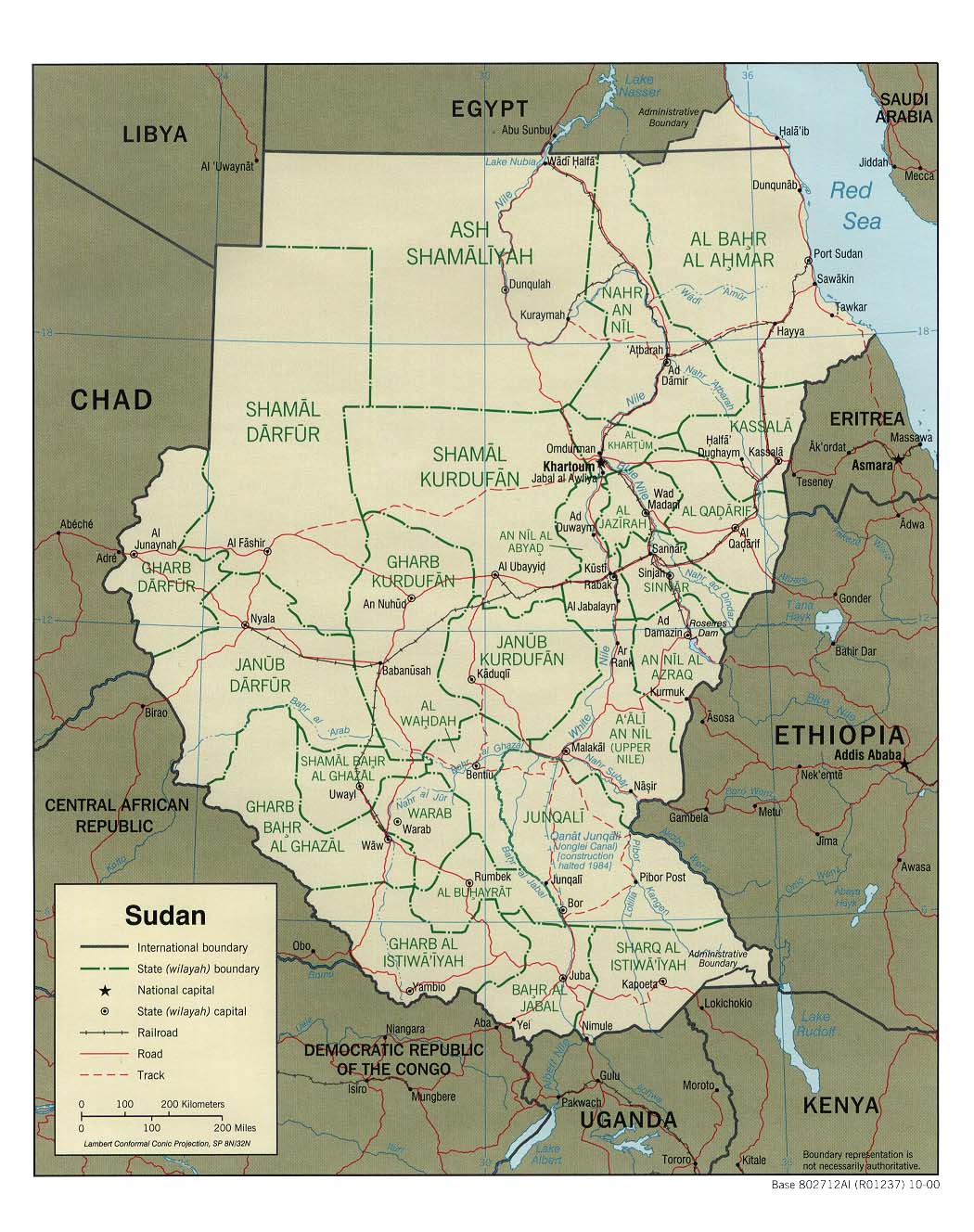
Oregon Jesuit On His Life As A Jesuit Missionary In the Sudan and Uganda


Author Discovers Hope and Unrelenting Love Among Sudanese Refugees

January 10, 2008 (Chicago, IL) – From Angelina Jolie to George Clooney to Bono, celebrities from every bent have alerted us to the critical situation of violence, poverty, starvation, and the AIDS epidemic in Africa. Fr. Gary Smith, a Jesuit priest from Oregon, is not of celebrity status, but that did not stop him from listening to the plight of the African people and spending six years living among and serving the Sudanese refugees. His journey began one night in Portland, Oregon, while chatting with friends over pizza and beer. Smith started talking about how he was becoming too “comfortable” in his eight-year assignment of serving the homeless in the city. During this conversation, he realized he wanted to be with the poor in a radical way. What ensued was a life-changing experience for Smith. They Come Back Singing, by Gary Smith, S.J., is his vivid, inspiring journal of the deep connections forged during the years he spent with the Jesuit Refugee Service (JRS) in Northern Uganda/Southern Sudan refugee settlements. Smith knew from the outset that Africa was uncharted territory for him and a risky journey. He saw first-hand the hopeless situation of the refugees and their unexpected strength and hope even in their most dire situations. Through his account of being a missionary in Africa, Smith is both a witness to and beneficiary of how God provides the strength to move forward in hope and with love. He was surrounded by suffering people who, despite being displaced by a brutal civil war, found the spiritual strength to let go of the many and deep sorrows of the past. Smith is also the author of Radical Compassion: Finding God in the Heart of the Poor. A California native, he currently resides in Portland, Oregon.

.
They Come Back Singing: Finding God with the Refugees
An African Journal by Gary Smith,
S.J.Loyola PressPaperback $14.95
ISBN-13: 978-0-8294-2701-1
PUB DATE: February 1, 2008
Link RNS (here)

The Jesuits And President Taft: The Philippines


What Filipinos also forget is that Taft negotiated the disposition of the so-called “friar lands” in the Philippines with Pope Leo XIII in the Vatican in the summer of 1902. To prepare for this task, Taft met with the superiors of the various religious congregations in the Philippines and conducted interviews with Filipinos regarding the expulsion of the Spanish friars, and again the “friar lands.”
Transcripts of these interviews were published for the information of the US Congress. Taft wanted to know about the relationship of the religious orders with the Filipinos and, of course, the extent of their land holdings. (Lands held for Ecclesiastical or Religious Uses in the Philippines Island etc., 56th Congress 2nd Session. US Senate document 190)
If we are to go by the number of pages, the Dominicans had the longest interview at 16 pages of transcribed text, followed by the Franciscans (12), the Augustinians (10), and the Jesuits (a mere three pages).
We must remember that the Jesuits were expelled from the Spanish Philippines and only returned in 1859 when they reopened a school that is now the Ateneo de Manila University.
Perhaps if they had stayed on, they would also have merited more pages because they would also have had accumulated significant landholdings.
What is significant is that the Benedictines are also included in this document even if they only arrived in the Philippines at the tail-end of the Spanish period and had very little to speak of, because they started as missionaries in Surigao and were captured by the revolutionists. The small community regrouped in Manila and set up a small school for boys that is now San Beda College. Benedictines were interviewed by Taft and merited all of one page, with Taft doing most of the talking. He even shifted the subject from land to the liqueur I mentioned in my last column called “Benedictine,” which he wished the monks of Manila would produce for his enjoyment. Hidden in this Senate document is a footnote to food and Taft’s human side.


Link to original article (here)

GC 35: First Rode, Then The Holy Father Himself

In early January, the Jesuits are gathering to elect a new Superior General. The pope will meet with delegates of the order and their new leader in February.


Link (here)


Jesuit Get Into It With "The View"

Fr. James Martin's Response to Joyce Behar's Anti-Catholicism
Foolish as it would be to look for deep theological insight from "The View," Joy Behar's recent statements on Catholic saints (a) not existing any longer and (b) needing medication, was about as close as you could come to a nice Youtubable, public display of anti-Catholicism, for any who doubt it still exists.Martin, editor of America magazine, has a good article responding to Joy Behar of The View who recently went on a public anti-Catholic screed. Do go read his responses to each of Behar's embarrassing examples of ignorance of the faith she is attacking. I also like his points about why he's not worried and the implied charity of Mother Teresa probably already praying for Behar.In addition to pointing out the problems with such impromptu examples of anti-Catholicism being the last acceptable prejudice, we should also remember to extend charity to such offenders by forgiving them and praying for them. Mother Teresa, pray with us and for us, as we pray for Joy Behar.
More on Joy Bahar (here) , (here) and (here)
Hat Tip to Julie D at her blog Catholic Media Review.

Thursday, January 10, 2008

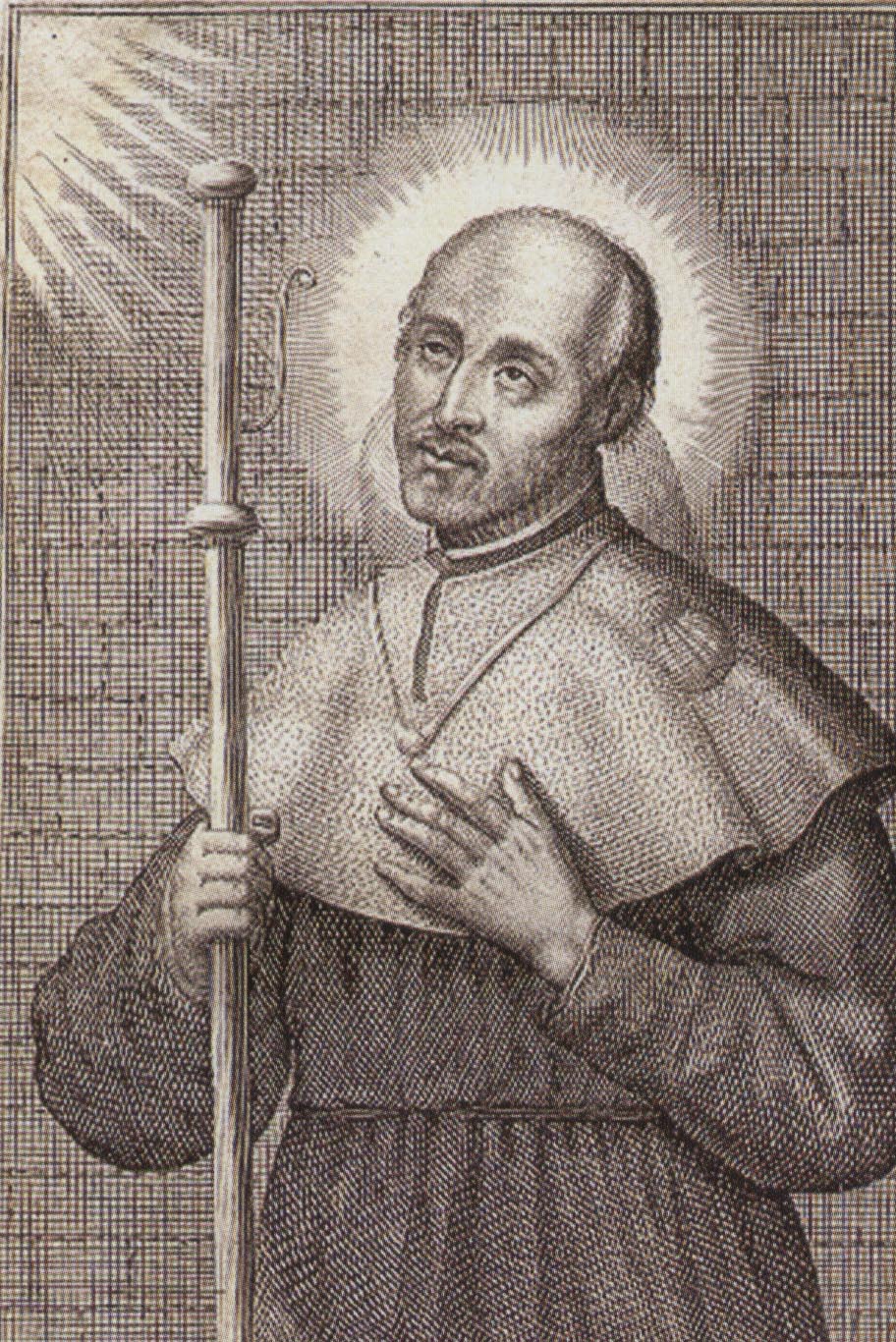
St. Ignatius of Loyola


St. Ignatius of Loyola
Biography

General Says "I Shall Return"

Jesuits Have Sights on China
Outgoing Superior Says Order Hopes to Return
ROME, JAN. 10, 2008 (Zenit.org).- Jesuits live in a time of waiting to fulfill their desire to return to China, said their superior-general, since the mission in that country is so directly linked with the foundations of the order. Father Peter-Hans Kolvenbach spoke with L'Osservatore Romano about the Jesuits' hopes to get back to China and other matters being discussed at the order's 35th General Congregation, which began Monday. There are 225 Jesuits gathered to elect Father Kolvenbach's successor; 217 of them are electors. The 79-year-old priest presented his request for retirement to the Pope, who accepted. Eighteen of the religious come from Africa, 40 from Latin America, 64 from Asia and Australia, 69 from Europe and 34 from North America. In electing a new superior,
Father Kolvenbach said, the society "says what it hopes for the future: a prophet or a wise man, an innovator or a moderator, a contemplative or an active, an outstanding man or a man of unity."
He continued, saying the General Congregation "began with an evaluation of the present situation, with a discernment of what is light and what is shadow in the society's service of the Church and the world. From this evaluation, the 'spark' should arise: This is the Jesuit we need to progress along the path of God." Mission Father Kolvenbach said the common denominator uniting all Jesuits in their diverse contexts is the mission. "This implies a presence at the frontiers," he said. "Once they were the geographical frontiers of Christianity." Today, rather, they are the frontiers between the Gospel and culture, between faith and science, between the Church and society, between the good news and a troubled and confused world. "According to the demands of the mission, there will always be an incredible variety of options and apostolic works, but in all of them, three responsibilities an be found together: announcing the word of God, sharing the life of Christ, and witnessing to the charity that the Spirit urges and nourishes." Speaking of the mission, Father Kolvenbach particularly noted China, where the Jesuits were since the times of foundation, "beginning with St. Francis Xavier's dream, to continue with the marvelous apostolic activity of Matteo Ricci and his companions." He added, "They achieved preaching Christ with the language of the Chinese culture and mentality, overcoming the prejudices and the sentiments of European superiority." This tradition motives Jesuits to keep their gaze on Christ, the superior said, to the point that "they have never renounced the desire to serve the Chinese people in their spiritual aspirations." In 1949, when the Jesuits were expelled from Chinas, many of them stayed in nearby countries "awaiting a good opportunity to return to their posts." He continued, "For the Society of Jesus, aside from a very modest actual presence, it is still a time of waiting -- awaiting the efforts of the Holy See to reestablish relations with China that would permit us to return to a mission so linked to the history of the society."
Link (here)

Virtue "Don't Mean Nothin!"

Forever Jesuit
January 10, 2008, 2:13 pm
Posted by Michael W. Higgins
This is a time of some uncertainity and much challenge for the Society of Jesus, itself a microcosm of the turbulence afflicting the universal church. The loss in clerical numbers, the empowerment of the laity, the emergence of an articulate and restive body of Catholic theologians, the postmodern critique of authority, the intense struggles between the local and central powers of religious leadership–these and many other contemporary issues cut to the heart of Jesuit conflict. In addition, liberationist and pastoral strategies have calaled into question the log and venerable tradition of Jesuit commitment to structure, system and sodality. The contemporary Jesuit is more inclined to rugged independence, grassroots networking, and conscientizing than to the maintenance of dying institutional enterprises>
In my view, Jesuits survive because they do not conform to that homogeneous block of rigid soldierly virtue that history and polemcics have made them.
Surely the spirituality of the Exercises of Ignatius Loyola as well as the persistent appeal of the founder himself continue to define the Jesuit essence. All else is moot and malleable. The election of the new General and the charting of new directions–all in the shadow of a wary Roman Pontiff–beqar close watching if for not oher reason because the Company of Jesus is the perfect bellwether for an imperfect ecclesia.
Link to Commonwheel (here)

30 Grand, Now The Cost For One Year At SLU

SLU will increase tuition next year by 6.5 percent
By Kavita Kumar
ST. LOUIS POST-DISPATCH
01/10/2008
Tuition at St. Louis University will once again go up next year — this time by 6.5 percent, or $1,850 annually. That means annual tuition will add up to $30,330, well above the national average for four-year private universities. The increase, though, is smaller than the previous 8.5 percent jump.Housing rates will go up about 3 percent, and meal plans will bump up about 4 percent. The total bill for students, including tuition, fees, room and board will go up 5.5 percent next year.In an e-mail Wednesday to the university community, the Rev. Lawrence Biondi, SLU's president, said that with the increase, SLU will remain in the middle tier of tuition rates amongst the 28 Jesuit universities. He said that the budget for the next fiscal year includes $9 million in new spending, mostly for academic programs and resources. The school is also expecting a substantial increase in the cost to heat and cool buildings next year as well as higher health and dental insurance costs, he said.In order to retain its best faculty, SLU will give larger merit increases for faculty salaries next year than it has in previous years, Biondi said.And some of the money from the tuition increase will be funneled back into $6 million more for scholarships. That will bring the school's total institutional aid next year to $92 million.While he stressed that SLU is financially sound, Biondi pointed out that the school depends primarily on tuition to fund its budget."As an institution, we need to work much harder to change that by bringing in more research dollars, continuing to increase our fundraising efforts and growing our endowment," he wrote.He also suggested that faculty and staff help the school find new sources of money such as revenue-producing conferences and workshops, new academic initiatives, and more summer programs.SLU has a $651 million budget for the 2008-09 school year.
Link to STL Today (here)

Fr. John Dear S.J. "Jesuit's Cooperate With Evil"

A Jesuit Thaw?
Posted by: Diogenes
As the Society of Jesus begins its General Congregation in Rome, there are signs of a new openness to criticism of Jesuit policy on the part of Jesuits themselves. National Catholic Reporter columnist John Dear admits he has "mixed feelings about the Jesuits," the order to which he belongs, which are provoked by what he terms "our history of violence." Dear finds this culture of violence deplorably abetted by contemporary Jesuit endeavors:

The leading Jesuit publication, America, features regular ads paid for by the Pentagon to recruit priests to join the military in support of their killing campaigns.Too harsh, I think. The true nature of those chaplain ads is almost certainly not evident in their black and white proofs. But Father Dear has even more astringent remarks about Jesuit educational institutions:

On top of this, most of our [Jesuit] universities and high schools train young
people how to murder other people in an evil program called Reserve Officer
Training Corp, or ROTC. This work goes against everything Jesus gave his life
for, everything we stand for.

Read Diogenes full post (here) at CWN

Wednesday, January 9, 2008

GC 35 Delegates From Southern Asia

Fr. P.S. Amal S.J. AND (Southern Asia) (here) and (here)
Fr. Tony J. D’ Souza S.J.
BOM (Southern Asia) (here) and (here)
Fr. Jeyaraj Velusamy S.J. CCU (Southern Asia)
Fr. Joseph Parakad S.J.
DAR (Southern Asia) (here)
Fr. Thomas Kuriakose S.J.
DEL (Southern Asia) (here)
Fr. Varghese P. S.J. DUM (Southern Asia)
Fr. Rosario Rocha S.J. GOA (Southern Asia) (here)
Fr. Jose Changanacherry S.J. GUJ (Southern Asia)
Fr. Fernando F. Franco S.J. GUJ (Southern Asia)
Fr. Edward Mudavassery S.J. HAZ (Southern Asia)
Fr. Jerome Cutinha S.J. JAM (Southern Asia)
Fr. Jerome D’ Souza S.J. KAR (Southern Asia)
Fr. Henry Pattarumadathil S.J. KER (Southern Asia)
Fr. Boniface Panna S.J. MDU (Southern Asia)
Fr. Jerry Rosario S.J. MDU (Southern Asia)
Fr. Sebasti L. Raj S.J. (Southern Asia)
Fr. Prakash Louis S.J. PAT (Southern Asia)
Fr. Marianus Kujur S.J. RAN (Southern Asia)
Fr. Henry Barla S.J. RAN (Southern Asia)
Fr. Yogeswaran Veerasan S.J. SRI (Southern Asia)
Br. Anthonydass Joseph S.J. PAT (Southern Asia)
Fr. Joseph Sebastian S.J. AND (Southern Asia)
Fr. Francis de Melo S.J. BOM (Southern Asia)
Fr. George Pattery S.J. CCU (Southern Asia)
Fr. Peter Pappu S.J.DAR (Southern Asia)
Fr. John M. Ariapilly S.J. DEL (Southern Asia)
Fr. Varghese Puthussery S.J. DUM (Southern Asia)
Fr. Anthony da Silva S.J. GOA (Southern Asia)
Fr. Keith Abranches S.J. GUJ (Southern Asia)
Fr. Thomas Venad S.J. HAZ (Southern Asia)
Fr. James Kalapura S.J. JAM (Southern Asia)
Fr. Vijay Kumar Prabhu S.J. KAR (Southern Asia)
Fr. Joye James Karumathil S.J. KER (Southern Asia)
Fr. Charles D’ Souza S.J. KHM (Southern Asia)
Fr. Amritlal Toppo S.J. MDU (Southern Asia) (here)
Fr. Devadoss Mudiappasamy S.J.
MDU (Southern Asia) (here)
Fr. Lawrence Maniyar S.J.
NEP (Southern Asia) (here)
Fr. Joy Karayampuram S.J. PAT (Southern Asia)
Fr. Bertram Rozario S.J. PUN (Southern Asia)
Fr. Ranjit Toppo S.J. RAN (Southern Asia)
Fr. Sebastian Maria Anthony S.J. SRI (Southern Asia)
Fr. Hector D’Souza S.J. IDA (Southern Asia)
Fr. Lisbert D’Souza S.J. ASM (Southern Asia) (here) and (here)

South Asia Assistancy
Andhra, Bombay, Calcutta, Darjeeling, Delhi, Dumka-Raiganj, Goa, Gujarat, Hazaribag, Jamshedpur, Karnataka (Kohima), Kerala, Madhya-Pradesh, Madurai, Patna (Nepal), Pune, Ranchi, Sri Lanka (here)

Source (here)