Wednesday, January 9, 2008

Thinking Faith, A New Jesuit Online Journal

LONDON - 10 January 2008
Jesuits to launch new on-line journal The state of ecumenism today, what scientists think about faith, and the European Treaty are among the topics that will be addressed as the British Province launches Thinking Faith this month. The online journal, which has been developed by Jesuit Media Initiatives in close collaboration with an editorial team of Jesuits and lay co-workers, will be officially launched next Friday, 18 January, at a reception attended by journalists, theologians, writers and others associated with the project.
Edited by Peter Scally SJ, the web site will be open to the widest set of subjects from science to theology, policy studies to poetry and spirituality to culture and development. It will build on the tradition of the former British Jesuit journal, The Month, contributing to debates and issues from a British (and European) perspective. But unlike a printed publication, Thinking Faith will not have a weekly or monthly edition, but a 'rolling' format. Articles may be added at any time, with subscribers informed by email alert, enabling a faster response to news, events and issues of concern. Among the first contributors to the online journal-the launch of which will coincide with the Week of Prayer for Christian Unity-will be Michael Hurley SJ of the Irish Province on where our hopes for ecumenism stand now, Dan Madigan SJ on interfaith dialogue, and broadcaster and Anglican deacon, Cindy Kent, on the situation of the Church of England. British Jesuit, Frank Turner, who is Director of the Jesuit European Office in Brussels (OCIPE), will be writing on the European treaty; while Raúl Gonzalez SJ of Venezuela and Anthony Egan SJ (South Africa) will be addressing the Chávez government and the ANC's new leader respectively. Jesuit brother, Guy Consolmagno of the Vatican Observatory will be another contributor as the journal goes online, alongside Jim Corkery from Ireland, a noted expert on the writings of Pope Benedict XVI, who will be offering his views on Spe Salvi. Thinking Faith will be launched at approximately 7pm on Friday, 18 January 2008 on http://www.thinkingfaith.org/.

This Is Exactly What Cardinal Rode Was Talking About

From Cardinal Rode's homily Link (here)
May those who, according to your legislation, have to oversee the doctrine of your magazines and publications do so in the light of and according to the “rules for sentire cum ecclesia”, with love and respect.

From America Magazine
How Theology Moves Along
By Sidney Callahan (here)

...........Today in the evolving theological story, contentious discussions are focused on the saving role of other religions. Cardinal Dulles refrains from detailing the still undecided ins and outs of the current fray, and concludes his essay with the hopeful words, "Perhaps some will reach the goal of their search only at the moment of death."
But why, it may be asked, should the Church's progressive journey toward greater inclusion not continue? I am inspired by another great Jesuit, Jacques Dupuis' work. He affirms that the revelation of Jesus Christ as the Word of God is "decisive" and "unsurpassable," but not "exhaustive." God's creativity is inexhaustible and works always and everywhere--in and out of human hearts and in other religions........

Read more (here)

Bold Statement Made By Australian Jesuit

Sydney Catholic College Quits "Amnesty" This Week
Jesuit headmaster of Sydney's St Aloysius College has confirmed that his school will sever its ties with Amnesty International. This follows the decision of the international human rights organisation to support limited abortion rights. But Fr Chris Middleton stressed that the school would not be giving up on human rights. Its Amnesty group would continue advocacy work under the a new name. It will be known as the Benenson Society, after Amnesty's British Catholic founder Peter Benenson. Fr Middleton explained that abortion differs from other issues contrary to Catholic teaching such as gay rights. He said, abortion "explicitly excludes some of the most vulnerable members of society - the 'unborn human' - from its campaigns for human rights".

Link (here)
About their organ (here)

Senior Members Of the GC 35

As established by the Formula, a commission is formed to determine if anyone has aspired to the office of General; it is composed of the oldest members in religion from the ten Assistancies.

The members are:
Frs. Augustin Karekezi (Africa)
Ramon Alaix (Southern Latin America)
Jorge Ambert (Northern Latin America)
Jose Changanacherry (Southern Asia)
Adolfo Nicolás (East Asia and Oceania)
Wendelin Köster (CentralEurope)
Elías Royón (Southern Europe)
Peter-Hans Kolvenbach (Western Europe)
Adam Zak (East Europe),
Vincent Cooke (United States of America).

Link to original document (here)

The Jesuit's Are On A Path To Nowhere

Jesuits: Where to?

For generations, the Jesuits were recognized as the intellectual "shock troops" of the Catholic Church, and the superior general was known informally as the "Black Pope" in recognition of his enormous influence. But today the rising lay movements like Opus Dei supply the "shock troops" for the papacy, and in his 24 years as leader of the Society, Father Kolvenbach has rarely roused any public controversy. When he announced plans for this year's general convention, the outgoing superior general said that he could foresee "no particular theme for discussion" at the meeting-- as if the future of the order required no special attention. Other Jesuit leaders seem to share placid confidence that the general congregation will bring no major changes.
They are evidently convinced that the next superior general will continue the current policies of the Jesuit leadership and the Society will continue along the same path to…To where?
The mission of the Jesuit order, as understood by most of its members, has changed radically in recent decades. As recently as the mid-20th century, the Jesuits were known as stalwart defenders of the Pope, who trained loyal young Catholics to defend Church doctrines. Today they are inveterate critics of the Vatican, who train young Catholics to question their faith. Is there any discussion among Jesuit leaders of a return to the defense of Catholic orthodoxy? Evidently not.
Perhaps not coincidentally, as the Jesuits have maneuvered to establish what amounts to a "loyal opposition" within the Catholic Church, the order has suffered heavily from defections and lost its ability to attract young recruits.
In 1965 when Father Arrupe became superior general, there were about 36,000 Jesuits in the world. Today that figure has been cut nearly in half, with about 19,000 Jesuits remaining in a rapidly aging society. Where are the Jesuits headed? Where do they want to go? What is their plan for long-term survival-- if indeed their leaders still believe that survival is a worthwhile goal? With a historic leadership change in the offing, one might have expected to see those questions discussed in Jesuit publications during the past year. But with only a few days to go before the 35th general congregation, that discussion still has not begun in earnest. The Society of Jesus is in crisis: a crisis compounded by the failure of Jesuit leaders to acknowledge that something is seriously wrong.


Read Fr. Ray Blake's post (here) read his blog (here)

Tuesday, January 8, 2008

Limasawa Jesuit

LIMASAWA, an invented word?
Limasawa, an invented word? The word Limasawa is not found in any of the over 100 languages of the Philippines. It is not found in any of the eyewitness reports that mention the episode of March 28-April 4, 1521 as written by Antonio Pigafetta, Gines de Mafra, Martinho de Aiamonte, Francisco Albo, and The Genoese Pilot.
In fact, it was invented in 1667 by a Jesuit historian who had not read any of those accounts. Fr. Francisco Combés, S.J., had read three works that refer to the Mazaua episode, by Gian Battista Ramusio who said the port was Butuan and this Combés adopted, Antonio de Herrera who said it was Mazaua which Combés rejected, and Fr. Francisco Colín, S.J., who said the island was Butuan. Colín pointed to another island he called Dimasaua to signify it is not (di is Bisaya for not) the isle where an Easter mass was celebrated.
The island is Pigafetta's Gatighan. In the case of Combés, who wrote five years after Colín, he did not adopt Dimasaua because his story does not mention any mass at all. Creator of grand geographical illusion Even while it is so poorly regarded Amoretti's work has left an enduring geographical puzzle--an invalid geographical assertion--which has only been recently detected. In two footnotes on pages 66 and 72, Amoretti surmised that Magellan's port, which he named Massana and appears otherwise as Mazaua or Mazzaua in the clear calligraphic writing of the Beinecke-Yale codex, where the Armada de Molucca anchored from March 28 to April 4, 1521, this port may be the Limassava in Jacques N. Bellin's map of the Philippines. Bellin's map is a perfect copy of a chart made by Fr. Pedro Murillo Velarde, S.J., of the Philippines in 1734. Murillo's map was such a brilliant and beautiful map many European mapmakers plagiarized it outright. To the credit of Bellin, he cites Murillo as his authority; he corrects the longitude which followed the erroneous entries of Pigafetta. The French Bellin was hydrographer to the king of France and one of the greatest and most important French cartographers of the mid-18th century. His works were of such excellence as to set a high standard and were widely copied throughout Europe. His map of the Philippines came out the same year that Murillo's map came out.In any case, Amorettti offers one proof in support of his guess: the latitude of Limassava is at Pigafetta's latitude for Mazaua at 9°40' North. He was mistaken on two counts, Limasawa is at 9°56' North while Mazaua had three latitude readings by three members of the Armada, 9°40' N by Pigafetta, 9°20' N by Francisco Albo, and 9° N by the Genoese Pilot.Mazaua was the port where Magellan's fleet anchored for one week. It was also the port where 22 years later, Ginés de Mafra, revisited, the only crewmember of the Armada to do so. There are other visits by Spanish and Portuguese during the entire Age of Sail, the last notable one a few months before the 1565 arrival of the Legazpi expedition being a Portuguese squadron that virtually wiped out the entire population of the isle except for one native who was able to hide. The enduring significance of Mazaua was, for the Philippines, the Easter mass which was held by Magellan and his men on 31 March 1521 and a huge cross they planted west of the island on the same day. Mazaua is therefore an icon of the Christianization of the Philippine archipelago.
Link (here)

Pontifical Oriental Institute: "Jesuit Bright Spot"

Bartholomew I to Visit Pontiff
VATICAN CITY, JAN. 8, 2008 (Zenit.org).- Benedict XVI will receive in audience Orthodox Patriarch Bartholomew I of Constantinople, who will visit Rome to mark the 90th anniversary of the Pontifical Oriental Institute. The Pontifical Council for Promoting Christian Unity confirmed the audience is scheduled for Thursday, March 6.

The patriarch will visit Rome for the celebrations of the anniversary of the foundation of the Pontifical Oriental Institute, entrusted to the Society of Jesus, and established by Pope Benedict XV in 1917.

Bartholomew I himself received a doctorate from the institute. Benedict XVI visited the patriarch in Turkey in 2006, on the occasion of the feast of St. Andrew. On Dec. 6, the Pope received a delegation from the Pontifical Oriental Institute and recognized that the role the institute provides has "an effective ecumenical value, because drawing from the heritage of wisdom of the Christian East enriches everyone.”


Link (here)

More on the Pontifical Oriental Institute (here) , (here) and (here)

Jesuits Out At Castle Gandalfo

The Castel Gandolfo Observatory
The Register Jan 4, 2008
By Joe Fay
The Pope has given the Vatican’s Jesuit astronomers their marching orders, banishing them and their infernal instruments from his summer palace and billeting them in a disused convent instead. The astronomers’ eviction from the Castel Gandolfo has been put down to Benedict XVI’s need for more space to receive visiting diplomats, according to The Independent.
According to the paper, the Jesuits who run the observatory are putting a brave face on their enforced removal, with the observatory’s director Father Jose Funes, insisting: “It is not a downgrading of science in the Vatican.” However, observers will no doubt see this as a negative move in the Church’s relationship with science, which dates back to that other troublesome astronomer, Galileo, and beyond. Benedict has been accused of looking to turn the clock back on his predecessor’s embrace of science, to the extent of apparently endorsing intelligent design. Alternatively, you could opt for the theory that the observatory’s main problem is that it’s largely run by Jesuits, another group that has a stormy relationship with the Holy See. After their stint as the Pope’s shock troops in the counter-reformation, the order was suppressed in the 18th century, before being restored in the 19th century. Nevertheless, some apparently feel that the Jesuits are too clever by half and, even worse, have developed a rather liberal tendency. Earlier this year, Benedict welcomed attendees to the observatory’s summer school with the message:
“The Vatican Observatory has sought to demonstrate the Church’s desire to embrace, encourage, and promote scientific study, on the basis of her conviction that ‘faith and reason are like two wings on which the human spirit rises to the contemplation of truth’.”
And, if after sufficient contemplation you still feel you can’t get to the truth, the Vatican will be happy to supply it for you.
Link (here)
More (here) and (here)

The Spiritual Exercises: Foundational Ignatian Meditation: The Two Standards


The Meditation on the Two Standards
The one of Christ, our Commander-in-chief and Lord; the other of Lucifer, mortal enemy of our human nature.


Prayer. The usual Preparatory Prayer.


First Prelude. The First Prelude is the narrative. It will be here how Christ calls and wants all under His standard; and Lucifer, on the contrary, under his.


Second Prelude. The second, a composition, seeing the place. It will be here to see a great field of all that region of Jerusalem, where the supreme Commander-in-chief of the good is Christ our Lord; another field in the region of Babylon, where the chief of the enemy is Lucifer.


Third Prelude. The third, to ask for what I want: and it will be here to ask for knowledge of the deceits of the bad chief and help to guard myself against them, and for knowledge of the true life which the supreme and true Captain shows and grace to imitate Him.


First Point. The first Point is to imagine as if the chief of all the enemy seated himself in that great field of Babylon, as in a great chair of fire and smoke, in shape horrible and terrifying.
Second Point. The second, to consider how he issues a summons to innumerable demons and how he scatters them, some to one city and others to another, and so through all the world, not omitting any provinces, places, states, nor any persons in particular.


Third Point. The third, to consider the discourse which he makes them, and how he tells them to cast out nets and chains; that they have first to tempt with a longing for riches -- as he is accustomed to do in most cases -- that men may more easily come to vain honor of the world, and then to vast pride. So that the first step shall be that of riches; the second, that of honor; the third, that of pride; and from these three steps he draws on to all the other vices. So, on the contrary, one has to imagine as to the supreme and true Captain, Who is Christ our Lord.


First Point. The first Point is to consider how Christ our Lord puts Himself in a great field of that region of Jerusalem, in lowly place, beautiful and attractive.


Second Point. The second, to consider how the Lord of all the world chooses so many persons -- Apostles, Disciples, etc., -- and sends them through all the world spreading His sacred doctrine through all states and conditions of persons.


Third Point. The third, to consider the discourse which Christ our Lord makes to all His servants and friends whom He sends on this expedition, recommending them to want to help all, by bringing them first to the highest spiritual poverty, and -- if His Divine Majesty would be served and would want to choose them -- no less to actual poverty; the second is to be of contumely and contempt; because from these two things humility follows. So that there are to be three steps; the first, poverty against riches; the second, contumely or contempt against worldly honor; the third, humility against pride. And from these three steps let them induce to all the other virtues.


First Colloquy. One Colloquy to Our Lady, that she may get me grace from Her Son and Lord that I may be received under His standard; and first in the highest spiritual poverty, and -- if His Divine Majesty would be served and would want to choose and receive me -- not less in actual poverty; second, in suffering contumely and injuries, to imitate Him more in them, if only I can suffer them without the sin of any person, or displeasure of His Divine Majesty; and with that a Hail Mary.


Second Colloquy. I will ask the same of the Son, that He may get it for me of the Father; and with that say the Soul of Christ.


Third Colloquy. I will ask the same of the Father, that He may grant it to me; and say an Our Father.

More (here)

de Vera Tries To Smooth Things Over, "Kind Of?"

Jesuits Decide Their Future
A spokesman for the Society of Jesus explains what’s happening at the Jesuit General Congregation in Rome.
January 13-19, 2008 Issue Posted 1/8/08 at 11:01 AM
Jesuit spokesman Father Jose Maria de Vera will be fielding lots of questions this month at the Society of Jesus’ most important gathering for 25 years. As well as electing a new general superior to succeed Father Peter-Hans Kolvenbach, the 225 delegates are likely to decide on changes in governance and mission of the society. Some hope the meeting, called a general congregation, will also tackle the problem of Jesuits who in recent years have tended to dissent from Church teaching. Father De Vera, spoke with Register correspondent Edward Pentin Jan. 3.
What is the purpose of a general congregation?
St. Ignatius, our founder, had two reasons for having it: Firstly, to choose a new superior general. That is very important for the society because the Society of Jesus is, without doubt, a kind of monarchy, and the superior general has a very important role to play. The second reason is that when the Society of Jesus, the Church or the world is facing difficulties — such as globalization or ecology — all these matters are beyond the scope of one particular province or nation to solve. So for that reason, when there are serious matters, the superior general is supposed to convoke a general congregation.
.
How long will this congregation last?
Normally, general congregations don’t tend to be too long. I don’t know how long this one will be. I’m speculating, but I would be surprised if this year it will go beyond the beginning of March. But some congregations, for a particular reason, go on longer than that.


What goes into the planning of such a conference?
There has been a commission preparing for the general congregation, but its role is only to suggest because, in the end, it is the general congregation that decides [what is discussed].
The commission proposed 11 topics for discussion, but the first part of the congregation — lasting about two weeks — will be mainly preparing for the election of the general. Once the election is over, there will be discussion of other matters — the 11 topics that have been suggested. These topics are of a general nature. One concerns the mission of the society. We know what the mission of the society is of course, but it should be adapted to the circumstances we have now in 2008. For instance, Father Pedro Arrupe [superior general 1965-1983] made changes. Refugees were an emerging problem, and they discussed whether that should be a proper concern of the society. A second topic concerns the identity of Jesuits, another is on governance and then another topic is obedience, including obedience to the pope. As you know, all religious make three vows: poverty, chastity and obedience. We add one vow of obedience to the pope — a special vow that St. Ignatius especially wanted. In the 21st century, obedience is not easy, generally speaking. In our constitutions of the past, the pope gave us a mission to fight atheism, for instance. Now, our mission is directed at China, Africa or intellectual life. When the pope gives us a particular mission, we have to accept it without question. The pope is the supreme authority.

.
Openly dissenting Jesuits have been a problem in recent years. Do you therefore foresee a tightening of this fourth vow?
Some Jesuits interpret this obedience to the pope only as mission. However, there is another interpretation that is wider than that. Our obedience means that we have a special relationship with the pope, which is of love, service and faithfulness. It’s not limited to saying: “Okay, we’ll do that, and that’s it.” No, Ignatius thought and felt very strongly that obedience is not only intellectual, but there must be a real affection for the pope. He uses the Latin phrase sentire cum ecclesia (think with the mind of the Church). But the relationship between the society and the pope has not always been easy, historically. From the beginning, St. Ignatius wanted a religious congregation that was apostolic in nature, but a later pope preferred a kind of monkish, contemplative society, to pray together and recite the breviary. … Then, in 1773, the Society of Jesus was suppressed. It was mandated by the pope who was under the influence, the pressure, of the kings of France and Spain, the masons and enemies of the society. Apparently he didn’t want to do it but he did, and so until 1814 the Society of Jesus did not exist canonically. So the relationship between the pope and the Jesuits has gone through difficulties.

.
But hasn’t the situation of the 18th and 19th centuries been reversed in a way? Instead of being so pro-Church and pro-pope, there is this dissent among some Jesuits, which is the opposite of what they used to be. Will that be a major point of discussion?
It will be discussed, but when the present superior general, Father Kolvenbach, was asked how the relations were between the Vatican and the Society of Jesus, with his good sense of humor he replied: “Well, they are normal — as they should be!” Because it’s well known that even in the time of the previous general, Padre Arrupe, there were difficulties between the Vatican and the Curia of the Society of Jesus. Arrupe was a prophet. He was a person with a great vision for the future, perhaps ahead of many others in the Church, and that caused some misunderstanding. Obviously, Father Arrupe did not always understand what the pope meant. As we say today, perhaps he was not very fluent in “Vaticanese,” in interpreting the language of the Vatican. He spoke several languages but perhaps he was too intuitive. So there were difficulties and that’s not a secret. The Pope [John Paul II] took some exceptional measures. When Padre Arrupe was sick, the normal procedure of the society would have been to call a general congregation to elect a successor. But the Pope did not allow that to happen, and chose a cardinal whose mission was to prepare a quiet general congregation, without some of the problems like liberation theology, which at that time was fervent in the society. But these problems are behind us now. The present relationship is very, very good indeed.


Read the full article in the Legion of Christ newspaper, The National Catholic Register (here)

Fordham Jesuit, "Defends The Indefenceable"

Vagina Monologues sparks Catholic debate
Who is truly celebrating women's empowerment, those viewing the Vagina Monologues and simulating the moans of sex, or those who pray the Rosary and celebrate a Woman who is the model of purity?
Tuesday, January 08, 2008By Mary Ann Kreitzer

It's that time of year again. Valentine's Day looms and feminists start thinking about and celebrating their private body parts. The Vagina Monologues, a play traditionally performed around Valentines Day, is a lesbian bacchanalia performed on campuses all over the country even purportedly by Catholic campuses. It celebrates female lewdness - to be more specific, lesbian female lewdness including the seduction and rape of a teenage girl by a lesbian adult who plies her with liquor. Most intelligent adults would recognize that as child abuse, but for author Eve Ensler it's "a good rape." In the original text the child was 13, but outrage caused Ensler to raise her age to 16. The girl was also heterosexually raped at age ten by a friend of her father. Not surprising, all men are brutes and rapists to the feminist, particularly the lesbian feminist, mind. The second rape, the "good rape," presumably heals the first and makes it all better. That this play is seriously treated on college and university campuses speaks volumes about the disintegration of higher education. It is certainly jolting to see Ensler simultaneously claiming to be opposed to violence against women while defending a crime against a girl-child. Her enthusiasm for reciting the names of body parts is nothing short of juvenile, like little boys on the playground calling each other "vagina-poop" and "penis breath." One gets the sense from the play that Ensler herself never grew out of the anal stage when children play in their feces. But perhaps that's not surprising considering practices common to homosexuals that involve bodily waste. What is particularly baffling to Catholics, though, is the enthusiasm for this pornographic and puerile nonsense on some Catholic campuses. In the past few years the number of Catholic schools showing the monologues has dropped thanks to organized protests by The Cardinal Newman Society, but some schools, notably Jesuit-run, continue to defend it with a zeal bordering on hysteria.

Fr. James Keane, S.J., a graduate student at Fordham University in the Bronx, showed audacity when he chastised those who protested the play in an article at the BustedHalo website. He was particularly incensed by a group of Catholic seminarians who protested against the play and held a prayer vigil with a picture of Our Lady of Guadalupe and a crucifix. Keane described their action as "obsessive heresy hunting." Can one expect much sense from a man who equates "women's empowerment" with a movement that encourages women to chant, "vulva, vulva, vulva?" Empowerment? Fr. Keane lamented the fact that students said the protest reminded them of groups outside abortion clinics. He described their words as "the most heartbreaking news of all.... In the students’ minds, the protestors (some in Roman collars) had equated a real and menacing evil, the slaughter of unborn children and the mutilation of their mothers, with a student-produced play put on to encourage women’s empowerment."

But who was really celebrating "women's empowerment" - the audience inside engaging in the "moaning monologue" (simulating sounds made during sex) or the seminarians praying the rosary before a picture of the model of purity. While abortion is clearly the more grievous evil, as Father points out, there are other evils. Our Lady told the three shepherd children at Fatima that clothing would come into fashion that would grieve her son very much. "Penance, penance, penance," she urged. Is public lewdness any less offensive to the Blessed Mother than immodest clothing? Unfortunately, statements like Fr. Keane's aren't unusual from Jesuit cheerleaders for the play, including some college presidents.

In 2005 Loyal University (New Orleans) president, Kevin Wildes, S.J. said, "The play affords an opportunity for everyone to think critically about the social issues involved in the treatment of women." Is a play celebrating lesbian sex really the best venue for exploring women's social issues?

Also in 2005 Notre Dame president Edward Malloy justified the performance saying, "Such interactions allow students to engage the controversial topics of the day in the context of our distinct intellectual, religious and moral traditions. While there are elements of this production which are offensive to many members of the Notre Dame community because they contravene positions of the Catholic Church, a responsible academic setting is precisely the place where controversial topics should be examined and discussed." By that rational why not invite Hustler editor Larry Flynt to come and discuss the merits of his life's work? Alas, I forgot, Georgetown already did it. Students today know little about Shakespeare and even less about Dante and Milton. In 1996, following a national trend in higher education, most schools dropped their requirement for English majors to study the classics.What were universities substituting? Pop culture. Students were now free to pursue studies in detective fiction, prison literature, soap operas, gender literature, even grafitti. The trend continues today. Few English departments require students to study Shakespeare, the greatest writer of the English language. In the dumbing down of American higher education, promotion of the Vagina Monologues makes a certain sense. The vocabulary is certainly easier since it's filled with four-letter words. Ensler is riding the wave of the Madonna/Britney Spears generation. One is hard-pressed to see the women who surf that wave as being either empowered or showing a capacity for intelligent discernment.
Mary Ann Kreitzer is a founder of the The Catholic Media Coalition.

Superior General #27, Jean-Baptiste Janssens, S.J.

Jean-Baptiste Janssens General # 27
General from 1946 to 1964

He was born in Mechelen, Belgium three days before Christmas on December 22, 1889. His first schooling was in the Diocesan Secondary School in Hasselt and his university years, where he excelled in Philosophy and Classical Philology, were spent at St. Aloysius University Faculty in Brussels. He entered the Jesuit Novitiate in Drongen on September 23, 1907, and took his first Vows in September 1909. After the usual two years of Philosophy spent at the Jesuit Collegium Maximum in Leuven he won his Doctorate in Civil Law at the University of Louvain (Leuven). From 1921 to 1923 he attended the Gregorian University in Rome where he added a Doctorate in Canon Law to the one he had earned at Louvain. He taught Canon Law at the Collegium Maximum in Louvain from 1923 until 1929 and became its Rector on August 17, 1929. On August 15, 1935 he was appointed Tertian Master and in 1938 became Provincial of the Northern Belgian Province of the Jesuits. During the year 1939 in the name of the General he made an official visit to the Jesuit missions in Zaire, at the time a protectorate of Belgium and known as the Belgian Congo. With the exception of this visitation and his two years studying in Rome, he had spent most of his life in his own province—in Leuven, Drongen, Antwerp, and Brussels. When Father Ledochowski died in 1942 the war was in full fury in Europe and Father Janssens was the Jesuit Provincial trying to keep his province intact and in peace. The Vicar General, Norbert de Boyne was unable to call a General Congregation because of the war. Thus, in effect, de Boyne was in charge of the governance of the Society for three years. The war ended in August 1945 and de Boyne was finally able to convene a General Congregation—the 29th—between September 6 and October 23, 1946. Janssens, as Provincial of his province, went to Rome as a delegate. The Congregation was held under Spartan conditions and many of the necessaries were provided by the delegates themselves from countries less affected by the war than were the countries of Europe. On September 15, Father Janssens the 57-year old Belgian was elected General on the first ballot and became the first General in the Nuclear Age. Because of his delicate health and the oppressiveness of the Roman air, a sizeable piece of property in the Alban Hills—southeast of Rome —was purchased as a retreat for the general and his curia. This property, well known in the area as Villa Cavalletti, became a place of retreat not only for the General and the Curia but also for the other Jesuits of Rome. It was also used and appreciated by professors and students of the Gregorian University—who could manage to get away for a few days of peace. It was finally sold in 1995, long after Father Janssens was in his grave. In 1957 after eleven years in office he summoned the 30th General Congregation to provide him with a Vicar General. During its September 6 to November 11 session the delegates appointed Father John Swain, a Canadian, as his Vicar. In his final years Janssens had to confront a dissension which was arising among theologians inside and outside the Society. He tried to moderate the problem, but to no avail, since the difficulty was not only within the Society, but also throughout the whole Church. He was the last to see the numbers in the Society top out at 36,000 members. After which high point there was a steady drop for the next thirty years. The turmoil in the Society and in the Church would not go away. Pope John XXIII had convened Vatican Council II to begin in 1962 to deal with many of the same problems that plagued Janssens during his generalate, and with which he found it difficult to cope. After 18 years and one month as General, Father Janssens died at the age of 75 on October 5, 1964. His body was taken to the Jesuit mausoleum at Campo Verano and interred with his immediate predecessors.
Thomas E. Zeyen, S.J. Jesuit Generals: A Glance into a Forgotten Corner.
University of Scranton Press, 2004.
More (here) , (here) and (here)

Superior General # 29, Peter-Hans Kolvenbach, S.J.


Peter-Hans Kolvenbach General # 29
General from 1983 to Present
As was written in the previous sketch, any person of the last quarter of the 20th Century, and one familiar with the very recent history of the Jesuits, recognizes the name of Peter-Hans Kolvenbach, the 29th General of the Society. We must await the definitive account of his Generalate to give us a true picture of his accomplishments and hopes for the future of the Society and how they were carried out. Peter-Hans was born on November 30, 1928, in Druten, a small town in South-eastern Holland, not far from Nijmegen. He was fortunate to have spent his childhood and adolescence close to the German border where he was able not only to use his native Dutch language, but German as well. It gave him a certain linguistic bent and later he was able to acquire several other languages including Arabic and Chaldean. He was able to switch rather easily from one to another without missing a syllable. His early schooling was at Canisius College, and he soon felt the call to become a priest. He entered the Novitiate at Mariendaal on September 7, 1948 and studied Philosophy and Theology in Nijmegen. He was ordained in Beirut, Lebanon, on June 29, 1961 in the Chaldean Rite. He became professor of Linguistics and Armenian at St. Joseph's University and was at home in both Oriental and Occidental communities. He was named Vice Provincial of the Near East Vice-Province made up of three Regions—Egypt, Lebanon, and Syria. During his term as Vice-Provincial, Lebanon was engaged in a destructive and bloody civil war and Kolvenbach managed to keep his equilibrium, his altruism, and personal tranquility in the face of opposing factions. He was able to travel through the Near-East visiting the Jesuits in his charge. In 1981, he was appointed Rector at the Oriental Institute in Rome, an office he held for almost two years until his election as General. Father General Arrupe had become incapacitated and was clearly unable to carry on as General. In 1980 he, himself, had suggested that he resign and a Congregation be held to elect a successor.On October 5, 1982 Pope John Paul II named Father Paolo Dezza as his Delegate—in effect, the Vicar General—to prepare for a Congregation to be held in the following autumn. So, on December 8, 1982 Dezza called for a Thirty-third General Congregation with the view of addressing two immediate problems: the resignation of Arrupe and the election of a new General. In addition, it was to treat of matters suggested by the Holy See. It was to begin on the following September 1 and continue until October 25, 1983. The work of the Congregation began on September 2, 1983 and right away got down to the matters in hand. Before voting on Arrupe's resignation a eulogy on his exceptional life of devotion to the Society was given and, the delegates, then, voted secretly on the proposition. Arrupe's resignation was accepted forthwith by the assembled Fathers on September 3. On the 13th the Fathers gathered in the chapel for an exhortation and a concelebrated Mass, after which a long time was spent in private prayer. In the Aula the Fathers gathered for the next session and Father Kolvenbach was elected General on the first ballot by an absolute majority of the votes. The result was quickly conveyed to the Pope who was on a pastoral visit in Austria. Immediately after his election Father Kolvenbach's remarks to the delegates expressed the Society's profound gratitude to Father Arrupe for his sacrifice and long devotion to the Society, and to Father Dezza, the Pope's Delegate who had so successfully moved the Congregation along. During the following years Father Kolvenbach carried on the example of Father Arrupe by visiting as many Jesuit Provinces and individual Jesuits as possible. As General his altruism and tranquility was displayed just as they had been when he was Provincial in the Near East in tempering of some misgivings of his subjects. As General his character has not changed from what it had been in the Near-East. It was in September 1992 that he first issued the call for another Congregation. Then, on September 8, 1993, he fixed the dates of the 34th General Congregation to begin on January 5, 1995, and was to continue until March 22. It was to deal with the Mission of the Society in the world today, the Jesuit identity, as we perceive ourselves, and for a revision of laws to conform to the modern world updating the Society to conform to the new code of Canon Law. Possibly, he found himself frustrated by the precipitous drop in the numbers of Jesuits in the past twenty or thirty years and the few Jesuit Novices entering to replenish the ranks of the older members, who were slowly dying off, and being unable to stop the gradual out-flow. However, Father Kolvenbach's optimism was a continual encouragement to the members of the Society, which he conveyed by letter and numerous conferences as he visited the various provinces. As of this writing Father Kolvenbach, God willing, still has years before him and will add to his many accomplishments and the many directives he has given for the future of the Company of Jesus and for the Greater Glory of God.
Thomas E. Zeyen, S.J. Jesuit Generals: A Glance into a Forgotten Corner.
University of Scranton Press, 2004.

Catholic World News, On GC 35

Blunt Vatican challenge to Jesuit leaders
Rome, Jan. 8, 2008 (CWNews.com) -
A top Vatican official offered some blunt criticism of the Society of Jesus as the 35th General Congregation of the Jesuits began. Cardinal Franc Rode, the prefect of the Congregation for Religious, was the principal celebrant at a Mass in the Gesu, the famous Jesuit church near the Vatican, where 225 Jesuit delegates are meeting this month to elect a new superior. In his homily the cardinal challenged the Jesuit delegates to correct a critical attitude toward Church authority.
"With sadness and anxiety I also see a growing distancing from the hierarchy"
among the world's Jesuits, Cardinal Rode said. He challenged the order's leaders to embrace the tradition established by St. Ignatius of Loyola, the founder of the Jesuits, who had insisted on loyalty to the Church and the Roman Pontiff. The cardinal said: Consecration to service to Christ cannot be separated from consecration to service to the Church. Ignatius and his first companions considered it thus when they wrote the formula of your Institute in which the essence of your charism is spelled out: "
To serve the Lord and his Spouse the Church under the Roman Pontiff."
It is with sorrow and anxiety that I see that the sentire cum ecclesia of which your founder frequently spoke is diminishing even in some members of religious families. The Church is waiting for a light from you to restore the sensus Ecclesiae. Cardinal Rode began his homily by praising the outgoing Jesuit superior, Father Peter-Hans Kolvenbach, who is resigning after 24 of leadership. Citing the words of St. Ignatius, the Slovenian cardinal said that the new superior, to be chosen by the General Congregation, should be
"a man very united to the Lord our God and familiar with prayer."
The cardinal also acknowledged one of the themes that many Jesuits have raised for discussion during this month's meetings at the Gesu: the prospects for broader collaboration with the laity as the number of active Jesuits continues to fall. The Vatican official only cautioned the delegates to ensure that "the growing participation of laity in your activities does not obscure your identity but rather enriches it." When he spoke directly about the Jesuit identity, however, Cardinal Rode's words were sobering.
"Without the gift of faith in the Church there can be no love for the Church,"
he told the delegates, returning to the theme of unity between the Jesuit order and the Catholic hierarchy. To underline that theme, the cardinal mentioned one particular challenge for Jesuits in their work of education and evangelization. He called particular attention to
"the need to present to the faithful and to the world the authentic truth revealed in Scripture and Tradition."
Explaining the importance of that issue, Cardinal Rode again made an implicit criticism of Jesuit scholars whose theological novelties have caused confusion among the faithful. He said: The doctrinal diversity of those who at all levels, by vocation and mission are called to announce the Kingdom of truth and love, disorients the faithful and leads to a relativism without limits. There is one truth, even though it can always be more deeply known. Cardinal Rode concluded his challenge to the Jesuit delegates with the assurance that he would join them in prayer for the success of their deliberations. He urged them to continue leading the Society fo Jesus along "the same path trodden by Ignatius from Loyola to Rome, a path of generosity, of penance, of discernment, of prayer, of apostolic zeal of obedience, of charity, of fidelity to and love for the hierarchical Church."

Link (here)
Photo credit (here)

Jesuit Bad Boy, John Sobrino In His Own Words, From 1999

My Century Home Page
Broadcast on Monday 29th November 1999
JOHN SOBRINO
My name is John Sobrino. I was born in the Basque country, nearly 60 years ago. At the age of 18, I became a Jesuit And a year after that, I was sent to El Salvador, in 1958. And since then I have practically lived my whole life here. The best thing that has happened to me in life is to have known Archbishop Romero. I was a close friend of his. And also I lived with a community of Jesuits who were assassinated ten years ago. I was away. I became first a Jesuit and then a priest - very simply, because I felt a call from God. It has given me an opportunity to serve others, especially to serve those very, very poor people here in El Salvador. At the age of 27, I studied theology. I was in Frankfurt, Germany. When I came back from Frankfurt, in '73, people started talking here a different language, as far as Christian faith and theology are concerned: for example, that this planet is a planet of poor, oppressed people, a planet of victims. It made no sense to me to say: "I believe in God", in the guise of Jesus of Nazareth, and not take the poor seriously. So I started doing theology along those lines. And then I realised that that was close to what people were beginning to call "liberation theology". Now, liberation theology is the type of theology which wants to look at God from the perspective of the poor of the world.

It's a way of thinking about Christianity so that the will of God, the dream of God, the utopia of God, becomes true.


I remember years ago, in a refugee camp in El Salvador, several times I went to say Mass. In the midst of so much tragedy, poverty and so on, all of a sudden I saw a peasant woman. And I said to myself spontaneously, when I looked at her face: "I have seen God". The depth of reality became present in the face of that woman: her dignity, her commitment to be there, her hope that maybe life would be better for her and for others; an experience of God. I think this is the origin of liberation theology.

Maybe people understand better when they know what happens when communities, priests in their homilies, bishops like Romero in their pastoral letters, professors like us, act out of this instinct of liberation theology.


What happened? Well, this university was bombed. A bomb exploded on our campus 25 times. The house where I live was bombed four times. Six Jesuits were killed. They were killed because they told the truth about the country. As Christians, they said: "God is against that." Why did they say that? Because they thought in a very specific way. And that specific way of thinking is called liberation theology.


Liberation theology is a threat because it tells the truth about this world. And the truth is not told. Whoever tells the truth gets killed.
Let's have this clear. Jesus was crucified himself. He offers us the good news: that following him life makes sense. Now following him, in situations like the Salvadorean one, might make it possible to be killed. As long as there is oppression, I hope that theologians will think of God from the point of view of the poor. As long as that happens, there will be liberation theology.
E N D
Link to the BBC piece (here)

Joe Garcia Breaks Down Rode's Homily

In what has become a nightmare scenario for the GC 35. Basically a full frontal attack on the "business as usual!" crowd. Jesuit's may now be reconsidering its agenda for the GC. Jesuit educational intituations have an alumni base like any other college. Maybe it's time for some new spiritual coaches to take over. Running the same old plays is just not working. The laity will now be willing to step forward in direct face to face terms. Jesuits who have been silenced will now be able to speak freely. A new era is coming, I can't wait to see it!

Joe Garcia has some great analysis on Cardinal Rode's homily read his list of great points and keen observations.

.

The same thing, seen another way.
Two things about the ongoing GC35:Among the more cynical and dejected and pessimistic Jesuit watchers, there is a widespread feeling Cdl. Rodé's homily was a colossal waste of time and energy.

This view is derived from these Jesuit watchers being cynical, dejected and pessimistic -- not that such cynicism, dejection and pessimism are altogether inexcusable, mark you -- but I believe they are not looking at the thing through the proper lens.

It may well be the case that for Jesuits such as Jon Sobrino, SJ such a homily might as well have sounded like one of the adults on the Charlie Brown cartoons (Mwahwahwahmwahmwha...) but I doubt that was the point.


Link (here)

Protestant Evangelical Magazine On The "Jesuit Bad Boys"

Good Works Not Enough
Latest papal document urges Roman Catholics to win souls.
Francis X. Rocca, RNS

Roman Catholic missionaries should aim to convert people and not restrict themselves to humanitarian good works, the Vatican said on December 14. A 19-page document, which was personally approved by Pope Benedict XVI, draws on the controversial Vatican declaration he issued in 2000 that asserted Catholics alone have "the fullness of the means of salvation." The document aims to correct a "growing confusion" among theologians who argue that "it is enough to build communities which strive for justice, freedom, peace, and solidarity." The document comes as the Catholic Church faces increased competition from Pentecostals and evangelicals, particularly in third-world countries, and charges of improper "sheep stealing" from Orthodox churches, especially in Russia. "[T]here has a been a cooling of missionary spirit in recent years," said Archbishop Angelo Amato, undersecretary of the Congregation for the Doctrine of the Faith, the Vatican's top doctrinal office. Amato specifically cited the work of three Jesuit theologians—Jacques Dupuis, Roger Haight, and Jon Sobrino—suggesting that their work had undermined missionary spirit by casting doubt on the uniqueness of Christ as the universal Savior of humankind.

Read the full and complete article in Christianity Today (here)

I Have Blog Envy! Unam Sanctam


This post is awsome, this blog is awsome.


Storm Heaven for the Jesuits
God knows, they need the prayers. Lots of them.I'm sorry to interrupt the Orthodox Christmas posts, but this is urgent and important. The General Congregation of the Society of Jesus is currently taking place in Rome.

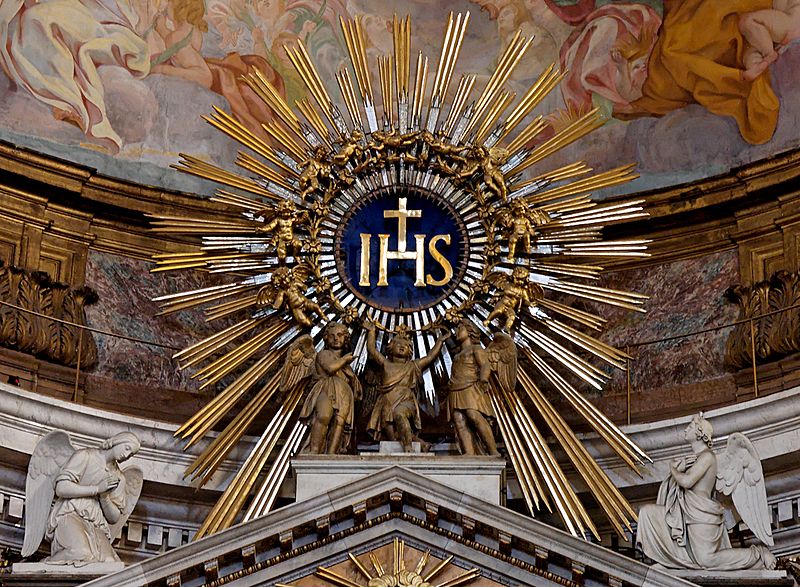
Seal of the Society of Jesus. The "IHS" trigram comprises the first three Greek letters of "IHΣOYΣ" (Jesus), later interpreted as "Iesus Homini Salvator", Jesus, Saviour of Mankind and as "Iesum Habemus Socium", We have Jesus as Companion, the Jesuit General Congregation is something extremely rare. Since their foundation almost 500 years ago, there have been, including this one, only 35 such General Congregations attended by delegates who represent the whole body of the Society. A general congregation is the ultimate governing body of the Society when it is in session. Once the congregation begins, it alone can determine when it has completed its business, as there is no scheduled ending time. One of the reasons a General Congregation gathers is to elect a new General of the Society who usually holds the position for life and is known as the Black Pope. So, the act of electing a General is very important as he's in for life. This GC is unique because the current Father General, Fr. Peter Hans Kolvenbach who succeeded Pedro Arrupe, SJ (who did much to transform the Jesuits from the formidable and loyal force it had been since its foundation by St. Ignatius into what it is today) has chosen to retire and has summoned the GC to, among other things, elect a new General.


Read the full and complete post (here)

Blog: Ignatian Life

An Ignatian Model of Church?
January 08, 2008 By: Mattie Category: Mattie's Posts, Major Posts
I teach sophomore high school Church History. Not an easy task, I suppose. The text we use begins with an introduction to the word church and the various models of church that one can think about when trying to understand what we mean when we use that oft-loaded word. In an attempt to discover a unique way to approach this somewhat complex topic, I created a quiz for my students to take: “What is your model of church?“ It’s admittedly unscientific and intentionally absolutist, but I still think it is an interesting excercise to introduce the notion of models of church.
This got me thinking: what is the Ignatian model of church? If Ignatius were to take my silly little quiz, what would he score? While I’ve not read much of Ignatius’ correspondance and can certainly not claim to be an expert in his thought, I reflected on what I do know about the first Jesuit.
Clearly Ignatius had no strong aversions to the institutional church; he willingly entered formation for the priesthood when it became clear that would be the conducive route for his ministry and his Society pledged absolute loyalty to the Pope.
He was undoubtedly a disciple of Christ willing to live counterculturally - how else can you explain his time at Manresa or his extensive work among the sick in Paris? His emphasis on the church as Body of Christ is evident in his depth of insight into the ways his directees and companions had so many different gifts and talents to contribute.
Sacramentality was a core component of Ignatius’ vision also - in the Exercises he stresses the importance of the Eucharist and Reconciliation explicitly.
A more implicit sacramentality is found in his recognition of the movements of the Spirit in the world. The Society of Jesus was (and remains today) a missionary organization, so Ignatius’ desire to perpetuate the “Herald” aspect of the church can not be disputed. There is no clear “model of church” that Ignatius seemed to favor.
This left me thinking Ignatius would probably come to the same conclusion that I have: any models of church we attempt to create are ultimately deficient. At the end of the day, the church is both all and absolutely none of these models. These frameworks help us understand various aspects of the church, but also tend to trivialize the interdependency of these assorted functions of the Church. The Church ultimately is a complete mystery. A beautiful, glorious mystery I am thrilled to be a part of…
Link to blog post (here)

Mattie’s Blogger Bio
I am a young woman attempting to live a life of integrity and authenticity in relationship with God. I believe that the charism of Ignatian spirituality is particularly useful in helping me live that life, but I’m also interested in all that the wide world of Christianity has to offer. I grew up in the Missouri Synod Lutheran Church, spent a few years as an agnostic, worshipped with a FourSquare Gospel Pentecostal Church and finally entered into the Catholic Church through RCIA in 2005. I currently teach high school scripture and church history, though my education is in Government (AB) and Christian Spirituality (MA). I am particularly interested in ecumenism, soteriology, theological anthropology, vocation/calling, indie rock, and all things foodie. I’m fairly traditionalist in my theology, though relatively progressive in my attempts at cultural engagement. I’m still figuring out who I am and what God has planned for my life… but then, aren’t we all?
Link (here)

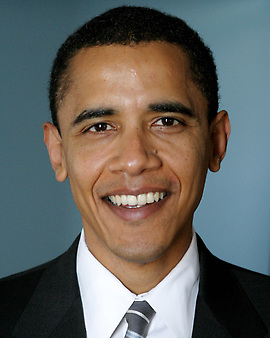
B. H. O. At Jesuit College

Obama rally at St. Peter's
Tuesday, January 08, 2008
Presidential candidate Barack Obama will be holding a rally at St. Peter's College in Jersey City tomorrow, college officials announced yesterday.
The event is scheduled for the Yanitelli Center, Montgomery Street between Kennedy Boulevard and West Side Avenue, said Bart Erbach, a spokesman for the Jesuit college, and is open to the public. Doors open at 2:30 and the rally is expected to start at 3:45, Erbach said.
There will be a "watch party" at 8 p.m. for the New Hampshire primary results tonight at Texas Arizona at 76 River St., Hoboken, Obama for America officials said.
KEN THORBOURNE

Link to the Jersey Journal (here)

Monday, January 7, 2008

The New Meaning Of Ignatian, "Sorrow And Anxiety"

Top Vatican Cardinal Tells the Jesuits to Clean Up their Act
Repeatedly spoke about his "sorrow and anxiety" at the state of the Jesuit order in terms of infidelity to the teachings of the Church.
By John-Henry Westen ROME, January 7, 2008 (LifeSiteNews.com) - The top Vatican official who deals with religious orders, Cardinal Franc Rode, addressed the 35th General Congregation of the Society of Jesus (the Jesuits) today. Cardinal Rode who was installed by Pope Benedict XVI as Prefect of the Vatican Congregation for Institutes of Consecrated Life and Societies of Apostolic Life spoke repeatedly about his "sorrow and anxiety" at the state of the Jesuit order in terms of infidelity to the teachings of the Church. Cardinal Rode recalled the founder of the Society of Jesus, St. Ignatius and his primary formula for the order: "To serve the Lord and his Spouse the Church under the Roman Pontiff" "It is with sorrow and anxiety that I see that the sentire cum ecclesia (thinking with the church) of which your founder frequently spoke is diminishing even in some members of religious families," he said.
The once illustrious Jesuits, the great defenders of faith, have over the last 40 years been steeped in dissident controversy. Jesuit priests have featured prominently in the homosexual priest scandal and Jesuit universities and their theologians have been hotbeds of dissent on Church teachings especially those on life and family.
Pope Benedict has put an end to some of the scandal issuing public corrections of several prominent Jesuit theologians. Last year, the editor of the U.S. Jesuit flagship publication 'America', Thomas J. Reese was abruptly resigned after a career of increasing hostility to Church teaching.
The Cardinal's address is being seen by Vatican watchers as another move in the Pope's efforts to restore the order to its former glory.
Later in his address, the Cardinal added, "With sadness and anxiety I also see a growing distancing from the Hierarchy." He explained:
"The Ignatian spirituality of apostolic service 'under the Roman Pontiff'
does not allow for this separation. In the Constitutions which he left you,
Ignatius . . . wrote 'we must always keep our mind prepared and quick to obey' .
. . the Hierarchical Church
"
Addressing specific areas the Prefect said, "May those who, according to your legislation, have to oversee the doctrine of your magazines and publications do so in the light of and according to the "rules for sentire cum ecclesia", with love and respect." Cardinal Rode did not content himself with correction but challenged the Jesuits to avant-garde position in the culture war - the very area where there have been so many traitors within the ranks of the Jesuits.
"The Tradition of the Society, from the first beginnings of the Collegio Romano always placed itself at the crossroads between Church and society, between faith and culture, between religion and secularism," said the Cardinal.
"Recover these avant-garde positions which are so necessary to transmit the eternal truth to today's world, in today's language. Do not abandon this challenge."
See the full address of Cardinal Rode here:http://www.lifesite.net/ldn/2008/jan/080107b.html
Link (here)

Mainstream Media's Five Facts About The Jesuits

FACTBOX: Five facts about the Jesuits
Mon Jan 7, 2008 9:46am EST
(Reuters) - Jesuit delegates from around the world are gathering in Rome to choose a superior general to run the largest male Catholic clerical order.
.
Here are five facts about the Jesuits:
* Founded in 1540 by the Spaniard St. Ignatius Loyola, the Society of Jesus -- as the Jesuits are formally known -- has about 19,200 members in 112 countries, down from a peak of some 36,000 in the 1960s. It is an all-male order with a growing percentage of members from developing countries, especially India.
* The Jesuits were disbanded by Pope Clement XIV in 1773 after political pressure in Europe and restored in 1814 by Pope Pius VII. They were said to be such intelligent debaters that critics coined the adjective "jesuitical" to describe someone who uses sly reasoning to argue a point of view.
* The Jesuits are best known for their prominent role in education, theology, missionary work and publishing, with a strong emphasis on social justice and human rights. They run many prestigious secondary schools and universities around the world and publish leading intellectual journals.
* Pope John Paul II, who died in 2005, clashed with the Jesuits. He said the order had become too independent, leftist and political, particularly in Latin America. Many of the theologians disciplined by the Vatican in recent years have been Jesuits.
* The new Jesuit leader is elected by a secret ballot. After he is chosen, delegates are not allowed to leave the room until the Pope is informed, in keeping with a centuries-old tradition.
(Writing by Phil Stewart; editing by Robert Woodward)

Link (here)

Canisius Jesuit At GC 35

Father Cooke In Rome to Elect Superior General
Canisius president a delegate at the Jesuit General Congregation which will elect a new superior general of the Society of Jesus
Rev. Vincent M. Cooke, S.J., president of Canisius College, is in Rome to participate in the 35th Jesuit General Congregation which began on the eve of the Feast of the Epiphany, January 5, 2008. The Society of Jesus was founded in 1540 by St. Ignatius Loyola and today is the largest religious order in the Roman Catholic Church. Father Cooke is one of 225 Jesuit delegates from around the world who will elect a new superior general of the Society of Jesus. Rev. Peter-Hans Kolvenbach, S.J., will resign after 25 years of service as superior general.Father Cooke is one of two delegates from the New York Province and one of only 34 delegates from the United States chosen to attend the Congregation. In addition, Father Cooke is the only member of the current American delegation who also served as a delegate at the 1983 Congregation that elected Father Kolvenbach. The election itself is preceded by four days of information gathering known as the “murmuratio,” during which time delegates are allowed to ask any other member of the Congregation about any member of the Society of Jesus who might be an apt superior general. No one may lobby or campaign for the position for themselves or for anyone else.At the end of the four days, a Jesuit is chosen to address the members of the Congregation about their duties to elect a new superior general. A secret ballot is then taken, collected and counted. Paper ballots are used for as many rounds of voting as necessary until someone receives a simple majority vote and is elected the new superior general. Father Kolvenbach was elected on the first ballot at the 33rd General Congregation. The late Rev. Pedro Arrupe, S.J. was elected on the third ballot at the 31st General Congregation. Father Cooke notes that an American has never been elected superior general, and that trend is likely to continue because most Americans do not have the language skills necessary for the post.

“The superior general must be fluent, at a minimum, in English, Spanish and Italian,” said Father Cooke. “The superior general has always been a European but the new leader may, for the first time, hail from a continent other than Europe. There is a 50-50 chance that an Asian, Indian or Latin American could emerge this time, which is more of a chance than ever before.”

After the election, members of the General Congregation will stay in Rome to discuss topics including the promotion of new vocations, how protection of the environment plays into the mission of the Society, Jesuit community life and the Jesuit vow of obedience to the Pope. Father Cooke is expected to be in Rome for several weeks. John J. Hurley, executive vice president at Canisius, will serve as acting president during Father Cooke’s absence. To read more about the 35th Jesuit General Congregation, click here.

Jesuit On Limbo

Unbaptised children out of limbo, Benedict rules
This week CathNews presents the top stories from 2007.

This article was originally published on 23 April 2007

In a long-awaited document published on Friday, the Vatican says that the traditional view of limbo as the destiny of those who die unbaptised is based on an "unduly restrictive view of salvation" and that God "wants all human beings to be saved". The result is that, with the approval of Pope Benedict, the Vatican's International Theological Commission has effectively buried the concept of limbo, the International Herald Tribune reports.The thumbs-down verdict on limbo had been expected for years and the document, called "The Hope of Salvation for Infants Who Die Without Being Baptised," was seen as most likely to be final since limbo was never formally part of Church doctrine.According to the Catholic News Service report, the 41-page document says the theologians advising the Pope concluded that since God is merciful he "wants all human beings to be saved." It says grace has priority over sin, and the exclusion of innocent babies from heaven does not seem to reflect Christ's special love for children, Catholic News Service, which is owned by the US Catholic Bishops Conference, quoted the document as saying. Limbo, which comes from the Latin word meaning "border" or "edge," was considered by medieval theologians to be a state or place reserved for the unbaptised dead, including good people who lived before the coming of Christ.
"Our conclusion is that the many factors that we have considered ... give serious theological and liturgical grounds for hope that unbaptised infants who die will be saved and enjoy the beatific vision (of God),"
the document said, according to Catholic News Service which is part of the US Catholic Bishops Conference. The Church teaches that baptism removes original sin which stained all souls since the fall from grace in the Garden of Eden. The Commission has been working on the document for some time and members have said in the past that it would recommend that the concept of limbo be scrapped. In writings before his election as Pope in 2005, the then Cardinal Joseph Ratzinger made it clear he believed the concept of limbo should be abandoned because it was "only a theological hypothesis" and "never a defined truth of faith." The Catholic Church's official catechism, issued in 1992 after decades of work, dropped the mention of limbo. In his Divine Comedy, Dante placed virtuous pagans and great classical philosophers, including Plato and Socrates, in limbo. Commenting on the document Jesuit Fr Luis Ladaria, who is the Commission's secretary-general, said "we can say we have many reasons to hope that there is salvation for these babies."

Link (here)
More on Limbo (here)

One Jesuits Take On The Opening Day Of GC 35


Sharing the Experience of the Congregation David Schultenover, S.J. January 7, 2008
Fr. Don Doll, S.J. took photos of the opening liturgy: January 7th photos.

Dave Schultenover, S.J. is a delegate to the Congregation from the Wisconsin Province, in the US Assistancy.
He is a Consultor to the Provincial of the Wisconsin Province and a professor of historical theology at Marquette University.


Today we opened the congregation with the Mass of the Holy Spirit at the Society’s mother church, the Church of the Gesù.
To be vesting with some 240 Jesuits from around the world, and then to process down the very long central aisle at the entrance procession, was very moving. The principal celebrant was Cardinal Franc Rodé, former Archbishop of the church of Slovenia and currently Pro-Prefect of the Congregation for Institutes of the Consecrated Life and Societies of Apostolic Life. He reminded us in his homily of our tradition of a vowed special relationship to the pope and of how influential we are with many other religious communities around the world because of our colleges, universities, and seminaries where so many of them receive training. He clearly wanted to impress upon us the seriousness of our congregation and the necessity of maintaining fidelity to the Holy See and the magisterium. The various occasional parts of the Mass underscored the universality, plurality, and diversity of the Church and the Society of Jesus by including women and men from many countries who spoke in numerous languages, for example, in the prayers of the faithful.
At the end of Mass, the Cardinal, flanked by Father General Kolvenbach and Father Frank Case (Oregon Province), Secretary of the Society, processed from the high altar down the main aisle and then over to the side altar where St. Ignatius of Loyola is buried. At the appropriate moment, the very large painting in the niche above the altar was gradually lowered in silence and revealing behind it the magnificent baroque silver statue of St. Ignatius (struck after the original which had been hauled off and melted down by Napoleon’s troops in 1798). As the new heroic-sized statue was gradually unveiled, the congregation seemed awestruck at its grandeur. Father General Kolvenbach then lit the votive lamp before the tomb and prayed the special prayer to St. Ignatius to intercede for us as we enter Congregation 35; all were invited to close by praying in common Ignatius’s Suscipe.
The church was filled, the liturgy was carefully choreographed, and the music, led by a well-rehearsed schola of Jesuit students, was inspiring.
This afternoon, we spent several hours taking care of essential preliminary details — not the least of which was learning how the wireless voting mechanisms work. We are now poised to enter into the very solemn process of discerning the election of our new superior general. Father Kolvenbach was in great humor and form as he presided over the opening session. He has been a superb general. But now, verging on 80 years of age, he recognizes that it is time to let younger hands take the helm.
David G. Schultenover, S.J.
Rome, January 7, 2008


Link (here)